online overuse affects

Online overuse affects mental health

Spending too much time online has become a common habit for many people but it may negatively affect mental well being and everyday life.

A study conducted in Germany found that excessive internet use can lead to higher stress levels irritability and less interest in other important activities.

Researchers at the University of Duisburg-Essen surveyed around 900 people to learn about

their internet habits.

Based on the amount of time they spent online participants were divided into three groups. For two weeks each participant completed a short survey every evening.

They reported their mood stress levels desire to use the internet and the total time they spent online that day.

The researchers also examined how much people enjoyed using the internet and whether it affected their work hobbies studies or personal responsibilities.

The study found that people who spent the most time online were more likely to feel stressed become easily irritated, and ignore other parts of their daily lives.

Researchers also discovered that many heavy internet users felt a strong urge to go online because it gave them comfort and enjoyment.

According to the researchers the findings show that excessive internet use can influence many areas of life and the risks are greater for people who spend long hours online regularly.

Similar Posts

  • |

    Press play on nostalgia

    There is an absurdly satisfying drama to slipping a shiny compact disc into a silver portable CD player. Next up, click the lid shut and voila! Listen to that faint mechanical whir-click as the laser reads the track. We live in an era where a glass smartphone screen gives you instant access to 100 million songs. And when one chooses to carry around a plastic disc player, it feels less like a modern inconvenience and more like a heroic act of rebellion. Well! In order to figure out why Gen Z is suddenly obsessing over vintage music players that take up actual pocket space, we have to look at the wild journey of how we got here. From Giant Plastic Discs to Invisible Spotify Soundtracks The evolution of portable music is essentially a history of humans constantly trading physical soul for pure convenience. The Boombox & Tape Era Back in 1979, the original Sony Walkman fundamentally changed society by letting people walk down the street with their own personal soundtrack playing on magnetic cassette tape. It was revolutionary, even if you occasionally had to fix a tangled tape using a No. 2 pencil. The Silver Disc Reign By the late 80s and 90s, the CD player (affectionately nicknamed the Discman, though brands like Goodmans ruled the market too) took over. Suddenly, music was crisp, digital and skip-resistant. The condition that provided your player had a reliable 45-second anti-shock buffer and you didn’t jump off while walking! Albums came with jewel cases, actual artwork and fold-out lyric booklets you could read on the bus. The MP3 Tidal Wave The early 2000s crushed physical media into tiny digital files. The iPod and cheap MP3 players meant you could hoard thousands of low-bitrate songs in your pocket. They effectively killed off the concept of buying an album just to listen to it as a cohesive story. The Infinite Streaming Void Today, platforms like Spotify and Apple Music serve us endless music on demand.  Every track on Earth is accessible with a single tap. That’s why music easily morphs into background noise rather than a meaningful event. The Retro Revival You’d think the generation born into high-speed Wi-Fi would turn their noses up at retro tech. However, physical music sales among young listeners are skyrocketing. It turns out that living entirely online gets exhausting. The antique way of listening to music hits differently for a few fun reasons. Spotify’s algorithm loves to push you into a hyper-specific mood bubble. On the other hand, physical disc into a portable player forces you to listen to an entire album from track 1 to track 20 the way the artist intended. On top, there are no skips, no ads, no doomscrolling while listening. There is a joy in pressing actual spring-loaded plastic buttons instead of tapping a flat screen. The mechanical clicks, volume dials and tangled headphone wires bring a sensory connection. In my opinion, a digital app just can’t match. In the subscription economy, you don’t own anything. If a streaming platform loses licensing rights, your favorite album vanishes overnight. A physical CD on your shelf, however, is yours forever. Now, let’s be honest! Pulled-out wired earbuds connected to a metallic silver CD player looking like straight out of Y2K sci-fi is an undeniable aesthetic flex.

  • Quitting tobacco and cutting salt may delay dementia

    Health experts say that quitting tobacco and reducing salt intake can help lower the risk of dementia, a condition associated with cognitive decline and memory loss. According to experts, these measures can help keep blood pressure within a healthy range and maintain stable blood sugar levels which may contribute to dementia prevention. A new study conducted in the United States found that if people adopt three healthy habits during middle age — maintaining normal blood pressure, keeping blood sugar levels under control and avoiding smoking — the onset of dementia could potentially be delayed by around 13 years. Researchers at New York University also found that dementia tends to develop later in women than in men regardless of their risk factors. More than 900,000 people in the United Kingdom are currently living with dementia. The condition is among the leading causes of death in the country accounting for more than 74,000 deaths every year. Most cases of dementia occur in people over the age of 65 while the risk of developing the condition approximately doubles every five years after the age of 65. However, growing scientific research suggests that dementia is not necessarily an inevitable part of ageing and that it can be prevented to a significant extent. Adopting a healthy lifestyle, such as exercising regularly, eating a balanced diet and maintaining a healthy body weight, can reduce the risk of dementia by more than 45%. A recent study by scientists at NYU Langone Health further suggests that if people maintain key health markers during middle age, they may be able to delay the onset of dementia by more than a decade.

  • Gas cooking may worsen asthma

    A new US study suggests that using gas stoves at home may worsen asthma symptoms by reducing indoor air quality. Researchers at Case Western Reserve University studied 85 children and adults with moderate to severe asthma. Participants used gas stoves for four weeks before researchers replaced them with electric stoves at no cost. Their health was then monitored for another two to three months.  The team also measured indoor air pollution before and after the switch. The study found that burning natural gas releases harmful gases including nitrogen dioxide and carbon monoxide which can affect lung health over time. After switching to electric stoves nitrogen dioxide levels inside homes dropped by up to 70% while asthma symptoms became less severe. Researchers said the health improvements were similar to or even better than those usually seen with asthma medication. The study also found an 80% drop in asthma related absences from work or school and a 70% reduction in doctor visits. However the researchers said the study was small and lasted only a few months so larger and longer studies are needed to confirm the findings.

  • Healthy weight may protect male fertility study

    Male infertility is becoming a growing health concern around the world and new research suggests that excess body fat may be one of the reasons behind the rising number of cases. A study from Aarhus University found that higher levels of body fat can negatively affect male reproductive health and reduce fertility. The researchers followed 1,058 young men, who were about 18 years and 9 months old when the study began. They measured body fat body weight and muscle mass to understand how body composition affects fertility. According to the researchers a healthy body fat percentage for men is generally between 8% and 19%, while 20% or higher is considered elevated. The study found that men with higher body fat had on average a 23% lower sperm count than those with healthier body fat levels. The researchers also found that excess body fat may disrupt hormones that play an important role in sperm production and overall reproductive health. Hormonal changes caused by obesity can reduce both sperm  quality and fertility. Experts say maintaining a healthy weight through regular exercise a balanced diet enough sleep and stress management can support both overall health and reproductive health. Avoiding smoking limiting alcohol and managing long term medical conditions may also help improve fertility. The findings were published in the journal Human Reproduction. The study supports earlier findings from the World Health Organization, which reported in 2023 that about 17.5% of adults worldwide experience infertility at some point in their lives. The WHO also noted that infertility affects people in high middle and low income countries making it a global public health challenge. Researchers say that while infertility can have many causes keeping body fat at a healthy level may be an important step in protecting male fertility and improving reproductive health.

  • |

    How translation reconstructs global literature

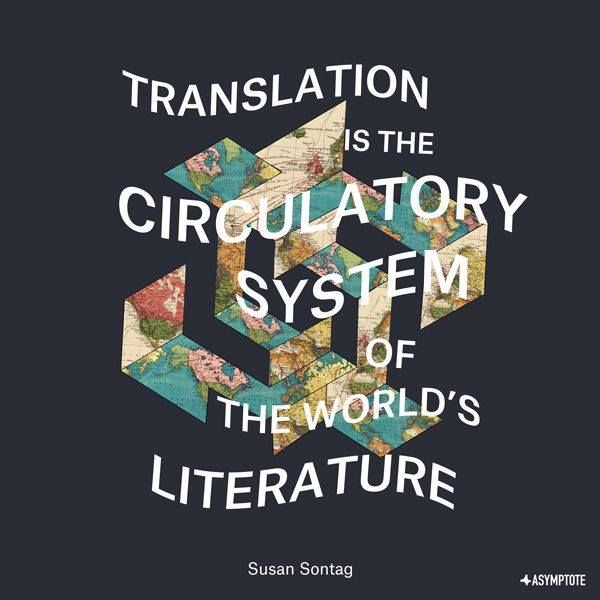
    For generations, the international publishing world operated around a narrow geographic axis. Books written in dominant English-speaking hubs dominated bookstore displays worldwide. Stories crafted in regional languages across Asia, Africa, South America, and Eastern Europe struggled to secure international distribution. When works were translated, the process was often viewed as a purely mechanical service. A utilitarian act of converting words from one dictionary to another. Today, a seismic cultural shift is redefining global literature. Translation is finally recognized as a sophisticated, creative art form that acts as the lifeblood of global storytelling. Recent publishing trends and prestigious accolades, such as the International Booker Prize, highlight this remarkable transformation. In 2026, the prize made history by awarding its top honor to Taiwan Travelogue by Yáng Shuāng-zǐ, brilliantly translated from Taiwanese Mandarin into English by Lin King. This historic win marking the first time a Taiwanese Mandarin work secured the award highlighted a broader reality. Global audiences are hungrier than ever for diverse, culturally distinct narratives. Over the past decade, sales of translated fiction have surged dramatically, proving that readers no longer seek comfort solely in familiar local settings. At the center of this movement is a fundamental re-evaluation of the translator’s role. Far from being invisible ghostwriters, translators are cultural ambassadors and literary artists in their own right. Translating a novel is rarely a matter of word-for-word substitution. Every language carries unique rhythms, idioms, historical baggage, and untranslatable social nuances. When a translator approaches a text, they must reconstruct its tone, preserve its emotional core, and decide how to navigate cultural concepts that have no direct equivalent in the target language. They rewrite the story from the inside out, ensuring it resonates authentically with a brand-new audience without stripping away its original soul. This evolving respect for translation has sparked important industry changes, such as the widely supported movement to print translators’ names directly on book covers alongside the author’s. Independent publishers are leading the charge, taking bold risks on works translated from lesser-represented languages, including Kannada, Taiwanese, Bulgarian, and Arabic. Digital distribution platforms have further accelerated this trend, allowing indie books to cross oceans instantly. Ultimately, translation is what prevents global literature from becoming an echo chamber. It dismantles geographical gatekeeping, fosters empathy across political divides, and allows readers to step directly into the lived experiences of people half a world away. The delicate craft of translation and the global literary community ensure that stories are no longer limited to by borders of the language in which they were born.  

  • How Otto the Great created an Empire from the ashes of chaos

    In the tenth century, Central Europe was facing a state of political fragmentation and relentless conflict. This happened following the collapse of Charlemagne’s realm through the Treaty of Verdun in 843. Thus, the region split into warring territories. East Francia, the lands that would later form medieval Germany, was divided among powerful regional dukes who frequently clashed for supremacy. Amidst, a Saxon ruler emerged whose ambition, military prowess, and diplomatic intelligence changed a shattering kingdom into the Holy Roman Empire. He was Otto I! When King Henry I passed away in 936, he broke traditional Carolingian customs. He left the entire East Francian kingdom to a single heir: twenty-four-year-old son, Otto. Otto was crowned at Charlemagne’s ancient seat in Aachen. His reign began with a show of unity from the prominent dukes. However, that outward display of loyalty quickly dissolved into internal unrest. Otto’s early years on the throne were defined by bitter revolts. Rival nobles resented the monarchy’s growing authority. Otto’s own family members turned against him. His half-brother Thankmar and younger brother Henry repeatedly joined rebel factions. To tighten his grip on the realm, Otto appointed close relatives to head the kingdom’s core duchies. The names included Swabia, Bavaria, and Lotharingia. Yet this strategy proved double-edged. Familial rivalries simply migrated to the highest seats of power. The most dangerous challenge arose in 953 when Otto’s eldest son and heir, Liudolf, launched an open rebellion. Fearing that Otto’s second marriage to the Italian princess Adelheid would compromise his succession. Therefore, Liudolf rallied dissatisfied German lords and ousted royal loyalists across multiple regions. As civil war threatened to tear the kingdom apart, an external threat dramatically altered the course of history. In 954, nomadic Magyar raiders from the Eurasian steppes swept deep into East Francia. When rebel forces collaborated with the invaders, public sentiment shifted in Otto’s favor. The German nobility reconciled with their king rallied by a shared threat.  In August 955, Otto confronted the Magyar army at the Battle of Lechfeld near Augsburg. His victory was overwhelming and decisive. By crushing the invaders, Otto permanently ended nomadic incursions into Western Europe and solidified his reputation as the hero of Christendom. Internal rebellions vanished almost overnight. This victory gave Otto the absolute authority he needed to look southward toward Rome. Otto understood that true imperial legitimacy required papal endorsement. He had already secured the crown of Lombardy through his marriage to Adelheid. Otto now marched into Italy in 961 after Pope John XII requested military assistance against rival Italian lords. On February 2, 962, Pope John XII crowned Otto emperor in Rome. This occasion effectively birthed what historians consider the Holy Roman Empire. A dynamic entity had united German and Italian territories under a single imperial crown. Otto established firm oversight over papal elections. He negotiated a landmark diplomatic treaty with the Byzantine Empire, and secured his dynasty’s future before passing away in 973. Otto transformed a chaotic collection of duchies into a medieval superpower that shaped European history for centuries.  

Leave a Reply

Your email address will not be published. Required fields are marked *