irgc releases satellite
| | | |

IRGC releases satellite images of US jets in Jordan

Iran’s Islamic Revolutionary Guard Corps (IRGC) has released satellite images that it says show hangars housing US military aircraft at Jordan’s Al Azraq air base, escalating its information battle with Washington.

The IRGC also called on the United States to end what it described as censorship and urged officials to provide the public with accurate information about the ongoing conflict.

The release comes after the United States rejected an Iranian claim that its forces had destroyed US F-35 fighter jets. Iranian authorities had earlier claimed that three American fighter aircraft were destroyed at the Al Azraq air base in Jordan.

In a statement, the IRGC said its forces had targeted three US F-35 aircraft stationed at the base. The claim has not been independently verified, while US officials have denied that Iran destroyed any American F-35s.

By publishing the satellite imagery, the IRGC appears to be seeking to support its version of events and challenge the US account of the reported attack. However, the images alone do not independently confirm whether any aircraft were damaged or destroyed.

The conflicting claims come amid heightened regional tensions and an ongoing exchange of accusations between Iran and the United States over military operations and attacks in the Middle East.

Similar Posts

  • |

    North Korea issues fresh warning to US allies

    PYONGYANG: North Korea has accused the United States, Japan and South Korea of creating a new security crisis in the Asia-Pacific, claiming their expanding military cooperation is increasing regional tensions and threatening stability. In a commentary published by the state-run Korean Central News Agency (KCNA), a military commentator alleged that the three allies are strengthening their joint combat capabilities through large-scale military exercises and closer defence coordination. The statement specifically criticized the recently concluded Rim of the Pacific (RIMPAC) naval exercise, describing it as a rehearsal for military aggression rather than a routine multinational drill. According to North Korean officials, the exercise involved more than 30,000 personnel, over 30 warships, five submarines and nearly 190 aircraft. Pyongyang claimed the United States is attempting to strengthen its military influence across the Asia-Pacific with the support of Japan and South Korea. It also objected to recent US-South Korea air force and logistics exercises, plans to expand American military command structures in Japan and the deployment of advanced US missile systems in the region. North Korea warned that it would respond to what it described as growing military threats by further strengthening its own deterrence capabilities. Officials said any increase in external pressure would be met with corresponding defensive measures. Separately, North Korea’s Foreign Ministry rejected recent accusations by the United States and its allies that Pyongyang poses a growing cyber threat. The ministry dismissed the allegations as politically motivated and without evidence. A foreign ministry spokesperson argued that the United States has been expanding military activities in cyberspace through cyber commands, joint cyber exercises and the use of artificial intelligence in defence operations. The spokesperson claimed Washington, rather than Pyongyang, was contributing to rising tensions in the cyber domain. North Korea reaffirmed that it would continue taking measures to safeguard its national security and protect its development interests against what it described as increasing pressure from Western countries.

  • |

    Indonesia quake kills 48, thousands left desperate…

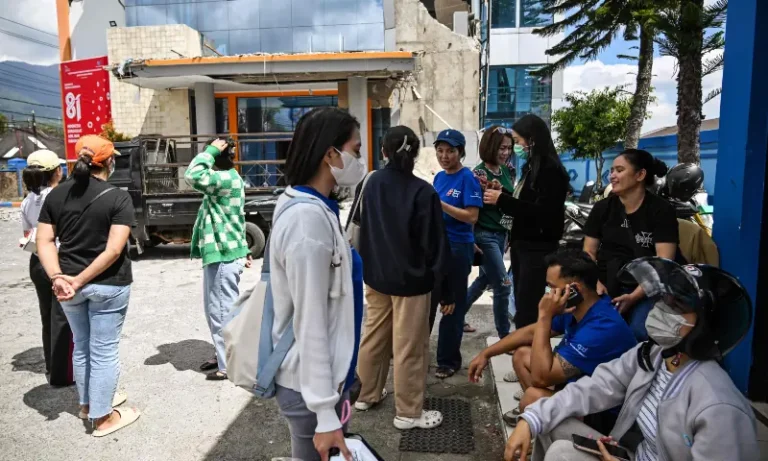
    RUTENG: Thousands of frightened residents on Indonesia’s Flores island remained in temporary shelters on Sunday as rescue teams raced to deliver food, water and medical supplies following a powerful magnitude-7.7 earthquake that killed dozens and left widespread destruction across the region. The earthquake struck off the northern coast of Flores early Saturday, triggering landslides, damaging homes and public buildings and cutting electricity and communications in several areas. The latest reports put the death toll at more than 50, with at least 100 people injured, while thousands of residents have been displaced. The disaster was followed by hundreds of aftershocks, deepening fears among residents who were already reluctant to return to damaged homes. Authorities said around 5,000 people initially fled their houses, while the number sheltering in evacuation centres later rose to more than 9,000. For many survivors, the immediate concern is basic necessities. “We need food, drink, medicines, and diapers for the children,” resident Umri told AFP, describing how he and others spent the night on a hill because they were too afraid to return home. Another resident, Nurhidayati, said memories of the devastating 1992 Flores earthquake had made the latest disaster even more terrifying. She said she remained traumatised by the previous tragedy and did not dare go back home. Rescue Efforts Face Major Obstacles Emergency crews have been working through collapsed structures and rubble while heavy machinery clears roads blocked by landslides. Some of the hardest-hit communities remain difficult to reach because of damaged roads, power failures and disrupted telecommunications. Indonesia has deployed military and police personnel, helicopters, aircraft and rescue vessels to support the emergency response. Authorities are also sending large quantities of food and other relief supplies to affected communities. The destruction has extended beyond residential areas. Hundreds of houses have been badly damaged, while schools, health facilities and government buildings have also suffered. In Ruteng, damaged hospital facilities forced patients to be moved into tents outside the building. Despite the difficult conditions, medical workers have continued treating patients. In one particularly dramatic case, doctors performed an emergency Caesarean section in a storage room after parts of the hospital were damaged. Both the mother and baby were reported safe. Tsunami Warning Lifted The earthquake briefly triggered fears of a tsunami after residents reported the sea retreating from parts of the coastline. Authorities issued a tsunami warning, but it was later lifted after monitoring showed no major destructive wave threat. Waves of around 1.6 metres were nevertheless recorded in some coastal areas. Officials have urged residents to remain vigilant and avoid entering damaged buildings because continuing aftershocks could cause weakened structures to collapse. A Region Used to Earthquake Tragedies Flores lies within Indonesia’s highly active seismic zone, part of the Pacific “Ring of Fire”, where several tectonic plates meet and powerful earthquakes are common. The island has painful memories of the past. A major earthquake in 1992 triggered a tsunami that killed roughly 2,500 people. The latest disaster has once again exposed the vulnerability of communities living in earthquake-prone areas, particularly where roads, hospitals and communication networks are limited. International assistance is also being prepared. The European Union has offered its Copernicus satellite system to help authorities map affected areas and support search-and-rescue operations. For now, the priority remains simple: finding survivors, reaching isolated communities and keeping thousands of displaced families safe as Flores waits for the ground to finally settle.


  • |

    Thousands storm Spain’s Ceuta border

    Thousands of migrants gathered overnight in the Moroccan town of Fnideq near the border with the Spanish enclave of Ceuta, creating fresh pressure on one of Europe’s busiest migration routes. The large movement of people came despite a major security operation launched by Moroccan and Spanish authorities to stop illegal border crossings. Security forces strengthened patrols and reinforced checkpoints around the border. However, many migrants continued searching for ways to reach Ceuta. Some walked along the coastline looking for gaps in the border fence, while others prepared to swim across the sea in hopes of entering Spanish territory. According to Spanish media reports, between 2,000 and 3,000 migrants managed to cross into Ceuta on Thursday. Most of the successful crossings reportedly took place before security measures were tightened later in the day. Ceuta, along with the nearby Spanish enclave of Melilla, is the European Union’s only land border with Africa. The two territories have long served as major entry points for migrants hoping to begin a new life in Europe. Spain responded to the latest migration surge by sending additional military personnel and police officers to Ceuta. Authorities in the enclave also confirmed that nine bodies had been recovered following the crossing attempts, although officials have not released further details about the victims. Moroccan authorities deployed water cannon vehicles and additional security personnel at the border. Officers repeatedly pushed back groups attempting to force their way through the crossing points. Despite the heavy presence, migrants continued gathering throughout the night. Violence broke out near the border as tensions escalated. Several vehicles, including a bus and seven other vehicles, were set on fire during clashes. Burnt-out vehicles remained on the roadside after the unrest, highlighting the intensity of the confrontation. Many migrants described scenes of panic and confusion. One migrant said he became trapped in a stampede as people rushed toward a narrow coastal route. He said he feared for his life as people pushed and stepped on one another while trying to reach the border. Traffic into Fnideq remained heavily congested as more migrants continued arriving from different parts of Morocco. Some travelled along highways on foot, while others used mountain paths to avoid police checkpoints. Many spent the night waiting for another opportunity to cross. The crowds included men, women and children from Morocco as well as several countries in sub-Saharan Africa. Many families remained stranded near the border after repeated attempts to enter Ceuta were blocked. Among them was 23-year-old Fatima Mahli from the Moroccan city of Tetouan. She said she had travelled with her two daughters hoping to cross into Ceuta with her husband. According to her, her husband left before dawn to try to swim across after they realised the border crossing was effectively closed.

  • |

    Anti-US protest greets Rubio at ASEAN Summit

    Protesters demonstrated against US Secretary of State Marco Rubio during the ASEAN Foreign Ministers’ Meeting in the Philippines, calling for an end to what they described as America’s war against Iran. According to reports from Manila, the protest took place while Rubio was attending the regional diplomatic gathering. Demonstrators gathered near the venue carrying banners and chanting slogans criticizing US foreign policy and military actions. The protesters urged the United States to stop its military campaign against Iran and called for peace in the region. They also appealed to the Philippine government not to become involved in any US-led military conflict. Police set up barricades around the meeting venue and prevented demonstrators from approaching the site where ASEAN foreign ministers were holding discussions. Security remained tight throughout the event, and no major clashes were reported. The protest coincided with high-level regional meetings attended by foreign ministers from ASEAN member states and dialogue partners, where regional security and international issues were among the key topics of discussion.

Leave a Reply

Your email address will not be published. Required fields are marked *