ajk gears second
| |

AJK gears up for second phase of elections

Preparations are in full swing for the second phase of the Azad Jammu and Kashmir (AJK) Legislative Assembly elections, with polling scheduled for August 2 across Muzaffarabad Division and 12 refugee seats.

The second phase will cover the three districts of Muzaffarabad Division—Muzaffarabad, Neelum and Jhelum Valley—as well as 12 constituencies reserved for Kashmiri refugees residing in Pakistan.

According to election authorities, a total of 890,621 registered voters are eligible to cast their ballots in the nine constituencies of Muzaffarabad Division. Of these, 427,955 are male voters, while 381,666 are female voters.

To facilitate polling, 1,483 polling stations have been established across the division. District Muzaffarabad, which has five constituencies, will have 1,205 polling stations. District Neelum, comprising two constituencies, will have 278 polling stations, while 328 polling stations have been set up in the two constituencies of Jhelum Valley.

A total of 208 candidates are contesting the nine seats in Muzaffarabad Division, making the second phase a closely watched electoral contest.

Meanwhile, Kashmiri refugees living in Pakistan will also cast their votes for 12 refugee constituencies, evenly divided between six Jammu seats and six Valley seats.

The Jammu refugee constituencies include LA-34 Jammu-I through LA-39 Jammu-VI, while the Valley refugee constituencies comprise LA-40 Valley-I through LA-45 Valley-VI.

The Azad Jammu and Kashmir Election Commission will announce the results of all 12 refugee constituencies after the completion of polling. Authorities have said all necessary arrangements have been finalised to ensure a peaceful, transparent and orderly voting process during the second phase of the elections.

Similar Posts

  • | |

    Trump hails Makkah Defence pact, calls it bold ste…

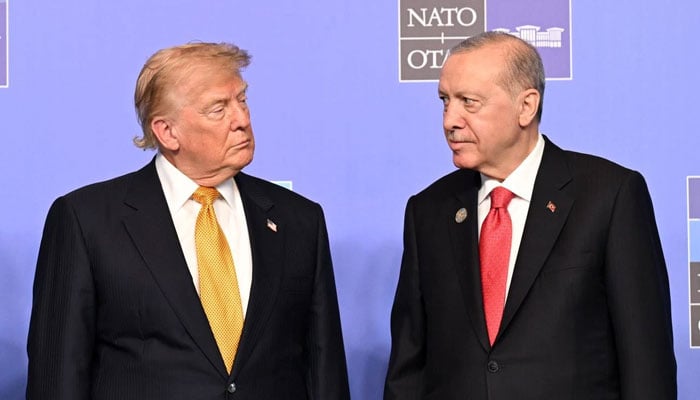
    WASHINGTON: US President Donald Trump has welcomed the newly signed Makkah Joint Defence Agreement between Pakistan, Saudi Arabia and Türkiye, describing the trilateral pact as an important step toward greater regional security. Trump said he was pleased to see the three countries formalise the agreement, arguing that it demonstrated a growing willingness among Middle Eastern and regional states to strengthen their ability to protect themselves. The agreement was signed in Makkah on August 7 during a summit involving Prime Minister Shehbaz Sharif, Saudi Crown Prince Mohammed bin Salman and Turkish President Recep Tayyip Erdogan. It establishes a framework for closer defence cooperation, collective deterrence and enhanced strategic coordination among the three countries. Although the pact has drawn comparisons with NATO, security analysts say it is primarily an institutionalisation of longstanding political and military ties rather than the creation of a new offensive military alliance. The framework is expected to facilitate greater cooperation in areas including intelligence sharing, defence planning, military coordination and strategic consultations. The agreement comes amid an increasingly complex regional security environment marked by conflicts, shifting alliances and emerging military threats. Supporters argue that stronger coordination among the three countries could enhance deterrence and contribute to regional stability. Pakistan brings extensive military and operational experience, while Saudi Arabia offers significant economic and political influence. Türkiye, meanwhile, contributes a developed defence industry, military technology and industrial capabilities. Analysts believe combining these strengths could improve the partners’ collective preparedness. Turkish President Erdogan has also described the agreement as a significant message for global peace. Speaking in an interview with Al Jazeera Arabic, he said the decision to sign the pact in Makkah gave it additional significance, particularly amid tensions between the United States and Iran. Erdogan stressed that Pakistan, Türkiye and Saudi Arabia sought to position themselves as advocates of peace and said the three countries would continue supporting diplomatic efforts to prevent conflict. Asked whether the agreement was comparable to NATO’s Article 5, Erdogan said its collective defence principle meant the three countries would have the opportunity to respond jointly if any member faced a serious threat. He also revealed that the framework could eventually expand beyond the three founding members. According to Erdogan, the agreement leaves the door open for other countries to join, with Egypt among the potential future participants. The pact is therefore emerging as a significant development in regional security cooperation, while its proponents present it as a defensive mechanism designed to strengthen deterrence and promote stability rather than fuel confrontation.

  • | |

    DIG East Dr. Farrukh: A model of public-friendly p…

    Karachi: While addressing ABAD — the Association of Builders and Developers of Pakistan — on Wednesday, Inspector General Sindh Mr. Javed Alam Odho once again reaffirmed the commitment to resolve the Mir Raza murder case on merit and without pressure. He admitted mistakes had been made by the police department, but reassured that all measures would be taken to correct them. He also claimed that the crime rate in Karachi had dropped by 14 percent. He also urged for reforms and need of more professional training in Medico-legal system of police. But all those numbers and all those assurances fall flat in the face of one unresolved case. The fact that a builders’ association felt compelled to raise the Mir Raza issue speaks volumes. It is not ABAD’s mandate, yet its leaders did it anyway — because the mistrust between citizens and Karachi Police has grown too deep to ignore. That mistrust exists not because of a lack of competent leadership at the top, but because subordinate SSPs failed to deliver where it mattered most. A Meeting That Set the Standard  I saw this gap first-hand in my initial meeting with DIG East, Dr. Farrukh Ali Lanjhar. He came across as accessible, direct, and willing to listen — the kind of officer who says, “call me when you need me.” When I requested time from DIG East Dr. Farrukh Lanjhar for an interview, I expected a formal reply or a future date. Instead, he politely asked me to walk into his office and join him for a cup of tea. I was pleasantly surprised by the cordiality. I walked in expecting bureaucracy. What I found was courtesy, and a senior officer who was ready to resolve the issue of a female journalist without making her feel like a petitioner. Does the Police Force Lack Role Models?  The meeting was also a wake-up call. At the ASP/SP level, many officers still treat citizens as subjects of a colony and themselves as masters, not servants. I often wonder what fuels this snobbery and arrogance. Is it clearing the CSS? But given our quota system and an exam that has been reduced to testing memory and English rather than intellect or judgment, that in itself is no great achievement. If it were, every government department would be running like a multinational — either making huge profit or excelling in service delivery. Is it the training we inherited from the British Raj, designed to produce a ruling elite? Or is it the culture of imitating seniors who remain inaccessible and aloof? Yet we do have exceptions. DIG East Dr. Farrukh Lanjhar, DIG Traffic Pir Mohammad Shah, DIG CTD Capt. (R) Azfar Mahesar, DIG RRF Usman Ghani Siddiqui, DIG Amir Farooqui, SSP Qamar Jiskani, SSP Saud Magsi, SSP Zeeshan Siddiqui, and above all IG Sindh Javed Alam Odho. Within the same flawed system that all of us are part of, they choose to serve as public servants. The impression they leave is exactly what I witnessed the other day. Can’t they be role models? Because the legacy you leave either lives on or haunts you. We still remember good officers long after they retire, like former ADIG Hyderabad Range, Dr. Jameel. AIG Ameer Sheikh will be spoken of in those terms. Ten years from now, who else will be remembered with the same respect? There were many who were pharaohs of their time, but no one now remembers them with respect after they leave office. A Glimpse of Reforms in East  During our discussion, Mr. Lanjhar also spoke about the reforms he has pushed in East Zone. He said more than 1,000 personnel have been pulled out of desk pools and deployed in the field where they are actually needed. To enforce accountability, he has introduced biometric attendance to eliminate ghost employees. The zone is also moving toward an advanced facial recognition system to ensure that no one can mark false attendance and every officer on the roster is truly on duty. The Mir Raza Murder Case  When asked to comment on the Mir Raza murder case, which falls under his jurisdiction, he responded softly: “A new committee has been constituted,” he said, “and I do not wish to comment before its findings are made public.” However, he assured that he would address all queries once the committee submits its report. As we wrapped up a meeting that ran longer than expected, Dr. Farrukh Lanjhar spoke openly — about the shortcomings of the media, about his personal experiences across different districts and roles, and about the reforms needed to make police more public-friendly. Especially Thana culture, which he called the main “interface” of the police force. Before I left, he said simply: “Don’t you worry, Madam. We will remain in touch. You can call me whenever and wherever needed to resolve your issue.” It left me thinking. Often, just listening with patience to the complaint of the aggrieved party can bring down the temperature of frustration and distrust toward police. That is exactly what was missing in the initial handling of the Mir Raza murder case. The first inquiry committee, in which SSP East Zubair Sheikh was allegedly accused of incompetence and of pushing a suicide theory (by the family), failed on that count. He did not take into account the point of view of the victim’s parents. Neither he nor SSP SIU Samiullah Soomro were able to convey to the grieving family that the police were with them, and that they would do everything to ensure they got the justice they deserved. It was that simple. Had SSP East, Zubair Sheikh, treated it with the same seriousness that DIG East showed toward my complaint — on a far smaller scale — perhaps IG Sindh, Javed Alam Odho would not have had to stand before the media and accept mistakes on behalf of his force. That is why we have a full hierarchy in place. If every SSP did his job, including answering the

  • |

    4.5-magnitude quake jolts Pakistan’s coast

      A 4.5-magnitude earthquake jolted Pakistan’s coastal region on Monday morning, with tremors recorded near Keti Bandar, according to the Pakistan Meteorological Department (PMD). The seismic activity occurred at around 8:31am, with the earthquake originating at a depth of approximately 40 kilometres beneath the surface. The PMD located the epicentre in the sea, around 156 kilometres southwest of Keti Bandar. The tremors were felt in parts of the coastal belt, prompting residents to remain alert. However, there were no immediate reports of casualties, injuries or significant damage to buildings and other infrastructure following the earthquake. The depth and offshore location of the earthquake likely reduced its impact on populated areas compared with a shallower quake occurring closer to land. Nevertheless, residents in coastal communities may have felt noticeable shaking depending on their distance from the epicentre. Seismic activity is not unusual in and around Pakistan’s coastal belt, which lies near tectonically active zones. Earthquakes in the region can occur beneath the Arabian Sea and along nearby fault systems. The meteorological department continues to monitor seismic activity and may issue further information if additional tremors or related developments are recorded. Authorities have also advised people to remain calm and follow official updates in the event of further seismic activity. No tsunami warning or major coastal emergency was reported in connection with the earthquake at the time of the initial report.

  • | |

    Sarwat Gilani celebrates Special Olympics athletes

    Renowned Pakistani actor and Special Olympics Pakistan (SOP) Ambassador Sarwat Gilani shared heartwarming moments from the organization’s three-day national sports competition, which concluded following a vibrant celebration of inclusion, sportsmanship, and determination. The three-day event, held from July 21 to July 23, brought together athletes with intellectual disabilities from across the country to showcase their athletic talents and foster a spirit of unity through sports. Taking to social media, Gilani shared a recap featuring photos and video clips highlighting her interactions with competitors, volunteering alongside organizers, and presenting awards to winners during the closing ceremony. The national competition featured a total of 82 athletes representing diverse regions, including Sindh, Punjab, Balochistan, Khyber Pakhtunkhwa, Gilgit-Baltistan, and the Federal territory. Highlighting the success of the games, Special Olympics Pakistan praised the participating athletes on its official social media channels, noting that every moment of the tournament reflected the intense passion and dedication of the individuals involved. Reflecting on her long-standing commitment as brand ambassador and advocate for the organization’s mission, Gilani emphasized the broader societal importance of empowering individuals with special needs: “At Special Olympics Pakistan, we celebrate athletes who redefine courage, resilience, and possibility every single day. They don’t just compete — they inspire a nation. They remind us that inclusion is not charity; it is justice. It is love in action.” In addition to celebrating the sports gathering, Gilani used the platform to promote Inclusion Rocks, an upcoming concert series aiming to raise awareness and support for the cause. Featuring musicians Faisal Kapadia and Murtaza Qizilbash, the musical initiative is scheduled to take place across Karachi, Islamabad, and Lahore. Special Olympics Pakistan continues to work towards transforming the lives of people with intellectual disabilities through sports, creating opportunities for nationwide participation and building a more inclusive society. Gilani’s active participation and advocacy during the national event served to further spotlight the remarkable resilience and achievements of the nation’s special athletes.

  • | | |

    For key diplomacy Erdogan urges Trump to keep Iran…

    ANKARA: Turkish President Recep Tayyip Erdogan has urged US President Donald Trump to keep diplomatic channels with Iran open, stressing that continued dialogue could help ease regional tensions. During a telephone conversation, Erdogan and Trump discussed bilateral ties as well as the ongoing conflicts involving Iran and Gaza, according to the Turkish presidency. The two leaders also exchanged views on defence agreements involving Pakistan and Saudi Arabia, amid growing regional security concerns. Erdogan told Trump that diplomacy should be given every opportunity and said Turkey was prepared to contribute to efforts aimed at maintaining dialogue with Iran. The Turkish president also raised concerns over the situation in Gaza, saying Israel’s military actions against Palestinians were continuing at a time when the second phase of a proposed peace plan was expected to begin. The call comes as Ankara continues to advocate diplomatic engagement to prevent further escalation and promote political solutions to conflicts across the region.

  • | |

    Muzaffargarh canal accident: Last missing victim?…

    KOT ADDU: The body of the last person missing after the tragic Muzaffargarh Canal accident has been recovered near Head Kallo, bringing the search and rescue operation to an end. The body was recovered during a continued search operation launched to locate people who went missing following the accident. Rescue teams had been conducting searches at different points along the canal, including Head Kallo, day and night. According to officials, water was released into the canal following a request from the families of the victims. Due to the flow of water, the missing person’s body surfaced near Head Kallo. Rescue personnel deployed at the location immediately responded and recovered the body. The search operation continued despite the release of water into the canal. Teams from the district administration, Rescue 1122 and other relevant departments remained engaged in the operation under the direction of Kot Addu Deputy Commissioner Bilal Saleem and the supervision of Assistant Commissioner Kot Addu Farrukh Mahmood. Rescue teams were deployed at multiple locations along the canal. They maintained continuous surveillance and carried out searches in different sections to locate all missing persons. With the recovery of the latest body, officials said that all people reported missing in connection with the Muzaffargarh Canal accident have now been found. The rescue teams are completing the necessary procedures following the recovery. The body will be handed over to the relevant authorities for identification and other legal formalities. The district administration and rescue teams used all available resources throughout the operation. Officials also provided possible assistance and cooperation to the affected families during the search. The recovery of the last missing victim marks the completion of the search for those reported missing after the tragic canal accident.

Leave a Reply

Your email address will not be published. Required fields are marked *