saudi defense minister
| |

Saudi Defense Minister holds urgent talks with Trump

Saudi Defense Minister Prince Khalid bin Salman held an urgent meeting with US President Donald Trump as Riyadh sought to convey a special message from Saudi Crown Prince Mohammed bin Salman to the American leadership, according to US media reports.

The meeting came amid heightened tensions in the Middle East, with Saudi Arabia reportedly pushing for de-escalation while also stressing its readiness to defend its territory and interests.

Earlier, during a meeting with US Vice President JD Vance, Prince Khalid said Saudi Arabia wanted to reduce tensions with Iran. He reportedly argued that Iran-backed Iraqi militias had crossed a red line by attacking critical infrastructure and energy facilities, leaving Riyadh with no choice but to respond.

However, the Saudi defense minister stressed that the military action in Iraq did not reflect a desire to escalate the regional conflict. He said the operation aimed to demonstrate that Saudi Arabia remains prepared to defend itself when necessary.

Prince Khalid also reportedly told Vance that Israeli Prime Minister Benjamin Netanyahu was pushing for greater confrontation with Iran, while Saudi Arabia preferred a path of de-escalation, which it considers more beneficial for regional stability and its own interests.

According to US media reports citing sources familiar with the discussions, Saudi Arabia also intended its strikes in Iraq to send a message to Yemen’s Houthi movement. Prince Khalid reportedly told the US vice president that Saudi Arabia has the capability to deal with the Houthis on its own and does not currently need direct US intervention on the issue.

The Saudi defense minister also said Riyadh continues to engage in talks with the Houthis, indicating that Saudi Arabia remains open to diplomatic efforts alongside its military preparedness.

The meetings highlight Riyadh’s attempt to balance military deterrence with diplomatic engagement as tensions involving Iran, Israel, Iraqi militias and the Houthis continue to shape the security situation across the region.

Similar Posts

  • | |

    Caitlin Clark brightens young patient’s day with heartwarming hospital visit

      Indiana Fever star Caitlin Clark is making headlines not only for her performances on the basketball court but also for her compassion off it. As the WNBA season enters its second half, the league’s rising superstar has earned widespread praise after taking time out of her busy schedule to visit a local children’s hospital, bringing joy to a young patient during his recovery. Clark has enjoyed an outstanding season with the Indiana Fever, helping the team secure 19 wins while establishing herself as one of the WNBA’s biggest stars. She was also among the standout names at this year’s WNBA All-Star Weekend, where her popularity and influence continued to grow. Despite her demanding schedule, the basketball sensation recently demonstrated that making a positive impact extends beyond the game. Last month, Clark visited Peyton Manning Children’s Hospital at Ascension St. Vincent in Indianapolis, a full-service pediatric medical center dedicated to providing specialized healthcare for children and supporting their families. During her visit, she spent time with young patients, creating memorable moments for those undergoing treatment. One particularly touching encounter was with 12-year-old Ryker, a basketball fan who has been courageously recovering during an extended hospital stay. The hospital later shared photos of Clark’s visit on social media, showing the athlete smiling alongside Ryker as they enjoyed a heartfelt conversation. In the caption accompanying the images, the hospital praised Ryker’s determination and resilience throughout his recovery. Staff explained that the young patient has shown remarkable strength despite facing significant medical challenges. Knowing his passion for basketball, Clark’s visit became a special surprise that brought excitement and encouragement during a difficult period. Hospital officials also highlighted the unwavering support Ryker has received from his family. Throughout his recovery, his father and grandparents have remained by his side, offering constant encouragement and care. Clark’s visit added another meaningful moment to his journey, giving him a welcome distraction and a reason to smile during his hospital stay. The heartwarming images quickly attracted attention across social media, with fans applauding Clark for taking the time to connect with a young supporter. Many praised her kindness and willingness to use her platform to inspire children facing difficult circumstances. One social media user noted that acts of generosity like these often happen away from the spotlight but can have a lasting impact on patients and their families. Another described Clark as a role model for young people, commending her for bringing hope to children in need. Others applauded her character, crediting her family for raising not only an exceptional athlete but also a compassionate and humble individual. Clark has consistently demonstrated that her influence extends well beyond basketball. While her performances on the court continue to attract attention, her commitment to community engagement and helping others has further strengthened her reputation among fans. Peyton Manning Children’s Hospital at Ascension St. Vincent is one of Indiana’s leading pediatric healthcare facilities. Located in Indianapolis, the hospital offers a wide range of specialized medical services, including pediatric heart care, brain and spine treatment, cancer care, orthopedic services, and fetal medicine. As the WNBA season continues, Clark remains focused on leading the Indiana Fever in their playoff push. At the same time, her thoughtful hospital visit serves as a reminder that some of an athlete’s greatest contributions come away from the game, where simple acts of kindness can leave a lasting impression on those who need them most.

  • |

    At least 18 migrants die as thousands cross into Spain’s Ceuta enclave

    At least 18 migrants have died while attempting to reach the Spanish enclave of Ceuta after thousands crossed the border from Morocco in one of the largest migration surges seen in the region in recent years. The humanitarian situation continued to worsen on Friday as migrants kept arriving by sea while clashes broke out between Moroccan security forces and groups gathered near the border. Hundreds of migrants were seen on hills overlooking Ceuta as Moroccan authorities used tear gas to disperse crowds trying to move toward the Spanish territory. Despite the security operation, many people continued to swim across the narrow stretch of water separating Morocco from Ceuta. At the same time, large numbers of migrants who had already entered the enclave chose to return to Morocco on foot. Rachid Sbihi, who heads a local association representing Spain’s Civil Guard officers, described the situation as a serious humanitarian emergency. He said thousands of migrants, including many unaccompanied children, were sleeping in parks, streets and public spaces because reception centres had reached capacity. Emergency teams and military personnel sent to the area have mainly focused on treating the injured and providing humanitarian assistance as authorities struggle to manage the crisis. According to local officials, many of the 18 victims drowned while trying to swim into Ceuta. Others reportedly died during a stampede near the breakwater at Tarajal beach as large crowds rushed toward the border. Rescue teams continued searching the coastline while personal belongings including shoes, clothing and flotation devices were scattered along the shore. Many migrants said they left Morocco in search of better economic opportunities in Europe. One migrant, 33 year old Ahmed Karim, said unemployment and limited prospects at home had driven many people to take the dangerous journey. He explained that many dream of reaching Europe or the United States but see few legal opportunities to do so. Moroccan authorities strengthened security along the border by deploying additional police officers, using water cannons and firing warning shots into the air to stop more crossings. Human rights groups said migrants who were detained near the border were transported further into Morocco, although many others continued arriving in the area hoping to enter Ceuta. Morocco’s ambassador to Spain, Karima Benyaich, expressed hope that those who had crossed into Ceuta would voluntarily return. She said Morocco supports safe and orderly migration but did not comment on what had triggered the sudden movement of thousands of people toward the Spanish territory. Officials in Spain linked the surge to a recent Supreme Court ruling stating that migrants who reach Spain by swimming cannot automatically be returned, unlike those who cross by land or climb the border fence. The Spanish government argued that people smuggling networks had exploited public misunderstanding of the ruling to encourage migrants to attempt the dangerous crossing. Some Moroccan rights activists questioned that explanation, saying many migrants were unlikely to have known about the legal decision. Spanish Prime Minister Pedro Sánchez was expected to visit Ceuta after local authorities requested military assistance. His government’s migration policies have come under criticism from opposition politicians, who argue that recent measures granting residency and work permits to certain undocumented migrants have encouraged more people to head for Spain. The government rejected those claims, insisting the current crisis is unrelated to its immigration reforms. The unrest also spread to Melilla, Spain’s other North African enclave, where groups of migrants attempted to cross the border and clashed with Moroccan police. Rights groups reported injuries among security personnel and dozens of arrests. Spanish officials have not yet confirmed how many migrants entered Ceuta, although media reports estimate that between 30,000 and 49,000 people crossed into the territory within a single day, placing enormous pressure on a city with a population of about 84,000.

  • |

    Xi backs Brazil against foreign interference in call with Lula

    Chinese President Xi Jinping expressed support for Brazil’s efforts to protect its sovereignty and resist foreign interference during a phone conversation with Brazilian President Luiz Inacio Lula da Silva, according to Chinese state media. The discussion took place just months before Brazil’s closely watched presidential election and against the backdrop of growing trade and diplomatic tensions with the United States. According to China’s Xinhua news agency, Xi praised Brazil’s role on the international stage and said Beijing values the country’s influence in global affairs. He stated that China supports Brazil in defending its independence, rejecting outside interference, and contributing to regional and international peace and stability. The phone call comes less than three months before Brazilians head to the polls in an election expected to be highly competitive. President Lula is seeking another term and faces a challenge from right wing candidate Flavio Bolsonaro, the son of former president Jair Bolsonaro. The Brazilian presidency said the two leaders also discussed strengthening economic cooperation. Both sides agreed on the importance of accelerating negotiations for a trade agreement between China and Mercosur, the South American trade bloc that includes Brazil, Argentina, Paraguay, and Uruguay. Such an agreement could expand trade opportunities between the region and the world’s second largest economy. During the conversation, which lasted more than an hour, Lula reaffirmed his commitment to expanding Brazil’s international trade network. He said his government is working to diversify export markets and reduce dependence on a limited number of trading partners, particularly as Brazil faces increased tariff pressure from the United States. Relations between Brasilia and Washington have become more strained in recent months. The United States introduced two additional rounds of tariffs on a range of Brazilian products this month, following a significant tariff increase imposed last year. The measures were linked to political tensions surrounding the legal case that resulted in former president Jair Bolsonaro being sentenced to prison over an alleged coup plot. Lula has strongly criticized the tariffs, arguing that they amount to political pressure during an election year. He has accused Washington of attempting to influence Brazil’s domestic affairs through economic measures, an allegation the United States has rejected. Diplomatic tensions have also surfaced over election related issues. According to diplomatic sources, Brazil recently refused entry visas for two American officials who planned to visit the country’s election authorities ahead of the October vote. The move reflected growing sensitivity within the Brazilian government over foreign involvement in electoral matters. Meanwhile, Flavio Bolsonaro has continued to question the reliability of Brazil’s electronic voting system despite repeated assurances from election officials that it is secure. His claims have echoed similar allegations made by US President Donald Trump regarding American elections, although no credible evidence has supported those accusations. While the Chinese government highlighted Xi’s support for Brazil in resisting external interference, the official statement released by the Brazilian presidency did not specifically mention that part of the discussion. Instead, it focused on economic cooperation and the importance of strengthening trade ties between Brazil, China, and the Mercosur bloc. The conversation underscores the increasingly close relationship between Beijing and Brasilia at a time when Brazil is balancing political challenges at home with shifting economic and diplomatic dynamics on the global stage.

  • | | |

    New Indian chargé d’affaires takes charge in Pa…

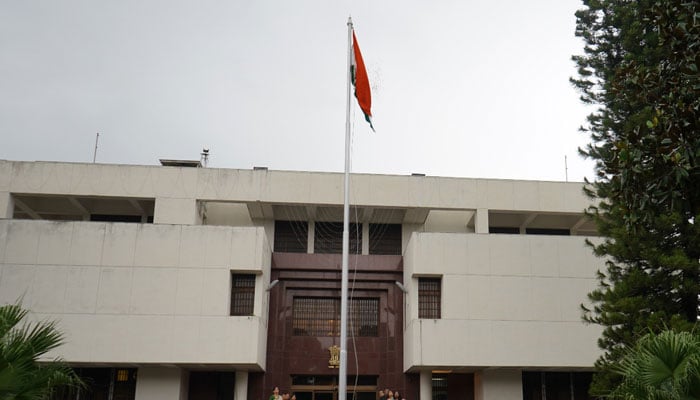
    Dr. Styanjal Pandey has formally assumed his responsibilities as the new Indian chargé d’affaires in Pakistan. He will serve as the head of the Indian High Commission in Islamabad. Pandey took charge of the position on August 1, 2026, according to diplomatic sources. His appointment comes after the completion of the tenure of former Indian chargé d’affaires Geetika Srivastava. Srivastava has completed her diplomatic assignment in Pakistan and has returned to India. After assuming his new responsibilities, Pandey also visited Pakistan’s Ministry of Foreign Affairs in Islamabad. During the visit, he held a formal meeting with Sajjad Haider, Director General for South Asia at the Foreign Office. The meeting was part of his initial diplomatic engagements after taking charge of the Indian mission. Pandey also met other relevant officials of the Ministry of Foreign Affairs. The meetings focused on diplomatic engagement and matters concerning bilateral relations between Pakistan and India. Pandey’s arrival marks a change in leadership at the Indian High Commission in Islamabad at a time when relations between the two neighbouring countries remain closely watched. As chargé d’affaires, he will oversee the functioning of the Indian diplomatic mission in Pakistan and represent New Delhi in official diplomatic engagements. Diplomatic sources said Pandey has begun his official engagements following his appointment. His meetings with Pakistani officials are expected to provide an opportunity for continued diplomatic communication between the two countries. The Indian High Commission in Islamabad plays a key role in maintaining official contacts between Pakistan and India.

  • |

    China and Japan give conflicting accounts of ministers’ ASEAN meeting

    China and Japan have offered different versions of whether their foreign ministers spoke during last week’s ASEAN meetings in the Philippines, highlighting the continued strain in relations between the two neighboring countries. Japanese Foreign Minister Toshimitsu Motegi said after the regional gathering that he had briefly spoken with Chinese Foreign Minister Wang Yi when the two crossed paths during the event. According to Motegi, the short conversation included discussion about bilateral relations, which Japan considers an important step in maintaining communication despite ongoing tensions. However, China’s Foreign Ministry rejected that account. Speaking at a regular press briefing on Monday, spokesperson Lin Jian said Wang Yi had no meeting scheduled with the Japanese side during his visit to Manila and insisted that no informal conversation or exchange took place at the venue. The conflicting statements reflect the growing diplomatic divide between Beijing and Tokyo, whose relationship has worsened significantly since last November. The decline followed comments by Japanese Prime Minister Sanae Takaichi regarding Taiwan, which China strongly condemned. Japan has expressed interest in improving ties with China and continues to support dialogue at every level. Motegi said maintaining communication is essential because both countries play a major role in preserving peace and stability across the region. Although he described his interaction with Wang as a discussion on bilateral relations, Japanese media reported that the exchange was limited to greetings and brief pleasantries. Prime Minister Takaichi said on Monday that contacts between the two governments remain active through various diplomatic channels, including the exchange Motegi referred to during the ASEAN meeting. The current tensions stem from remarks Takaichi made shortly after becoming prime minister. During a parliamentary session, she was asked whether a Chinese military blockade or attack on Taiwan could trigger Japan’s collective self defense policy. She replied that such a situation could threaten Japan’s survival and therefore might meet the legal conditions for military involvement alongside an ally, most likely the United States. China viewed those comments as crossing a major diplomatic red line. Beijing considers Taiwan part of its territory and strongly opposes any statement or action that it believes supports Taiwan’s independence or suggests foreign military involvement in a future conflict. Taiwan, meanwhile, governs itself independently despite China’s territorial claims. Although Takaichi later said she would avoid discussing specific military scenarios in future parliamentary debates, she has refused to withdraw her original remarks. Her position has continued to frustrate Beijing and has made efforts to restore stable relations more difficult. The dispute has affected more than diplomacy. Economic ties have also been impacted, with reports of fewer Chinese tourists visiting Japan and growing concern in both countries over each other’s expanding military capabilities. The disagreement over what happened during the ASEAN meeting has become another sign of the deep mistrust that continues to shape relations between Asia’s two largest economies.

  • | | |

    Iran says US military weaker as Hormuz crisis deep…

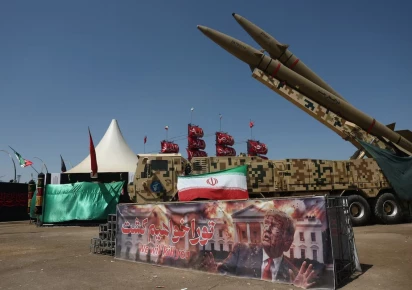
    TEHRAN: Iran has intensified its rhetoric against the United States as attacks on commercial shipping and stalled peace efforts deepen uncertainty over the future of the war, with Tehran warning that the strategically vital Strait of Hormuz will remain closed unless Washington accepts its conditions. Mohammad Reza Naqdi, an adviser to the commander of Iran’s Islamic Revolutionary Guard Corps, said in an interview with PBS that the US military had proved “weaker than what we perceived” during the five-month conflict. Naqdi said Iran had gained valuable battlefield experience during the war and claimed Tehran would continue to emerge victorious. “The longer this war lasts, the more experience we gain,” he said, arguing that Iranian forces had learned how to confront the US military through direct experience. His comments came as maritime traffic through the Strait of Hormuz dropped sharply. Shipping data showed only eight vessels were tracked through the waterway on Tuesday, below a 10-day average of about 12 and the lowest daily figure since August 5. Before the conflict, the strait typically handled around 130 to 140 vessels a day. The slowdown has heightened fears over global energy supplies because Hormuz is a crucial route for oil and liquefied natural gas shipments. The International Maritime Organization has previously warned of serious risks to vessels and seafarers operating in the area. Shipping attacks raise fresh alarm Tensions also spread to other maritime chokepoints. Four crew members were reportedly killed in a suspected Houthi attack on a cargo vessel in the Bab el-Mandeb Strait, while two Yemeni rescuers were also killed, according to reports cited in the source material. The US military separately said an MH-60 helicopter fired two Hellfire missiles at a Panama-flagged cargo ship after the vessel allegedly ignored warnings linked to a blockade of Iranian ports. Maritime sources said the incident occurred off Pakistan in the Gulf of Oman. The attacks have added to concerns that the conflict could disrupt shipping routes connecting the Gulf with the Red Sea and beyond. Iran sets conditions for reopening Hormuz Iranian security official Mohsen Rezaei said the Strait of Hormuz would not reopen unless Washington agreed to Tehran’s demands, including the release of frozen Iranian assets and an end to conflicts across the region. Iran’s parliament is also preparing legislation that would restrict military and commercial vessels from countries Tehran considers hostile from entering the Gulf without Iranian authorisation. The proposed law is intended to strengthen Iran’s control over the strategically important waterway. US President Donald Trump, meanwhile, has continued to combine threats with suggestions that negotiations could eventually produce a settlement. He has claimed the United States has control over the Strait and warned Iran against further escalation. Oil markets have already reacted to the uncertainty. Brent crude rose 1.4 per cent to $88.91 a barrel, while US crude gained 1.3pc to $83.20. Pakistan seeks diplomatic space Amid the worsening security situation, Pakistan has continued diplomatic engagement with Tehran. Interior Minister Mohsin Naqvi visited Iran and met President Masoud Pezeshkian, with both sides stressing the importance of strengthening bilateral political, economic, trade, cultural and security ties. Pezeshkian praised Pakistan’s commitment to closer relations and said Tehran was ready to expand cooperation with Islamabad. Naqvi said his visit was aimed at following up on understandings reached between the two countries and accelerating implementation of existing agreements. With military rhetoric rising, shipping routes under pressure and negotiations at an apparent impasse, the Strait of Hormuz remains at the centre of a crisis whose consequences could extend far beyond the Middle East.

Leave a Reply

Your email address will not be published. Required fields are marked *