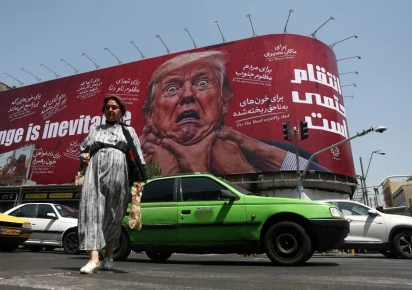
iran vows retaliation
| | | |

Iran vows retaliation after fresh US strikes

Iran has vowed to retaliate after the United States launched fresh overnight air strikes on multiple locations across the country, further escalating the conflict that has increasingly drawn several Middle Eastern nations into the fighting.

The Islamic Revolutionary Guard Corps (IRGC) issued a strong warning, saying those responsible for the attacks would face punishment. Iranian media quoted the force as saying that the “aggressor” would be held accountable.

The latest US strikes reportedly targeted several areas in southern Iran, including Bushehr province, which is home to the country’s only nuclear power plant. Explosions were also reported in Qeshm, Kish, Bandar Abbas, Abadan and other nearby locations.

Iranian officials said a residential building on Qeshm Island was struck during the attacks. Local authorities confirmed that three members of the same family, including a child, were killed. Two other children from the same family were injured and shifted to hospital for treatment.

The US military said the strikes were launched in response to recent Iranian missile attacks targeting American forces stationed in Jordan. Washington described the operation as a powerful response aimed at deterring further attacks on its troops in the region.

The military action came shortly after US President Donald Trump warned that Iran would face severe consequences following attacks on American military facilities.

Meanwhile, Jordan said its air defence systems intercepted and destroyed five Iranian missiles heading toward its territory. Officials said this was the fourth consecutive day that missiles or drones launched from Iran had been intercepted. No casualties or property damage were reported.

Iran also strongly condemned recent joint US-Saudi air strikes carried out in Iraq. Tehran described the attacks as a violation of Iraq’s sovereignty and territorial integrity. It accused Washington of widening the regional conflict and expressed support for the Iraqi government.

The Iraqi government also criticised the strikes and called on all parties to avoid further escalation. Iraqi officials stressed that the country should not become a battleground for regional disputes.

Israeli Prime Minister Benjamin Netanyahu said it was difficult to predict Iran’s next moves regarding the Strait of Hormuz. However, he argued that alternative energy routes could eventually reduce the strategic importance of the vital shipping lane.

The United Nations expressed deep concern over the renewed fighting. UN Secretary-General António Guterres urged both the United States and Iran to end hostilities and return to diplomatic negotiations. He also welcomed mediation efforts by regional countries seeking to reduce tensions.

The IRGC claimed that two oil tankers attempting to sail through what it described as an unauthorised route in the Strait of Hormuz turned back after a fire reportedly broke out on one vessel. Iranian officials insisted the country maintained control over the strategic waterway and warned that restrictions would remain as long as foreign military threats continued.

The United Arab Emirates also condemned drone attacks targeting Saudi oil facilities from Iraqi territory, calling them a serious violation of Saudi sovereignty and a threat to regional security.

The conflict has expanded rapidly over recent days, with military activity reported in Iran, Iraq, Jordan, Egypt and the Gulf region. The growing instability has increased concerns over regional security and disrupted global energy markets.

Oil prices climbed sharply as investors reacted to fears of further escalation and possible disruptions to shipping through the Strait of Hormuz, one of the world’s most important energy trade routes.
Similar Posts

  • | |

    Canada announces retaliatory tariffs as trade talks with US collapse

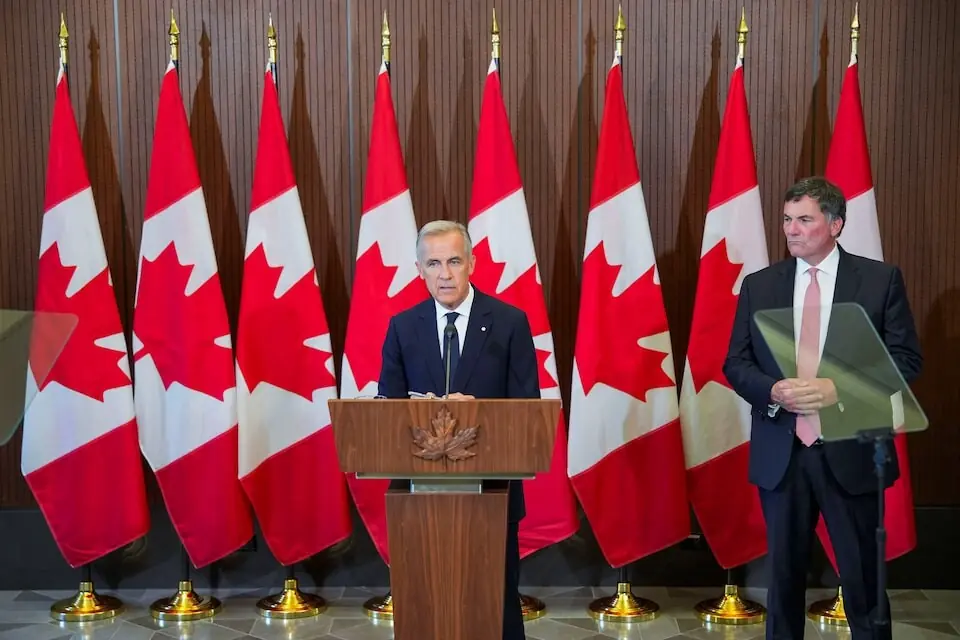
    OTTAWA: Canada has announced plans to impose new tariffs on a range of American products in response to steep duties introduced by US President Donald Trump on Canadian goods, marking another sharp deterioration in trade relations between the two North American neighbours. Prime Minister Mark Carney said on Saturday that Canada would adopt a “dollar-for-dollar” approach to Washington’s latest tariffs. The retaliatory measures are scheduled to take effect on September 8 and will cover products including US steel, electronics, appliances, agricultural equipment, pulp and paper and other goods. The announcement came after three days of intensive negotiations between Canadian and US officials ended without a trade agreement. Both sides blamed the other for the failure to reach a breakthrough, raising fresh uncertainty over the future of the United States-Mexico-Canada trade framework. Carney vows to defend Canadian economy Speaking at a press conference in Ottawa, Carney said Canada would respond to the US measures in an effort to shield workers, farmers, businesses and families from the economic impact of the new duties. “Canada will match Washington’s new tariffs dollar for dollar,” Carney said, stressing that Ottawa could not accept the conditions put forward by the US administration. Asked whether the dispute had effectively developed into a trade war, Carney responded in stark terms, saying Canada had been attacked and therefore had to defend its economic interests. The Canadian government said its countermeasures would target a broad selection of US products. Further details, including the specific goods affected and the tariff rates, are expected to be announced in the coming days. Carney also indicated that Ottawa would introduce support programmes for Canadian industries affected by the American duties. The assistance could remain in place for several years depending on the impact of the trade measures. US-Canada negotiations break down The latest dispute follows the collapse of negotiations that had been viewed as an opportunity to prevent a further escalation in tariffs. US Trade Representative Jamieson Greer described the failed talks as a missed opportunity for Canada and said Washington would proceed with measures responding to Canadian retaliation. He also suggested that no fresh negotiations were immediately planned. The White House and offices representing the US commerce secretary and trade representative did not immediately issue a detailed response to Canada’s announcement. The breakdown has created additional uncertainty for businesses operating across the US-Canada border, particularly industries that depend heavily on integrated North American supply chains. New US duties affect key Canadian exports The latest US tariffs apply to a range of Canadian exports, including wine, furniture, dairy products, cement, clothing, fishing equipment and hockey-related products. According to the Canadian government, the new duties affect approximately $20 billion worth of Canadian exports to the United States. Unlike some previous measures, the latest tariffs do not fully exempt products traded under the existing North American trade agreement. The new duties represent a relatively small share of Canada’s overall exports to the US, but officials and industry representatives warn that individual sectors could face significant pressure. Industries such as softwood lumber, wine, manufacturing and other export-oriented businesses could experience weaker demand, higher costs and potential employment losses if the dispute continues. Candace Laing, chief executive of the Canadian Chamber of Commerce, urged companies across the country to prepare for a prolonged period of uncertainty. Dispute over vehicles and trade conditions One of the most difficult issues during the negotiations involved the treatment of larger vehicles. Canadian negotiators reportedly sought to extend preferential tariff arrangements for light-duty vehicles to medium- and heavy-duty trucks. Washington opposed the proposal, according to people familiar with the negotiations. Carney said the US position could have placed Canadian-made models at a competitive disadvantage. He specifically pointed to vehicles produced in Canada, including Ford’s F-350, F-450 and F-550 trucks and General Motors’ Silverado. The Canadian prime minister also said some US proposals touched on issues involving Canadian culture, language and sovereignty, although he did not provide further details. Ontario backs Ottawa’s position Ontario Premier Doug Ford, a prominent critic of US tariffs, welcomed Carney’s decision to reject what he described as an unfavourable agreement. Ford said the proposed terms would have harmed Ontario’s automotive, steel and manufacturing industries, adding that he supported Ottawa’s decision to retaliate rather than accept a deal that he considered damaging to the province. Ontario is particularly exposed to disruptions in US-Canada trade because of its large manufacturing and automotive sectors and its close integration with American supply chains. Canada seeks new international partnerships The escalating dispute also comes as Canada seeks to reduce its economic dependence on the United States. Nearly 70% of Canadian exports are destined for the US market, making the country particularly vulnerable to changes in American trade policy. Carney has nevertheless pledged to strengthen Canada’s relationships with other countries and explore new trade and security partnerships. The prime minister was elected on a platform that included a tougher negotiating stance toward the Trump administration. His government has maintained that Canada should defend its economic interests while looking for opportunities to expand trade beyond its southern neighbour. Public opinion has also strengthened Ottawa’s position, with polling indicating that many Canadians oppose making major concessions to Washington. Conservative Party leader Pierre Poilievre, who leads the federal opposition, also called for national unity in response to the US tariffs.

  • | |

    Sindh government spokesperson accuses Hafiz Naeem …

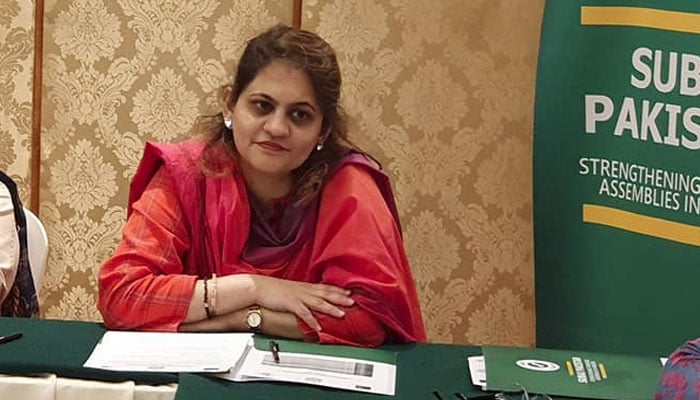
      Sindh government spokesperson Sadia Javed has accused Jamaat-e-Islami Pakistan Emir Hafiz Naeem ur Rehman of distorting the context of what she described as sincere national agreements reached in the past. In a statement issued from Karachi, Sadia Javed said that Hafiz Naeem was presenting previous national agreements in a misleading manner. She criticised the Jamaat-e-Islami leader for allegedly attempting to portray past understandings between political stakeholders in a way that did not reflect their original spirit or context. She questioned Hafiz Naeem’s position on electricity generated from Thar coal, asking why he remained silent about what she described as some of the cheapest electricity being produced through the country’s indigenous coal resources. “Why is Hafiz Naeem silent on the inexpensive electricity generated from Thar coal?” she questioned, while responding to his criticism of the Sindh government and the Pakistan Peoples Party (PPP). Sadia Javed also strongly rejected what she described as allegations against the Sindh government, saying that Hafiz Naeem had no justification for issuing what she termed “mafia certificates” to others. She challenged the Jamaat-e-Islami leader to examine his own political record before making accusations against others. According to her, political leaders should first reflect on their own actions and positions before questioning the credibility or performance of others. The Sindh government spokesperson further defended the provincial government’s policies and highlighted the importance of Thar coal in meeting Pakistan’s energy requirements. She suggested that criticism of the provincial government should be based on facts and a complete understanding of the agreements and projects under discussion. Another Sindh government spokesperson, Ghanhor Khan, also criticised Jamaat-e-Islami and Hafiz Naeem, accusing them of making allegations based on what he described as political hypocrisy. Ghanhor Khan said that making accusations against the PPP over the issue of Independent Power Producers (IPPs) was part of what he called Jamaat-e-Islami’s unsuccessful political strategy. He argued that the party was attempting to use the controversial issue of IPPs to create political pressure against the PPP and the Sindh government. The dispute comes amid renewed political debate over Pakistan’s electricity sector, particularly the cost of power generation, agreements with IPPs and the role of domestic energy resources. Political parties have frequently criticised successive governments over electricity prices, power-sector contracts and energy policies. The Sindh government has continued to highlight Thar coal as an important component of its energy strategy, while its political opponents have raised questions about governance, transparency and the broader impact of energy-sector agreements. The exchange between the Sindh government and Jamaat-e-Islami reflects growing political tensions over energy policy and the interpretation of past agreements. While Hafiz Naeem has criticised the government’s handling of the power sector, Sindh government representatives have rejected his allegations and questioned the consistency of his political position. Both sides have continued to defend their respective positions, with the Sindh government emphasising its energy initiatives and Jamaat-e-Islami maintaining its criticism of the power-sector policies.

  • | |

    Salma Hayek embraces grandmotherhood, shares 1st l…

    Hollywood star Salma Hayek has stepped into a new chapter of her life as a grandmother and has given fans a heartwarming first glimpse of her newborn grandson. The 59-year-old Oscar-nominated actress shared an emotional video on Instagram on Sunday, August 16, showing herself lovingly holding the baby and speaking to him in Spanish. Hayek revealed that the baby, born to her stepson François Pinault Jr. and his wife Lara Cosima Henckel von Donnersmarck, has been named François. However, the actress said she plans to affectionately call him “Panchito,” a nickname that she says the newborn already seems to enjoy. “We are blessed to welcome the fourth living generation of Francois,” Hayek wrote alongside the video, expressing her joy over the newest addition to the family. Hayek shares her 18-year-old daughter Valentina with her husband, François-Henri Pinault. She is also stepmother to Pinault’s three other children, Mathilde, François and Augustin. Although Hayek only recently made her grandmotherhood public, reports indicate that the baby was born in July. The new parents recently marked their first month as a family, sharing photographs of their baby boy, including sweet moments with Hayek. The Desperado and Frida star’s latest post has since drawn warm reactions from fans, who celebrated the actress’s joyful new role and the growing Pinault family.

  • | |

    Two sewer workers die of suffocation while cleanin…

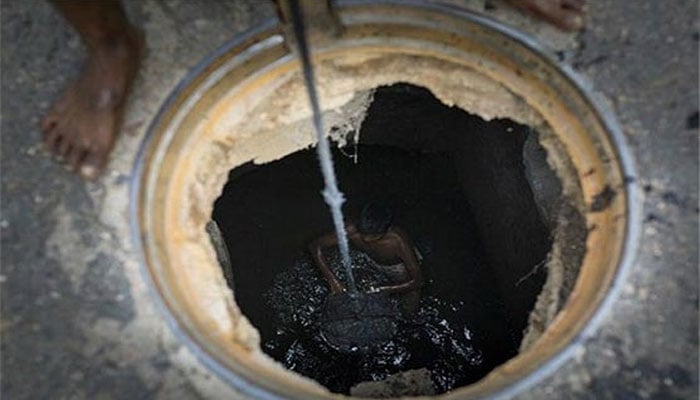
    MULTAN: Two workers of the Water and Sanitation Agency (WASA) lost their lives after suffocating while cleaning a sewer line near BCG Chowk in Multan, according to rescue officials. The incident occurred late at night when the two employees were carrying out cleaning work inside the sewer. Rescue sources said the workers became unconscious due to a lack of oxygen and were unable to escape. Local residents later retrieved the bodies from the sewer and handed them over to the families. Police said the workers had been performing the hazardous task without proper protective equipment, raising fresh concerns about the safety measures provided to sanitation workers engaged in sewer-cleaning operations. Authorities are expected to investigate the circumstances surrounding the incident and determine why the workers were allowed to enter the sewer without adequate safety gear.

  • |

    Brazil’s Lula announces fourth-term campaign…

    Brazilian President Luiz Inacio Lula da Silva has launched his campaign for a fourth term at a Workers’ Party convention in Sao Paulo, confirming it would be his final bid for office. Centring his platform on global affairs and national defence, the 80-year-old leader pledged to increase military spending and protect the country’s vast rare earth mineral reserves. He warned foreign powers that Brazil would not permit nations like China, France, or the United States to access these resources without respecting territorial sovereignty. Lula currently holds a slight lead in opinion polls against his likely main challenger, Senator Flavio Bolsonaro.

  • |

    Investigative report reveals new human smuggling network 

      An investigative report has revealed that human smuggling networks have established a new and well-organized operation to transport undocumented migrants from the United Kingdom to mainland Europe. The report highlights how criminal groups are exploiting vulnerable migrants by offering illegal travel services, often presenting them as safe and reliable routes to European countries where migrants believe they have a better chance of obtaining legal residency. According to the investigation, smugglers charge approximately £1,000 per person to transport migrants across the English Channel from the United Kingdom to continental Europe. Those wishing to continue their journey to Spain are reportedly asked to pay an additional £500. Spain has become an attractive destination because of recent immigration policies that are widely perceived as providing greater opportunities for undocumented migrants to regularize their legal status. The report explains that these criminal organizations have adopted sophisticated marketing strategies, using social media platforms to advertise their services. Their promotional posts resemble travel packages rather than illegal migration schemes. The advertisements often feature appealing images of famous European cities such as Berlin, Paris, Rome, and other popular destinations, creating the impression of a safe and exciting journey. By using professional-looking graphics and persuasive language, smugglers attempt to gain the trust of potential clients. The investigation further states that these groups specifically target individuals whose UK visas have expired or whose immigration status is uncertain. Many of these migrants fear deportation or have exhausted legal options to remain in Britain, making them particularly vulnerable to the promises made by smugglers. Criminal networks assure them that they can avoid detection by British immigration authorities and safely reach mainland Europe. According to the report, smugglers often claim that once migrants enter the Schengen Area, they may benefit from the freedom of movement available within many European countries. Although these claims can be misleading and depend on individual legal circumstances, they are frequently used to persuade migrants to undertake dangerous and illegal journeys. In some cases, migrants are transported across different European countries using taxis and privately hired vehicles, allowing smugglers to bypass traditional border checkpoints and reduce the likelihood of interception. A major reason Spain has become a central focus of these smuggling operations is the country’s efforts to address labor shortages. The report notes that the Spanish government has introduced a broad immigration regularization program designed to grant legal status to certain undocumented migrants under specific conditions. As part of this amnesty initiative, approximately 1.2 million applications have reportedly been submitted. Of these, nearly 600,000 individuals have received renewable residence permits, allowing them to live and work legally in Spain. Human smugglers have seized upon these developments as a selling point in their advertising campaigns. They present Spain as a destination where undocumented migrants have a greater chance of securing legal residency after arrival. However, experts caution that such claims are often exaggerated or oversimplified. Eligibility for legal status depends on meeting strict legal requirements, and many migrants may not qualify despite the promises made by smugglers. The report also emphasizes the role of social media in facilitating these illegal activities. Platforms that were originally designed for communication and business promotion are increasingly being exploited by organized crime groups to recruit clients, negotiate payments, and coordinate transportation. The ease of anonymous communication and the global reach of these platforms make it easier for smugglers to expand their operations while making it more difficult for law enforcement agencies to identify and dismantle their networks. Meanwhile, the British government continues to stress that it is intensifying efforts to combat international human smuggling organizations. Officials say that law enforcement agencies on both sides of the English Channel are working closely together to investigate criminal networks, disrupt their operations, and prosecute those responsible. The government has also strengthened border surveillance and tightened immigration enforcement in an effort to discourage irregular migration and reduce opportunities for smugglers to operate. Authorities argue that stronger international cooperation is essential because these criminal organizations often operate across multiple countries, making investigations more complex. Intelligence sharing, joint operations, and improved border security are considered key elements in tackling transnational human trafficking and smuggling. Migration experts, however, believe that enforcement measures alone may not be sufficient. They argue that as long as significant differences remain between the immigration policies of European countries, human smuggling networks will continue to identify new routes and exploit legal loopholes. Criminal groups are highly adaptable and frequently alter their methods in response to changing border controls and government policies. Experts also warn that undocumented migrants remain at serious risk of exploitation throughout their journeys. Many face dangerous travel conditions, financial exploitation, deception, and abuse at the hands of smugglers. Some migrants lose large sums of money, while others become victims of forced labor or other forms of exploitation after reaching their destinations. The investigation concludes that addressing the issue of human smuggling requires a comprehensive international strategy. In addition to stronger law enforcement, governments must improve legal migration pathways, enhance cooperation on immigration policies, and increase public awareness about the risks of relying on criminal smuggling networks. Without coordinated action across Europe, experts fear that these illegal operations will continue to evolve, placing thousands of vulnerable migrants at risk while generating significant profits for organized criminal groups.

Leave a Reply

Your email address will not be published. Required fields are marked *