kashmir beyond geographic
|

Kashmir is beyond a geographic location

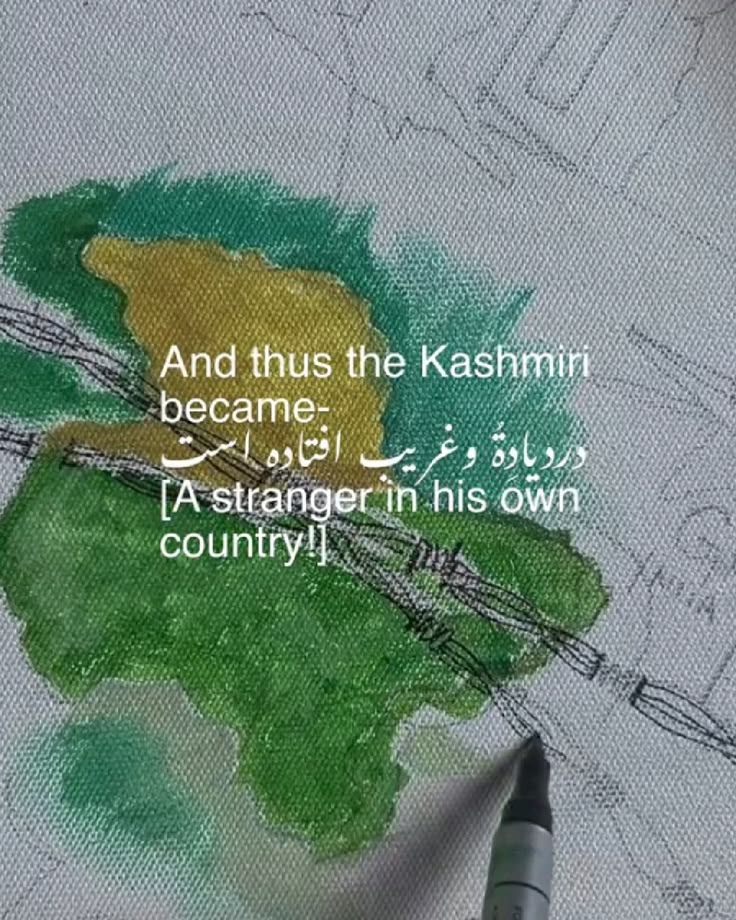
For centuries, Kashmir has occupied a singular space in the poetic imagination. It is a region defined by a paradox. On one hand, earthly paradise of pristine lakes, towering snow-capped peaks and crimson autumn chinars. On the opposite, centuries of political upheaval, exile and grief. In literature, Kashmir is beyond a geographic location. It is a metaphor for divine beauty, and a testament to human endurance. The poetic tradition of Kashmir took root in spiritual mysticism and poignant lyricism during the medieval period.

In the 14th century, the mystic poet Lal Ded pioneered the Vakh: four-line spiritual verse couplets in the Kashmiri vernacular. Her poetry bridged Hinduism and Sufism. It’s essence was inner purity, liberation, and the transcendence of physical suffering.

I searched for my Self until I grew weary,

No one, I thought, could reach this hidden knowledge.

I plunged into it, and there found the jar of nectar.

Habba Khatoon was known as the Nightingale of Kashmir. The 16th-century peasant-turned-queen introduced the Lol: a short, melodic form of love lyric. Her husband, King Yousuf Shah Chak, was exiled by the Mughal Emperor Akbar. Then, her poetry transformed into immortal songs of separation and longing.

The spring has come, but you have not returned;

My heart bleeds like the red bloom of the pomegranate.

During the Mughal and Persian era, Kashmir became synonymous with heavenly superiority. The iconic Persian couplet often attributed to Amir Khusrow or Mughal Emperor Jahangir summarized this adoration:

Agar firdaus bar roo-e zameen ast,

Hamin ast-o hamin ast-o hamin ast.

(If there is a paradise on the face of the earth, it is this, it is this, it is this.)

In the 20th century, Allama Iqbal, whose ancestors hailed from Kashmir, brought a nuanced perspective to this paradise. In works like Javid Nama, he celebrated Kashmir’s breath-taking landscape while lamenting the subjugation and suffering of its people. He reflected on the region’s immense dormant potential in Payam-e-Mashriq:

Pani tere chashmon ka hai aab-e-hayat,

Aur tere kohsar hain qasran-e-kibriya.

The water of your natural springs is the elixir of life,

And your mountain ranges are towering palaces of divine grandeur.

Iqbal’s verse moved beyond aesthetic wonder, using poetry as a call to dignity, resilience, and self-realization for the Kashmiris.

In modern poetry, Kashmir’s narrative shifted dramatically toward exile, memory, and war. No poet captured this transition more powerfully than Agha Shahid Ali (1949–2001). He wrote primarily in English while employing traditional Urdu ghazal forms. Ali gave voice to the tragedy of late 20th-century Kashmir. In his seminal collection, The Country Without a Post Office (1997), Kashmir becomes a landscape of ghost letters, curfews, and faded memories.

I write on fallen leaves and floating petals,

I write to you from a country without a post office.

Ali’s verse knits together global literary influences from Mahmoud Darwish to James Merrill. His poetry creates a poignant eulogy for a lost homeland.

Their memory is anything but green, an white-hot fire.

They burn down Kashmir in my veins.

From the ascetic reflections of Lal Ded to the haunting elegies of Agha Shahid Ali, poetry has served as Kashmir’s truest archive. A disputed land of changing maps, borders, and historical conflicts. It’s the poetry that preserves the living soul of the land. The verses anchor its beauty, its heartbreaks, and its unyielding hope. Kashmir remains forever intact. It is an eternal paradise written in ink, surviving through the memory and voices of its poets.

 

Similar Posts

  • Humans may live up to 194 Years

    How long can a human live? No one knows the exact answer but scientists believe there is a natural limit to the human lifespan. According to a study a person could possibly live as long as 194 years although reaching that age would be extremely rare. Researchers say living forever is not possible. Even if science discovers new ways to slow aging the body cannot avoid the natural damage that builds up over time. The study published in the journal Nature looked at how our DNA and genes change throughout life. Scientists found that many genetic changes are harmless but some damage cells and reduce how well they work. Over time this damage increases the risk of age related diseases. The researchers explained that these genetic changes cannot be completely prevented.  They happen naturally when cells divide and can also be caused by viruses certain chemicals and ultraviolet (UV) rays from sunlight. To estimate the maximum human lifespan the team created a scientific model that included reversible signs of aging while keeping permanent genetic changes in place. The results suggested that even if future technology slows the aging process the longest a human could live would likely be between 146 and 194 years. Scientists also noted that some organs such as the skin and liver regularly replace old cells helping repair some damage. However the heart and brain do not replace most of their cells making genetic damage in these organs much harder to reverse. The researchers stressed that genetic changes are not always harmful but as they build up over time they may gradually shorten a person’s lifespan. They also believe that other biological processes may affect aging and more research is needed to better understand them. At present the longest confirmed human lifespan belongs to Jeanne Calment of France who died in 1997 at the age of 122 years making her the oldest verified person in recorded history.

  • |

    Silence is the gateway to self-knowledge

    In a world governed by the constant impulse to broadcast every thought, quiet reflection has become a rare commodity. Modern culture often treats silence as an uncomfortable void. It is termed as a gap in conversation that must be immediately filled with idle chatter, opinions, or background noise. However, a insightful cultural piece by The Marginalian revisit Kahlil Gibran’s classic masterpiece, The Prophet. It reminds us that embracing silence is not an act of withdrawal, but a necessary passage toward understanding who we truly are. When Kahlil Gibran wrote The Prophet in 1923, he addressed human struggles that remain relevant today. In his discourse on speech, Gibran suggests that incessant talking often springs from a subtle internal distress. We speak most compulsively when we lose touch with the quiet rhythm of our own thoughts. When we can no longer sit comfortably with our internal world, language transforms from genuine connection into a mere distraction. Thus, rendering itself as verbal pastime designed to drown out silence. Gibran offers a vivid metaphor for this dynamic. He writes that thought is a bird of space that can spread its wings inside a cage of words. Yet, it remains incapable of real flight. By reducing complex feelings into rigid verbal formulas, we often constrain the depth of our experiences. Excessive talk can obscure deeper understanding rather than clarify it. It might replace genuine contemplation with superficial noise. Why do so many people flee from quiet moments? According to Gibran, chatter frequently serves as a shield against the intimidating clarity of solitude. In the stillness of being alone, external distractions vanish. This silence forces us to stand face-to-face with our unvarnished selves: our fears, insecurities, unresolved longings, and raw truths. When Gibran’s prophet-protagonist is asked to address the matter of talking, he responds: You talk when you cease to be at peace with your thoughts; And when you can no longer dwell in the solitude of your heart you live in your lips, and sound is a diversion and a pastime. And in much of your talking, thinking is half murdered. For thought is a bird of space, that in a cage of words may indeed unfold its wings but cannot fly.In a world governed by the constant impulse to broadcast every thought, quiet reflection has become a rare commodity. For many, this exposure feels uncomfortable, triggering an urgent desire to keep a conversation going. It takes genuine courage to endure the silence long enough to hear what our inner world is actually trying to tell us. Gibran’s perspective on self-knowledge carries a warning against over-categorizing human identity. He cautions against treating the human soul as a static math problem or a territory that can be fully mapped and measured. Rather than declaring, “I have found the absolute truth,” Gibran suggests a humbler, more open attitude: “I have found a truth” He describes the human spirit not as a straight line or a single rigid structure, but as a boundless sea unfolding like a lotus with countless petals. When we attempt to define our entire identity through fixed labels or rigid verbal definitions, we risk placing artificial boundaries around a psyche that is naturally vast and evolving. Real self-knowledge isn’t about arriving at a final conclusion about who we are… it is about maintaining a curiosity toward our own inner evolution. Reclaiming Quiet in a Hyper-Connected Age In an epoch characterized by constant connectivity, Gibran’s reflections serve as an urgent invitation to recalibrate our relationship with quietness. Silence is not the absence of sound. Rather, it is a space where creative intuition, emotional healing, and genuine self-awareness take root.  

  • Don’t throw away coriander stems

    Many people use only the leaves of fresh coriander (cilantro) while cooking and throw away the stems. However food and nutrition experts say the stems are packed with flavor and nutrients and can be a valuable part of many meals. Coriander stems contain vitamins A, C and K along with fiber which helps support healthy digestion. They also contain natural plant compounds that may support heart health and help the body function properly as part of a balanced diet. Instead of throwing them away here are some easy ways to use coriander stems in your kitchen. Add them to curries. Finely chop the stems and cook them with onions garlic and spices. As they soften they blend into the gravy and give the dish a richer flavor and fresh aroma. •Use them in soups and broths Wash the stems well and add them to vegetable or chicken soup while it cooks. They add extra flavor and nutrients to the broth. •Mix them into lentils and vegetables Add chopped coriander stems to the tempering with cumin garlic and other spices. This simple step can make lentils and vegetable dishes taste even better. Use them in marinades Blend the stems with ginger, garlic yogurt and spices to make a marinade for chicken fish meat or paneer. They help add a fresh herbal taste to the food. •Add them to chutneys and yogurt dips Blend coriander stems with mint garlic yogurt or roasted chickpeas to make a thick and flavorful chutney or dip that goes well with snacks and meals. If you have extra coriander stems wash and dry them then chop and store them in an airtight container or freezer bag. They can stay fresh in the freezer for several weeks and can be added directly to cooked dishes whenever needed. Experts say using coriander stems is a simple way to reduce food waste save money and add more flavor and nutrients to everyday meals.

  • Donated skin for younger looks

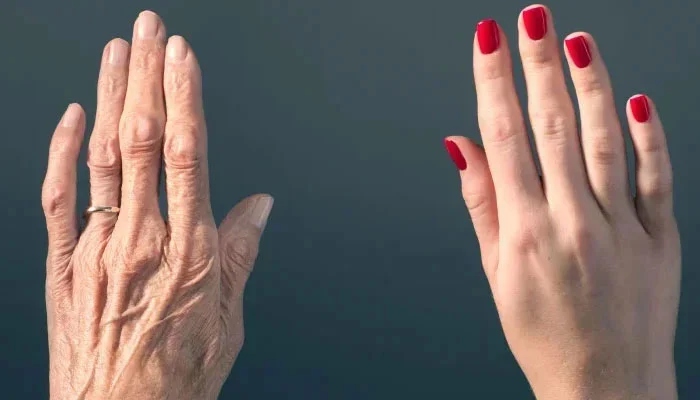
    Everyone ages and growing older is a natural part of life. While many people wish they could stay young forever a unique anti aging treatment in South Korea is attracting attention for its unusual approach. The treatment called RE20 (Return to Your Twenties) uses donated human skin from deceased donors. The skin is processed in a laboratory where all living cells are removed.  This leaves behind a clean tissue structure that can be safely used in cosmetic treatments. The final product contains collagen elastin hyaluronic acid and other ingredients. It is also combined with the patient’s own skin cells to help the body accept the treatment more easily. According to Dr. Kim Han Saem of DOD Dermatology Clinic removing the cells reduces the risk of the body rejecting the tissue or causing an allergic reaction. The treatment is injected into the face and neck. The company says it can reduce fine lines improve skin texture tighten pores and encourage the skin to produce more collagen and elastin making it look  younger. Many people who have tried the treatment have shared positive experiences. One Reddit user said their skin looked smoother and healthier just two weeks after the procedure. However the treatment has also raised ethical concerns.  Some critics question whether using donated human tissue for cosmetic purposes is appropriate. Experts also say more long term research is needed to confirm its safety. Besides South Korea the treatment is also available in Singapore and Japan.

  • Viral video highlights risky school route in India

    Millions of children around the world go to school every day but for some simply reaching the classroom can be a dangerous journey. In India a viral video has raised concerns after showing schoolchildren taking a highly risky route to get to school in Madhya Pradesh’s Vidisha district. The students reportedly have to jump across a river embankment to reach their school while strong water flows below. The dangerous journey has shocked people on social media and raised serious questions about the safety of the children. Parents and local residents say there is no safe route for the children to reach school forcing them to take the dangerous path every day. The situation becomes even more risky during the rainy season when the water level and flow increase. Locals have urged the authorities to inspect the area immediately and provide a safe and permanent route for the students instead of waiting for a tragic accident to happen.

  • Forgotten memories may not be gone

    New research suggests that some memories that seem to be forgotten may not completely disappear from the brain.  Instead they may remain stored in a quiet state and can sometimes return when a person receives the right reminder or is placed in a familiar environment. Scientists studied fruit flies and found that memories could become active again when the flies were placed in an environment similar to the one where the memory was first formed. This suggests that some memories may not be erased with time. They may simply become harder for the brain to access. Human memory is a very complex system. Some memories become weaker over time while others may suddenly return after seeing a familiar place, smelling a certain scent or noticing another related signal. However researchers still do not fully understand why the brain sometimes creates false memories along with real ones.  Understanding how the brain brings back true memories and creates inaccurate ones remains an important question for scientists. The findings could  help researchers better understand how memories are stored in the brain and how different surroundings or reminders can help bring forgotten memories back.

Leave a Reply

Your email address will not be published. Required fields are marked *