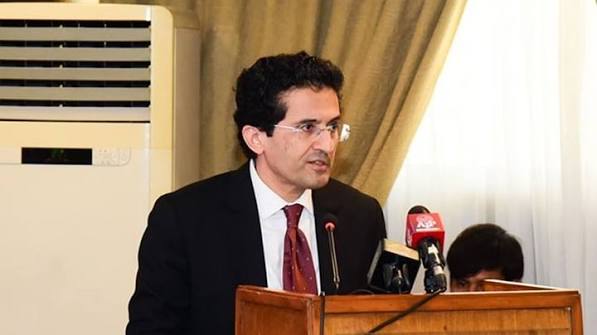
pakistan ranks fifth
| |

Pakistan ranks fifth globally in viral Hepatitis b…

Pakistan has been ranked among the countries with the highest number of viral hepatitis cases worldwide, with the country standing fifth globally in total hepatitis burden, according to the Pakistan Medical Association (PMA). The warning was issued on the occasion of World Hepatitis Day, highlighting the growing public health challenge caused by hepatitis B and C infections.

PMA Secretary General Dr Abdul Ghafoor Shoro said Pakistan has one of the world’s largest burdens of Hepatitis C Virus (HCV), with around 10 million people suffering from chronic Hepatitis C. In addition, an estimated 3.8 million people are living with chronic Hepatitis B (HBV), bringing the total number of people affected by viral hepatitis in the country to approximately 13.8 million.

According to the PMA, Pakistan’s hepatitis burden is higher than many countries and is exceeded only by China, India, Indonesia, and Nigeria. The national prevalence rate of Hepatitis C is estimated between 4.8 and 7.5 percent, while Hepatitis B affects around 1.1 to 1.7 percent of the population.

Health experts warned that untreated hepatitis can lead to serious complications, including liver cirrhosis and liver cancer, which collectively claim more than 37,000 lives in Pakistan every year.

Dr Shoro stated that Pakistan contributes a significant share of new global Hepatitis C infections due to unsafe medical practices. He highlighted that thousands of new infections occur annually because of the reuse of unsterilized syringes, unsafe medical equipment, and unscreened blood transfusions.

Other major causes of hepatitis transmission include unsafe surgical procedures, dental treatments, tattooing, body piercing, shaving with contaminated razors at barber shops, and practices carried out by unqualified healthcare providers. Low coverage of the mandatory Hepatitis B birth-dose vaccine has also remained a concern.

President Asif Ali Zardari said hepatitis remains one of the country’s most serious public health challenges but emphasized that it can be prevented and treated through early detection, timely medical care, and collective efforts. He stressed the need for strict regulation of unsafe healthcare practices and awareness campaigns to protect citizens.

National Assembly Speaker Sardar Ayaz Sadiq also highlighted the importance of prevention, early diagnosis, and access to quality treatment. He said strengthening the healthcare system and improving public awareness are essential steps toward reducing the disease burden.

Health authorities and public representatives called for greater cooperation between government institutions, healthcare providers, and communities to control hepatitis transmission and improve treatment access across Pakistan.

Similar Posts

  • | | |

    Dar targets $20bn Pakistan-US trade

    Deputy Prime Minister and Foreign Minister Ishaq Dar has expressed confidence that Pakistan and the United States can increase bilateral trade in goods to $20 billion within the next five years. Dar said Pakistan’s trade in goods with the US stood at $9.4 billion during the last fiscal year. He described the US as Pakistan’s largest single-country export market. Addressing a US Congressional Delegation and American business representatives, Dar said stronger trade and investment ties could create new opportunities for companies in both countries. He said closer economic cooperation could also generate employment, encourage innovation and support long-term economic growth. Dar highlighted several areas where Pakistan and the US could expand commercial cooperation. These include information technology, artificial intelligence, energy, manufacturing, agriculture and critical minerals. He said Pakistan is already an important buyer of American cotton and soybeans. The country is also becoming a growing market for US hydrocarbons. At the same time, Pakistan’s increasing demand for advanced machinery, technology and capital goods could create opportunities for American manufacturers, he added. Dar said the presence of more than 80 US companies in Pakistan demonstrated growing confidence in the country’s market and economic potential. He welcomed the interest shown by American companies in Pakistan’s technology, energy, critical minerals and defence sectors. The foreign minister also pointed to the US Exim Bank’s $1.25 billion financing for the Reko Diq project as an indication of increasing US confidence in Pakistan’s investment prospects. Dar encouraged American businesses to establish partnerships with Pakistani companies and explore long-term investment opportunities. He said Pakistan had improved its infrastructure over the past decade through modern highways, ports and logistics networks. These developments, he added, had strengthened the country’s position as a potential trade and investment gateway. The government is also working to make the business environment more investor-friendly. Dar said regulatory procedures had been simplified to reduce bureaucratic delays and make licensing and approvals easier. He said Pakistan wanted to deepen cooperation with the US across both goods and services. Technology, AI, energy, manufacturing, critical minerals and agriculture were among the sectors identified for greater collaboration. Dar also highlighted the broader improvement in Pakistan-US relations. He said frequent high-level contacts under Prime Minister Shehbaz Sharif and US President Donald Trump had helped strengthen bilateral engagement. He said his meetings with US Secretary of State Marco Rubio had also focused on strengthening relations and discussing regional developments. The foreign minister stressed that parliamentary engagement was equally important. He said regular interaction between lawmakers could improve mutual understanding and strengthen institutional ties. Dar said Pakistan’s engagement with the US Congress had increased significantly over the past year. The interaction has included lawmakers from both political parties and key congressional committees. The two countries also discussed regional security and stability. Dar said stronger Pakistan-US relations could contribute to peace and stability in the wider region. He also recalled Pakistan’s role in facilitating dialogue between the US and Iran. Dar said Islamabad remained committed to dialogue, diplomacy and peaceful solutions to regional disputes. The foreign minister separately received a US congressional delegation comprising Representatives Ryan Zinke and Michael James Baumgartner. During the meeting, both sides discussed ways to expand cooperation in trade, investment, IT, energy and other areas. The US lawmakers acknowledged the contribution of the Pakistani community to American society and economy. They described the diaspora as an important link between the two countries.

  • |

    Punjab to modernize Civil Defence with Rs500m equipment

    Lahore – Under the vision of Punjab Chief Minister Maryam Nawaz Sharif for a “Safe Punjab,” the Civil Defence Resilience Corps is being modernized in line with contemporary requirements to help establish a safer society and respond effectively to emergencies. In this regard, Punjab Home Secretary Dr. Ahmed Javed Qazi visited the Civil Defence Headquarters where a smartly turned-out Civil Defence contingent presented him with a guard of honour. The Home Secretary inspected a display of modern equipment and also inaugurated a renovated block of the headquarters. On the occasion, Director Civil Defence Tasneem Ali Khan and Zigham Nawaz briefed the Punjab Home Secretary on the capacity, modern equipment and rescue capabilities of Civil Defence. The modern equipment displayed by Civil Defence included aerial-lift drones, IED bomb-disposal drones, bomb-disposal robots, anti-drone guns, electric sirens, bomb-disposal suits, bomb blankets, mine detectors, snake cameras, hook-and-line kits, mobile bomb-disposal bikes and advanced firefighting equipment. Speaking on the occasion, Punjab Home Secretary Dr. Ahmed Javed Qazi said that the Civil Defence Resilience Corps is an important step toward a safe, capable and responsible Punjab. He said the Punjab government is taking practical measures to bring Civil Defence in line with the requirements of the modern era. He said that modern equipment worth Rs500 million has been purchased to modernize Civil Defence. He added that the advanced aerial-lift drones are capable of rescuing people trapped in difficult-to-access areas and can carry loads of up to 200 kilograms. Dr. Ahmed Javed Qazi said that Civil Defence is equally important during both peace and wartime and serves as the first line of response for district administrations during any emergency situation. The Punjab Home Secretary said that the Chief Minister has increased the honorarium of Civil Defence volunteers in recognition of their services and performance. He urged citizens to join Civil Defence as volunteers according to their abilities. According to him, more than 350,000 citizens have so far registered as Civil Defence volunteers. The Home Secretary said that all Civil Defence volunteers are being provided with Basic Life Support (BLS) training so that they can provide timely assistance to save lives during natural disasters, accidents and medical emergencies. He appealed to citizens to become part of Civil Defence by registering as volunteers through the online portal VCD.HOME.GOP.PK.

  • | |

    Tom Holland reveals the surprising secret behind h…

    Tom Holland has offered fans a refreshingly honest look at his skincare routine, admitting that he relies almost entirely on wife Zendaya when it comes to looking after his skin. During a recent interview, the Spider-Man star revealed that he has very little knowledge about the products he uses and simply trusts Zendaya to handle that part of their daily routine. The 30-year-old actor confessed that he does not even know the name of the moisturizer he applies every day because Zendaya is the one who buys all of their skincare products. Holland joked that he simply follows her lead, explaining that she has a much better understanding of skincare than he does. “I don’t even know what it’s called,” Holland said with a laugh, adding that Zendaya takes care of purchasing everything they need. His candid remarks quickly amused fans, many of whom praised the couple’s relatable dynamic. Although Holland admitted he is far from being a skincare expert, he emphasized that maintaining healthy skin has become increasingly important because of his career. Long filming schedules, heavy makeup and frequent travel can all take a toll on an actor’s complexion, making a consistent routine essential. Instead of researching products himself, however, Holland happily leaves those decisions to his wife. The actor also opened up about wearing makeup for film and television projects, explaining that it has become a normal part of his job. Whether preparing for action-packed scenes or walking the red carpet, professional makeup helps ensure he looks camera-ready under bright studio lights and high-definition cameras. Holland and Zendaya have become one of Hollywood’s most beloved couples since first meeting while filming Spider-Man: Homecoming in 2016. Over the years, both stars have spoken warmly about supporting each other’s careers, and Holland’s latest comments offered another glimpse into their everyday life together. Fans appreciated the actor’s honesty and sense of humor, with many saying his admission made the couple seem even more down-to-earth. The interview comes during a busy period for Holland as he promotes Spider-Man: Brand New Day. The actor has recently attended several promotional events alongside Zendaya, where the pair have continued to charm fans with their playful interactions and genuine affection for one another. Their close partnership has become one of the entertainment industry’s most admired relationships. While Holland may not know the names of his favorite skincare products, he made it clear that he trusts Zendaya’s judgment completely. His lighthearted confession highlighted the couple’s easygoing relationship and showed that, sometimes, the simplest beauty routine is letting someone you trust take the lead. As fans continue to celebrate their romance, Holland’s candid comments have once again proven why the pair remain among Hollywood’s most relatable stars.

  • | |

    Internet slams Naeem Hanif over remarks on Mohammad Ahmed.

    Journalist Naeem Hanif has come under fire on social media after commenting on veteran actor and writer Syed Mohammad Ahmed’s recent claims of being mistreated by younger actors on a drama set. His remarks sparked widespread criticism, with many internet users accusing him of being disrespectful toward a senior artist. Syed Mohammad Ahmed recently revealed that he had faced inappropriate behaviour from younger actors during a shoot. In his interview, he named actors Fahad Sheikh, Faizan Sheikh, and Jenan Hussain, saying they repeatedly made fun of him and crossed professional boundaries on set. The veteran actor’s statements received overwhelming support from fans and fellow celebrities, many of whom praised him for speaking openly about the issue. Ahmed later clarified that he had not intended for the interview to be uploaded publicly. However, once the video surfaced online, it quickly went viral, bringing the alleged incident into the spotlight and triggering a wider conversation about respect for senior artists in Pakistan’s entertainment industry. Reacting to the controversy, Naeem Hanif argued that Syed Mohammad Ahmed had exaggerated the situation. According to Hanif, actors on drama sets often joke with one another, and the incident should not have been presented as a major issue. During his analysis, Hanif said, “Muhammad Ahmed, before you make such a big thing, understand where you are. You are not a lecturer. You are not teaching an Islamiat lecture in a university that you got so offended by someone making fun of you.” He further added, “What is your venue where this all happened? You are doing a drama. You are doing acting. You are in showbiz.” His comments quickly drew backlash online, with many social media users saying his remarks were insensitive and failed to acknowledge the importance of treating senior colleagues with dignity and respect, regardless of the workplace. One user criticised Hanif for disrespecting an elder, saying it was shameful for someone calling himself a journalist to speak in such a manner about a veteran artist. The commenter also questioned his credibility as a journalist. Another social media user accused Hanif of having double standards. The commenter argued that if he believed interactions with unrelated women in the media were inappropriate, he should also reflect on his own work in television and digital media. The user questioned why he was preaching morality while continuing to benefit from the same industry. Many others echoed similar views, stating that professionalism should never be compromised and that no one, especially a senior actor with decades of experience, deserves to be ridiculed on a professional set. The debate continues online, with a large number of fans standing by Syed Mohammad Ahmed and maintaining that respect for senior artists should remain a fundamental value within the entertainment industry.

  • | |

    Petroleum minister defends daily fuel pricing mech…

    Petroleum Minister Ali Pervaiz Malik defended the government’s new daily fuel pricing system on Thursday, telling lawmakers it has ended a practice under the previous mechanism in which oil companies restricted petrol supplies ahead of expected price revisions. The federal government announced on July 17 that petroleum product prices would now be reviewed and notified daily rather than weekly, a shift introduced as renewed tensions between the United States and Iran continue to unsettle global oil markets and raise concerns about fuel supply security. The daily system followed an earlier move from fortnightly to weekly price revisions that had been introduced during the first phase of the US Iran conflict. The change has faced pushback from transporters, businesses and opposition lawmakers, who argue that frequent price adjustments create uncertainty, push up transport and freight costs, and make it harder for businesses and households to plan their spending. Petrol pump owners had threatened a nationwide strike over the issue before suspending their protest after receiving government assurances that their concerns would be addressed. Speaking at a meeting of the National Assembly Standing Committee on Petroleum, chaired by Umar Farooq, Malik said petrol and diesel prices still rely on a seven day rolling average of international market prices, even though the pricing is now updated daily instead of fortnightly. He said the government has delegated pricing authority to the Oil and Gas Regulatory Authority, which coordinates with stakeholders before finalizing prices, and noted that the pricing methodology and benchmark figures are published on the regulator’s website. He added that Prime Minister Shehbaz Sharif had instructed the regulator to also publish the formula in Urdu to improve transparency. Malik explained that international benchmark prices are drawn from Platts, with government taxes and oil company margins added afterward to determine domestic retail prices. He said the switch to daily pricing corrected a flaw in the earlier weekly system, under which companies could anticipate price movements from an emerging three day average and adjust supply accordingly. Under the new approach, he said, prices are set daily based on the seven day average, removing that predictability. Committee members pushed back sharply on the new mechanism. Senator Saifullah Abro described it as slow poison for consumers, saying the public has no way of knowing what today’s price is, let alone tomorrow’s. He questioned recent price increases, pointing out that international crude prices rose from 76 dollars a barrel on July 11 to 82 dollars on July 17, and asked how domestic fuel prices had climbed by 30 rupees over the same period. Malik responded that the comparison was misleading since domestic fuel prices track refined petroleum products rather than raw crude oil. The minister also defended the existing tax structure, saying the petroleum levy remains lower than the rate imposed during the height of the conflict period. He said reducing the levy further would be difficult without agreement from the International Monetary Fund, though he suggested an alternative revenue source could eventually make a reduction feasible. Ogra officials also addressed the committee in support of the new system. Acting Chairman Nabeel Ahmed Awan said daily prices remain based on the seven day average, meaning that both price declines and increases in the global market are passed on to consumers gradually over a week. He said the new mechanism removes opportunities for short term profiteering by preventing traders from creating false market impressions to turn a profit. Officials also told the committee that customs duty on petrol currently stands at 18.11 rupees per litre. The session grew tense at points, with committee members criticizing Ogra for failing to circulate a working paper ahead of the meeting. When the acting chairman asked what a working paper was, Abro rebuked him sharply, questioning his familiarity with basic regulatory procedure. Malik also told the committee that the process to appoint a permanent Ogra chairman had begun on schedule, but that interviews failed to produce a suitable candidate, prompting officials to restart the search. The government had reshuffled Ogra’s leadership in April, replacing then acting chairman Shahzad Iqbal with Nabeel Ahmed Awan, a senior Pakistan Administrative Service officer and secretary of the Establishment Division, who was appointed to a three month term as the search for a permanent chairman continues.

  • |

    Pakistan, Iran agree to boost bilateral trade to $10 billion

    ISLAMABAD: Pakistan and Iran have reaffirmed their commitment to significantly strengthen economic cooperation by increasing bilateral trade to $10 billion and accelerating efforts to finalize a long-awaited Free Trade Agreement (FTA). The understanding was reached during the 10th meeting of the Pakistan-Iran Joint Trade Committee, held in Islamabad on Tuesday. The session was jointly chaired by Federal Minister for Commerce Jam Kamal Khan and Iranian Minister for Industry, Mine and Trade Dr. Mohammad Atabak, with senior officials from both countries participating in discussions aimed at expanding trade and investment ties. During the meeting, both sides reviewed the current state of bilateral trade and explored practical measures to unlock its full potential. The two countries agreed that stronger economic integration, improved connectivity, and enhanced cross-border cooperation are essential for achieving the ambitious trade target of $10 billion. Speaking on the occasion, Commerce Minister Jam Kamal said Pakistan and Iran enjoy longstanding historical, cultural, and religious ties, but stressed that these relations should now be translated into a robust economic partnership. He emphasized that expanding trade and investment would bring mutual economic benefits and contribute to regional prosperity. The minister underscored the importance of completing the Pakistan-Iran Free Trade Agreement at the earliest opportunity, describing it as a key step toward facilitating commerce between the neighboring countries. He also called for the removal of bottlenecks affecting border logistics, customs procedures, and cargo movement to ensure smoother and faster trade flows. Jam Kamal noted that bilateral trade could be further enhanced through the development of joint border markets, greater use of electronic data interchange systems, and closer coordination between relevant government agencies. He said modernizing trade infrastructure and simplifying customs procedures would help businesses on both sides benefit from increased commercial activity. The Joint Trade Committee also agreed to formulate a practical roadmap aimed at strengthening economic cooperation across multiple sectors. The roadmap will focus on trade facilitation, infrastructure development, logistics, and investment opportunities while encouraging closer collaboration between the public and private sectors. Iranian Minister Dr. Mohammad Atabak described Pakistan as one of Iran’s key long-term strategic trade partners and expressed confidence that bilateral economic relations could expand considerably in the coming years. He highlighted the importance of increasing regional trade and logistics cooperation, particularly by utilizing Pakistan’s Karachi and Gwadar ports to improve connectivity and facilitate the movement of goods. Dr. Atabak also voiced optimism about the early conclusion of the Pakistan-Iran Free Trade Agreement, saying it would create new opportunities for businesses in both countries. He added that cooperation in electricity trade, transport networks, and regional connectivity projects could open new avenues for economic growth and strengthen commercial links across the region.

Leave a Reply

Your email address will not be published. Required fields are marked *