internet slams naeem
| |

Internet slams Naeem Hanif over remarks on Mohammad Ahmed.

Journalist Naeem Hanif has come under fire on social media after commenting on veteran actor and writer Syed Mohammad Ahmed’s recent claims of being mistreated by younger actors on a drama set. His remarks sparked widespread criticism, with many internet users accusing him of being disrespectful toward a senior artist.
Syed Mohammad Ahmed recently revealed that he had faced inappropriate behaviour from younger actors during a shoot. In his interview, he named actors Fahad Sheikh, Faizan Sheikh, and Jenan Hussain, saying they repeatedly made fun of him and crossed professional boundaries on set. The veteran actor’s statements received overwhelming support from fans and fellow celebrities, many of whom praised him for speaking openly about the issue.
Ahmed later clarified that he had not intended for the interview to be uploaded publicly. However, once the video surfaced online, it quickly went viral, bringing the alleged incident into the spotlight and triggering a wider conversation about respect for senior artists in Pakistan’s entertainment industry.
Reacting to the controversy, Naeem Hanif argued that Syed Mohammad Ahmed had exaggerated the situation. According to Hanif, actors on drama sets often joke with one another, and the incident should not have been presented as a major issue.
During his analysis, Hanif said, “Muhammad Ahmed, before you make such a big thing, understand where you are. You are not a lecturer. You are not teaching an Islamiat lecture in a university that you got so offended by someone making fun of you.”
He further added, “What is your venue where this all happened? You are doing a drama. You are doing acting. You are in showbiz.”
His comments quickly drew backlash online, with many social media users saying his remarks were insensitive and failed to acknowledge the importance of treating senior colleagues with dignity and respect, regardless of the workplace.
One user criticised Hanif for disrespecting an elder, saying it was shameful for someone calling himself a journalist to speak in such a manner about a veteran artist. The commenter also questioned his credibility as a journalist.
Another social media user accused Hanif of having double standards. The commenter argued that if he believed interactions with unrelated women in the media were inappropriate, he should also reflect on his own work in television and digital media. The user questioned why he was preaching morality while continuing to benefit from the same industry.
Many others echoed similar views, stating that professionalism should never be compromised and that no one, especially a senior actor with decades of experience, deserves to be ridiculed on a professional set.
The debate continues online, with a large number of fans standing by Syed Mohammad Ahmed and maintaining that respect for senior artists should remain a fundamental value within the entertainment industry.
Similar Posts

  • |

    Pakistan’s Young Taekwondo stars shine in Singapore

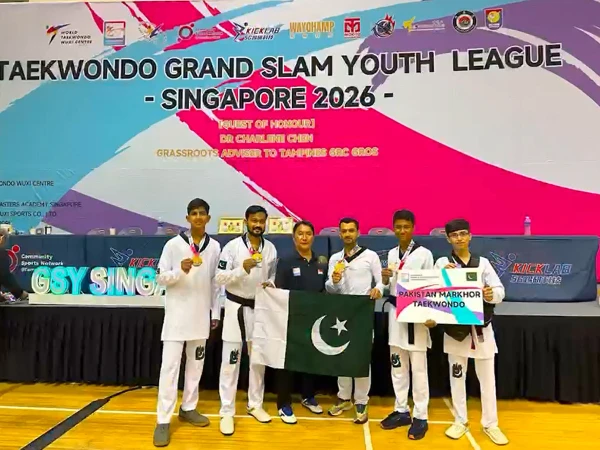
    Pakistan’s young taekwondo athletes delivered a memorable performance in Singapore, returning from the Grand Slam Youth Taekwondo League with an impressive haul of five medals, including three golds. The international youth competition was held in Tampines, Singapore, from July 24 to 26, bringing together talented athletes from more than 13 countries. The event provided young competitors with a valuable platform to test their skills against international opposition. The Singapore edition was also officially listed as the second edition of the Grand Slam Youth League. Pakistan’s Qadeer Khan, Wajahat Ali Khan and Arham Manaf emerged as the standout performers, securing gold medals in their respective categories after impressive displays. Their victories highlighted the growing confidence and ability of Pakistan’s young taekwondo athletes on the international stage. Competing against athletes from a wide range of countries, the Pakistani trio demonstrated determination, speed and technical skill to finish at the top. The country’s medal tally was further strengthened by Ayan Miraj and Syed Ahmed Ayaz, who claimed bronze medals after strong performances. The five-medal haul represents an encouraging development for Pakistan’s youth taekwondo programme. Beyond the medals themselves, the results offer a glimpse of the potential emerging among the country’s younger athletes. The Grand Slam Youth League is designed to give young competitors high-level international experience while allowing them to showcase their abilities in a competitive environment. For Pakistan, the Singapore success could prove an important confidence boost as these young athletes continue their development. Their performances have not only raised the national flag on the international stage but also underlined the depth of talent available in Pakistan’s next generation of taekwondo competitors.

  • |

    Javeria Saud calls out obsession with surgeries and size-zero

    Pakistani actress and television host Javeria Saud has spoken openly about the growing obsession with cosmetic procedures, beauty filters, and extremely slim body figures among women. Known for her outspoken personality and candid views, the actress recently addressed the topic during a podcast, where she questioned the pressure many women feel to change their natural appearance. Javeria Saud has remained a familiar face in the Pakistani entertainment industry for years. Alongside acting and hosting, she has also worked as a producer and earned recognition for her performances in several popular television dramas, including Yeh Zindagi Hai, Nand, Paristan, Baby Baji, Baby Baji Ki Bahuwain, and Muhabbat Starangi. She has also been appreciated for her appearances in projects such as Bajjo and Muhabbat Aur Mehngai. During the podcast, Javeria discussed how beauty standards have changed and how social media has contributed to people’s desire to alter their looks. She revealed that even her own children do not approve when she uses filters on her pictures. According to Javeria, her children often question why she feels the need to use filters and remind her that people should be comfortable with the way they were naturally created. She shared that her children have even gone as far as deleting the application she uses for editing her pictures. However, she humorously admitted that she eventually downloads the app again. The actress also criticized what she described as an increasing fascination with Bollywood-inspired beauty standards. She claimed that many women in Pakistan want to resemble famous Indian actresses such as Kajol, Kareena Kapoor and Katrina Kaif, which can lead some of them to consider cosmetic procedures or other ways of changing their facial features. Javeria also spoke about the pressure surrounding body size, particularly the trend of trying to achieve a “size-zero” figure. She questioned the idea that becoming extremely thin automatically makes a person more attractive. She particularly expressed concern about women over the age of 30 who follow strict diets in an attempt to become extremely slim. According to her, excessive dieting can result in the loss of muscle and collagen, which may affect a person’s overall appearance and make them look unhealthy rather than glamorous. Using a humorous comparison, Javeria said that women can end up looking like a “dehydrated mango” when they lose too much weight and their skin and body lose their natural fullness. Her comments have once again highlighted the ongoing conversation around beauty standards, cosmetic enhancements, social media filters and body image. While cosmetic procedures and dieting remain personal choices, Javeria’s remarks encourage women to reconsider the pressure to achieve unrealistic beauty ideals and to appreciate their natural appearance.

  • | |

    Saima Noor’s epic transformation breaks the internet

    Veteran Pakistani actress Saima Noor has become the centre of attention on social media after videos showcasing her remarkable fitness transformation and youthful energy went viral. The 58-year-old actress was seen performing intense workout routines, including squats, kettlebell swings and other strength-training exercises. Her dedication to fitness drew widespread praise from fans, who admired her stamina, strength and disciplined lifestyle. Other viral clips also showed Saima Noor visiting a salon, where many social media users noticed her visible weight loss and refreshed appearance. Fans described the actress as “evergreen” and applauded her youthful looks. Some users jokingly remarked that the videos appeared so impressive they looked as though they had been created using artificial intelligence (AI). The renewed attention also brought back clips from Saima Noor’s earlier interviews, in which she spoke openly about her fitness journey and commitment to a healthy lifestyle. The actress revealed that there was a time when she felt she had become overweight, prompting her to make significant lifestyle changes to improve her health and overall well-being. Saima Noor said she does not follow strict or complicated diet plans. Instead, she prefers eating balanced meals in moderate portions and has incorporated intermittent fasting into her daily routine. She credited regular exercise, mental well-being and a disciplined lifestyle for helping her regain her fitness, boost her energy levels and maintain a healthy, youthful appearance.

  • |

    PCB unveils major domestic cricket overhaul ahead of ODI World Cup

    LAHORE: The Pakistan Cricket Board (PCB) has announced a significant revamp of its 2026–27 domestic cricket season, introducing structural changes aimed at strengthening competition and preparing players for the upcoming ICC Men’s ODI World Cup. The new domestic calendar places greater emphasis on high-quality white-ball cricket while also reshaping Pakistan’s premier first-class competition to improve competitiveness across all formats. According to the PCB, the season will begin on August 11 in Multan with the National Champions Cup, a four-team one-day tournament. Squads for the competition will be selected by the national selection committee, providing emerging players with an opportunity to impress in the 50-over format ahead of the global tournament. The board has also confirmed that the domestic season will feature two List A competitions. Following the National Champions Cup, teams will compete in the President’s Cup, giving players additional match practice and selectors a broader pool of performances to evaluate before international assignments. One of the biggest changes announced is the expansion of regional participation. The number of regional teams has increased from 18 to 20, with Sialkot and Peshawar each receiving permission to field a second team. PCB officials believe the move will create more opportunities for talented cricketers across the country and deepen the domestic talent pipeline. In another landmark decision, the prestigious Quaid-e-Azam Trophy has been divided into Gold and Silver Divisions for the first time in the tournament’s history. The Gold Division will feature the country’s eight strongest teams, while the Silver Division will include 12 teams competing for promotion and a chance to challenge the top sides. Both divisions are scheduled to begin on November 1, with the new format designed to increase the quality and intensity of first-class cricket. The domestic campaign will conclude with the National T20 Cup, scheduled for February and March, ensuring players receive competitive exposure in all three major formats before the international season intensifies. PCB officials said the revised structure reflects the board’s long-term strategy of producing better-prepared cricketers capable of succeeding at the highest level. By increasing meaningful competition, expanding opportunities for regional teams, and aligning domestic cricket with international priorities, the board hopes to strengthen Pakistan’s player development pathway. Cricket analysts have welcomed the changes, saying the new format could raise the standard of domestic cricket while helping selectors identify consistent performers ahead of major international tournaments, including the 2027 ODI World Cup.

  • |

    Karan Johar revisits Kabhi Alvida Naa Kehna journey

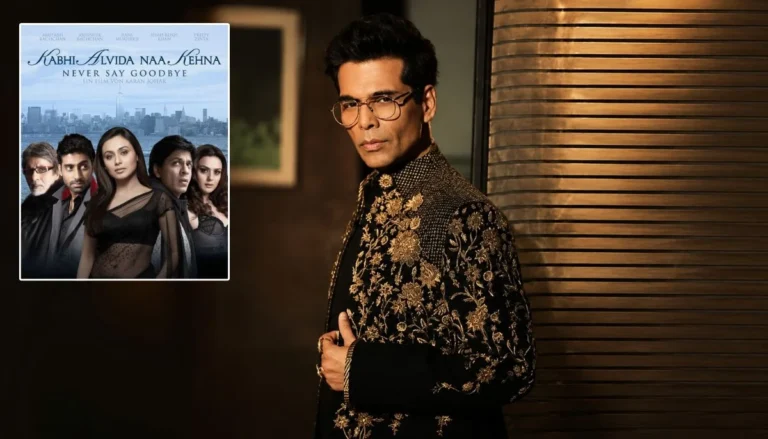
    Karan Johar has taken a nostalgic look back at Kabhi Alvida Naa Kehna as the much-discussed romantic drama completes two decades since its theatrical debut. Released on August 11, 2006, the film brought together Shah Rukh Khan, Rani Mukerji, Abhishek Bachchan, Preity Zinta and Amitabh Bachchan in a story that explored the uncertainties of marriage, emotional distance and complicated personal relationships. Set against the backdrop of New York, the film moved away from the conventional Bollywood portrayal of romance and family life. Its unconventional storyline quickly became a talking point, dividing viewers between those who appreciated its honesty and those who felt its themes challenged traditional values. Reflecting on the film’s journey, Johar recalled the wide range of reactions it generated after reaching cinemas. The filmmaker said he encountered everything from strong appreciation for the movie’s daring subject to severe criticism over the choices made by its characters. He also revisited a pre-release screening that gave him an early indication of just how strongly audiences might respond. During the screening, Johar noticed an audience member becoming visibly uncomfortable during a sequence involving Dev and Maya, the characters played by Shah Rukh Khan and Rani Mukerji. Another memory from that period involved a mother who approached Johar after watching the film. She questioned why he had chosen to build a story around divorce and troubled relationships rather than create another conventional family drama. With the benefit of hindsight, Johar has also been open about the movie’s imperfections. He acknowledged that its grand production, elaborate presentation and several songs contributed to an oversized cinematic experience, with some elements that he now believes could have been handled differently. However, Johar continues to stand by the central purpose of the film. He has maintained that the story was not intended to present infidelity as something admirable. Instead, it sought to examine the emotional consequences of decisions made within and outside marriage and the impact those choices can have on everyone involved. For Johar, the film’s enduring appeal lies in its willingness to avoid straightforward answers. Relationships, he suggested, cannot always be understood through simple definitions of right and wrong, particularly when emotions, expectations and personal struggles become intertwined. The filmmaker also acknowledged the contribution of the cast and crew who helped transform the ambitious idea into a large-scale production. Two decades later, Kabhi Alvida Naa Kehna remains a film that continues to invite debate. While its themes divided audiences when it first arrived, its exploration of imperfect relationships and difficult emotional decisions has allowed the movie to remain part of conversations around love, marriage and human choices.

  • |

    Indian activists challenge AI-powered police surveillance following student demonstrations

    Indian digital rights activists and student leaders are challenging Prime Minister Narendra Modi’s government in the Delhi High Court over the deployment of artificial intelligence-powered mass surveillance during recent youth protests in New Delhi. Student activist Aishe Ghosh filed a petition with the Delhi High Court seeking to declare the police’s mass surveillance of demonstrators unconstitutional. The lawsuit requests the immediate destruction of all personal and biometric data collected during the demonstrations and asks the court to establish clear binding guidelines governing the use of surveillance technologies at public gatherings. The controversy intensified after photographs circulated showing a mobile police surveillance unit, branded “Ikshana” and developed alongside security firm CP Plus, deployed at the main protest site. The vehicle featured telescopic masts providing 360-degree coverage, AI-powered cameras, and real-time facial recognition capabilities that displayed face accuracy metrics to match attendees against law enforcement databases. Furthermore, police officers were documented recording the social media handles of arriving participants. Digital rights organisations, including the Internet Freedom Foundation, have formally requested the Delhi Police Commissioner to delete all biometric data gathered during the events. Advocates emphasise that India currently lacks a dedicated legal framework governing police deployment of facial recognition systems, making such intrusive measures disproportionate and illegal. During court proceedings, Solicitor General Tushar Mehta defended law enforcement actions, arguing that expectations of privacy at a public gathering were misplaced and asserting that the security measures were absolutely necessary in the interest of public order. Delhi Police maintained that the technology was used solely to identify individuals with criminal histories and count crowd size without restricting freedoms. The court challenge continues despite the end of the student demonstrations, which were triggered by widespread examination paper leaks in national competitive tests. The protests culminated in the resignation of Union Education Minister Dharmendra Pradhan and the announcement of a government panel tasked with overhauling the national examination system.

Leave a Reply

Your email address will not be published. Required fields are marked *