political crisis pakistan

Political Crisis in Pakistan

By Granaz Assa

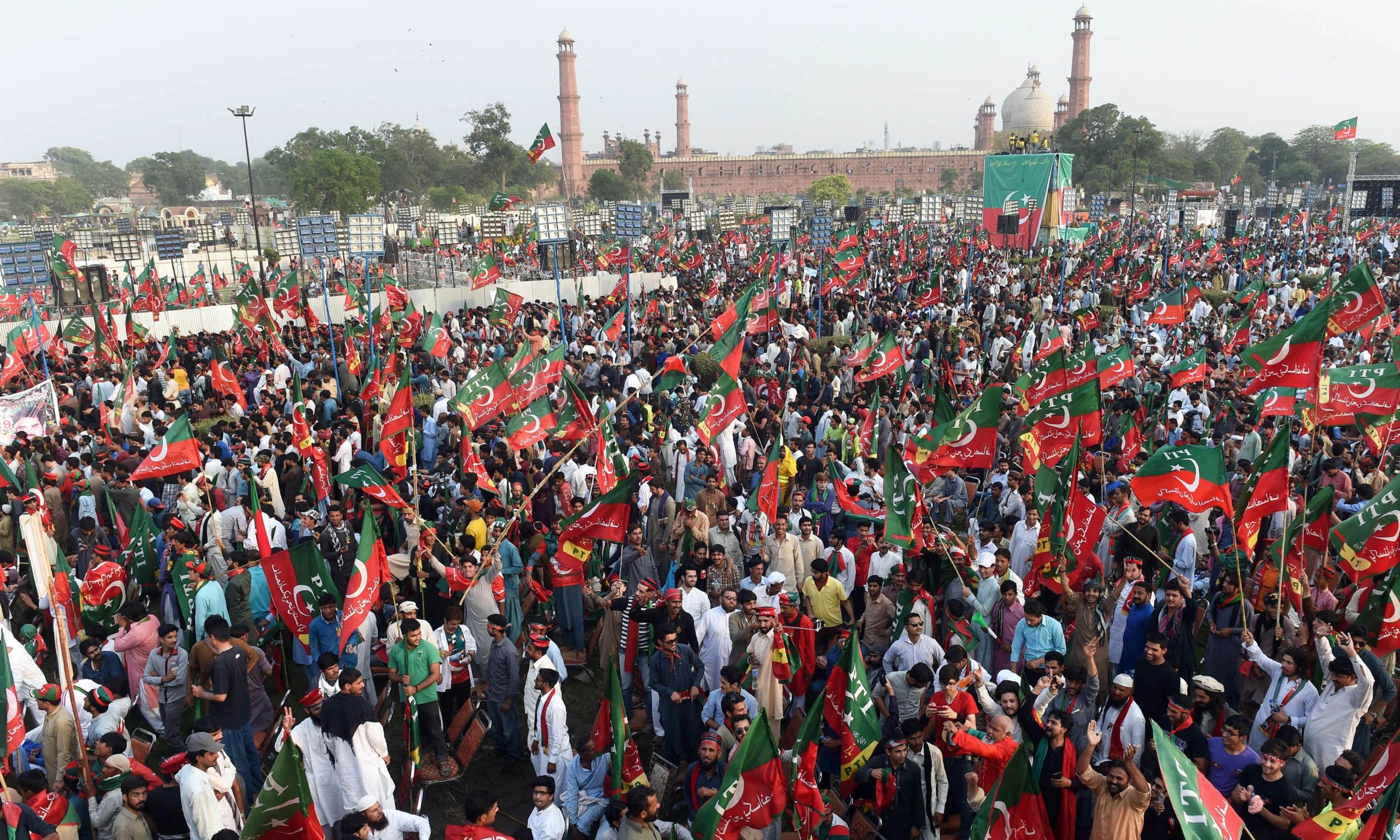
A nation cannot move forward when its leaders are divided. Political stability is the backbone of every successful country, but when conflict, corruption, and power struggles become more important than public welfare, a nation begins to suffer. Unfortunately, Pakistan has faced a political crisis for many years.

A political crisis is a situation in which a country’s political system becomes unstable, making it difficult for the government to run the country properly. It is mainly caused by conflicts between the government and the military, political disagreements, corruption, and weak leadership, which lead to instability, loss of public trust, and slow development in the country.

Pakistan’s future depends on strong and fair leadership, but the ongoing political crisis is slowing the country down. Moreover, the people are facing hardships because of this. As a result, Pakistan is experiencing an economic slowdown, a poor international image, and low development. When leaders fight for power and control, it divides the country and creates confusion. Corruption also makes the situation worse because some leaders misuse public money for their own benefit instead of serving the citizens. If the government is weak, it cannot make good decisions or effectively help the people.

A political crisis has many negative impacts on the country. It creates instability, weakens the economy, increases prices, and raises unemployment. Development projects such as schools, hospitals, and roads may be delayed. Public services can also be affected. As a result, the country’s overall progress becomes slow, and the daily lives of citizens become more difficult. In this way, a country cannot move forward.

To solve the political crisis in Pakistan, some important steps are needed. First, corruption must be reduced, and leaders should work honestly for the people. Moreover, the country needs strong and fair leadership to make good decisions and guide the nation. Political parties should work peacefully and respect one another instead of engaging in conflicts. These steps can bring stability, improve the country’s economy, and build a better future for Pakistan.

The political crisis is a serious problem that affects the country in many ways. The country needs to promote peace and unity among its people. Pakistan can overcome this crisis if all political parties and their leaders work together for the country instead of pursuing their personal interests. Free and fair elections, respect for the Constitution, and peaceful dialogue can help resolve political disagreements. The government must focus on the needs of the people. Citizens should also vote responsibly and support peace, unity, and democracy. By working together, the country can achieve political stability, economic growth, and a brighter future.
Similar Posts

  • |

    China’s Chang’e-7 Moon mission to launch on August 24

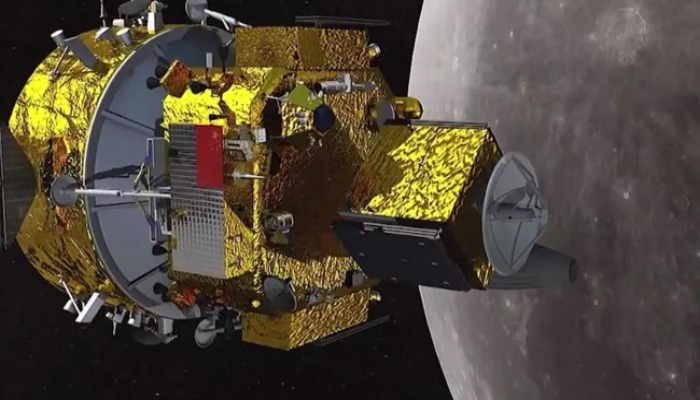
    China is preparing to launch a complex, multi-spacecraft mission to the Moon. The mission will land near the Moon’s south pole and search for evidence of water and ice. The mission is scheduled to launch on August 24 from the Wenchang Satellite Launch Center on China’s Hainan Island. According to a statement issued by the China Manned Space Agency, the Chang’e-7 mission will be launched aboard a Long March 5 rocket. The mission will focus on the Moon’s south pole and attempt to determine whether water and ice are present inside the craters as well as their quantity and other related details. Water vapour has previously been detected in this region of the Moon through remote sensing but scientists have not yet been able to measure it directly or obtain samples. Chang’e-7 will also help lay the technological groundwork for China’s crewed lunar mission planned for 2030. The mission will consist of an orbiter, lander, rover and hopper spacecraft. Five days after launch, the spacecraft is expected to enter lunar orbit. The orbiter will then identify and determine the target landing area. Chinese authorities have not yet announced the exact landing date and the landing is expected to take place several months after launch. The hopper spacecraft will make multiple flights over the permanently dark craters near the Moon’s south pole. It will also be equipped with landing legs to allow it to land and analyze the surface of the selected locations. The mission will also carry scientific payloads from several countries. China’s Chang’e-5 mission in 2020 and Chang’e-6 mission in 2024 successfully collected lunar samples and returned them to Earth.

  • |

    The Rise of Diseases

    The increasing number of diseases has become a serious concern in Pakistan. Dengue, malaria, hepatitis and many other illnesses are spreading due to poor sanitation polluted water air pollution and a lack of public awareness.   Hospitals are becoming overcrowded while many people cannot afford proper medical treatment. The government should improve healthcare facilities, ensure cleanliness, provide safe drinking water and conduct awareness campaigns on disease prevention.   Citizens also have a responsibility to maintain hygiene keep their surroundings clean and follow basic health precautions. Good health is the foundation of a strong nation. If immediate steps are not taken the rise of diseases will continue to threaten the well being of our people

  • Artificial Intelligence vs Human Creativity

    By Muhammad Talha Karim A workshop under the project titled “Digital Trust and Free Expression in the AI Era” at the Department of Media and Development Communication, University of the Punjab, supported by the U.S. Mission to Pakistan in partnership with the Pakistan-U.S. Alumni Network (PUAN) made me ask myself that: “can a machine create, or does it only create what humans have already imagined?” Creativity has always been a phenomenal ability for human beings, which makes it unique from all other creatures. It helps us solve problems, create art, design new things, think differently, compose music, and write stories. The rapid development of AI has made machines so capable that they can generate music, create art, write essays, and even solve human-related problems. But a very serious question arises here: “Can AI truly be more creative than humans? AI has shown that it can perfectly help humans create new ideas. It simply analyzes the large amount of information, follow the pattern that is previously provided and by combining all the sources, generates content within few seconds. For example, can write an essay, assist you in providing you with the needed material, and make the stories for you. It can also make the process quicker by giving different alternatives. But, if we talk about human creativity, no AI-powered tool can match the detailing, background content and emotional support of a human creativity. AI-powered tools merely scan the information, combine it, rearrange the patterns and give you the required material. It does not use any kind of emotional power, background knowledge to do it. While on the very opposite side, human creativity holds this very significant and unique ability to use emotions, feeling and history with the art. Humans use attach emotions like love, loneliness, sadness, happiness, betrayal and attachment and many more and they are feeling with the art to create it perfectly. For example, if an artist creates a painting, it is not merely the amalgamation of colors, strokes and lines but it experiences the emotion that made the artist create the art. Human beings can physically and mentally feel that specific emotion and a sense of attachment with the art and artist. Creativity has always been deeply linked with emotions and feelings. Certainly, AI powered tools can create content more quickly, but it lacks a major factor “attachment”. It simply rephrases and rearrange the words that are already given and/or uploaded on it. but cannot explain it by using emotions. For instance, if a user commands any AI powered tool to write a story, it will be done in just few seconds, but it will lack the emotional attachment. On the other hand, a story written by a human being will be rich in emotions and feelings. Maybe the writer turned his own experience into the story. As the writer himself experienced that feeling, he can put that in words in such a way that it hits directly in the heart of the reader or any other person. They can feel more attachment to it. They can see themselves in that story, which connects people more strongly.   The second major factor is intention and purpose. Human beings have their purpose and intentions for doing a certain job. It can either be an emotion or a thought. Human beings can challenge the society, write to change the entire perspective of a group of people, and many other reasons while AI does not possess any of this. It writes only because it is being commanded. It does not experience childhood, young age, love, hate, separation, loneliness – nothing at all which makes it merely a content provider while Human beings are the content experiencers. They personally go through those feelings and phases, and they can better explain this!   Despite all these differences, both AI and Human creativity can go together. Humans can provide emotions, feelings, ideas and content while AI can provide speed, more information, new ideas and solutions to different problems. Instead of making AI and humans competitors they can become partners and offer better outcomes. For example, a graphic designer can ask AI to give him various initial concepts and then use his own concepts and creativity to make the best one.  AI may be able to imitate creativity, but human creativity comes from a life that no machine has ever lived. AI has changed the way humans think about creativity. No matter how Fastly AI can generate the content to create pictures, write stories and compose music, it still cannot connect it with emotions. But human beings connect emotions, feelings, thoughts, ideas more creatively. As a human being, it’s the need for us to keep getting the content, art, music and information which emotionally connects us with each other. The views, thoughts, and opinions expressed in this blog are solely those of the author and do not necessarily reflect the official policy or position of the U.S. Mission to Pakistan or  USEFP/PUAN.

  • Fenugreek seeds for healthier hair

    Many common kitchen ingredients can be useful for beauty and self care and fenugreek seeds are one of them.  They are often used in home remedies to help keep hair healthy and strong. Fenugreek seeds contain nutrients such as protein, iron and other compounds that may support hair and scalp health.  They can help nourish dry hair strengthen the roots and make hair look softer and shinier. Here are some simple ways to use fenugreek seeds for hair care. For dry hair Fenugreek can help add moisture to dry and dull hair.  Mix one tablespoon of ground fenugreek with two to three tablespoons of warm coconut oil.  Apply it to your hair after shampooing leave it for about 30 minutes, and then wash it out. For stronger hair Soak two tablespoons of fenugreek seeds overnight and blend them into a smooth paste.  Apply the paste from the roots to the ends before shampooing. This can help nourish weak and brittle hair. For dandruff Fenugreek may also help keep the scalp clean and reduce dandruff.  Mix three tablespoons of soaked fenugreek with half a teaspoon of lemon juice. Apply the mixture to your scalp leave it for around 15 minutes and then wash your hair. For shinier hair You can also use fenugreek water as a final hair rinse. Strain the water from soaked fenugreek seeds and pour it over your hair after washing. It can leave dry and dull hair feeling softer and looking shinier.

  • Ecolinguistics and the Role of Media

    The role of media should not be confined to disseminating news and information but must also highlight public awareness regarding climate change. The media, in its reporting, is required to use appropriate terminology and diction to raise awareness, highlight the causes, and provide a way forward. The media, in its reporting, is expected to project the environment not as a resource to be used by humans but as a living environmental and ecological process that must not be disturbed by humans. For example, while writing such reports, if the media says that natural resources are diminishing or facing extinction, it must similarly highlight that the environmental system is being affected or impacted negatively . Recent studies have also reinforced this perspective. Penz and Fill (2022) observe that ecolinguistics promotes and fosters environmental awareness while supporting and strengthening the connection between humans and nature for sustainable development. In this context, Alexander and Stibbe (2014) argue that ecolinguistics plays a key role in highlighting the relationship between humans and the environment, as well as its impact on addressing environmental challenges and shaping a sustainable future. It is pertinent to highlight that while reporting any incident about environmental degradation or natural disasters, the media, apart from reporting, is also expected to provide solutions and a way forward to help face such incidents in the future. In reports about floods, wildfires, and rising temperatures, the media is also required to provide guidance and suggestions on how to combat or lessen the impacts of such environmental changes. The reporting must not be based only on presenting news and subsequently creating fear or chaos but must also give a sense of hope among people that through various techniques and the use of technology, such natural disasters can be managed effectively. The media must not consider floods, droughts, fires, or other environmental disasters merely as natural disasters but should link such impacts with environmental changes, industrial pollution, deforestation, human intervention with nature, and so on. Fairclough (1995), in his study, states that media should cover and highlight the areas that , on the other hand, are ignored and not given consideration by the masses. Therefore, the media is expected to sensitize the masses regarding such disasters and create a way forward to combat or tackle such environmental change disasters and their impacts on people and society as a whole. On the other hand, equally important is environmental equity or justice in society. It has been widely observed and noted that in floods, droughts, disasters, and environmental changes, the major impacts are faced by the underprivileged in society. It is the role and responsibility of the media to highlight and become a voice for such voiceless people, representing them and creating a sense of ownership among the poor and marginalized sections of society. The media is also required to highlight and create awareness among people about science and technology related to the environment and provide them with knowledge that through the use of such technology, they can tackle the horrors of disasters. The study of ecolinguistics reminds the media that humans are, in no way, different from society and can never be detached from society and vice versa. Hence, media reports are also expected to discuss humans, rivers, oceans, flora, fauna, biodiversity, and the ecosystem as a whole to give them significance and bring them into the limelight of the coverage. Media reporting is also required to use environment related terminology and diction, such as environmental war, ecological emergency, and other relevant terms, in its reports to highlight environment related information. Recent studies highlight that similes and metaphors have a significant impact on human thinking. Hence, the media is encouraged to resort to this method to mould public opinion towards environmental conservation and protection. Moreover, media personnel are required to engage in investigative journalism and cover incidents and events from different angles , examining their pros and cons deeply. If there are frequent flash floods in any area, the media is expected to discuss the causes and the role of concerned authorities in handling the incidents . Media houses, along with environmental protection organizations and other stakeholders, are required to impart knowledge and training to journalists. There is also a significant role for environmental funding organizations in sensitizing media personnel. In training sessions, they are expected to invite environmental experts, scientists, and scholars who have made significant contributions in this area. Media reports and the diction used therein have great significance. They must highlight a green and stable future through sustainable development initiatives and become partners in facing the challenges and effects of environmental degradation. They must give hope to people that the media stands with them and will continue contributing its responsible and positive role. This is the major objective of ecolinguistics. Societies such as ours widely need the use of ecolinguistics in the media.

  • |

    Kashmir’s nightingale Habba Khatoon

    Habba Khatoon stands as Kashmir’s Nightingale and Zoon: the Moon of Kashmir. Living in the 16th century, she transformed personal grief, marital heartbreak, and political exile into the foundational canon of Kashmiri romantic poetry. She was born to a peasant family in Chandhara village (Pampore), famous for its saffron fields. Unlike most rural girls of her era, her father sent her to a local maktab where she learned Persian and Arabic, nurturing her early literary talent. She got married to a peasant named Aziz Rathar. Unappreciative of her poetic disposition and intelligence, her husband and mother-in-law ill-treated her. She began singing her inner pain while working in the saffron fields and fetching water. Legend holds that while hunting near Pampore, Prince (later Sultan) Yousuf Shah Chak heard her singing under a plane tree. He arranged her divorce and married her as he was mesmerized by her voice and beauty. This marriage elevated her to Queen of Kashmir as Habba Khatoon. Emperor Akbar summoned Sultan Yousuf Shah to Delhi under the pretense of talks, arrested him, and exiled him to Bihar. Kashmir fell to Mughal rule, breaking Habba Khatoon’s world. She shed her courtly garments, donned the robes of an ascetic, and wandered the valley singing lamentations for her lost king. In short, she refused royal comfort. She spent her final years near Gurez and Athwajan, where her tomb rests today. Before Habba Khatoon, Kashmiri verse was dominated by devotional mysticism: Vaakhs and Shrukhs. She revolutionized Koshur literature by introducing the Lol. Lol is a short, melic lyric of intense personal feeling, love, longing, and domestic intimacy. It’s particularly designed to be sung rather than recited. One of her most iconic pieces, sung to this day across the valley: Mey haa karchey kitt kitaye, Mey kar tayiaar lole-vun… Chey kyaah gazi chaani roopeye, Volo haa maalyene dhoopeye! I have prepared myself in every way, I have composed my heart into a song of longing… What does it cost your beauty to look upon me? Come, my love, let us gather wild mountain herbs together! In the following verses, she uses Kashmir’s fleeting spring as an allegory for human beauty and time: Gulaan goy rang, pholan goy bahar, Mey valai poshan hyund hahaar… Yuthus chhumyene chaani dhaar, Volo maayi chaane pyarey! The flowers have faded, spring has taken its leave, My youth is wilting like a blossom in the heat… My eyes remain fixed on the path where you disappeared Come back, my beloved, for the sake of love!   After emperor Akbar exiled her husband to Bihar, she wrote this verse that captures geopolitical heartbreak reduced to raw human loss: Cchey saazey vaaye, bo saazey vaaye, Kati chhak chey, bo kati chhas… Diluk zaar vanay kith-kith bo, Jeel-e-Jhelum geyi aaba-haar! You play your tune far away, while I play mine in solitude, Where are you trapped, and where am I left to wander? How shall I tell you the agony of my heart? Even the waters of the Jhelum weep and overflow their banks for us. Her poetry is more than a story of personal transformation. It is the emotional arc of Kashmir itself. By introducing the Lol, she pulled Kashmiri verse down from abstract, detached mysticism into the intimate, beating heart of human experience. She gave language to the quiet endurance of ordinary women, the agony of sudden separation, and the unyielding beauty of a homeland caught in the tides of history.  

Leave a Reply

Your email address will not be published. Required fields are marked *