economists urge sbp
| | |

Economists urge SBP to hold rate at 11.5%

Economists have recommended that the State Bank of Pakistan (SBP) keep its policy rate unchanged at 11.5% at its upcoming monetary policy meeting on July 27.

The recommendation comes as inflation has started to ease, but underlying price pressures remain high. Analysts believe the economy is also recovering unevenly, leaving limited room for another increase in borrowing costs.

A recent economic assessment showed that headline inflation fell to 11.1% in June. However, core inflation remained elevated. Urban core inflation stood at 8.7%, while rural core inflation was recorded at 7.9%.

Economists said much of the current inflationary pressure is coming from food, energy, transport and government-controlled prices. These factors cannot be addressed effectively through interest-rate changes alone.

They also warned that a recent increase in the Sensitive Price Indicator (SPI) requires close monitoring. The development could indicate that the decline in inflation has not yet become firmly established.

Financial market indicators also support maintaining the current policy rate. Short-term Treasury bill yields remain close to the SBP’s existing rate, while the overnight interest rate is also broadly aligned with the current monetary policy stance.

However, yields on longer-term Treasury bills have increased. The six-month yield reached 11.80%, while the 12-month yield rose to 11.99%. Economists said the movement reflects some caution about the medium-term economic outlook.

The assessment noted that Pakistan’s economic recovery has gained momentum but remains uneven. Large-scale manufacturing continues to face challenges, while there are no strong signs of excessive demand that would require another rate hike.

Economists warned that raising the policy rate further could increase borrowing costs for businesses and consumers. It could also discourage investment and slow economic activity without directly tackling the supply-side factors behind current inflation.

Pakistan’s external position has improved in recent months. Higher foreign exchange reserves, strong remittance inflows and relative stability in the exchange rate have reduced immediate pressure on the economy.

Despite these improvements, risks remain. The country continues to face a sizeable merchandise trade deficit and upcoming external debt repayments. Heavy dependence on imported energy also leaves Pakistan vulnerable to international oil price fluctuations.

A sharp rise in global oil prices could increase transportation and energy costs in Pakistan. It could also widen external pressures and trigger another round of inflation.

Persistent core inflation is another major concern. If underlying price pressures remain high, inflation expectations could become difficult to control. This could delay any reduction in interest rates or force the central bank to consider tighter monetary policy.

A weakening exchange rate could create additional pressure by making imports more expensive. It could also affect foreign exchange reserves and increase imported inflation.

Economists have therefore advised the SBP to closely monitor private-sector borrowing, lending rates, monetary growth and the difference between short- and long-term interest rates.

For now, the indicators favour maintaining the policy rate at 11.5%. However, economists say the central bank should remain ready to adjust its stance if inflation, oil prices, exchange-rate pressures or external financing risks deteriorate.
Similar Posts

  • |

    Gianni Infantino defends World Cup 2026 amid criticism

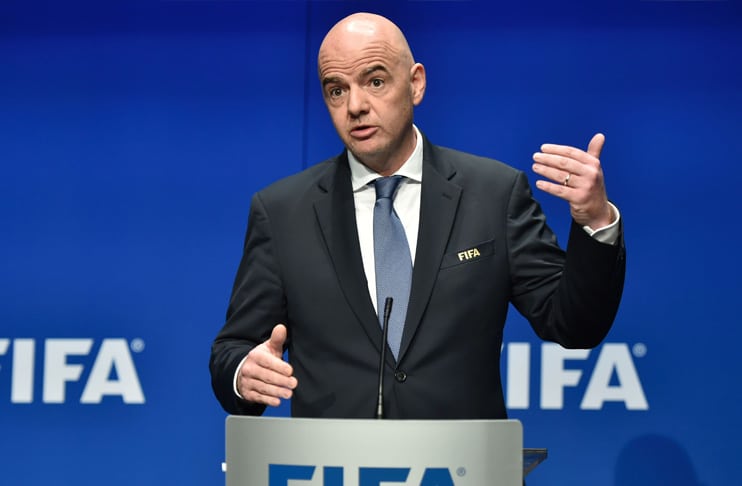
    FIFA President Gianni Infantino has issued a strong defence of the 2026 FIFA World Cup, accusing critics of focusing on controversy while overlooking what he described as a tournament that united millions of people around the world. In an open letter published on Monday and shared on his personal social media accounts as well as FIFA’s official platforms, Infantino responded to criticism surrounding the tournament, which was jointly hosted by the United States, Canada and Mexico and won by Spain. The FIFA chief argued that many detractors ignored the positive impact of the competition and instead concentrated on negative narratives. He praised the atmosphere created by fans and highlighted football’s ability to bring people together across generations. Addressing critics directly, Infantino wrote, “To all of you who missed watching kids, babies, grandparents, and parents come together for the beautiful game, I say sorry that the matches are now over and sorry that you missed all that joy and togetherness.” He continued, “Sorry that you were so consumed by hate and criticism that you missed it all.” The 56-year-old also appeared to criticise journalists and commentators, claiming that while FIFA had worked tirelessly to organise a successful tournament, others had focused on spreading misinformation. “To those behind their pens and papers, behind their screens spreading hate and false rumours, I want to say that while you are sitting behind, we at FIFA are on the front lines organising, working hard, and delivering the best show in the world,” he wrote. Infantino pointed to what he described as the tournament’s outstanding security record. According to the FIFA president, nearly seven million spectators from more than 200 countries attended matches throughout the competition. “We experienced no violence, no incidents, 100% safety and security, only joy and happiness,” he said. Despite the successful attendance figures, the tournament faced criticism over travel and visa restrictions affecting supporters and officials from several participating nations, including Iran, Haiti, Senegal and Ivory Coast. Somali referee Omar Artan was also reportedly denied entry to the United States after not receiving a visa. Responding to those concerns, Infantino said, “You mentioned the few people denied visas and overlooked the millions who were approved, from all parts of the world. Because football unites the world, and it was demonstrated impressively this summer.” The FIFA president also addressed debates over refereeing decisions, player suspensions and disciplinary rulings during the tournament. He argued that controversial officiating is common across football and questioned why FIFA had received such intense scrutiny. “Potentially mistaken red or yellow cards or subsequent decisions not to ban players in certain situations are routine and widely accepted in some of the biggest leagues worldwide,” he said, adding, “It’s curious that the same countries employing these practices are the ones criticising.” Concluding his message, Infantino urged critics to focus on football’s ability to unite people rather than dwell on controversy. “To those spending their time and energy hating us, please take a moment to reflect, meditate, pray, or watch a football match and truly observe the faces, the eyes, the emotions,” he wrote, ending with the message, “May football rise above all hate.”

  • | |

    Flood alert in Pakistan as India opens Salal dam g…

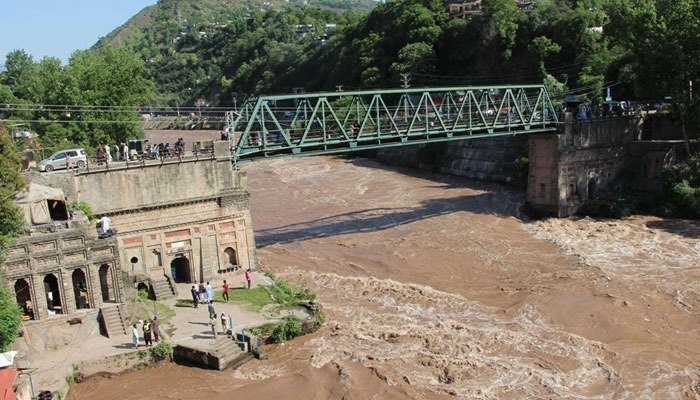
    Pakistan has issued a high-level flood alert after India released a significant volume of water from the Salal Dam following heavy rainfall in Indian-administered Kashmir. The move has raised concerns among Pakistani authorities, who are closely monitoring the situation as water levels continue to rise in the Chenab River. According to Punjab’s Irrigation Department, the heavy rainfall in the upper catchment areas prompted Indian authorities to open all gates of the Salal Dam, allowing a large flow of water to move downstream toward Pakistan. Officials have warned that the increased water discharge could reach Wazirabad within the next 48 hours, prompting precautionary measures in vulnerable areas. The Irrigation Department stated that water levels in the Chenab River have already begun to increase. Authorities are continuously tracking river flows to assess the potential impact on downstream districts and to provide timely updates if the situation changes. As a precaution, a high alert has been issued for flood-prone areas, particularly in Sialkot and Wazirabad, where local administrations have been instructed to remain prepared for any emergency. Disaster management teams are coordinating with relevant departments to monitor developments and ensure a rapid response if water levels continue to rise. Officials have urged residents living near the Chenab River and low-lying areas to stay informed through official announcements and avoid unnecessary travel near riverbanks. Emergency services are also on standby to respond quickly should flooding occur. Seasonal monsoon rains often lead to rising river levels across the region, making cross-border water management a critical issue during this period. Sudden increases in water discharge from upstream reservoirs can significantly affect downstream communities, requiring close coordination between authorities and continuous monitoring of river conditions. While officials have expressed concern over the rising water levels, they are also emphasizing that the situation remains under observation. The extent of any flooding will depend on rainfall patterns over the coming days and the volume of water continuing to flow into the Chenab River. Residents in at-risk areas are advised to follow guidance issued by local authorities, remain alert for weather and flood updates, and take necessary precautions if evacuation advisories are issued. Authorities have assured the public that monitoring efforts will continue around the clock to minimize risks and protect communities from any potential flooding. With the water surge expected to arrive within the next two days, emergency agencies remain on alert as Pakistan prepares for the possible impact of increased river flows during the ongoing monsoon season.

  • |

    Cameroonian President Paul Biya reshuffles military leadership amidst prolonged absence in Switzerland

    Cameroon’s 93-year-old President, Paul Biya, the world’s oldest sitting head of state, has enacted a strategic reshuffle of the country’s military leadership from abroad, issuing decrees to promote senior officers and appoint new commanders while remaining in Geneva, Switzerland. Among the key appointments, Biya promoted five colonels to the rank of brigadier general. Notably, Brigadier General Raymond Jean Charles Beko’o Abondo was reappointed to lead the elite Presidential Guard, an essential security unit responsible for the president’s personal protection that he has commanded since 2013. The administrative shifts coincide with growing domestic anxiety regarding Biya’s absence from Cameroon, which has extended to nearly two months following his departure on 7 June for what officials termed a “brief private stay”. Opponents and civil society groups have voiced concern over an institutional vacuum, noting that a newly created vice-presidential seat remains vacant and a promised cabinet overhaul has yet to materialise. Government representatives, including Communication Minister René Emmanuel Sadi, dismissed claims of administrative paralysis or health crises, maintaining that the president remains fully operational and continues to sign official decrees and financial agreements from abroad.

  • |

    Hundreds arrested in France as destructive wildfires spread across Europe

    European emergency services are battling fierce wildfires triggered by a record-breaking heatwave, with French authorities arresting nearly 500 individuals on suspicion of starting blazes since July 1. France’s interior ministry reported that 474 people, including 183 minors, have been detained, with approximately 70% suspected of intentional arson. In south-west France, a rapid blaze in the Landes region consumed nearly 1,100 hectares of pine forest in under 24 hours, prompting the emergency evacuation of more than 525 residents from the village of Luglon. The severe weather conditions have caused destruction and displacement across multiple European countries. In Croatia, a gale-driven wildfire swept through the coastal tourist town of Lokva Rogoznica, leaving one person dead, 40 injured, and forcing 1,200 people to evacuate to emergency shelters. In western Germany, over 2,000 residents fled the village of Gey as a forest fire advanced, while emergency crews faced additional hazards from detonating Second World War ammunition buried in the terrain. Elsewhere on the continent, military personnel in north-east Spain evacuated the historical remains of three 11th-century kings from the San Juan de la Peña monastery as flames threatened the site. In northern Greece, a fleet of small boats rescued approximately 500 holidaymakers stranded on beaches along the Halkidiki peninsula after a two-mile fire front threatened local resorts. Firefighters in the UK also faced severe conditions, as wildfires across the West Midlands destroyed several residential properties.

  • |

    Young doctors launch campaign against PG induction…

    The Young Doctors Federation has launched a strong campaign against the current postgraduate (PG) medical induction testing system, calling for an end to what it describes as unnecessary and repetitive examinations for doctors seeking admission to postgraduate training programmes. Dr Hassan Baloch, Convener of the Young Doctors Federation, said the federation had begun a vigorous movement against the postgraduate induction test, drawing a parallel with its previous efforts that led to the elimination of the National Licensing Examination (NLE). He said doctors already face multiple examinations during their medical education and professional careers, and forcing them to sit for several tests for the same postgraduate induction purpose creates an additional burden. He demanded a simpler and more transparent system based on merit. Dr Baloch proposed two possible alternatives. The authorities should either use FCPS Part-I or the Joint Centralized Admission Test (JCAT) as the basis for postgraduate induction, or introduce a single national postgraduate entrance examination for doctors across the country. He argued that conducting multiple examinations for the same objective wastes candidates’ time, increases financial pressure through repeated examination fees, and creates unnecessary complications for medical graduates competing for postgraduate training positions. The Young Doctors Federation also called for a unified and transparent induction mechanism that ensures equal opportunities for all eligible doctors. Dr Baloch pointed to the Medical and Dental College Admission Test (MDCAT), which serves as a common entrance examination for undergraduate medical admissions, and India’s NEET-PG system as examples of centralized testing models. He stressed that Pakistan should also adopt a single, transparent and merit-based mechanism for postgraduate medical induction instead of requiring doctors to navigate multiple examinations and selection processes. The federation’s campaign seeks reforms in the postgraduate induction system and aims to push authorities toward a more streamlined process that reduces the burden on doctors while ensuring fair and merit-based admissions to postgraduate medical training.

  • | | |

    PSX sheds 280 points amid cautious trading

    The Pakistan Stock Exchange (PSX) remained under pressure during Tuesday’s trading session as investors adopted a cautious approach. The benchmark KSE-100 Index opened on a weak note and stayed in negative territory during the first half of the session. By 1pm, the index had dropped 279.65 points, or 0.16%, to 177,982.68 points. It had closed at 178,262.33 points in the previous session. The market witnessed further pressure shortly after opening. At around 9:39am, the KSE-100 fell to 177,914.38 points, losing 347.95 points, or 0.20%. The index later recovered some of its early losses but remained below the previous close. Trading remained volatile during the session. The index reached an intraday high of 179,123 points and a low of 177,903.87 points. Despite the decline in the benchmark index, market activity remained relatively strong. Around 339.48 million shares were traded during the session. The total value of shares traded stood at approximately Rs19.71 billion. Investor sentiment remained subdued as market participants appeared cautious about taking fresh positions. Profit-taking also contributed to the pressure on the benchmark index. The partial recovery from the morning low indicated some buying interest at lower levels. However, it was not enough to push the index back into positive territory by midday. Investors continued to monitor market developments and broader economic indicators for direction. The afternoon session was expected to determine whether the index could recover its losses or close the day in negative territory.

Leave a Reply

Your email address will not be published. Required fields are marked *