flood alert pakistan
| |

Flood alert in Pakistan as India opens Salal dam g…

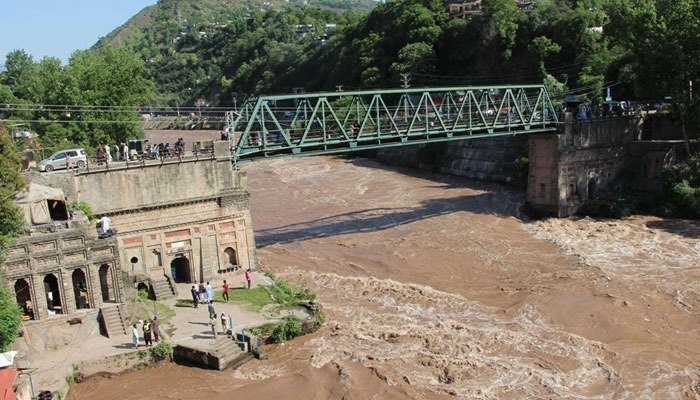
Pakistan has issued a high-level flood alert after India released a significant volume of water from the Salal Dam following heavy rainfall in Indian-administered Kashmir. The move has raised concerns among Pakistani authorities, who are closely monitoring the situation as water levels continue to rise in the Chenab River.

According to Punjab’s Irrigation Department, the heavy rainfall in the upper catchment areas prompted Indian authorities to open all gates of the Salal Dam, allowing a large flow of water to move downstream toward Pakistan. Officials have warned that the increased water discharge could reach Wazirabad within the next 48 hours, prompting precautionary measures in vulnerable areas.

The Irrigation Department stated that water levels in the Chenab River have already begun to increase. Authorities are continuously tracking river flows to assess the potential impact on downstream districts and to provide timely updates if the situation changes.

As a precaution, a high alert has been issued for flood-prone areas, particularly in Sialkot and Wazirabad, where local administrations have been instructed to remain prepared for any emergency. Disaster management teams are coordinating with relevant departments to monitor developments and ensure a rapid response if water levels continue to rise.

Officials have urged residents living near the Chenab River and low-lying areas to stay informed through official announcements and avoid unnecessary travel near riverbanks. Emergency services are also on standby to respond quickly should flooding occur.

Seasonal monsoon rains often lead to rising river levels across the region, making cross-border water management a critical issue during this period. Sudden increases in water discharge from upstream reservoirs can significantly affect downstream communities, requiring close coordination between authorities and continuous monitoring of river conditions.

While officials have expressed concern over the rising water levels, they are also emphasizing that the situation remains under observation. The extent of any flooding will depend on rainfall patterns over the coming days and the volume of water continuing to flow into the Chenab River.

Residents in at-risk areas are advised to follow guidance issued by local authorities, remain alert for weather and flood updates, and take necessary precautions if evacuation advisories are issued. Authorities have assured the public that monitoring efforts will continue around the clock to minimize risks and protect communities from any potential flooding.

With the water surge expected to arrive within the next two days, emergency agencies remain on alert as Pakistan prepares for the possible impact of increased river flows during the ongoing monsoon season.
Similar Posts

  • |

    Pakistan’s auto tax policy sparks industry divide over EV incentives

    LAHORE: Pakistan’s automobile industry is witnessing growing divisions over the government’s taxation policy for vehicles, with local manufacturers warning that the current framework unfairly benefits expensive imported and premium new energy vehicles (NEVs) while placing a heavier tax burden on affordable cars purchased by middle-income families. The controversy has intensified following the government’s decision to introduce a range of fiscal incentives for new energy vehicles, including battery electric vehicles (BEVs), plug-in hybrid electric vehicles (PHEVs) and range-extended electric vehicles (REEVs). While the policy is designed to accelerate Pakistan’s transition towards cleaner transportation and reduce reliance on fossil fuels, established local assemblers argue that the incentives are skewed in favour of luxury vehicle buyers instead of promoting affordable green mobility. Industry representatives say the taxation gap between conventional locally assembled vehicles and premium electric vehicles has widened considerably, raising concerns over fairness, competitiveness and the long-term sustainability of Pakistan’s domestic automobile manufacturing sector. According to industry estimates, a locally assembled Suzuki Alto—one of the country’s most affordable passenger vehicles priced at around Rs3 million—bears nearly Rs550,000 in taxes, including sales tax, federal excise duty (FED) and the recently introduced New Energy Vehicle (NEV) levy. In contrast, a premium REEV costing close to Rs10 million reportedly attracts sales tax of only around Rs100,000 while remaining exempt from both the federal excise duty and the NEV levy. The tax disparity has triggered criticism from domestic manufacturers, who argue that the current structure effectively penalises middle-income consumers while offering generous incentives to buyers of high-end imported vehicles. Local Assemblers Raise Concerns Pak Suzuki Motor Company spokesperson Ikhlaq Virk said the taxation framework has created an uneven competitive environment that disadvantages affordable vehicles widely used by Pakistani families. He said entry-level models such as the Alto and Cultus serve as essential transportation for the country’s middle class but receive no meaningful tax relief despite their affordability. Virk further noted that premium hybrid and electric vehicles, valued at nearly Rs10 million or more, continue to enjoy substantial concessions under the government’s clean mobility policy. He also pointed to reports suggesting that the sales tax on certain plug-in hybrid and hybrid electric vehicles could be reduced from 25 percent to 18 percent after changes introduced through the Finance Bill, arguing that such relief would primarily benefit affluent consumers rather than encouraging mass-market adoption. IMF Programme Adds Complexity The debate comes at a time when Pakistan remains under an International Monetary Fund (IMF) programme, which has required the government to increase tax revenues, rationalise subsidies and implement fiscal reforms to stabilise the economy. Against this backdrop, industry stakeholders argue that taxation policies should strike a balance between environmental objectives and economic realities, ensuring that clean energy initiatives do not disproportionately favour a small segment of wealthy consumers. The discussion has also reopened a broader policy debate over whether Pakistan’s green mobility strategy should focus solely on reducing emissions or also safeguard domestic manufacturing, employment and industrial investment. Analysts Call for Balanced Incentives Automobile industry experts believe Pakistan’s transition towards cleaner transportation is necessary, but they stress that government incentives should encourage widespread adoption instead of being concentrated in the luxury vehicle segment. Yousuf M. Farooq, Director Research at Chase Securities, said environmental goals should be pursued alongside industrial development and economic sustainability. He noted that while encouraging cleaner transportation is an important national objective, incentive programmes should also consider vehicle affordability, localisation, environmental benefits and the contribution of manufacturers to Pakistan’s economy. Farooq emphasised the need for a consistent taxation framework across all vehicle categories, including conventional internal combustion engine vehicles, hybrids, plug-in hybrids and range-extended electric vehicles, while maintaining adequate protection for local assembly operations and the domestic auto parts industry. He added that environmental incentives should not undermine the competitiveness of local manufacturers or threaten employment generated by Pakistan’s automotive sector. Local Industry Fears Investment Slowdown Pakistan’s automobile industry has invested billions of rupees over the past three decades in assembly plants, localisation programmes and vendor development. The sector supports hundreds of component manufacturers and provides employment to thousands of skilled workers across the country. Industry stakeholders warn that if imported premium electric vehicles continue to enjoy significantly lower taxation than locally assembled conventional vehicles, future investment in domestic manufacturing could slow, weakening Pakistan’s automotive supply chain and localisation efforts. Manufacturers believe a prolonged imbalance may discourage further expansion by existing assemblers while affecting the viability of local parts suppliers that have developed alongside the country’s automobile industry. Government’s Green Mobility Vision Supporters of the government’s policy argue that Pakistan cannot afford to lag behind the global transition towards electric mobility. Many countries are offering tax incentives, subsidies and policy support to encourage electric vehicle adoption, reduce dependence on imported petroleum products and lower carbon emissions. Pakistan, which spends billions of dollars annually on fuel imports, could also benefit from increased electrification of its transport sector by reducing its import bill and improving environmental sustainability over the long term. However, industry observers believe the core issue is not whether electric vehicles deserve policy support but how those incentives should be structured.

  • | | | |

    Trump says US-Iran talks to resume Monday

    US President Donald Trump has announced that fresh negotiations between the United States and Iran are expected to begin on Monday, saying he decided to suspend planned military action after being encouraged by signs of progress toward a possible agreement. Speaking to reporters aboard Air Force One, Trump said discussions with Tehran would resume through diplomatic channels, expressing hope that negotiations could help prevent further escalation in the region. He did not disclose the venue of the talks or identify the officials expected to participate. Earlier, Trump stated that he had delayed what he described as a large-scale military operation after receiving requests from Iran and several key US allies in the Middle East to give diplomacy another opportunity. According to him, regional partners believed a negotiated settlement was within reach and urged Washington to avoid immediate military action. Trump said Saudi Arabia, the United Arab Emirates and Qatar had all encouraged restraint, arguing that continued dialogue offered the best chance for reducing tensions. He added that discussions were expected to cover issues related to the Strait of Hormuz as well as Iran’s nuclear programme. Despite Trump’s comments, Iranian authorities have not officially confirmed the planned negotiations. Iran’s semi-official Mehr News Agency rejected claims that Tehran had requested the United States to postpone military action, describing the assertion as inaccurate. Iranian Foreign Minister Abbas Araghchi, however, said negotiations involving Oman over the future of the Strait of Hormuz were progressing toward a final stage, indicating that diplomatic contacts remain active. Trump also declined to set a deadline for reaching an agreement, saying his administration was prepared for different outcomes but preferred a peaceful resolution over military confrontation. The announcement had an immediate impact on global energy markets. Oil prices fell sharply in early Asian trading as investors reacted to the possibility of reduced tensions in the Gulf region. Brent crude and US benchmark oil both recorded notable declines following Trump’s remarks. The Strait of Hormuz remains one of the world’s most strategically important shipping routes, with roughly one-fifth of global crude oil and liquefied natural gas supplies passing through the narrow waterway. Any disruption in the area has the potential to significantly affect international energy markets.

  • | | | |

    US launches strikes on Iran after attack on Jordan base

    WASHINGTON/TEHRAN: Tensions between the United States and Iran have sharply escalated after Washington launched strikes against Iranian targets following a ballistic missile attack on a US military base in Jordan. US Central Command said its forces began the strikes at around 8pm Eastern Time on Wednesday. CENTCOM described the operation as a “powerful response” to attempted attacks against American forces in the Middle East. The strikes came after Iran’s Islamic Revolutionary Guard Corps claimed responsibility for operations targeting US military assets in Jordan. The IRGC said it had targeted an airbase and a command centre. US President Donald Trump had earlier warned that Iran would face a strong military response. Trump said the United States would hit Iran “very hard” after the attack, despite reports that US forces had intercepted the missiles. The latest developments have raised fears of a wider regional conflict. Military activity has also been reported across southern Iran. Iranian state broadcaster IRIB reported explosions in Bushehr province, home to the country’s only nuclear power plant. Several explosions were also reported on Qeshm Island. Iranian media said a missile may have struck a residential area, although details about casualties were not immediately available. Other explosions were reported at several locations in southern Iran following the launch of the US operation. The conflict has also intensified around Iraq. Baghdad condemned US and Saudi strikes that reportedly killed members of Iraq’s Popular Mobilisation Forces. The group said at least 20 of its fighters were killed and 32 others were wounded. Iranian media separately reported that four Iranian advisers were killed in the strikes. The situation around the Strait of Hormuz has also become increasingly tense. Iran’s Revolutionary Guard said its naval forces targeted three oil tankers that were allegedly approaching the strategic waterway using routes not approved by Tehran. Iran has rejected an Omani proposal concerning shipping routes through the Strait of Hormuz. Tehran has also discussed imposing charges on vessels using the strategically important passage. Iranian officials have insisted that mine-clearing operations in the waterway should be carried out by Iranian forces. Tehran has warned that any European involvement could turn those forces into potential targets. The latest escalation comes only days after Trump said Washington was holding what he described as positive talks with Iran. He had also warned that military action could resume if Tehran failed to show seriousness in negotiations. Analysts have warned that continued retaliation could create a dangerous cycle of escalation. They say repeated strikes could eventually expand beyond military targets and increase the risk to civilians and critical infrastructure.

  • | |

    Riyadh sofa factory fire kills 16 Bangladeshi work…

    RIYADH: At least 16 Bangladeshi migrant workers have died after a fire swept through a sofa manufacturing factory in Saudi Arabia’s capital, Riyadh, in a tragedy that has prompted urgent efforts to bring the victims’ remains home. The fire broke out on Sunday at a furniture manufacturing facility in the industrial area of Riyadh’s Al Shifa district, according to Bangladesh’s Ministry of Foreign Affairs. Bangladesh’s embassy in Riyadh is coordinating with Saudi authorities over the incident and arrangements for the repatriation of the victims’ bodies. Officials are also working to identify the deceased and complete the necessary formalities. Bangladesh’s Expatriates’ Welfare and Overseas Employment Minister Ariful Haque Choudhury expressed deep sorrow over the deaths and directed officials to speed up the process of returning the bodies to Bangladesh. He also called for assistance and compensation to be provided to the bereaved families, many of whom depend on income earned by relatives working abroad. Saudi Arabia’s Civil Defence confirmed that firefighters had responded to a blaze at an unlicensed furniture-making facility in the capital, although its initial statement did not provide details about the fatalities. The tragedy has once again drawn attention to workplace safety for migrant labourers in the Gulf. Saudi Arabia is home to a large Bangladeshi expatriate community, with reports putting the number at around 3.5 million. For many of these workers, employment in Saudi Arabia provides a vital source of income for families back home. The deaths in Riyadh have therefore sent shockwaves beyond the immediate workplace, leaving families anxiously awaiting the return of their loved ones. Authorities are expected to investigate the cause of the fire and examine safety conditions at the factory. The focus will also be on determining whether violations contributed to the deadly blaze. For Bangladesh, the immediate priority remains bringing the victims home and ensuring their families receive the promised support.

  • | |

    PMDC announces special measures for AJK students a…

      The Pakistan Medical and Dental Council (PMDC) has announced a series of special measures to ensure that students from Azad Jammu and Kashmir (AJK), who have been affected by prolonged internet disruptions, are able to participate in the Medical and Dental College Admission Test (MDCAT) without facing unnecessary obstacles. As part of these initiatives, the PMDC has established a dedicated examination center in Islamabad and has also reached a preliminary agreement to set up a regional PMDC office in Azad Kashmir. The decisions were made during a meeting between AJK Secretary of Health Brigadier Aamir Raza and Joint Admission Committee Chairman Professor Dr. Faisal Bashir with PMDC President Professor Dr. Rizwan Taj, Registrar Brigadier (Retd.) Rehan Naqvi, and Director of Admission Affairs Dr. Imdad Ali Khushk. The meeting focused on the registration challenges faced by AJK students due to the prolonged internet shutdown and explored practical solutions to ensure that no eligible candidate is deprived of the opportunity to take the MDCAT. During the meeting, the Secretary of Health of the AJK government informed PMDC officials that the ongoing internet suspension in the region had created serious difficulties for students attempting to complete their online registration for the entrance examination. He requested the council to extend every possible facility to affected students so that deserving candidates would not miss the examination because of circumstances beyond their control. Speaking on the occasion, PMDC President Professor Dr. Rizwan Taj stated that the council had already introduced several special measures to facilitate students from Azad Kashmir. He emphasized that the Government of Pakistan remains committed to ensuring equal opportunities for every eligible student seeking admission to medical and dental colleges, regardless of the challenges they face. Dr. Rizwan Taj explained that, considering the extraordinary circumstances in the region, the deadline for MDCAT registration with the regular fee had been extended twice. Initially, the deadline was extended until July 13, and later it was further extended until July 23, 2026, to provide additional time for students affected by the communication disruptions to complete their registration process. The PMDC President further said that students from Azad Kashmir had been given multiple options for submitting their registration applications. In addition to the online process, applications could be sent through WhatsApp, email, postal mail, or submitted in person. He also assured students experiencing registration difficulties that they could contact the PMDC directly, where officials would provide all possible assistance to help them complete the process successfully. To further support students, the PMDC has established a special MDCAT examination center in Islamabad specifically for candidates from Azad Kashmir. A public notice has already been issued regarding the facility, and a dedicated focal person has been appointed to guide students throughout the registration and examination process. The council hopes these measures will reduce confusion and ensure smooth coordination for affected candidates. During the meeting, PMDC President Professor Dr. Rizwan Taj and Registrar Brigadier (Retd.) Rehan Naqvi assured the Government of Azad Jammu and Kashmir of their full cooperation in addressing students’ concerns. Both sides also reached a preliminary agreement to establish a PMDC regional office in Azad Kashmir to improve access to council services for students and healthcare professionals in the region. The proposal will now be presented to the PMDC Governing Body for formal approval. At the conclusion of the meeting, the AJK Secretary of Health and the Chairman of the Joint Admission Committee appreciated the PMDC’s timely response and the special facilities provided for students affected by the internet shutdown. They expressed confidence that these initiatives would ensure that no eligible student from Azad Jammu and Kashmir would be deprived of the opportunity to appear in the MDCAT because of technical or communication-related difficulties.

  • |

    Pakistan set to appoint Mike Smith as batting coach

    LAHORE: Pakistan are reportedly close to appointing Mike Smith as the batting coach of the national Test team, with the experienced South African expected to take charge ahead of this month’s crucial three-match Test series against England. According to sources, Smith is the leading candidate for the role and could officially join the team before the England tour begins. The Pakistan Cricket Board (PCB) has yet to make a formal announcement regarding the appointment. Smith is a Level 4-qualified coach and a former South African first-class cricketer. He is also familiar with Pakistan cricket, having previously worked with Multan Sultans in the Pakistan Super League (PSL), where he earned praise for his coaching methods and player development. If appointed, Smith will replace the interim coaching arrangement currently being handled by former Pakistan batter Asad Shafiq, who has been serving as the team’s temporary batting coach. The PCB began its search for a permanent batting coach in May, inviting applications from qualified candidates. The deadline for submissions was June 7, after which the board evaluated potential applicants before shortlisting candidates for the position. Pakistan’s move to strengthen its coaching staff comes at an important time, with the national team preparing for a challenging Test assignment in England. The series is expected to be a significant test for Pakistan’s batting unit, which has faced criticism for inconsistent performances in recent overseas matches. Adding an experienced batting specialist is seen as part of the PCB’s broader strategy to improve the team’s red-ball performances and provide greater technical support to the players. Smith’s previous experience in franchise cricket and his reputation for working closely with batters could make him a valuable addition to Pakistan’s coaching setup. Although an official confirmation is still awaited, reports suggest the appointment process is in its final stages. With the England Test series approaching rapidly, the PCB is expected to finalize the coaching staff soon as Pakistan aims to build a stronger batting lineup capable of delivering consistent performances in challenging overseas conditions.

Leave a Reply

Your email address will not be published. Required fields are marked *