shehbaz sharif says
| |

PM Shehbaz Sharif says Pakistan used autonomous sy…

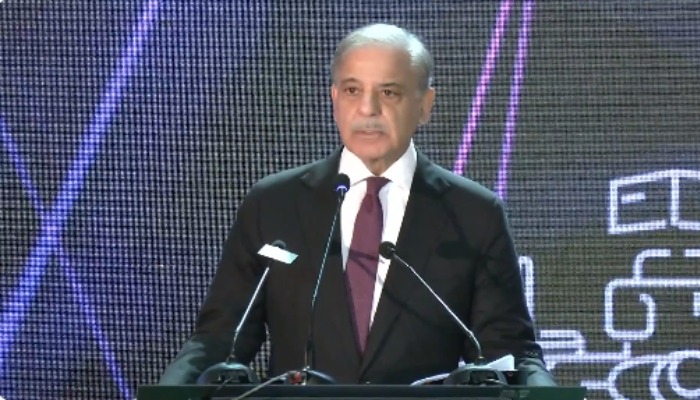
Prime Minister Shehbaz Sharif has reaffirmed Pakistan’s commitment to strengthening national security through advanced technology, stating that the country’s armed forces relied on autonomous systems and cybersecurity capabilities to protect its borders during what he described as “Marka-e-Haq.” His remarks came while addressing the Indus Robotics and Autonomous Systems Expo in Islamabad.

Speaking at the event, the Prime Minister said Pakistan is making significant progress in modern technology and innovation, adding that initiatives such as the robotics and autonomous systems exhibition will help position the country among leading technology-driven nations in the 21st century.

Shehbaz Sharif emphasized that the use of advanced technologies in the security sector is a matter of national pride. He noted that Pakistan has achieved important milestones in the development of indigenous defense capabilities, particularly in drone technology. According to the Prime Minister, more than 60 percent of the country’s drone production is now being carried out locally, reflecting continued efforts to reduce reliance on foreign technology and strengthen domestic manufacturing.

The Prime Minister also praised the leadership of Field Marshal Syed Asim Munir, saying the armed forces successfully adopted modern technological solutions during Marka-e-Haq. He acknowledged the contributions of the Chief of Air Staff and the Chief of Naval Staff, stating that their coordination and leadership played an important role in strengthening Pakistan’s defense preparedness.

Highlighting the growing importance of digital security, Shehbaz Sharif said autonomous systems and cybersecurity have become essential components of modern warfare and national defense. He stressed that Pakistan will continue investing in emerging technologies to enhance its security capabilities and protect its sovereignty in an increasingly technology-driven world.

The Prime Minister added that innovation in robotics, artificial intelligence, unmanned systems, and cyber defense is not only important for military preparedness but also for the country’s broader technological and economic development. He encouraged collaboration between government institutions, the private sector, and academic organizations to accelerate research and promote local innovation.

The Indus Robotics and Autonomous Systems Expo showcased advancements in robotics, autonomous technologies, and indigenous defense solutions, highlighting Pakistan’s growing focus on technological self-reliance. Government officials believe such initiatives will help strengthen the country’s industrial base while supporting long-term national security objectives.

Shehbaz Sharif concluded by reaffirming that Pakistan will continue to adopt modern technologies to safeguard its borders and enhance its defense capabilities, ensuring the country remains prepared to address evolving security challenges in the years ahead.
Similar Posts

  • |

    Pakistan squad arrives in England for Test series

    Pakistan’s Test squad has arrived in England for a three-match series, with the team set to begin preparations ahead of the opening Test on August 19. The national side reached England after drawing their recent Test series in the West Indies 1-1. The upcoming tour will present another demanding challenge, particularly with England’s conditions expected to test Pakistan’s batters and bowlers. The Pakistan squad will take a short break on August 8 and 9 before returning to training. The team is scheduled to begin its first practice session on August 10 at the County Ground in Beckenham. Training is scheduled to start at 9:30am local time as the players begin adapting to the English conditions. Before the Test series gets underway, Pakistan will have an important opportunity to fine-tune their combinations during a four-day practice match against a Select XI. The warm-up fixture is scheduled to take place from August 12 to 15. The practice game is expected to help the team management assess players ahead of the first Test while allowing the squad to adjust to the pace, movement and weather conditions in England. Pakistan and England will then begin their three-Test series on August 19. The visitors will be hoping to carry lessons from their West Indies campaign into the tour and make a strong start in England. For Pakistan, the series will also provide an important test of their red-ball depth, with both experienced players and younger members of the squad expected to play key roles. With training, a four-day practice match and the opening Test all lined up, Pakistan’s preparations are now officially underway. The team will be eager to use the coming days wisely before the real contest begins on August 19, when Pakistan and England resume their battle in the longest format of the game.

  • | |

    Rajab Butt’s mother reveals his relationship status details and age

    Rajab Butt’s mother has broken her silence on one of the most discussed personal sagas in Pakistani vlogging, appearing on Dr Ruby Malik’s podcast for The Digitalline.pk to share details about her son’s age, his marriage and the possibility of a reconciliation with his wife Emaan. Rajab Butt is one of Pakistan’s most followed digital influencers, with around 9 million YouTube subscribers, nearly 3 million Instagram followers and a massive audience on TikTok Live. In recent months, his personal life has attracted as much attention as his content, following reports of a separation from Emaan shortly after the birth of their son Kivan, a formal divorce notice, and subsequent reconciliation speculation. His mother addressed the situation directly, beginning with a revelation about how the marriage came to be in the first place. “Rajab Ali is 30 years old now, Alhamdulillah,” she said. “I arranged his marriage entirely on my own. It was my choice because Rajab wasn’t ready to get married. His priority was to build our house and get Ghazal married first, as we didn’t even have our own home. We sold the house that I had received as my share of the family property, and I invested all of that money into Rajab’s business. Alhamdulillah, he fulfilled both responsibilities, and then I insisted that he get married. I found the proposal myself, and I love Kivan more than anyone.” The account was unexpectedly candid. It revealed not only how the marriage came about but also the financial sacrifices the family made to support Rajab’s career, including the sale of property that was her own personal inheritance. It painted a picture of a mother who invested enormously in her son’s future and then took it upon herself to find him a wife when she felt the time was right. When asked directly about the possibility of Rajab and Emaan reconciling, she declined to speculate. “I don’t know whether Emaan and Rajab will patch up because it is their personal matter,” she said, drawing a clear line around a question she clearly felt was not hers to answer. She was equally measured when asked whether she was already searching for a new marriage proposal for her son. “I have no idea who his future wife will be because I won’t be searching for a proposal this time,” she said, before closing with a prayer: “May Allah make it easy for both of them.” The interview offered a rare maternal perspective on a story that has played out almost entirely through the couple’s own social media accounts and through speculation from their online audiences. Whatever happens next between Rajab and Emaan, his mother’s message was clear: she loves her grandson, she arranged the marriage in good faith, and the rest is in Allah’s hands.

  • |

    Trump link to Balogun decision triggers FIFA backlash

    ZURICH: A fresh controversy has erupted around the 2026 FIFA World Cup after Norway’s Football Federation announced it is considering filing a formal complaint with FIFA’s Ethics Committee over the governing body’s decision to reverse the automatic suspension of United States forward Folarin Balogun. The dispute centers on FIFA’s decision to suspend Balogun’s one-match ban for 12 months, allowing him to feature in the United States’ Round of 16 clash against Belgium despite receiving a straight red card in an earlier match against Bosnia and Herzegovina. Under FIFA regulations, the dismissal would normally have ruled the striker out of the knockout fixture. However, the suspension was put on hold, a move that has drawn criticism from several football associations and intensified debate over the integrity of disciplinary procedures. According to international media reports, the decision followed reported intervention by US President Donald Trump, a claim that has fueled accusations of political influence in football governance. Although Balogun was cleared to play, the decision ultimately had little impact on the result, with Belgium defeating the United States 4-1 to advance to the quarter-finals. Norwegian Football Federation President Lise Klaveness said the organization is now examining whether to expand an existing ethics complaint against FIFA by including the Balogun case. Klaveness indicated that the issue could be linked with an earlier complaint concerning FIFA’s decision to award Trump a symbolic “Peace Prize,” arguing that both matters raise broader questions about governance, transparency and independence within world football. The controversy has also attracted criticism from Belgium’s Football Federation and European football governing body UEFA, both of which reportedly expressed serious reservations over FIFA’s handling of the disciplinary process. Belgium had sought clarification regarding the decision to allow Balogun to participate, but FIFA reportedly dismissed the request as inadmissible, further adding to frustration among European football officials. The latest dispute has reignited debate over whether external political influence should have any role in decisions affecting international competitions. While FIFA has not publicly addressed the allegations of political pressure, the governing body maintains that its disciplinary and appeals processes operate under established legal frameworks. The controversy comes at a sensitive time for FIFA following the conclusion of the expanded 2026 World Cup, with calls growing for greater transparency in disciplinary decisions involving players and national teams. If Norway proceeds with its complaint, FIFA’s Ethics Committee could face renewed scrutiny over its governance standards and decision-making process, potentially prolonging one of the tournament’s most talked-about off-field controversies.

  • | |

    Inquiry Committee formed against Punjab University…

    Lahore : The administration of Punjab University has taken a significant step by forming a three-member inquiry committee to investigate multiple complaints submitted against the university’s Public Relations Officer (PRO), Khurram Shehzad. The committee has been constituted with the approval of the Vice Chancellor and has been directed to complete its investigation within one week and submit a detailed report along with recommendations. According to official documents, the inquiry committee comprises Dr Nadir Shah, Dr Imtiaz Shafiq, and the Deputy Registrar (Administration). The committee will review the complaints, examine relevant records, assess available evidence and record statements from concerned individuals before finalising its findings. Sources said that Khurram Shehzad has been serving as PRO on additional charge for several years. During this period, several faculty members reportedly submitted written complaints to the Vice Chancellor, alleging concerns regarding the use of official authority and the handling of administrative responsibilities. The complaints reportedly include allegations relating to misuse of official resources, administrative conduct, procedural issues and other matters connected with the performance of duties. The allegations, however, will be subject to verification by the inquiry committee. The Vice Chancellor has directed the committee to conduct a transparent review and submit its findings within the stipulated timeframe, after which any further administrative action will be considered in light of the inquiry report. The formation of the committee has attracted attention within academic and administrative circles, with university stakeholders awaiting the outcome of the investigation.

  • Librarians’ Day observed at UoG’s Quaid-e-Azam Central Library

    GUJRAT: Librarians’ Day was observed at the Quaid-e-Azam Central Library of the University of Gujrat (UoG) with a seminar and panel discussion focusing on the evolving role of libraries, academic research and information professionals in the digital age. The event was organised to commemorate the birth anniversary of Dr S.R. Ranganathan, regarded as the father of library science in South Asia. August 12 is observed as Librarians’ Day in recognition of his contribution to the development of library science and his five laws of library science. Speaking during the panel discussion, Senior Librarian Rameeza Mushtaq said that a central library was the intellectual hub of any university and that the role of librarians had changed significantly with the expansion of digital resources. She said modern librarians were no longer limited to maintaining books and records but were increasingly helping students and researchers identify, access and use reliable academic material. Senior Librarian Liaquat Ali said the growing use of digital media had not reduced the importance of printed books and physical archives. He said libraries continued to provide researchers with access to authentic and preserved sources of knowledge. Librarian Khadija Munawar highlighted the impact of technology on library services and said librarians had increasingly become information navigators, helping students and researchers locate relevant digital resources in an increasingly complex information environment. In his presidential address, Chief Librarian A.R. Sheikh said academic libraries played a central role in strengthening research and intellectual development. “A library is neither a mere structure of bricks and mortar nor a repository of silent shelves; it is the fundamental engine of a nation’s intellectual sovereignty,” he said. Mr Sheikh said the rapid spread of unverified information through digital platforms had created new challenges for librarians and researchers. He said ensuring access to authentic and credible academic information was now among the key responsibilities of library professionals. He said the Quaid-e-Azam Central Library was providing students and researchers access to HEC digital resources, international peer-reviewed journals and the Online Public Access Catalogue (OPAC). The library also has dedicated research facilities for MPhil and PhD scholars and provides services related to academic research and similarity checking, he added. The speakers stressed the need for universities to further strengthen library infrastructure and equip libraries with modern digital resources to support research and higher education. The event concluded with a cake-cutting ceremony attended by Chief Librarian A.R. Sheikh and senior members of the library staff.

  • | |

    Rs19,000 billion federal spending sparks Senate de…

    Islamabad: A Senate committee has raised serious questions over the functioning of the Council of Common Interests (CCI), warning that constitutional powers given to provinces after the 18th Amendment are being weakened through the revival of federal ministries on devolved subjects. The Senate Standing Committee on Devolution expressed concern that ministries related to education, health, agriculture, food security, climate change and other provincial matters were recreated at the federal level despite their transfer to provinces under the constitutional process. The committee questioned why federal institutions were continuing to handle matters that were supposed to belong to provinces after the 18th Constitutional Amendment, calling for a review of the entire system. The meeting was held at Parliament House, Islamabad, where Senator Zamir Hussain Ghumro presided over the session. Senators Poonjo Bheel and Jan Muhammad Buledi also attended the meeting. Senator Ghumro said that under the 18th Amendment, a detailed process was completed in 2010 and 2011 to transfer powers from the federal government to provinces. He explained that notifications issued on December 2, 2010, April 15, 2011, and June 29, 2011 resulted in the devolution of 17 ministries dealing with subjects that were shifted to provincial control. According to Senator Ghumro, the recreation of ministries after June 30, 2011, on subjects already transferred to provinces was against the spirit of the Constitution. He specifically pointed towards areas including education, health, national food security, culture, climate change, housing, social initiatives, EOBI, Evacuee Trust matters and Zakat and Ushr related functions. The senator argued that creating federal structures for provincial subjects has increased government expenses at a time when Pakistan is facing financial pressure. He claimed that federal government expenditure has increased to around Rs19,000 billion, while the country’s total tax and non tax revenue stands near Rs20,000 billion. Senator Ghumro said that apart from defence requirements due to security challenges, other federal ministries should have limited budgets according to constitutional responsibilities. He suggested that reducing unnecessary federal administrative structures could save around Rs5,000 to Rs6,000 billion and help reduce dependence on foreign loans. The committee also raised concerns about the ineffective role of the Council of Common Interests, a constitutional body responsible for resolving issues between the federation and provinces. Senator Ghumro said the CCI’s permanent secretariat was not functioning effectively and stressed that the institution must be strengthened to protect provincial rights. The committee decided to form a subcommittee to examine alleged violations related to the implementation of the 18th Amendment, including the revival of ministries and the role of the CCI. Senator Poonjo Bheel said that ministries created on devolved subjects should be abolished because the matter had already been settled through the constitutional process. Senator Jan Muhammad Buledi said the subcommittee should not only review the recreated ministries but also examine why the CCI had become ineffective despite having an important constitutional role. The committee also directed the Establishment Division to avoid making appointments in departments dealing with devolved subjects and ensure that provincial representation is protected in government appointments and promotions. Officials were asked to provide details of appointments in different grades within two weeks and submit a compliance report within 15 days. It emphasized that the federal government should support provinces rather than reduce their constitutional benefits. The committee also reviewed the issue of the Rs46 billion allocation for Quaid-e-Azam’s Mausoleum, which was not released last year and was reportedly transferred to another ministry. The committee directed authorities to provide monthly progress reports regarding the development and maintenance of Mazar-e-Quaid. The committee further sought details about the tenure of federal secretaries and directed the Establishment Division to submit complete records.

Leave a Reply

Your email address will not be published. Required fields are marked *