mqmp raises sindh
| |

MQM-P raises Sindh representation, census demands

MQM-Pakistan Chairman Khalid Maqbool Siddiqui has accused the Pakistan Peoples Party (PPP) of creating an ethnic divide in Sindh. He said the province had not simply been divided into urban and rural areas. Instead, he claimed that a linguistic and ethnic division had been created.

Speaking at a public gathering in Hyderabad, Siddiqui said Muhajirs were settled in 21 cities across Sindh. He said his party had always preferred political and peaceful struggle over confrontation.

Siddiqui warned that if the people participating in the political movement were directed towards the Chief Minister’s House, the situation could reach a decisive point. However, he stressed that MQM-P had never called for fighting. He said the party wanted different communities to recognise and respect each other.

The MQM-P chief said the cities of Sindh belonged to the descendants of people who had contributed to the creation of Pakistan. He said they had brought their share of Pakistan with them and had continued to remain committed to the country.

Siddiqui also spoke about abandoned properties in Sindh. He claimed that the Muhajir community had not received even 10 per cent of what he described as its rightful share. He said the community’s love for Pakistan and desire for peace should not be considered a weakness.

He said MQM-P would continue raising the rights of the people regardless of the number of votes it received. Siddiqui claimed that the party was bigger than the assemblies and said its presence represented Pakistan.

The MQM-P chairman also urged the federal government to take the party’s demands seriously. He said one of the party’s major demands was the establishment and empowerment of effective local governments.

Siddiqui argued that strong local governments were necessary to solve problems at the grassroots level. He said people should have greater control over decisions affecting their cities and communities.

The MQM-P leader also demanded a fair and accurate population census in Sindh. He said every person must be properly counted to ensure fair political representation and distribution of resources.

Siddiqui warned that those responsible for failing to count people accurately would eventually have to answer for it. He claimed that two sections of society were currently contributing to the state’s economy in Sindh but were not receiving proportionate representation.

He argued that a transparent population count could resolve many of the grievances surrounding political representation. According to Siddiqui, if the people of Sindh were properly counted, the demand for a separate province would no longer remain necessary.

His remarks come amid an ongoing political debate in Sindh over population figures, ethnic representation, local government powers and the distribution of resources.

The MQM-P has repeatedly called for stronger local governments and greater representation for urban areas. The party maintains that accurate population data is essential for determining political representation and ensuring a fair share of development resources.
Similar Posts

  • | | |

    Karachi oil spill: NRL pipeline bursts in DHA phas…

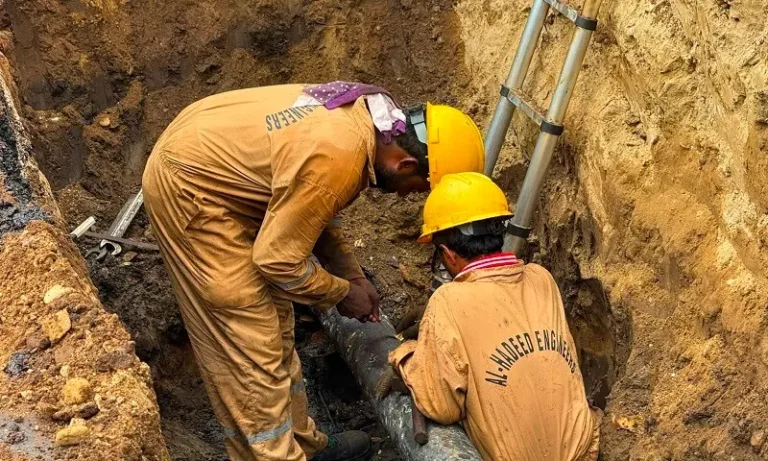
    A crude oil pipeline operated by National Refinery Limited (NRL) burst in Karachi’s DHA Phase VI, triggering an emergency containment and repair operation, authorities said. The leak occurred around 10:30pm on Saturday on Khayaban-e-Sehar, Street 13. The pipeline carries crude oil from Keamari to Korangi and reportedly runs through a road median. The incident caused crude oil to spill onto the road, prompting authorities to restrict access to the affected area. NRL’s response team arrived around midnight and began containment and cleanup operations using specialised spill kits. More than 20 drums of leaked oil had been collected, while excavation work was launched to identify the exact point of the damaged pipeline and stop the leak completely. The Sindh Environmental Protection Agency (Sepa) directed authorities to safely remove contaminated soil, sand and sludge and dispose of the material according to environmental regulations. Fresh sand will reportedly be placed after remedial work is completed. Officials urged residents to stay away from the affected location and avoid smoking or using open flames near the spilled oil. They also warned residents against attempting cleanup themselves or washing oil into nearby drains. Authorities continue to monitor the situation closely.

  • | |

    Monsoon death toll rises to 107 as Punjab, K-P fac…

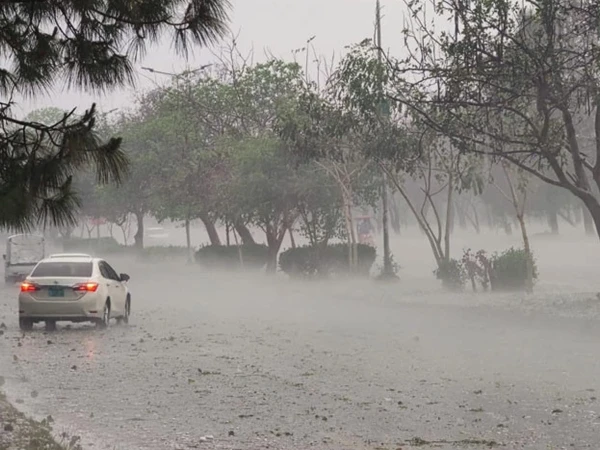
    LAHORE: Pakistan’s monsoon death toll has risen to 107 after 10 more people were killed in rain-related incidents across Punjab and Khyber-Pakhtunkhwa during the past 24 hours. According to the latest figures released by the National Disaster Management Authority (NDMA), seven people died in Punjab while three lost their lives in K-P. The deaths were reported between the previous afternoon and 1pm on Sunday. Punjab recorded fatalities in several districts. Gujrat and Okara reported two deaths each, while Sargodha, Narowal and Sialkot each reported one death. In K-P, two people died in Hangu and another was killed in Shangla. Officials said the latest casualties were caused by incidents including house collapses, electrocution and drowning as heavy rainfall continued to affect several parts of the country. The recent rains also injured 50 people. Punjab accounted for 47 of the injured, while three people were injured in Hangu. K-P has recorded the highest number of deaths since the beginning of the current monsoon season, with 55 fatalities. Punjab follows with 36 deaths. Seven people have died in Azad Jammu and Kashmir, six in Balochistan, two in Sindh and one in Gilgit-Baltistan. Overall, the monsoon has injured 297 people and damaged 447 houses across the country. At least 269 livestock have also been killed. Rescue authorities have carried out 130 operations since the start of the rainy season. These efforts have helped rescue 3,841 people from flooded and other dangerous areas. The rains have also caused significant damage to roads and other infrastructure. Landslides, flash floods and rising water levels have disrupted transportation in parts of K-P and Gilgit-Baltistan. The mountainous region has suffered particularly heavy damage. The Gilgit-Baltistan Disaster Management Authority said 184 houses have been damaged, while nine bridges have been destroyed. Nearly eight kilometres of roads have also been washed away. Astore has reported the highest number of damaged homes, while Diamer has suffered major destruction from several weather-related incidents. Skardu has recorded the greatest number of damaged bridges. Relief activities are continuing in affected communities. Authorities are distributing food, tents and other essential supplies, while road crews are working to reopen important routes.

  • | | |

    Pakistan requests $10bn US foreign exchange stabil…

    Pakistan has requested a $10 billion foreign exchange stabilization facility from the United States in an effort to strengthen its economy and improve its external financial position. The proposed facility is expected to help increase the country’s foreign exchange reserves, ease pressure on the Pakistani rupee, and reduce dependence on emergency financial assistance from international lenders. According to reports, the Pakistani government has submitted a formal proposal to US Treasury Secretary Scott Bessent seeking a five-year bilateral Exchange Stabilization Support Facility. If approved, the financial arrangement could provide Pakistan with greater economic stability at a time when the country continues to face external financing challenges. The proposed fund is designed to support Pakistan’s foreign exchange reserves, which remain under pressure despite recent improvements in the country’s economic outlook. Stronger reserves would help stabilize the rupee, improve investor confidence, and provide the government with greater flexibility in managing external debt repayments. The request comes after Pakistan’s reported diplomatic efforts during the Iran conflict. According to the report, Islamabad played a facilitating role in communication between Tehran and Washington. The diplomatic engagement is believed to have enhanced Pakistan’s strategic importance and may have contributed to closer economic discussions with the United States. If Washington approves the request, Pakistan could reduce its dependence on short-term financial support from multilateral institutions, including the International Monetary Fund (IMF). The facility would also help the country better manage future external financing needs while maintaining stability in the foreign exchange market. Pakistan is currently implementing wide-ranging economic reforms under the IMF’s $7 billion Extended Fund Facility (EFF). The programme requires the government to increase tax revenues, reduce public spending, improve fiscal discipline, and introduce structural reforms aimed at strengthening the economy. The country narrowly avoided a sovereign default in 2023 after securing a $3 billion IMF emergency programme. That support was later followed by the approval of the larger $7 billion EFF programme. Although the reforms have improved economic indicators, Pakistan still relies heavily on external borrowing, financial assistance from friendly countries, and the rollover of existing loans to meet its financing requirements. Economic experts believe that a US-backed stabilization facility would provide a significant boost to Pakistan’s financial position. It could strengthen foreign exchange reserves, support currency stability, improve investor confidence, and reduce the need for repeated emergency borrowing.

  • | |

    Sindh to launch facial recognition attendance syst…

    KARACHI: The Sindh government is set to introduce a facial recognition-based attendance system in government schools across six districts from August 17, aiming to strengthen staff monitoring and improve teacher availability for students. The Facial Recognition Attendance Monitoring and Evaluation System (FRAMES) will initially be launched as a pilot project, with one district selected from each division. The system will monitor attendance of both teaching and non-teaching staff through a digital mobile application. The pilot phase will cover Karachi East, Hyderabad, Naushehro Feroze, Jacobabad, Ghotki and Umerkot, with attendance of around 49,565 employees to be monitored through the system. Sindh Education Minister Syed Sardar Ali Shah said the initiative would gradually be expanded to all districts if the pilot proves successful. He said the application had been designed to be user-friendly, while a mechanism had also been established to identify and resolve technical issues promptly. The minister said FRAMES was not merely an attendance tool but was intended to ensure students have access to teachers during school hours. Staff members will be able to record attendance using their own phones or those of a headmaster or colleague. The system will also function without an internet connection, with attendance data automatically updated once connectivity becomes available. Teachers will be required to record both their arrival and departure from school. Employees will be able to view their attendance records through the application and download monthly reports. The system will also allow teachers to submit leave requests online from home, with approvals processed digitally. Training for education officials, school heads and teachers has been completed to ensure smooth implementation. The government has also provided special training to school heads to assist staff in using the system. FRAMES is available on both Android and Apple devices, while employees who have not yet completed registration have been advised to contact the Directorate General Monitoring and Evaluation office to update their records.

  • |

    Anger boils over as residents jeer French PM in Gironde

    French Prime Minister Sebastien Lecornu faced a hostile reception in the Gironde region on Monday. Residents booed him during a visit to Le Porge, amid growing anger over the government’s handling of recent wildfires. Lecornu had travelled to the area to meet local officials and discuss reconstruction efforts following a devastating wildfire last month. The visit, however, quickly turned tense. Footage published by BFMTV showed residents jeering as the prime minister arrived. Several locals also criticised him for leaving without engaging freely with the community. Speaking to AFP, 65-year-old resident Tony Veiga said the least Lecornu could have done was actually meet with residents directly. He said the government’s approach made people feel as though they simply didn’t matter. Lecornu’s office responded by saying he had spoken with affected residents and farmers during the visit. Speaking separately with officials in nearby Merignac, the prime minister insisted there was nothing to hide regarding how fire protection efforts had been carried out in recent weeks. According to AFP, much of the anger stems from allegations that authorities prioritised protecting the affluent Cap-Ferret peninsula over ordinary local homes during the firefighting response. Lecornu firmly rejected those claims, denying any preferential treatment had taken place. The backlash adds to broader frustration across parts of Europe currently grappling with wildfire emergencies. Meanwhile, the European Commission has ramped up support elsewhere on the continent, deploying additional firefighting resources to both Belgium and Spain through its civil protection mechanism. Swedish aircraft and helicopters from several European countries have been sent to Belgium to assist with ongoing fire response efforts there. Separately, 104 French firefighters and 36 vehicles have joined operations in Spain to help combat blazes spreading through the region. With wildfires continuing to strain resources across multiple European countries, pressure on national governments to respond effectively is likely to remain high in the coming weeks. For Lecornu, Monday’s frosty reception in Gironde signals that public patience with the government’s crisis response is wearing thin.

  • | |

    Kuwaiti Foreign Minister meets Army Chief  Asim M…

    RAWALPINDI: Kuwait’s Minister of Foreign Affairs, Sheikh Jarrah Jaber Al-Ahmad Al-Sabah, met Field Marshal Syed Asim Munir, Chief of Army Staff and Chief of Defence Forces, at the General Headquarters (GHQ) in Rawalpindi on Tuesday to discuss regional security and ways to strengthen cooperation between the two countries. The Kuwaiti foreign minister was accompanied by Kuwait’s Ambassador to Pakistan, Nassar Abdul Rahman J. Al-Mutairi. According to the Inter-Services Public Relations (ISPR), the two sides exchanged views on matters of mutual interest, the regional security environment, and opportunities to further deepen bilateral cooperation. During the meeting, the Kuwaiti foreign minister appreciated Pakistan’s continued support and its constructive role in promoting regional peace and stability. He also highlighted the longstanding fraternal relationship between Pakistan and Kuwait. Field Marshal Syed Asim Munir reaffirmed Pakistan’s commitment to further strengthening ties with Kuwait, stressing that both countries share a common vision for regional peace, stability, and prosperity. He expressed confidence that the enduring partnership between the two nations would continue to grow across multiple areas of cooperation.

Leave a Reply

Your email address will not be published. Required fields are marked *