vaping may harmful

Vaping may be as harmful as smoking

Smoking is well known to cause lung cancer heart disease and breathing problems.  However many people believe that vaping is a safer alternative.

New scientific research suggests this belief may be misleading. Studies show that using e-cigarettes can also harm the body and may cause damage similar to that seen in cigarette smokers.

Experts say switching from cigarettes to vaping should not be considered completely safe.

Although e-cigarettes do not contain traditional tobacco they still expose the body to harmful substances.

Research published in 2026 by the University of New South Wales along with findings from scientists at the University of Southern California found that vaping can damage the DNA in cells of the mouth and lungs.

DNA is the body’s genetic blueprint. It controls how cells grow and function. When DNA is damaged the risk of serious diseases including cancer can increase.

Researchers also found that sweet and fruit flavored vape products may contribute to DNA damage.

People who use pod based vaping devices showed even higher levels of cell damage in the study.

According to the scientists vaping may increase the risk of cancers of the mouth and lungs.  The research also found that DNA damage in people who vape was almost as severe as the damage seen in cigarette smokers.

Although vaping and smoking work differently both can seriously affect health. Health experts advise people not to think of vaping as a harmless option.

Every vaping session may damage important cells in the body. They recommend avoiding vaping altogether and raising awareness about its possible health risks.

Similar Posts

  • My life and my struggle 

    I have been suffering from this mental illness for so many years, and I don’t know what to do. Sixty-five percent of my life has been spent suffering from obsessive compulsive disorder and schizophrenia. My mother is Mahrukh Butt, and she is with me here in Lahore. I don’t know when these sufferings will end. It has crossed the limits, you know. I am in Lahore, Pakistan right now. The day before yesterday I was so unwell. I was in Lahore at my home, and I heard voices for more than five hours, and I was getting a severe headache, and I was going through hell, and I still am. I don’t know what to do. The sufferings have no intention of stopping. We are born into this world with no fault of our own, and there is only misery in this life. I hear voices almost every day for hours, and as you know, I have been having compulsions for more than fifteen years now, and that is not a joke. They tell me that if I don’t do the compulsions, then something bad will happen to me. I want to go to Karachi with my friend Alina Mehmood, who is six years older than me and used to come to our house in Islamabad when my father was alive, when we used to have parties at our house in Khudadad Heights. The party used to start at ten at night and go on till four in the morning, and the music was playing, and everything was rocking. I will go to Karachi by plane, and that will cost over forty thousand rupees, and I will go to Dolmen Mall and also to Liberty Books, though it is very expensive. The music in the background reminds me of London and Bangkok. My relative Hassan Raza Sherazi has gone to England, and I will go straight to Islamabad when he comes back, as a matter of fact. The thing I love to do is travel by plane. I love going to Thailand, and also writing books and articles. We went to New York City twice, to my father’s friend’s house in the suburb of Millburn. I love to write articles for Pakistani newspapers, although I get no money for doing so, as a matter of fact. A few months ago, I was in my bedroom here in Lahore, and I was waiting for the aliens to come and abduct me, but no one came. They had to take me to their planet or to the moon, although the American government is actually covering up aliens and these sorts of conspiracy theories, and they do not want the public to know the reality and the truth behind aliens. But I know that they exist. I am in Lahore, Pakistan right now. I spent twenty-five days in Islamabad, Pakistan, and now I have shifted into my house in Cantt. I really want to go to Karachi, Pakistan, as I need a break.

  • Dad’s fake Ultrasound trick goes viral

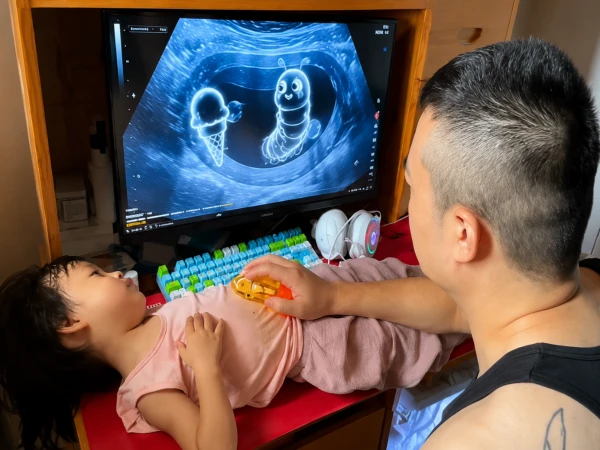
    A father’s unusual way of helping his young daughter stop eating junk food has gone viral on social media. The video shows a Chinese father who was worried because his daughter loved junk food and would not stop eating it even after he asked her many times. https://www.instagram.com/reel/Dbalh_1AbcP/?igsh=NTV3MGpkcWpkang0 To teach her a lesson the father created a fake ultrasound video. In the video it looked like a worm was growing inside the girl’s stomach because of the junk food she was eating. The animation showed the worm happily eating ice cream and other unhealthy foods becoming bigger each time she ate them. According to the viral story the trick worked and the little girl completely gave up junk food. The video quickly spread across social media and received mixed reactions. Some people praised the father’s creative idea while others said it is better to explain the benefits of healthy eating instead of frightening children.

  • Online overuse affects mental health

    Spending too much time online has become a common habit for many people but it may negatively affect mental well being and everyday life. A study conducted in Germany found that excessive internet use can lead to higher stress levels irritability and less interest in other important activities. Researchers at the University of Duisburg-Essen surveyed around 900 people to learn about their internet habits. Based on the amount of time they spent online participants were divided into three groups. For two weeks each participant completed a short survey every evening. They reported their mood stress levels desire to use the internet and the total time they spent online that day. The researchers also examined how much people enjoyed using the internet and whether it affected their work hobbies studies or personal responsibilities. The study found that people who spent the most time online were more likely to feel stressed become easily irritated, and ignore other parts of their daily lives. Researchers also discovered that many heavy internet users felt a strong urge to go online because it gave them comfort and enjoyment. According to the researchers the findings show that excessive internet use can influence many areas of life and the risks are greater for people who spend long hours online regularly.

  • The Geography of Governance

    By Syed Tahir Rashdi  The writer is a Shahdadpur-based contributing columnist, book reviewer, and climate change activist. He holds a BS degree in Pakistan Studies from University of Sindh Pakistan’s debate over new provinces has returned with familiar demands: South Punjab, Bahawalpur, Hazara, Karachi and, periodically, proposals for a more extensive reorganisation of the federation. There are credible arguments behind some of these demands. Population growth, administrative distance, uneven development and the persistence of regional identities have altered the circumstances in which Pakistan’s present provincial arrangement was conceived. Yet the debate tends to proceed from an assumption that deserves greater scrutiny: that creating smaller provinces will, in itself, improve governance. It may. But it may also not. The distinction is important because Pakistan’s principal difficulty has never been simply the size of its administrative units. It has been the weakness, discontinuity and politicisation of the institutions through which those units are governed. This does not make the case for new provinces illegitimate. It does, however, suggest that provincial restructuring should be considered as one component of administrative reform rather than as a substitute for it. Pakistan’s provincial boundaries have never been immutable. The One Unit scheme of 1955 consolidated the western wing into a single province, partly to establish parity between the two wings of the country. It was abolished in 1970, restoring the provinces. The episode remains relevant because it demonstrated the limits of administrative engineering. A territorial arrangement can be imposed constitutionally, but its durability ultimately depends upon political legitimacy. The present debate is considerably more complex. The demand for a South Punjab province contains at least three distinct strands: the historical claim associated with Bahawalpur, the linguistic and cultural politics of Saraiki identity, and the administrative argument that the southern districts have remained distant from the provincial centre in Lahore. There is also the persistent claim of regional economic neglect. These strands should not be conflated. Similarly, the Hazara demand has a strong identity component, while the Karachi question is inseparable from the city’s unusual demographic, economic and political history and the longstanding contest over authority between urban local institutions and the provincial government. The differences matter because different problems require different institutional responses. The Constitution does not make the creation of a new province a matter of political declaration. Article 239 provides a demanding procedure for constitutional amendment, including the approval of the concerned provincial assembly where provincial boundaries are affected. That requirement is not an accidental obstacle. It reflects the logic of federalism: a federation cannot permit the territorial boundaries of one constituent unit to be altered without giving that unit a decisive constitutional voice. The experience of the parliamentary commission on new provinces in 2012 illustrated the complexity of the exercise. Questions of boundaries, resources, representation, administrative structures and constitutional amendments quickly became inseparable from the political question of who would gain or lose influence. That is why the debate deserves to be insulated, as far as possible, from electoral expediency. There is, however, a more fundamental issue that receives considerably less attention. Article 140-A of the Constitution requires provincial governments to establish local government systems and devolve political, administrative and financial responsibility and authority to elected local representatives. This provision goes to the heart of the governance question. A citizen’s encounter with government is rarely with the federal government or even with a provincial assembly. It is with the school, hospital, police station, municipal authority, land office, sanitation service or local administration. Yet local governments in Pakistan have rarely acquired the institutional continuity, fiscal autonomy and political authority envisaged by the Constitution. The result is an unusual form of devolution. The 18th Amendment substantially strengthened the provinces by transferring functions and resources from the federation, but the transfer of authority has often stopped at the provincial level. Islamabad became less dominant. The provinces became stronger. The citizen did not necessarily become more powerful. This is perhaps the most important issue in the new-provinces debate. If a region is suffering because decisions are too distant from its population, the first question should be whether existing institutions can be decentralised before an entirely new tier of government is created. Comparative experience does not provide a universal answer, but it does offer useful cautions. Indonesia’s post-Suharto decentralisation transferred extensive responsibilities to subnational governments. The reform was necessary after decades of centralised rule, but decentralisation itself did not guarantee effective or accountable government. Subsequent reforms had to focus on institutional capacity, fiscal management and local accountability. Nigeria provides another caution. The creation of additional states was partly intended to improve political representation and accommodate regional interests. Yet the country continues to face substantial governance and institutional-capacity problems across its states. The lesson from both cases is not that administrative restructuring is futile. It is that territorial fragmentation and institutional development are different processes. South Africa offers a somewhat different model. Its Constitution explicitly recognises local government as a sphere of government and assigns municipalities constitutional responsibilities relating to democratic participation and service delivery. The significance lies less in the number of provinces than in the distribution of authority among the different levels of government. Switzerland’s federal tradition similarly rests on substantial cantonal and communal autonomy. Its relevance to Pakistan is not institutional imitation but a principle: government functions should be located at the level at which they can be performed most effectively, while higher levels retain responsibilities that require wider coordination. There is therefore no universally correct number of provinces. The appropriate administrative scale depends upon geography, population, fiscal capacity, the nature of the public service and, above all, institutional competence. Pakistan’s governance difficulties are familiar enough to require little elaboration: weak rule of law, politicisation of public institutions, patronage, corruption, uneven accountability, administrative discontinuity and the recurrent weakening of local government. None of these problems disappears when a provincial boundary is moved. A new province may shorten the administrative distance between a region and its provincial capital. It does not automatically make the police independent,


  • | | |

    Ducky bhai questions parents’ role in children?…

    Pakistani YouTuber Ducky Bhai has questioned the growing criticism of YouTubers over their alleged negative influence on children, arguing that parents must also take responsibility for their children’s upbringing and online activities. In his recent remarks, Ducky Bhai rejected the idea that YouTubers alone are responsible when children are exposed to inappropriate or negative content. He questioned where parents are when children are spending significant amounts of time online and consuming digital content. According to Ducky Bhai, content creators should make an effort to keep their videos clean and appropriate. However, he stressed that YouTubers cannot be expected to act as parents for every child watching their content. He argued that parents have a key role in deciding what their children watch and how much time they spend online. Monitoring internet activity, setting boundaries and discussing appropriate content with children, he suggested, should be part of responsible parenting. Ducky Bhai also referred to his own childhood while explaining his perspective. He recalled that his father encouraged him to focus on his studies and used rewards, including the promise of a PlayStation for good performance, as motivation. He further revealed that his father had installed security measures on his computer that allowed him to monitor his activities. According to Ducky Bhai, this close supervision helped his parents remain aware of what he was doing online. His comments have renewed discussion about the responsibilities of parents and digital content creators in an age when children have easy access to YouTube and other online platforms. While creators can influence young audiences through the content they publish, Ducky Bhai believes parents cannot simply shift the entire responsibility onto YouTubers. Instead, he says families should actively monitor children’s digital activities and guide them toward appropriate content. The debate highlights a broader challenge for modern families: balancing children’s access to entertainment and technology with parental supervision. As online platforms continue to become an important part of children’s daily lives, both content creators and parents face increasing pressure to ensure that young viewers are exposed to safe and suitable material.

  • Electricity problems in kolaho

    Haleema Abdul Rauf I am writing to inform you that, due to the lack of electricity, we are facing many problems in our area. Without electricity, we cannot use fans, lights, the internet, or many other essential facilities. Nowadays, almost everything depends on electricity. Many poor families cannot afford solar panels because they do not have enough money or stable jobs. They also cannot afford appliances such as refrigerators. As a result, many people suffer from extreme heat, and some even become unconscious because of the high temperatures. We are facing many difficulties due to the electricity shortage. Refrigerators, lights, fans, and many modern devices all depend on electricity. Therefore, I request the government and WAPDA to ensure a proper and regular supply of electricity. Reliable electricity is very important for people’s daily lives, education, health, and work. I hope my request will be considered, and the electricity problem in our area will be resolved as soon as possible.

Leave a Reply

Your email address will not be published. Required fields are marked *