metamorphosis mass rebellion

From metamorphosis to mass rebellion:  India’s “Cockroach Janta Party” 

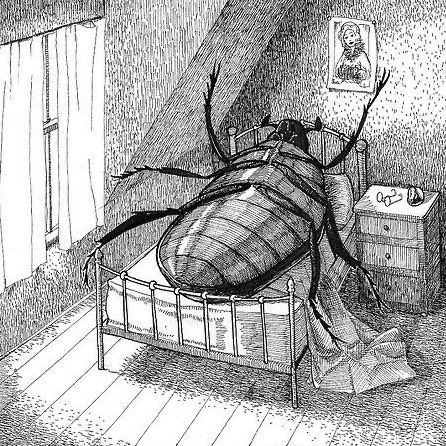
When Franz Kafka penned The Metamorphosis in 1915, he captured the existential horror of Gregor Samsa. A dutiful young clerk who wakes up transformed into a monstrous insect (Ungeziefer). Gregor’s tragedy is not his physical revulsion. It’s how his transformation strips him of human dignity in the eyes of authority and his own family. Reduced to an unwanted pest, Gregor is isolated, degraded, and ultimately left to die as a useless burden to a capitalist system. In May 2026, a similar socio-political dynamic unfolded in real life. It triggered a political phenomenon in India and then, the rise of the Cockroach Janta Party (CJP).

The movement was born out of an explosive judicial exchange. While hearing a routine legal petition, Chief Justice of India Surya Kant directed frustration toward unemployed youth, activists, and independent journalists. Dismissing their systemic critiques, he referred to them as parasites of society. He likened jobless young citizens who take to social media or activism to cockroaches who lack professional stability. The remark hit across a country where nearly 40% of young graduates face severe unemployment and widespread examination leaks (such as the NEET-UG) continuously derail youth aspirations. Rather than slinking into the shadows like Kafka’s Gregor, the affected youth weaponized the insult.

 Institutional View: Youth = “Cockroaches / Parasites”

Resistance Response: Subversion through Satire & Mass Action

 Ultimate Outcome: An “Exterminator’s Nightmare” (Mass Force)

Within 24 hours of the courtroom remarks, communications strategist Abhijeet Dipke launched the Cockroach Janta Party. A satirical parody on the ruling Bharatiya Janata Party (BJP). The platform’s initial setup was steeped in self-deprecating irony.

The Tagline: “Voice of the Lazy & Unemployed“.

Membership Criteria: Open to anyone who identified as unemployed, lazy, chronically online, and able to rant professionally.

The Digital Explosion: Within days, the CJP’s social media handle amassed over 22 million followers, eclipsing the official accounts of major political parties. Opposition figures, MPs, and prominent activists joined in, amplifying its reach.

The CJP represents a classic instance of subversive identity reclaim. Much like marginalized movements throughout history, Indian youth embraced the dehumanizing label assigned to them by elite institutions. By self-identifying as cockroaches, they exposed the establishment’s disdain for citizens struggling under economic stagnation and institutional failure. What began as a digital meme swiftly morphed into a formidable political force. The CJP mobilized offline.  Aligned with education-reform hunger strikes led by activists like Sonam Wangchuk and demanding the resignation of key government ministers over exam leaks. Just as Kafka’s protagonist faced violence when he tried to step out of his room, the state met the Cockroach march toward Parliament with heavy-handed resistance. The state put blockades, tear gas, and account withholdings under national security provisions. Ultimately, the Cockroach Janta Party illustrates the ultimate inversion of Kafka’s tragedy. Gregor Samsa died alone in silent isolation. Whereas millions of young adults proved that when an entire generation is labeled as vermin, they do not quietly perish. They swarm.


Similar Posts

  • | |

    Author Ursula Hegi leaves a legacy of memory and truth

    The literary world has lost one of its most perceptive voices on historical memory and collective silence. Author Ursula Hegi, whose work rigorously examined the human dimensions of life during and after World War II in Germany, died on July 27 at her home in Sag Harbor, New York. She was 80 years old. Hegi’s Journey as a Writer Hegi’s journey as a writer was deeply intertwined with her personal background. Born Ursula Koch in Düsseldorf, Germany, in 1946, she spent her early years amidst the rubble of a nation struggling to rebuild. Growing up in the immediate aftermath of the war, she experienced a culture dominated by a pervasive, uncomfortable silence. Despite visible physical destruction all around, adults rarely spoke openly about the Holocaust or Germany’s culpability in Nazi atrocities. That suffocating atmosphere of secrecy left an indelible impression on Hegi. At age 18, she left Germany for the United States. She later became a naturalized U.S. citizen. Unpacking the Burgdorf Cycle Hegi’s move across the Atlantic gave her the critical distance needed to confront the uncomfortable realities of her heritage. She began exploring these themes through fiction, creating the imaginary German town of Burgdorf. This setting served as the backdrop for four of her novels, most notably her 1994 masterpiece, Stones from the River. In Stones from the River, Hegi tells the story of Trudi Montag, a woman with dwarfism who serves as the town’s librarian. Trudi lives on the periphery of her community. She becomes a silent observer of human nature. People often dismiss or confide in her, allowing her to gather the town’s deepest secrets and witness how ordinary citizens slowly succumbed to, ignored, or quietly resisted the rise of National Socialism. The novel received widespread critical acclaim and was nominated for the PEN/Faulkner Award. It achieved massive commercial success when Oprah Winfrey selected it for her book club in 1997. It has catapulted Hegi to national prominence and cementing the novel as a staple of modern historical fiction. Confronting the Unspoken What set Hegi’s work apart was her refusal to reduce complex historical atrocities to simple caricatures. Rather than focusing solely on major political figures or battlefields, she turned her lens toward the everyday townspeople. The neighbors who looked the other way, the shopkeepers who compromised their moral standards, and the silent witnesses whose compliance enabled widespread horror. Through her character-driven narratives, Hegi demonstrated how shame and denial could poison future generations if left unaddressed. Her non-fiction work, Tearing the Silence, extended these themes by gathering interviews from German-born individuals of her generation to explore how their parents’ war choices shaped their own adult identities. A Lasting Influence Her career as an author of over a dozen books including short story collections, children’s literature, and standalone novels. Hegi spent decades teaching and mentoring aspiring writers, notably serving on the creative writing faculty at Stony Brook Southampton. Ursula Hegi’s legacy lies in her unwavering belief that storytelling can bridge the gap between guilt and healing. By confronting uncomfortable truths with empathy, clarity, and grace, her literature ensures that the painful lessons of the 20th century will not be forgotten.

  • |

    Subjective aesthetics versus literary brilliance

    Litigation over artistic quality reveals more about the critic’s personal taste and ideological leanings than it does about the intrinsic value of the literature itself. A prominent Bangladeshi academic initiated a debate across literary circles when a short video clip went viral online. In this brief excerpt from a presentation delivered at a university literary festival, the scholar dismissed the acclaimed author Shahidul Zahir. He claimed that Zahir does not even qualify as a third-rate artist. He  labeled him instead as a third-class writer whose language is thoroughly uninteresting. He similarly critiqued another modern Bengali prose writer, Akhteruzzaman Elias. For this case, he dismissed his writing style as endlessly monotonous. This judgment raises critical questions about literary aesthetics and the metrics used to evaluate global literature. Does a critic’s subjective boredom justify reducing a writer’s work to a low rating? Analytically, the fiction of Shahidul Zahir demonstrates the exact qualities that define world-class literature. Shahidul Zahir was never a conventional storyteller who somehow aimed to comfort his audience. Rather than offering comfortable narratives, his work exposes uncomfortable truths beneath established historical accounts. His portrayal of wartime violence, political opportunism, and societal compromise during and after the 1971 Liberation War forces readers to confront disturbing realities. Zahir connects the grim details of local life with magical and surreal elements. He utilizes oral storytelling traditions. He also combined surreal metaphors with layered depictions of the human condition. His narratives have bizarre occurrences such as animals acting as caretakers or war collaborators feeding human flesh to animals appear surprisingly believable against the background of ordinary towns like Sirajganj or Old Dhaka. His surrealism reflects real-world atrocities that were often equally unimaginable far from being mere fantasy. The academic’s critique centered primarily on two claims. Firstly, Zahir’s writing is dull. Secondly, his portrayal of the 1971 war is historically inaccurate. However, a closer look at these claims exposes significant flaws in the critic’s premise. The critic in question strongly favors traditional, highly formal, Sanskritized prose (sadhu bhasha) and rejects everyday spoken dialect (cholito bhasha) for serious discourse. In contrast, Zahir’s prose relies on the living, informal, and at times raw language spoken by everyday people. Therefore, rejecting an author because their prose reflects the authentic cadence of public speech reveals an elitist preference rather than an objective literary standard. The scholar accused Zahir’s acclaimed novella Jibon O Rajnoitik Bastobota (Life and Political Reality) of presenting stereotypical representations. He further pointed the supposed depiction of war collaborators wearing skull caps. Yet, nowhere in the actual text does such a detail exist. The critic appeared to project his own assumptions onto the text rather than reading what was actually written. Zahir’s novella accurately captures the painful political reality of post-liberation Bangladesh, where former wartime collaborators were gradually integrated back into mainstream power structures. Literary scholars often define world literature as creative work that responds to the global dynamics of modern capitalism and political change. Zahir’s novels illustrate how global economic forces interact unevenly with local feudal structures. In his masterpiece Shei Raate Purnima Chhilo (It Was Full Moon That Night), Zahir explores the rise of a powerful rural leader under state-sponsored political reform. The narrative illustrates how modern capitalist development mixes with lingering feudal mentalities. This mentality then creates a system where local elites hold unchecked power. Zahir constructs a portrait of a society caught between tradition and modern governance. Furthermore, Zahir’s treatment of the 1971 war connects local experiences with international geopolitics. In his stories, wartime memories constantly surface like fresh grass breaking through soil. His words speak about how national liberation was simultaneously a local struggle for survival and an event influenced by global Cold War tensions. The argument that a nation must produce literature directly accessible or marketed to Western readers in order to be considered world-class relies on a flawed premise. Global literary status should not depend solely on English translation or commercial visibility. Countless profound authors around the globe write within their local contexts. Such marvelous authors produce works that match the thematic depth of international figures like Franz Kafka or Gabriel García Márquez. As a matter of fact, dismissing Shahidul Zahir as third-class overlooks the artistic, historical, and linguistic power of his work. His fiction stands as an extraordinary accomplishment in modern literature. He is the one that challenges, provokes, and immortalizes the complex human experience far beyond the boundaries of narrow critique.  

  • | |

    Theories behind Shakespeare’s true identity

    For centuries, William Shakespeare has been indicated as the undisputed genius of Western literature. His masterworks, ranging from the tragedy of Hamlet to the romantic drama of Romeo and Juliet, form the bedrock of English theater. Yet, beneath the reverence lies one of the most persistent controversies in literary history. Did a provincial actor from Stratford-upon-Avon actually pen these legendary plays? Was Shakespeare merely a convenient alias for another genius working in the shadows? The Paradox of the Bard’s Background Doubts surrounding Shakespeare’s authorship stem largely from the sharp contrast between his known biography and the astonishing depth of his literary canon. Born in 1564, Shakespeare attended the local grammar school where he learned Latin and basic rhetoric. He never pursued higher education at a university, nor did he ever leave England. In contrast, the plays attributed to him demonstrate an extraordinary mastery of complex subjects. They reveal intimate familiarity with international geography, continental languages, high-stakes royal politics, aristocratic court etiquette, and intricate legal doctrines. In an era before public libraries and widespread travel, skeptic scholars often called Anti-Stratfordians question how a man with limited schooling and exposure to foreign cultures could possess such erudition. This discrepancy has led many to speculate that the real Shakespeare acted primarily as a public frontman. As an actor and shareholder in the Lord Chamberlain’s Men, Shakespeare was well-positioned in London’s theatrical community. High-born courtiers or politically vulnerable figures who wished to write plays may have utilized Shakespeare’s name to publish their works safely. The Leading Candidates Over years, prominent figures from Tudor and Jacobean society have emerged as alternatives for the true authorship. Sir Francis Bacon: A brilliant philosopher, statesman, and pioneer of the scientific method. Bacon possessed the intellectual rigor and courtly insight required to craft the plays. Proponents argue that he’s Lord Chancellor and a government insider. So, Bacon couldn’t openly associate with public theater. It would’ve definitely ruined his political standing and risking royal disapproval. Edward de Vere, Earl of Oxford: Educated at Cambridge, well-traveled throughout Europe, and a celebrated poet in his own right, de Vere fits the profile of an elite playwright. However, a major hurdle for the Oxfordian theory is that de Vere passed away in 1604 several years before iconic plays like The Tempest and Macbeth were produced. Christopher Marlowe: Perhaps the most dramatic theory involves Shakespeare’s contemporary, Christopher Marlowe. A gifted Cambridge graduate and spy for the Tudor government, Marlowe officially died in a tavern brawl in 1593. Skeptics suggest he faked his death to escape charges of heresy and treason, subsequently continuing to write under the pen name William Shakespeare. Notably, the first publications under Shakespeare’s name appeared just weeks after Marlowe’s reported demise. Was the Genius a Woman? The authorship debate extends beyond male nobles to include extraordinary women of the Elizabethan court. Shakespeare’s plays are remarkable for their nuanced, highly capable female characters who defy traditional stereotypes of the era. Two prominent women are frequently cited in authorship theories. Mary Sidney, Countess of Pembroke: An accomplished writer, classical scholar, and major patron of the arts, Sidney hosted a renowned literary salon and authored closet dramas meant for private performance. Emilia Bassano: Born to a family of Venetian court musicians believed to have Jewish heritage, Bassano possessed both international ties and formal education. Her background offers a compelling explanation for the Italian settings and Jewish themes present in works such as The Merchant of Venice. An Enduring Literary Mystery Mainstream academic consensus remains firmly with the man from Stratford-upon-Avon. They pointed to contemporary records, theatrical tributes and historical references. The debate surrounding the Bard’s identity continues to fascinate scholars and theater lovers alike. Whether created by a single self-made dramatist or a hidden collective of noble minds, the plays continue to inspire readers across the globe.

  • | |

    Finding Macbeth among the cul-de-sacs

    There is a persistent cultural myth that high art requires crumbling castles, stormed heaths, or the frantic pulse of a metropolitan center. Suburbia, by contrast, is frequently dismissed as a landscape of cultural vacuum. The locality is defined instead by the hypnotic hum of lawnmowers, identical mailboxes, and the predictable choreography of the morning commute. Yet, to truly understand the works of William Shakespeare, one might argue that the quiet cul-de-sac is precisely where his characters feel most alive. Far from being an ivory-tower exercise, reading the Elizabethan canon against the backdrop of modern suburban life reveals a shocking truth. The human heart remains unchanged. It battles with the exact same ambitions, fears, and frailties that obsessed the playwright over four centuries ago. Shakespeare’s Macbeth Consider the iconic image of Macbeth encountering the three witches on a desolate heath. It’s a scene immortalized in classical art where armored men on horseback reel back in shock from supernatural prophets. On the surface, this imagery feels light-years away from a suburban subdivision. And yet, the psychological anatomy of Macbeth’s descent is intensely domestic. The internal dialogue of unchecked ambition, the quiet rationalization of moral compromise, and the creeping dread of consequences do not require a Scottish throne room. They can happen just as easily across a kitchen island or inside a quiet home office late at night. The weird sisters whispering prophecies of greatness are mirrored in modern life by the relentless cultural pressures to achieve. King Lear’s Misjudgment of His Children When we open a volume of Shakespeare, the distance between the sixteenth-century stage and the twenty-first-century lawn collapses. The suburban environment with its heavy emphasis on conformity and respectability provides a testing ground for tragedy. Iago’s subtle manipulations and toxic envy find their modern equivalents in politics, gossip, and the quiet resentments behind closed doors. King Lear’s tragic misjudgment of his children echoes in the universal anxieties of aging, and the desperate search for legacy. The stakes may appear smaller. They’re measured in property values and school districts rather than kingdoms and crowns but the emotional resonance is identical. Reading Shakespeare in Suburbia Furthermore, reading Shakespeare in suburbia changes how we interact with our immediate surroundings. It strips away the sterile academic intimidation that often turns classical literature into a chore to be checked off a syllabus. Instead, the verse becomes a lens through which the mundane details of daily existence are rendered extraordinary. The polite wave to a neighbor takes on a layer of complex subtext; the solitary evening walk under streetlights feels heavy with introspection. We begin to recognize that our neighbors are not merely background characters in a quiet life, but complex individuals harboring their own private comedies and tragedies.    Immutable Patterns of Human Behavior Ultimately, literature serves as a mirror. The suburban landscape offers a surface polished to a clear, sometimes uncomfortable reflection. Shakespeare did not write merely about royalty or historical epochs. He wrote about the immutable patterns of human behavior. By bringing his texts into the quiet corners of modern domestic life, we bridge the gap between antiquity and the everyday. We discover that drama is not something reserved for history books or theatrical stages, but an inescapable part of being human, waiting to be noticed right outside our front doors.

  • |

    The art of the open ending

    For centuries, traditional storytelling operated under a strict covenant of closure. Fables, romantic comedies, and classic mysteries were built upon a reassuring promise. And by the final chapter, every thread would be neatly tied, justice served, lovers united, and monsters vanquished. This desire for definitive resolutizon is deeply human. Our brains naturally crave order and certainty. Yet, as modern literature evolved alongside an increasingly complex world, a different artistic philosophy took the spot. The open ending is not a failure of craft; it is a sophisticated act of storytelling that treats the reader as an active partner. When an author refuses to deliver a resolution, they fundamentally alter the dynamic between text and reader. In a traditional closed narrative, the reader is a passive recipient, sitting back while the writer decides the fate of every character. An open ending, by contrast, throws open the door to collaboration. As the final sentence lingers without a definitive resolution, the narrative burden shifts. The reader must step into the silence. They must analyse character motivations, thematic clues, and emotional trajectories to construct their own sense of meaning. The story stops being merely something you consumed; it becomes an intellectual puzzle you participated in completing. Psychologically, ambiguous endings linger in the memory far longer than wrapped-up conclusions. Behavioral scientists refer to this as the Zeigarnik effect: the cognitive tendency for human minds to remember uncompleted or interrupted tasks better than completed ones. A novel that ends with a smooth resolution is easily categorized and set aside. But a book that closes on a question mark or a character standing at a metaphorical crossroads, uncertain of their next step continues to resonate in the subconscious. Long after the book is closed, you find yourself pondering what happened next while doing dishes, walking to work, or staring out a window. Furthermore, the open ending reflects a deeper fidelity to real life. Human existence rarely delivers clean, cinematic resolutions. Our relationships, griefs, ambitions, and self-discoveries are ongoing processes rather than neatly closed chapters. By leaving a story partially unresolved, an author honors the messy reality of human experience. It acknowledges that living with unanswered questions is often far more authentic than forcing an artificial sense of certainty. When executed with skill, an open ending is never lazy or evasive. It is not an abrupt cutoff, but a carefully calibrated launching pad. The author leaves behind enough emotional breadcrumbs and thematic architecture for the conclusion to feel earned, even if the explicit plot points remain unwritten. It transforms the final page inviting us to look beyond the boundaries of the page and recognize that the best stories are the ones that keep living inside us.  

  • |

    Why marginalia is devised for conversation

    For centuries, books were treated as sacred, untouchable artifacts. Readers were taught to open a spine with reverence, turn pages by the edges, and never, under any circumstance, mark the paper. But in the modern reading culture, a quiet revolution has taken root: marginalia is no longer viewed as defacement. Today, it is recognized as a vital form of active intellectual engagement. Marking up a book transforms reading from a passive act of consumption into an active. Reading is a two-way dialogue between the reader and the writer. When you read with a pencil, pen, or sticky tab in hand, your relationship with the text fundamentally shifts. You cease to be a distant spectator observing someone else’s thoughts. In other words, you become a collaborator. Underlining a sentence, drawing an exclamation point next to a surprising plot twist, or a counterargument in the margin forces your brain to process language at a deeper level. It requires you to articulate why a passage resonated or failed. Furthermore, annotated books serve as personal time capsules. When you reopen a novel you marked up five or ten years ago, it offers an unfiltered reflection into who you were at that exact moment in your life. You might find yourself cringing at an old marginal note. Then you agree passionately with a circled phrase, or realizing that a passage you completely ignored years ago now carries personal meaning. The book becomes a physical record not just of the author’s story, but of your own cognitive and emotional evolution. Edgar Allan Poe once wrote: ‘In getting my books, I have been always solicitous of an ample margin … for the facility it affords me of pencilling suggested thoughts, agreements and differences of opinion …’ Practically speaking, marginalia also sharpens critical thinking. Students, scholars, and casual readers alike find that tracking themes through custom color-coded tabs or brief summary notes at the end of chapters drastically improves retention and comprehension. It prevents the common phenomenon of eye-scanning where your eyes move across sentences while your mind wanders elsewhere. Annotation demands presence. Ultimately, scribbling in the margins strips away the artificial pedestal we often place books upon. It reminds us that literature is not meant to sit pristine and untouched on a display shelf. Literature is meant to be wrestled with, questioned, celebrated, and lived in. The next time you open a book that challenges or moves you, don’t hold back. Pick up a pen, claim the empty white space on the page, and join a conversation that has been taking place across centuries.  

Leave a Reply

Your email address will not be published. Required fields are marked *