new jersey discovers

New Jersey discovers software glitch that permitted non-citizens to vote

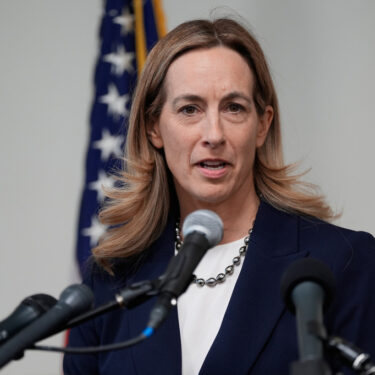
A major technological defect within New Jersey’s Motor Vehicle Commission (MVC) added approximately 6,600 non-U.S. citizens to the state’s voters between June 2023 and June 2024. Governor Mikie Sherrill publicly disclosed the finding during a news briefing, explaining that an investigation was immediately launched upon discovery to ensure election rolls are corrected and fully secured. Preliminary assessments conducted by election authorities indicate that fewer than 400 of those erroneously added individuals actually went on to participate in elections. Officials emphasized that there is no indication these votes altered the outcome of any contest or resulted from intentional fraud by the affected residents.

The voter registration system used across New Jersey driver’s license centers relies on digital touchpads designed to streamline voter sign-ups. When residents apply for or renew state identification or driver’s licenses, the system asks a series of preliminary eligibility questions, including whether the applicant is a United States citizen. Between June 2023 and June 2024, a severe programming error caused the system to bypass negative responses. Even when non-citizen applicants explicitly selected No on the prompt asking if they were eligible citizens, the software disregarded the answer and forwarded their information to election boards as new voter registrations.

Governor Sherrill noted that the individuals involved were completely blameless. They answered the eligibility prompts truthfully, but the automated backend software processed them as voters regardless. Although the underlying code error was patched in June 2024, the full scope of the improperly generated registrations was not uncovered until recently. After identifying the affected records, state election administrators conducted a preliminary audit to evaluate whether any of the erroneously registered individuals had cast ballots. The review revealed that under 400 people on the list had voted in at least one election during the period in question.

The misregistered voters were distributed across political spectrums, enrolling as Democrats, Republicans, and unaffiliated voters across multiple counties. State analysts confirmed that the limited number of votes cast were widely dispersed across time and region, meaning no single local or statewide race was tipped as a result of the system error. State officials clarified that affected individuals will not face prosecution or legal penalties, as they did not falsify documents or attempt to circumvent registration laws. In response to the revelation, Governor Sherrill announced immediate corrective steps to clean the voter registries and enforce administrative accountability. Election boards have begun systematically removing all 6,600 affected names from state voter databases. The state is mailing official notification letters to all impacted residents, informing them of the system glitch and confirming that their records are being updated to prevent future voter file errors. The state Motor Vehicle Commission is severing ties with IDEMIA, the third-party software contractor responsible for managing the license registration keypads, and moving to onboard a new vendor. The Governor’s Chief Counsel has opened an internal investigation into why the error persisted for a full year under the previous administration without being escalated or publicly reported.

The disclosure has drawn varied reactions across the political and advocacy landscape. Voting rights organizations, including the League of Women Voters of New Jersey, commended the current administration for its swift transparency and proactive purging of improper records while reiterating that affected residents were victims of a software glitch rather than bad actors. At the same time, the incident has fueled debates over voter registration infrastructure and database management. Republican lawmakers called for broader overhauls and stricter verification mechanisms across state agencies. State leaders maintained that the issue represents an isolated technology failure that is being thoroughly rectified to preserve the integrity of future elections.

 

Similar Posts

  • | |

    Iran pressures Gulf allies to rein in Trump, threa…

    Iran has launched an intensive diplomatic campaign targeting Gulf states, warning them directly that Tehran will strike their oil, power and water facilities unless they persuade President Donald Trump to halt US military action and pursue a negotiated end to the war instead. According to a senior Iranian official, the warning covers potential attacks on energy facilities, oil fields, refineries, electricity grids, water systems, transport networks and other strategic infrastructure belonging to Washington’s closest Arab partners in the region. The message formed part of a wider Iranian strategy to discourage further American military action by raising the specter of significant economic damage across the Gulf. Sources familiar with the matter said the warning traveled through a wave of high level diplomatic contacts following Trump’s July 28 threat to strike Iran’s energy network and broader infrastructure. Two senior Iranian officials, two Gulf sources and a senior regional diplomat, all speaking on condition of anonymity given the sensitivity of the discussions, said Iranian Foreign Minister Abbas Araqchi held conversations with his Saudi, Turkish and Qatari counterparts as well as Pakistan’s army chief. The senior diplomat said Araqchi pressed Washington’s Gulf allies to use their influence with Trump to head off renewed strikes, cautioning that any attack on Iran would trigger retaliation against American assets and critical infrastructure throughout the Gulf. The diplomat said Araqchi delivered a consistent message in each conversation, expressing readiness to retaliate while stressing that a diplomatic solution offers the best chance of avoiding wider regional destruction. One Gulf source described the Iranian position as unambiguous, saying Tehran made clear that any American strike on Iranian infrastructure would draw retaliation against Gulf energy facilities and other regional targets. The campaign illustrates how Iran is attempting to convert Gulf vulnerability into diplomatic leverage, presenting regional governments with the prospect that a renewed confrontation between Washington and Tehran could put the infrastructure their economies depend on directly at risk. Saudi Crown Prince Mohammed bin Salman subsequently spoke with Trump directly, urging him to hold off on military action, return to the negotiating table, pursue a ceasefire and seek a diplomatic resolution, according to the senior diplomat and Gulf sources. Another Gulf source said the warning was meant for every Gulf state but traveled primarily through Saudi Arabia and Qatar, both of which have rebuilt ties with Iran in recent years after a long period of regional rivalry. Qatar, Oman and Saudi Arabia have each urged Washington to resume talks with Tehran and prevent a fresh round of conflict, with Iran cautioning that further strikes could turn the region into what one Iranian official called a fireball. On August 2, Trump said he had agreed to call off a planned attack on Iran, provided a deal could be reached quickly. Concerns over wider escalation A Gulf source said Saudi Arabia believes additional escalation would only cause further destruction, explaining why Riyadh pushed Trump to give diplomacy more room to work. At the same time, Saudi officials made clear the kingdom would defend itself if directly threatened, with a second Gulf source saying Riyadh warned that any strike on Saudi territory would draw a military response of its own. Ali Shihabi, a Saudi analyst with ties to the royal court, said the kingdom’s assessment holds that further escalation is unlikely to produce the outcome Washington wants. He said Saudi officials believe a mix of proportionate military responses combined with sustained pressure on Iran around the Strait of Hormuz offers the most realistic route toward a workable diplomatic settlement. Iran’s clerical leadership has repeatedly called for the closure of US military bases across the Gulf and urged Gulf Arab states to stop sharing intelligence with Washington, which Tehran believes has enabled strikes against Iranian targets. Shihabi noted that memories of the September 2019 drone and missile strikes on Saudi Arabia’s Abqaiq and Khurais oil facilities still shape regional thinking, since that attack temporarily cut more than half the kingdom’s crude output and exposed how vulnerable Gulf energy infrastructure remains. A separate Iranian official reiterated that any damage inflicted on Iran would be met with far greater retaliation, again citing power grids and refineries among potential targets. From Tehran’s perspective, the senior Iranian official said, Trump now confronts two difficult options: escalate a conflict that risks engulfing the wider Gulf and disrupting global energy markets, or accept a negotiated settlement that falls short of the decisive win Washington has sought. The senior regional diplomat identified Washington’s reluctance to let Tehran claim any form of victory as one of the central obstacles blocking an agreement, noting that American officials want tangible proof they prevailed in the conflict.

  • |

    New lizard species “Syrax” discovered in Thailand

    A new species of lizard has been discovered in Thailand. According to foreign media reports, the new species was discovered in western Thailand and has been given a name inspired by the popular series “House of the Dragon.” The lizard has been named “Syrax” after the dragon ridden by Queen Rhaenyra Targaryen in the series. Details about the discovery of the new lizard were published last month in the journal ZooKeys. The study found that the lizard belongs to a group known as mountain horned dragons and was discovered in the forests of the high-altitude areas of Mae Wong. Researchers explained that the name was chosen based on the lizard’s yellowish coloration, small size and large clutch size. Mountain horned dragons are known for the spiny projections on their necks and backs. The study also stated that further research is needed to fully understand the distribution of lizard species. Researchers also need to explore nearby mountain ranges to discover other hidden or previously undocumented species in the northern and western mountainous regions.

  • |

    Bangladesh hints at joining Pakistan-Saudi-Türkiy…

    DHAKA: Bangladesh has signalled that it could consider joining the emerging economic or defence framework involving Pakistan, Saudi Arabia and Türkiye, opening a potentially significant new chapter in regional diplomacy and security cooperation. Bangladesh Prime Minister’s Foreign Affairs Adviser Humayun Kabir said Dhaka was taking a positive view of the possibility of becoming part of a framework involving the three countries. His comments come only weeks after Pakistan, Saudi Arabia and Türkiye signed the Makkah Joint Defence Agreement. The agreement, signed in Makkah on Aug 7, commits the three countries to strengthening collective security and defence cooperation. It also states that an armed attack against any one of the three signatories would be regarded as an attack against all three. Kabir, speaking to Bangladesh’s state news agency, indicated that Dhaka would examine the idea through the lens of its own national interests and the rapidly changing global economic and trade environment. “The government is following a Bangladesh First policy,” Kabir said, according to reports, stressing that national interests remain at the centre of Dhaka’s foreign policy. The remarks are particularly noteworthy because Bangladesh has recently been working to strengthen practical ties with Pakistan. Kabir said the two countries were seeking greater cooperation in trade and people-to-people contacts, suggesting that economic engagement could form an important part of the relationship. For Pakistan, Bangladesh’s interest could give the Makkah framework a wider South Asian dimension. For Saudi Arabia and Türkiye, Dhaka’s possible participation could also expand the reach of an arrangement that the signatories have described as defensive rather than directed against any particular country. Turkish President Recep Tayyip Erdogan has said the agreement is open to other friendly countries seeking peace, prosperity and stability in the region. Turkish officials have also stressed that the pact does not identify a common enemy and is intended to strengthen defence cooperation and collective deterrence. Bangladesh’s possible move comes as Dhaka is also deepening its relationship with Saudi Arabia. Kabir said Prime Minister Tarique Rahman is expected to visit Saudi Arabia following an invitation from Crown Prince Mohammed bin Salman. The visit could provide an opportunity for discussions on economic cooperation, regional security and Bangladesh’s possible role in broader regional frameworks. For now, Dhaka has not announced any formal decision to join the defence agreement. But its positive signal is already attracting attention, particularly because Bangladesh’s participation could reshape the strategic picture across South Asia and the wider Muslim world. The next step will likely depend on how Dhaka assesses the proposed framework against its national interests, economic priorities and wider foreign-policy objectives.

  • | | | |

    Iran warns US forces face regional expulsion

    Senior Iranian officials on Wednesday issued fresh warnings against the United States, declaring that American forces could eventually be forced out of the Middle East while linking any future reopening of the Strait of Hormuz to changes in Washington’s policies. Ebrahim Azizi, chairman of the Iranian parliament’s National Security Committee, said the removal of US military forces from the region and from countries hosting American bases was only a matter of time. In a post on X, he claimed the US would eventually have to focus its resources on securing its own territory instead of maintaining military installations abroad. The remarks came as Iranian media reported that ongoing discussions between Tehran and Oman over future navigation arrangements in the Strait of Hormuz would not automatically lead to the reopening of the strategic shipping route. According to Iranian state media, negotiations are being conducted solely between Iran and Oman, with officials insisting that the process is independent of the United States. Iranian sources maintained that even if an agreement is reached with Muscat, the waterway will remain closed unless Washington changes what Tehran describes as its hostile policies and interference. The Strait of Hormuz is one of the world’s most critical energy corridors, carrying a significant share of global oil shipments. Any disruption to traffic through the strait has the potential to affect international energy markets and regional security. Meanwhile, the United Nations expressed concern over a sharp increase in executions in Iran. UN High Commissioner for Human Rights Volker Türk said at least 56 people had been executed on national security-related charges since March, including dozens connected to protest-related cases. He warned that the growing use of capital punishment appeared aimed at creating fear within society. Regional tensions also escalated after Yemen’s Houthi movement claimed responsibility for a missile attack on the Saudi oil tanker Wafaa in the northern Red Sea. The group said the vessel was struck by ballistic missiles as part of its campaign targeting Saudi shipping. Houthi spokesman Yahya Saree claimed the movement had targeted eight Saudi oil tankers since launching its maritime blockade in late July and said dozens of other vessels had either been prevented from passing or forced to change course. Saudi authorities had not commented on the claims at the time of reporting. Separately, Iranian lawmaker Esmail Kowsari criticised US President Donald Trump’s approach toward Tehran, describing Washington’s negotiating strategy as inconsistent and unreliable. He accused the US administration of issuing conflicting statements regarding the Strait of Hormuz and Iran’s regional position. Iranian officials also blamed what they described as continued US pressure and military threats for slowing negotiations with Oman over navigation in the Strait of Hormuz, insisting that Tehran would not conclude any agreement under external pressure.

  • |

    Mark Zuckerberg’s $300m superyacht faces scrutiny after ignoring distress call from stranded vessel in Alaska

    Questions have been raised regarding Meta CEO Mark Zuckerberg after his $300 million vessel reportedly ignored a call to assist a stranded boat off the coast of south-east Alaska. The 387-foot luxury yacht, named Launchpad, was positioned closer to the helpless 21-foot skiff than the commercial cruise vessel that ultimately stepped in to provide aid. According to an eyewitness account shared on Bluesky by a traveler on the Wilderness Legacy (operated by UnCruise Adventures), the captain informed guests that maritime authorities had tried reaching the billionaire’s vessel first. The passenger noted that their vessel performed the rescue after the US Coast Guard tried contacting Mark Zuckerberg’s yacht, which sat at a shorter distance, and reported that the crew repeatedly ignored the radio broadcasts. Representatives for Zuckerberg and his partner, Priscilla Chan, have strongly disputed the claim that the crew knowingly ignored a distress signal. Spokesperson Brian Baker clarified to Forbes that neither Zuckerberg nor Chan were present on Launchpad during the incident. He further stated that the crew was monitoring a different radio frequency at the time and maintained that rescue operations were already under way by the time the message was reviewed. The small skiff had been left immobilised after running out of fuel while traveling between Petersburg and Juneau. Zuckerberg, who heads Meta Platforms, has not issued any personal statement concerning the event.

Leave a Reply

Your email address will not be published. Required fields are marked *