stay safe this

Stay safe this monsoon

The monsoon season brings cool weather fresh air and beautiful rainfall making it a favorite time of the year for many people.

However it also comes with several risks. In Pakistan especially in cities like Karachi heavy rain can cause water to collect on roads making travel dangerous and increasing the risk of accidents.

Experts say that following a few simple safety tips can help prevent serious incidents during the rainy season.

One of the biggest dangers during rain is electricity. Never touch fallen power lines or electrical equipment with bare hands.  Parents should also teach children to stay away from broken or exposed electric wires.

It is also a good idea to unplug electrical appliances that are not in use during heavy rain.

Drivers should avoid parking vehicles under power poles or overhead electric wires as strong winds and heavy rain can damage them and create dangerous situations.

People walking outdoors should be careful as well. Whenever possible use dry sidewalks and avoid walking through standing water.

Flooded roads may hide open drains or fallen electric wires making them extremely dangerous.

If you need to go outside while it is raining, carry an umbrella or wear a raincoat to stay dry and reduce the risk of catching seasonal illnesses.

Health experts also recommend keeping a basic first aid kit at home so that minor injuries or emergencies can be treated quickly until medical help is available.

Rainwater that remains stagnant for several days can become a breeding ground for mosquitoes increasing the risk of diseases such as dengue malaria and skin infections.

To stay safe make sure rainwater does not collect around your home or in  nearby streets.

Experts say that taking these simple precautions can help protect lives and allow people to enjoy the beauty of the monsoon season more safely.
Similar Posts

  • |

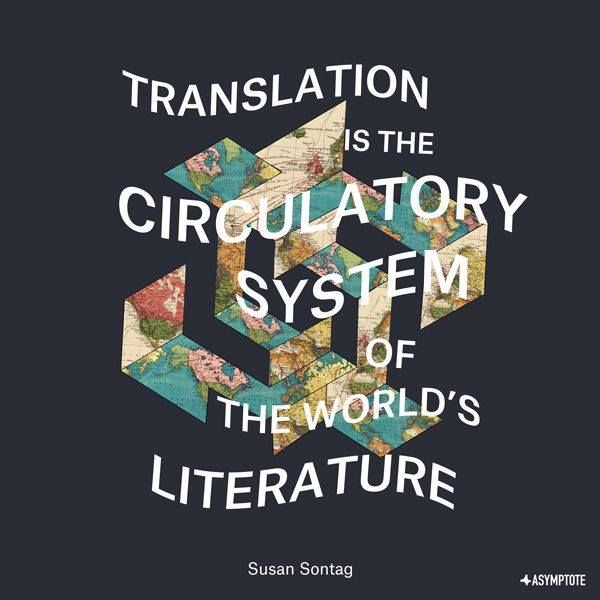
    How translation reconstructs global literature

    For generations, the international publishing world operated around a narrow geographic axis. Books written in dominant English-speaking hubs dominated bookstore displays worldwide. Stories crafted in regional languages across Asia, Africa, South America, and Eastern Europe struggled to secure international distribution. When works were translated, the process was often viewed as a purely mechanical service. A utilitarian act of converting words from one dictionary to another. Today, a seismic cultural shift is redefining global literature. Translation is finally recognized as a sophisticated, creative art form that acts as the lifeblood of global storytelling. Recent publishing trends and prestigious accolades, such as the International Booker Prize, highlight this remarkable transformation. In 2026, the prize made history by awarding its top honor to Taiwan Travelogue by Yáng Shuāng-zǐ, brilliantly translated from Taiwanese Mandarin into English by Lin King. This historic win marking the first time a Taiwanese Mandarin work secured the award highlighted a broader reality. Global audiences are hungrier than ever for diverse, culturally distinct narratives. Over the past decade, sales of translated fiction have surged dramatically, proving that readers no longer seek comfort solely in familiar local settings. At the center of this movement is a fundamental re-evaluation of the translator’s role. Far from being invisible ghostwriters, translators are cultural ambassadors and literary artists in their own right. Translating a novel is rarely a matter of word-for-word substitution. Every language carries unique rhythms, idioms, historical baggage, and untranslatable social nuances. When a translator approaches a text, they must reconstruct its tone, preserve its emotional core, and decide how to navigate cultural concepts that have no direct equivalent in the target language. They rewrite the story from the inside out, ensuring it resonates authentically with a brand-new audience without stripping away its original soul. This evolving respect for translation has sparked important industry changes, such as the widely supported movement to print translators’ names directly on book covers alongside the author’s. Independent publishers are leading the charge, taking bold risks on works translated from lesser-represented languages, including Kannada, Taiwanese, Bulgarian, and Arabic. Digital distribution platforms have further accelerated this trend, allowing indie books to cross oceans instantly. Ultimately, translation is what prevents global literature from becoming an echo chamber. It dismantles geographical gatekeeping, fosters empathy across political divides, and allows readers to step directly into the lived experiences of people half a world away. The delicate craft of translation and the global literary community ensure that stories are no longer limited to by borders of the language in which they were born.  

  • |

    New lizard species “Syrax” discovered in Thailand

    A new species of lizard has been discovered in Thailand. According to foreign media reports, the new species was discovered in western Thailand and has been given a name inspired by the popular series “House of the Dragon.” The lizard has been named “Syrax” after the dragon ridden by Queen Rhaenyra Targaryen in the series. Details about the discovery of the new lizard were published last month in the journal ZooKeys. The study found that the lizard belongs to a group known as mountain horned dragons and was discovered in the forests of the high-altitude areas of Mae Wong. Researchers explained that the name was chosen based on the lizard’s yellowish coloration, small size and large clutch size. Mountain horned dragons are known for the spiny projections on their necks and backs. The study also stated that further research is needed to fully understand the distribution of lizard species. Researchers also need to explore nearby mountain ranges to discover other hidden or previously undocumented species in the northern and western mountainous regions.

  • Dogs can read human emotions

    Dogs may understand more than just the words we say. A new scientific study suggests that they can also notice human facial expressions and may recognize different emotions such as happiness, anger fear and sadness. Researchers from the  University of Vienna in Austria studied dogs’ brains to understand how they react to human faces.  Their findings were published in the scientific journal iScience. How the study was done In the first part of the study researchers used MRI scans to study the brains of eight dogs. The group included six Border Collies, one Labrador and one Golden Retriever. The dogs were shown pictures of unfamiliar people with happy or neutral facial expressions. When the dogs saw happy faces certain areas of their brains became more active. These areas are linked to thinking rewards and positive experiences. Researchers found strong activity in areas such as the temporal cortex and caudate nucleus.  The caudate nucleus is connected with the brain’s reward system and may also respond to social rewards. According to senior researcher Laura Cuaya, this suggests that a happy human face may have a positive emotional meaning for dogs even when the person is a stranger. Dogs may tell different emotions apart The researchers then wanted to know whether dogs could also recognize negative emotions. Twelve dogs were shown human faces expressing happiness anger, fear and sadness. Their brain activity was recorded and studied using machine learning methods. The results showed that dogs’ brains reacted differently to angry fearful and sad faces compared with happy faces. The researchers also found different brain activity patterns for each negative emotion. This suggests that dogs may be able to tell these emotions apart rather than seeing all negative expressions as the same. Dogs notice small changes First author Raul Hernandez Perez explained that humans can often understand emotions from very small changes in a person’s face.  Dogs may also pay close attention to these small changes. This ability may help explain why dogs are so good at understanding people. Unlike humans and monkeys dogs did not develop these social skills through the same evolutionary path. Instead thousands of years of living closely with humans may have helped dogs become highly sensitive to our behavior and signals. Interestingly both researchers are not only professional colleagues but also life partners. Their own two dogs, Odin and Kunkun were also part of the study. It is not only about the face The researchers say dogs do not depend on facial expressions alone. They can also notice changes in our voice body movements, behavior and even smell. So when a dog seems to know that its owner is happy worried or upset it may be combining many different signals at the same time. Training dogs for MRI scans The dogs had to receive special training before taking part in the research.  They learned to stay still inside an MRI scanner for short periods. At first they were trained to remain still for only one or two seconds.  The time was slowly increased as they became more comfortable. They were also introduced to the scanner the equipment and the sounds it made.  One of the hardest parts was teaching the dogs that doing nothing was actually their job. The dogs took part voluntarily and could leave whenever they wanted. The study has some limits The study was small and most of the dogs were Border Collies. This breed is known for being intelligent and good at understanding human social signals. Because of this the results may not be the same for every dog breed. More research is needed to find out whether different breeds understand human emotions in different ways. Scientists also want to learn how dogs use these emotional signals in everyday life. The study does not prove that dogs experience happiness sadness or fear in exactly the same way humans do. Scientists cannot directly know what a dog is thinking or feeling. However the brain activity does suggest that human facial expressions carry emotional information for dogs. The bond between humans and dogs goes far beyond simple commands. Dogs can pick up signals from our faces voices movements and behavior. This ability may be one of the reasons why the relationship between people and dogs is so strong.

  • Tracing the spiritual legacy of “Nanak Se Nankana”

    In the fertile plains of Punjab lies a landscape quietly layered with centuries of devotion, miracle tales, and interfaith kinship. This sanctuary of green fields was known as Rai-Bhoi-Di-Talwandi. The time long before the bustling town of Nankana Sahib bore its current name. It was overseen by Rai Bhoi Bhatti, a local Muslim landlord whose family had influence over the region. Yet, history transitioned irreversibly in 1469. It was in this soil that Guru Nanak Dev Ji, the founder of Sikhism, was born to Mehta Kalu and Mata Tripta. Rai Bular Bhatti (Rai Bhoi’s descendant) renamed the settlement Nankana Sahib in his honor. He was basically moved by the extraordinary spiritual wisdom radiating from the young child. Thus began a historical and spiritual trajectory known throughout the subcontinent as Nanak Se Nankana. The sacred evolution of a man into a timeless sanctuary. What makes Nankana Sahib uniquely enchanting is that the entire geography operates as a living storyboard. The city’s trees, fields, and lanes are strongly knitted  into local folklore. And each folklore is  marked by a Gurdwara commemorating young Nanak’s childhood and early enlightenment. Gurdwara Janam Asthan is the crown of the holy city. This magnificent marble compound stands at the site of Guru Nanak’s ancestral home. It was originally built as a small sanctum by his descendants. Later transformed into a grand complex surrounded by reflective Sarovars (holy pools) during the reign of Maharaja Ranjit Singh. According to popular regional legend, a young Nanak was sleeping out in the open pastures while tending to his father’s cattle. As the afternoon sun shifted, a large cobra slithered out and expanded its hood above his face to shade him from the blistering heat. Rai Bular Bhatti witnessed this miracle from his horse and then showed his devotion for Nanak. The ancient Jal (Mal) tree under which the event occurred still casts its shade today at Gurdwara Malji Sahib. Local folklore recalls a peasant complaining that Nanak’s roaming cattle had ruined his crops. Yet, when officials inspected the field, the damaged green stalks had miraculously grew back whole and undamaged. Gurdwara Kiara Sahib stands today atop that very field. When young Nanak returned from a nearby market town having spent his father’s money entirely on feeding hungry sadhus (Sacha Sauda or the True Bargain), he feared his father’s anger. He hid beneath a large, canopy-like tree whose drooping branches resembled a tent (tambu). Nearby stands Patti Sahib, where a seven-year-old Nanak astounded his teacher by writing an acrostic poem on the alphabet explaining divine truths instead of mere grammar. Beyond the miraculous legends of childhood, Nankana Sahib carries profound historical lore. It weathered the turbulent Sikh Empire era. The city witnessed the heroic sacrifices of the 1921 Akali Movement reform at Janam Asthan. It also survived the painful demographics shifts of the 1947 Partition. Today, the journey of Nanak Se Nankana remains an emotional pilgrimage. Every year during Gurpurab (Guru Nanak’s birth anniversary), thousands of pilgrims from across the globe cross borders to converge on these quiet lanes. The devotees step through the grand archways of Gurdwara Janam Asthan and touch the dust of Nankana to their foreheads. They aren’t just visiting a building. They are retracing a historical path that transformed a quiet Punjab meadow into a sanctuary of universal love, humility, and timeless unity.  

  • Amazing uses of rice water you should know

    Rice water is often thrown away after cooking, but it can be useful in many ways.  It can improve the taste of food help plants grow support healthy hair and skin and even be used for cleaning. Instead of pouring it down the drain try these simple ideas. Add It to Rice Dishes Use leftover rice water when cooking rice based meals. It can add extra flavor and provide a small nutritional boost. Use It in Soups and Broths Mix rice water into homemade soups or broths. It helps make them slightly thicker while improving both taste and texture. Cook Vegetables Steam or boil vegetables in rice water instead of plain water. The vegetables may absorb some of the nutrients and develop a richer flavor. Baking Rice water can be added to recipes such as bread pancakes, or other baked goods. It helps keep them soft and moist. Hair Rinse Rice water contains vitamins, minerals and amino acids. After washing your hair with shampoo and conditioner use rice water as a final rinse. It may help make hair feel smoother and look shinier. Natural Facial Toner Rice water has been used in Asian skincare for generations. Apply it with a cotton pad to help refresh the skin reduce the appearance of irritation and leave your face feeling clean and fresh. Feed Your Plants Dilute rice water with plain water before using it on indoor or outdoor plants. It contains nutrients that may support healthy plant growth. Natural Cleaner Diluted rice water can be used to clean kitchen counters and wash some household items.  Its mild starch and natural compounds may help remove light grease and dirt. Help Protect Plants Spraying diluted rice water around plants may help discourage some garden pests.  While it is not a guaranteed pest control method it can be a simple natural option to try. Instead of wasting leftover rice water give it a second life around your home. It is an easy low cost way to reduce waste and make use of something that is often thrown away.

  • Lower protein may boost longevity

    Protein rich foods such as cereals coffee water and many other products have become increasingly popular. However a new study suggests that for many people eating less protein instead of more may actually be better for overall health and could even help people live longer. The review published on July 31 in the journal Cell Press Blue examined more than 350 scientific studies exploring the connection between lower protein intake and healthy aging. Researchers found that reducing protein intake may improve metabolism help cells respond better to nutrients lower cell damage and support normal cell function. Together these effects may promote better health and a longer lifespan. The study’s lead author Dudley Lamming said that protein is important for people who exercise regularly because it helps build muscle and improves workout results. However he added that most people are not very physically active which means they may be eating more protein than their bodies actually need. In some cases this could have negative effects on health. Experts also noted that the right amount of protein is different for everyone.  It depends on factors such as age overall health physical activity and lifestyle. They recommend following a balanced diet and getting advice from a healthcare professional before making major changes to protein intake.

Leave a Reply

Your email address will not be published. Required fields are marked *