six members one
| |

Six members of one family killed in Israeli strike…

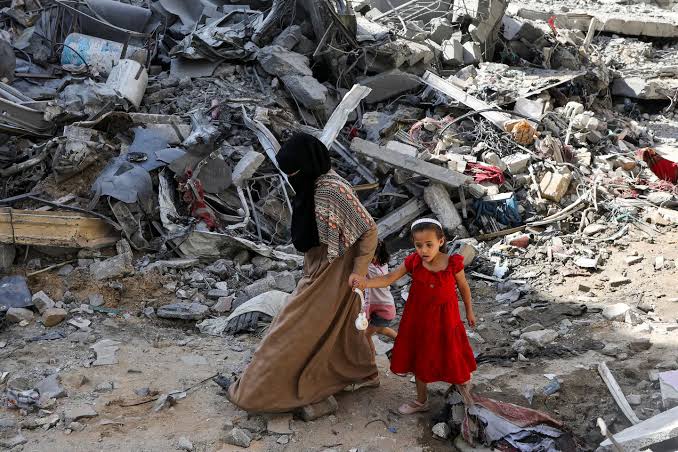
An Israeli airstrike killed a father, his wife and their four children in Gaza City on Tuesday, setting their home on fire, according to health officials, in the latest deadly incident since a US backed ceasefire took hold more than nine months ago.

Medics said the strike hit the family’s house in the Sabra neighborhood, killing Firas Al Masri, his wife Salsabeel, their three daughters and their son. The Israeli military confirmed carrying out the strike, saying it had targeted a Hamas militant and that it was still assessing the outcome of the attack.

A video obtained by a news agency showed rescue workers battling fires inside the house and carrying out bodies wrapped in white shrouds. Masri’s father, Abu Yusuf Al Masri, said the explosion occurred while the family slept, describing his grief over the loss of his son, daughter in law and grandchildren.

He said rescuers could not save the children and grandchildren from the flames and destruction, and that around five or six people died, most of them women and children, without warning and without mercy. Standing outside the family home, he said no place in Gaza offers relative calm or safety anymore.

Heavy toll since October

The Israeli military said it carried out four separate strikes since Friday that killed four militants from Hamas and Islamic Jihad, three of whom it said had taken part in the October 7, 2023, attack on Israel that triggered the war and involved the seizure of Israeli hostages.

Later Tuesday, two additional Israeli airstrikes hit a vehicle in central Gaza and an association building in Gaza City, killing at least six more people and wounding others, according to Palestinian medics, bringing Tuesday’s overall death toll to 12. The Israeli military did not immediately comment on either of these later strikes.

These latest deaths add to a toll exceeding 1,160 Palestinians, most of them civilians, killed in Israeli attacks since the ceasefire between Israel and Hamas took effect in October, according to health officials in Gaza. Hamas typically does not disclose its own casualty figures.

The truce halted large scale fighting but has not stopped near daily Israeli strikes across the territory. Israel says these operations target militants. Four Israeli soldiers have died at the hands of militants in Gaza during the same period.

Mediators including Egypt, Qatar, Turkey and the United States have continued working to advance a plan put forward by President Donald Trump aimed at ending the conflict in Gaza, which calls for Hamas to disarm and for Israeli forces to withdraw, though little progress has emerged so far.

The war began when Hamas led fighters attacked communities in southern Israel, killing 1,200 people and taking roughly 250 hostages, according to Israeli figures. Israel’s subsequent military campaign has killed more than 73,000 Palestinians, according to Gaza health officials.

Nearly all of Gaza’s population of about two million people now lives crowded along a narrow strip of coastal land, largely in makeshift tents or damaged buildings, enduring severe conditions under continued Hamas control.

The continued strikes highlight how the ceasefire, despite formally ending large scale combat, has failed to bring lasting safety to civilians in Gaza, with families like the Al Masris bearing the human cost of attacks that Israel says are aimed at militants but that have repeatedly killed women and children in residential areas. International mediators continue pressing for progress on disarmament and withdrawal terms, though the persistent violence has raised doubts about how quickly, if at all, conditions on the ground might meaningfully improve for Gaza’s remaining population.
Similar Posts

  • | |

    Karachi-Rohri rail track construction to begin nex…

    Federal Minister for Railways Hanif Abbasi has said construction of a 480-kilometre railway track from Karachi to Rohri will begin next year. He made the remarks during a meeting with Sindh Governor Nihal Hashmi, where Federal Petroleum Minister Ali Pervaiz Malik, Minister of State Kheial Das Kohistani, Fahad Haroon and other officials were also present. During the meeting, Abbasi said Pakistan Railways would soon begin transporting fuel, automobiles, minerals and liquefied petroleum gas (LPG) through its network. He said around 11,000 tonnes of coal was currently being transported from Thar to the national grid every day. Abbasi also remarked that only two or three countries could be considered Pakistan’s enemies. The Sindh governor praised the government for ensuring uninterrupted supplies of petroleum products despite the ongoing challenges. Hashmi particularly appreciated the measures taken by Petroleum Minister Ali Pervaiz Malik to maintain the supply of fuel across the country. Ali Pervaiz Malik said stakeholders had extended full cooperation to ensure the uninterrupted availability of petroleum products. The meeting also discussed measures to strengthen transportation and logistics infrastructure and improve coordination between relevant federal and provincial authorities.

  • | | |

    PM forms top panel to revive Iran gas pipeline

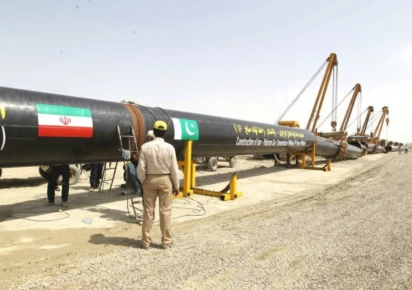
    Prime Minister Shehbaz Sharif has formed a high-level committee to find a mutually acceptable solution to the long-delayed Pakistan-Iran gas pipeline project, which has remained stuck for more than a decade. Petroleum Minister Ali Pervaiz Malik informed the Senate that the committee is examining the legal, financial and energy implications of the project. It will assess Pakistan’s potential financial exposure in the ongoing arbitration process while also considering the country’s future energy requirements. The minister was responding to a calling-attention notice raised by Senator Talha Mahmood. He said the government was seeking a negotiated solution rather than allowing the dispute to become more complicated through prolonged litigation. Describing Iran as a “brotherly country”, Malik said the leadership of Pakistan and Iran remained in contact and was working towards an amicable settlement. He noted that Iran had already completed substantial infrastructure on its side of the project. Iranian authorities have brought gas from the South Pars field towards a major city close to the Pakistani border. The dispute over the pipeline has reached international arbitration in Paris. Pakistan is therefore assessing the possible financial consequences of the project delays and the legal proceedings before deciding its next course of action. The government is also reviewing whether the pipeline can be made commercially viable. Pakistan has previously asked Iran to cut its gas price by around 50 per cent and reduce the proposed supply volume because several domestic sectors have shown limited interest in purchasing Iranian gas at existing prices. Officials have said that domestic consumers and fertiliser plants are currently receiving gas at significantly lower prices than the cost at which imported gas could be supplied through the project. Power producers have also indicated that purchasing imported gas at prices above Rs2,000 per million British thermal units would not be commercially feasible. The government has therefore been considering a lower price as a potential benchmark for making the pipeline economically sustainable. Pakistan has also indicated that it could move ahead with the project if the United States provides a waiver allowing energy cooperation with Iran despite Washington’s sanctions regime. The Iran-Pakistan pipeline, commonly known as the Peace Pipeline, was originally designed to transport Iranian natural gas to Pakistan and help address the country’s long-term energy needs. Iran completed a substantial portion of the pipeline within its territory. Pakistan, however, did not complete its section by the agreed deadline, leaving the project largely dormant. US sanctions against Iran, difficulties in securing financing and wider geopolitical tensions have complicated Pakistan’s efforts to complete the project. The issue has also resulted in legal disputes between the two countries. Iran initiated international arbitration proceedings in Paris over delays in the implementation of the project. Meanwhile, the petroleum minister told the Senate that the government was separately addressing gas-related problems in Balochistan. He said Prime Minister Shehbaz Sharif had instructed him to engage with provincial stakeholders. Another high-level committee, headed by Deputy Prime Minister and Foreign Minister Ishaq Dar, is examining gas-related issues in the province, including technical and payment-related matters. The latest move indicates that Islamabad is attempting to balance its obligations under the Iran gas project with its financial constraints, international commitments and changing energy requirements.

  • | |

    4.8-magnitude earthquake jolts Zhob, Chaman

    QUETTA: Earthquake tremors were felt in Zhob and Chaman districts of Balochistan, triggering panic among residents. According to the Seismological Centre, the earthquake had a magnitude of 4.8 on the Richter scale. Its depth was recorded at 15 kilometres below the Earth’s surface. The epicentre of the earthquake was located around 122 kilometres northeast of Zhob, according to the seismic monitoring authorities. The tremors were felt in several areas, causing fear and anxiety among local residents. Many people rushed out of their homes as a precautionary measure. Residents were seen reciting the Kalma Tayyaba while gathering in open areas to avoid any possible danger from the earthquake. The sudden tremors caused concern among citizens, particularly because of the possibility of aftershocks. People remained cautious and stayed outside their homes for some time. Authorities and local administration remained alert following the earthquake. Emergency services were also monitoring the situation in the affected districts. So far, no casualties or property damage have been reported as a result of the earthquake. Officials are continuing to assess the situation and monitor for any further seismic activity. Earthquakes are relatively common in parts of Balochistan because of the region’s geological setting. Authorities generally advise residents to remain calm during tremors and move to safer open areas after leaving buildings if necessary.

  • |

    Global food prices hit 3-year high as FAO warns of hunger risk

    World food prices climbed in July to their highest level in more than three years. The UN Food and Agriculture Organization says extreme weather and escalating conflicts are driving the surge. According to FAO’s food price index, prices averaged 131.1 points in July, up from 130.3 points in June. That marks the strongest reading recorded since January 2023. Experts describe the trend as a “perfect storm” of overlapping pressures hitting global agriculture at once. Multiple factors are compounding each other, making the situation harder to control. Reuters reported that FAO’s chief economist pointed to severe weather, including intense heatwaves and El Niño effects, as major contributors. These conditions have damaged crop yields in several key farming regions. On top of that, escalating conflicts in the Black Sea and Gulf regions have added further strain. Together, these factors have disrupted supply chains and pushed prices higher across multiple food categories. Cereal prices led July’s overall rise, climbing 3.4% month-on-month. That increase was largely driven by a sharp 5.8% jump in wheat prices specifically. FAO said wheat markets were rattled by fears over disrupted Black Sea exports. Heat damage to crops in major producing regions added even more pressure on supply. Vegetable oil prices also rose, climbing 2% to their highest level since June 2022. Higher crude oil prices, tied partly to the ongoing Iran conflict, helped push palm and soy oil prices upward. Rapeseed and sunflower oil prices moved in the opposite direction, declining slightly during the same period. Sugar prices rose too, up 5.6%, driven by weather concerns across Europe and Asia. Stronger expected demand for ethanol in Brazil added further support to sugar prices. Meat prices, however, told a different story entirely, falling 2.8% after hitting a record high in June. Poultry, pork and beef prices all declined during the month. Sheep meat was the exception, hitting a record high due to tight export supplies from Oceania. Dairy prices dipped slightly as well, down 0.7% overall. Despite July’s increase, the latest reading remains 18.2% below the record peak set in March 2022, following Russia’s invasion of Ukraine. Even so, economists warn that these combined pressures could trigger a fresh wave of global food inflation in the months ahead

  • | | | |

    PTI seeks immediate hospital transfer for Imran Kh…

    The Pakistan Tehreek-e-Insaf (PTI) has demanded the immediate transfer of party founder Imran Khan to a hospital after a medical report highlighted concerns over his blood pressure and anxiety. The demand came after a report from Adiala Jail authorities was submitted to the Supreme Court. The report contains details of Imran Khan’s latest medical condition and recommendations for his care. PTI leaders held a press conference on Monday and expressed concern over the former prime minister’s health. They called for him to be moved to a hospital where he could receive specialised medical treatment. PTI Chairman Barrister Gohar Ali Khan said Imran Khan’s elevated blood pressure was a serious concern. He demanded that the former prime minister receive the best available medical care. Gohar said Imran Khan should also be given access to his personal doctors. He demanded that his family members and lawyers should be allowed to meet him. The PTI chairman said access to Imran Khan had remained restricted for months. He claimed that party representatives had repeatedly approached the courts seeking permission for meetings. According to Gohar, the PTI had approached the high court around 25 times and the Supreme Court around 15 times over the issue. He described meetings with family members, doctors and lawyers as Imran Khan’s fundamental legal right. He urged the judiciary to address the matter and ensure that the former prime minister received appropriate medical attention. Gohar said the party’s concerns would not end until Imran Khan was provided proper medical treatment and regular access to his family and legal team. He also criticised what he described as a prolonged dispute over access to the PTI founder. Gohar said the situation had continued since October and called for an end to what he termed a “cat and mouse game”. The PTI’s demands came shortly before the Supreme Court was scheduled to hear matters concerning Imran Khan. The jail report had recommended increasing family interaction to help manage his anxiety and blood pressure. It also contained details of his medical examinations and treatment. PTI leaders argued that the reported health concerns should be treated seriously and that hospitalisation would ensure closer medical supervision. The party has also continued to call for access to Imran Khan’s personal physicians, saying they should be allowed to assess his condition independently. The issue of Imran Khan’s health has become a major political and legal point of contention. PTI leaders have repeatedly raised concerns over his medical care and restrictions on meetings.

  • China Repatriates Over 1,200 Suspected Scammers in Cross-Border Operation

    BANGKOK – In a major coordinated cross-border operation, Chinese authorities have deployed charter flights to Thailand to repatriate 1,208 Chinese nationals accused of operating in large-scale scam syndicates in Myanmar. The first group of 300 individuals departed from Mae Sot International Airport in Tak province on the morning of December 1, 2025, following their transfer […]

Leave a Reply

Your email address will not be published. Required fields are marked *