pakistan high commissioner
|

Pakistan High Commissioner presents credentials documents at Lancaster House

Pakistan’s High Commissioner to the United Kingdom, Tipu Usman, on Tuesday presented the working copies of his Letter of Appointment to Scott Furssedonn-Wood, Vice-Marshal of the Diplomatic Corps, during a meeting at Lancaster House.

During the meeting, the High Commissioner conveyed the best wishes of Pakistan’s leadership and people to the leadership and people of the United Kingdom. He reaffirmed Pakistan’s commitment to working closely with his UK counterparts to further strengthen the longstanding bilateral relationship between the two countries.

The presentation of the working copies marks an important diplomatic step before the formal presentation of credentials to His Majesty King Charles III, enabling the High Commissioner to commence his official diplomatic responsibilities in the United Kingdom.

Pakistan and the United Kingdom share longstanding ties across trade, investment, security, education and people-to-people links, with both sides expressing their commitment to further enhancing cooperation in areas of mutual interest.

Similar Posts

  • | |

    Punjab allocates Rs12.52bn for local polls after 1…

    The Punjab government has taken a major step towards holding long-delayed local government elections, approving Rs12.52 billion for the polls that could finally restore elected local councils across the province after an 11-year gap. The decision was taken during the 36th meeting of the Punjab Cabinet, chaired by Chief Minister Maryam Nawaz. The allocation signals that the provincial government is preparing for a fresh local election process after years of political, legal and administrative delays. Punjab last held local government elections in 2015, during the tenure of former chief minister Shehbaz Sharif. Polling was conducted in phases between October and December that year, while elected councils formally assumed office in 2017 following indirect elections for mayors and chairpersons. However, the local government system subsequently faced repeated disruptions. The Pakistan Tehreek-i-Insaf government dissolved the elected local bodies in April 2019 before their scheduled completion. Although the Supreme Court later ordered their restoration, the councils eventually completed their term on December 31, 2021. Under Article 140A of the Constitution and the Elections Act, local government elections are required within 120 days after the expiry of local councils. This meant Punjab’s next elections were due in April 2022. Yet successive governments repeatedly changed local government laws, forcing the Election Commission of Pakistan (ECP) to restart key preparations. Polls Could Be Held by November The latest development has raised hopes that Punjab may finally see local elections later this year. PILDAT President Ahmad Bilal Mehboob welcomed the cabinet’s decision to allocate funds, describing it as a positive indication that the electoral process could move forward. He said the ECP had completed the demarcation and delimitation process and dealt with objections, making it possible for the commission to announce an election schedule after August 17. According to Mehboob, if there is no “unseen factor”, local government elections could be held in Punjab by November 2026. The move could also have wider political implications. Asked whether the PML-N government’s decision might ease pressure surrounding demands for the creation of new provinces, Mehboob said provincial restructuring remained a complex issue. However, he noted that holding local elections could, to some extent, reduce the pressure for new provinces by strengthening grassroots representation. For millions of Punjab residents, the key question now is whether the latest budget allocation will finally translate into polling stations, elected councils and a functioning local government system after years of waiting.

  • | |

    South Indian actress Shakeela undergoes neck surgery after excessive phone use

      South Indian actress Shakeela has revealed that her excessive use of mobile phones left her with a serious neck problem that eventually required surgery costing around Rs300,000 Indian rupees. The 53-year-old actress shared her experience in a video posted on her YouTube channel and urged people, especially parents, to limit unnecessary mobile phone use. Shakeela, who has worked in Malayalam, Tamil, Kannada and Telugu films, said her habit of playing games and watching videos on her phone for several hours caused significant damage to her neck. She explained that she would often lie on her side in bed for long periods while using her phone. “I used to play games on my phone continuously for four hours while lying on my side in bed,” Shakeela said. She added that she would only get up occasionally to have tea or coffee before returning to her phone. After playing games, she would spend hours watching reels on YouTube and Instagram. According to the actress, maintaining an incorrect posture while using her phone, combined with prolonged screen time, affected important blood vessels in her neck and eventually led to serious health complications. She underwent surgery in Chennai and said that a titanium screw was also used during the procedure. After returning home, doctors advised Shakeela to wear a neck collar until she recovered. She said that following the surgery, she has needed assistance even with basic activities such as getting out of bed and eating. Shakeela stressed that mobile phones are useful devices when used responsibly, but excessive use can have serious consequences. She advised people not to spend unnecessary hours watching videos or playing games, even if the content is entertaining. She also issued a warning to parents, urging them to avoid giving mobile phones to children unnecessarily. According to her, children should use phones only for essential activities and educational or useful content rather than spending long periods watching short videos and playing games. The actress said that people could end up paying a heavy financial and physical price for excessive phone use, adding that her own experience had cost her around Rs300,000 and caused considerable pain and difficulty. Shakeela Begum was born in Chennai. Her mother, Chand Bee, was from Andhra Pradesh, while her father, Chand Basha, was from Tamil Nadu. She began her acting career with a Tamil film in 1995. However, she gained widespread recognition after appearing in the Malayalam film Kinnarathumbikal, released in 2000. Over the years, Shakeela became a well-known name in South Indian cinema, particularly for her work in Malayalam films. Her latest health experience has now prompted her to use her public platform to raise awareness about responsible mobile phone use and the potential health risks associated with prolonged screen time and poor posture.


  • |

    US Forest Service chief reportedly pressed staff to deploy extra aircraft for fire near his Idaho ranch

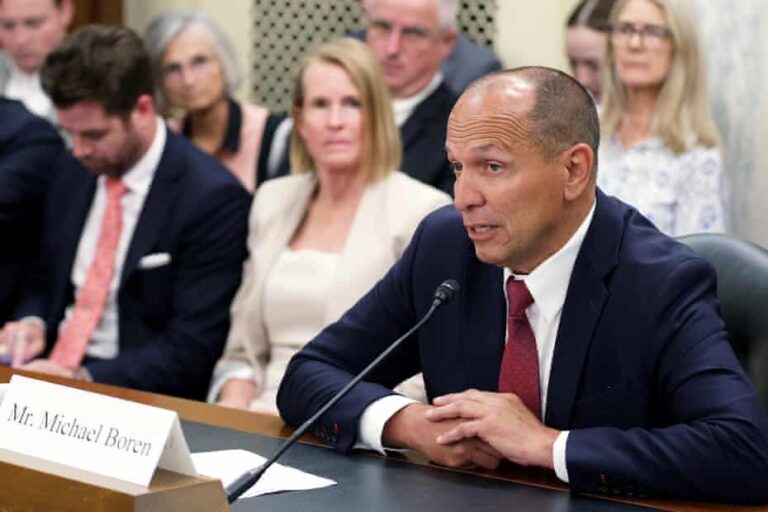
    Michael Boren, the US Undersecretary of Agriculture for Natural Resources and Environment who oversees the US Forest Service, reportedly pressured agency staff to deploy additional aircraft to a small 7-acre wildfire burning near his private property in Idaho. According to agency communications and current and former Forest Service officials, the Cabin Creek fire began on 12 July 2026 in the Sawtooth National Forest due to an unattended campfire. Boren, who owns a 480-acre ranch in the nearby Sawtooth National Recreation Area, repeatedly contacted regional and national operations leadership to question why more aircraft were not assigned to the blaze. Flight data reveals that approximately nine aircraft—including air tankers, tactical planes, and helicopters—were dispatched to the small fire, with some assets diverted from other active wildfires in Idaho. Insiders noted that the emergency response was unusually heavy for a minor outbreak that ground crews could easily access and which posed no immediate threat to life or major infrastructure. In response, a spokesperson for the Department of Agriculture maintained that Boren merely reported the fire as any local landowner would and denied that he ordered or pressured staff to shift resources. The fire was fully contained by 15 July.

  • |

    ‘Super’ El Niño threatens $20bn Africa hit

    Africa could suffer economic losses of between $10 billion and $20 billion if a powerful El Niño weather pattern develops, the African Development Bank’s climate chief has warned. The expected weather event could bring severe droughts, floods and storms to different parts of Africa. It could put additional pressure on food supplies, water resources and government finances. Anthony Nyong, the African Development Bank’s director for climate change and green growth, said countries facing the worst effects could see their gross domestic product decline by around 1% to 2%. He said the potential losses could amount to between $10 billion and $20 billion across the continent. The warning comes as forecasters monitor rising temperatures in the Pacific Ocean. Current conditions have raised concerns that the next El Niño could become unusually strong. El Niño is a climate pattern that can significantly change weather conditions in different parts of the world. In Africa, it can contribute to drought, heavy rainfall, flooding and storms. A severe event could deepen existing climate problems across the continent. The Sahel region has already faced serious drought conditions in recent years. Other parts of Africa are still recovering from major storms and floods. Nyong warned that the economic consequences may continue long after the weather event ends. He pointed to Mozambique’s experience after Cyclone Idai in 2019. The country needed years to recover from the damage caused by the storm. Agriculture could be among the sectors hit hardest by the expected climate shock. The previous El Niño, which occurred during 2023 and 2024, brought severe drought to Southern Africa. East Africa experienced heavy rainfall and flooding. The extreme weather contributed to crop failures and higher food prices. Coastal areas also recorded unusually high sea levels. African farmers are already facing substantial losses. The African Development Bank estimates that agricultural losses could reach around $327 million this year. Fishing communities could also suffer. Rising sea temperatures and storms are expected to affect fisheries productivity. The bank estimates that fisheries productivity could decline by between 1% and 4%. Nyong warned that food shortages could become a major concern if the expected weather pattern intensifies. Maize is particularly important because it is a major staple food in many African countries. A significant decline in production could push prices higher and increase pressure on vulnerable households. The expected disaster could also put further pressure on national budgets. Many African governments already have limited resources to respond to climate emergencies. Severe weather could force them to spend more on relief, reconstruction and infrastructure repairs. This could mean less money for health, education and development projects. Nyong described the situation as a “climate finance trap”. Countries may have to divert funds from essential services to deal with climate-related emergencies. The African Development Bank is preparing to assess the possible effects of El Niño on its investments. The bank plans to hold a major seminar in September. Senior officials will examine the potential risks to existing and planned projects. The institution is also prepared to restructure some projects if necessary. It will work with affected countries to seek additional international climate financing. Possible sources include the Green Climate Fund, Adaptation Fund and Climate Investment Funds. New loss-and-damage financing mechanisms could also provide support to countries suffering serious climate impacts. The expected strength of El Niño could increase Africa’s climate financing needs significantly. Nyong estimated that the continent could require up to $100 billion this year to strengthen climate resilience and adaptation. He said the need for climate adaptation funding was already extremely high. The possible El Niño event could add billions of dollars to that requirement. The financing gap remains a major challenge for developing countries. Without sufficient funding, vulnerable countries may struggle to prepare for droughts, floods and storms before they occur. The humanitarian consequences could be severe if drought and food shortages intensify. Nyong warned that large numbers of people could be forced to leave their homes in search of food, water and livelihoods. Sudan, South Sudan, the Democratic Republic of Congo, Somalia, Mali, Burundi and Nigeria were among the countries identified as potentially vulnerable to severe impacts. Agricultural losses could leave many communities without reliable sources of income. Shortages of water and grazing land could also increase competition between communities. Such pressures could worsen instability in regions already affected by conflict, poverty and displacement. The African Development Bank has therefore called for greater investment in preparedness and climate resilience. Nyong stressed that governments should act before disasters strike rather than wait until the damage has already occurred.

  • | | |

    Karachi water crisis: Munem Zafar Khan says citize…

    Jamaat-e-Islami Karachi chief Munem Zafar Khan has expressed concern over the worsening civic problems in Karachi, saying that residents of the city are struggling even for basic necessities such as clean water. Addressing a press conference in Karachi, Munem Zafar Khan criticized the provincial government over issues related to water supply, electricity, infrastructure, and public services. He said that the city continues to face serious challenges despite repeated promises of improvement. The Jamaat-e-Islami leader claimed that shortly after the first drops of rain fell in Karachi, around 200 power feeders were affected, causing electricity disruptions in several areas. He questioned the performance of K-Electric, stating that despite receiving significant government support, improvements in power generation and transmission systems had not met public expectations. Munem Zafar Khan also criticized the Sindh government over urban infrastructure issues, claiming that Karachi lacks adequate facilities and that residents are facing difficulties due to shortages of essential services. He raised concerns about drainage problems and safety issues, stating that several people had lost their lives after falling into open gutters. He questioned why proper maintenance and safety measures had not been implemented despite repeated incidents. The JI Karachi chief also criticized the pace of development projects, claiming that funds allocated for drainage cleaning and infrastructure improvements were often utilized shortly before the monsoon season instead of through year-round planning. Discussing the city’s water shortage, he said that a significant portion of Karachi’s coastal population continues to face difficulties accessing water. He also raised concerns about delays in the K-IV water project, saying that the project remains crucial for meeting the city’s growing water needs. Munem Zafar Khan further criticized delays in road and transport projects, including water pipeline work and other development schemes, alleging that political interests and poor management have affected progress. He also mentioned health-related concerns, referring to reports of HIV cases among children and calling for accountability and improvements in healthcare systems. The Sindh government and other relevant authorities have faced repeated criticism from opposition parties over Karachi’s civic challenges, including water shortages, electricity problems, waste management, and infrastructure development. Karachi, Pakistan’s largest city and economic hub, continues to face pressure from rapid population growth and increasing demand for public services. Experts have emphasized the need for long-term planning, better governance, and effective implementation of development projects to address the city’s growing challenges.

  • | | |

    Pakistan, Saudi Arabia, Turkiye set for defence de…

    Pakistan, Saudi Arabia and Turkiye are expected to sign a joint defence agreement during a trilateral summit in Saudi Arabia, according to media reports. The proposed agreement comes as tensions continue to rise across the Middle East amid the ongoing conflict involving the United States and Iran. The three countries are expected to discuss regional security, defence cooperation and efforts to promote stability. Prime Minister Shehbaz Sharif and Chief of Defence Forces Field Marshal Asim Munir arrived in Saudi Arabia on Thursday for a three-day visit. Turkish President Recep Tayyip Erdogan is also expected to join the summit. The Pakistani delegation was received in Jeddah by Makkah Deputy Governor Prince Saud bin Mishaal bin Abdulaziz and Saudi Minister of Environment, Water and Agriculture Abdulrahman Abdulmohsen Al-Fadley. Prime Minister Shehbaz and Field Marshal Munir also performed Umrah during their visit. The Foreign Office said the prime minister’s visit, scheduled from August 6 to 8, would focus on Pakistan-Saudi relations and major regional and international developments. During the visit, Shehbaz is expected to meet Saudi Crown Prince Mohammed bin Salman. Discussions are likely to cover bilateral cooperation, regional security and diplomatic efforts to reduce tensions in the Middle East. Deputy Prime Minister and Foreign Minister Ishaq Dar is also part of Pakistan’s diplomatic engagement in the region. Pakistan has been seeking a diplomatic solution to the conflict involving the United States and Iran. Islamabad has also been calling for dialogue and efforts to prevent the regional conflict from spreading further. The proposed trilateral defence arrangement would bring together three countries with longstanding military and strategic ties. It could also strengthen coordination on regional security at a time of heightened tensions. Pakistan and Saudi Arabia already have a separate mutual defence agreement signed in September 2025. Under that pact, aggression against either country is treated as aggression against both. The agreement further strengthened the two countries’ decades-old defence partnership. Pakistan has traditionally provided Saudi Arabia with military training, advisory support and other defence assistance. Saudi Arabia, in turn, has remained an important economic and financial partner for Pakistan and has provided support during periods of financial pressure. The reported trilateral agreement could expand security cooperation beyond the existing Pakistan-Saudi framework and create closer strategic coordination with Turkiye.

Leave a Reply

Your email address will not be published. Required fields are marked *