sbp injects rs116tr
| | |

SBP injects Rs11.6tr into banking system

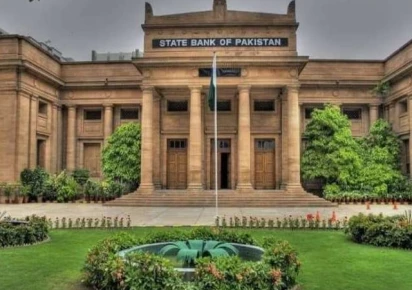
The State Bank of Pakistan (SBP) injected around Rs11.6 trillion into the country’s banking system through an open market operation on Monday, providing significant liquidity to banks.

The central bank conducted a reverse repo auction under its Open Market Operations (OMOs). Banks submitted bids worth Rs11.777 trillion across two different tenors.

The SBP accepted Rs11.613 trillion in total.

For the four-day tenor, banks offered Rs31 billion. The central bank accepted the entire amount at an interest rate of 11.54%. The bids in this category ranged between 11.56% and 11.54%.

The 14-day tenor attracted much larger demand. Banks submitted offers worth Rs11.746 trillion. The SBP accepted Rs11.583 trillion at a cut-off rate of 11.51%.

The bidding rate for the 14-day facility ranged from 11.57% to 11.51%. Of the Rs5.6527 trillion offered specifically at 11.51%, the central bank accepted Rs5.48415 trillion on a pro-rata basis.

The large-scale liquidity injection comes as banks continue to manage their short-term funding requirements. Open market operations are among the SBP’s key tools for managing liquidity and maintaining stability in the financial system.

Meanwhile, the Pakistani rupee recorded a slight improvement against the US dollar during Monday’s trading session.

The rupee strengthened by three paisa, closing at Rs277.62 per dollar compared with the previous close of Rs277.65. The marginal gain reflected relative stability in the foreign exchange market.

The US dollar index also declined by 0.1%. The index, which measures the dollar against six major international currencies, traded near its lowest level of the month at 99.519.

Gold prices, meanwhile, moved sharply higher in Pakistan.

The price of gold increased by Rs2,000 per tola to reach Rs461,936. The price of 10 grams also rose by Rs1,715 to Rs396,035, according to market rates.

The increase followed a strong recovery in international bullion prices. Gold has gained around 9% in August and was trading near $4,400 an ounce.

Market analysts said the recent recovery suggested renewed interest from institutional investors and central banks.

The rebound has also pushed gold above key technical resistance levels. This has strengthened expectations that prices could move higher if buying momentum continues.

Gold had faced heavy pressure following the escalation of the US-Israel conflict with Iran. International prices fell from a record level of around $5,595 an ounce in January to below $4,000 in June.

The decline prompted some investors to raise cash. Some central banks also used reserves to support their domestic economies as oil prices surged.

Analysts now believe renewed central bank purchases could support the precious metal. Institutional investors are also rebuilding their holdings after the earlier sell-off.

Similar Posts

  • | |

    Hilaria Baldwin takes hilarious dig at troll after…

    Hilaria Baldwin has found a funny way to respond to an online troll after initially misunderstanding a comment that was meant as criticism. The businesswoman and wife of actor Alec Baldwin addressed the exchange on Instagram on Aug. 8, turning an awkward moment into a lighthearted joke about her dyslexia and ADHD. Hilaria thought the comment was a compliment The social media comment described Baldwin as “vacuous,” a word meaning empty, lacking ideas or showing little intelligence. However, Baldwin initially read the word differently and thought the commenter had called her “vivacious,” which means lively or energetic. (People.com⁠) In an Instagram video, Baldwin explained that it took her some time to read and understand the unfamiliar word. She then shared the definition with her followers, making the situation even more amusing. Baldwin joked that she had to search for the meaning before she could even become offended by the comment. Her caption added another playful twist, saying that her dyslexia and ADHD had read the word as “vivacious” anyway. (People.com⁠) Instead of responding with anger, Baldwin appeared to embrace the misunderstanding and use humor to turn the negative interaction into something lighter. Baldwin speaks openly about dyslexia The incident also reflects Baldwin’s previous discussions about being neurodivergent. She has spoken publicly about having ADHD and dyslexia, including in her 2025 book Manual Not Included. Baldwin has explained that these conditions can affect different parts of her daily life, including reading, listening, focus, memory and confidence. She has also described how she spent years feeling that she had to work harder in school and struggled with the idea that she was not “smart in the right way.” (People.com⁠) Her latest Instagram post shows how those challenges can sometimes lead to unexpected and humorous moments. Turning internet criticism into humor Social media criticism is nothing new for public figures, and Baldwin has frequently faced comments about her public life. This time, however, the situation took an unexpected turn because she initially interpreted an insult as praise. By laughing about the misunderstanding, Baldwin avoided giving the comment the reaction its writer may have expected. Her response also gave followers a glimpse into how her dyslexia can affect everyday communication. What began as an attempt to criticize Baldwin ultimately became a humorous story she could share with her audience. For the businesswoman, the mix-up became a reminder that sometimes the easiest response to an internet troll is simply to laugh it off.

  • | | |

    Dar targets $20bn Pakistan-US trade

    Deputy Prime Minister and Foreign Minister Ishaq Dar has expressed confidence that Pakistan and the United States can increase bilateral trade in goods to $20 billion within the next five years. Dar said Pakistan’s trade in goods with the US stood at $9.4 billion during the last fiscal year. He described the US as Pakistan’s largest single-country export market. Addressing a US Congressional Delegation and American business representatives, Dar said stronger trade and investment ties could create new opportunities for companies in both countries. He said closer economic cooperation could also generate employment, encourage innovation and support long-term economic growth. Dar highlighted several areas where Pakistan and the US could expand commercial cooperation. These include information technology, artificial intelligence, energy, manufacturing, agriculture and critical minerals. He said Pakistan is already an important buyer of American cotton and soybeans. The country is also becoming a growing market for US hydrocarbons. At the same time, Pakistan’s increasing demand for advanced machinery, technology and capital goods could create opportunities for American manufacturers, he added. Dar said the presence of more than 80 US companies in Pakistan demonstrated growing confidence in the country’s market and economic potential. He welcomed the interest shown by American companies in Pakistan’s technology, energy, critical minerals and defence sectors. The foreign minister also pointed to the US Exim Bank’s $1.25 billion financing for the Reko Diq project as an indication of increasing US confidence in Pakistan’s investment prospects. Dar encouraged American businesses to establish partnerships with Pakistani companies and explore long-term investment opportunities. He said Pakistan had improved its infrastructure over the past decade through modern highways, ports and logistics networks. These developments, he added, had strengthened the country’s position as a potential trade and investment gateway. The government is also working to make the business environment more investor-friendly. Dar said regulatory procedures had been simplified to reduce bureaucratic delays and make licensing and approvals easier. He said Pakistan wanted to deepen cooperation with the US across both goods and services. Technology, AI, energy, manufacturing, critical minerals and agriculture were among the sectors identified for greater collaboration. Dar also highlighted the broader improvement in Pakistan-US relations. He said frequent high-level contacts under Prime Minister Shehbaz Sharif and US President Donald Trump had helped strengthen bilateral engagement. He said his meetings with US Secretary of State Marco Rubio had also focused on strengthening relations and discussing regional developments. The foreign minister stressed that parliamentary engagement was equally important. He said regular interaction between lawmakers could improve mutual understanding and strengthen institutional ties. Dar said Pakistan’s engagement with the US Congress had increased significantly over the past year. The interaction has included lawmakers from both political parties and key congressional committees. The two countries also discussed regional security and stability. Dar said stronger Pakistan-US relations could contribute to peace and stability in the wider region. He also recalled Pakistan’s role in facilitating dialogue between the US and Iran. Dar said Islamabad remained committed to dialogue, diplomacy and peaceful solutions to regional disputes. The foreign minister separately received a US congressional delegation comprising Representatives Ryan Zinke and Michael James Baumgartner. During the meeting, both sides discussed ways to expand cooperation in trade, investment, IT, energy and other areas. The US lawmakers acknowledged the contribution of the Pakistani community to American society and economy. They described the diaspora as an important link between the two countries.

  • | |

    Cockroach’ protests end in stunning victory

    India’s Education Minister Dharmendra Pradhan resigned on Saturday after days of youth-led protests over alleged irregularities in major entrance examinations. The resignation came as thousands of young people gathered in New Delhi and other parts of the country under the banner of the Cockroach Janta Party (CJP). The protesters had demanded Pradhan’s removal and major reforms to the country’s examination system. They also raised wider concerns about unemployment and limited opportunities for young people. Pradhan confirmed that he had submitted his resignation to Prime Minister Narendra Modi. In a statement, he said he was deeply concerned about the events of the previous 10 days. He said the decision was not about personal prestige. He added that India’s youth were an important strength of the country and said efforts were needed to prevent young people from becoming trapped in uncertainty. The announcement immediately triggered celebrations at the main protest site at Jantar Mantar in New Delhi. CJP founder Abhijeet Dipke told the cheering crowd, “We have done it.” Hundreds of protesters responded with loud applause and celebrations. The CJP later announced that its demands had been accepted following talks with the government. It said the protests would therefore be called off. The movement had focused on alleged irregularities in examinations, including concerns over the National Eligibility cum Entrance Test (NEET). Protesters demanded greater transparency and accountability in the examination system. They also called for compensation for people affected by examination irregularities. Another demand was the withdrawal of legal cases against protesters. The government held two rounds of talks with CJP representatives during the week. However, the discussions initially failed to produce an agreement. Pradhan submitted his resignation before a third round of talks was scheduled. The protests also faced a strong response from police. Authorities used tear gas and batons when demonstrators attempted to march from Jantar Mantar towards Parliament. The campaign gradually expanded beyond examination issues. Protesters also highlighted unemployment, lack of opportunities for young people and broader concerns about governance. The demonstrations became one of the most significant challenges to Prime Minister Narendra Modi’s government since his re-election in 2024. India’s opposition leader Rahul Gandhi also backed the protesters. He described Pradhan’s resignation as a major development and urged Modi to apologise to students and address their concerns. Gandhi also called for action against those accused of violence against students during the demonstrations. The resignation brought an emotional response from protesters. One 27-year-old participant who visited the protest site for the first time on Saturday described the atmosphere as highly charged, particularly after the minister’s resignation.

  • A Long War Ahead: Diplomacy, Nerves, and a Region …

    The Middle East appears to be entering a prolonged phase of strategic tension—one defined not only by the possibility of conflict, but by a high-stakes battle of nerves accompanied by intense diplomatic maneuvering. The American Centcom has briefed the president about the next phase of attacks that Centcom thinks will decaptilze the Iranian power. They warn that they will target the Iranian power plants and with meeting Israeli pm natanyahu also assured and second the trump decision. In response the Iranian also ready to attack in Israeli power plants and in Gcc American bases. So a long war ahead. At the center of this evolving landscape stands Mohammed bin Salman (MBS), whose regional vision and leadership now face one of their most critical tests.   Over the past decade, the Gulf Cooperation Council (GCC), under Saudi Arabia’s influence, aligned itself closely with the United States. This alignment brought undeniable short-term gains: an influx of multinational corporations, the emergence of technology hubs, ambitious infrastructure projects like NEOM, and a rebranding of the Gulf as a global tourism and investment destination. These developments projected an image of modernity and economic diversification—an intentional shift away from rigid conservatism.   However, beneath this transformation lies a deeper geopolitical calculation. The United States sought not only economic engagement but strategic positioning in the Middle East, particularly in the context of its long-standing rivalry with Iran. By encouraging normalization with Israel through frameworks like the Abraham Accords, Washington aimed to consolidate a regional bloc that could counterbalance Tehran.   This strategy, while effective in shaping alliances, also came at a cost. Iran was increasingly portrayed in Western narratives as rigid, anti-modern, and resistant to democratic values. Whether accurate or exaggerated, this portrayal contributed to its diplomatic isolation. Yet, Iran has not remained passive. Instead, it has adopted a dual-track approach—maintaining a posture of resistance while keeping diplomatic channels open. This calculated balance has allowed Tehran to assert its relevance in any future regional order.   Recent developments suggest that the initial cohesion within the GCC may be more fragile than it appeared. Trust built over decades can erode rapidly under pressure, and shifting geopolitical realities have exposed underlying vulnerabilities. If Iran successfully convinces regional actors that its inclusion is essential for stability, it could reshape the Middle Eastern power structure in its favor.   Meanwhile, other key players—Pakistan, Qatar, and Turkey—have attempted to position themselves as mediators. However, their efforts have been slow and, at times, constrained by their own strategic dependencies. Qatar has shown willingness to facilitate dialogue, but Turkey’s independent stance and Pakistan’s cautious approach—often influenced by its ties with Washington—have limited the effectiveness of a unified diplomatic front.   The question, then, is whether diplomacy can still alter the trajectory. Iran’s willingness to engage, even while projecting strength, indicates that a negotiated outcome remains possible. If Tehran can compel regional actors, including Saudi Arabia, to broaden the dialogue and incorporate Turkey into a more inclusive framework, it may shift the balance away from confrontation.   For the United States, the situation presents no clear path to victory. Military escalation risks triggering a wider, multi-stage conflict that could engulf the entire region, placing GCC states in a precarious position. What may have once been framed as a strategic contest could evolve into a prolonged struggle driven by perceptions of credibility and prestige.   In this volatile environment, the risk is not just war—but a drawn-out cycle of escalation and retaliation. Iran, despite sustained pressure, appears increasingly resilient, with its strategic resolve hardening over time. Conversely, the Gulf states must reassess whether their current alignments serve long-term stability or merely short-term gains.   Ultimately, the region stands at a strong moment. The path forward will depend not only on military power but on the success of diplomacy in bridging deep-seated divides. There remains a possibility—however uncertain—that actors like China and Russia could play a crucial role in de-escalation. But trump also hinted that both assured him their neutrality during Iran war. The drones however allegedly counter thinks a Russian help under the war table. If such efforts succeed, they may prevent the Middle East from sliding into a conflict whose consequences would extend far beyond its borders.

  • | |

    Shawn Mendes goes Instagram official with Bruna Marquezine

    Shawn Mendes has confirmed his relationship with Brazilian actress Bruna Marquezine after sharing a heartfelt Instagram tribute that gave fans a glimpse into their romance. The Canadian singer surprised followers by posting a series of personal moments featuring Marquezine, highlighting their connection and the special memories they have created together. The post marked the first time Mendes publicly acknowledged their relationship, moving their romance from speculation into the spotlight. Mendes’ emotional message celebrated Marquezine’s presence in his life, with the singer expressing appreciation and affection for the actress. The tribute included intimate moments between the pair, showing a more personal side of the usually private star. The couple had sparked relationship rumours after being seen together on several occasions, leading fans to speculate about their growing connection. However, Mendes’ latest social media post served as a clear confirmation that the two are officially together. Marquezine, a major name in Brazilian entertainment, has built a successful acting career and gained international recognition for her role in the superhero film “Blue Beetle.” Her growing global profile has made her one of Brazil’s most recognised young stars. Mendes, meanwhile, has continued to maintain a strong presence in the music industry with his chart-topping hits and worldwide fan base. Throughout his career, the singer has often spoken about personal growth, finding balance, and protecting his private life away from the public eye. The announcement quickly attracted attention from fans around the world, many celebrating the couple’s decision to share their happiness publicly. Social media was filled with messages of support as followers reacted to the singer’s sweet tribute. With their relationship now confirmed, Mendes and Marquezine appear ready to embrace this new chapter together while continuing to focus on their successful careers. Their public debut as a couple marks a memorable moment for fans who have followed both stars throughout their journeys. https://www.instagram.com/p/DbogoGBEsW_/?img_index=3&igsh=ZXBtN2w0aTkxam5h

Leave a Reply

Your email address will not be published. Required fields are marked *