sher afzal marwat
| |

Sher Afzal Marwat urges government to rethink deci…


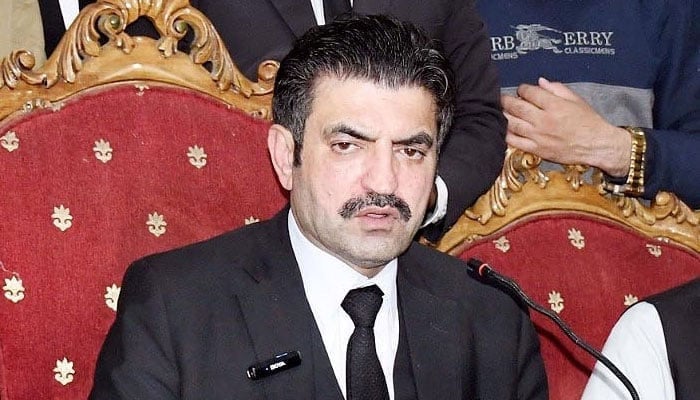
National Assembly Member Sher Afzal Marwat has said that the government appears to be stuck on an issue that could negatively affect its public image and political standing.

Marwat said the government needed to carefully consider its decisions and avoid taking positions that could ultimately damage its reputation among the public. He emphasized that decisions involving ordinary citizens, particularly matters related to healthcare, should be approached with greater understanding and consideration.


Commenting on the issue of medical treatment, Marwat said there was nothing wrong with a patient choosing to receive treatment at a private hospital at their own expense. He argued that if an individual is willing and able to pay for medical services privately, the government should not necessarily object to that choice.


According to Marwat, people should have the freedom to decide where and how they want to receive medical treatment, particularly when they are using their own resources. He suggested that restricting such choices could create unnecessary controversy and may not serve the interests of either the government or the public.


Marwat further stressed that the government must think carefully before making decisions that could have political or social consequences. He said that authorities should assess both the immediate and long-term impact of their policies instead of becoming fixated on a single issue.

His comments come amid ongoing public debate over government decisions concerning healthcare and access to medical facilities. The issue has drawn attention because healthcare remains a sensitive matter for citizens, particularly those who seek timely treatment and may prefer private hospitals because of availability, facilities, or personal choice.

Marwat’s remarks also highlight the broader question of how governments should balance public-sector policies with individual rights and choices. While governments have a responsibility to regulate healthcare and ensure that citizens have access to affordable and quality treatment, individuals may also want the option of using private healthcare services when they can afford them.

The lawmaker maintained that the government should adopt a practical and carefully considered approach rather than allowing political disagreements to influence decisions that directly affect citizens. In his view, policies should be designed in a way that protects public interests while also respecting individual choices.

He warned that continuing to remain focused on an issue without considering its wider implications could harm the government’s political standing. According to him, the government needs to recognize how its decisions are perceived by the public and make choices accordingly.

Marwat’s statement reflects growing calls for greater flexibility and careful decision-making in matters that affect ordinary people. His comments suggest that governments can avoid unnecessary criticism by taking public concerns into account and ensuring that their policies remain focused on practical solutions.

The National Assembly member ultimately urged the government to reconsider its approach and make decisions after carefully examining their possible consequences. He emphasized that thoughtful policymaking is essential to maintaining public confidence and avoiding decisions that could damage the government’s image.

The remarks underline the importance of balancing government policy with the rights, needs, and preferences of citizens, particularly in sensitive areas such as healthcare.
Similar Posts

  • | | |

    Security forces kill 10 militants in two Khyber Pa…

    Security forces have killed 10 militants of Fitna al-Khawarij in two separate operations in Khyber Pakhtunkhwa, according to the Inter-Services Public Relations (ISPR). The first operation was conducted in the Azam Warsak area of South Waziristan district after a group of militants attacked security forces’ check posts. According to ISPR, security personnel responded effectively to the attack, resulting in an exchange of fire. Eight militants were killed during the operation. The second operation was carried out in Dir district, where security forces killed two more militants. Weapons and ammunition were also recovered from the possession of the slain militants. ISPR said the militants killed in the operations had been involved in several terrorist activities in the area. The military’s media wing said security forces are continuing intelligence-based counterterrorism operations under the government’s vision of “Azm-e-Istehkam” to eliminate terrorism and maintain peace and stability in the region.

  • KP youth affairs launch Digital Skills Training Programme for tribal youth

    PESHAWAR: The Directorate of Youth Affairs, Government of Khyber Pakhtunkhwa, in collaboration with TTSK, has launched a one-week Digital Skills Training Programme for youth from the Tribal Districts (Ex-FATA) to equip them with in-demand digital competencies and improve their employment prospects. The training programme provides practical instruction in Artificial Intelligence (AI), Graphic Designing, and Video Editing, enabling participants to develop market-oriented skills, strengthen their creativity, and explore opportunities in freelancing, entrepreneurship, and the digital economy. Director Youth Affairs Khyber Pakhtunkhwa Abbas Khan Afridi said the initiative reflects the provincial government’s commitment to investing in the potential of young people and preparing them for the evolving demands of the digital age. “Our objective is to ensure that the youth of the Tribal Districts have access to modern skills that can help them secure sustainable livelihoods and compete in national and international markets. Digital empowerment is essential for building a prosperous and self-reliant generation,” he said. He said the Directorate of Youth Affairs would continue collaborating with partner organisations to expand access to quality training programmes and create meaningful opportunities for youth across Khyber Pakhtunkhwa. The Directorate said the programme forms part of its ongoing efforts to promote innovation, digital literacy, and skills development, enabling young people to play a greater role in the province’s economic and social development.

  • |

    Devastating Russian ballistic missile strikes claim lives across Ukraine following presidential warning

    Russian forces executed a coordinated overnight barrage of ballistic missiles targeting several Ukrainian urban centres, resulting in multiple civilian casualties and extensive structural damage shortly after President Volodymyr Zelenskyy issued a national safety alert. A direct hit from an Iskander-M ballistic missile destroyed a family home on the outskirts of Kryvyi Rih, killing six people, including two young girls aged five and twelve, and leaving at least eight others wounded. In the capital city of Kyiv, emergency services confirmed one death alongside widespread fires across several municipal districts, whilst residential buildings in the western city of Lviv also sustained damage during the bombardment. The severe escalation prompted neighbouring Poland to scramble fighter jets and activate ground-based air defence systems to secure its own national airspace. In response to the wave of destruction, President Zelenskyy renewed his urgent appeal to international allies for additional air defence missiles to replenish depleted stockpiles and protect civilian infrastructure. Meanwhile, in Russia’s western Penza region, a Ukrainian retaliatory drone strike set fire to a large commercial warehouse, injuring one individual and forcing the emergency evacuation of approximately two hundred workers.

  • | |

    Arooj Aurangzeb calls out support for Indian Gen Z

    Arooj Aurangzeb is a name that carries real weight in Pakistan’s student activism circles. In 2019, she went viral after a video of her reciting a powerful poem during the student solidarity march spread rapidly across social media. She was protesting alongside thousands of other students who were demanding the restoration of student unions and proper political representation for young people within the country’s institutions. The videos from that movement were electric, emotional and widely shared, including hers. Seven years later, she is back in the public conversation, but this time it is not because of a protest. It is because of a contradiction she says she can no longer stay quiet about. When Indian students began protesting over the NEET paper leak at Jantar Mantar, demanding justice and systemic reform in the country’s examination system, Pakistani social media users responded with visible enthusiasm. Support poured in from across the border, with many Pakistanis praising the Indian Gen Z for their courage, awareness and refusal to be silent. Arooj Aurangzeb watched that wave of support and felt something shift inside her. She took to social media to point out what she saw as a glaring and painful inconsistency. While Pakistanis were celebrating the Indian protesters and calling their movement inspiring, many of those same people had ridiculed, trolled and dismissed her and her fellow students when they took to the streets in 2019 for exactly the same kind of systemic change. She did not hold back. She highlighted the irony directly, asking how the same people who mocked Pakistani students fighting for their rights could turn around and feel so moved by Indian Gen Z doing the same thing. Her post was not framed as anti-India. It was framed as a question about selective empathy and the way Pakistanis sometimes extend more admiration to voices from abroad than to those speaking up at home. The internet did not respond with silence. Reactions were divided and sharp. Some users sided with her immediately. “We never stand by our own heroes,” one person wrote, capturing the frustration that Arooj was articulating. Others pushed back, with one commenter arguing that the dynamics of Indian and Pakistani Gen Z are completely different and that direct comparisons were unfair. Another raised a pointed question of their own, asking why so many Pakistani revolutionaries eventually leave the country on foreign visas, a remark that suggested the critique went both ways. Arooj Aurangzeb’s voice in 2019 was a reminder that young Pakistanis were willing to stand up and demand something better. Her voice in 2026 is a reminder that those same young people are still watching, still paying attention, and still asking why the recognition they deserved then continues to be denied while admiration flows so freely elsewhere.

  • |

    Perez Hilton’s livestream prompts police response in Miami

    Celebrity gossip blogger Perez Hilton prompted widespread concern after police responded to his Miami home following a disturbing TikTok livestream in which he appeared to harm himself. Videos that quickly spread across social media showed the 48-year-old internet personality in an apparent state of distress. In the clips, Hilton appeared visibly agitated and was seen with blood on his body while repeatedly using an object to injure himself. The footage led viewers to contact emergency services, fearing for his safety. Authorities confirmed they received multiple reports from concerned members of the public regarding a person appearing to self-harm during a livestream. Deputies were dispatched to Hilton’s residence to assess the situation and ensure his well-being. After arriving at the property, officers determined that Hilton was alone inside his home. Law enforcement officials said they chose a de-escalation approach, avoiding direct confrontation while also communicating with members of his family. Officials explained that when responding to incidents involving an individual experiencing a mental health crisis, officers often prioritize creating time and distance to reduce tension. Crisis intervention strategies are commonly used in such situations to encourage communication while minimizing the risk of harm to the individual, responding officers, and the public. The incident has sparked renewed discussion online about mental health awareness, crisis intervention, and the emotional pressures faced by public figures whose personal struggles often unfold in front of large audiences. Hilton has previously spoken publicly about his health and emotional challenges. Earlier this year, he revealed that he had been hospitalized for nearly three weeks after what initially appeared to be a case of the flu developed into a series of serious medical complications. According to Hilton, his condition worsened significantly, leading to an ulcer, a perforation, and eventually sepsis, a life-threatening response to infection. He later described the experience as one of the most difficult periods of his life. Following his recovery and return home, Hilton shared that the ordeal had transformed his outlook on life and faith. He said the experience strengthened his spiritual beliefs and inspired him to reconnect with religion. The media personality explained that he believed the difficult experience brought him closer to God and encouraged him to begin attending church regularly with his children. He described the change as deeply personal and life-changing. In recent months, Hilton had also hinted at ongoing emotional struggles through social media. In one video shared earlier this year, he asked followers to pray for him, saying he felt he was facing intense personal challenges. Perez Hilton, whose real name is Mario Armando Lavandeira Jr., rose to fame in the mid-2000s through his celebrity gossip website, becoming one of the internet’s most recognizable entertainment bloggers. Over the years, he has remained active across various social media platforms while also focusing on raising his three children, all of whom were welcomed through surrogacy. The latest incident has prompted an outpouring of concern from fans and followers, many of whom expressed hope that Hilton receives the care and support he needs as he navigates this difficult period.

  • | |

    Oil prices tumble after US and Iran halt strikes, …

    Oil prices fell sharply on Monday after the United States and Iran paused military strikes over the weekend, ending two weeks of attacks and raising hopes that diplomacy could de escalate the conflict and allow shipping through the Strait of Hormuz to resume. Brent crude futures dropped by around 5.9 percent to just above 91 dollars a barrel, briefly slipping below the closely watched 90 dollar mark earlier in the session. US West Texas Intermediate crude fell roughly 5.4 percent to settle near 84.50 dollars a barrel. Both benchmarks touched their lowest levels in almost a week, reversing three straight weeks of gains driven by the conflict. Brent had climbed as high as 100 dollars a barrel as fighting disrupted oil shipments through the Strait of Hormuz and spread to the Red Sea, complicating exports from Saudi Arabia, the world’s largest oil exporter, through the Bab el Mandeb strait toward Asian markets. US Ambassador to the United Nations Mike Waltz said President Donald Trump had opted to pause American strikes to give diplomatic efforts more room to work, a message he delivered across several US television appearances Sunday. Market analysts remained cautious despite the price drop. PVM analyst John Evans said markets continue to search for encouraging signals from a region that has offered little reassurance so far, and cautioned that a pause in strikes carries no guarantee that oil shipments will resume quickly. He said prices are more likely to keep falling if elevated costs curb demand rather than because of a fragile ceasefire. Shipping data from Kpler showed fewer than ten commodity vessels passed through the Strait of Hormuz per day over the weekend. MST Marquee analyst Saul Kavonic said any recovery in traffic through the strait will likely be gradual and incomplete, since many shipping operators remain cautious and will want stronger safety assurances before sending empty vessels back into the waterway. Traffic through the Bab el Mandeb strait also declined Sunday after Yemen’s Houthi movement struck Saudi oil facilities along the Red Sea coast, though one additional Chinese supertanker managed to exit through the strait. Analysts at Societe Generale estimate that every month the Red Sea situation remains unresolved could add at least 10 dollars to the price of a barrel. Some analysts expect prices to stay supported if supply disruptions continue across the Middle East and in connection with Russia’s war in Ukraine. Analysts at UOB noted that the widening Middle East conflict, combined with Ukrainian drone strikes on Russian ships and refineries, could sustain supply disruptions that keep oil prices elevated and add upward pressure to global inflation. Ukraine said it struck several Russian oil facilities over the weekend as part of that ongoing campaign. The volatility underscores how closely global energy markets remain tied to geopolitical developments in the Middle East, where even temporary pauses in fighting can trigger significant price swings as traders weigh the likelihood of a lasting resolution against the risk of renewed escalation.

Leave a Reply

Your email address will not be published. Required fields are marked *