parliament approves sweeping
| |

Parliament approves sweeping defence command chang…

Pakistan’s Parliament has approved legislation aimed at establishing a new legal framework for the country’s military command structure.

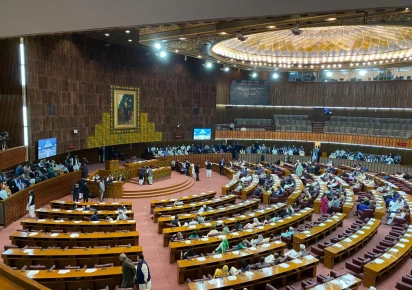
The National Assembly and Senate passed the Defence Forces Act 2026 and amendments to the National Command Authority Act 2010 on Thursday. The legislation was approved despite strong opposition from opposition lawmakers, who objected to the speed at which the bills were brought before the Houses.

Prime Minister Shehbaz Sharif attended the National Assembly session. The opposition later boycotted the voting process and walked out of the chamber in protest.

The new Defence Forces Act provides a legal structure for the Defence Forces Headquarters. The headquarters will serve as a central institution for matters concerning national security, defence policy and coordination among the armed forces.

Under the new framework, the Chief of Defence Forces will exercise operational command and control over the armed forces. The CDF will remain accountable to the federal government for matters related to command and control.

The legislation also gives the CDF powers to improve coordination and integration among the Army, Navy and Air Force. The office will oversee joint operations, coordination and other matters involving the armed forces.

The CDF will also have authority under relevant laws regarding the retirement, release and dismissal of military personnel, subject to constitutional provisions. The office will also be able to approve or reject resignations and retain personnel in service where permitted under the law.

The federal government will frame rules and regulations needed to implement the new legislation. The CDF will also be authorised to issue orders and directions required to enforce the provisions of the Act.

Parliament also approved amendments to the National Command Authority Act 2010. The changes replace references to the Chairman Joint Chiefs of Staff Committee with references to the Chief of Army Staff and Chief of Defence Forces.

The legislation gives retrospective effect to key provisions from November 2025.

The new laws are linked to changes introduced through the 27th Constitutional Amendment, which significantly altered Pakistan’s military command structure.

Under the revised system, the Chief of Army Staff also serves as the Chief of Defence Forces. The office of Chairman Joint Chiefs of Staff Committee has been abolished under the new framework.

The opposition strongly objected to the legislation being placed on the supplementary agenda. Opposition lawmakers said they had not been given sufficient time to examine the bills.

Opposition Leader Allama Raja Nasir Abbas questioned the urgency of the legislation and called for more time for lawmakers to study the proposed changes.

Mahmood Khan Achakzai also demanded that lawmakers be given at least a few days to review and debate the bills before voting.

The government defended the procedure, saying parliamentary rules allow supplementary legislation to be introduced. Law Minister Azam Nazeer Tarar argued that the bills had already been examined and approved by the National Assembly.

The cabinet had approved the draft legislation earlier in the day during a meeting chaired by Prime Minister Shehbaz Sharif in Islamabad.

According to the government, the Defence Forces Act was necessary to provide administrative and legal arrangements for the office of the Chief of Defence Forces and its headquarters.

The new framework also establishes the position of Commander of the National Strategic Command following the abolition of the CJCSC post. The commander is appointed by the prime minister on the recommendation of the army chief and CDF.

The position carries a three-year term, with the possibility of another three-year term under the prescribed procedure.


Similar Posts

  • | | |

    Uzma Bukhari rejects Bilawal’s rigging claims, u…

    Punjab Information Minister Uzma Bukhari has strongly rejected Pakistan Peoples Party (PPP) Chairman Bilawal Bhutto Zardari’s allegations of rigging in the Azad Jammu and Kashmir (AJK) elections, saying political parties should respect the public’s mandate and pursue legal channels if they have complaints. Responding to Bilawal’s criticism of the election process, Bukhari questioned why the PPP was accusing the Pakistan Muslim League-Nawaz (PML-N) of electoral manipulation despite the AJK government and administrative machinery being under its own jurisdiction. “My question is this: the prime minister is yours, the police are yours, yet you are accusing the PML-N of rigging,” she said. She also alleged that in Nawabshah, opposition candidates contesting against the PPP often face intimidation, adding that Bilawal should address such concerns before making allegations against others. The provincial minister noted that two phases of the Azad Kashmir elections are still to be held and advised the PPP to approach the courts if it believes electoral irregularities have occurred. “If you have complaints, go to the courts and adopt the legal course,” she said. Bukhari emphasized that accepting election outcomes is a fundamental principle of democracy. She criticized the PPP for refusing to accept the results while presenting itself as a strong supporter of democratic values. She also criticized Bilawal’s speech, saying it appeared to imitate the rhetoric of other political leaders and that the language he used was inappropriate for a democratic debate. Turning her attention to governance in Sindh, Bukhari questioned the PPP’s performance during its long tenure in the province. She accused the party of failing to address Karachi’s water supply issues, alleging that the city had effectively been left in the hands of the tanker mafia. She further challenged the PPP leadership to present examples of development projects completed in Sindh, arguing that the party frequently criticizes other provinces while failing to highlight its own achievements. Comparing Punjab and Sindh, Bukhari claimed Punjab had made greater progress in public services, citing initiatives such as air ambulance services and school meal programs. She also questioned how the Sindh government had utilized its reported Rs. 1.7 trillion budget, asking officials to identify the major development projects completed with those funds. The exchange of statements has intensified political tensions following the AJK elections, with both the PPP and PML-N continuing to trade accusations over the electoral process and governance issues.

  • |

    Pakistan begins Commonwealth Games 2026 campaign with hopes pinned on Arshad Nadeem

    GLASGOW: The 2026 Commonwealth Games have officially begun in Glasgow and will continue until August 2, bringing together nearly 3,000 athletes from 74 countries to compete across multiple sporting disciplines. Pakistan has sent a 36-member contingent, including 20 athletes, along with coaches and officials, to participate in this year’s event. The national team will compete in six sports: athletics, boxing, judo, gymnastics, lawn bowls and swimming. Pakistan’s biggest medal hope is Olympic javelin champion Arshad Nadeem, who will defend his Commonwealth Games title. Having achieved historic success for Pakistan on the international stage in recent years, Arshad is widely regarded as the country’s strongest contender for a gold medal. In athletics, Pakistan will be represented by Arshad Nadeem, Faiqa Riaz, Ansar Abbas, Muhammad Akhtar, Muhammad Ismail, Muhammad Yasir and Noreen Hussain. The boxing squad includes Afzal Khan, Fatima Zahra, Malaika Zahid, Qudratullah and Samama Rehman. Shah Hussain Shah will compete in judo, while Shehzad Ali will represent Pakistan in gymnastics. In lawn bowls, Maqsood Waseem Khan and Muhammad Ayub Qureshi will compete, while Hamza Asif, Hareem Malik, Jehanara Nabi and Muhammad Ahmed Durrani will represent Pakistan in swimming. Sports analysts believe Pakistan’s brightest medal prospect is Arshad Nadeem in the men’s javelin throw. If he performs at his best, he is considered a leading favourite to win gold. Pakistan could also challenge for medals in boxing, although the competition is expected to be tough. In judo, Shah Hussain Shah is viewed as another strong contender, given Pakistan’s previous success in the sport at the Commonwealth Games. In gymnastics, lawn bowls and swimming, the main objective for Pakistani athletes will be to reach the final rounds and achieve personal best performances. Overall, experts believe Pakistan has the potential to win one to three medals, with the strongest possibility being a gold medal through Arshad Nadeem. A standout performance in boxing or judo could further improve the country’s medal tally. As the Games get underway, Pakistani fans will be closely following Arshad Nadeem, whose achievements have made him one of the country’s most celebrated athletes and an inspiration for the next generation of sportsmen and women.

  • | |

    Doctor suspended after performing laparoscopic sur…

    Islamabad: The Medical Tribunal has upheld a one year suspension of Dr Irfan Ashraf after finding that he performed laparoscopic surgery despite not completing the required training for independent laparoscopic procedures and operated at a healthcare facility that lacked an Intensive Care Unit and other essential facilities needed to deal with serious complications. The Tribunal also upheld a Rs100,000 fine and a ban preventing Dr Irfan Ashraf from performing laparoscopic procedures until he completes proper certified training. The judgment, announced on July 8, 2026, came in an appeal filed by Muhammad Zahid Niaz, whose father Niaz Ahmad died after a chain of medical treatment that began with laparoscopic surgery at Saleem Polyclinic in Mian Channu on December 31, 2016. The case took a serious turn when the disciplinary inquiry examined the actual training record of Dr Irfan Ashraf. The inquiry found that although he had taken part in laparoscopic procedures during his postgraduate training, most of his experience was as an observer or assistant. According to the judgment, Dr Irfan Ashraf had not completed the required number of procedures at the higher training levels needed to show independent surgical ability. The record showed that he had not completed even a single Level V procedure, which represents the stage at which a trainee is expected to perform laparoscopic surgery independently without supervision. The Tribunal said this was not simply a case where a normal surgical complication had occurred. The main concern was that Dr Irfan Ashraf undertook an elective laparoscopic operation without having demonstrated the required independent competence and at a facility that did not have the necessary backup facilities. The patient, Niaz Ahmad, suffered an injury to the common bile duct and hepatic vascular structures during the surgery. He was later taken to Bahawal Victoria Hospital in Bahawalpur for further treatment. He subsequently received treatment at Sheikh Zayed Hospital in Lahore and underwent an interventional radiological procedure at Lahore Medical Complex. Despite prolonged treatment at several hospitals, he died on March 4, 2017. The Punjab Healthcare Commission had earlier investigated the matter. It found that Saleem Polyclinic did not have the required infrastructure, qualified human resources and licensing needed for such surgical procedures. The Commission imposed a financial penalty on the owner of the healthcare establishment and referred the conduct of Dr Muhammad Saleem Akhtar and Dr Irfan Ashraf to the medical regulator for disciplinary action. The medical disciplinary committee later appointed Prof Dr Tanwir Khaliq, an experienced general surgeon, as an independent medical expert. He examined the medical record and assessed the standard of care, the management of laparoscopic complications and the facilities available at the clinic. Prof Dr Tanwir Khaliq concluded that the operation had been performed at a relatively small healthcare facility without an ICU and other essential backup facilities. He also found that Dr Irfan Ashraf was not sufficiently proficient in laparoscopic surgery, particularly when dealing with complications. The Tribunal noted that Dr Irfan Ashraf himself acknowledged that Saleem Polyclinic did not have an ICU or the facilities required to manage serious complications from laparoscopic surgery. The Tribunal also noted that Dr Irfan Ashraf had been working as a Senior Registrar at Bahawal Victoria Hospital, where better surgical support was available. When questioned about why the operation was carried out at the private facility, the explanation was that the patient wanted the surgery there. The Tribunal rejected this reasoning. It said a patient’s preference cannot remove a surgeon’s professional responsibility to determine whether a healthcare facility is safe enough for the planned procedure. The case also raised questions about what doctors tell patients about their professional skills. The disciplinary committee found that Dr Irfan Ashraf had represented himself as independently competent to perform laparoscopic surgery even though his training record did not show that he had completed the required independent procedures. The Tribunal said the evidence supported three major findings against Dr Irfan Ashraf. He performed an elective laparoscopic operation at a facility that could not properly manage foreseeable complications. He represented himself as independently competent despite incomplete training. He also exposed the patient to avoidable risk by choosing a facility without the necessary support instead of a properly equipped tertiary hospital. However, the Tribunal did not hold every doctor involved in the patient’s treatment responsible. Dr Muhammad Saleem Akhtar, the owner of Saleem Polyclinic, received a warning rather than a disciplinary punishment. The Tribunal found that there was no evidence that he personally performed the operation or took part in the surgical decision making. The Tribunal said ownership of a healthcare facility alone was not enough to impose the same disciplinary punishment on Dr Muhammad Saleem Akhtar as the operating surgeon. However, the warning required him to ensure that his facility was not used for procedures beyond its capacity. Dr Khurram Shafiq Khan was also cleared of professional negligence. His involvement came later, after the patient had already suffered complications from the earlier surgery. His role was connected with an embolization procedure to control bleeding from the hepatic artery. After examining his role, the disciplinary committee found no clear connection between the procedure performed by Dr Khurram Shafiq Khan and the patient’s eventual death. The Tribunal found no reason to disturb that decision. Muhammad Zahid Niaz had appealed because he believed the punishment against Dr Irfan Ashraf was too weak considering that his father’s treatment ultimately ended in death. He also wanted stronger action against Dr Muhammad Saleem Akhtar and Dr Khurram Shafiq Khan. The Medical Tribunal, chaired by Justice (Retired) Safdar Saleem Shahid, rejected the request for harsher punishment. The Tribunal said a tragic medical outcome does not automatically mean that every doctor involved was negligent. It explained that medical procedures can have known complications even when reasonable care is taken. The important question is whether a doctor failed to meet the level of skill and care expected from a competent doctor in similar circumstances. In the case of Dr Irfan Ashraf, however, the Tribunal found that the disciplinary committee had enough evidence

  • | | | |

    Iran, Oman make progress on Strait of Hormuz shipping talks

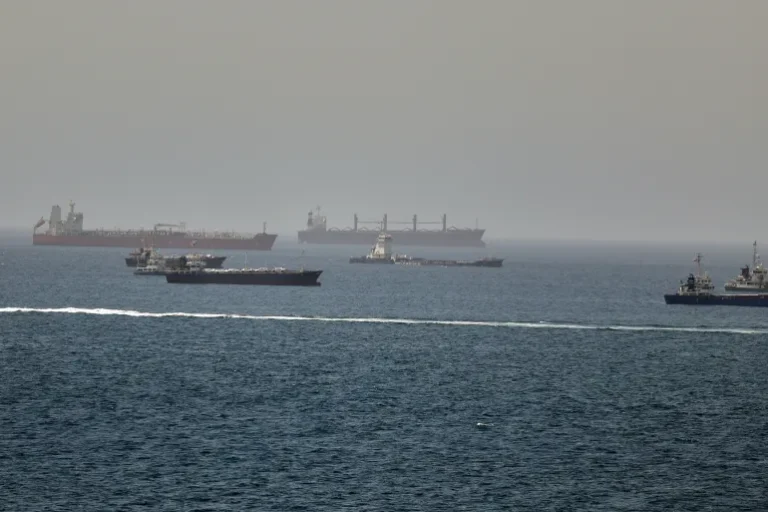
    Iran and Oman have reported progress in discussions aimed at ensuring safer shipping through the Strait of Hormuz amid the ongoing regional conflict. Iranian Foreign Ministry spokesman Esmaeil Baghaei said senior officials from both countries held talks in Tehran over two days to discuss arrangements for managing maritime traffic through the strategic waterway. According to Baghaei, the discussions focused on common principles and practical measures to maintain safe shipping while respecting the sovereignty of Iran and Oman, the two countries bordering the strait. He described the talks as useful and said progress had been made. Further political and technical consultations are expected to continue between the two sides. Baghaei also said there had been no change in the current traffic situation in the Strait of Hormuz. The development comes as tensions remain high between Iran, the United States and Israel. The waterway has become a major focus of the conflict because it is a critical route for global energy shipments. Iranian army spokesman General Abolfazl Shekarchi separately claimed that Washington had failed to achieve its objectives in the Strait of Hormuz and in weakening Iran. He described the situation for the United States as “chaotic and undesirable” and said Washington was apparently considering a new strategy. Shekarchi also suggested that any possible US withdrawal from the conflict could depend on Israel’s approval. Meanwhile, tensions have spread beyond the immediate battlefield. Iran summoned Ukrainian diplomats after Kyiv reportedly struck an Iranian vessel in the Caspian Sea, killing at least one sailor and injuring another. Ukraine said the operation targeted Russian vessels allegedly carrying military cargo linked to Iran. Ukrainian President Volodymyr Zelenskyy has also accused Russia of supporting Iran during the ongoing conflict.

  • | |

    Ex-army chief Qamar Bajwa undergoes Dubai check-up

    Former Chief of Army Staff General (retd) Qamar Javed Bajwa has been shifted to the United Arab Emirates for further medical examination and treatment. Family sources said Bajwa is currently in the UAE. He travelled abroad after completing his initial treatment in Pakistan. The former army chief was examined by a team of specialist doctors in Dubai. The doctors carried out a detailed medical check-up. According to family sources, Bajwa’s condition has improved considerably after the medical examination. However, the results of some important medical tests are still awaited. Doctors will review the remaining reports before giving their final recommendations. His further treatment and return to Pakistan will depend on the doctors’ advice. Family sources said Bajwa will stay in the UAE for a few days. He will remain with his son during his stay in the country. A final decision about his return to Pakistan will be taken after the doctors review all his medical reports. His family is also awaiting the doctors’ further instructions. Bajwa had suffered serious injuries around four and a half months ago. He reportedly slipped and fell at his residence. The accident caused injuries to his head and back. He was immediately shifted to Combined Military Hospital (CMH) Rawalpindi for treatment. The former army chief remained admitted to the hospital for around three weeks. He received treatment under the supervision of military doctors. At the time, the Inter-Services Public Relations (ISPR) officially confirmed that Bajwa had been injured after falling at his residence. The military’s media wing said he was receiving treatment at CMH Rawalpindi. His condition was monitored by doctors during his stay at the hospital. After completing his initial treatment in Pakistan, Bajwa later travelled to the UAE for further medical assessment. His current stay in the UAE is expected to continue until doctors complete their assessment. The results of the pending tests will help determine the next course of treatment. Family sources have not provided a specific date for his return to Pakistan. They said the decision will be made after consultation with doctors. General (retd) Qamar Javed Bajwa served as Pakistan’s Chief of Army Staff from November 2016 to November 2022. He retired from the position after completing his tenure in November 2022.

  • | |

    Mir Raza’s father seeks suspension of police off…

    KARACHI: The father of slain businessman Mir Raza Ali has called for the suspension of Karachi East DIG Dr Farrukh Ali and other police officials, accusing them of delaying the investigation and allegedly concealing crucial evidence in his son’s murder case. Speaking to reporters, Mir Hussain said the police had mishandled the investigation and urged authorities to take action against the Ferozabad SHO and other officers allegedly involved in the case. He claimed that officials had “played a game” with the grieving family. Twenty-five-year-old Mir Raza Ali, an IBA graduate and businessman, went missing on July 28 and was found dead in Gulistan-e-Jauhar the following day. While the initial investigation considered suicide as a possibility, his family consistently maintained that he had been abducted, tortured and murdered. The case took a new turn after a fresh post-mortem reportedly identified a gunshot wound to Ali’s back along with other injuries. A chemical examination also detected acid particles and gunshot-residue elements on his shirt, while police said sedatives were found in his blood and DNA testing matched his parents. Meanwhile, the family has requested that Ali’s smartwatch be examined by the Punjab Forensic Science Agency (PFSA), rather than the National Cyber Crime Investigation Agency (NCCIA). Family lawyer Jibran Nasir expressed concern that the device had remained with a former investigation committee head for several days before being handed to the NCCIA, raising fears of possible tampering. The newly formed investigation team, headed by DIG Amir Farooqi, has written to the NCCIA seeking forensic analysis of the smartwatch as well as information concerning Ali’s social media and other digital accounts. Investigators have also revisited the crime scene, interviewed nursery staff and collected additional evidence. The team has been tasked with examining outstanding aspects of the case, including geofencing, mobile-data records and digital evidence. Authorities have set August 15 as the deadline for submission of the investigation report. Meanwhile, a medico-legal officer who conducted the initial post-mortem was removed following an inquiry that identified serious lapses in the examination.

Leave a Reply

Your email address will not be published. Required fields are marked *