trump warns iran
| |

Trump warns Iran backers of economic punishment

US President Donald Trump has warned that countries providing an economic “lifeline” to Iran could face financial penalties as Washington steps up pressure on Tehran. Trump has also announced what he described as an “economic D-Day” against Iran as part of his broader campaign to weaken the country’s economy and force changes in its policies.

The latest threat reflects Trump’s continued reliance on US economic power as a key foreign policy tool. His administration has increasingly used tariffs, sanctions and other financial measures to pressure countries and governments that Washington believes support US rivals or undermine its strategic objectives.

Analysts, however, question whether the strategy can deliver the same results against Iran as it has in cases where the United States enjoys greater cooperation from other major economies.

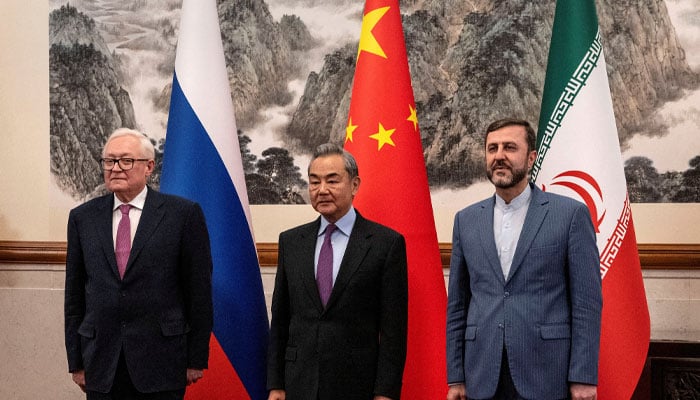
Iran maintains important economic ties with China and Russia, two countries that have strong reasons to resist US pressure. Russia already faces extensive American sanctions and has significantly reduced its dependence on the US-led global financial system. As a result, additional US economic pressure may have a limited impact on Moscow’s willingness to maintain trade and other economic relations with Tehran.

China could present an even greater challenge for Washington. Beijing has repeatedly shown that it is prepared to resist or work around US sanctions when its own economic and strategic interests are at stake. China remains one of Iran’s most important trading partners, particularly in the energy sector, making Beijing a key factor in any US effort to isolate Tehran economically.

Paul Musgrave, an associate professor of government at Georgetown University in Qatar, told Arab media that Trump would face significant difficulties in making his pressure campaign fully effective.

Musgrave said Trump was attempting to impose a coordinated sanctions regime largely through unilateral US pressure, even though such efforts have traditionally depended on cooperation from multiple countries. He noted that an effective international campaign would require support from major powers, including China and Russia, as well as cooperation among the five permanent members of the United Nations Security Council.

Trump said in a post on his social media platform, Truth Social, on Tuesday that his campaign against Iran would become one of the most devastating economic operations ever directed against a country.

The statement signals a major escalation in Washington’s economic pressure on Tehran. Trump’s administration appears determined to use America’s financial influence, access to global markets and trade relationships to make it increasingly difficult for Iran to maintain its international economic ties.

However, experts warn that the strategy could also create significant economic consequences beyond Iran. If Washington threatens countries that continue trading with Tehran, those governments could face a difficult choice between maintaining their economic interests and avoiding US penalties.

The effectiveness of Trump’s strategy will largely depend on whether Washington can convince major trading partners to cooperate. China and Russia are likely to remain the biggest obstacles, particularly if they view continued economic engagement with Iran as important to their own strategic interests.

The latest move also comes after a series of contentious trade battles during Trump’s second presidential term, highlighting his continued preference for economic pressure as a means of pursuing foreign policy goals. Whether the approach can isolate Iran without triggering further tensions with major global powers remains uncertain.

Similar Posts

  • | |

    Anas Sarwar joins UK Cabinet as Trade Minister

    Anas Sarwar has resigned as leader of the Scottish Labour Party after accepting the post of Minister of State for Trade in Prime Minister Andy Burnham’s government. The move ends his five-year leadership of the party and opens a new chapter in his political career at the national level. Sarwar confirmed that he will step down from the Scottish Parliament and will receive a life peerage, allowing him to take a seat in the House of Lords. From there, he will serve as a minister in the UK government and take responsibility for trade-related matters. In a statement, Sarwar said it was a great honour to be asked to join the government. He said public service has always been the driving force behind his political career. He added that serving the entire United Kingdom in the new role is a responsibility he accepts with humility and determination. Sarwar also reflected on Scottish Labour’s disappointing performance in the recent Scottish Parliament elections. The party won only 17 seats in the 129-member parliament, its worst result on record. He admitted that he shares responsibility for the defeat and said he was sorry that the party had failed to meet expectations. Despite the setback, Sarwar said the country faces serious political and economic challenges that require strong leadership. He warned that the rise of right-wing politics presents a major test for the United Kingdom. He said the Labour government must succeed in delivering stability, economic growth and better opportunities for people across the country. Following his resignation, Scottish Labour deputy leader Dame Jackie Baillie has taken over as acting leader. She thanked Sarwar for his leadership and praised his commitment to equality, fairness and public service. She said the party’s executive committee will soon announce the timetable for electing a new permanent leader. Sarwar’s departure from the Scottish Parliament will not trigger a by-election because he was elected through the regional list system. Under parliamentary rules, the next eligible Labour candidate on the Glasgow regional list is expected to replace him. His decision has sparked strong political debate. Opposition parties accused him of changing his position after previously supporting the abolition of the House of Lords. Critics also pointed to his earlier statements in which he said his main goal was to become Scotland’s first minister and remain focused on Scottish politics. Political leaders offered mixed reactions to the announcement. Some congratulated Sarwar on his new role and wished him success in government. Others argued that accepting a seat in the House of Lords contradicts his previous promises and could damage public confidence in politics.

  • | | | |

    Pakistan, Qatar push US-Iran 10-day ceasefire plan

    WASHINGTON/DOHA: Pakistan, Qatar and Egypt have stepped up diplomatic efforts to prevent a wider conflict in the Middle East by proposing a 10-day ceasefire between the United States and Iran, according to a report by US news outlet Axios. However, neither side has yet agreed to the proposal as military tensions continue to escalate. The report said regional mediators are working behind the scenes to create space for diplomacy after days of intense hostilities between Washington and Tehran. The proposed ceasefire aims to temporarily halt military operations, restore maritime security in the Strait of Hormuz and open the door for renewed negotiations. According to sources familiar with the mediation efforts, the proposal has been shared with both governments, but officials in Washington and Tehran have so far withheld their approval. Diplomats say both countries appear determined to strengthen their military positions before considering any pause in fighting. The report added that US President Donald Trump is weighing two key options. The first is to endorse a limited 10-day ceasefire that could reduce regional tensions and revive diplomatic talks. The second involves expanding military operations alongside Israel in an effort to increase pressure on Iran and force concessions over security and nuclear issues. US officials quoted in the report said no final decision has been made, adding that developments over the coming days are expected to determine Washington’s next move. Despite several days of military operations, the report noted that the United States and Israel have not succeeded in eliminating Iran’s influence over the strategically vital Strait of Hormuz, through which a significant portion of the world’s oil supplies passes. Analysts warn that any prolonged disruption in the waterway could have serious consequences for global energy markets. The report also highlighted growing domestic pressure on the Trump administration as rising fuel prices in the United States fuel public concern over the economic cost of continued military action. Diplomatic momentum reportedly suffered a setback after two American soldiers were killed in an Iranian missile attack in Jordan over the weekend. Following the incident, Washington is said to have adopted a tougher stance while continuing diplomatic contacts. A senior US official confirmed that backchannel discussions remain active but stressed that the United States intends to respond to the deaths of its troops. The official added that military operations could continue for as long as President Trump considers necessary. Regional sources nevertheless expressed cautious optimism, saying negotiations remain the best path forward, as neither Washington nor Tehran is believed to be in a position to impose a lasting solution through military means alone.

  • |

    Moroccan migrants return home after failed bid to reach Europe

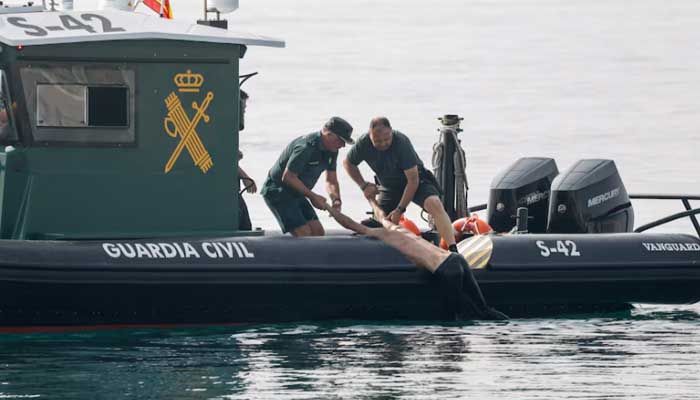
    Thousands of Moroccan migrants who entered Spain’s North African enclave of Ceuta this week have begun returning home after their hopes of reaching mainland Europe faded. Many said they were driven back by hunger, exhaustion and difficult living conditions, while others claimed they faced hostility after arriving in the Spanish territory. Several returnees said they had decided to cross into Ceuta after watching viral social media videos and receiving messages from friends claiming the heavily guarded border could be breached. Believing they had a chance to build a better future in Europe, many left their jobs and travelled to the border. However, after reaching Ceuta, migrants discovered there was no clear route to mainland Spain. Many said they became stranded in the enclave with limited access to food, water and shelter. One migrant said he survived for three days by drinking only water because he could not afford food. He described the cost of basic meals as extremely high and said life in Ceuta was far more difficult than he had expected. Returning migrants also claimed that many supermarkets and shops remained closed, making it difficult to buy essential supplies. Some spent days in wet clothes after swimming across the border and struggled to find safe places to rest. Several migrants alleged they were forced to leave certain neighbourhoods by local residents, although those claims could not be independently verified. Spanish authorities confirmed that two people suffered minor injuries in separate knife attacks and said one suspect had been arrested. Officials added that no deaths linked to the incidents had been reported. The large influx also affected businesses on both sides of the border. In the Moroccan border city of Fnideq, hotels and restaurants faced staff shortages after several workers crossed into Ceuta. Some employers have already begun looking for replacement workers as many employees remain missing. Meanwhile, daily life in Ceuta has gradually started returning to normal. Cafes have reopened in parts of the city, while police continue to maintain a strong security presence. Many businesses, however, remain closed as authorities monitor the situation. Aid workers said migrant reception facilities are operating at full capacity, with thousands of people still believed to be inside the enclave awaiting assistance or decisions on their future. Local residents expressed mixed emotions over the crisis. While many admitted the sudden arrival of thousands of migrants created fear and uncertainty, others said they sympathised with the young people, arguing they had been misled by false hopes of an easier route into Europe.

  • |

    Indian student protest to continue after clashes in Delhi leave nearly 180 injured

    A youth led protest movement in India has vowed to continue demonstrations demanding the resignation of Education Minister Dharmendra Pradhan after violent clashes with police in New Delhi left nearly 180 people injured. The movement, known as the Cockroach Janta Party, cancelled plans for another march to parliament but said protests would continue at the Jantar Mantar demonstration site. Organisers said they wanted to avoid further injuries after Monday’s confrontation with security forces. The campaign began as an online satirical movement but has rapidly grown into one of the biggest public challenges facing Prime Minister Narendra Modi during his third term in office. It has attracted widespread support from young people angered by repeated examination paper leaks and allegations of corruption in India’s education system. Thousands of protesters from Delhi and nearby regions gathered outside parliament on Monday to demand accountability over a national medical entrance examination leak that affected more than two million students earlier this year. The exam had to be conducted again after question papers were leaked, while reports of several student suicides linked to the controversy intensified public outrage. Police used batons and tear gas to disperse demonstrators after violence broke out during the march. According to Delhi Police, more than 118 police and security personnel, along with around 60 protesters, were injured during the clashes. Most of those hurt received medical treatment and were later discharged from hospital. Authorities also detained around 70 protesters and said legal action would be taken against them. Police accused demonstrators of ignoring restrictions on public gatherings and behaving aggressively despite repeated warnings. On Tuesday, around 500 protesters gathered peacefully at Jantar Mantar despite light rain and heavy security across central Delhi. Paramilitary forces remained deployed while barricades were placed on several roads to prevent further unrest. CJP founder Abhijeet Dipke apologised to supporters for the violence they faced during Monday’s protest. He expressed particular concern over female demonstrators who he claimed were assaulted by male police officers during the clashes. Dipke announced that while the movement would continue its campaign, organisers would not attempt another march towards parliament because they feared more young people could be injured. The protest movement gained significant momentum after social activist Sonam Wangchuk joined the campaign with a hunger strike in late June. Wangchuk was later moved to hospital by authorities, a move that further fuelled criticism of the government among supporters. The group’s demands include the resignation of the education minister, the release of Wangchuk and financial compensation for the families of students who reportedly died by suicide following the examination leak. Government officials have indicated they are open to discussions. Health Minister JP Nadda recently met representatives of the movement and requested time to consider their demands. Parliamentary Affairs Minister Kiren Rijiju also called for calm and said ongoing talks should not be disrupted. Opposition parties criticised the government’s handling of the protests and accused authorities of using excessive force against peaceful demonstrators. Leaders of the ruling Bharatiya Janata Party rejected those claims and argued that the violence appeared to have been deliberately provoked. Political analysts believe that even if negotiations reduce immediate tensions, the wider frustration among India’s younger generation is unlikely to disappear. Concerns over unemployment, repeated examination scandals and growing distrust in public institutions continue to drive dissatisfaction, making youth unrest an increasingly important political issue for the government.

  • | |

    Fresh footage of Iran’s Supreme Leader Mojtaba K…

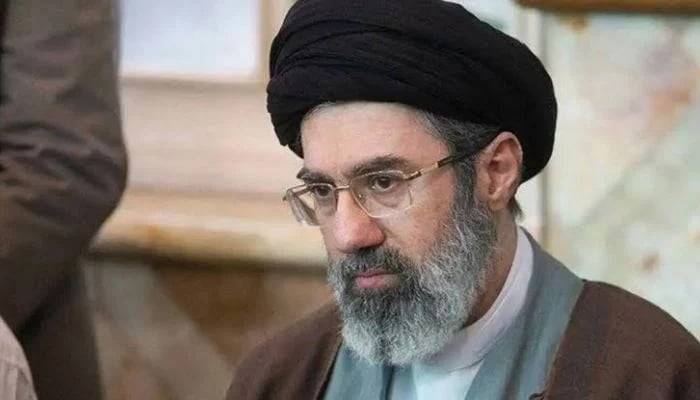
    A previously recorded video of Iran’s Supreme Leader Mojtaba Khamenei has surfaced, offering a rare glimpse of the country’s new leader as speculation continues over his health. The footage, released by Iranian media, shows Khamenei attending an academic session and reviewing a student’s research paper on the “Islamic security model.” He is heard speaking publicly in the video for what is described as the first time since assuming the leadership, and he praises the research as flawless. The release comes amid unverified reports that Khamenei was seriously injured during military strikes that resulted in the death of his father, Ayatollah Ali Khamenei. Iranian state media has sought to counter the reports by broadcasting the footage, although the exact date when it was recorded remains unclear. Iranian President Masoud Pezeshkian has also rejected claims about the supreme leader’s deteriorating health, describing him as “absolutely healthy.” Since taking office, the 56-year-old Mojtaba Khamenei has largely stayed away from public appearances, communicating mainly through written statements and official channels. His limited visibility has continued to fuel questions about his health and whereabouts.

  • |

    Talks accelerate to fully reopen Strait of Hormuz 

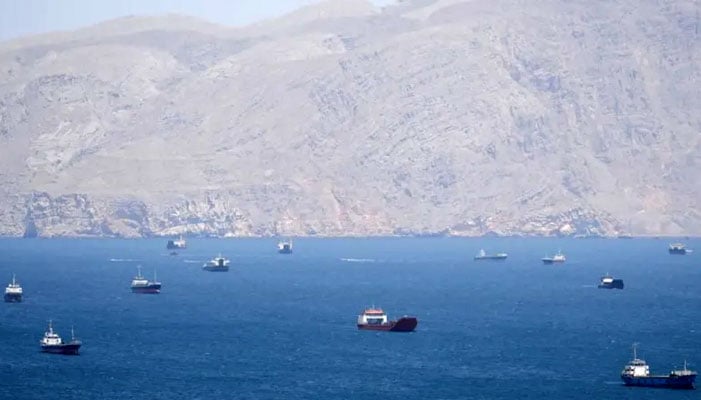
      Efforts to fully reopen the Strait of Hormuz, one of the world’s most strategically important maritime trade routes, are gaining momentum as diplomatic contacts between the United States and Iran continue to show encouraging progress. According to reports preparations are underway to restore unrestricted commercial navigation through the vital waterway, with an official announcement expected within the next few hours or by Wednesday. The Strait of Hormuz serves as a critical shipping corridor connecting the Persian Gulf to international waters, carrying a significant share of the world’s crude oil, liquefied natural gas, refined petroleum products, and other essential commodities. Any disruption in traffic through the strait has immediate consequences for global energy markets and international trade. Arab television channels have claimed that discussions aimed at fully reopening the waterway have advanced considerably. The reports suggest that diplomatic negotiations have entered their final stages and that an agreement could soon be announced, allowing commercial vessels to resume normal operations after a period of uncertainty. Earlier, U.S. Treasury Secretary Scott Bessent also expressed optimism regarding the ongoing negotiations. Speaking to media in Washington , he said there was a strong possibility that an agreement to reopen the Strait of Hormuz could be reached by Tuesday or Wednesday.Talks between Washington and Tehran are focused on ensuring the uninterrupted movement of commercial ships through the strategic passage while restoring stability to the region. During the interview, the Treasury Secretary noted that negotiations are continuing with the aim of normalizing the security situation in the Strait of Hormuz and guaranteeing safe passage for international shipping. He emphasized that both sides are engaged in discussions designed to reduce tensions and facilitate the free flow of maritime commerce. When asked whether Iran would be permitted to collect toll fees from vessels passing through the Strait of Hormuz, Bessent dismissed the possibility. He clarified that the proposed arrangement is based on the principle of complete freedom of navigation for all commercial vessels. According to him, the agreement is intended to ensure that ships from every nation can transit the waterway without facing additional charges or restrictions. If finalized, the agreement is expected to have far-reaching economic benefits. In addition to restoring the uninterrupted export of crude oil from Gulf producers, it would also enable the smooth transportation of fertilizers, refined petroleum products, industrial gases, and numerous other essential commodities. Industry experts believe that the reopening of the strait would significantly improve global supply chains that have been disrupted by regional tensions. Another major benefit of the proposed agreement would be the release of hundreds of commercial vessels currently delayed or stranded in the Persian Gulf due to security concerns. Allowing these ships to resume their voyages would ease congestion, reduce shipping costs, and improve delivery schedules for international trade. Economists suggest that a full reopening of the Strait of Hormuz could also help stabilize global energy markets. Increased supplies of crude oil and petroleum products would likely ease concerns over shortages, potentially leading to lower international oil prices. Reduced transportation costs could further contribute to price relief across several sectors, including manufacturing, agriculture, and consumer goods. While optimism surrounding the negotiations has grown, officials have yet to announce a formal agreement. Diplomatic efforts remain ongoing, and both governments are expected to continue discussions until a final framework is approved. Observers around the world are closely monitoring developments, as the outcome of these talks could have a significant impact on global trade, energy security, and regional stability. If the anticipated agreement is reached, it would mark an important diplomatic breakthrough, restoring confidence in one of the world’s busiest maritime corridors and helping normalize commercial activity throughout the Gulf region.

Leave a Reply

Your email address will not be published. Required fields are marked *