source rejects imran
| | |

Source rejects Imran deal, Shehbaz-Asim rift repor…

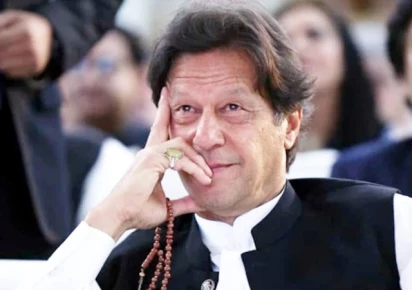
An informed source familiar with political and government developments has categorically rejected speculation about any possible “deal or relief” for former Prime Minister Imran Khan, as well as reports of differences between Prime Minister Shehbaz Sharif and Chief of Army Staff Field Marshal Asim Munir.

The source described the possibility of both developments as “zero,” amid intense speculation following the Supreme Court’s order concerning Imran Khan’s medical treatment.

It had been expected that Imran Khan would be shifted to Shifa International Hospital for treatment. However, instead of being taken to Shifa International, he was transferred to the Pakistan Institute of Medical Sciences (PIMS) and later returned to Adiala Jail.

The development triggered speculation in political circles about whether the issue was linked to a possible deal or some form of relief for the Pakistan Tehreek-e-Insaf founder.

When specifically asked whether there was any possibility of a deal or concession for Imran Khan, the informed source gave a clear one-word response: “Zero.”

The source was also asked about reports and speculation regarding differences between Prime Minister Shehbaz Sharif and Field Marshal Asim Munir. The response was again: “Zero.”

According to the source, such speculation is not unusual in Pakistan. Political developments involving the civilian and military leadership have historically been interpreted through the lens of possible deals, concessions or disagreements between the civilian government and the military establishment.

The source said that whenever an unusual political development takes place, speculation immediately emerges that a behind-the-scenes deal may be under discussion or that differences have developed between the civilian and military leadership.

However, the source stressed that the current political and institutional arrangement should not be viewed through the lens of Pakistan’s past political experiences.

Referring to the political setup that took shape around three to four years ago, the source said the relationship between the civilian government under Shehbaz Sharif and the military leadership was “completely different” from arrangements witnessed in the past.

The source also suggested that many reports currently circulating may reflect the wishes or expectations of certain individuals rather than the actual situation on the ground.

Similar Posts

  • | |

    Climate authority summoned again as questions grow…

    Islamabad: The Pakistan Climate Change Authority has been called back before a Senate committee only days after Chairperson Sherry Rehman strongly questioned why a new authority was operating alongside the Climate Change Ministry, asked what new work it was actually doing and raised concerns over staff costs, duplication and the use of public money. The fresh meeting will again focus almost entirely on the authority, its work, projects, programmes and progress. The quick return of the issue to the committee has increased pressure on the authority to clearly explain why it exists and what results it has produced that the Ministry of Climate Change and Environmental Coordination could not already deliver. At the previous meeting, Sherry Rehman repeatedly asked officials what work the authority was doing that the ministry was not already responsible for. She questioned whether the government had effectively created a parallel structure carrying out the same work on climate mitigation, adaptation, coordination and policy implementation. Rehman said the presentation before the committee did not show a clear new role for the authority. She also questioned why another institution was being created at a time when the ministry itself was facing shrinking development budgets. One of the strongest moments came when the committee discussed the authority’s staffing and expenditure. Rehman referred to a sanctioned strength of 24 positions and said employee related expenditure had already reached around Rs 80 million according to the presentation placed before the committee. She questioned why these costs were being incurred when she could not see a clear difference between the work of the authority and the ministry. She warned officials not to treat the meeting as a routine presentation exercise and demanded direct answers about public spending and actual results. Rehman also questioned whether creating the authority had brought new climate experts into government. Members asked whether the purpose was to recruit technocrats who could not otherwise be brought into the ministry. However, Rehman said the presentation appeared to show many of the same officials who had already worked inside government departments. She described the situation as a reshuffling of bureaucracy rather than the creation of a new technical institution. She said fragmentation was already a major government problem, with different organisations working separately on connected climate and disaster issues. According to her argument, creating another body without a clearly different mandate could increase costs while making responsibility more confusing. Rehman also questioned why the authority had been activated years after the law creating it first appeared. She said the law allowed the authority to exist but argued that this did not necessarily mean the government was forced to operationalise it. She said earlier governments had discussed removing such overlapping structures instead. During the exchange, she said she had opposed operationalising the authority while serving as minister because she feared it would create duplication. She told the committee that the result now appeared close to what she had warned about: officials were moving between the ministry and the authority instead of creating a completely new technical team. The authority defended its role. Dr Muhammad Rafiq told the committee that the authority was originally designed to provide technical support to the ministry. He acknowledged that more explanation was needed regarding what the authority was delivering against its original responsibilities. He suggested that the ministry and authority should be given an opportunity to return with a clearer presentation explaining what results they expected to achieve and what the authority could do that the ministry could not. The committee was told that the authority was still incomplete. Officials said a permanent chairperson was still being appointed and that only three members were working at the authority with a limited number of staff against the total positions planned. The authority also presented one of its strongest arguments in defence of its performance. An authority member told the committee that it had become Pakistan’s first public sector organisation to qualify as a delivery partner with the Green Climate Fund through the relevant mechanism. The official said this had been achieved by only three members and without technical assistance. He argued that this status could help the authority develop technical proposals and bring more climate finance into Pakistan. Rehman was not convinced that this achievement alone justified a separate authority. She argued that Green Climate Fund financing had already been coming to Pakistan through government structures and questioned why a completely new authority was needed when a climate finance office could operate within the ministry. She again asked why project development and technical hiring could not be handled directly by the ministry. Her central question remained the same throughout the discussion: what exactly could the new authority do that the ministry could not already do? The ministry told the committee that it had a supervisory and controlling role over the authority and that the authority’s budget passed through the ministry. However, Rehman continued to question how effective that control was if the authority could hire staff and exercise statutory powers separately. She asked officials to explain how rotating officials into a separate authority would make climate work more efficient when the ministry itself was losing development resources. Professor Dr Zahoor Ahmed Bazai, who identified himself as an unpaid member nominated to the authority and as a climate change academic, defended the institution. He told the committee that the authority was included in the climate law and that members had been nominated through the formal process. He argued that the authority was intended to provide expertise and serve an advisory role. Rehman said her criticism was not directed personally at individual members. She said the bigger problem was duplication between institutions and the growing number of attached bodies dealing with similar climate matters. The committee chairperson was also critical of the presentation the authority gave. Rehman said the presentation was not strong enough to be used by Pakistan at an international climate forum and described it as outdated in style. She said that if the authority wanted to demonstrate its value and

  • | |

    Ariana Grande’s Petal video sparks fresh health concerns

    Ariana Grande has once again become the centre of online discussion after the release of her new music video for Petal, with fans expressing renewed concern over the singer’s noticeably slim appearance. While many praised the video’s creative direction, others said they were worried about Grande’s health, reigniting a debate that has followed the pop star for several years. In one of the video’s opening scenes, Grande appears at an audition wearing a Grease-inspired outfit consisting of black leggings, an off-the-shoulder black top, a matching neck scarf, vintage-style sunglasses, pearl earrings, black heels and a leather jacket draped over her shoulder. Her signature ponytail was styled into tight curls as she joined a group of aspiring actresses in a choreographed waiting-room dance sequence. Soon after the video’s release, social media platforms were flooded with reactions. Many fans admired the song and visuals but admitted they were distracted by Grande’s appearance. One fan wrote: “She is extremely thin and it’s concerning.” Another commented: “I think people are allowed to be concerned for her health.” A third person remarked: “Bones are literally popping out.” Another fan wrote: “As an Ari fan, the song and video are absolutely incredible concepts and incredibly executed but honestly all I can think about is how I hope she’s okay because she literally looks ill. She needs to get help.” However, many others rushed to Grande’s defence, arguing that constant public discussion about her body amounts to body-shaming rather than genuine concern. One supporter wrote: “If y’all actually cared about her you wouldn’t be publicly making comments about her body.” Another added: “Leave her body alone. Ariana doesn’t exist for your commentary. She’s out here meeting fans, dropping Petal, and living her life. Her weight is not a public discussion. Body-shaming a woman for being thin is still body-shaming.” A third fan posted: “CLOCK THEM, ARIANA GRANDE. THEY BETTER STOP COMMENTING ON HER BODY, HER WEIGHT, OR HER LOOKS. It’s weird, it’s unnecessary, and she doesn’t owe anyone an explanation for how she looks.” The renewed discussion echoes comments Grande herself made in 2024 when she spoke about the pressure women face over their appearance. During an interview, the singer admitted that public scrutiny can be painful. “I think that it’s something that is uncomfortable no matter what scale you’re experiencing it on.” She also described comments about a person’s weight as: “Uncomfortable” and “horrible.” Grande further explained that society has become far too comfortable commenting on other people’s appearance, saying: “There’s a comfortability that people have commenting on that that I think is really dangerous.” Despite the ongoing debate, Petal has been warmly received for its music and visual storytelling, with many fans urging others to focus on Grande’s artistry rather than her physical appearance. The latest conversation once again highlights the growing discussion around celebrity privacy, body image and the impact of online commentary on public figures.

  • | |

    Ducky Bhai urges parents to monitor children’s online content

    ISLAMABAD: Pakistani YouTuber Saadur Rehman, popularly known as Ducky Bhai, has urged parents to take greater responsibility for monitoring their children’s online activities. Speaking during a recent podcast, the content creator responded to criticism directed at YouTubers when children develop what parents consider inappropriate habits. Ducky Bhai said parents should decide what their children watch online. He argued that children are not required to watch any particular YouTuber and that parents have the ability to restrict or monitor their access to digital content. He recalled the restrictions placed on him by his own parents during his childhood. According to the YouTuber, his father closely monitored his computer use and used parental-control software to track the websites and content he accessed. Ducky Bhai said his parents also linked access to games and other forms of entertainment with his academic performance. He used the example to argue that parents today can similarly establish rules for their children’s use of phones, tablets and computers. He also stressed that YouTube should not be treated like a school or an educational requirement. He said viewers have the choice to watch his content or avoid it. The YouTuber also discussed his experience of spending around three months in jail in connection with allegations involving an online gambling application. Ducky Bhai was granted bail in November 2025 after spending approximately 100 days at Camp Jail in Lahore. Reflecting on the experience, he described his time in custody as extremely difficult. He said the limited space and isolation made the period particularly challenging. He recalled being unable to move freely or access recreational facilities available in other parts of the prison. According to Ducky Bhai, prisoners in other areas could spend time outdoors, play sports and use recreational facilities. He said he was not permitted to visit the prison library but requested books during his detention. He also revealed that he began reading newspapers for the first time during his imprisonment. The YouTuber said his time in custody also separated him from the public reaction to his case. He explained that social media feeds generally show recent content, making it difficult to find older posts and determine who had supported or criticised him during his imprisonment. Ducky Bhai also commented on controversies involving fellow content creator Rajab Butt. He suggested that personal disputes should be addressed quickly and privately before they become larger public controversies. He said family elders could play an important role in resolving such disputes. Drawing from his own experience, he said his time in jail made him realise how deeply a public controversy can affect a creator’s family.

  • Thailand Implements Strict New Penalty Guidelines For Cannabis Businesses

    BANGKOK, Thailand — The Department of Thai Traditional and Alternative Medicine has issued comprehensive new penalty guidelines that introduce strict license suspensions and permanent revocations for cannabis businesses found in breach of national regulations. The new framework is designed to tighten control over the commercial cannabis sector and ensure strict compliance with public health standards. […]

  • | | |

    Karachi water crisis: Munem Zafar Khan says citize…

    Jamaat-e-Islami Karachi chief Munem Zafar Khan has expressed concern over the worsening civic problems in Karachi, saying that residents of the city are struggling even for basic necessities such as clean water. Addressing a press conference in Karachi, Munem Zafar Khan criticized the provincial government over issues related to water supply, electricity, infrastructure, and public services. He said that the city continues to face serious challenges despite repeated promises of improvement. The Jamaat-e-Islami leader claimed that shortly after the first drops of rain fell in Karachi, around 200 power feeders were affected, causing electricity disruptions in several areas. He questioned the performance of K-Electric, stating that despite receiving significant government support, improvements in power generation and transmission systems had not met public expectations. Munem Zafar Khan also criticized the Sindh government over urban infrastructure issues, claiming that Karachi lacks adequate facilities and that residents are facing difficulties due to shortages of essential services. He raised concerns about drainage problems and safety issues, stating that several people had lost their lives after falling into open gutters. He questioned why proper maintenance and safety measures had not been implemented despite repeated incidents. The JI Karachi chief also criticized the pace of development projects, claiming that funds allocated for drainage cleaning and infrastructure improvements were often utilized shortly before the monsoon season instead of through year-round planning. Discussing the city’s water shortage, he said that a significant portion of Karachi’s coastal population continues to face difficulties accessing water. He also raised concerns about delays in the K-IV water project, saying that the project remains crucial for meeting the city’s growing water needs. Munem Zafar Khan further criticized delays in road and transport projects, including water pipeline work and other development schemes, alleging that political interests and poor management have affected progress. He also mentioned health-related concerns, referring to reports of HIV cases among children and calling for accountability and improvements in healthcare systems. The Sindh government and other relevant authorities have faced repeated criticism from opposition parties over Karachi’s civic challenges, including water shortages, electricity problems, waste management, and infrastructure development. Karachi, Pakistan’s largest city and economic hub, continues to face pressure from rapid population growth and increasing demand for public services. Experts have emphasized the need for long-term planning, better governance, and effective implementation of development projects to address the city’s growing challenges.

  • | | |

    Pakistan to import 1 million tons of wheat to meet…

    ISLAMABAD: The federal government has decided to immediately import one million tons of wheat to ensure an uninterrupted supply across the country and meet the growing demand of the provinces. The decision was reached after detailed consultations between the federal government and provincial authorities on wheat availability, pricing, and supply. During the meeting, participants agreed that wheat stocks currently held by the Pakistan Agricultural Storage and Services Corporation (PASSCO) would be released without delay to address the immediate requirements of the provinces. Officials noted that while PASSCO’s existing reserves would help ease the short-term situation, the available stocks are insufficient to meet the combined demand of all provinces. To bridge the gap and maintain market stability, the government approved the immediate import of one million tons of wheat. Federal Minister for National Food Security Rana Tanveer Hussain said the government remains committed to ensuring the availability of affordable, high-quality wheat for consumers. He stated that PASSCO’s wheat reserves would be distributed according to provincial needs, while the planned imports would help fulfill the country’s overall requirements and prevent supply disruptions. The minister added that the move is aimed at maintaining stable wheat supplies, supporting provincial food security, and preventing unnecessary fluctuations in the domestic market.

Leave a Reply

Your email address will not be published. Required fields are marked *