rumesh tharanga sri
|

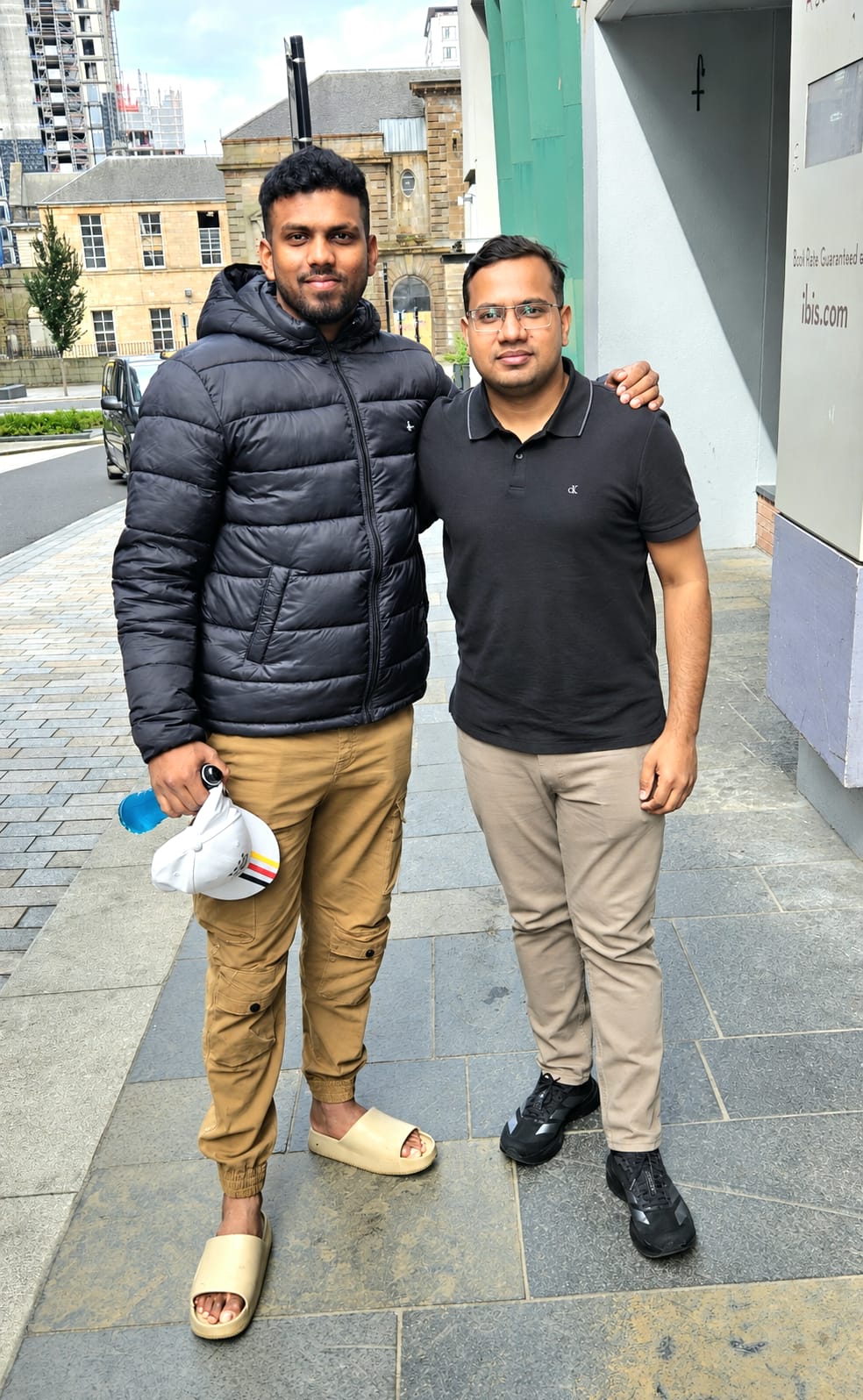
Rumesh Tharanga: Sri Lanka’s new javelin star

Sri Lanka’s athletics scene has a new rising star. At just 23, Rumesh Tharanga Pathirage has established himself as one of the most exciting young javelin throwers in the world.

Tharanga’s remarkable 2026 season has already included a 92.62-metre national record, a Commonwealth Games gold medal, multiple Diamond League victories and a World Championships final appearance. His latest achievement came at the Lausanne Diamond League, where he edged India’s Olympic champion Neeraj Chopra by just nine centimetres.

From cricket to javelin

Born on March 21, 2003, in Kalutara, Sri Lanka, Tharanga initially dreamed of making a career in cricket. He developed into a promising fast bowler and reportedly reached speeds of around 134 kilometres per hour as a teenager.

His father’s involvement in throwing events eventually encouraged him to explore athletics. Tharanga first tried discus before turning his attention to javelin while studying at St Peter’s College in Colombo.

His cricket background helped him develop explosive movement, speed and coordination — qualities that later became important parts of his javelin technique.

Rapid rise in athletics

Tharanga represented Sri Lanka at the 2022 World Athletics U20 Championships, gaining valuable international experience.

By 2025, he had moved beyond the status of a promising prospect. He became the first Sri Lankan male javelin thrower to reach a World Athletics Championships final and finished seventh with a throw of 84.38 metres.

His progress accelerated dramatically the following year.

Breaking the 90-metre mark

At the Rome Diamond League in 2026, Tharanga produced the biggest throw of his career, sending the javelin 92.62 metres.

The effort set a new Sri Lankan national record and placed him among the world’s elite throwers. It also put him close to Pakistan’s Olympic champion Arshad Nadeem, whose 92.97-metre throw won gold at the Paris 2024 Olympics.

Crossing the 90-metre barrier marked a major milestone. Tharanga had firmly established himself as a serious contender at the highest level of international javelin.

Commonwealth Games champion

Tharanga carried that momentum into the 2026 Commonwealth Games in Glasgow, where he faced a star-studded field that included Chopra, Nadeem, Anderson Peters and Keshorn Walcott.

He produced a huge 89.75-metre throw to claim the gold medal. Chopra finished second, while India’s Yash Vir Singh secured bronze.

The victory gave Sri Lanka a major javelin success and further raised Tharanga’s profile on the international stage.

Narrow win over Neeraj Chopra

The rivalry with Chopra continued at the Lausanne Diamond League on August 21.

Tharanga opened the competition with an 85.99-metre throw before improving to 87.06 metres with his second attempt.

Chopra responded with an 88.05-metre throw, his season’s best at the time, and briefly moved into first place.

Tharanga answered immediately. His third attempt travelled 88.14 metres, putting him back in the lead and securing the victory.

The nine-centimetre margin highlighted just how closely matched the two athletes were.

Lausanne Diamond League standings:

1. 🇱🇰 Rumesh Tharanga Pathirage — 88.14m

2. 🇮🇳 Neeraj Chopra — 88.05m

3. 🇬🇩 Anderson Peters — 86.69m

4. 🇹🇹 Keshorn Walcott — 83.71m

5. 🇺🇸 Marc Anthony Minichello — 80.06m

The Lausanne victory added another important chapter to Tharanga’s breakthrough season and strengthened his position among the leading javelin throwers in the world.

A new South Asian rivalry

For years, South Asian javelin focused largely on the rivalry between Chopra and Nadeem. Tharanga’s rapid emergence has added another major contender from the region.

His 92.62-metre national record demonstrates his enormous throwing ability, while his Commonwealth Games gold and Diamond League victories show that he can perform when the pressure is highest.

At only 23, Tharanga still has considerable room to develop.

Sri Lanka’s rising athletics star

Tharanga’s success carries significance beyond javelin. Sri Lanka has long enjoyed a strong sporting identity through cricket, but his achievements are bringing renewed attention to the country’s athletics programme.

His journey from teenage fast bowler to Commonwealth champion and Diamond League winner also highlights the unpredictable paths that can lead athletes to international success.

With a 92.62-metre personal best, major titles already on his record and growing experience against the world’s best, Tharanga appears to have established himself as one of the leading young names in men’s javelin.

At 23, his biggest achievements may still lie ahead.
Similar Posts

  • |

    Powerful 7.4 magnitude earthquake hits western Colombia, killing at least 111

    A powerful 7.4 magnitude earthquake struck western Colombia on Monday, killing at least 111 people and injuring dozens more in what authorities have confirmed is the country’s strongest earthquake of the 21st century. The massive tremor struck at a depth of 107 kilometres, with its epicentre located near Chocó. Despite occurring deep beneath the Earth’s crust, the intense seismic shock waves triggered widespread destruction across densely populated urban valleys throughout western Colombia and the primary coffee-growing regions. In Pereira, a four-story building collapsed into rubble, while video footage from Manizales captured the catastrophic collapse of one of the side towers of the city’s historic neo-Gothic cathedral. Severe building collapses and casualties were also reported in Cali, where local residents formed human chains alongside emergency responders to shovel away fallen concrete and pull survivors from trapped spaces. Thrusting the administration into its first major crisis just days after his inauguration, President Abelardo De La Espriella declared a national state of emergency. In a live television address, De La Espriella announced that all available state and military resources were being deployed to western Colombia, confirming that the national government’s immediate priority remains the location and rescue of victims trapped beneath collapsed structures. Severe regional communications outages initially delayed casualty reporting from rural zones near the epicentre in Chocó, where Governor Nubia Carolina Córdoba confirmed at least 12 fatalities and scores of injuries. Meanwhile, Colombia’s civil aviation authority halted flight operations across key regional airports, including facilities in Pereira, Manizales, Quibdó, Armenia, Cartago, and Buenaventura, while structural engineers assess airfield and terminal safety. The Colombian Geological Service recorded over 20 aftershocks following the initial quake and warned that additional tremors remain likely. Sitting directly along the seismically active Pacific Ring of Fire, western Colombia previously suffered a devastating magnitude 6.2 earthquake in 1999 that claimed more than 1,000 lives across the same region.

  • |

    Thailand’s ancient monastery earns Unesco World Heritage status

    A historic Buddhist monastery in southern Thailand has been added to the Unesco World Heritage List, giving the country another globally recognized cultural landmark and providing stronger support for its long term preservation. The recognition marks an important milestone for Thailand as it is the first World Heritage site located in the country’s southern region. The newly listed site is Wat Phra Mahathat Woramahawihan, located in Nakhon Si Thammarat province. The Thai Foreign Ministry announced that it is now Thailand’s ninth World Heritage site. Officials said the designation will help improve conservation efforts through closer cooperation between national authorities and local communities, ensuring the monastery remains protected for future generations. The announcement was celebrated at the monastery with traditional ceremonies. Monks gathered to chant blessings while officials and visitors took part in the event by striking a ceremonial gong. Local media described the atmosphere as one of pride and celebration as the centuries old temple received international recognition. According to Unesco, the monastery has served as one of the region’s leading Buddhist centers since it was established in the eighth century. Over the centuries, it has become an important place of worship, education, and cultural exchange. The temple complex is home to impressive stone stupas, a large reclining Buddha statue, and numerous standing and seated golden Buddha figures. Visitors can also see detailed sculptures and artistic depictions of guardian deities throughout the site. The monastery reflects a rich blend of religious and cultural influences that shaped Southeast Asia over many centuries. Because of its location on the Thai peninsula between the Pacific and Indian oceans, it became a meeting point for traders, pilgrims, and scholars from across the region. Unesco noted that traditions and architectural styles from Brahmanism, Hinduism, Mahayana Buddhism, and Theravada Buddhism, along with influences from India, Sri Lanka, and Myanmar, are all visible in the site’s design and religious practices. These different cultural traditions have been woven into the monastery’s buildings, ceremonies, and daily rituals, making it a valuable symbol of the region’s shared history. The site’s historical importance and unique cultural identity were key reasons behind its inclusion on the prestigious World Heritage List. Thailand hopes the international recognition will also strengthen its tourism industry. World Heritage status often attracts more international visitors, helping local economies while raising awareness about the importance of preserving cultural landmarks. Tourism remains one of Thailand’s most important economic sectors, although visitor numbers have not yet fully recovered to levels seen before the Covid-19 pandemic. Government figures show that tourist arrivals during the first half of this year were more than three percent lower than during the same period in 2025. Officials believe the addition of another World Heritage site could encourage more travelers to explore destinations beyond Thailand’s traditional tourist hotspots. Wat Phra Mahathat Woramahawihan now joins a distinguished list of Thai World Heritage sites that includes the Historic City of Ayutthaya, the Thungyai Huai Kha Khaeng Wildlife Sanctuaries, and the Ancient Town of Si Thep. The latest recognition highlights Thailand’s rich cultural heritage while reinforcing efforts to preserve one of the country’s most significant religious and historical treasures for generations to come.

  • |

    Pakistan’s ambassador presents credentials to Uzbek foreign minister

    Pakistan’s newly appointed Ambassador to Uzbekistan, Muhammad Mudassir Tipu, formally presented copies of his diplomatic credentials to Uzbek Foreign Minister Bakhtiyor Saidov in Tashkent. Describing the meeting as a distinct honor, Ambassador Tipu confirmed that both sides held constructive talks on bilateral cooperation. Foreign Minister Saidov highlighted that discussions focused on deepening the strategic partnership between the two nations, ensuring the implementation of high-level agreements, and expanding trade, investment, and interregional connectivity.

  • | |

    PM Shehbaz arrives in Madinah, visits Masjid-e-Nab…

    Prime Minister Shehbaz Sharif has arrived in Madinah during his visit to Saudi Arabia and paid his respects at Masjid-e-Nabawi ﷺ. The prime minister was accompanied by members of his delegation during his visit to the holy mosque. Prime Minister Shehbaz offered Nafl prayers at Riyaz-ul-Jannah. He also prayed for the peace, progress and prosperity of Pakistan and the well-being of its people. During his visit, the prime minister also had the honour of visiting Roza-e-Rasool ﷺ. He offered prayers and paid his respects at the sacred site. The visit to Madinah is part of Prime Minister Shehbaz Sharif’s ongoing engagement with Saudi Arabia. His visit also reflects the close and longstanding ties between Pakistan and the Kingdom of Saudi Arabia. The prime minister’s presence at Masjid-e-Nabawi ﷺ was marked by prayers for the country’s stability, development and prosperity. He also prayed for the safety and well-being of the Pakistani nation. Earlier, Prime Minister Shehbaz Sharif has described the signing of the Makkah Agreement for Joint Defence between Pakistan, Saudi Arabia and Türkiye as a historic step towards strengthening peace, security and regional stability. In a post on X, the prime minister said he had the honour of signing the agreement alongside Saudi Crown Prince and Prime Minister Mohammed bin Salman and Turkish President Recep Tayyip Erdogan.

  • | |

    Punjab cybercrime crackdown, 28 suspects arrested

    LAHORE: Authorities have arrested 28 suspects in Lahore, Faisalabad and Multan as part of a major crackdown on organised online fraud, exposing alleged schemes that relied on impersonation, fake investment opportunities and fabricated official identities to deceive citizens. The arrests were made during a province-wide operation by the National Cyber Crime Investigation Agency (NCCIA) Punjab, directed by Punjab Director Muhammad Ali Wasim, officials said. Investigators also seized 24 mobile phones and a laptop, which are now being examined for evidence that could lead to other members of the alleged network. The investigation has revealed how fraudsters allegedly manipulated trust to convince victims to hand over large sums of money. Millions allegedly lost in Lahore scam In Lahore, 18 suspects were arrested in separate operations. Investigators said the suspects allegedly impersonated relatives, visa agents, government officials and personnel associated with the Punjab Safe Cities Authority. In one case, suspects allegedly posed as both a relative and a visa agent and persuaded a victim to transfer Rs25.86 million. The case has highlighted how scammers can combine apparently familiar identities with urgent requests to make their schemes appear legitimate. Rs54.66m trading fraud uncovered Three suspects were arrested in Faisalabad in connection with alleged online trading fraud and unauthorised access to a company email account. According to investigators, a victim was shown fabricated trading records, digital-wallet balances and purported profit statements to create the impression that substantial returns were being generated. After being persuaded to invest, the victim allegedly lost Rs54.66 million, investigators said. The case demonstrates the growing sophistication of investment scams, where criminals allegedly use manipulated digital information to make fraudulent platforms appear genuine. Multan arrests expose impersonation tactics In Multan, seven suspects were arrested for allegedly posing as relatives, bank employees and individuals claiming to be based in Britain. Officials said victims were approached with various demands, including payments supposedly required for prize money, customs clearance, taxes and visa renewals. Such tactics typically create a sense of urgency, leaving victims with little time to verify the identity of the caller or the authenticity of the demand. Digital evidence now under forensic examination NCCIA investigators are examining the seized devices through forensic analysis. Financial transactions, call records and digital communications are also being reviewed to establish the full extent of the alleged operation and identify other people who may be connected to it. The crackdown comes amid growing concern over online financial fraud in Pakistan. The NCCIA’s own statistics identify financial fraud as a major category of reported cybercrime. The latest arrests underscore a simple but increasingly important warning: an apparently familiar voice, official-looking message or promising investment opportunity may not be what it seems. Authorities are expected to continue the investigation as they trace the alleged network and follow the digital and financial trails left behind.

  • |

    New dinosaur species discovered in Zimbabwe reveals distinct ancient ecosystems across southern Africa

    Palaeontologists have identified a new species of Late Triassic dinosaur from fossils discovered on the shores of Lake Kariba in northern Zimbabwe, offering fresh insights into prehistoric ecosystems across southern Africa. Named Musango matusadonaensis, the 4.5-metre-long creature lived approximately 210 million years ago, a pivotal era when dinosaurs were beginning to spread across the supercontinent Gondwana prior to becoming the planet’s dominant land animals. The discovery represents only the fifth dinosaur species formally named from Zimbabwe, stemming from a international research collaboration between institutions in the United Kingdom, South Africa, and Zimbabwe. Lead researcher Professor Paul Barrett from London’s Natural History Museum, alongside co-authors publishing in the Journal of Systematic Palaeontology, detailed the anatomical characteristics of the fossilised skeleton, which included bones from the spine, arms, and feet. Musango was an early sauropodomorph, an evolutionary precursor to massive four-legged herbivores like Diplodocus, though this earlier relative was lightly built and walked primarily on two legs. Microscopic analysis of its fibula revealed eight distinct growth rings, indicating the animal was around eight years old and nearly fully grown when it died, while weighing an estimated 222 kilogrammes. The discovery challenges long-held scientific assumptions that Late Triassic dinosaur populations were uniform across the southern regions of Gondwana. Based on structural features of its skeleton and comparative ecosystem data, researchers believe Musango was an opportunistic omnivore that fed on plants, small reptiles, lungfish, and crocodile-like phytosaurs. The presence of a distinct species in the Lake Kariba region demonstrates that ancient southern Africa was divided into unique, localised environments with varied wildlife compositions, showing that regional climate and geography drove dinosaur diversification much earlier than previously understood.

Leave a Reply

Your email address will not be published. Required fields are marked *