
shehbaz seeks stronger
| |

PM Shehbaz seeks stronger US ties in trade, IT and…

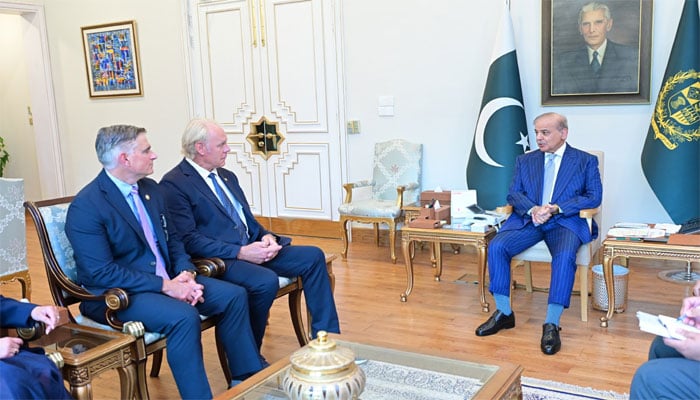
Prime Minister Shehbaz Sharif has called for stronger cooperation between Pakistan and the United States in key economic and strategic sectors.

The prime minister made the remarks during a meeting with a delegation of the US Congress. The delegation included Ryan Zinke and Representative Michael Baumgartner.

According to an official statement, the meeting focused on Pakistan-US relations and opportunities to expand bilateral cooperation.

Prime Minister Shehbaz welcomed the visit by the US lawmakers. He described it as a positive step towards strengthening ties between the two countries.

The prime minister also conveyed his best wishes to US President Donald Trump.

He appreciated Trump’s role in helping secure a ceasefire between Pakistan and India. Shehbaz described the US president’s intervention as bold and decisive.

The prime minister said Pakistan wanted to further expand cooperation with the United States in several important areas.

These included trade, agriculture, information technology and energy.

He said stronger economic engagement could create new opportunities for both countries. Pakistan, he added, was interested in building broader and more productive relations with the United States.

The US congressional delegation also spoke positively about bilateral relations.

The delegation said President Trump’s strong ties with Pakistan’s leadership were producing positive results. It also recognised the importance of continued engagement between Islamabad and Washington.

The visiting lawmakers praised Pakistan for its role in efforts to promote peace and stability in the region.

The meeting comes as Pakistan seeks to deepen its relations with the United States. Economic cooperation remains an important part of the bilateral relationship.

Trade and investment are among the areas where Pakistan wants greater engagement with the US. Islamabad is also seeking cooperation in technology, agriculture and energy.

The government believes stronger cooperation in these sectors can support economic growth and create new opportunities for businesses.

The meeting also highlighted the importance of political engagement between the two countries. Regular exchanges between Pakistani and US officials can help strengthen mutual understanding.

Following the meeting, Prime Minister Shehbaz Sharif hosted a reception for a delegation of executives from the US corporate sector.

The reception provided an opportunity to discuss business and investment opportunities.

The government is seeking greater participation from international companies in Pakistan’s economy. It hopes stronger engagement with the US corporate sector will help attract investment and expand economic cooperation.
Similar Posts

  • | |

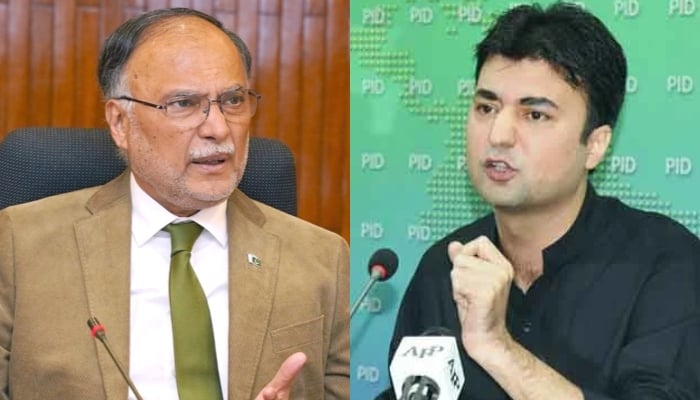
    Court awards Ahsan Iqbal Rs2.5m in defamation case

    An Islamabad District and Sessions Court has ruled in favour of Federal Minister Ahsan Iqbal in a long-running defamation case against PTI leader Murad Saeed. The court ordered Murad Saeed to pay Rs2.5 million in damages for making allegations that were not proven during the proceedings. Additional Sessions Judge Hakim Khan announced the verdict after hearing the case. The court held that Murad Saeed’s statements had damaged Ahsan Iqbal’s reputation and public image. It directed the PTI leader to compensate the federal minister with Rs2.5 million. According to the judgment, Murad Saeed accused Ahsan Iqbal of being involved in corruption worth Rs70 billion. However, the court found that he failed to provide any evidence to support the allegations. The court ruled that the accusations of corruption, misuse of authority, and receiving illegal commissions were defamatory because they remained unsubstantiated. The judgment stated that Ahsan Iqbal had initially sought Rs10 billion in damages for the alleged harm caused to his reputation. However, the court observed that the amount claimed was excessive in view of the evidence presented during the trial. It therefore awarded Rs2.5 million as reasonable compensation. The court further observed that Murad Saeed’s controversial statements had harmed Ahsan Iqbal’s reputation, dignity, and credibility. It said the allegations created a negative impression of the minister among the public and directly targeted his honesty, integrity, and professional standing. The judgment also noted that Murad Saeed neither appeared before the court during the proceedings nor submitted evidence to substantiate the corruption claims. The absence of supporting material, the court said, weakened his defence and left the allegations unproven. The case originated from statements made by Murad Saeed in 2019 regarding the Multan-Sukkur Motorway project. At the time, he alleged that Ahsan Iqbal had committed corruption in connection with the project. After reviewing the evidence and hearing the arguments, the court concluded that the accusations were not established and therefore amounted to defamation. The verdict marks the conclusion of the defamation proceedings, with the court reaffirming that public allegations of corruption must be backed by credible evidence.

  • | |

    Court orders Azma Bukhari to appear in person over…

    LAHORE: The Lahore Sessions Court has directed Punjab Information Minister Azma Bukhari to appear in person and record her statement in a case involving the alleged circulation of a fake video on social media. The matter was heard by Additional Sessions Judge Nusrat Ali Siddiqui, who rejected Bukhari’s request to record her statement through video link. The court ordered her to personally appear at the next hearing to record her statement. Bukhari had challenged an earlier order issued by a judicial magistrate requiring her to appear before the court in person. The case relates to allegations surrounding the circulation of a fabricated video attributed to the provincial minister. Bukhari had approached the authorities against the alleged dissemination of the video and lodged a complaint with the National Cyber Crime Investigation Agency (NCCIA) against Falak Javed. The court’s latest order means Bukhari will have to appear before the Sessions Court at the upcoming hearing as proceedings in the case continue.

  • | | |

    Pakistan receives $3.6 billion in remittances in J…

      KARACHI: Pakistan received $3.6 billion in workers’ remittances from overseas Pakistanis during July 2026, marking a significant increase compared with the same period last year, according to data released by the State Bank of Pakistan (SBP). The central bank reported that remittance inflows increased by 13% year-on-year in July and also recorded a 4.5% rise compared with the previous month. The latest figures highlight the continued importance of overseas Pakistanis in supporting the country’s foreign exchange position and overall economic stability. Saudi Arabia remained the largest source of remittances during the month, sending $913.9 million to Pakistan. The United Arab Emirates (UAE) followed with $737.3 million, while overseas Pakistanis in the United Kingdom contributed $555.5 million. The United States also remained an important source, accounting for $317.2 million in remittance inflows. Prime Minister Shehbaz Sharif welcomed the increase and expressed satisfaction over the $3.6 billion received in July. In a statement issued by the Prime Minister’s Office, he said the 13% year-on-year increase in remittances was encouraging and reflected the continued contribution of overseas Pakistanis to the national economy. The prime minister also highlighted the 4.5% month-on-month growth, saying that the consistent financial support provided by overseas Pakistanis was playing an important role in strengthening Pakistan’s economy. He described overseas Pakistanis as a valuable and integral part of the country’s economic mainstream. The latest figures have also generated positive expectations regarding Pakistan’s remittance outlook for the ongoing financial year. Topline Research estimated that remittances could reach around $40.1 billion during FY27 if the current trend continues. Economist Dr Khaqan Najeeb said remittances were becoming increasingly important as a source of foreign exchange, particularly at a time when Pakistan’s export sector continued to face difficulties. According to him, the country’s weak domestic economic conditions, limited employment opportunities and significant differences between local and international wages were encouraging more Pakistanis to seek employment abroad. He noted that the movement of workers overseas was resulting in a corresponding flow of foreign exchange back into Pakistan. The economist said these inflows were helping the country manage its balance of payments and reduce pressure on its external accounts. However, he also warned that the growing dependence on remittances highlighted deeper structural weaknesses within the domestic economy. Dr Najeeb pointed out that Pakistan’s increasing reliance on overseas employment reflected the country’s inability to generate enough productive and well-paying jobs at home. While remittances provide valuable financial support and strengthen foreign exchange reserves, he argued that sustainable economic growth requires stronger domestic employment opportunities and a more competitive export sector. The July figures therefore present both an encouraging development and a broader economic challenge. Rising remittances are providing Pakistan with much-needed foreign exchange, but policymakers also face the task of improving domestic economic conditions so that overseas employment becomes a choice rather than a necessity for a growing number of Pakistanis.

  • Welfare pharmacy seal-off adds to poor patients’ woes

    GUJRAT: The District Health Authority (DHA) has shut down the medical store of the Patients’ Welfare Association at Jalalpur Jattan Civil Hospital following the recent visit of Punjab Secretary for Health and Population Nadia Saqib, a move that has drawn concern from patients, civil society representatives and local residents. The medical store, which had been providing medicines to poor and needy patients on a welfare basis, was closed after Secretary Nadia Saqib’s visit to Gujrat last week. Medical stores at THQ hospitals in Kharian and Kunjah were also closed following the health secretary’s directions, according to official sources. The Health Department’s position is that medicines should not be distributed without a Drug Testing Laboratory (DTL) report. Officials said the Jalalpur Jattan store was sealed because the medicines available there did not have the required DTL reports. They maintained that the department could not allow medicines to be provided to patients without ensuring their quality through the prescribed testing process. However, the closure of the patients’ welfare association’s medical store has raised concerns among local residents, particularly because the association had been supplementing the medicines officially provided by the hospital and helping poor patients who could not afford medicines from private pharmacies. Sources said the official medicine budget of Jalalpur Jattan Civil Hospital was already very low, even when compared with hospitals functioning at the THQ level. Local authorities had therefore engaged civil society and philanthropists to supplement the officially provided medicines and facilitate poor and needy patients. The development has also triggered protests by civil society representatives, who have demanded immediate attention to the shortage of medicines and other healthcare facilities at the hospital, particularly now that the welfare pharmacy is no longer operational. Representatives of the Patients’ Welfare Association have also urged Punjab Chief Minister Maryam Nawaz to take notice of the situation and ensure the establishment of a proper THQ hospital at Jalalpur Jattan, permission for the resumption of medicine provision through appropriate channels, and an increase in the hospital’s medicine budget. The association’s representatives have also criticised the frequent changes of medical superintendents at Jalalpur Jattan Civil Hospital and demanded more medical officers and other staff to improve healthcare services. Jalalpur Jattan was upgraded as a tehsil headquarters by former Punjab chief minister Chaudhry Parvez Elahi in 2022. Despite being the second major urban centre of Gujrat district, the tehsil has yet to get a THQ-level hospital for its population of around 700,000, according to local sources. The issue has become particularly sensitive for residents because the Patients’ Welfare Association had emerged as an important support system for poor patients seeking treatment at the civil hospital. While the Health Department insists that medicines must undergo the required testing process before being distributed, local residents argue that the closure has further reduced an already limited source of medicines for needy patients. The situation has now put the spotlight on both the quality-control requirements for medicines and the broader shortage of healthcare resources at Jalalpur Jattan Civil Hospital.

  • |

    Oil prices rise as Hormuz tensions escalate

    Oil prices climbed on Monday as uncertainty over a possible diplomatic breakthrough between the United States and Iran increased, while a sharp slowdown in tanker movements through the Strait of Hormuz heightened concerns about disruptions to global crude supplies. Brent crude futures gained as much as 1% during early trading to reach $89.40 per barrel. The benchmark was later up 72 cents, or about 0.8%, at $89.20 a barrel by 0229 GMT. US West Texas Intermediate (WTI) crude also moved higher, rising 44 cents to $82.83 per barrel. Both international benchmarks posted gains of more than 5% last week after a series of attacks involving energy and shipping assets in and around the strategically important Strait of Hormuz. The incidents have intensified fears that further escalation could affect one of the world’s most important oil transit routes. Market sentiment was further affected by developments over the weekend, when Iranian Foreign Minister Abbas Araqchi said Tehran had yet to decide whether it would resume negotiations with Washington. US President Donald Trump, meanwhile, told Americans to prepare for somewhat higher gasoline prices as the conflict continues. Analysts said the renewed uncertainty had brought geopolitical risk back into crude markets after oil prices had previously come under pressure on expectations that diplomatic efforts could ease tensions. “Oil prices have now rebounded almost completely from the lows seen in early August, as hopes for a more permanent resolution between the US and Iran have faded and geopolitical risk premiums have returned to the market,” said Priyanka Sachdeva, head of market insights at Phillip Nova in Singapore. Sachdeva cautioned, however, that the rally could lose momentum unless there is evidence of a further deterioration in the situation. She said the market would need to see renewed aggression in the Strait of Hormuz, particularly significant damage to oil tankers or energy infrastructure, before prices were likely to move substantially higher. Hormuz shipping activity slows Concerns over physical supply disruptions increased after ship-tracking data showed a marked decline in vessel traffic through the Strait of Hormuz over the weekend. According to data from Kpler, only five commodity vessels crossed the strategic waterway on Saturday, while no such transits were recorded on Sunday. This compared with 31 commodity vessel crossings during the previous weekend. The slowdown is significant because the Strait of Hormuz is a critical route for international energy shipments. Any prolonged disruption could increase transportation risks, raise insurance costs and place additional upward pressure on crude prices. The United Arab Emirates also accused Iran of attacking another vessel operated by Abu Dhabi National Oil Company (ADNOC) while it was passing through the strait on Friday, according to the Emirati state news agency WAM. The UAE had earlier blamed Iran for two separate incidents involving ADNOC-operated vessels on Thursday evening. The latest incidents have added to concerns among traders that the conflict could increasingly affect commercial shipping and energy infrastructure, rather than remaining confined to military and diplomatic confrontation. Markets remain focused on escalation risks The Strait of Hormuz remains particularly important to global oil markets because a substantial volume of crude and petroleum products moves through the waterway. Any sustained interruption could therefore have consequences well beyond the region. For now, traders are closely monitoring developments involving US-Iran diplomatic contacts, attacks on shipping and the movement of tankers through the strait. While the latest price gains reflect a higher geopolitical risk premium, analysts remain cautious about predicting a prolonged rally. If shipping activity resumes and diplomatic channels reopen, some of the premium built into crude prices could quickly unwind. Conversely, additional attacks on tankers, oil facilities or other critical infrastructure could trigger a stronger market reaction and push prices higher as traders reassess the security of regional supplies.

  • | | |

    Iran warns Ukraine of response after reported Casp…

    Tensions between Iran and Ukraine have increased after Tehran accused Kyiv of carrying out an attack on a vessel in the Caspian Sea and warned that the incident would not go unanswered. According to Iranian state media reports, Iran’s Parliament Deputy Speaker Ali Nikzad said the country would respond to what he described as an irresponsible action by Ukraine. He stated that Iran reserves the right to defend its territorial sovereignty and considers any attack on its territory or interests a matter requiring a response. The controversy emerged after Ukrainian President Volodymyr Zelenskyy reportedly claimed that Ukrainian forces had targeted a Russian military vessel and also struck an Iranian vessel in the Caspian Sea. Iran’s Foreign Ministry later confirmed that an Iranian ship had been affected by the incident. Following the report, Iran summoned Ukraine’s chargé d’affaires and lodged a formal protest, describing the action as hostile and unacceptable. Tehran said the incident could increase regional tensions and accused Ukraine of violating international principles. Iran’s Foreign Ministry stated that the country would take measures to protect its security and interests within the framework of international law. Iranian Foreign Minister Abbas Araghchi also condemned the reported attack and called on the United Nations, the European Union, and the international community to take action. During a phone conversation with EU foreign policy chief Kaja Kallas, Araghchi urged international bodies to hold those responsible for the incident accountable. The reported confrontation has added another layer of complexity to ongoing international tensions, with both sides facing calls to clarify the circumstances surrounding the incident.

Leave a Reply

Your email address will not be published. Required fields are marked *