passengers recount terrifying
|

Passengers recount terrifying turbulence on Air India flight

At least 17 passengers and crew members were injured after an Air India flight encountered severe turbulence while travelling from Phuket, Thailand, to New Delhi, prompting frightened passengers to fear the aircraft might crash.

According to Indian media, the flight was carrying 137 passengers and eight crew members when it was hit by sudden and intense turbulence mid-air. The violent shaking reportedly caused the aircraft to drop abruptly, leaving several passengers and crew members injured. The aircraft also sustained minor damage during the incident.

The flight landed safely at Indira Gandhi International Airport in New Delhi, where emergency medical teams were waiting. Injured passengers were taken from the aircraft on stretchers and transported to nearby hospitals for treatment.

An Italian passenger described the ordeal as one of the most terrifying experiences of her life. She said the turbulence was so powerful that her sister was thrown out of her seat, while her mother suffered a head injury. She added that several passengers were hurt, including one man whose face was covered in blood.

“We thought we were going to die,” the passenger said, recalling the frightening moments during the flight.

Air India, however, said none of the passengers or crew members suffered life-threatening injuries. The airline stated that those injured were taken to hospital as a precaution for medical evaluation.

According to the airline, five people were discharged shortly after receiving treatment, while the remaining injured passengers continue to receive medical care.

The incident has once again drawn attention to the dangers posed by severe in-flight turbulence, although aviation experts note that such events are relatively rare and commercial aircraft are designed to withstand extreme weather conditions.

Similar Posts

  • |

    UK faces potential red weather alerts as fifth heatwave of 2026 brings 36C temperatures

    The United Kingdom is preparing for a fifth heatwave this summer, with temperatures projected to reach 36C and prompting the Met Office to consider issuing rare red weather alerts. The extreme heat poses severe risks of disruption across railway lines and power networks, whilst compounding growing concerns over drought and food security. Following a temporary drop in temperatures on Monday, heat levels across England and Wales are expected to climb rapidly. Sunday marked the 35th day in 2026 where British temperatures exceeded 30C, hitting a peak of 30.6C. Met Office meteorologist Tom Morgan indicated that mid-30s temperatures will become widespread on Wednesday and Thursday, with Thursday currently tracking as the hottest day of the week and holding a small chance of exceeding 36C. The prolonged period of dry conditions has left half of England and Wales grappling with near-drought environments, and officials warn that further regions could soon be declared affected zones. Alongside potential infrastructure damage, authorities are highlighting risks to health and agricultural output. The Met Office confirmed that formal amber and red warnings are under active consideration as the situation develops. Meanwhile, the UK Health Security Agency has put yellow heat-health alerts in place across the East Midlands, West Midlands, South East, South West, East of England, Yorkshire and the Humber, and London. These health advisories remain active through Tuesday evening, with potential extensions if extreme conditions persist.

  • |

    93% admissions at top colleges go to private-schoo…

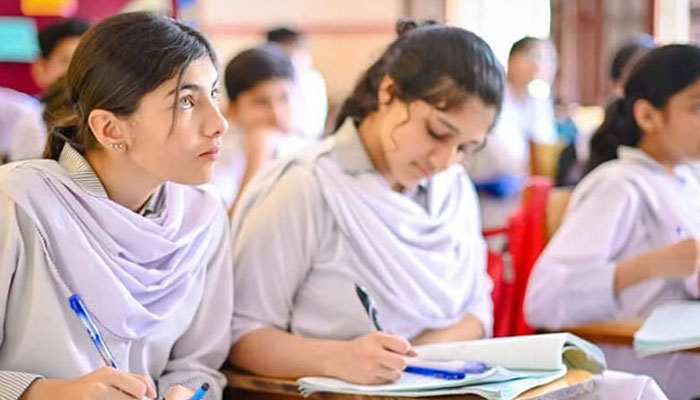
    Concern has been raised over the quality of education in Karachi’s government schools and the ability of their students to gain admission to the city’s leading government colleges. According to admission data, the overwhelming majority of students admitted to Karachi’s top 10 government colleges completed their matriculation from private schools. Despite these institutions being government colleges, around 93 out of every 100 students admitted to them are graduates of private schools, while only about seven come from government schools. Data obtained from the colleges shows that a total of 13,211 students were admitted to these institutions. Of them, 12,264 had completed their matriculation from private schools, while only 947 were graduates of government schools. This means that 92.8% of admissions were secured by students from private schools, while government school students accounted for just 7.2%. In other words, for every 100 students admitted to these government colleges, approximately 93 come from private schools and only seven from government schools. At Adamjee Government Science College, 613 students were admitted. Among them, 585 had completed matriculation from private schools, while only 28 came from government schools. Similarly, Government D.J. Sindh Science College admitted a total of 1,258 students. Of these, 1,214 were graduates of private schools and only 44 had studied at government schools. At Delhi Government Science College, 801 students were admitted. The figures show that 773 came from private schools, while only 28 were graduates of government schools. Government Boys College for Men, Nazimabad, admitted a total of 1,317 students. Of these, 1,257 had completed their matriculation from private schools, while only 60 came from government schools. The same trend is even more visible among government girls’ colleges. Government Sir Syed Girls College admitted 2,507 students. Among them, 2,266 had completed matriculation from private schools, while only 241 were graduates of government schools. At St Lawrence Government Girls College, 691 students were admitted. Of these, 631 came from private schools and only 60 from government schools. Similarly, at PECHS Government College for Women, 1,517 students were admitted. A total of 1,420 had studied at private schools, while only 97 had completed matriculation from government schools. At Khatoon-e-Pakistan Government College for Women, 2,107 students were admitted. Of these, 1,876 were graduates of private schools, while only 231 came from government schools. The figures for boys and girls at Government Degree College Malir Cantonment were also included. According to the data provided, 402 students were counted in the combined figures, while the reported breakdown listed 1,316 students from private schools and 86 from government schools. Meanwhile, Government Degree Boys and Girls College Stadium Road admitted a total of 998 students. Of these, 926 had completed matriculation from private schools, while only 72 were graduates of government schools. The situation at government girls’ colleges is similarly concerning. At Sir Syed Girls College, 2,266 students from private schools secured admission compared with only 241 from government schools. At PECHS Government College for Women, the ratio was 1,420 private-school graduates against 97 government-school graduates. At Khatoon-e-Pakistan Government College for Women, 1,876 private-school graduates were admitted compared with just 231 from government schools.

  • | |

    Punjab CNF seizes 24.7 tonnes of narcotics worth R…

      Lahore, August 4, 2026: The Punjab Counter Narcotics Force (CNF) has intensified its crackdown on drug trafficking across the province, achieving significant success in recent intelligence-led operations. The campaign is being carried out under the special directives of Punjab Chief Minister Maryam Nawaz Sharif as part of the government’s commitment to building a “Drug-Free, Healthy and Safe Punjab.” Over the past two weeks, the CNF conducted 85 intelligence-based operations across the divisions of Lahore, Dera Ghazi Khan, Rawalpindi, Gujranwala, Faisalabad, Bahawalpur and Sargodha. These coordinated raids targeted major drug trafficking networks operating in different parts of the province. The operations resulted in the arrest of 93 suspected drug traffickers, while authorities recovered approximately 296 kilograms of narcotics with an estimated market value of more than Rs. 53.4 million. Officials described the operations as a major step toward curbing the illegal drug trade and improving public safety. The seized narcotics included a wide range of illegal substances such as hashish, opium, cannabis (weed), crystal meth (Ice), poppy straw, cocaine, heroin and five litres of illicit liquor. In addition to narcotics, the CNF recovered a significant cache of weapons from the suspects. These included 13 pistols, two sub-machine guns (SMGs), four rifles and seven drones that investigators believe were being used to facilitate criminal activities and drug distribution. Director General of the Punjab Counter Narcotics Force, Commander Brigadier Mazhar Iqbal, said the Force’s success should not only be measured by the quantity of drugs confiscated but also by its ability to dismantle organised drug trafficking networks across Punjab. He noted that the CNF continues to rely on modern intelligence gathering, professional expertise and coordinated operational planning to identify and eliminate criminal groups involved in the narcotics trade. He further highlighted the Force’s overall performance since it became operational in August 2025. According to the Director General, the Punjab CNF has recovered a cumulative 24.7 tonnes of narcotics valued at more than Rs. 2.23 billion. He described these achievements as evidence of the provincial government’s zero-tolerance policy against narcotics and the effectiveness of its law enforcement strategy. Commander Brigadier Mazhar Iqbal also credited the Force’s progress to close coordination among various law enforcement agencies, which has strengthened efforts to combat drug trafficking and disrupt criminal organisations operating throughout the province. Reaffirming the CNF’s commitment, the Director General said the Force will continue to launch vigorous and indiscriminate operations against drug dealers and traffickers. He stressed that intelligence-driven policing, enhanced operational capabilities and sustained enforcement efforts will remain central to achieving the government’s vision of a province free from the menace of narcotics. Punjab authorities have reiterated that the fight against drugs remains a top priority, emphasizing that continued action against traffickers is essential to protecting communities, safeguarding young people and ensuring a healthier and safer future for the province.

  • |

    Alexandrova shocks world No. 1 Sabalenka in Toronto

    TORONTO: Russian tennis player Ekaterina Alexandrova produced a major upset at the WTA Toronto Masters by defeating world No. 1 Aryna Sabalenka in the fourth round. The 16th-seeded Alexandrova secured a hard-fought 7-6 (7-3), 4-6, 6-4 victory over the four-time Grand Slam champion in a match lasting two hours and 29 minutes. The win booked Alexandrova’s place in the quarter-finals and improved her career record against Sabalenka to 5-5. Sabalenka made a strong start, breaking Alexandrova early in the opening set to take a 2-0 lead. However, the Russian responded by winning four consecutive games. The set remained closely contested, with both players exchanging breaks late in the set. Alexandrova eventually dominated the tie-break and took the opening set 7-6. Sabalenka fought back in the second set. She secured a crucial break to move 4-3 ahead before holding her next two service games to level the match. The deciding set again featured intense rallies and momentum shifts. Alexandrova broke Sabalenka early to establish a 3-1 advantage. Sabalenka managed to recover one break, but Alexandrova remained composed under pressure. The Russian created two match points in the 10th game after a series of errors from the top seed. Sabalenka saved the first two opportunities with a service winner and an ace. However, she then sent a backhand beyond the baseline before committing her sixth double fault of the match, handing Alexandrova victory. Alexandrova said she entered the contest without any particular expectations because she knew defeating Sabalenka would be extremely difficult. She explained that she deliberately played aggressively and took risks because she believed it was the best way to create opportunities against the powerful Belarusian. The victory sends Alexandrova into the Toronto quarter-finals, where she will face either American eighth seed Amanda Anisimova or Ukraine’s ninth seed Elina Svitolina.

  • | | |

    Sindh forms third medical board for exhumation of …

    The Sindh government has constituted a third medical board to carry out the exhumation and medico-legal examination of 25-year-old businessman Mir Ali Raza’s body, following controversy over the findings of his initial post-mortem report. The new eight-member medical board was notified by the Sindh Health Department on Friday after two earlier notifications were withdrawn. The exhumation, which was initially scheduled for Friday, was postponed after the deceased’s family raised objections over the sudden changes in the medical board. According to the latest notification, Police Surgeon Dr Sumaiyya Syed has been appointed as the convener of the board, while Dow University of Health Sciences (DUHS) Pathology Department Head Professor Dr Naseem Ahmed will serve as the pathologist. Other members of the board include forensic expert Dr Farah Waseem from Jinnah Sindh Medical University, forensic identification expert Amir Hassan Khan, Additional Police Surgeon Dr Srichand, and medico-legal officers from Jinnah Postgraduate Medical Centre (JPMC), including Dr Kamran Khan and Dr Daniyal Mirza. The board has also been authorized to include additional experts if required. The exhumation has been scheduled for Saturday, August 8, at 11am, according to the Office of the Police Surgeon. A civil judge and judicial magistrate Karachi-XXI will also be present during the procedure. The decision to exhume Mir Ali Raza’s body came after his father approached the court seeking further investigation. A Karachi court allowed the exhumation and directed authorities to form a medico-legal board to examine the circumstances surrounding his death. The case gained attention after concerns were raised regarding possible inconsistencies in the original autopsy report. Karachi Police Surgeon Dr Sumaiyya Syed had pointed out that certain observations in the post-mortem report appeared inconsistent with available photographs, including questions regarding the bullet entry and exit wounds. She stated that the reported bullet trajectory and wounds required further examination and noted that gunshot residue testing, which can be relevant in suspected suicide cases, had not been conducted. Police officials responded by saying that such comments could affect the ongoing investigation but acknowledged that exhumation could provide further clarification through a committee of medical experts with court approval. Mir Ali Raza, the owner of food outlet Wafflix, went missing on July 28. His body was discovered the following day near Shahi Qila Ground in Gulistan-e-Jauhar with a gunshot wound. Initially, a kidnapping case was registered at Ferozabad Police Station on his father’s complaint. Police said their investigation indicated that Ali had been facing financial difficulties and had contacted friends for financial assistance before his death. Investigators said he left his home in PECHS Block-2 and traveled by a ride-hailing taxi, which dropped him near the location where his body was later found. The latest medical board is expected to examine the remains and provide further forensic findings that may help clarify the circumstances surrounding Mir Ali Raza’s death.

  • | |

    Zelensky says Russia deploying North Korean missil…

    Ukrainian President Volodymyr Zelensky said Russia used North Korean missiles in overnight strikes on Zaporizhzhia that killed at least six people and injured 19 others, as both sides continued exchanging attacks across the front line. In a video address Monday evening, Zelensky said Russia has reached a point where it “cannot wage war without reinforcements from North Korea” for the first time. He warned that continued use of North Korean missiles and troops inside Ukraine and across Europe allows Pyongyang to identify and fix weaknesses in its weapons systems, calling this a growing danger that extends beyond the immediate conflict. Zaporizhzhia regional governor Ivan Fedorov shared images of burning vehicles and damaged buildings, saying Russian forces struck the city with missiles and guided bombs. He said the attack damaged industrial sites, infrastructure and non residential buildings across the city, in addition to causing casualties. The strikes followed a separate wave of Ukrainian drone attacks that killed at least 13 people, including a child, in Russia’s republic of Tatarstan, located more than 1,100 kilometers, or roughly 680 miles, from the Ukrainian border. Ukraine’s Armed Forces said the strikes hit the city’s Tanevo oil refinery, and verified social media footage showed large plumes of smoke and daytime flames at the site as air raid sirens sounded nearby. Officials said at least 75 people were injured in that attack, which ranks among the deadliest single strikes on Russian territory since the full scale invasion began in 2022. Uzbekistan’s consulate in Tatarstan said seven of those killed held Uzbek citizenship. In Kyiv, air raid sirens sounded twice overnight and explosions struck the outskirts of the capital, sparking fires and injuring one person. A strike also damaged a hospital in the city, though officials said staff and patients had already moved to shelter. Separate strikes on power substations in Kherson and Kharkiv caused outages in both cities. In Sumy, a Russian drone strike injured two women, aged 52 and 66, according to Sergiy Kryvosheenko, head of the Sumy City Military Administration. He said both were treated at the scene and that the strike also damaged civilian vehicles, warehouse buildings and other infrastructure. Ukrainian officials said Russia launched 120 drones overnight along with a mix of missile types, though for the first time authorities did not disclose how many missiles were fired or intercepted. The omission followed a statement from Ukraine’s Air Force on Monday asking media outlets to avoid sensationalized coverage or pessimistic framing regarding the country’s shortage of air defence interceptors. Ukraine also struck Russian territory overnight, hitting warehouses belonging to online retailer Wildberries in the Voronezh region in southern Russia. Wildberries, often described as Russia’s answer to Amazon, has faced repeated attacks on its facilities in recent weeks. The company has not confirmed the latest strike but said it evacuated facilities in the border region as a precaution. In July, Ukrainian drone strikes on several Wildberries warehouses disrupted operations for a large number of small and medium sized Russian businesses. Kyiv said at the time that it was targeting logistics hubs Russian buyers used to acquire military equipment, part of a broader effort to disrupt supply lines feeding the Russian military. In his Monday address, Zelensky also praised a separate strike on a Russian petrochemical plant in western Siberia, calling it a significant achievement for Ukraine’s military. He pledged additional long range Ukrainian strikes intended to convince Russia and the Russian public that peace remains necessary. This is not the first time Zelensky has raised alarm over North Korean military support for Russia. He said over the weekend that as many as 50,000 North Korean soldiers have been deployed to fight alongside Russian forces, part of a growing pattern of cooperation between Moscow and Pyongyang that Ukrainian officials say is reshaping the battlefield and raising broader security concerns well beyond the immediate conflict.

Leave a Reply

Your email address will not be published. Required fields are marked *