remove shower head

How to remove shower head Limescale

If the water coming from your shower has become weak or sprays unevenly limescale buildup inside the shower head could be the reason.

Experts say a simple citric acid solution is one of the easiest and most effective ways to restore normal water flow. Limescale forms when minerals such as calcium and magnesium commonly found in hard water collect inside the tiny holes of the shower head.

Over time these deposits reduce water pressure block the spray nozzles, and can shorten the life of the fixture.

To clean it experts recommend mixing 2–3 tablespoons of citric acid with warm water.

Remove the shower head if possible and soak it in the solution for 30 minutes to one hour. After soaking gently scrub the nozzles with an old toothbrush and rinse thoroughly with clean water.

If the shower head cannot be removed pour the citric acid solution into a plastic bag and secure it around the shower head with a rubber band so the nozzles remain fully submerged.

After soaking remove the bag scrub away any remaining deposits and rinse well. Experts say this method helps dissolve stubborn limescale improves water pressure restores an even spray pattern and can extend the lifespan of the shower head.

To prevent future buildup clean your shower head at least once a month wipe it dry after use whenever possible and consider installing an anti-limescale or water softening filter if you live in an area with hard water.

Regular maintenance can keep your shower working efficiently and reduce the need for costly replacements.

Similar Posts

  • When dry skin may lead to infection

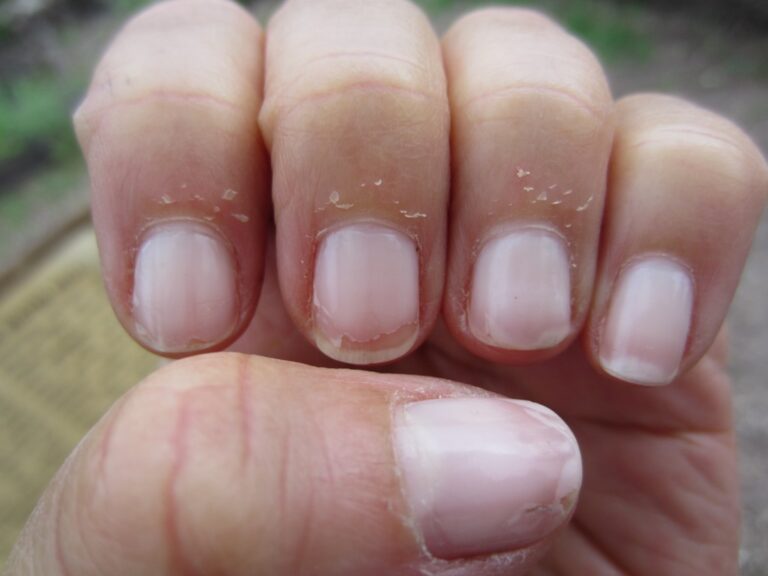
    Dry peeling skin around the nails is a common problem. It can be uncomfortable and may make simple daily tasks difficult.  This dryness can happen for several reasons including frequent hand washing harsh products and skin irritation. Why does skin  around the nails become dry? Frequent hand washing Washing your hands again and again can remove the skin’s natural oils.  If you do not use moisturizer afterward the skin around your nails may become dry and cracked. •Allergies and Irritation •Nail polish soaps detergents and other products may contain chemicals that irritate the skin.  This irritation can cause dryness peeling or redness. Nail Biting Biting your nails can damage the skin around them.  Small cuts may develop and increase the risk of irritation or infection. Lack of nutrients A poor diet may sometimes affect the health of your skin and nails.  A balanced diet with enough vitamins and minerals is important for healthy skin. Infection dry or damaged skin around the nails can sometimes become irritated or infected especially if it is picked or bitten. How can you  care for dry skin around the nails? •Use moisturizer Apply a good hand cream or moisturizer regularly especially after washing your hands.  This helps keep the skin soft and prevents cracking. •Aloe Vera Apply fresh aloe vera gel to the dry skin around your nails. It can help soothe and moisturize irritated skin. •Honey Apply a small amount of honey to your hands for 10–15 minutes then wash it off with lukewarm water. Honey can help keep the skin moisturized. •Cucumber Place fresh cucumber slices on your hands for about 15–20 minutes.  Then wash your hands with lukewarm water. •Olive oil Gently massage a little olive oil around your nails to help soften dry skin. After a few minutes wash your hands and apply moisturizer. Tip Avoid biting or pulling the peeling skin around your nails. If you notice severe pain  swelling pus or redness that does not improve  consult a doctor or dermatologist.

  • |

    “The Ark” in an era of ecological reckoning

    In summer 2026, the power plant “Batcave” opened a group exhibition The Ark curated by renowned painter Eric Fischl alongside Powerhouse Arts President Eric Shiner. Bringing together roughly 90 animal sculptures by a multigenerational line-up of international artists. The exhibition uses the ancient narrative of the Great Flood as a mirror for modern ecological and cultural turmoil. The concept behind The Ark draws directly from the myth of the Deluge, an archetypal narrative found across diverse world traditions where catastrophic waters sweep away the old world to test human stewardship and resilience. Yet rather than adopting a purely apocalyptic or alarmist tone, the exhibition framing focuses on empathy, kinship, and survival. Co-curator Eric Fischl notes that animal sculpture offers a unique vehicle for exploring profound existential truths. Animal sculpture also captures raw instinct and sublime wonder through physical form. By placing non-human creatures at the center of the narrative, the exhibition encourages viewers to rethink their place within the broader web of life.  From Historic Whaling Port to Post-Industrial Sanctuary The journey of The Ark mirrors its thematic concern with changing environments. An earlier, smaller iteration of the show debuted at The Church in Sag Harbor, Long Island. A historic coastal town deeply tied to the 19th-century whaling industry. In that seaside context, the sculptures called to mind maritime history and marine life under threat. When relocated and expanded for Powerhouse Arts in Brooklyn, the narrative shifted dramatically toward urban ecology and environmental remediation. Displaying ninety animal figures inside a rehabilitated power plant adjacent to heavily polluted urban waters creates a poignant visual tension. The physical site itself acts as a metaphor: an industrial relic turned creative sanctuary, witnessing the slow process of ecological recovery alongside the artistic preservation of animal life. Masterpieces of Instinct and Form The roster of participating artists spans decades and stylistic movements, uniting legendary figures of contemporary art with bold emerging voices. Pioneering Figures: Works by artists such as Maurizio Cattelan, Kiki Smith, Bruce Nauman, Sarah Lucas, and Jim Dine showcase how animals have long served as psychological stand-ins for human vulnerability, angst, and desire. Expanded Roster for Brooklyn: Newly added works by artists including Wangechi Mutu, Cannupa Hanska Luger, François-Xavier Lalanne, Nohemí Pérez, and Nari Ward introduce critical perspectives on Indigenous land sovereignty, post-colonial environments, and urban material reuse. Craft and Material Labor: Because Powerhouse Arts functions primarily as a fabrication facility, the exhibition doubles as a tribute to artistic craftsmanship. Visitors encounter bronze beasts, woven totems, carved wood, and reassembled found materials, celebrating the tactile labor behind each creation.   By encouraging close physical encounters with these sculpted beasts, The Ark bridges the gap between artistic tradition and ecological activism. It asks visitors to consider what merits saving when tides rise. It is suggesting that compassion for vulnerable creatures may well be our most essential anchor in turbulent times.

  • |

    China’s Chongqing East becomes world’s largest railway station

    Almost everyone has travelled by train at some point and has seen railway stations. But do you know which country is home to the world’s largest railway station? If you do not, here is the answer: the world’s largest railway station is located in China and is nothing short of an architectural marvel. China is already known for numerous engineering wonders ranging from remarkable bridges to the world’s largest high-speed railway network. Chongqing East Railway Station Chongqing East Railway Station located in southwestern China is the world’s largest railway station in terms of area. It was opened to the public in June 2025. The railway station covers an area of approximately 13 million square feet equivalent to around 170 football fields. It is also about five times larger than New York’s Grand Central Terminal. The station has 15 platforms and 29 railway tracks and during peak hours, it can accommodate around 16,000 passengers per hour. Around 16,500 tonnes of steel were used for its roof. However, the most remarkable feature of the station is the speed at which it was constructed and it was built on top of a mountain. The Chongqing region is mountainous which has traditionally made the development of transportation infrastructure particularly challenging. The station was constructed in just 38 months with the help of around 40,000 workers and a fleet of robotic machinery. Although 38 months may seem like a long period, in many countries, simply obtaining approval for projects of this scale can take longer than that.

  • | |

    Echoes from the Interstellar Dark

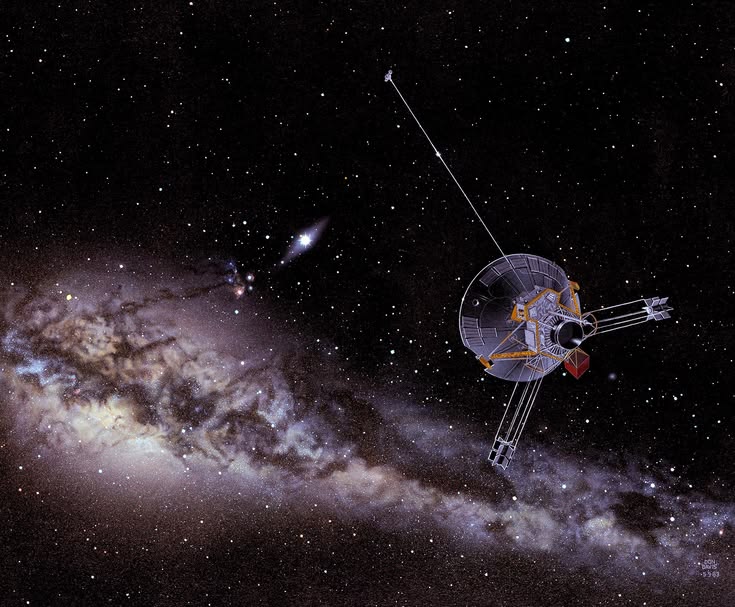
    NASA’s Voyager 1 probe was designed to explore the outer giant planets and send back photographs of Jupiter and Saturn. It was launched in 1977. More than eleven billion miles from Earth, floating through the icy void beyond our solar system, a tiny scrap of 1970s human ingenuity continues its lonely journey. Decades after its primary mission ended, the craft crossed the heliopause. The boundary where the sun’s protective magnetic bubble ends and true interstellar space begins. ​In recent months, engineers faced a daunting crisis. Voyager 1 began transmitting a repeating, meaningless gibberish loop of ones and zeros back to Mission Control. For a moment, scientists feared that after nearly half a century of unbroken operation, the farthest human artifact had finally succumbed to cosmic radiation and cold degradation. Yet through meticulous diagnostic work, engineers isolated a corrupt microchip. They rerouted its memory code across ancient hardware.  Hence, they successfully restored intelligible science data across the vast distance. ​Voyager 1’s survival is not just an engineering miracle; it is a profound testament to humanity’s desire to touch the unknown. ​A spindle of wire, a heart made of bronze, It drifts through the night where the quiet responds. Beyond the sun’s breath and the cradle of red, It whispers the secrets of worlds overhead. ​A Message in a Bottle Across Cosmic Waves ​Carried on the hull of Voyager 1 is the Golden Record, a gold-plated copper phonograph disc containing sounds of Earth, greetings in fifty-five languages, musical compositions from Bach to Chuck Berry, and encoded images of terrestrial life. It serves as an interstellar time capsule, intended to outlast our civilization and tell any distant intelligence who we were. ​We carved our desire on golden veneer, To prove in the darkness that someone was here. A chorus of ocean, a child’s brief greeting, Sent out to outlive every mortal heart’s beating. ​As the probe glides through the cosmic dust, its radio signal traveling at the speed of light takes over twenty-two hours to reach dish antennas on Earth. Every line of telemetry received is a faint echo from an environment no human eye will ever witness firsthand. The spacecraft operates on a diminishing power supply provided by its decaying plutonium generators. Year by year, NASA engineers shut down non-essential instruments to conserve every milliwatt of power, prioritizing the magnetometers and cosmic ray sensors that measure the interstellar medium. ​The Final Quiet Crossing ​The remaining active instruments will inevitably power down as the thermal generators fade entirely by the end of this decade. Voyager 1 will then become a silent voyager, drifting along its galactic orbit around the center of the Milky Way, unbothered by atmospheric drag or gravitational interference, lasting for millions of years. ​When the last power flickers and warmth slips away, It will glide through the night till the dawn of no day. No longer a transmitter, no longer a thread, Just a monument floating where gods used to tread. ​The triumph of retrieving clear data from Voyager 1 reminds us why we look up. Science and art stem from the same original impulse: the refusal to remain quiet in the vastness of the dark, and the drive to leave something meaningful behind before the power fades.

  • Urgent Need for a Hospital and Ambulance Service in Shapuk, District Kech

    By Asma Qayyum I would like to draw the attention of the health authorities and the Government of Balochistan to the severe healthcare crisis faced by the residents of Shapuk, a rural village in District Kech. At present, Shapuk has no healthcare infrastructure. There is no hospital, Basic Health Unit (BHU), clinic or even a single doctor available to serve the local population. For even minor illnesses routine check-ups  or medical consultations, residents are forced to travel nearly 34 kilometers to Turbat. This not only causes inconvenience but also places an unnecessary financial burden on families. The situation becomes even more alarming during medical emergencies. Shapuk has no ambulance service leaving critically ill patients without immediate medical assistance.   In cases of childbirth complications serious accidents heart attacks or other life threatening conditions patients must wait for expensive private transport. Many lives are put at risk or even lost during the long and painful journey to Turbat.   Pregnant women in particular face immense danger when timely medical care is unavailable. Access to basic healthcare is a fundamental human right yet the people of Shapuk remain deprived of this essential service. According to regional healthcare assessments by the Pakistan Poverty Alleviation Fund and district development profiles Kech has long suffered from a shortage of healthcare facilities and medical professionals. It is encouraging that the Balochistan Government’s Public Sector Development Programme (PSDP) has allocated funds for infrastructure projects such as the Construction of the Shapuk External Road. However while roads are being developed healthcare remains neglected. Roads alone cannot save lives if there are no nearby medical facilities to serve the people. I respectfully urge the Balochistan Health Department the Deputy Commissioner of Kech, and the elected representatives of the area to take immediate action.   The government should establish at least a fully equipped Basic Health Unit (BHU) in Shapuk appoint qualified doctors and medical staff provide essential medicines and station an emergency ambulance to ensure timely medical care for residents. Healthcare is not a privilege it is a basic right. The people of Shapuk deserve access to safe timely and quality medical services. Immediate action today can save countless lives tomorrow.

  • Hidden mistake challenge

    Do you enjoy solving brain teasers and visual puzzles? If yes this simple challenge is for you. The only rule is to find the answer within 5 to 10 seconds. The good news is that you do not need math skills or logical thinking to solve this puzzle. It is simply a test of how carefully you observe details. Take a close look at the picture and try to find the hidden mistake before time runs out. Many people cannot spot the error right away. In fact once they finally notice it they often wonder how they missed something so obvious. Most people immediately focus on the numbers in the image expecting to find a mistake there. Because of this they overlook the real error. If you could not find it within 10 seconds don’t worry. The mistake is not in the numbers. The hidden error is actually in the text beside them. The word “mistake” is spelled incorrectly. This happens because the brain naturally pays attention to the numbers first and assumes the text is correct. Only after checking the numbers does it begin to notice the writing. This simple puzzle shows how our brains can miss obvious details when our attention is focused somewhere else.

Leave a Reply

Your email address will not be published. Required fields are marked *