
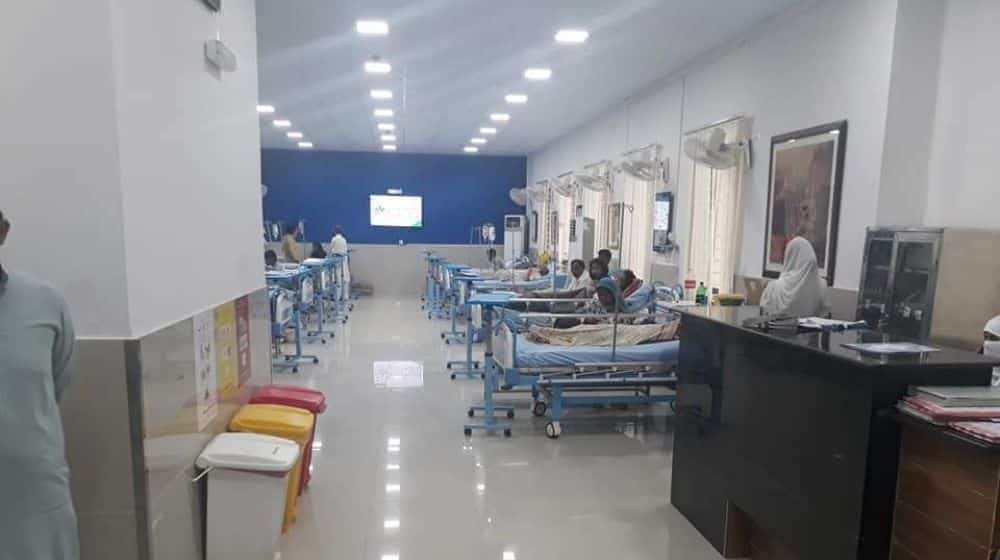
urgent need hospital

Urgent Need for a Hospital and Ambulance Service in Shapuk, District Kech

By Asma Qayyum

I would like to draw the attention of the health authorities and the Government of Balochistan to the severe healthcare crisis faced by the residents of Shapuk, a rural village in District Kech.

At present, Shapuk has no healthcare infrastructure. There is no hospital, Basic Health Unit (BHU), clinic or even a single doctor available to serve the local population.

For even minor illnesses routine check-ups  or medical consultations, residents are forced to travel nearly 34 kilometers to Turbat. This not only causes inconvenience but also places an unnecessary financial burden on families.

The situation becomes even more alarming during medical emergencies. Shapuk has no ambulance service leaving critically ill patients without immediate medical assistance.


In cases of childbirth complications serious accidents heart attacks or other life threatening conditions patients must wait for expensive private transport. Many lives are put at risk or even lost during the long and painful journey to Turbat.


Pregnant women in particular face immense danger when timely medical care is unavailable.

Access to basic healthcare is a fundamental human right yet the people of Shapuk remain deprived of this essential service. According to regional healthcare assessments by the Pakistan Poverty Alleviation Fund and district development profiles Kech has long suffered from a shortage of healthcare facilities and medical professionals.

It is encouraging that the Balochistan Government’s Public Sector Development Programme (PSDP) has allocated funds for infrastructure projects such as the Construction of the Shapuk External Road. However while roads are being developed healthcare remains neglected. Roads alone cannot save lives if there are no nearby medical facilities to serve the people.

I respectfully urge the Balochistan Health Department the Deputy Commissioner of Kech, and the elected representatives of the area to take immediate action.


The government should establish at least a fully equipped Basic Health Unit (BHU) in Shapuk appoint qualified doctors and medical staff provide essential medicines and station an emergency ambulance to ensure timely medical care for residents.

Healthcare is not a privilege it is a basic right. The people of Shapuk deserve access to safe timely and quality medical services. Immediate action today can save countless lives tomorrow.

Similar Posts

  • Why popcorn explodes when heated

    Popcorn is a favorite snack for people of all ages, especially during movie nights. But have you ever wondered why only certain corn kernels pop while regular corn does not? Food experts say the answer lies in the kernel’s unique structure moisture and the way it reacts to heat. Not all corn can turn into popcorn. A special type of corn called Zea mays everta is used because its kernels have a hard outer shell and a soft starchy center with a small amount of water inside. Although popcorn kernels look dry they contain about 13–15% moisture. When heated, the water inside turns into steam. Since the outer shell is very strong the steam cannot escape causing pressure to build inside the kernel. As the pressure keeps increasing the kernel acts like a tiny pressure cooker. Eventually the shell bursts with a popping sound.  The hot steam quickly escapes and the soft starch inside expands. Within seconds it cools and forms the fluffy crispy popcorn we enjoy.  A popped kernel can become 30 to 40 times larger than its original size. Sometimes a few kernels do not pop. Experts say this usually happens because they do not contain enough moisture to create the pressure needed to burst. Tiny cracks in the outer shell can also let steam escape too early preventing the kernel from popping.  Heating the kernels at a temperature that is too low may also cause them to dry out before enough pressure builds up. Popcorn can be made in several ways including on the stove in an air popper or in a microwave. Microwave popcorn bags and the oil inside them help spread heat evenly while oil on the stove helps heat the kernels more consistently. Air poppers on the other hand use only hot air and do not require oil. According to food scientists the secret behind perfect popcorn is the combination of a strong outer shell the right amount of moisture steam pressure and the natural expansion of starch when heated.

  • Treasure hunt at Mayo landa in old Lahore

    Behind the 19th-century Victorian red-brick arches of Mayo Hospital exists one of Lahore’s most vibrant bazaars: Mayo Landa. First-time visitors might expect a simple fleece and jacket bazaar through the narrow lanes behind Mayo Hospital. However, it reveals something far richer. Mayo Landa has transformed into a bustling open-air ecosystem where global fashion, imported household goods, rare oddities, and genuine historic antiques intersect at prices that defy modern inflation. The word landa originates from the Punjabi term for roofless or uncovered. It usually refers to the early informal stalls that traders set up along open alleys without permanent shopfronts. The origins of Lahore’s landa market trace back to the pre-partition British colonial era. It is located strategically between the Lahore Railway Station and bustling medical hub of Mayo Hospital (established in 1871). The area naturally became a high-traffic junction for travelers, laborers, and rural migrants. Vendors began setting up wooden crates and blankets to sell low-cost textiles and goods to working-class families who could not afford stuff otherwise. Following the partition in 1947, the market expanded rapidly to accommodate millions of resettling families seeking affordable essentials. Over the decades, small family-run stalls grew into an organized nationwide wholesale network. Today, Mayo Landa operates as a major locality for imported pre-owned items. These are sourced globally from North America, Europe, Japan, South Korea, and Australia. While everyday apparel from heavy winter coats to designer sneakers remains a staple, the modern Mayo Landa experience goes far beyond clothing. Collectors regularly scour the market for genuine heavy-leather jackets, vintage denim, and retro sports gear that would cost hundreds of dollars internationally. Stalls feature everything from Japanese porcelain and European glassware to high-end kitchenware and functional electronics. Antique items are hidden within subtle corner stalls and old storerooms. Victorian brass lamps, mid-century mechanical clocks, classic cameras, old vinyl records, and hand-carved wooden artifacts. Prices are mostly negotiated through traditional haggling. Shoppers can frequently pick up valuable, high-grade collectibles at a fraction of their market value. What makes the backside of Mayo Hospital particularly captivating is its extraordinary cultural overlap and unique spatial atmosphere. Mayo landa alleyways & antique stalls. There roaming doctors & med students in scrubs. Then NCA art students searching for props across the area. Amongst, pashtun traders sorting bales. Hidden under the shade of century-old banyan trees behind the hospital compounds are secretive, multi-room vintage stores disguised as crumbling brick structures. Step inside, and you might find an operational 1920s gramophone playing vintage orchestra records right next to a pile of modern winter coats. Mayo Landa is more than just a flea market to the frequent visitors. It is a living archive of economic resilience, sustainable reuse, and cultural heritage. In a world dominated by fast fashion and mass-produced plastic, this historic corner of Old Lahore offers something rare. It’s the thrill of real discovery backed by over a century of history.  

  • |

    America’s premier tourist destination

    During the early 1860s, an unexpected location ranked as the second most visited tourist spot in the United States: Green-Wood Cemetery in Brooklyn. Trailing only Niagara Falls in popularity, the vast burial ground welcomed roughly 500,000 visitors every year. Families routinely spent their afternoons strolling through the peaceful grounds. They took horse-drawn carriage rides and admiring the elaborate grand monuments across the landscape. When Green-Wood first opened its gates in 1838, New York City had virtually no public parks, as Central Park had not yet been conceived. By the time the early 1860s arrived, Central Park was only beginning to open its initial sections to the public. As a result, rural cemeteries like Green-Wood filled a massive void for city dwellers seeking fresh air, natural beauty, and a quiet escape from urban density. The unique charm and sweeping vistas of the cemetery caught the attention of Rudolf Cronau, a German-born illustrator and artist. Born in Solingen in 1855, Cronau trained at the prestigious Düsseldorf Art Academy under Andreas Müller before establishing his own studio. In 1881, he ventured across the Atlantic on an assignment for Die Gartenlaube, a popular German illustrated magazine. His mission was to document the landscapes, bustling cities, and diverse people of the United States, bringing the American experience to life for European readers through a mix of written reports and detailed artwork. While visiting Brooklyn in 1881, Cronau captured the cemetery’s famous skyline view in a artwork titled View from Greenwood Cemetery, Brooklyn. Rendered in delicate watercolor and black ink, the piece now resides in the permanent collection of the Brooklyn Museum. Cronau arranged his view in three distinct planes: an elaborate mausoleum anchored the foreground, Green-Wood’s iconic Gothic main entrance gates framed the middle ground, and the vast expanse of New York Harbor and the New Jersey coastline stretched out in the background. The mausoleum highlighted in the foreground of Cronau’s illustration belonged to John Anderson, a prominent NYC figure who amassed a massive fortune in the tobacco trade. Anderson, born in 1812, ran a well-known shop near Manhattan’s City Hall before eventually passing away in Paris in 1881.   Beyond serving as his final resting place, Anderson’s tomb was built as a bold political statement. Commissioned during the heights of the American Civil War, the Greek Revival-style structure was purposefully designed to symbolize a commitment to republican governance over monarchical rule, while serving as an unmistakable declaration of pro-Union support. Through art and architecture, a single cemetery hilltop managed to weave together personal wealth, national ideology, and one of the finest views of 19th-century New York.

  • Productivity and Time Management

    By: Asma Qayyum With the rapid pace of modern life, productivity and time management have become vital skills for students, professionals, and individuals alike. With increasing responsibilities and constant distractions, managing time effectively is the key to achieving success. Productivity refers to the ability to complete tasks effectively by making the best use of time, energy, and resources. On the other hand, time management is the process of planning and organizing how time is spent on different activities to accomplish goals efficiently. The greatest benefit of effective time management is increased efficiency. People who plan their day and prioritize their most important tasks are more likely to meet deadlines, stay productive, and produce higher-quality work. It also helps reduce stress by preventing last-minute pressure and allowing people to complete their tasks in a calm and organized manner. For example, students who follow a regular study schedule usually perform better in examinations than those who rely on last-minute preparation. Despite these benefits, several factors reduce productivity, including procrastination, excessive use of social media, poor planning, and a lack of clear goals. These habits waste precious time and make it difficult to focus on essential responsibilities. However, with the right approach, these challenges can be overcome through self-discipline and proper planning. There are several ways to improve productivity, such as creating a daily to-do list, avoiding unnecessary distractions, setting realistic goals, completing the most important tasks first, taking short breaks, following a regular routine, and managing time effectively. Research highlights the importance of effective time management. According to the American Psychological Association (APA), planning tasks and managing time can help reduce stress and improve overall well-being. Similarly, educational research by Pan et al. (2011) found that strong time management skills are directly associated with higher study engagement and greater achievement of academic goals. In conclusion, productivity and time management are not just useful skills but essential habits for success. By managing time wisely and staying focused on priorities, individuals can accomplish more, reduce stress, and create opportunities for personal and professional growth. Every second is valuable, and learning to manage time effectively is one of the best investments anyone can make in their future.

  • New image reveal Sun’s surface in amazing detail

    Looking directly at the Sun is impossible and capturing a clear image of it is even more difficult. However, new images of the star at the center of our solar system have been released showing its surface in extraordinary detail. The images were captured by the Inouye Solar Telescope located in the US state of Hawaii. It is considered the world’s most powerful solar telescope and is capable of observing the Sun in unprecedented detail. The telescope has captured images of the Sun before but these new photographs provide the most detailed views yet of the surface of our solar system’s star. A unique wing-like pattern can be seen across the Sun’s surface in the images. According to scientists, this pattern is associated with the Sun’s magnetic field which is moving in a wave-like manner due to hot gases. Closer look at Sun’s surface The images reveal processes occurring on the Sun’s surface that may help explain a decades-old mystery: why the Sun’s outer atmosphere known as the corona is millions of times hotter than its visible surface. Experts say these are the highest-resolution images of the Sun’s surface ever captured. In earlier observations, the telescope detected sand-like structures on the Sun’s surface making it appear as though grains of sand were being viewed under a microscope. Each of these structures was roughly the size of France in terms of area but the new images reveal much greater detail. The new photographs show a distinctive pattern on the Sun’s surface associated with rapidly moving plasma. Scientists have identified this pattern as Kelvin-Helmholtz instabilities (KHIs). Kelvin-Helmholtz instabilities have been observed on Earth during the formation of patterns in lakes, oceans and clouds. They have also been detected on Jupiter and Saturn but their presence on the Sun had not previously been confirmed. Why Sun’s magnetic activity matters? Solar activity particularly changes in the Sun’s magnetic fields can affect power grids, satellites, GPS positioning and global communications on Earth. These magnetic fields are generated by the Sun’s extremely hot plasma but scientists have not yet fully understood how they work. Experts know that these magnetic fields can trigger sudden releases of enormous amounts of heat but exactly why this happens remains unclear. The new images, however, provide clues that could help explain why the Sun’s visible surface has a temperature of around 6,000°C while its outer atmosphere can reach temperatures of millions of degrees Celsius.

  • Poor condition of roads in Dasht

    I want to draw the attention of the concerned authorities to the poor condition of roads in Dasht. Many roads are broken and full of potholes. During the rainy season, they become muddy and difficult to use. The damaged roads cause traffic problems and accidents. Students, patients, farmers, and other people face great difficulties while travelling. Sometimes vehicles are also damaged because of the bad roads. I request the concerned authorities to take immediate action and repair the roads in Dasht. Good roads are necessary for the safety and development of the area. I hope that the authorities will pay attention to this serious problem.

Leave a Reply

Your email address will not be published. Required fields are marked *