pmln rejects rigging
| |

PML-N rejects rigging claims as AJK polls head tow…

ISLAMABAD: Pakistan’s ruling Pakistan Muslim League-Nawaz (PML-N) has strongly rejected allegations of election rigging in the ongoing Azad Jammu and Kashmir (AJK) legislative assembly elections, maintaining that the electoral process has remained transparent and democratic despite criticism from opposition parties.

The three-phase election, being held under heightened security arrangements, has become one of the most closely watched political contests in recent years. The process has been marked by the boycott of the polls by Pakistan Tehreek-e-Insaf (PTI), accusations of irregularities by the Pakistan Peoples Party (PPP), and weeks of unrest linked to the Joint Awami Action Committee (JAAC), which has challenged the existing electoral structure, particularly the controversial refugee constituencies.

Addressing a press conference after the completion of the second phase of polling, Prime Minister’s Adviser on Political Affairs Rana Sanaullah expressed confidence that the PML-N had already secured enough seats to form the next AJK government. He predicted the party would strengthen its position further after the remaining constituencies complete voting in the final phase.

Sanaullah described the elections as free, fair and credible, crediting election officials, law enforcement agencies and the AJK administration for ensuring a peaceful voting process under difficult circumstances. He dismissed the PPP’s allegations of rigging, arguing that any complaints should be formally presented before the Election Commission, which has the constitutional authority to investigate and order re-polling wherever necessary.

The senior PML-N leader also alleged that elements associated with the PPP and JAAC attempted to create unrest in Muzaffarabad before polling day to discourage voter turnout in areas considered favorable to his party. He said the PML-N would seek an official investigation into those incidents.

The PPP, however, continues to challenge the credibility of the elections. Party Chairman Bilawal Bhutto Zardari has alleged widespread irregularities and insisted that several constituencies require independent investigations, claiming that the electoral process has not provided a level playing field for all contestants.

One of the central issues surrounding the election remains the 12 refugee constituencies, which represent refugees from Indian-administered Kashmir residing in different parts of Pakistan. Critics argue that these seats allow Islamabad greater influence over government formation in AJK, while the government maintains they are constitutionally protected. Earlier this year, the AJK Supreme Court ruled that the constituencies cannot be abolished without a constitutional amendment.

The political atmosphere has also been shaped by protests led by the Joint Awami Action Committee, which initially mobilized against rising electricity prices, taxation and the increasing cost of living before expanding its campaign to demand electoral reforms. Following weeks of demonstrations and clashes with security forces, the AJK government declared JAAC a banned organization under anti-terrorism laws.

With unofficial results from the first two phases placing the PML-N in a leading position, attention has now shifted to the third and final phase of polling in Poonch Division, scheduled for August 10. The outcome will determine the composition of the next AJK government and conclude an election that has generated intense political debate across Pakistan.
Similar Posts

  • | |

    Sharmila Faruqui warns of growing PPP-PML-N tensio…

    Pakistan Peoples Party (PPP) lawmaker Sharmila Faruqui has warned that relations between the PPP and Pakistan Muslim League-Nawaz (PML-N) have become increasingly tense following the Azad Jammu and Kashmir (AJK) elections. Speaking to journalists outside Parliament, Faruqui said the situation between the two coalition partners was currently strained. She added that it was difficult to predict how the political situation would develop in the coming days. Her remarks came amid discussions over the political relationship between the PPP and PML-N and growing differences on several issues. Faruqui said the issue of creating new administrative units should be handled through Parliament. She opposed turning the matter into a debate primarily conducted through television channels. She said any proposal to create new administrative units should be formally brought before the National Assembly and the Senate. According to her, Parliament is the appropriate forum for discussing matters that could have major constitutional and administrative implications. The PPP leader stressed that such issues require detailed debate and consultation. She said lawmakers should have the opportunity to examine the proposals and discuss their possible political, administrative and constitutional consequences. Faruqui also highlighted the impact of the AJK elections on relations between the PPP and PML-N. She said the situation between the two parties had become “very tense” after the elections. She warned that the political developments could take different turns. Her comments indicate that differences between the coalition partners may become more prominent if the issues are not addressed through dialogue. The PPP and PML-N have remained key political partners at the federal level. However, differences between the two parties have surfaced on various political and administrative matters. Faruqui’s comments come at a time when the question of new administrative units has also generated political debate. The proposal has attracted attention because any major change in the administrative structure could have wider political and constitutional implications. The PPP lawmaker maintained that such a sensitive issue should not be settled through media discussions. She called for the matter to be brought before both houses of Parliament for a proper debate. Her statement also reflects the growing political uncertainty following the AJK elections, with questions emerging over the future course of relations between the PPP and PML-N.

  • | | |

    Pakistan, Saudi Arabia, Türkiye set for strategic…

    Pakistan’s top civilian and military leadership offered prayers at Islam’s holiest site on Friday as Islamabad prepared for what diplomatic sources describe as a pivotal round of high-level engagements in Saudi Arabia that could reshape strategic cooperation among Pakistan, Saudi Arabia and Türkiye. Prime Minister Shehbaz Sharif, Chief of Defence Forces and Chief of Army Staff Field Marshal Syed Asim Munir, Deputy Prime Minister and Foreign Minister Senator Ishaq Dar, Defence Minister Khawaja Muhammad Asif, Information Minister Attaullah Tarar, Special Assistant Tariq Fatemi and members of the Pakistani delegation performed Umrah during their official visit to the Kingdom. Before performing Umrah, the delegation was granted the rare honour of a special visit inside the Holy Kaaba. Following the pilgrimage, Prime Minister Shehbaz Sharif, Field Marshal Asim Munir and members of the delegation offered special prayers for Pakistan’s peace, economic prosperity, national security, the unity of the Muslim Ummah and lasting regional and global peace. The visit comes at a strategically significant moment for the region. Diplomatic sources say Turkish President Recep Tayyip Erdoğan is also expected to arrive in Saudi Arabia, where a possible trilateral engagement involving the leaders of Pakistan, Saudi Arabia and Türkiye is expected on the sidelines of high-level consultations. According to diplomatic sources, the expected meeting could pave the way for a major expansion in defence cooperation, with discussions likely to focus on military collaboration, defence industrial partnerships, regional security coordination and strategic cooperation among the three countries. The Saudi visit underscores Pakistan’s growing diplomatic profile and its deepening strategic partnerships with Riyadh and Ankara. Officials view the engagements as an opportunity to advance cooperation in defence, investment, regional stability and economic development, while reinforcing Pakistan’s role in promoting peace and security across the Muslim world.

  • | | |

    Goods transport strike enters fourth day

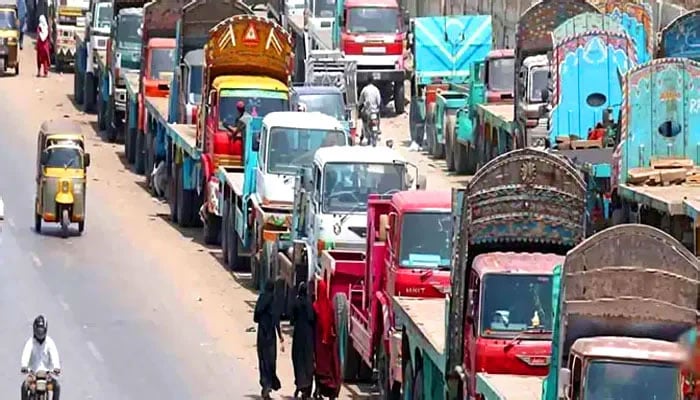
    The nationwide strike by the All Pakistan Goods Transport Alliance has entered its fourth consecutive day. The continued suspension of freight services has raised concerns about possible disruptions to the supply of essential goods. Transporters say there has been no major breakthrough in talks with the government. They have therefore decided to continue their protest. Goods Transport Alliance President Malik Shehzad Awan said the government must take serious steps to end the deadlock. He said transporters were still willing to negotiate. However, he stressed that talks alone would not be enough. The transporters want clear progress on their demands before ending the strike. The ongoing protest has created uncertainty for businesses and traders. Goods transport vehicles play a key role in moving food, fuel and other essential items between cities. A prolonged strike could affect the movement of supplies. It could also create difficulties for wholesalers, retailers and consumers. There are concerns that shortages in some markets may push up prices. Food items could become more expensive if supplies remain disrupted for an extended period. The transporters launched the protest over rising petroleum prices. They are also opposing the government’s policy of changing petroleum prices on a daily basis. The alliance has demanded action on the issues affecting the transport sector. Transporters argue that frequent changes in fuel prices make it difficult for them to manage operating costs. They have called for serious engagement from the government. They want their concerns to be addressed through negotiations. Malik Shehzad Awan said the transporters had not closed the door to dialogue. However, he maintained that the government must demonstrate meaningful progress. The strike is affecting freight movement at a time when businesses depend heavily on road transport. Goods vehicles are used to supply markets across the country. If the deadlock continues, the impact could become more visible in local markets. Traders may face delays in receiving supplies, while consumers could face higher prices. The transporters have not announced a deadline for ending the strike. They are waiting for further government action and progress on their demands.

  • | |

    Pakistan goods transporters association declares i…

      The Pakistan Goods Transporters Association has raised serious concerns over the volatile and unpredictable daily adjustments in petroleum prices, stating that such frequent fluctuations make it impossible for the transport sector to continue operations smoothly. In a press conference held in Lahore, association officials, led by President Nabeel Mahmood Tariq, articulated a series of demands and grievances that have been mounting over recent months, warning that without immediate government intervention, the entire logistics and supply chain network could face severe disruption. Addressing the media alongside other senior office-bearers of the All Pakistan Goods Transporters Association, Nabeel Mahmood Tariq emphasized that the transportation industry is the backbone of the national economy, responsible for moving essential commodities, industrial raw materials, and consumer goods across the length and breadth of the country. However, he argued that the current pricing mechanism for petroleum products—which has seen almost daily revisions—has created an environment of extreme uncertainty for fleet operators. Unlike larger corporate entities, most truck owners and small transport companies operate on thin profit margins, and without a stable fuel pricing framework, they are unable to quote competitive rates to clients or plan their operational budgets effectively. Tariq pointed out that many transporters have already started grounding their vehicles, as each trip now carries the risk of financial loss if fuel prices rise unexpectedly mid-journey. Beyond fuel prices, the association president laid out a comprehensive list of demands aimed at reducing the financial burden on the sector. First and foremost, he called for an immediate end to unnecessary customs checking at various inter-provincial checkpoints. According to Tariq, these intrusive and repetitive inspections not only cause long delays—sometimes stretching into hours—but also open the door to harassment and bribery, which further inflate the cost of doing business. He urged the federal and provincial governments to streamline customs procedures and adopt a more efficient, technology-driven system that would expedite the movement of goods without compromising security or revenue collection. Another major point of contention raised by Tariq was the recent increase in toll taxes on highways and motorways. He demanded that this hike be rolled back completely, arguing that transporters are already struggling with rising maintenance costs, spare part prices, and tyre rates. The additional toll burden, he said, is simply unsustainable and forces many operators to take longer, less safe alternative routes, which ultimately hurts the overall efficiency of freight movement. Turning his attention to provincial policies, particularly in Punjab, Tariq called for the establishment of new, modern truck terminals across the province. He noted that existing truck stands and loading points are outdated, overcrowded, and lack basic amenities for drivers and helpers. New truck yards, equipped with proper parking, resting areas, workshops, and loading/unloading facilities, would not only improve working conditions but also reduce traffic congestion in urban centers. He also strongly condemned the 300 percent increase in token tax imposed on commercial vehicles in Punjab, labeling it as punitive and counterproductive. He demanded that this excessive tax hike be withdrawn immediately, asserting that it disproportionately affects small owner-operators who form the majority of the association’s membership. In a significant announcement, Nabeel Mahmood Tariq declared that the association fully supports the wheel-jam strike (hunger strike) called for August 8, which has been organized by various transport unions across the country to pressure the government into addressing these long-standing issues. He clarified that this is not a political move but a last-resort measure to draw attention to the existential crisis facing the transport industry. He warned that if the government fails to respond positively before that date, thousands of trucks, trailers, and tankers will park on the roads, effectively paralyzing the movement of food, medicine, fuel, and industrial goods. Such a strike, he cautioned, would have catastrophic consequences for an already fragile economy, leading to shortages, price hikes, and factory closures. Concluding his address, Tariq appealed to Prime Minister Shehbaz Sharif and the chief ministers of all provinces to personally intervene and hold urgent consultations with transport representatives. He reiterated that the industry is not asking for subsidies or charity, but merely for a predictable policy environment, fair taxation, and the elimination of corrupt practices at checkpoints. He expressed hope that the government would act wisely and avert a crisis that benefits no one except speculators and hoarders. The press conference ended with a unanimous resolution passed by the association leaders, vowing to continue their struggle peacefully but firmly until all their legitimate demands are met. The coming days, they warned, will be decisive for the future of Pakistan’s transport sector and, by extension, its entire supply chain.

  • | |

    Trump halts Iran strike, pushes for deal

    US President Donald Trump has announced that he is postponing plans for a new military strike against Iran, saying he is giving diplomacy another opportunity to resolve tensions over Tehran’s nuclear programme and restore navigation through the Strait of Hormuz. In a statement posted on his social media platform, Trump said Iran, along with other countries in the Middle East, had requested additional time to finalize an agreement aimed at reopening the strategic waterway and addressing international concerns over Iran’s nuclear activities. Trump said he had agreed to suspend military action for the time being, provided that negotiations lead to a rapid and meaningful agreement. He added that the decision was made in the interest of regional stability, global security and the future prosperity of Iran. He also claimed that Israel supports the diplomatic approach, although Israeli officials had not publicly commented on the statement. Despite the temporary pause, tensions remain high across the region. Iranian officials warned that any military action by the United States or its allies would trigger an immediate and decisive response. Tehran maintained that it would defend its sovereignty against any form of aggression. Iranian Foreign Minister Abbas Araqchi held separate telephone conversations with senior officials from Pakistan, Türkiye and Saudi Arabia to discuss the rapidly evolving regional situation. During the talks, he warned that any attack on Iran would have serious consequences for regional peace and stability. Araqchi also stressed that Iran would respond proportionately if the United States, Israel or any regional country participated in military action against Iranian territory. The discussions focused on preventing further escalation and encouraging diplomatic efforts to avoid a wider conflict. Meanwhile, Saudi Crown Prince Mohammed bin Salman also held talks with President Trump to seek clarification on Washington’s plans regarding Iran. Although officials confirmed that the conversation took place, no further details were released. Iranian media affiliated with the country’s security establishment warned that attacks on Iran’s energy infrastructure could result in retaliatory strikes against oil and gas facilities across the Gulf region. The warning has heightened concerns among energy producers and international markets. President Trump acknowledged that negotiations remain difficult and admitted that his confidence in reaching an agreement has weakened. However, he said his administration continues to pursue diplomatic engagement before considering further military action. Senior US officials remain involved in efforts to secure a negotiated settlement. The conflict has already had a significant impact on global energy markets. Fighting between US, Israeli and Iranian forces has disrupted regional stability and increased uncertainty over international oil supplies. The Strait of Hormuz remains one of the world’s most important shipping routes for crude oil exports. Continued security threats have reduced commercial shipping through the passage, raising concerns over global energy supplies and increasing pressure on oil prices. Analysts say prolonged instability in the Gulf could further affect international markets if diplomatic efforts fail. Rising oil prices have already placed additional economic pressure on many countries dependent on imported energy. Regional security concerns have also expanded beyond the Strait of Hormuz. Maritime authorities reported separate incidents involving commercial vessels near Oman, including damage to a tanker after it was struck by an unidentified projectile. Another vessel reported a nearby explosion but escaped without damage.

  • |

    Pakistan secures US $629.5 million in agreements following landmark Pakistan-China Pharmaceutical B2B Conference

    Syed Mustafa Kamal, Federal Minister for National Health Services, Regulations and Coordination has announced a major breakthrough for Pakistan’s pharmaceutical sector following the successful Pakistan-China Pharmaceutical Business-to-Business (B2B) Conference held in Islamabad on 17–18 July. Addressing a press conference, the Minister said the conference marks a significant milestone in the government’s efforts to transform Pakistan’s pharmaceutical industry into a globally competitive sector, attract foreign investment, strengthen local manufacturing, and reduce dependence on imported pharmaceutical products. “The purpose of sharing this success is to present a positive image of Pakistan to our people and the world. While challenges exist, it is equally important to highlight our achievements that restore confidence in Pakistan’s economy and its investment potential,” the Minister said. The two-day conference brought together 240 Chinese delegates representing 140 leading Chinese pharmaceutical companies and 430 Pakistani delegates from 210 local companies, making it one of the largest Pakistan-China engagements ever held exclusively for the pharmaceutical sector. To maximize business outcomes, the Ministry of National Health Services facilitated six weeks of virtual business matchmaking before the conference, ensuring participating companies entered the event with well-developed business discussions rather than first-time introductions. As a result, the conference generated 340 bilateral business meetings, culminating in: 22 commercial agreements worth US$629.5 million 84 Memoranda of Understanding (MoUs) with an estimated value of approximately US$800 million, many of which are expected to mature into formal investment agreements. The signed agreements span six strategic sub-sectors critical to the future of Pakistan’s healthcare industry: Active Pharmaceutical Ingredients (APIs) – 2 agreements Local Vaccine Production – 8 agreements Clinical Trials – 2 agreements Generic Formulations & Injectables – 2 agreements Medical Devices Manufacturing – 8 agreements The Minister emphasized that the government’s objective extends beyond signing MoUs, focusing instead on legally binding commercial agreements that lead to tangible investments, technology transfer, industrial growth, and employment generation. Highlighting the government’s broader pharmaceutical reforms, the Minister noted that Pakistan has, for the first time, developed and approved a National Local Vaccine Production Policy, creating the policy framework necessary for domestic vaccine manufacturing. Currently, Pakistan administers 13 vaccines under its national immunization programme, all of which are imported. The new policy aims to establish local production capacity, improve health security, and reduce import dependence. The Minister also identified several strategic priorities being pursued jointly with Chinese partners, including: Development of Pakistan’s clinical trials ecosystem; Promotion of Traditional Chinese Medicine and herbal medicines; Local manufacturing and export of medical devices; Establishment of vocational and technical training programmes for the pharmaceutical and biotechnology workforce; and Indigenous production of Active Pharmaceutical Ingredients (APIs), as Pakistan currently imports approximately 95% of the raw materials used to manufacture medicines despite producing nearly 85% of its pharmaceutical products locally. The Minister observed that healthcare is a permanent and growing global industry, and with Pakistan’s population exceeding 250 million, strengthening domestic pharmaceutical manufacturing has become both an economic and strategic necessity. He further highlighted the government’s regulatory reforms, particularly within the Drug Regulatory Authority of Pakistan (DRAP), where approximately 85% of regulatory processes have now been digitized. The reforms have substantially reduced processing times, enhanced transparency, minimized human intervention, and improved ease of doing business. As an example, the Minister noted that the registration of medical devices, which previously required years to complete, can now be processed entirely online, with approvals being issued within 20 days, significantly improving investor confidence. The Minister acknowledged the collective efforts of the Embassy of Pakistan in Beijing, led by Ambassador Khalil Hashmi, the Ministry of National Health Services, DRAP, the Trade Development Authority of Pakistan (TDAP), the Board of Investment (BOI), the Ministry of Information and Broadcasting, Islamabad Police, law enforcement agencies, and all public officials whose coordinated efforts ensured the successful organization of the conference. He also appreciated the active participation of the Pakistani pharmaceutical industry and Chinese business partners, whose collaboration translated business dialogue into concrete investment commitments. Concluding the press conference, the Minister described the conference as the beginning of a long-term strategic partnership between Pakistan and China in the healthcare and pharmaceutical sectors. He reaffirmed the government’s commitment to ensuring that the signed agreements are implemented expeditiously and translated into operational projects that strengthen Pakistan’s pharmaceutical manufacturing capacity, create employment opportunities, increase exports, and contribute to national economic growth.

Leave a Reply

Your email address will not be published. Required fields are marked *