
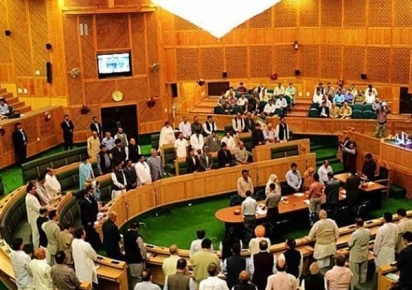
ajk assembly seeks
| |

AJK Assembly seeks Truth Commission over unrest

The Azad Jammu and Kashmir (AJK) Legislative Assembly has unanimously passed a resolution calling for the formation of an independent Truth Commission to investigate the recent unrest that claimed several lives and left many others injured.

The proposed commission will examine the causes of the violence, investigate all reported deaths, injuries and property damage, and recommend measures to provide relief to victims and prevent similar incidents in the future.

The move comes after violent clashes between law enforcement personnel and protesters in Rawalakot, where both security officials and demonstrators reported casualties. The unrest sparked widespread concern and renewed calls for an impartial investigation.

According to the resolution, the Truth Commission will function as an independent and impartial body. Its structure, powers and terms of reference will be finalised jointly by the federal government and representatives of the protest leadership before being formally established under AJK law.

The commission will be tasked with reviewing all aspects of the recent crisis. It will examine evidence related to deaths, injuries, property losses and allegations of violence. Authorities said the inquiry will be conducted without any predetermined conclusions, ensuring that every affected family and relevant party has an opportunity to present evidence and testimony.

The proposed body will have access to official records, including government documents, police reports, forensic material, communication records, videos and witness statements. Sensitive information involving national security or witness protection may be reviewed through confidential proceedings.

The Assembly clarified that the commission will not determine criminal guilt or hand down punishments. Instead, if evidence suggests legal violations, the matter will be referred to the relevant investigative or judicial authorities for further action. Individuals or institutions facing adverse findings will also be given an opportunity to respond before any conclusions are reached.

The commission will submit interim and final reports within an agreed timeframe. Its final report is expected to be made public, subject to legal restrictions concerning national security and witness safety. It may also recommend compensation for victims, institutional reforms, legal action where necessary and measures to prevent future unrest.

The resolution also called for immediate de-escalation of tensions across the region. It urged the government to restore normal life by reopening roads, ensuring medical and emergency services, improving communication networks and maintaining the uninterrupted supply of essential goods.

At the same time, protest organisers were urged to suspend demonstrations until the commission completes its work. The governments of AJK and Pakistan were also asked to avoid further actions linked to the crisis during the inquiry, except where immediate measures are required to protect public safety.

The Assembly reaffirmed its commitment to democratic values, constitutional governance and the rule of law. It stressed that peaceful protest, freedom of expression and the right to raise political, economic and social demands are guaranteed under democratic principles. However, it strongly rejected violence, vandalism, the use of weapons and attempts to challenge state authority through force.

Lawmakers paid tribute to security personnel, police officials and civilians who lost their lives during the unrest. They expressed sympathy with all affected families and stressed that every victim deserves justice, humanitarian assistance and equal treatment under the law.

The House also appealed to citizens, political workers, traders and youth to distance themselves from violent elements. It emphasised that responsibility for any unlawful acts should be determined individually through evidence and due legal process rather than collective blame.

Similar Posts

  • | | |

    Naqvi tells tycoons: Stop funding politicians

    Federal Minister Mohsin Naqvi has called for sweeping structural reforms, warning that Pakistan cannot overcome its long-standing economic and governance challenges without fundamental changes to the country’s political and administrative systems. Speaking at the First Pakistan Investment Summit in Islamabad, Naqvi said the existing governance structure has become outdated and is no longer capable of meeting the country’s growing economic needs. He cautioned that without meaningful reforms, Pakistan could still be facing the same problems a decade from now. Addressing business leaders and investors, the minister said responsibility for the current state of affairs does not rest solely with politicians. He argued that the business community also plays a significant role in sustaining the existing system by financing political campaigns. Naqvi urged business leaders to stop funding political parties during elections and instead push for greater transparency, accountability and institutional reforms. He said reducing financial dependence on wealthy donors could help strengthen democratic institutions and improve governance. The minister also stressed the need to reduce Pakistan’s reliance on foreign loans. He said the country must focus on generating domestic resources, expanding investment and building a stronger economic foundation through long-term planning. Calling for national unity, Naqvi urged political parties to set aside differences and work together on a comprehensive reform agenda. He said lasting economic stability can only be achieved through collective decision-making and institutional improvements. Other speakers at the summit also highlighted the need for major administrative reforms. They argued that changes in governance structures, including decentralisation and stronger regional administration, could improve service delivery and reduce governance challenges. Business leader S.M. Tanvir said structural weaknesses continue to slow economic progress and called for fresh leadership and institutional reforms to strengthen the country’s administrative framework. Participants also expressed concern over Pakistan’s social and economic indicators. They noted that a large segment of the population continues to live below the poverty line, while unemployment remains a major challenge, particularly among young people. Several speakers said temporary welfare measures alone cannot address the country’s long-term economic issues. They called for policies that create sustainable employment opportunities, promote merit-based recruitment and equip young people with the skills needed to participate in the economy

  • |

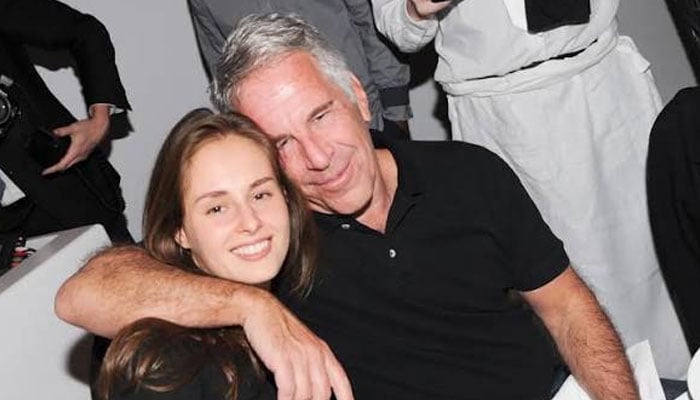
    Who is Epstein’s potential heir?

    Attention has shifted to Karyna Shuliak, the longtime girlfriend of convicted sex offender and disgraced US financier Jeffrey Epstein. The development comes years after Epstein died in a federal prison in 2019. His death brought an end to his criminal case but left behind a complicated estate and several legal disputes. Shuliak is now being described as a potential major beneficiary of Epstein’s remaining wealth. According to court documents, Epstein signed a new will just two days before his death. The document created a private trust known as the 1953 Trust. Recent court records reportedly show that Shuliak was included among the important beneficiaries of the trust. However, the exact amount she could receive remains uncertain. US Department of Justice records reportedly indicate that Shuliak was the last person Epstein spoke to outside prison before his death. Reports also say that Epstein made some of his final telephone calls to her while he was in custody. At the time of his death, Epstein’s estate was estimated to be worth around $600 million. A significant portion of that wealth has since been used to compensate people who accused Epstein of sexual abuse. More than $170 million was reportedly paid to over 200 victims through compensation arrangements. The estate has also faced several legal claims and settlements with government authorities. These matters have complicated the distribution of Epstein’s remaining assets. After a recent tax refund, the value of the estate’s remaining assets is estimated at between $120 million and $150 million. Despite being named as a potential beneficiary, Shuliak has not yet secured the inheritance. Payments connected to the trust remain suspended while legal proceedings continue. Richard Kahn, the executor of Epstein’s estate, has reportedly raised concerns about the wording of the trust agreement. He described the document as unclear and poorly prepared. The uncertainty has made it difficult to determine exactly how Epstein intended his remaining fortune to be divided. Legal experts say Shuliak’s potential inheritance cannot be confirmed until outstanding claims and court proceedings are resolved.

  • | | |

    No date finalised for renewed US-Iran talks, sources say

    Efforts to revive direct negotiations between the United States and Iran are continuing through diplomatic channels, but no date or venue has been finalised for the next round of talks, according to informed sources. The sources said discussions are ongoing with the help of mediators from Pakistan and Qatar, who are working with both Washington and Tehran to arrange a fresh round of negotiations aimed at reducing tensions and restoring dialogue after months of conflict. Officials familiar with the process said there is currently no scheduled meeting between American and Iranian negotiators in Islamabad. They added that both Islamabad and Doha remain possible venues for future talks, although no final decision has been made. According to the sources, Pakistan’s Interior Minister Mohsin Naqvi is expected to visit Tehran in the coming days to discuss diplomatic efforts and explore ways to help restart negotiations between the two countries. Diplomatic contacts between the two sides have reportedly continued despite recent hostilities, with mediators exchanging messages in an effort to revive dialogue under the Islamabad Memorandum of Understanding signed earlier this year. The sources said both countries are expected to begin with indirect discussions through mediators before moving to direct negotiations. The initial phase is likely to focus on maintaining the current reduction in hostilities and building mutual confidence rather than addressing Iran’s nuclear programme. One of the main issues expected to dominate future discussions is the Strait of Hormuz, a strategically important waterway through which a significant share of the world’s oil supply passes. Mediators are reportedly working on proposals to ensure safe maritime navigation and reduce tensions in the Gulf. Meanwhile, Iran’s Foreign Ministry said there are currently no direct negotiations taking place with the United States. Iranian officials confirmed that Tehran is engaged in discussions with Oman regarding a temporary maritime route through the Strait of Hormuz but stressed that these talks should not be interpreted as an agreement to fully reopen the strategic waterway. Iran also maintained that any broader agreement would depend on changes in the regional security situation and an end to what it described as continued US pressure. Regional tensions remained high as Iranian media reported that the country’s Revolutionary Guard had shot down a US MQ-9 Reaper drone over the Strait of Hormuz. Separately, several oil tankers reportedly changed their shipping routes to avoid potential security threats near the Bab al-Mandab Strait, increasing transportation costs for energy shipments. At the same time, Israel launched military exercises involving naval and ground forces, saying the drills had been planned in advance. Israeli forces also continued military operations in southern Lebanon, while cross-border tensions remained elevated despite an existing ceasefire. US President Donald Trump recently said he had postponed a planned military strike against Iran after receiving requests from regional countries to allow more time for diplomacy. He expressed hope that negotiations could eventually lead to agreements on the Strait of Hormuz and broader regional security issues.

  • |

    Apple plans smart glasses with future health and fitness features

    Apple is reportedly working on a new generation of smart glasses that could eventually become an important part of its health and fitness ecosystem. Although the first version of the wearable device is expected to focus on core smart features, the company is said to have a long-term vision of transforming future models into personal health and wellness companions. Apple is exploring ways to expand its health-focused product lineup beyond the Apple Watch. The company is believed to be developing advanced fitness and wellness features for its upcoming wearable devices, allowing users to monitor their health more conveniently throughout the day. Apple has previously experimented with integrating fitness technology into its Vision Pro headset. The original concept involved a dedicated version of Apple Fitness+ that would let users participate in guided workout sessions while the headset tracked their body movements in real time. This system was designed to analyze posture, movement, and exercise performance, providing users with more accurate feedback during workouts. Reports also suggested that Apple had developed sophisticated body-tracking technology capable of monitoring users’ physical movements with a high level of precision. The feature was intended to enhance fitness training by measuring exercise form and movement patterns. However, despite the promising technology, Apple ultimately decided not to introduce these fitness capabilities with the Vision Pro. The main reason behind this decision was the headset’s weight. While Vision Pro offers advanced mixed-reality experiences, its relatively heavy design made it uncomfortable for prolonged physical activity. Wearing the headset during exercise was considered impractical, leading Apple to postpone its fitness ambitions for the device. Rather than abandoning the idea altogether, Apple appears to be shifting its focus toward lighter wearable products, particularly its upcoming smart glasses. These glasses are expected to provide a more comfortable platform for delivering health and fitness experiences without the limitations posed by a bulky headset. To support these efforts, Apple is reportedly recruiting specialists with expertise in health technology, spatial computing, and wearable devices. Recent job postings indicate that the company is looking for professionals who can help create innovative wellness and fitness experiences for future vision-based products. The hiring efforts suggest Apple remains committed to expanding the capabilities of its wearable ecosystem. Industry analysts have also indicated that Apple may incorporate heart-rate monitoring technology into future smart glasses. The sensor technology is expected to be similar to the heart-rate monitoring features reportedly being developed for upcoming AirPods models. If implemented successfully, these sensors could allow users to monitor key health metrics without relying solely on the Apple Watch. Although Apple has not officially confirmed the features or launch timeline, reports suggest that these advanced health capabilities are still under development. As a result, they are unlikely to appear in the first generation of Apple smart glasses. Instead, Apple is expected to introduce these fitness and wellness functions gradually in future versions of the device as the technology matures. While consumers may need to wait several years before these advanced features become available, Apple’s continued investment in wearable health technology highlights its ambition to build a broader ecosystem that seamlessly combines everyday convenience with personal health monitoring.

  • | |

    Sindh Chief Minister reviews Karachi water reform …

      Sindh Chief Minister Syed Murad Ali Shah met with World Bank Country Director Bolormaa Amgaabazar during a high-level meeting held to review the progress of Karachi’s water reform projects. The meeting focused on accelerating initiatives aimed at improving the city’s water supply and wastewater management systems. It was attended by the Sindh Minister for Local Government, Karachi Mayor Murtaza Wahab, the Chief Secretary, the Principal Secretary, and other senior government officials. During the meeting, Chief Minister Murad Ali Shah and the World Bank Country Director assessed the overall progress of the Karachi Water and Sewerage Services Improvement Project (KWSSIP). Both sides agreed on a fast-track roadmap to improve Karachi’s water supply and drainage infrastructure. The Chief Minister directed all relevant departments to ensure the timely completion of ongoing KWSSIP projects and to accelerate progress on the K-IV water supply project, which is considered one of the city’s most important infrastructure initiatives. Officials informed the meeting that Sui Southern Gas Company handed over the project site on June 22, 2026. Preparations are currently underway for a joint technical inspection of the 96-inch diameter water pipeline. In addition, rehabilitation work on the NIPA Bridge and other related technical activities is progressing according to schedule, with completion targeted for August 20. The briefing also highlighted that the procurement process for the K-IV expansion project has entered its final phase. The World Bank has already issued its No Objection Certificate (NOC), clearing the way for the next stage of implementation. Authorities stated that the official tender for the K-IV project will be advertised shortly. Before large-scale installation begins, a pilot program will be launched to evaluate technical performance and operational efficiency. The meeting included a detailed review of the appointment of consultants and the technical studies required for the project’s successful implementation. Officials emphasized that these studies are essential to ensure that the infrastructure meets international standards and addresses Karachi’s long-term water management challenges. Karachi Mayor Murtaza Wahab informed the participants that chlorination stations have been relocated to their designated sites and are currently undergoing commissioning. Water quality testing is expected to begin on July 30, marking another significant milestone in the project. He also reported that compensation has been paid to 186 out of the 203 individuals affected by the development works, demonstrating continued progress in addressing social and resettlement obligations. Chief Minister Murad Ali Shah instructed the Karachi Water and Sewerage Corporation (KWSC) to complete the commissioning and testing process without delay. He reiterated that providing safe and clean drinking water to the people of Sindh remains one of the provincial government’s highest priorities. The Chief Minister further directed all concerned institutions to strengthen coordination and communication to avoid unnecessary delays. He stressed that modern water utility organizations operate through effective data management, metering systems, and advanced technology, adding that Karachi requires a modern and efficient water management system capable of meeting the demands of its growing population. Speaking at the meeting, World Bank Country Director Bolormaa Amgaabazar reaffirmed the World Bank’s continued commitment to supporting Karachi in achieving sustainable water supply and wastewater management. She emphasized that institutional reforms, good governance, social safeguards, and timely implementation are essential for the long-term success of the projects. She also expressed confidence that continued cooperation between the Sindh government and the World Bank would help improve essential public services and enhance the quality of life for Karachi’s residents.

  • |

    Govt hikes petrol by Rs4.4, diesel by Rs3.62 as gl…

    The federal government on Thursday increased the prices of petrol and high-speed diesel by Rs4.40 and Rs3.62 per litre, respectively, effective July 24. Following the latest revision, petrol now stands at Rs331.52 per litre, while HSD is priced at Rs378.66. The price hike comes amid a surge in global oil prices, with Brent crude jumping 6% to $100.50 a barrel following attacks on tankers in the Red Sea, which have choked off a second crucial Middle East artery for global oil supplies alongside Iran’s near-closure of the Strait of Hormuz. This is the fourth consecutive day the government has revised fuel prices after switching to a daily review mechanism last week to reflect volatility in international markets. The new system bases daily fuel prices on a seven-day average of international market rates, ensuring timely adjustments to align with global trends. The latest increase was anticipated as oil prices surged to their highest level since May, driven by escalating tensions in the Middle East. The price revision came after the government and the All Pakistan Petrol Pump Owners Association reached an agreement a day ago to postpone the association’s planned nationwide shutdown for two weeks. The agreement followed successful negotiations with Petroleum Minister Ali Pervaiz Malik, who assured dealers that their long-pending concerns, including demands for a monthly pricing mechanism and an increase in dealer commissions, would be addressed. The surge in global oil prices has been fueled by Houthi attacks on oil tankers in the Red Sea, which have raised fears of a wider regional conflict. The attacks have disrupted shipping through the Bab el-Mandeb strait, a vital alternative route for Saudi oil exports, adding to the supply concerns already triggered by the near-closure of the Strait of Hormuz. The dual disruptions have put energy markets on edge, with fears of a global supply crunch intensifying. The spike in oil prices has also impacted global stock markets, with major tech giants knocking US stocks lower and Europe’s borrowing costs spiking to long-term highs. The unsettling day across markets reflects the broader economic implications of the Middle East conflict, which continues to disrupt global energy supplies and threaten economic stability. As the situation remains volatile, further price revisions are likely in the coming days. The government has assured the public that it is monitoring the situation closely and will take necessary measures to mitigate the impact on consumers. However, with global oil prices expected to remain elevated, Pakistani consumers are likely to face continued pressure on fuel costs, affecting transportation, goods, and services across the country. The government’s daily price revision mechanism aims to provide transparency and responsiveness to market changes, but it also means that consumers will face more frequent price adjustments as global oil markets remain volatile. The coming days will be critical in determining whether the situation stabilizes or whether further hikes are needed to reflect global trends.

Leave a Reply

Your email address will not be published. Required fields are marked *