Azad Jammu Kashmir

  • | | |

    Rawalakot security operation underway as AJK polic…

    Security forces have launched an operation against armed groups in Rawalakot, Azad Jammu and Kashmir (AJK), after gunmen allegedly occupied several buildings and opened fire on law enforcement personnel, according to the AJK Police spokesperson. Speaking at a press conference on Wednesday, SSP Khawar Ali Shaukat, spokesperson for the Azad Jammu and Kashmir Police, said armed individuals had taken positions inside various buildings in the city. He stated that security forces responded by initiating a full-scale operation to regain control of the affected areas. According to the police spokesperson, one Rangers personnel was killed during the attack. He said the operation resulted in the arrest of several suspects, who were allegedly found in possession of modern weapons. Authorities have not yet released further details regarding the identities of those detained or the exact number of arrests made. Shaukat alleged that the armed groups were linked to elements seeking to destabilize the peaceful environment in Azad Kashmir. He also claimed that authorities were aware of what he described as negative propaganda being circulated on social media by hostile actors. The spokesperson emphasized that state institutions had exercised restraint throughout the situation but warned that attacks on law enforcement agencies would not be tolerated. He said security forces remained committed to restoring law and order and ensuring those responsible for the violence are brought to justice. “The writ of the state will be upheld, and anyone challenging it will face legal action,” he said, adding that police and other law enforcement agencies would continue operations until the security situation is fully brought under control. Authorities said every possible measure is being taken to restore peace and protect residents in the affected areas. Security personnel remain deployed across Rawalakot, while the operation continues. Officials have not yet released additional information regarding the motive behind the attack or whether any further casualties have occurred. The investigation remains ongoing, and authorities are expected to provide further updates as the operation progresses. The developments have heightened security concerns in the region, with officials reiterating their commitment to maintaining public order while urging the public to rely on verified information and avoid the spread of unconfirmed reports as the situation evolves.

  • | |

    Analysing Pakistan’s system collapse through Orwell’s 1984

    Pakistan’s Interior Minister, Mohsin Naqvi, publicly conceded that the nation’s existing governance structure has collapsed. The minister admitted that the administrative machinery can no longer resolve the country’s compounding socio-economic crises. The phrase strategically slipped through while addressing the Pakistan Economic Summit in Islamabad. He warned that adhering to the status quo would drag the nation into the same stagnant cycle  ten years from now. Amidst, he called upon political parties to set aside differences, decentralize power, and establish new administrative units to avert total destabilization. Yet, this public declaration does not occur in a vacuum. It arrives amidst mounting public resentment, economic desperation, and an escalating crackdown on political dissent, particularly in regions like Azad Jammu & Kashmir and urban political centers where mass protests against state austerity and police overreach have intensified. On the surface, the minister’s statement sounds like a candid plea for political reform and democratic unity. Beneath it, lies a far more insidious dynamic. One that mirrors the political theology of George Orwell’s classic dystopian novel, 1984. Big Brother and the Permanent State In Orwell’s 1984, the state of Oceania is governed by a dual reality. On the visible surface sits the Outer Party and its administrative ministries: the Ministry of Peace (which wages war), the Ministry of Plenty (which manages scarcity), and the Ministry of Truth (which manufactures lies). But behind these facade institutions resides the true, unquestionable entity: the Party itself, epitomized by the omnipotent figure of Big Brother. The purpose of the ministers, bureaucrats, and politicians is not to serve the citizenry, but to safeguard the survival of the core entity at all costs. When applied to the political landscape of Pakistan, the Interior Minister’s declaration functions as a quintessential display of Orwellian doublethink. The ability to hold two contradictory beliefs in one’s mind simultaneously and accept both of them. The visible civilians admit powerlessness, yet the hidden apparatus of establishment and the deep-state continues to wield absolute authority. The state apparatus operates under an unwritten constitutional clause: individual rights, democratic mandates, and administrative cohesion may be sacrificed, so long as the core, permanent security apparatus remains untouched and supreme. Echoes From 1971 to Kashmir This pattern of preserving an unseen core entity while allowing civilian institutions to decay is not a novel phenomenon. Rather, it is the recurring motif of the region’s post-colonial history. During the 1971 crisis in East Pakistan, the political leadership and the military high command operated under the illusion that they were protecting the sacred unity of the state. In reality, the democratic mandate of the majority population in Bengal was suppressed to protect the ideological and structural hegemony of the West Pakistani establishment—the ruling entity. The state prioritized the preservation of its central ruling elite over the actual people, ultimately leading to the violent birth of Bangladesh. Similarly, in the context of Kashmir, both regional state apparatuses have historically treated the territory not as a community of citizens with self-determination, but as a hyper-militarized buffer zone. The rights of the local population are routinely suspended under emergency clauses, security regulations, and administrative crackdowns. Kashmir becomes a national security theater where the state justifies its authoritarian measures by pointing to a existential enemy, much like Oceania’s perpetual, shifting wars with Eurasia and Eastasia. The System Has Collapsed Minister Naqvi cautions that the system is broken and warns against civil unrest. The message carries an implicit subtext: the civilian government is simply the expendable skin of the state. The real state must be shielded from public wrath. Public dissent erupts over inflation, human rights abuses, or rigged mandates. However, the state’s reaction is not to adapt to the popular will, but to enforce compliance through force. The plea for political parties to sit together is less about democratic reconciliation and more an invitation to absorb the blame for a crisis created by the underlying apparatus. Ultimately, Orwell’s warning in 1984 was not merely about surveillance or censorship. Instead it was about the total erasure of individual agency in service of an unaccountable entity.  The region remains bound to protecting a shadowy establishment at the expense of its people.  

  • |

    Echoes of 1971 in Pakistan’s Kashmir policy

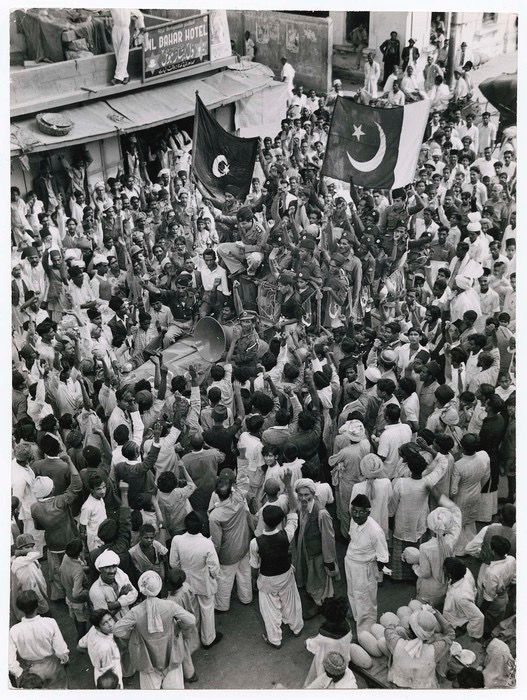
    History rarely repeats itself in exact terms, but it frequently rhymes through patterns of power, dissent and state responses. In Pakistan, analysts and political observers are increasingly highlighting the parallels between historical missteps. It is specifically the events leading up to the loss of East Pakistan in 1971 and the contemporary public grievances in Pakistan-administered Kashmir. The Cost of Ignoring Electoral Mandates In 1970, General Yahya Khan permitted general elections across Pakistan. The Awami League in East Pakistan secured a decisive democratic victory by winning 162 out of 300 national seats. However, rather than facilitating a peaceful transfer of power, military leaders stalled negotiations in Dhaka through early 1971. This breakdown in dialogue culminated in Operation Searchlight, a military crackdown targeting intellectuals, students, and Bengali civilians. The resulting violence triggered a massive refugee crisis. Approximately ten million people were sent to India. A war that ultimately led to the creation of Bangladesh. Pakistan’s own Hamoodur Rahman Commission concluded that political failure and operational excess by military leadership were central to the catastrophe. Despite these official findings, the report remained suppressed for decades, leaving fundamental lessons about the dangers of military overreach largely unexamined within state institutions.  Unrest in Pakistan-Controlled Kashmir Today, army leadership under General Asim Munir continues to champion strong nationalistic rhetoric regarding Kashmir. He has been asserting it as the nation’s core and a willingness to fight further conflicts over Indian-administered territory. Yet, a  different internal dynamic has been evolving since 2025 within the territories Pakistan actually controls. Local populations have mobilized in widespread demonstrations driven by clear economic and political grievances. Unmanageable costs for basic essential goods. Disproportionately high pricing for local power distribution. Legislative structures that assign disproportionate authority to mainland administrators rather than local residents. State institutions responded with heavy-handed measures rather than operating for meaningful negotiation. The organizing groups were banned, communication blackouts were implemented and arrests occurred. Security forces deployed live fire against demonstrators  and caused dozens of civilian casualties. The Danger of Ignoring Unheard Grievances The concern raised by historians is not that history will reproduce the exact outcome of 1971, but that the state is relying on the same flawed logic. State is again attempting to suppress domestic economic and political grievances through state force. When state policy prioritizes coercion over political engagement, it risks alienating populations. The lingering question for Pakistan’s establishment is whether the lessons of past governance failures will finally be integrated, or whether suppressed grievances will once again lead to deep institutional crises.  

  • | | |

    Azad Kashmir elections 2026: second phase polling …

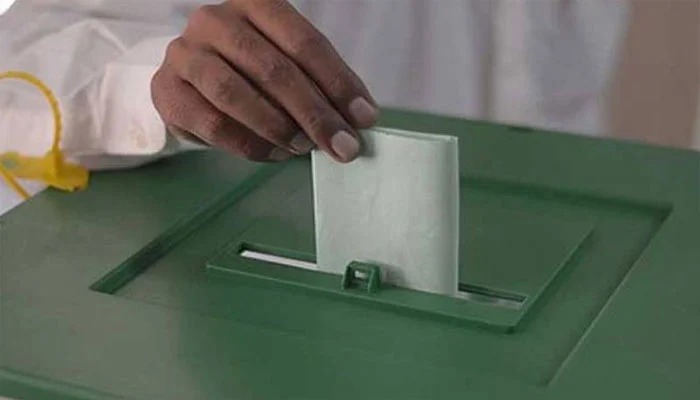
    The second phase of the Azad Kashmir Legislative Assembly Elections 2026 is being held today, with polling taking place in the Muzaffarabad Division and migrant constituencies. Voters in nine constituencies of Muzaffarabad Division and 12 migrant seats will exercise their right to vote as the electoral process moves forward. Election authorities completed preparations for the polling process, including the transportation of election materials and deployment of staff at polling stations. Voting will begin at 8:00 am and continue until 5:00 pm without interruption. The Muzaffarabad Division includes three districts — Muzaffarabad, Neelum, and Jhelum Valley. A total of 890,621 registered voters are eligible to cast their ballots across nine constituencies in the division. According to election officials, 1,483 polling stations have been established throughout Muzaffarabad Division to facilitate voters. A total of 208 candidates are contesting the nine seats, including nominees from major political parties such as the Pakistan Peoples Party, Pakistan Muslim League-Nawaz, Istehkam-e-Pakistan Party, other political groups, and independent candidates. In addition to the Muzaffarabad Division seats, polling is also being conducted for 12 seats reserved for Kashmiri migrants living in different parts of Pakistan. These include six seats from the Jammu region and six seats from the Valley region, where registered Kashmiri voters will participate in the election. The migrant constituencies include Jammu seats from LA-34 Jammu-1 to LA-39 Jammu-6, while Valley seats range from LA-40 Valley-1 to LA-45 Valley-6. Speaking to Geo News, Azad Jammu and Kashmir Chief Election Commissioner Justice (retd) Ghulam Mustafa Mughal said elections are conducted in phases due to security considerations. He stated that although uncertainty existed in Muzaffarabad earlier, the law and order situation has improved and is better than before. Authorities have made security arrangements to ensure a peaceful voting process and have urged citizens to participate responsibly. The Election Commission has emphasized that maintaining a secure environment and ensuring transparency remain key priorities during the polling process. The second phase of the Azad Kashmir Elections 2026 is expected to determine representatives for important constituencies and further shape the political landscape of the region.

  • | | | |

    AJK polling postponed in LA-27 after landslides

    MUZAFFARABAD: Polling for the Azad Jammu and Kashmir (AJK) Legislative Assembly constituency LA-27 Muzaffarabad-I was postponed on Sunday after heavy monsoon rains and landslides cut off key roads, preventing election officials and polling materials from reaching voting stations on time. According to the AJK Election Commission, severe weather disrupted transportation routes across parts of the constituency, making it impossible for polling staff and election equipment to arrive before the scheduled start of voting. As a result, polling in the constituency was suspended for the day. The commission said the decision was taken after assessing the situation on the ground and consulting the district administration, which had been working to reopen blocked roads since early morning. However, despite continued efforts, several affected routes remained inaccessible due to landslides and debris caused by the intense rainfall. Election authorities announced that a new polling date for LA-27 Muzaffarabad-I would be declared later in the day, with an official announcement expected at 2pm. The Election Commission expressed regret over the inconvenience caused to voters and appealed for public cooperation, stressing that the postponement was necessary to ensure the safety of election personnel and to conduct the electoral process in a fair and orderly manner. While polling was halted in LA-27, voting in all other constituencies across Azad Jammu and Kashmir continued according to schedule under security arrangements. Election officials said polling activities elsewhere remained unaffected by the weather. The suspension highlights the challenges posed by the ongoing monsoon season in the mountainous region, where heavy rainfall frequently triggers landslides and road closures, disrupting transportation and public services. Authorities said they were closely monitoring weather conditions and coordinating with local administration to restore road access as quickly as possible so that polling in the affected constituency can be held without further delay. Voters in LA-27 have been advised to stay updated through official Election Commission announcements regarding the revised polling schedule and any additional instructions.

  • | | |

    Sherry Rehman flags polling delays, security lapse…

    ISLAMABAD: Pakistan Peoples Party (PPP) Senator Sherry Rehman has voiced concern over delays in polling at several constituencies in Azad Jammu and Kashmir (AJK), saying the disruption has caused significant hardship for voters and raised serious questions about election management. In a statement issued on Sunday, Rehman said delayed arrival of election staff had affected the voting process at a number of polling stations, preventing many voters from casting their ballots on time. She identified constituencies LA-28, LA-31, LA-25 and LA-34 among the areas where polling was reportedly delayed, calling on the Election Commission to immediately investigate the matter and ensure that the electoral process proceeds without further disruption. The PPP leader also expressed concern over security arrangements at a women’s polling station in Shark Kamal Bandi in LA-31, claiming that only one police officer had been deployed despite the polling station having previously been declared sensitive. According to Rehman, inadequate security at such locations could undermine voter confidence and create unnecessary challenges for women participating in the electoral process. She further highlighted transportation problems affecting voters in the region. Rehman said the road connecting Rangla to Katkair had remained blocked since Saturday night, leaving more than 50 vehicles carrying voters stranded and preventing many people from reaching their designated polling stations. The senator said these issues had been formally reported to the Election Commission, urging the electoral body to conduct an immediate inquiry into the reported irregularities and take prompt corrective measures wherever necessary. “Every voter must be given the opportunity to exercise their democratic right without obstacles,” she said, emphasizing that transparent, impartial and well-managed elections are essential for strengthening democratic institutions. Rehman maintained that any compromise on the sanctity of the vote would be unacceptable and stressed the need for election authorities to ensure equal access to polling facilities for all eligible voters. Her remarks come amid ongoing polling across Azad Jammu and Kashmir, where election authorities have been working to address logistical and weather-related challenges in some areas. The Election Commission has yet to issue a detailed response to the specific concerns raised by the PPP senator, while voting continues in constituencies where polling arrangements remain unaffected.

  • | | |

    TTAP announces relief mission to AJK amid tensions

    ISLAMABAD: The opposition alliance Tehreek Tahaffuz-e-Ayeen Pakistan (TTAP) has announced that its senior leadership will travel to Azad Jammu and Kashmir (AJK) on Monday with relief supplies, while criticizing the government’s handling of the situation in the region and calling for dialogue to address ongoing political tensions. Speaking at a press conference in Islamabad, TTAP spokesperson Akhunzada Hussain Yousafzai said the delegation would carry humanitarian assistance for affected residents and express solidarity with people in Rawalakot, where a protest sit-in has continued in recent days. Yousafzai alleged that the government had responded to public dissent with force rather than engagement. He claimed that, according to what he described as verified information, dozens of people had lost their lives during the unrest. His claims have not been independently verified, and no official confirmation of the casualty figures was immediately available. The spokesperson also alleged that leaders associated with the Joint Awami Action Committee (JAAC) had either been killed or had bounties placed on them. Authorities have not publicly responded to these specific allegations. Political tensions in Azad Jammu and Kashmir have persisted since widespread demonstrations erupted last year over demands for constitutional, administrative and governance reforms. The JAAC-led protests called for a broad package of changes, including an end to privileges for the political elite, the abolition of 12 legislative assembly seats reserved for refugees and the removal of the existing quota system. The unrest resulted in deadly clashes before negotiations between the government and the JAAC produced an agreement covering several core demands. As part of that understanding, both sides agreed to establish a high-level committee to examine the issue of refugee seats in the AJK Legislative Assembly. However, the issue remains unresolved. The JAAC continues to demand the abolition of the reserved refugee seats, while the government maintains its opposition to the proposal. Yousafzai argued that attempts to suppress opposing voices had deepened political divisions and contributed to the emergence of public movements in the region. He maintained that all outstanding issues could be resolved through meaningful negotiations rather than confrontation. The opposition alliance said its planned visit is intended to provide humanitarian support while also urging all stakeholders to pursue peaceful dialogue. Political observers say the coming days could prove significant as discussions over governance reforms and representation continue to shape the political landscape in Azad Jammu and Kashmir.

  • | |

    AJK polling extended amid rain, PPP alleges electi…

    Polling continued on Sunday in the second phase of the Azad Jammu and Kashmir (AJK) elections, with voters casting ballots in eight of the nine constituencies in the Muzaffarabad division and all 12 refugee constituencies. The polling process began at 8am and was initially scheduled to conclude at 5pm. However, an AJK Election Commission spokesperson announced a one-hour extension, allowing voters to cast their ballots until 6pm. Heavy rainfall forced authorities to postpone polling in LA-27 (Muzaffarabad-I), AJK Chief Election Commissioner Ghulam Mustafa Mughal said. More than 300 candidates are contesting the seats in the Muzaffarabad division and the 12 constituencies reserved for refugees settled in various parts of Pakistan. Meanwhile, Pakistan Peoples Party (PPP) Chairman Bilawal Bhutto-Zardari renewed his allegations of electoral irregularities, accusing the Pakistan Muslim League-Nawaz (PML-N) of attempting to influence the voting process during the second phase as well. In a post on X, Bilawal condemned what he described as an attack on PPP’s regional president Chaudhry Latif Akbar, who is also contesting from LA-31 (Muzaffarabad-V). He alleged that elements linked to the PML-N were responsible for the incident and claimed that PPP worker Mushtaq Shah was killed in the same constituency. Bilawal accused the PML-N of using intimidation and violence to interfere with the electoral process and called for the immediate arrest of those responsible for the alleged attack on Akbar and the killing of the party worker. In another statement, the PPP chairman alleged that attacks had targeted his party’s voters as well as the AJK president. He said the contest in Muzaffarabad had turned into a struggle between the PPP’s political principles and what he described as the PML-N’s use of threats, coercion and alleged rigging. The PPP also submitted a formal complaint to the AJK Election Commission, alleging that Akbar faced a physical assault while participating in election-related activities on polling day. The party named three individuals in connection with the incident and said it had initiated the process of registering a first information report (FIR). The PPP urged the Election Commission to investigate the alleged security failure and determine how the incident occurred despite security arrangements at the polling site. AJK Prime Minister Faisal Mumtaz Rathore, who belongs to the PPP, also took notice of the incident. He directed the chief secretary and inspector general of police to investigate the matter and ensure that those responsible face legal action.

  • | | |

    AJK reserved seats election: Polling set for Augus…

    The AJK reserved seats election will be held on August 24, with the Azad Jammu and Kashmir Election Commission announcing the schedule for polling in the Legislative Assembly. According to the notification, voting will take place at the AJK Assembly from 10am to 1pm. The reserved seats include five for women, one for Ulema-e-Deen or Mashaikh, one for Jammu and Kashmir state subjects living abroad, and one for technocrats and other professionals. Candidates will be able to submit their nomination papers on August 20 between 9am and 2pm. The returning officer will subsequently scrutinise the papers and publish the list of valid candidates. Appeals against decisions on nomination papers can be filed on August 21. The Chief Election Commissioner will hear the appeals on August 22, while candidates can withdraw their nominations before 2pm on August 23. The AJK Assembly has 53 members, including 45 directly elected members and eight members elected through reserved seats. However, polling on seven directly elected seats could not take place because of law and order concerns. As a result, the reserved-seat election will initially be conducted by the 38 directly elected members elected so far. The development comes as AJK’s three-phase electoral process continues amid political and security challenges.

  • | |

    Nawaz Sharif calls for better governance in AJK

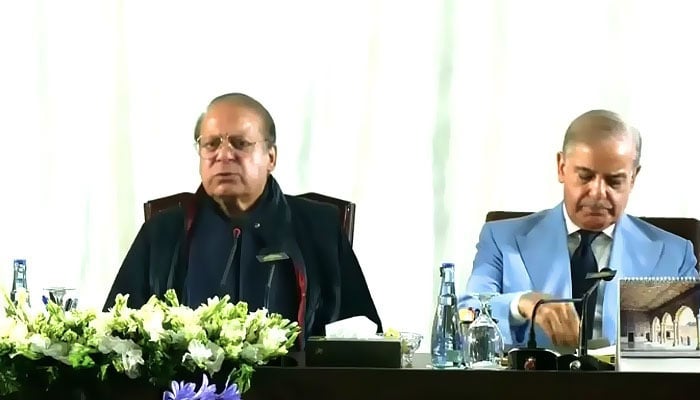
    Pakistan Muslim League-Nawaz (PML-N) President Nawaz Sharif has urged political parties to keep their differences within the bounds of democratic competition, saying political rivalry should never turn into personal hostility. Addressing a meeting of the PML-N Azad Jammu and Kashmir (AJK) parliamentary party in Murree, Nawaz congratulated the candidates who won seats in the AJK elections and called for greater financial support for the region. He said the federal government should provide AJK with maximum possible development funds so that the territory can improve its infrastructure and public services. He also directed the party leadership to examine the reasons behind the defeat of several strong PML-N candidates and learn from the election results. Nawaz said the party had secured victories in two phases of the electoral process, describing the results as another expression of public confidence in the PML-N. However, he cautioned that the party must deliver on its promises to retain that trust. “If the PML-N fails to deliver, the people here will become disappointed,” he said. The former prime minister stressed the need to improve roads, hospitals and other basic facilities across AJK. He said children in the region should also have access to modern educational opportunities and technology, including laptops. Nawaz credited Prime Minister Shehbaz Sharif’s efforts for the country’s ongoing development, saying Pakistan was moving forward. He called for AJK to experience similar progress and said the region should develop along the lines of Punjab. He stressed that the PML-N could not afford to disappoint voters who had placed their confidence in the party. Nawaz also expressed concern over complaints that emerged during the political process involving the Pakistan Peoples Party (PPP). He said he had not expected the PPP to provide an opportunity for complaints, particularly given that the party had previously led the AJK government. “Some complaints reached us, and I was saddened by them,” Nawaz said, while emphasising the need for political parties to maintain respectful relations despite their differences. He said previous AJK governments had failed to fully meet public expectations and stressed that improving the welfare and living standards of the region’s people should remain the top priority. Nawaz maintained that the PML-N would continue to focus on development and public service while working to strengthen its political position in AJK.