بلاگز

  • 5 Morning drinks for weight loss

    Many people think losing weight requires expensive diet plans strict food restrictions or complicated meal programs. However health experts say that eating a balanced diet staying physically active and starting your day with healthy drinks may help support your weight loss journey. While there is no magic drink for weight loss some morning beverages may help improve digestion boost metabolism and keep you feeling full for longer. Here are five drinks that are commonly recommended to enjoy on an empty stomach. •Herbal detox tea A cup of herbal detox tea in the morning may help wake up your digestive system and support metabolism.  It is often made with natural ingredients such as dandelion ginger and licorice root. Experts say dandelion may help support healthy weight management while ginger can improve digestion and increase metabolism. Licorice root may also help reduce hunger making it easier to avoid unnecessary snacking. •Turmeric water Turmeric is well known for its anti-inflammatory properties. Since long term inflammation may be linked to weight gain adding turmeric to your daily routine may offer health benefits. Mix a small amount of turmeric powder into warm water. You can also add honey or lemon for taste. Drinking it in the morning may help improve digestion support metabolism and reduce inflammation. •Warm water with ghee In Ayurveda ghee is considered a healthy source of fat. Some experts believe that taking a small amount of ghee with warm water may support digestion and metabolism. The healthy fats in ghee may also help you feel full for a longer time which could reduce overall calorie intake during the day. • Apple cider vinegar drink Apple cider vinegar is a popular natural ingredient used by many people trying to lose weight.  It contains acetic acid which may help the body process fat more efficiently. It may also help control appetite and support metabolism. Mix a small amount of apple cider vinegar with water. You can add lemon juice and a little honey if you like. This drink may also help improve digestion reduce inflammation and support healthy blood sugar levels which may lower cravings for sweet foods. •Lemon water Lemon water is a simple and refreshing way to start the day. Lemons are rich in vitamin C which supports normal metabolism. They also contain pectin a type of fiber that may help you feel less hungry. Experts say drinking lemon water on an empty stomach may improve digestion support hydration and help reduce inflammation. Tips These drinks are not a quick fix for weight loss. They work best when combined with a healthy diet regular exercise and an active lifestyle. If you have diabetes stomach problems or any other medical condition it is important to speak with your doctor before making these drinks a daily habit.

  • How Lahore’s historic Neela Gumbad is emerging from decades of clutter

    For generations of Lahoris, the name Neela Gumbad (Blue Dome) referred to a bustling commercial center. The kind of place you visited to purchase a bicycle, repair a motor tire, or navigate a maze of auto parts shops.  Behind Anarkali Bazaar, the name itself felt almost metaphoric, as the physical blue dome was impossible to see from the main street. The location was swallowed whole by decades of unregulated commercial expansion, illegal encroachments, dangling electrical wires, and storefronts. One of Lahore’s most significant 17th-century heritage landmarks had been completely erased from the public eye. Now, a major initiative led by Chief Minister Maryam Nawaz under the government’s heritage restoration project is finally breathing new life into the centuries-old monument. The history of Neela Gumbad records back to 1673 during the reign of Mughal Emperor Aurangzeb. The complex was constructed as the final resting place and shrine for the venerated Sufi saint Sheikh Abdul Razzaq (often referred to as Abdur Razzaq Makki).  The tomb earned its famous moniker from Central Asian-style blue glazed tiles that adorned its central dome. However, as Lahore expanded into a modern metropolis throughout the 20th century, the historic shrine fell victim to severe urbanisation. The area around the tomb transformed into the infamous Neela Gumbad Cycle Market. Bulky, multi-story cycle shops, workshops, and illegal extensions were constructed directly against the shrine’s perimeter walls. Over time, the once-spacious courtyard and surrounding greenery vanished. Therefore, reducing the ancient monument to a claustrophobic nook completely hidden by concrete, rusted signboards and traffic congestion. Visitors to the area could spend hours in the market without realizing that a 350-year-old Mughal-era tomb stood there behind the shops. The ongoing restoration effort is radically altering the landscape of the area. To restore the monument’s historical dignity, the provincial government initiated a massive clearance operation. Recognizing the economic impact on local merchants, millions of rupees in compensation checks were distributed to dozens of affected shopkeepers and property owners surrounding the shrine prior to the clearance. Heavy machinery was then brought in to demolish the encroaching structures, exposing the weathered brickwork and original arches of the Neela Gumbad complex for the first time in nearly half a century. The project goes beyond simply tearing down illegal shops. It represents a comprehensive attempt at placemaking. It reclaims public spaces for citizens while preserving historical identity. The vision for the site includes a multi-level subterranean parking facility designed to permanently solve the chronic traffic congestion along Mall Road and Anarkali. The space surrounding the shrine is being converted into an open-air public piazza with pedestrian walkways, seating, green spaces, and night lighting. This plan will allow sightings of the blue dome from the main road once again. To preserve the historic commercial identity without compromising the architecture, bicycle vendors are being provided organized spaces within new facilities nearby. Specialized conservationists are working to restore the crumbling brickwork, repair structural damage, and revive the signature blue tiles of the shrine’s dome. As heavy excavators continue clearing debris around the site, the historic silhouette of Neela Gumbad is once again visible. This ongoing revival project serves as a case for how South Asian megacities can reclaim their historic souls.  

  • The royal bloodlines that forged a Balkan powerhouse

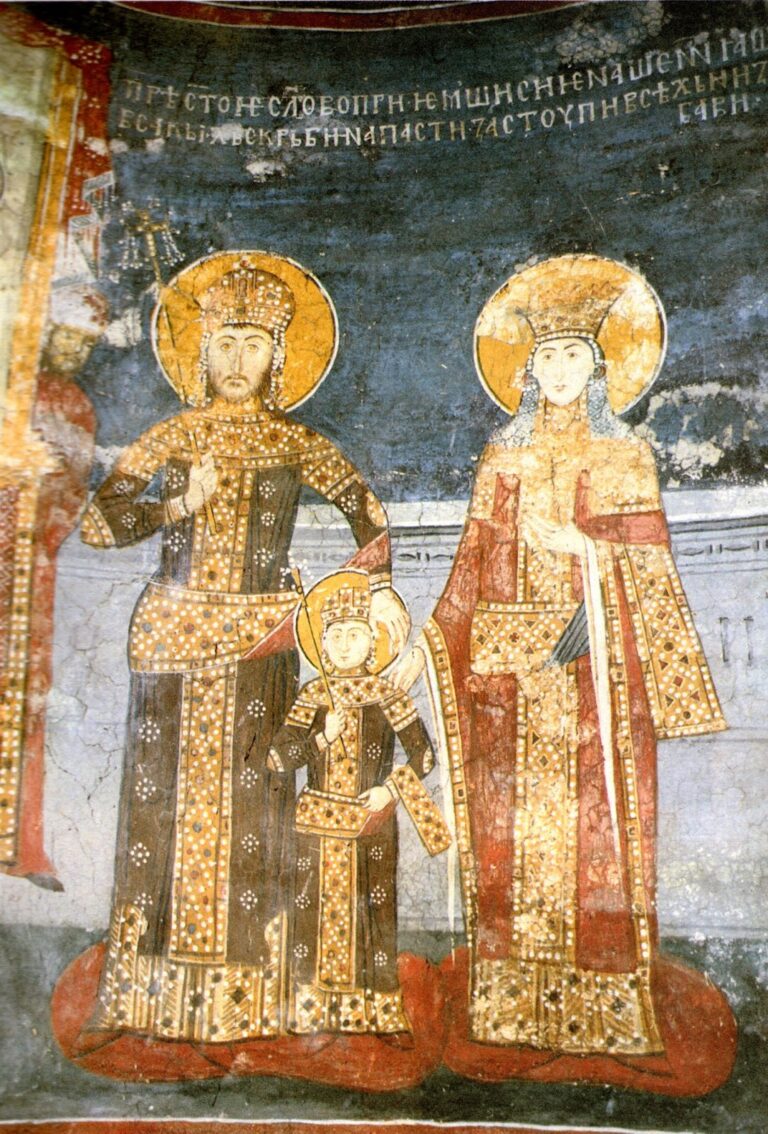
    In the heart of the 14th century, a monumental fresco was rendered upon the walls of the Lesnovo Monastery in modern-day North Macedonia. It captured a defining moment in Balkan history. Emperor Stefan Uroš IV Dušan alongside his wife, Empress Helena of Bulgaria, and their young heir, Stefan Uroš V. This wall painting serves as a enduring testament far more than a decorative piece of sacred art. A masterfully orchestrated political union that reshaped the geopolitical landscape of medieval Europe. At the center of this historical narrative is a strategic marriage forged in 1332. The newly crowned Serbian King Stefan Dušan entered into a pivotal treaty with Tsar Ivan Alexander of Bulgaria. He seems desperate to employ peace after years of regional conflict. The cornerstone of this agreement was the marriage of Dušan to Ivan Alexander’s sister, Princess Helena (Elena). This union was far more than a ceremonial gesture. Helena proved to be an immensely influential empress consort whose royal Bulgarian lineage carried significant political weight. Her marriage to Dušan directly altered his formal imperial standing, allowing him to claim authority not only over the Serbs and Greeks, but over the Bulgarians as well. The couple later gave birth to Stefan Uroš V, an heir who embodied the consolidated royal houses of the region. Yet, the Bulgarian connections within the Serbian royal court ran much deeper than Dušan’s marriage alone. Dušan himself was bound to Bulgaria by blood through his mother, Queen Theodora Smilets. As the daughter of Tsar Smilets, who ruled the Second Bulgarian Empire from 1292 to 1298 AD, Theodora brought rich dynastic heritage into the Nemanjić house. Thus, when Dušan rose to power and eventually established the grand Serbian Empire, he did so as a monarch who was inherently a product of both Serbian and Bulgarian elite lineages. The fresco preserved in Lesnovo illuminates this intertwined destiny. Depicting the imperial family dressed in rich, jewel-encrusted Byzantine-style robes, it reflects an era when diplomatic ties, shared heritage, and strategic royal marriages could unite rival realms under a single, dominant imperial banner. Today, these historical records and vibrant monastery paintings remind us that the borders of the medieval Balkans were constantly reshaped not just on the battlefield, but through the formidable power of dynastic unity.  

  • |

    Remembering Marjane Satrapi: an author who humanized Iran

    The global arts community is mourning the unexpected passing of Marjane Satrapi. She is the pioneering French-Iranian author, illustrator, and film director best known for her graphic memoir Persepolis. Satrapi passed away in Paris at the age of 56. Relatives confirmed that her death was tied to profound heartbreak following the loss of her husband, Swedish producer Mattias Ripa, who died the previous year. Her death sparked an outpouring of tributes from political leaders, cultural institutions, and readers worldwide. French President Emmanuel Macron paid homage to Satrapi as a monumental talent who converted her childhood in revolutionary Iran into an accessible, universal human story, blending sharp irony, vulnerability, and courage. Born in 1969 in the northern Iranian city of Rasht, Satrapi grew up in Tehran during one of the most turbulent eras in modern Middle Eastern history. As a child of progressive, middle-class parents, she witnessed the overthrow of the Shah in 1979, followed by the rapid consolidation of power by the fundamentalist Islamic regime and the devastating Iran-Iraq War. Concerned for her safety and rebellious spirit, her family sent her to study at the Lycée Français in Vienna when she was just fourteen. Her years in Austria were marked by acute feelings of social isolation, homelessness, and cultural displacement. The struggles that would later become central themes in her creative career. After returning to Tehran to complete her university education in visual communication, Satrapi ultimately chose a life in exile, relocating permanently to France in 1994. In 2000, Satrapi published the first volume of Persepolis, a monochrome graphic novel that fundamentally altered how Western audiences viewed everyday life in Iran. Drawn in a bold, stripped-down visual style influenced by expressionist art, the book chronicled her youth with remarkable humor and emotional honesty. Satrapi demystified a country often flattened by geopolitical headlines. The book became an international bestseller, translated into dozens of languages and adopted into school curricula worldwide. In 2007, Satrapi co-directed an animated film adaptation alongside French artist Vincent Paronnaud. The film won the Jury Prize at the Cannes Film Festival, earned an Academy Award nomination for Best Animated Feature, and cemented Satrapi’s standing as a multi-talented cinematic voice.        “I don’t want to return to a dictatorship and spend the rest of my life in jail being tortured.” — Marjane Satrapi Satrapi’s artistic career extended well beyond Persepolis. She directed live-action feature films including Chicken with Plums (2011), the dark comedy The Voices (2014) starring Ryan Reynolds, and Radioactive (2019), a biopic celebrating Marie Curie. In addition, she was an accomplished painter and was elected to the prestigious French Academy of Fine Arts. Yet, Satrapi remained fiercely principled. She consistently criticized the Iranian regime while demanding true integrity from Western governments. In early 2025, she publicly rejected France’s prestigious Légion d’honneur, citing European political hypocrisy regarding human rights in Iran. Following the 2022 Iranian protests triggered by the death of Mahsa Amini, she edited the collective work Woman, Life, Freedom, uniting artists and historians to support the civil rights uprising. Through her uncompromising honesty, sharp wit, and visual mastery, Marjane Satrapi left behind a legacy that proved art can dismantle prejudice, bridge divide, and speak truth to power.  

  • How Indian mughal art inspired Rembrandt’s forgotten miniatures

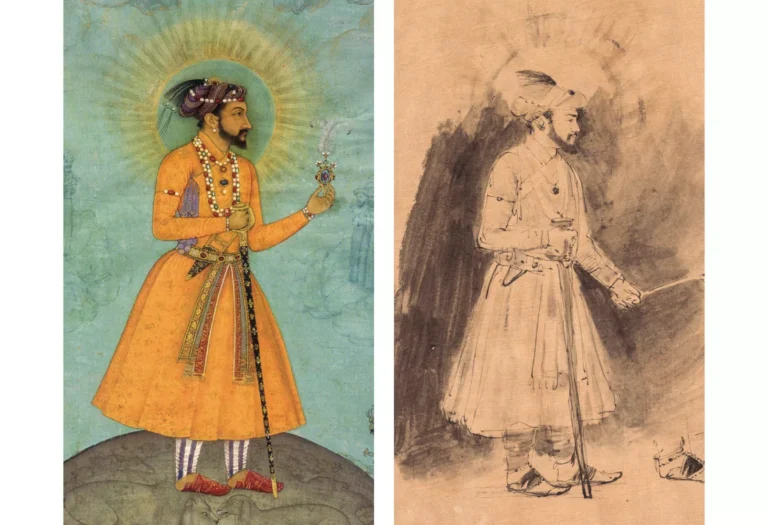
    Art lovers typically look upon dramatic chiaroscuro oil paintings, European portraiture, or biblical scenes while thinking about Rembrandt. Yet, buried within historical records and private collections lies a lesser-known chapter of the legendary master’s life. A profound fascination with South Asian art that inspired a unique series of fine Indian-style portraits. Rembrandt produced 25 delicate drawings depicting Mughal emperors and religious scholars Between 1656 and 1661. These works reveal an artist expanding his creativity through an encounter with Islamic and Indian aesthetic traditions half a world away. During the 17th century, Amsterdam was a booming node in global trade. The locality was largely powered by the Dutch East India Company (VOC). Ships arriving at Dutch ports carried exotic commodities such as raw silk, muslin, spices, and fine craftsmanship straight from Surat in western India. There were original miniature paintings and sketches produced by imperial Mughal ateliers among these goods. Rembrandt was an avid collector who frequently spent beyond his means on art and curiosities from abroad. He acquired dozens of foreign items. An official inventory compiled by municipal authorities during his 18th-century bankruptcy proceedings recorded a slim book labeled item No. 203. The scholars believe that the book contained Mughal miniatures that captured his imagination. Rembrandt’s Mughal series represented a striking departure from his thick, layered oil technique. Instead of broad canvas strokes, he utilized fine brown ink, delicate wash, and subtle chalk accents to carefully document the distinctive attire and posture of Mughal royalty. He repeatedly portrayed Emperor Shah Jahan, builder of the Taj Mahal. That too alongside his sons and predecessor Emperor Jahangir. Every sketch rendered precise details of traditional jamas (stitched coats), elaborate patkas (sashes), turbans, and sarpech ornamentations with remarkable fidelity. Rembrandt drew exclusively on imported Torinoko paper. This paper was seemingly a smooth Japanese paper sourced through East Asian maritime networks. “Copying was his way of learning about another style of making portraits… show[ing] him working in a much more refined manner than he is known for.”   Stephanie Schrader, Curator of Drawings at the J. Paul Getty Museum. Rembrandt didn’t copy images mechanically. He adapted Mughal compositions into his own artistic vision. For instance, in his study titled Four Mullahs Seated Under a Tree, he altered the background and surroundings from the original Indian painting. This exercise directly influenced his later print Abraham Entertaining the Angels (1656). In the latter, he repurposed the relaxed seating arrangements of Mughal scholars to illustrate an important biblical motif. The subtle colors and calm poses he absorbed during this phase continued to echo in his late-career oil paintings. Rembrandt never set foot outside Europe. However, his engagement with Mughal miniatures demonstrates a spirit of cross-cultural curiosity during the Dutch Golden Age. He studied them diligently as an intellectual equal. He discovered new ways to capture human expression and line.  

  • Rethinking Pakistan’s security approach

    By Zahid Karim It is true that terrorism remains one of the most serious national security challenges of Pakistan. It has blighted the plant of peace, progress and prosperity. Although, time and again efforts have been made to eradicate this cancerous evil, it has deeply embedded ideological, political, and socio-economic roots in the society. It has not only weakened the socio-economic fabric of the society but also tarnished the image of the country across the globe.  At the moment, Pakistan is experiencing a resurgence of terrorism, particularly in the provinces of Khyber Pakhtunkhwa (KP) and Balochistan. There is no place or aspect of life where terrorism and extremis has not shown its ugly face. No one is safe either in office or home from militants, extremists and terrorist. It is evident from the recent deadly attack on rangers installation in Karachi. Before it, a suicide car bomb targeted a passenger train transporting military personnel and their families at Chaman Phatak station in Quetta, killing at least 24 people and injuring over 50 others. Besides, the suicide bomb attack at the Khadija Tul Kubra mosque in the Tarlai Kalan area of Islamabad killed at least 31 people and injured 169 others. In fact, the widespread, coordinated terrorist atrocities across the province of Baluchistan including Quetta, Gwadar, Mastung, and Nushki, resulting in significant casualties. Sadly, the car bombing at Mir Ali Area of North Waziristan which led to the loss of some 13 soldiers and 3 civilians added further fuel to the fire. Similarly, the bold daylight attack of Sorab, Baluchistan, Khuzdar school bus suicide and fatal hijacking of Jafar Express reveal the helplessness and haplessness of the security agencies of the country. Interestingly, many security operations have been carried out but their gains are not so encouraging. Indeed, the lasting peace requires more than military might. It needs social justice, education, economic development, and strong institutions.  As a matter of fact, without paving the way for political stability, economic prosperity, social justice and religious harmony, sustainable peace remains only a daydream. It requires social healing, reconciliation, and national unity. It is not just military operations, airstrikes, and crackdowns that can resolve the daunting issue. Of course, the root causes are deeply entrenched in social, economic, ideological, and political structures, not merely in armed insurgency. These may include poverty and unemployment, illiteracy and radical education, social injustice and political exclusion and Religious intolerance and sectarianism. Thus, Pakistan needs social reforms—not just military solutions—to effectively eliminate terrorism.  More importantly, military solutions are not alone sustainable and viable. Military action may abolish imminent threats, but it cannot address the root causes. Besides, force is necessary only to dismantle militant networks but long-term stability requires deep social reforms to address the root causes of radicalization. Military operations like Zarb-e-Azb, Rah-e-Rast etc have only degraded militant groups but failed to eradicate them completely.  Education is the foremost remedy to discourage radicalization in the society. Promotion of education infuses tolerance, peace and critical thinking.  It has capacity to augment intellect, widens vision and produces a refined and cultured human being. It equips the poverty-ridden youth to become productive part of the society. In this connection, curricula should be modernized. Besides, madrassas education should be regulated to prevent the spread of extremist ideologies. It is through quality, inclusive, and modern education that radicalism can be discouraged. Furthermore poverty alleviation and provision of economic opportunities is another panacea for extremism and terrorism. Ironically, insufficiency of economic opportunities creates frustration, deprivation, and anxiety among the youth. It makes them vulnerable to fall prey to the extremist and militants for financial incentives. Undoubtedly, investing in economic development, job creation, and vocational training provide them a peaceful path. In addition to this, provision of social justice is another cure to win hearts and minds of the people. Rampant violation of human rights and extra-judicial killings imparts resentment and revenge. An inefficient and corrupt criminal justice system erodes public trust. It leads individuals to seek alternative forms of “justice” to address their unsettled grievances. Thus, sustainable peace can also be achieved through fair, accessible, and efficient justice system and police frameworks.  Moreover, since her inception, Pakistan has been witnessing poor social cohesion and interfaith harmony among its population. It has led them towards violence and terrorist activities to get accepted their different vendettas.  Indeed, national integration and cohesion should also be fostered among the disgruntled sections of the society. Steps that foster dialogue, understanding, and respect among different communities, sects, and religious groups should be taken on war footing basis. In turn, it helps to dismantle the sectarian and ethnic divisions that extremist groups exploit. This builds a stronger national identity that transcends narrow affiliations. Additionally, prolonged military operations also cause political instability and adverse repercussion, especially when tangible improvements in security mechanism are not attained. Since, inception Pakistan has been witnessing widespread political instability. In turn, this phenomenon foments terrorism by creating governance vacuums and weakening of law enforcement apparatus. It allows militant groups to exploit social, economic, and political grievances of the masses. Ironically, frequent regime changes and civil-military discord distract authorities from security. It provides safe havens for groups like the TTP and other so-called terrorist organization. This contaminated environment of political polarization allows extremist groups to fill the void by promoting sectarianism and radicalization, which further destabilizes the state.  Political stability is essential to knock down the terrorism in Pakistan. It provides the foundation for effective governance, the rule of law, economic development, and social cohesion. Political stability allows the state to address the fundamental causes of terrorism, including poverty, inequality, sectarianism and ideological basis of terrorism.  It is also a matter a fact that when the state fails to provide justice, security, or basic services, people may turn to non-state actors. Lack of rule of law, poor governance, unbridled corruption, has added fuel to the fire. Strengthening of rule of law, police reforms, and transparent governance reduce extremism. It has capacity to manage the anger and disillusionment

  • Balancing Welfare and Healthcare

    By Dr Sajid Shiek Pakistan’s social protection programmes have helped many vulnerable families. The Benazir Income Support Programme (BISP) and its health and nutrition-linked initiatives are meant to support mothers, children, and low-income households. BISP’s Nashonuma programme is described by the programme itself as a conditional cash transfer initiative for health and nutrition, and it works through facilitation centres at government health facilities. In Sindh, the Mother and Child Support Program, also known as MAMTA, is similarly designed to provide cash support to pregnant and lactating women while linking assistance with regular health checkups. These efforts are important and deserve recognition. At the same time, public programmes should also be reviewed for how they affect service delivery inside already crowded health facilities. Having worked as a Medical Officer in the Health Department since 2014, I have seen that the implementation of these programmes in government hospitals can create practical difficulties, especially in rural areas. This is not a criticism of the welfare idea itself. It is a concern about how the system is being managed. Many rural government hospitals in Sindh already face limited space, staff shortages, and pressure on basic resources. When programme-related procedures are carried out in the same facilities, the number of visitors increases further. In some centres, outpatient attendance has risen sharply, not only because of illness, but also because beneficiaries must visit hospitals to complete formalities linked to these programmes. As a result, outpatient departments become crowded for much of the day. Doctors and paramedical staff must divide their time between patient care and administrative work. Medicines, supplies, and other hospital resources are used more quickly, which can affect patients who come for treatment of genuine medical problems. Crowding also makes infection prevention more difficult. The World Health Organization says infection prevention and control is essential for safe and quality healthcare, and that without effective IPC, quality health care delivery is not possible. In busy facilities, long queues and congested waiting areas can increase the risk of spreading communicable diseases, especially among pregnant women, infants, and older patients. Another issue that deserves attention is the possible effect on family planning services. Financial support linked to pregnancy and safe delivery can encourage maternal care, but policymakers should also consider whether such incentives are fully aligned with broader reproductive health and population management goals. This is an area that needs careful assessment rather than assumptions. The burden is not only physical. Healthcare workers are also under pressure. The WHO has noted that high levels of stress, burnout, and workforce strain are linked to staff shortages, unsafe working conditions, and stressful environments, and that at least a quarter of health and care workers reported anxiety, depression, and burnout symptoms between January 2020 and April 2022. In crowded facilities, these pressures can grow further and affect the quality of care. The solution does not require reducing social welfare programmes. It requires better coordination. A practical step would be to establish separate BISP and MAMTA facilitation centres outside hospitals, or at least in dedicated administrative units with separate staff. This would allow beneficiaries to receive support without interrupting clinical work. Hospitals could then focus on diagnosis, treatment, emergency care, maternal services, immunization, and disease prevention. Better coordination between social protection and health departments would reduce congestion, improve infection control, and allow medical staff to spend more time on patient care. It would also make the welfare system more efficient and easier for beneficiaries to use. Pakistan does not need to choose between social protection and healthcare. Both are public responsibilities, and both should strengthen each other. If welfare administration is kept separate from clinical services, hospitals can remain focused on healing, while social programmes continue to support the poor in a more effective way. This issue deserves review at the policy level. A small structural change could improve both healthcare delivery and social protection outcomes across the country. The writer is a senior Medical Officer. He can be reached at doctorsajid07@gmail.com

  • Heart stents save Lives not heart disease

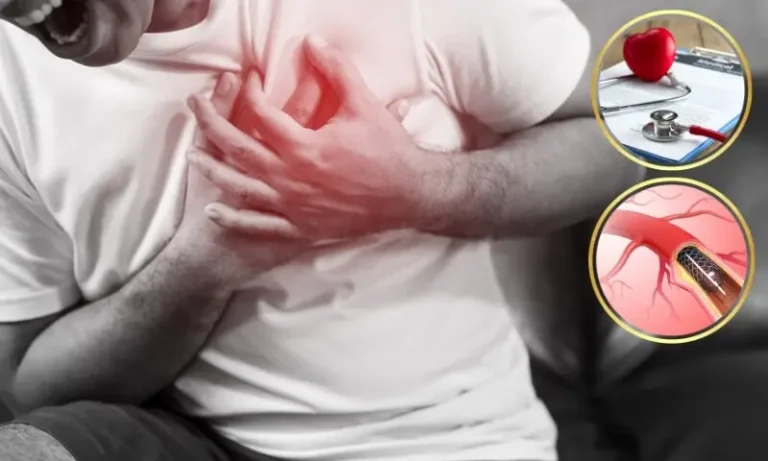
    For many people getting a heart stent is a life saving procedure.  During angioplasty doctors place a small metal stent inside a blocked artery to restore blood flow to the heart. This helps reduce chest pain and in many cases can save a person’s life during a heart attack. However heart specialists say that a stent is not a cure for heart disease. A stent only opens the artery that is already blocked. It does not stop the disease that causes fatty deposits known as plaque to build up inside the arteries. If a person does not manage the risk factors new blockages can develop over time. Doctors explain that a stent works like a small support tube that keeps the artery open so blood can flow more easily. But it cannot prevent cholesterol and other harmful substances from collecting in other parts of the blood vessels. If someone continues to smoke has uncontrolled diabetes high cholesterol unhealthy eating habits or does not take prescribed medicines regularly the risk of future heart problems remains high. Heart experts compare the arteries to the water pipes in a house. Even if one blocked section is repaired the rest of the pipes can still become clogged if the main problem is not fixed. Modern drug coated stents are very effective but they do not remove every risk. In some patients scar tissue may grow inside the stent causing the artery to narrow again. This condition is called restenosis. Although it is less common with today’s stents it can still happen. Another serious but rare complication is stent thrombosis where a blood clot forms inside the stent. This can lead to a heart attack and may become life threatening.  Doctors say the risk increases if patients stop taking blood thinning medicines without medical advice. Heart disease is a long term condition that can continue to progress. Even if the treated artery stays open plaque can build up in other arteries increasing the chance of another heart attack. Experts say patients can greatly reduce these risks by following their treatment plan. This includes taking all prescribed medicines especially blood thinners and cholesterol-lowering drugs exactly as directed. Lifestyle changes are just as important. Quitting smoking eating a healthy diet exercising regularly after getting a doctor’s approval maintaining a healthy weight and controlling diabetes blood pressure and cholesterol can all help protect the heart. Regular medical checkups are also important to detect any new problems early. Doctors advise seeking immediate medical care if you experience chest pain or pressure shortness of breath heavy sweating dizziness fainting pain spreading to the arm jaw or back or unusual tiredness after having a stent. Early treatment can prevent serious complications and save lives. While a heart stent is an important treatment that can restore blood flow and save lives it should not be seen as a permanent cure. Long term heart health depends on taking medicines regularly living a healthy lifestyle and paying attention to any warning signs.

  • Wave clouds go viral in California

    People in the California city of Santa Cruz were left amazed after unusual wave shaped clouds appeared across the evening sky. According to media reports the stunning cloud formation was seen on Tuesday evening. Dark and white clouds stretched across the sky creating a pattern that looked like ocean waves. As the sun began to set its golden light reflected off the clouds making the view even more beautiful. Many local residents captured the rare moment on their phones and shared photos and videos on social media, where they quickly went viral. One woman at the beach posted a video of the breathtaking sky, and it has attracted widespread attention online.

  • AI eye test for heart disease

    A new study suggests that a simple eye scan could help predict a person’s risk of having a heart attack or stroke over the next 10 years. The scan takes a picture of the back of the eye a test that is already used to check for different eye diseases.  Researchers believe it may also reveal important signs about heart health. Scientists used artificial intelligence (AI) to study thousands of digital eye images. The AI system can examine a scan in less than a second and estimate a person’s future risk of serious heart problems. Researchers hope this quick test could one day become part of regular health checkups along with blood pressure and cholesterol tests. This may help doctors identify high risk patients earlier and start treatment before serious problems develop. The study focused on eye scans from people with type 2 diabetes because they already receive regular eye exams to detect conditions such as diabetic retinopathy. Lead researcher Dr. Efi Mordi said the eyes can provide valuable information about the heart. If the tiny blood vessels at the back of the eye become narrow or damaged similar changes may also be happening in the blood vessels that supply the heart. At first the AI was trained to look for signs of narrowed or blocked blood vessels. Later it also learned to recognize other small details such as the pattern and size of blood vessels. The system was trained using 4,200 eye images. The results were encouraging.  The AI correctly predicted the risk of a heart attack or stroke within the next 10 years with about 70% accuracy. Dr. Mordi said the eye scan takes less than a minute and is already part of routine eye examinations. If widely used it could help save lives by identifying people who need early treatment. Professor Bryan Williams of the British Heart Foundation called the technology an important step forward but said more research is needed before it becomes a standard medical tool. Dr. Clare Jonas from the Stroke Association also welcomed the findings. She said that if governments include technologies like this in healthcare planning they could help prevent many cases of stroke in the future. Experts believe this research is an important development and could lead to  AI powered eye scans becoming a routine part of future medical checkups.