بلاگز

  • Keep insulin safe in monsoon

    Monsoon rain may bring relief from the heat but it can create new problems for people with diabetes especially those who use insulin. Health experts say high humidity and changing temperatures can affect insulin if it is not stored properly. According to diabetes specialist Dr. Sameer Bhardwaj many people believe that keeping insulin away from direct sunlight is enough. However during the monsoon season high humidity can also damage insulin and reduce how well it works. If insulin loses its strength a person may continue taking the usual dose but their blood sugar levels can still rise without any clear reason. This can increase the risk of diabetes related health problems. Experts explain that insulin is a sensitive protein hormone that must be stored at the correct temperature. Too much moisture or frequent temperature changes can affect its quality even if the insulin looks normal. Doctors say there are three common mistakes people make during the monsoon. The first is relying only on cooling bags or cooling wallets. These products work well in dry weather but in humid conditions they may not stay cool enough which can reduce insulin’s effectiveness. The second mistake is storing insulin in the refrigerator door. Because the door is opened and closed often the temperature keeps changing. Experts recommend keeping insulin on the middle shelf of the refrigerator where the temperature is more stable. The third mistake is judging insulin only by its appearance. Insulin may still look clear and normal even after it has lost some of its effectiveness. If blood sugar levels keep rising despite following your diet medicine and insulin schedule the insulin itself may be the problem. Instead of increasing the insulin dose on your own doctors advise using a new insulin pen or vial that has been stored correctly and speaking with your healthcare provider if blood sugar remains high. To protect insulin during the monsoon experts recommend keeping insulin pens or vials in a clean airtight plastic or glass container to reduce exposure to moisture. It should also be stored at the recommended temperature and checked before each use. Health experts say that storing insulin properly during the rainy season is just as important as taking it on time. A small storage mistake can reduce its effectiveness and make blood sugar harder to control.


  • |

    Iqbal’s philosophy shapes modern freedom movements

    Ghulami Mein Na Kaam Ati Hain Shamsheerain Na Tadbeerain Jo Ho Zauq-E-Yaqeen Paida To Kat Jati Hain Zanjeerain (In slavery, neither swords nor plans are effective but when the taste for conviction is forged, the chains are shattered.) In these timeless couplets, Allama Muhammad Iqbal captivated a fundamental truth about human liberation. It’s that the physical force (shamsheerain) and strategic maneuvering (tadbeerain) are utterly powerless if a nation or an individual is trapped in a mindset of subjugation. True emancipation does not start on the battlefield or at a diplomatic negotiation table. It begins within the human psyche through Zauq-e-Yaqeen. An unshakeable conviction, profound self-belief, and faith in a higher purpose accordingly.  When one examines the contemporary global events, Iqbal’s words understand modern struggles for sovereignty, social justice, and systemic reform. In the modern world, servitude rarely presents itself through colonial rule or physical iron chains. Instead, modern subjugation often manifests as economic dependency, cultural imperialism, digital surveillance, and ideological defeatism. Entire populations often find themselves caught in systems that dictate their economic choices. They systems that diminish their local heritage, and undermine their self-reliance. Iqbal’s verse applies to this contemporary reality. The verse reveals why so many political reform efforts or heavily funded technological solutions fail to bring real change. When a society suffers from an internal sense of inferiority, no amount of advancement or external assistance can bring genuine autonomy. Strategy and weapons are just instruments. They remain inert without the driving force of genuine conviction. Psychological emancipation must precede material victory. Until a community believes it is worthy and capable of self-determination, external freedom remains an illusion. What does it mean to cultivate Zauq-e-Yaqeen (the taste of deep certainty) in today’s complex world? It represents a transition from passive endurance to active self-realization (Khudi). Historically and in present times, the most profound societal revolutions did not succeed purely because they had superior resources. They succeeded because a critical mass of people developed an unshakeable belief in the justice of their cause. Modern historical struggles show that authoritarian regimes with military apparatuses often crumble when faced with non-violent movements engined by absolute moral certainty. In an era of informational dominance, Zauq-e-Yaqeen requires reclaiming intellectual sovereignty. It demands rejecting narrative manipulation and trusting one’s collective identity and ethical values. Developing nations breaking free from debt cycles and foreign leverage do so by encouraging local innovation, education, and confidence in their human capital. Iqbal’s poetry is not a eulogy for the past. It is an urgent command for the present. The chains of the modern era: political suppression, economic exploitation, or personal despair, cannot be let go of by adopting foreign systems or waiting for political saviors. Real liberation requires an internal awakening. When a society cultivates faith in its intrinsic worth, its moral foundation, and its capacity to shape its destiny, the structural barriers that once seemed insurmountable inevitably begin to shatter. Strategic plans and practical tools then become effective because they are finally guided by an invincible spirit.  

  • Video games may improve memory

    Video games are often seen as just a form of entertainment but a new scientific review suggests they may also benefit the brain. A research review covering 20 years found that people who play video games may perform better in some mental skills especially memory. Researchers examined the results of many previous studies to understand how video games affect the brain. Their goal was to find out whether gaming can improve thinking and learning abilities. The review found a small but statistically significant link between playing video games and better cognitive performance. The strongest improvement was seen in memory. People who played video games generally scored higher in memory-related tests than those who did not. Experts say this may be because many games require players to remember information follow different events make quick decisions and plan strategies. Repeating these tasks can act as a form of mental exercise that helps strengthen memory. Some games also require players to focus on several things at once keeping the brain active. The research also looked at other mental abilities including spatial skills visual attention cognitive control and intelligence. Gamers showed slightly better performance in these areas as well but the biggest and most consistent benefit was found in memory. Researchers noted that not all video games have the same effects. The studies included different types of games such as action games and brain training games as well as participants of different ages.  These differences may explain why the results were not exactly the same across all studies. The researchers also cautioned that it is still too early to say that video games can greatly improve all mental abilities in daily life. More long term studies are needed to understand how long these benefits last and how useful they are in everyday activities. Health experts say playing video games in moderation may support brain health but it should be combined with a balanced diet regular exercise enough sleep and healthy screen time habits. When enjoyed as part of a balanced lifestyle video games can offer both entertainment and potential mental benefits.

  • Some medicines go bad after opening

    Many people check the expiry date on a medicine bottle or box and assume it is safe to use until that date. However health experts say this is not always true.  Some medicines start losing their effectiveness or become unsafe after they are opened even if the printed expiry date is still months away. It is common for people to use a cough syrup or eye drops once put them back in the cupboard and use them again weeks or months later after checking only the expiry date. Doctors say this can be risky because some medicines do not stay safe for long once opened. When a medicine bottle tube or dropper is opened air moisture and germs can get inside. Over time repeated opening can reduce the medicine’s protection against bacteria increasing the risk of contamination. If a syrup changes color or smell a cream separates or tablets become soft or crumbly they should not be used. Many people believe that every medicine should be thrown away one month after opening but experts say this is not true. According to Dr. Sanjay K. Jain, Head of Pediatrics and Neonatology in New Delhi each medicine has different storage and usage rules. He explains that common syrups such as cough syrup paracetamol syrup and vitamin syrup can usually be used until their expiry date if they are stored properly and show no changes in color smell or appearance. Tablets and capsules also remain safe until their expiry date in many cases especially if they stay in their original blister packs and are stored according to the instructions. However some medicines have a much shorter life after opening.  Antibiotic syrups that come as powder and need water before use should usually be thrown away after 7 to 14 days even if some medicine is left. If the syrup changes color or particles appear inside the bottle it should be discarded immediately. Eye drops also need extra care. Most should be used within 28 days after opening because the tip of the bottle can collect germs each time it is used. Insulin and some injectable medicines also have special storage rules and may only remain safe for a limited time after opening. Doctors advise reading the label or package instructions carefully before using any medicine. This is especially important for eye drops insulin liquid antibiotics and medicines that need refrigeration. It is also a good idea to check medicines stored at home from time to time. If you are unsure whether a medicine is still safe ask a doctor or pharmacist instead of taking the risk. Health experts say that for some medicines the most important date is not the expiry date but the day the bottle or package was first opened. Writing the opening date on the bottle can help you know when it is time to throw it away. If you ever have doubts about a medicine’s safety it is better to discard it than risk your health.

  • Poor sitting habits may harm your spine

    If you often suffer from back pain or muscle stiffness your sitting posture may be the hidden cause. The good news is that a few simple lifestyle changes can help improve your posture and reduce discomfort. •Why does poor posture happen? In today’s world many people spend hours using laptops computers and smartphones.  Sitting for long periods without moving can make muscles tight weak and unbalanced. Doctors say that constantly looking down at a phone or computer screen puts extra pressure on the neck and upper back. Over time this can lead to poor posture muscle weakness and pain. Poor posture can also develop because of injuries certain medical conditions genetics or jobs that require standing for long hours. •How poor posture affects your health Bad posture does more than cause temporary discomfort. It can lead to. •Neck shoulder and back pain •Muscle stiffness and tension •Reduced flexibility and movement •Weak muscles •Lower back pain •Extra pressure on the spine If ignored for a long time poor posture may increase the risk of spinal problems such as a herniated disc or sciatica. Simple ways to improve your posture The good news is that poor posture can often be corrected with regular practice and healthy habits. Stretch and exercise every day. •Avoid sitting for long hours without taking breaks. Limit unnecessary smartphone use especially if it makes you look down for long periods. Sit with your back straight and shoulders relaxed. Use a cushion to support your lower back while sitting. When standing keep your weight evenly balanced on both feet and avoid locking your knees. Lift heavy objects by bending your knees instead of your back. Choose a supportive pillow that keeps your neck and spine aligned during sleep. Sleep on a comfortable mattress that provides proper support. Adjust your car seat so you can comfortably reach the pedals while driving. On long drives stop every two hours to stretch your legs and move around. Making these small changes every day can improve your posture reduce pain and help protect your spine in the long run.

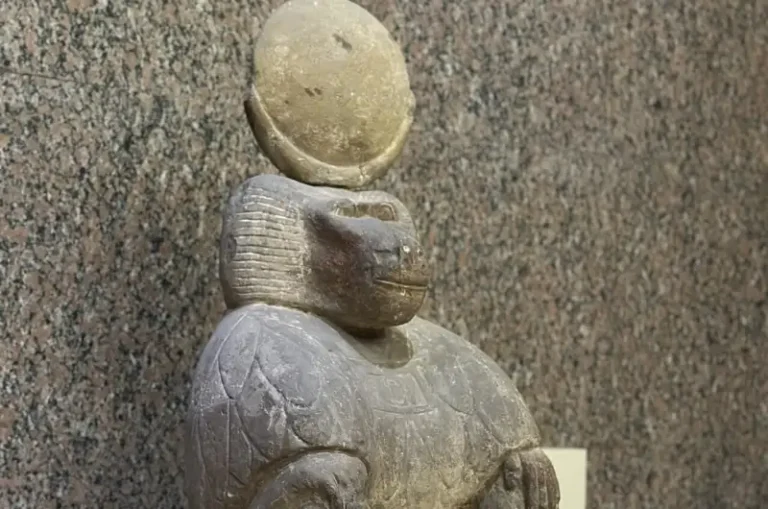
  • Science explains why ancient Egyptians worshipped the baboon

    In the vast pantheon of ancient Egypt, deities were frequently portrayed as living creatures. Anubis assumed the form of a sleek jackal, Hathor appeared as a majestic cow, and Horus was depicted as a fierce falcon. In almost every instance, a single animal species was tied to a single divine figure. However, the deity Thoth who’s the ancient Egyptian god of wisdom, writing, magic, and the moon stood out. Ancient artists and priests portrayed Thoth in two completely different animal forms. First, the slender, wading sacred ibis (Threskiornis aethiopicus). Second, the stocky, silver-furred sacred baboon (Papio hamadryas). For centuries, Egyptologists and anthropologists struggled to explain why two such different animals were chosen to represent the exact same lunar god.  The sacred ibis seemed to make intuitive sense. Its curved, arching beak resembles a delicate crescent moon. Its black-and-white plumage aligns with classical lunar motifs. The sacred baboon remained an enigma. Baboons were not even native to the Nile Valley. Egyptians had to import them from regions thousands of miles to the south at immense expense and difficulty. Furthermore, across most neighboring African cultures, baboons were viewed with hostility as agricultural pests that destroyed crops. A groundbreaking study published in the journal Time and Mind by a team of researchers from the University of St Andrews and Dartmouth College has finally understood the case. The researchers caught a glimpse into the psychological and spiritual world of ancient Egypt. Professor Catherine Hobaiter at the University of St Andrews led the research team sought to move past human visual perception. Human color judgment is naturally subjective and heavily influenced by cultural assumptions. To eliminate this bias, the scientists utilized spectroscopy. It’s a technique that measures the precise light wave frequencies reflected off physical surfaces. Using spectroscopic measurements, the researchers analyzed the physical light signatures emitted by the plumage of the sacred ibis and the thick coat of the sacred hamadryas baboon. Then, compared those measurements to the light wave frequencies given off by actual moonlight. The findings were astonishingly clear. Both the silver-white fur of the hamadryas baboon and the bright feathers of the sacred ibis possess spectral profiles that are practically identical to the reflected light of the moon. This discovery reveals that the ancient Egyptians were intentional in their religious symbolism. Ancient Egyptians had access to multiple bird and primate species. They were well-acquainted with at least three distinct types of ibises and several other monkey species, including green vervet monkeys and patas monkeys. Yet, out of all available animals, they specifically selected the single white ibis species and the single silver-furred baboon species. The new research demonstrates that the ancient Egyptians recognized an inherent physical connection between these animals and the night sky. To the Egyptian mind, divinity was not an abstract concept restricted to invisible realms. In fact, it was tangibly embodied in the natural environment. When an ancient observer looked upon a hamadryas baboon sitting under the night sky, its coat reflected the exact spectral radiance of the full moon shining overhead. Physical artifacts, temple walls, and mummified remains have revealed much about what ancient Egyptians built and worshipped. However, opportunities to understand how they perceived the world around them are exceptionally rare. Scientists have provided a rare window into ancient human consciousness. Science proved that to the people of the Nile, a baboon’s silver coat was quite literally the embodiment of heavenly light on Earth.  

  • Self Care DAy healthy habits

    Every year on July 24, people around the world observe Self Care Day to remind everyone that looking after their physical mental and emotional health is just as important as meeting daily responsibilities. The date also carries a special meaning encouraging people to practice self care 24 hours a day 7 days a week. Health experts say taking care of yourself is not selfish it is an important part of living a healthy and balanced life. While self care should be practiced every day Self Care Day is a good time to renew this commitment. One of the best ways to care for yourself is to set aside some personal time each day.  Even one hour can make a difference. You can read a book watch your favorite show take a walk or simply relax in a quiet place. These activities can help reduce stress and improve your mood. Eating a healthy and balanced diet is another important part of self care. Experts recommend including fresh fruits vegetables whole grains and beans in your meals.  Nutritious foods provide energy and support overall health. Regular physical activity is also essential. Exercise even if it is light can improve fitness boost energy reduce stress and help you feel happier. If you cannot exercise every day try to stay active whenever possible. Getting enough quality sleep is equally important.  Good sleep helps the body recover improves brain function and reduces tiredness making it easier to handle daily tasks. Experts also suggest practicing deep breathing meditation or yoga to support mental well being. These activities can improve focus lower anxiety and help you feel more relaxed. According to health professionals self care is not a luxury but a basic need. Making these simple habits part of your daily routine can help improve both your physical and mental health.

  • Tracing the spiritual legacy of “Nanak Se Nankana”

    In the fertile plains of Punjab lies a landscape quietly layered with centuries of devotion, miracle tales, and interfaith kinship. This sanctuary of green fields was known as Rai-Bhoi-Di-Talwandi. The time long before the bustling town of Nankana Sahib bore its current name. It was overseen by Rai Bhoi Bhatti, a local Muslim landlord whose family had influence over the region. Yet, history transitioned irreversibly in 1469. It was in this soil that Guru Nanak Dev Ji, the founder of Sikhism, was born to Mehta Kalu and Mata Tripta. Rai Bular Bhatti (Rai Bhoi’s descendant) renamed the settlement Nankana Sahib in his honor. He was basically moved by the extraordinary spiritual wisdom radiating from the young child. Thus began a historical and spiritual trajectory known throughout the subcontinent as Nanak Se Nankana. The sacred evolution of a man into a timeless sanctuary. What makes Nankana Sahib uniquely enchanting is that the entire geography operates as a living storyboard. The city’s trees, fields, and lanes are strongly knitted  into local folklore. And each folklore is  marked by a Gurdwara commemorating young Nanak’s childhood and early enlightenment. Gurdwara Janam Asthan is the crown of the holy city. This magnificent marble compound stands at the site of Guru Nanak’s ancestral home. It was originally built as a small sanctum by his descendants. Later transformed into a grand complex surrounded by reflective Sarovars (holy pools) during the reign of Maharaja Ranjit Singh. According to popular regional legend, a young Nanak was sleeping out in the open pastures while tending to his father’s cattle. As the afternoon sun shifted, a large cobra slithered out and expanded its hood above his face to shade him from the blistering heat. Rai Bular Bhatti witnessed this miracle from his horse and then showed his devotion for Nanak. The ancient Jal (Mal) tree under which the event occurred still casts its shade today at Gurdwara Malji Sahib. Local folklore recalls a peasant complaining that Nanak’s roaming cattle had ruined his crops. Yet, when officials inspected the field, the damaged green stalks had miraculously grew back whole and undamaged. Gurdwara Kiara Sahib stands today atop that very field. When young Nanak returned from a nearby market town having spent his father’s money entirely on feeding hungry sadhus (Sacha Sauda or the True Bargain), he feared his father’s anger. He hid beneath a large, canopy-like tree whose drooping branches resembled a tent (tambu). Nearby stands Patti Sahib, where a seven-year-old Nanak astounded his teacher by writing an acrostic poem on the alphabet explaining divine truths instead of mere grammar. Beyond the miraculous legends of childhood, Nankana Sahib carries profound historical lore. It weathered the turbulent Sikh Empire era. The city witnessed the heroic sacrifices of the 1921 Akali Movement reform at Janam Asthan. It also survived the painful demographics shifts of the 1947 Partition. Today, the journey of Nanak Se Nankana remains an emotional pilgrimage. Every year during Gurpurab (Guru Nanak’s birth anniversary), thousands of pilgrims from across the globe cross borders to converge on these quiet lanes. The devotees step through the grand archways of Gurdwara Janam Asthan and touch the dust of Nankana to their foreheads. They aren’t just visiting a building. They are retracing a historical path that transformed a quiet Punjab meadow into a sanctuary of universal love, humility, and timeless unity.  

  • Lunch salad may boost health

    If you want to live a healthier lifestyle health experts say making a nutritious salad part of your lunch is a simple and effective habit. The goal is not to lose weight quickly but to build healthy eating habits that are easy to follow for the long term. Experts say a healthy salad should include more than just leafy greens. It can contain chickpeas whole mung beans cucumber tomatoes onions carrots bell peppers, quinoa avocado orange slices pomegranate seeds or even raw mango.  These foods provide fiber vitamins minerals and other important nutrients. For extra flavor you can use salt black pepper lemon juice or vinegar.  To make the meal more filling experts recommend adding a healthy source of protein such as grilled paneer soy or other protein rich foods. Eating the same salad every day can become boring so changing the ingredients regularly can keep meals tasty while providing a wider range of nutrients. According to health experts eating a balanced salad at lunch may help control hunger reduce unhealthy snacking and keep you feeling full for longer. It may also reduce the afternoon energy slump and help you stay more active during the day. Experts say weight loss results can vary from person to person but following a balanced diet over time can improve body composition help clothes fit better and support overall health. They also stress that healthy eating does not mean giving up your favorite foods completely.  The key to a healthy lifestyle is balance moderation and consistency. Enjoying treats occasionally while choosing nutritious foods most of the time is the best approach.

  • Treasure hunt at Mayo landa in old Lahore

    Behind the 19th-century Victorian red-brick arches of Mayo Hospital exists one of Lahore’s most vibrant bazaars: Mayo Landa. First-time visitors might expect a simple fleece and jacket bazaar through the narrow lanes behind Mayo Hospital. However, it reveals something far richer. Mayo Landa has transformed into a bustling open-air ecosystem where global fashion, imported household goods, rare oddities, and genuine historic antiques intersect at prices that defy modern inflation. The word landa originates from the Punjabi term for roofless or uncovered. It usually refers to the early informal stalls that traders set up along open alleys without permanent shopfronts. The origins of Lahore’s landa market trace back to the pre-partition British colonial era. It is located strategically between the Lahore Railway Station and bustling medical hub of Mayo Hospital (established in 1871). The area naturally became a high-traffic junction for travelers, laborers, and rural migrants. Vendors began setting up wooden crates and blankets to sell low-cost textiles and goods to working-class families who could not afford stuff otherwise. Following the partition in 1947, the market expanded rapidly to accommodate millions of resettling families seeking affordable essentials. Over the decades, small family-run stalls grew into an organized nationwide wholesale network. Today, Mayo Landa operates as a major locality for imported pre-owned items. These are sourced globally from North America, Europe, Japan, South Korea, and Australia. While everyday apparel from heavy winter coats to designer sneakers remains a staple, the modern Mayo Landa experience goes far beyond clothing. Collectors regularly scour the market for genuine heavy-leather jackets, vintage denim, and retro sports gear that would cost hundreds of dollars internationally. Stalls feature everything from Japanese porcelain and European glassware to high-end kitchenware and functional electronics. Antique items are hidden within subtle corner stalls and old storerooms. Victorian brass lamps, mid-century mechanical clocks, classic cameras, old vinyl records, and hand-carved wooden artifacts. Prices are mostly negotiated through traditional haggling. Shoppers can frequently pick up valuable, high-grade collectibles at a fraction of their market value. What makes the backside of Mayo Hospital particularly captivating is its extraordinary cultural overlap and unique spatial atmosphere. Mayo landa alleyways & antique stalls. There roaming doctors & med students in scrubs. Then NCA art students searching for props across the area. Amongst, pashtun traders sorting bales. Hidden under the shade of century-old banyan trees behind the hospital compounds are secretive, multi-room vintage stores disguised as crumbling brick structures. Step inside, and you might find an operational 1920s gramophone playing vintage orchestra records right next to a pile of modern winter coats. Mayo Landa is more than just a flea market to the frequent visitors. It is a living archive of economic resilience, sustainable reuse, and cultural heritage. In a world dominated by fast fashion and mass-produced plastic, this historic corner of Old Lahore offers something rare. It’s the thrill of real discovery backed by over a century of history.