بلاگز

  • Dark spots? Expert tips for clear skin

    Clear healthy skin is something many women want but sun exposure acne marks hormonal changes skin irritation and poor skincare can all lead to dark spots on the face. Many people try quick home remedies or low quality creams to remove these marks but these products can sometimes make the skin more sensitive instead of improving it. Experts say it is important to understand the cause of dark spots rather than just trying to hide them. •What causes dark spots? Dark spots can appear after acne heals from skin injuries or irritation hormonal changes or too much sun exposure.  In some cases using skincare products that irritate the skin can also lead to discoloration. •Simple habits for healthier skin A daily skincare routine can help keep your skin clear.  Wash your face every day to remove dirt sweat and makeup especially before going to bed. Using sunscreen every day is also important. Dermatologists say sunlight can make existing dark spots darker and increase the risk of new ones forming. •Be careful with home remedies Natural ingredients such as rose water honey and yogurt are commonly used in home beauty treatments but they may not suit every skin type. Avoid applying lemon juice or other acidic ingredients directly to your face as they can cause irritation redness and make dark spots worse. •When to see a dermatologist If your dark spots keep getting worse return frequently or do not improve despite proper skincare it is best to consult a dermatologist.  Finding the real cause of the problem is the first step toward choosing the right treatment.

  • UK approves myqorzo for rare heart disease

    The UK has approved a new medicine called Myqorzo to treat obstructive hypertrophic cardiomyopathy (oHCM) a rare heart condition that can block blood flow from the heart. The approval was granted by the UK’s medicines regulator on Thursday. At the same time the National Institute for Health and Care Excellence (NICE) recommended that eligible adults in England and Wales should receive the treatment through the NHS. oHCM causes the heart muscle to become unusually thick making it harder for the heart to pump blood around the body. Around 1 in every 500 people in the UK has hypertrophic cardiomyopathy (HCM) and about half of the cases are inherited. NICE recommends Myqorzo for adults with symptoms of oHCM who are classified as NYHA Class II or III. The medicine can be used together with standard treatments or on its own if other medicines are not suitable.  Around 6,600 patients are expected to benefit from the treatment. Myqorzo belongs to a group of medicines called cardiac myosin inhibitors the same class as Bristol Myers Squibb’s Camzyos. It works by relaxing the heart muscle reducing the blockage and helping the heart pump blood more effectively.

  • Hotel buffet leftovers reused or thrown away?

    Hotel buffets are known for their wide variety of colorful and delicious dishes.  Luxury hotels often serve many different foods allowing guests to enjoy whatever they like. But many people wonder what happens to the large amount of food left after the buffet ends. Is it served again or is it thrown away? The answer depends on each hotel’s policy local laws, and food safety rules. Hotels must follow strict health guidelines when handling leftover food. According to reports leftover buffet food is usually divided into three groups. The first group includes food that was prepared in the kitchen but never placed on the buffet table. If it has been stored safely and kept at the correct temperature it may be used later. The second group is food that was displayed on the buffet. Even if it looks fresh it is usually thrown away after the buffet because it has been left out for too long increasing the risk of bacteria. The third group is food left on guests’ plates. This food is never reused and is always thrown away for health and safety reasons. Food safety experts explain that cooked food can become unsafe if it stays at room temperature for too long. That is why hotels often discard buffet food even when it still looks good. Some unused ingredients can be given a second purpose. For example fruits and vegetables that were never placed on the buffet may be used in soups smoothies desserts or jam.  Leftover bread can be turned into breadcrumbs or croutons. Many hotels around the world also donate safe, untouched food to charities and non profit organizations.  This helps provide meals to people in need while reducing food waste. Before donating hotels make sure the food is still safe to eat. Food that can no longer be eaten is sometimes used to make compost or biogas.  Compost turns food waste into natural fertilizer while biogas plants convert organic waste into energy helping protect the environment. Experts say modern hotels are also taking steps to reduce food waste.  They prepare food more carefully study guest eating habits use artificial intelligence and data to predict demand and refill buffet trays only when needed instead of filling them all at once. Guests can also help reduce waste by taking only the amount of food they can finish and going back for more if needed. Although hotel policies and local laws differ from country to country the hotel industry is making greater efforts to reduce food waste maintain high food safety standards and support environmentally friendly practices.

  • Gustav Klimt’s “Lakeshore with Birches” (1901)

    Gustav Klimt’s Lakeshore with Birches (Seeufer mit Birken, 1901) presents a contemplative immersion into nature. This piece was painted during a crucial transitional moment in Klimt’s artistic development. It was completed when Klimt spent his summers away from the urban noise of Vienna at Lake Attersee. This work captures the quiet rhythm of the natural world, distilled through a distinctly modern visual sensitivity. What immediately distinguishes Lakeshore with Birches is its unorthodox composition. Rather than offering a traditional panorama with a distant horizon line, Klimt deliberately truncates the viewer’s field of vision. The composition is anchored by a singular birch trunk rising vertically near the center-right of the canvas. Klimt creates a radical sense of spatial compression by eliminating the sky. The landscape is flattened into a decorative field, where depth is suggested through subtle layering. A lush, wild embankment dotted with small yellow and purple wildflowers. The stark pale birch trunk with its rhythmic dark lenticels, acting as a structural mast. In the background, still water reflecting the dark foliage of the far shore. This croppings draws inspiration from both Japanese ukiyo-e woodblock prints and contemporary square-format photography. The canvas forces the viewer to engage with the textures and moods of the immediate environment. The atmosphere of the painting is dictated by a restrained palette. Dominated by muted moss greens, deep olive tones, and dark murky browns, the water acts as a mirror absorbing the weight of the forest shadows. Against this dark, reflective pool, the small specks of yellow buttercups and delicate purples along the grass introduce a subtle optical vibration. Klimt’s brushwork here bridges French Impressionist techniques and the emerging principles of Art Nouveau. The bank is rendered using tiny, stippled dabs of paint, creating a tapestry-like surface pattern. Up close, the reflections on the water resolve into abstract patches of blue, gray, and dark brown. The slender birch tree provides a crisp, pale contrast. Its bark painted with precise horizontal dashes that echo the linear motifs Klimt would later deploy in his famous Golden Phase. Beyond its formal qualities, Lakeshore with Birches radiates profound stillness. Free from human figures or dramatic narrative.  Turns nature into a psychological sanctuary. The solitary birch trunk stands almost like a quiet observer at the edge of the water. It seems like a subtle proxy for the solitary painter himself. During his summer retreats at the Attersee, Klimt used landscape painting as a palette cleanser, freeing himself from the contentious public commissions and psychological weight of his Viennese portraiture. In Lakeshore with Birches, he captures the fleeting light and quiet isolation of late summer. He converted a humble patch of lakeside grass and water into an intricate sanctuary of pattern and color. It remains a testament to Klimt’s unique ability to merge acute observation with abstract harmony.  

  • Obsession with cannibalism as the metaphor for love

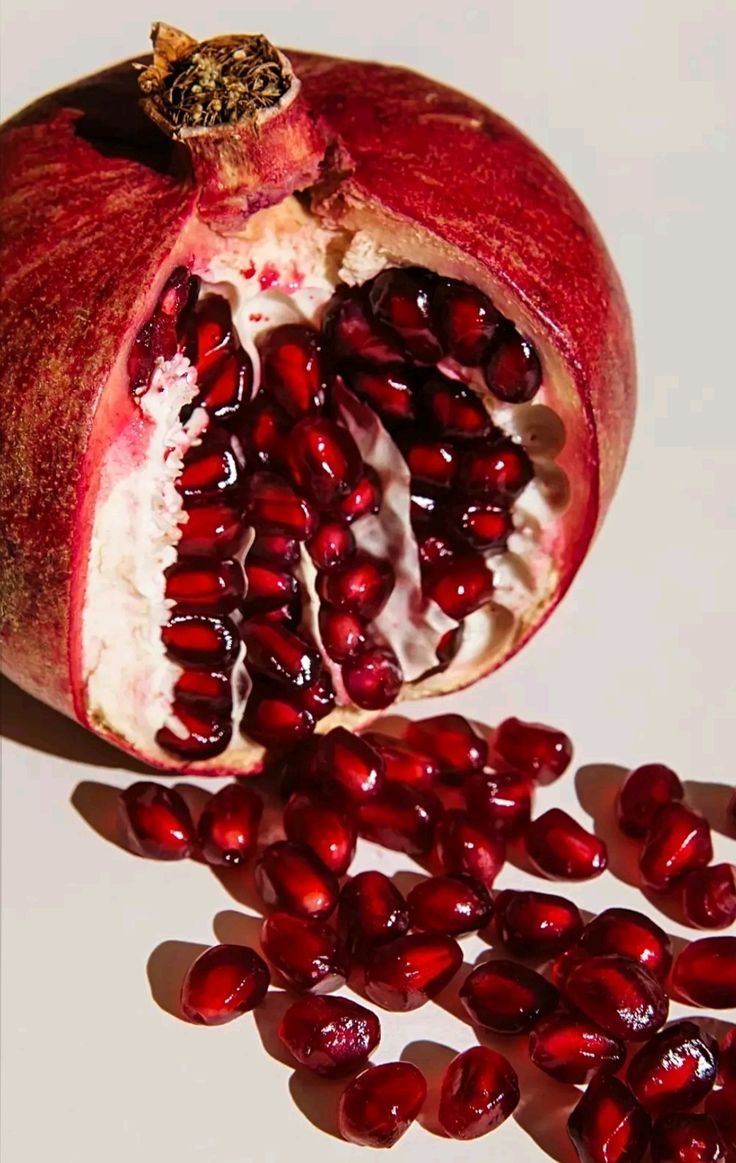
     Social media ecosystems have turned toward a darker trope to articulate the depths of romantic obsession: cannibalism. Curated mood boards are featuring imagery of raw meat, overripe pomegranates, and bloodied lovers. Viral poetry is explicitly framing consumption as intimacy. The internet has revitalized an ancient literary standard. But why has this unsettling imagery captured the imagination of so many digital creators today? If you scroll through modern aesthetic feeds, you will quickly encounter a redundant visual language centered on bodily devotion. The imagery often combines classical romance with motifs of physical destruction and ingestion. Visual art depicting lovers covered in blood or blurring the boundary between violence and affection. Photographs of bruised, overripe red fruits, notably pomegranates, bursting open. Mostly, the graphics are serving as vivid stand-ins for human flesh and emotion. Stills from cinematic works featuring vampires and monsters. The act of biting or feeding is inextricably linked to passion. Images of cuts of raw meat juxtaposed against soft, romantic lighting. Verse that frames complete surrender as allowing oneself to be digested, bitten, or absorbed by a partner. A prime example of this sentiment comes from writer Azra T.’s poem ‘Fruit’: Peel your heart like a pomegranate. Offer it to him, palms outwards. Say ‘eat.’ Watch him come away stained red by you. You’re in his teeth. He’ll kiss you with that mouth. The poem depicts the core ethos of this aesthetic. Total self-offering, emotional vulnerability pushed to its absolute physical extreme, and a desire to permanently mark and be integrated into the person you love. The surge of cannibalism-as-love content feels distinctly accustomed to the melodrama of internet subcultures. However, it is far from a contemporary invention. The urge to frame love as an act of consumption has deep historical and cultural roots.  Why Is the Metaphor Resonating Now? This world is driven by digital interactions and transactional relationships. So, the urge to consume and be consumed represents a longing for absolute vulnerability. When someone invokes cannibalism in a romantic context, they aren’t expressing a literal desire for violence. Instead, they are grasping for a metaphor extreme enough to convey a few core human desires. To be ingested is to become a part of someone else forever. Their body will be physically reshaped by your presence. Traditional closeness still leaves a physical boundary between two individuals. Consumption erases that barrier entirely. Two become one in the most literal sense conceivable. Giving up oneself entirely to be possessed by another is the ultimate gesture of trust. Ultimately, the rise of the cannibalism-as-love highlights an overwhelming power of affection. By reaching for the extreme, internet culture finds a way to express what ordinary romantic language fails to capture. A devotion so grand, so terrifying, and so profound that it borders on the appetite.  

  • |

    Bangkok’s original name has 168 characters

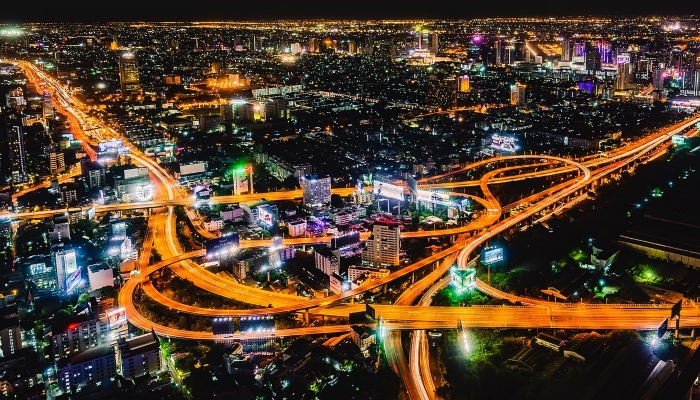
    Did you know that the city with the world’s longest official name is also one of the most famous cities on Earth? Interestingly, the name by which most people know this city is not its official name. The city is Bangkok, the capital of Thailand whose full ceremonial name consists of 168 characters. If you ever visit Thailand, you are unlikely to hear local residents recite the full name as even many of them cannot remember it. The city’s full ceremonial name is Krungthepmahanakhonamonrattanakosinmahintharaayuthayamahadilokphopnoppharatratchathaniburiromudomratchaniwetmahasathanamonpimanawatansathitsakkathattiyawitsanukamprasit. Bangkok’s official ceremonial name is recognized by Guinness World Records as the longest place name in the world. If you find it impossible to remember, you’re certainly not alone. The city also has a shorter official name in Thai: Krung Thep Maha Nakhon which is commonly shortened further by locals to simply Krung Thep. In 2022, the Thai government announced that both Krung Thep Maha Nakhon and Bangkok would be accepted as official Romanized names for the capital. The 168-character ceremonial name is derived from Sanskrit and Pali and its shorter form roughly translates to “The Great City of Angels.” However, historians are still uncertain why such an extraordinarily long ceremonial name was originally adopted. How did name “Bangkok” come about? According to popular accounts, the name Bangkok predates the establishment of the city as Thailand’s capital. It is believed to have originated from the area’s former village or district name possibly derived from the Thai words “Bang” (a village or riverside settlement) and “Makok” referring to a type of wild plum or olive tree that once grew abundantly in the area. Over time, the name Bang Makok is thought to have evolved into Bangkok, the name by which the city became known internationally.

  • |

    Lady Catherine Dyer’s metaphysical elegy

    “My dearest dust“, in three monosyllables, Dyer fuses affectionate devotion with biblical mortality. Few opening lines in English poetry carry the sudden jolt of Lady Catherine Dyer’s seventeenth-century elegy to her late husband, Sir William Dyer. The phrase creates a brilliant phonic equation. Two words linked by alliterative d sounds and ending in the crisp st consonant cluster. This sequence immediately brings closer the earthly tenderness and the cold realities of the grave. Written after Sir William’s premature death in 1621 at the age of 37, the 14-line poem presents a wife addressing her departed spouse. This poem is not from a distance of detached, formal mourning, but from the shared boundary of their marital bedchamber. It is an extraordinary work of grief. A sequence of part lullaby, part nocturnal dialogue, and part radical act of faith. Dyer crafts her elegy primarily in rhymed heroic couplets, a poetic form where paired lines lie side-by-side like lovers in rest. Yet, the emotional core of the poem resides within its deliberate deviations from standard iambic pentameter. When Catherine laments her husband’s sudden departure, the meter breaks under the weight of her longing: Thy weary limbs with early rest, She exempts the line 6 of its expected fifth metrical foot, reducing it to iambic tetrameter. Dyer mirrors the truncated nature of Sir William’s life. His death was early and so the line itself ends prematurely. Similarly, when describing her daily routines of widowhood in line 10, preparing her nightly dress and calling to prayer. There, the missing foot echoes the quiet vacancy of her solitary routine. Something essential is absent, and the meter forces the reader to feel that empty space. Even the poem’s gentle play with rhythm in lines 3 and 4 captures this hesitation. Asking whether they might have, Sate up, or gone to bedd together? The unaccented final syllable creates a lingering, breathless pause. It presents a moment where the speaker hesitates before facing the silence of her answer. The Audacity of Desire What makes Dyer’s poem so captivating is its unapologetic amalgamation of grief and intimacy. As the poem draws toward its conclusion, the speaker describes her eyelids growing heavy while her beloved’s body grows cold. She commands: Draw, draw ye closed curtaynes: and make room: My dear, my dearest dust; I come, I come. To a contemporary reader, the closing insistence: “I come, I come” is a poignant declaration of joining her husband in ultimate death. However, the phrasing carries a remarkably provocative double layer. In Renaissance and 17th-century vernacular, “to die” was a well-known euphemism for sexual climax. The verb “to come” already held slang connotations surrounding physical intimacy. For Lady Catherine, her very surname, Dyer, homophonically echoes dier. These final words create a daring convergence of spiritual reunion and erotic memory. To lay down in the grave beside her husband is both an act of holy surrender and a transcendent return to marital passion. It is a moment of fearless emotional honesty carved directly into a sacred space. The Monument at Colmworth This extraordinary text was not merely kept in a private manuscript. In 1641, two decades after her husband’s death, Lady Catherine erected an elaborate monument in the Church of St. Denys in Colmworth, Bedfordshire. Above stone effigies of the couple propped on their elbows as if engaged in eternal late-night conversation, the full poem was proudly embossed. Lady Catherine outlived Sir William by 33 years, never remarrying. For over three decades, she lived with the memory of the husband who died young after fathering seven children. Catherine would have gazed upon her own stone likeness, reading her own words of twenty years prior while waiting for the remaining thirteen years of her earthly separation to expire.  The Dissolution of Words and the Promise of Reunion In the centuries since its installation, time and moisture have slowly eroded the Colmworth monument. Today, many of the terminal words in the carved verses have worn away, softening the crispness of the original rhymes. Yet, there is a poetic justice in this physical decay. Rather than diminishing the work, the fading text represents a literal blurring of boundaries. It expresses a “de-coupleting” of stone that mirrors the breakdown of mortal limits. As the physical letters dissolve into the ambient damp of the church, Catherine and William’s separation quietly closes, fulfilling the poem’s final command to make room for eternal rest.  

  • |

    World’s tallest bridge features 300-meter artificial waterfall

    China has completed several remarkable engineering projects in recent years but the Huajiang Grand Canyon Bridge stands out as one of the most extraordinary. Often described as an engineering marvel, the bridge is not for the faint-hearted. Anyone with a fear of heights may find crossing it a nerve-racking experience. The bridge is situated 625 meters (2,051 feet) above the ground and was opened to the public in September 2025 making it the world’s tallest bridge. However, its height is not the only feature that makes it unique. The bridge also includes a spectacular artificial waterfall making it a major tourist attraction rather than just a transportation route. Chinese authorities designed the bridge as both an infrastructure project and a tourist destination. Visitors can enjoy glass walkways, cafes inside the bridge towers and adventure activities such as bungee jumping. The bridge’s most eye-catching attraction is its 300-meter-long artificial waterfall which creates a dramatic curtain of water. A laser lighting system has also been installed allowing the waterfall to put on a dazzling display at night. According to local authorities, thousands of tourists visit the site every day. The bridge gained further recognition when Time magazine ranked it as the No. 1 destination in its list of the World’s Greatest Places for 2026. Located in Guizhou Province in southwestern China, the Huajiang Grand Canyon Bridge was primarily built to reduce travel time across the mountainous region. Guizhou’s rugged terrain previously made travel between many locations slow and difficult. Thanks to the new bridge, a journey that once took two hours can now be completed in about one minute. Constructed from 20,000 tons of steel roughly equivalent to the amount used in three Eiffel Towers, the bridge stretches 9,482 feet (about 2,890 meters) in length. Construction began in January 2022 and the bridge officially opened to the public in September 2025.

  • Inflation fuels mental health crisis in Pakistan

    Rising prices unemployment and ongoing financial pressure are not only reducing people’s buying power in Pakistan but are also affecting their mental and physical health. Mental health experts say that money problems job insecurity growing debt, and uncertainty about the future are leading to higher rates of depression anxiety stress sleep problems irritability family conflicts high blood pressure and heart disease. Clinical psychologist Fatima Tahir explained that when income is lower than household expenses people experience constant stress.  Over time this can develop into depression anxiety anger fear and hopelessness. She warned that without timely mental health support these problems can also lead to physical illness social isolation and family disputes. Psychiatrist and social worker Dr. Ayesha Imran Murtaza who has worked at Fountain House for more than 20 years said inflation unemployment poverty and financial hardship are major reasons behind the growing number of mental health cases in Pakistan. She noted that people with low incomes are more likely to suffer from emotional trauma and mental illness because they often lack family support and cannot afford treatment. According to her poverty and mental illness create a cycle in which each problem makes the other worse. When patients cannot afford medicine their condition often worsens and if the family’s only breadwinner becomes ill the entire household is affected. According to the Pakistan Psychiatric Society National Psychiatric Morbidity Survey (2019–2022) 32.3% of adults in Pakistan are living with a mental health disorder while 37.9% have experienced one at some point in their lives. Anxiety stress and depression are the most common conditions with women low income groups and people living in cities being more affected. The World Health Organization estimates that more than 24 million people in Pakistan need mental health services. However the country faces a severe shortage of specialists. Pakistan has only around 300 to 340 psychiatrists meaning there is roughly one psychiatrist for every 700,000 to 800,000 people. The country also has about 478 psychologists, 3,145 social workers and only 22 occupational therapists working in mental health care. According to Prof. Wajid Ali Akhundzada, one in four young people and one in five children in Pakistan are dealing with mental health issues while around 10% of the population struggles with drug addiction. He stressed that the number of mental health professionals and treatment facilities is far below the country’s growing needs making mental health a national priority. Meanwhile the Punjab government is upgrading the Punjab Institute of Mental Health (PIMH) in Lahore to improve treatment and rehabilitation services. The institute is expanding psychiatric care emergency services addiction treatment rehabilitation programs and professional training under one roof. The government also plans to extend mental health services to district and tehsil level public hospitals so that more patients can receive treatment closer to home.

  • Rewriting the history of early universe

    For centuries, human understanding of the universe was limited to the narrow band of visible light that reaches our eyes. We gazed through glass lenses at distant stars and planetary bodies. We suddenly assumed that what we saw was the complete picture of existence. However, the modern era of observational astronomy is proving that the vast majority of cosmic history has been hidden in plain sight. The history is obscured by dense cosmic dust clouds and rendered invisible to standard optical instruments. Today, scientists are piercing through these ancient barriers, effectively looking back in time to the very dawn of creation. The core of this astronomical revolution lies in how light travels across cosmic distances. As the universe expands, light emitted by the earliest stars and galaxies stretches out. Over billions of years, visible light waves elongate into invisible infrared wavelengths. It’s a phenomenon known to astrophysicists as redshift. To traditional telescopes, these primordial structures appear as empty voids of black space. However, advanced infrared technology allows researchers to detect the heat signatures and stretched light of these ancient entities. They’re now capturing photons that began their journey over thirteen billion years ago. Recent data gathered from these cutting-edge observatories has shattered long-held scientific assumptions. Previously, mainstream astrophysical models suggested that the early universe was a disorganized environment where galaxies took several billion years to unite into orderly structures. Yet, newly analyzed images reveal fully formed, structured spiral galaxies operating merely a few hundred million years after the Big Bang. These massive cosmic bodies, with billions of bright stars, existed far earlier than existing theoretical frameworks predicted. The discovery has forced cosmologists to reconsider how cosmic matter gathered and condensed during the universe’s formative epochs. Infrared observation is providing unprecedented insight into the life cycles of stars and the creation of essential elements. Dense interstellar clouds or stellar nurseries are so choked with cosmic dust that light from developing protostars cannot escape. Infrared instruments can look directly into these opaque cradles. Therefore, revealing the exact thermodynamic processes that trigger the birth of new solar systems. Scientists can now track how heavy elements such as carbon, oxygen, and iron are synthesized in the cores of giant stars. They can find out how heavy elements subsequently dispersed across space when those stars explode in supernovae. The implications of these discoveries extend far beyond theoretical physics. They touch upon fundamental questions about the origins of life itself. Astronomers are evaluating whether the ingredients for life are common throughout the Milky Way and beyond. All by tracing the distribution of organic molecules and water vapor within dust clouds around infant star systems. As technology advances, data continues to pour in from space. Humanity stands on the precipice of a new paradigm in space exploration. The ability to peer through cosmic dust and decode the earliest moments of light does not just illuminate distant galaxies. It also offers a clearer understanding of the universal processes that ultimately led to the formation of our own planet. The invisible cosmos is finally making itself known, proving that the night sky holds far more history than we ever imagined.