بلاگز

  • Road Safety: Everyone’s Responsibility

    By Sumaiya Azeem Behind every road accident statistic is a name, a family, a dream that never came true. The next name doesn’t have to be someone we know—but only if we take responsibility. Road accidents do not happen by chance; they happen because of preventable mistakes. Saving lives is a shared responsibility. Road safety is not just about following traffic rules, it is about protecting human lives. Every day in Pakistan, we hear about road accidents on the news. A bike crash near a school, a bus overturned on the highway, and a child hit while crossing the road—these aren’t just headlines. They are the fathers who won’t come back, students whose exams will never be taken, and futures cut short. Roads connect people, communities, and economies. They allow students to reach school, workers to reach their workplace, and families to travel from one place to another. However, road accidents have become one of the leading causes of death and injury across the world, and unsafe road behavior has turned roads into a major global safety challenge. Every day, thousands of people lose their lives or suffer serious injuries; it also causes permanent disability and leaves families with lifelong conditions. According to the World Health Organization (WHO), approximately 1.19 million people die every year due to road traffic crashes, while 20 to 30 million people suffer non-fatal injuries, many of which result in permanent disability. Road accidents are a serious public health and economic issue. The WHO report shows that more than 90% of traffic accidents occur in low- and middle-income countries. These accidents cause enormous financial losses. Medical expenses, vehicle damage, loss of productivity, and long-term disability create a heavy burden on families. There are several major causes of road accidents. Overspeeding is one of the leading causes of serious road accidents. When vehicles move at high speeds, drivers have less time to react to sudden dangers such as pedestrians crossing, vehicles stopping suddenly, or obstacles on the road. It also increases the severity of injuries during a crash. The use of mobile phones while driving has also become a growing danger. Texting, making calls, or scrolling on social media can cause more accidents. Responsible drivers must keep their full attention on the roads and avoid unnecessary distractions. In addition, driving after consuming alcohol or drugs seriously affects judgment. An impaired driver may not realize the danger in time or may make risky decisions that endanger others. Strict laws and public awareness are necessary to prevent such behavior. Ignoring traffic signals, unsafe overtaking, driving on the wrong side of the road, and failing to give way are other common causes of crashes. Traffic rules are designed to protect everyone; following them is a responsibility, not merely a legal requirement. Moreover, one mistake by one person creates a ripple effect that impacts everyone on the road. A road accident doesn’t just hurt one person. It breaks a family, blocks traffic for hours, burdens hospitals, and wastes national resources. A helmet, a seatbelt, or a 10-second wait at a red light can save lives. Apart from this, everyone has a role to play: Drivers have the biggest role. They must wear seatbelts, avoid using phones while driving, follow speed limits, and obey traffic signals. Riders, especially motorcyclists, are very vulnerable. They should always wear helmets, avoid rash driving, and use indicators, which also helps them stay visible. Pedestrians also need to be careful. A pedestrian is anyone walking on foot. They should use footpaths and zebra crossings, look both ways before crossing, and avoid distractions like headphones on busy roads. Pakistan faces significant road safety challenges due to rapid population growth, an increasing number of vehicles, unsafe driving practices, and weak enforcement. Improving road safety requires better roads, stronger law enforcement, and public awareness. The problem can be solved by following traffic rules, raising awareness, building better road infrastructure, and utilizing strict law enforcement to help prevent accidents. In short, if drivers drive carefully, riders stay alert, pedestrians walk safely, and the community supports traffic rules, we can make our roads much safer. Road safety is not the duty of one person or one department; it is a responsibility shared by everyone. Governments must provide safe infrastructure, and citizens must make responsible choices. A moment of carelessness can destroy a family, while a moment of responsibility can save a life. By respecting traffic rules and promoting awareness, we can create safer roads for ourselves and future generations. Every journey should end safely, and every single person has a role in making it possible.

  • Monsoon remedies for itchy feet

    The monsoon season brings welcome rain but it can also increase the risk of skin problems. Walking through dirty rainwater wearing wet shoes or socks for too long and constant moisture can cause itchy feet red rashes burning and fungal infections. If these symptoms are ignored a minor irritation can develop into a more serious skin infection. If your feet become itchy or irritated during the rainy season a few simple home remedies may help relieve mild symptoms. •Coconut oil Coconut oil is known for its natural antifungal and antibacterial properties. Wash your feet with clean water dry them completely with a soft towel and then apply a thin layer of coconut oil. It may help soothe irritation keep the skin moisturized and reduce the growth of germs. •Aloe Vera Gel If itching is accompanied by a burning sensation fresh aloe vera gel can provide cooling relief. Apply the gel directly to the affected area to help calm the skin and reduce irritation. •Neem paste Neem has long been used as a natural remedy for skin problems.  Grind fresh neem leaves with a little water to make a thick paste and apply it to the itchy area. It may help reduce mild itching and skin irritation. •Cold compress If your feet are swollen or extremely itchy wrap ice in a clean cloth and place it on the affected area for about 10 minutes. Never apply ice directly to the skin as it can cause damage. Moisturizing or antiseptic lotion If natural remedies are not available you can use a good quality moisturizer or antiseptic lotion to reduce dryness and soothe irritated skin. Tips to protect your feet After getting caught in the rain change into dry shoes and socks as soon as possible. Wear clean dry socks every day avoid reusing wet shoes and choose breathable footwear whenever possible. If your feet sweat a lot an antifungal powder may also help. When to see a doctor health experts advise seeing a doctor if the itching lasts for several days or if you develop severe swelling pus open sores intense pain fever or if the affected area spreads quickly. In some cases antifungal medicines or other treatments may be needed. These home remedies may help with mild symptoms but they are not a substitute for medical treatment. If your condition becomes severe or does not improve consult a qualified healthcare professional for proper diagnosis and treatment.

  • | | |

    Parliament should focus on Pakistan’s real c…

    Pakistan is an Islamic republic whose Constitution defines not only the structure of the state but also its ideological foundation. It explicitly states that the country should create an environment in which Muslims can live their lives in accordance with the teachings of the Quran and Sunnah. Against this constitutional backdrop, it is surprising that the issue of women wearing the abaya—or an Islamic financial institution including the abaya in its employee dress code—has become a matter of concern for a parliamentary committee. This naturally raises an important question: Who is setting the country’s priorities, and are these truly the issues that deserve Parliament’s attention? Pakistan continues to face pressing challenges, including rising inflation, unemployment, an unequal tax system, a struggling economy, and serious shortcomings in education and healthcare. These are the issues that directly affect the daily lives of millions of citizens. If a parliamentary standing committee, whose primary responsibility is financial oversight, chooses to focus instead on the dress code of Islamic banks, it is reasonable for the public to question whether legislative priorities are aligned with the country’s most urgent needs. The debate also raises questions about consistency. Critics have objected to the abaya as part of an institutional dress code, yet there is little discussion about uniforms in many government departments that follow Western styles of dress. Women serving in the police, the Federal Investigation Agency (FIA), and several other public institutions are commonly required to wear trousers and shirts as part of their official uniforms. If clothing is to become a matter of parliamentary debate, then similar standards should apply across the board. Selective criticism can create the perception of bias. Supporters of Islamic dress codes argue that the issue extends beyond clothing itself and reflects broader concerns about cultural and religious identity. From this perspective, the concern is not simply about the abaya but about a mindset that views visible expressions of religious identity as obstacles to modernization. They question whether institutions with an Islamic identity should be expected to abandon their traditions in the name of progress. This leads to a broader debate: Who defines what it means to be modern? Does modernization necessarily require reducing the public expression of religious values or adopting Western cultural norms? For institutions operating within Pakistan’s Islamic banking framework, supporters argue that their identity is rooted not only in financial principles but also in ethical and religious values. If such institutions adopt internal policies that comply with Pakistani law and reflect constitutional and religious principles, they contend that those choices should be respected. The discussion also draws comparisons with international examples. In countries such as France, restrictions on religious clothing have generated significant criticism from human rights advocates. Supporters of religious freedom argue that Pakistan, which was established with a distinct religious and cultural identity, should carefully consider whether adopting similar approaches is consistent with its own constitutional framework and historical foundations. Ultimately, the central argument is that Parliament should devote its time and resources to addressing issues that directly affect governance, economic stability, and public welfare. Matters of personal attire, religious belief, and institutional identity, many argue, should not become subjects of unnecessary official intervention when the country faces far more pressing social and economic challenges.

  • Why are chip bags filled with air?

    Many people feel disappointed after opening a bag of chips because it looks much fuller from the outside than it does inside. It may seem like the bag is filled with air instead of chips but there is a good reason for it. The gas inside a chip bag is not ordinary air. Before sealing the bag, manufacturers fill it with nitrogen gas. Nitrogen is colorless odorless and makes up most of the air we breathe.  It is also safe for food and does not react easily with it. If oxygen were left inside the bag the oil in the chips could spoil more quickly causing the chips to lose their fresh taste and become stale. Nitrogen helps keep the chips fresh crispy and tasty for a longer time. The extra space inside the bag also works like a cushion. Chips are very fragile and can easily break during transport from the factory to warehouses trucks stores and finally to customers. The nitrogen filled space absorbs pressure and protects the chips from being crushed. Some people wonder why companies do not simply use smaller bags.  The size of the bag is designed to protect the product work with packing machines and make shipping easier. Different types of chips also need different amounts of space because of their shape and size. The amount of chips is based on weight not how full the bag looks. That is why the package clearly shows the net weight of the chips even if there appears to be empty space inside. So, the next time you open a bag of chips remember that the “air” is not there to trick you. It is there to keep your chips fresh crispy and protected until they reach you.

  • Man breaks fish finger record

    A 32 year old man from the UK has earned a Guinness World Records title after eating 15 fish fingers in just one minute. Nathan Davis decided to chase a world record after recently winning more than $130,000 on a TV game show. He said he chose fish fingers because he had already taken part in several informal eating challenges and felt confident with the food. After setting the record Davis said he was happy to become a Guinness World Record holder even if it was for eating fish fingers. He added that if the fish fingers had been allowed to cool a little more he believed he could have eaten even more. Still he said he was pleased with his achievement.

  • Poultry industry linked to foodborne infections

    A new study warns that modern large scale chicken farming may be helping dangerous food poisoning bacteria spread more easily creating new risks for human health. Researchers from the Oxford University found that the rapid growth of industrial poultry farming has created ideal conditions for Campylobacter, a bacteria that causes food poisoning to grow spread and develop new traits. Campylobacter is one of the world’s leading causes of diarrhea and food poisoning. In the UK it causes around three and a half times more stomach illness cases each year than all other monitored foodborne bacteria combined. The researchers said the global chicken population has increased about sevenfold since the 1960s reaching around 31 billion birds. This growth has made it easier for bacteria carried by wild birds to spread among farm chickens. The team studied nearly 2,800 bacterial genomes collected from chickens and wild birds in 30 countries including the UK and the US between 1979 and 2024. Genetic analysis showed that the bacteria had developed changes linked to modern farming conditions. These included genes that help it resist antibiotics and survive more easily in large poultry farms. Researchers warned that rising antibiotic resistance is making Campylobacter infections harder to treat. The study’s lead author Sam Sheppard said the findings provide new evidence that human activities and environmental changes can increase the spread of infectious diseases. He added that understanding how bacteria evolve will be important for reducing future risks of animal to human diseases and antibiotic resistant infections.

  • Shark jump captured on camera

    A video of a great white shark jumping out of the water near the California coast has gone viral on social media. According to international media reports, Soren Stevenson was filming a family member surfing near Newport Beach when a great white shark suddenly leaped out of the water. The unexpected moment was captured on video. Stevenson said he did not notice the shark while recording. He only saw it later when he watched the footage and was shocked by what had happened. Christopher Lowe a marine biology professor and director of the Shark Lab at California State University Long Beach believes the shark was likely a young great white that was simply playing near the surface. https://www.instagram.com/reel/DbZIMciAkbr/?igsh=cjlwNTlyZjhvdG8x According to the National Oceanic and Atmospheric Administration great white sharks are found in temperate and subtropical oceans around the world and often migrate as water temperatures change. Wildlife officials also said that warmer ocean waters linked to the 2026 El Nino weather pattern may bring more great white sharks closer to Southern California’s coastline.

  • Early sugar control benefits brain health

    A new study suggests that giving children little or no sugar before the age of two may help reduce their risk of developing dementia later in life. Researchers found that people who were exposed to very low amounts of sugar during pregnancy and in their first two years of life had a 23% lower risk of dementia as adults. Health experts say eating too much sugar is already linked to type 2 diabetes which can damage blood vessels and increase the risk of dementia. The new findings suggest that limiting sugar early in life may also support long term brain health. The study’s lead author, Dr. Jiaxin Zheng said the results show that reducing sugar intake during early childhood could have lasting benefits for brain health. Researchers added that while the findings are encouraging more studies are needed to confirm the connection between low sugar intake in early life and a lower risk of dementia.

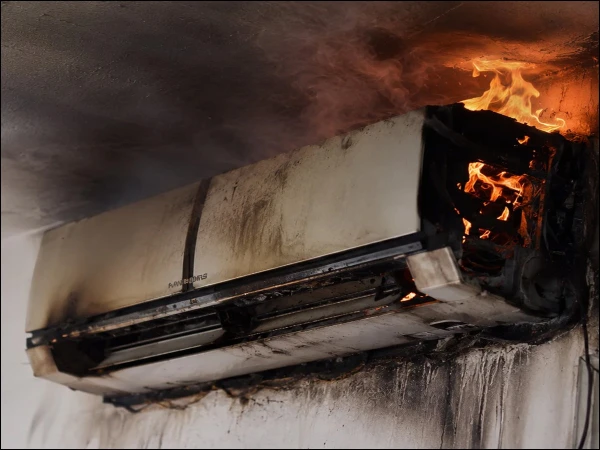
  • Danger signs your air conditioner needs repair

    As temperatures rise many people buy old or low cost air conditioners to save money. However experts warn that aging AC units can become dangerous if problems are ignored.  Small faults may turn into serious issues including electrical short circuits fires or costly damage. According to experts older air conditioners often develop worn out wiring damaged electrical parts faulty motors and overheating. These problems may seem minor at first but can become dangerous if they are not repaired in time. One of the biggest warning signs is a burning smell or the odor of melted plastic when the AC is switched on.  Experts say this could mean the internal wiring motor or insulation has been damaged increasing the risk of fire. If this happens turn off the unit immediately and have it checked by a qualified technician. Unusual sounds such as rattling grinding or loud noises are also signs that something is wrong. These noises may be caused by a loose part a damaged fan or a compressor problem.  Ignoring them could lead to a complete system failure. If the air conditioner becomes unusually hot while running it may indicate an electrical fault inside the unit.  Overheating can increase the risk of a short circuit or fire making immediate inspection and repair important. Experts also advise not to ignore weak cooling. Reduced cooling may be caused by low refrigerant a faulty compressor or a clogged air filter.  These issues usually mean the AC needs servicing or repairs. Another serious warning sign is seeing sparks near the voltage stabilizer or electrical wires. This may indicate loose connections or damaged wiring, which can quickly become a fire hazard if not fixed. Experts recommend turning off the air conditioner immediately if you notice any of these warning signs and contacting a qualified technician for a full inspection.  Timely repairs can help prevent bigger damage and keep your home and family safe. They also advise that if an air conditioner keeps breaking down and needs frequent repairs replacing it with a newer safer and more energy efficient model may be a smarter and more cost effective choice.

  • |

    Post-graduate depression

    No one talks about the depression, hopelessness, and anxiety that fresh university graduates face. They suffer silently, wondering what to do next and how to find opportunities. Even their families often don’t understand what they are going through. Many graduates slowly fade away. They stop talking to friends, lose contact with classmates, and avoid social gatherings. At family functions, relatives ask questions like, “Beta, what are you doing now?”, “How long are you going to stay at your parents’ home?” If it’s a girl, people ask, “When are you getting married?” or “What have you achieved after getting your degree? Have you earned any money? Look at our daughters—they’re married, have two kids, and are happy. Meanwhile, your poor parents are still taking care of you.” When it comes to boys, they face endless questions from uncles and relatives. Many become demotivated. Some dream of moving abroad but don’t have the money to do so. Others try trading after taking advice from friends and sometimes fail. Some start giving home tuition while constantly thinking about how to settle in life and repay their parents, who are getting older every day. This is the reality of our society. Those who can afford it pursue a master’s degree or go abroad for higher studies. Many work overtime just to prove that they are capable of achieving something in life. Otherwise, people label them as a burden on their parents. Many daughters are pressured into marriage instead of being allowed to pursue private jobs. If they want to build a career, they are expected to prepare for competitive government exams. Even after 14 or 16 years of education, they still have to study further to clear exams like CSS or PPSC. Only then do parents and society begin to appreciate them, and their names are respected. Otherwise, to society, you are just another university graduate—and that’s all.