بلاگز

  • Danger signs your air conditioner needs repair

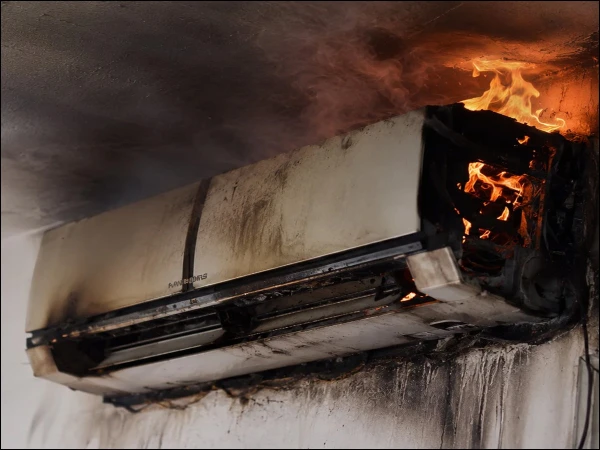
    As temperatures rise many people buy old or low cost air conditioners to save money. However experts warn that aging AC units can become dangerous if problems are ignored.  Small faults may turn into serious issues including electrical short circuits fires or costly damage. According to experts older air conditioners often develop worn out wiring damaged electrical parts faulty motors and overheating. These problems may seem minor at first but can become dangerous if they are not repaired in time. One of the biggest warning signs is a burning smell or the odor of melted plastic when the AC is switched on. Experts say this could mean the internal wiring motor or insulation has been damaged increasing the risk of fire.  If this happens turn off the unit immediately and have it checked by a qualified technician. Unusual sounds such as rattling grinding or loud noises are also signs that something is wrong. These noises may be caused by a loose part a damaged fan or a compressor problem.  Ignoring them could lead to a complete system failure. If the air conditioner becomes unusually hot while running it may indicate an electrical fault inside the unit.  Overheating can increase the risk of a short circuit or fire making immediate inspection and repair important. Experts also advise not to ignore weak cooling. Reduced cooling may be caused by low refrigerant a faulty compressor or a clogged air filter.  These issues usually mean the AC needs servicing or repairs. Another serious warning sign is seeing sparks near the voltage stabilizer or electrical wires. This may indicate loose connections or damaged wiring, which can quickly become a fire hazard if not fixed. Experts recommend turning off the air conditioner immediately if you notice any of these warning signs and contacting a qualified technician for a full inspection. Timely repairs can help prevent bigger damage and keep your home and family safe. They also advise that if an air conditioner keeps breaking down and needs frequent repairs replacing it with a newer safer and more energy efficient model may be a smarter and more cost effective choice.

  • Thieves cook 14 egg omelet before robbery

    In a strange burglary case from India’s Rajasthan state thieves surprised police by stopping to cook and eat a 14 egg omelet before stealing valuables from a house. According to Indian media reports the burglars broke into an empty home and stole an LED TV cash and jewelry worth thousands of dollars. Before leaving they went into the kitchen cooked a large omelet using 14 eggs and ate it. Police said the house belongs to Harjit Singh who was in Mumbai with his family for cancer treatment when the burglary happened. The thieves searched the house and left many rooms in a mess before escaping with the stolen items. Officers reached the scene after receiving a report and started an investigation. Since the family is still in Mumbai police have not yet confirmed the full list of stolen items or the total financial loss. A police official added that the neighborhood had a private security guard but the thieves managed to enter the house without being caught.

  • Study links fructose to Cancer spread

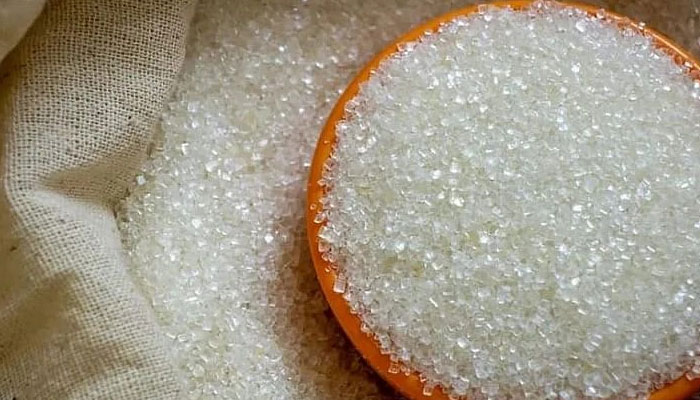
    A new scientific study has found that fructose a simple type of sugar may help cancer cells that survive chemotherapy send signals that encourage the disease to spread. Researchers at the Wistar Institute in the United States explained that some cancer cells are not completely destroyed by chemotherapy. These surviving cells stop dividing but remain active. They continue to send chemical signals to nearby cancer cells which may influence how the disease behaves. The study published in the journal Nature Aging suggests that fructose could be one of the substances involved in this signaling process. According to the researchers it may help surviving cancer cells stay active and communicate with other cancer cells. Co-author Aidan Cole said this is one of the first studies to show that a nutrient found in food such as fructose may act as a signaling molecule between cancer cells. Experts say the findings could improve understanding of how cancer returns or spreads after chemotherapy and may help guide future treatments. However they stressed that more research is needed. The study does not prove that eating fructose directly causes cancer to grow or spread.

  • How far can you drive after low fuel light comes on?

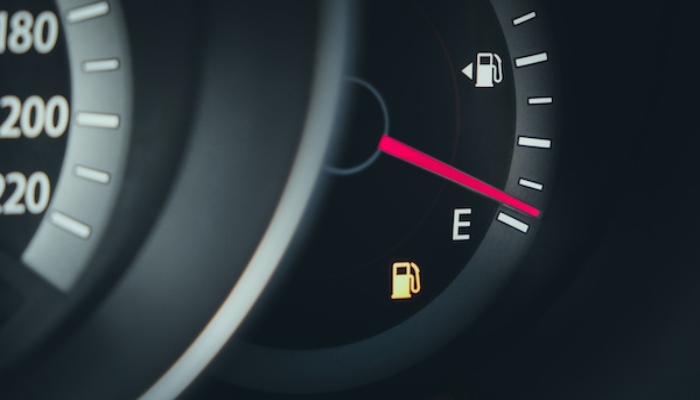
    If you fail to keep an eye on your fuel level while driving, your car could eventually come to a stop. When a car is about to run out of fuel, a warning indicator commonly known as the low fuel light illuminates on the dashboard. But how far can you actually drive once this light comes on? The answer can be useful if there isn’t a fuel station nearby. However, there is no single answer as it depends on several factors including the car’s make and model, model year, driving habits, fuel efficiency and road conditions. According to experts, once the low fuel warning light turns on, the vehicle cannot travel very far. The good news, however, is that it can usually go farther than many people expect. Experts say the warning light typically comes on when the fuel tank has around 10 to 15 percent of its capacity remaining. On average, small cars can travel about 20 to 30 miles (32–48 km) after the light comes on while larger vehicles may cover up to 50 miles (80 km). However, if the vehicle is old or the road conditions are poor, the remaining driving range may be significantly shorter. Cold weather can also increase fuel consumption reducing the distance the car can travel after the warning light appears. Experts further caution that continuing to drive for an extended period after the low fuel light comes on may damage the engine although driving a few additional miles is generally unlikely to cause any harm.

  • Rice water for hair facts vs myths

    Rice water has become one of the most popular natural hair care remedies in recent years.  Social media is full of videos claiming that it can make hair longer thicker and stronger. Many people also believe that women in countries like Korea and Japan have used rice water for healthy hair for generations. But is there real scientific evidence behind these claims? Rice water is the starchy liquid left after soaking or boiling rice. It contains small amounts of nutrients such as B vitamins vitamin E minerals antioxidants and carbohydrates that  come from the rice. These nutrients may help improve the overall condition of hair but experts say rice water should not be seen as a miracle treatment. A study published in the International Journal of Cosmetic Science in 2010 found that rice water contains a carbohydrate called inositol. This ingredient may help protect the outer layer of the hair reduce breakage and make hair feel stronger. Some research also suggests that inositol can remain on the hair even after rinsing, providing temporary protection. However scientists say there is still no strong evidence that rice water alone can make hair grow faster or cure baldness. Hair growth depends on many factors including genetics hormones nutrition overall health and lifestyle. Health experts believe rice water may help reduce hair breakage improve shine and make hair easier to manage. While it can support healthier looking hair it is not a quick solution for long hair overnight.Experts also recommend using rice water in moderation. Applying it too often may leave some people’s hair feeling dry, stiff or dull especially if their hair is sensitive to protein. Good hair health also depends on what you eat and how you care for your body. A balanced diet rich in protein, iron, zinc biotin and vitamin D along with enough water quality sleep and lower stress levels all play an important role in healthy hair growth. If you are experiencing severe hair loss scalp itching infection or rapid hair thinning it is best to consult a qualified doctor or dermatologist instead of relying only on home remedies. Overall experts say rice water can be a helpful part of a regular hair care routine but it should not be considered a guaranteed solution for faster hair growth or every hair problem. More scientific research is needed to fully understand its long term benefits.

  • Starvation Wages in Times of Inflation

    Hani Rasheed I wish to draw attention to the worsening condition of daily wage labourers. Despite working from morning till evening under the scorching sun, many labourers receive only around Rs1,500 a day. In today’s high inflation, this amount is far from enough to cover basic necessities such as food, rent, transport, education, and medical expenses. The rising cost of living has made survival extremely difficult for low-income families. While prices continue to increase, the wages of many labourers remain unchanged. This imbalance is forcing hardworking people deeper into poverty despite their honest efforts. The government should revise the minimum wage in line with inflation and ensure that employers pay workers fairly and on time. Protecting the rights of labourers is essential for social justice and economic stability. I hope the concerned authorities will take immediate action to improve the lives of daily wage workers

  • Human civilisation has always been scared of forgetting

    By Syed Tahir Rashdi A time ago before the first computer, the first library or even the first book people thought memory was the most important thing for knowledge. Whole societies relied on it. People remembered laws and stories by heart. Passed them down to their children. To remember something was not just to recall facts it was to keep your identity, culture and history alive. A time ago in ancient Greece people started to worry about memory. In a book called “Phaedrus” Socrates tells a story about a god named Theuth. Theuth invented writing. Thought it would make people wiser and help them remember more.. The king of Egypt, Thamus did not agree. He said that writing would actually make peoples memories weaker. People would start to rely on written words of trying to remember things themselves. They would think they know something just because they can read it. They would not really understand it. Course that is not what happened. Writing did not hurt society it changed it. Books became a way to store knowledge and share ideas with people all over the world. Socrates was worried about something that is still important today. The question now is not whether we remember things because of books. It is whether we remember anything all. Today we have information stored somewhere than ever before. Our phones remember our conversations. Computers store our photos forever. We can find answers to questions in seconds. Machines can summarise books. Help us find information fast. Never before has much information existed outside of our own minds. This is a change in how people relate to knowledge. A man named Marshall McLuhan said that every new technology is like an extension of our abilities. The wheel is like an extension of our feet. The telescope is like an extension of our eyes. By that logic our phones are like an extension of our memories. They help us remember things. The problem is obvious. As we get better at storing information outside of our minds we get worse at remembering things ourselves. We do not remember phone numbers because our phones do. We do not remember birthdays because our computers do. We do not remember how to get places because our phones tell us. We are not trying to remember things much as we used to. We are just looking them up. That small change might be one of the most important things that has happened to our minds in the past century. It is easy to see why we like to store information outside of our minds. Who would want to go to using paper maps or big books to find answers? Digital technology has made it easy for everyone to get information. We can find things out in seconds that used to take days. The question is not whether this is useful. It is whether it is changing our minds in some way. Some psychologists did a study in 2011. Found out something interesting. They found out that when people know they can find information easily they do not try to remember it much. They just remember where to find it. This is a deal. Our minds are changing from storing information to finding it. We are getting better at finding the path. Not the destination. This is not a habit it is how we think. Remembering things is not about storing facts it is about using them to make decisions to imagine things and to be creative. When we remember things we can connect them in ways and have new ideas. When we store information outside of our minds that changes. A man named Nicholas Carr said that digital technology is not just changing how we get information it is changing how we think. The internet is great at giving us answers. It is not so good at helping us really understand things. If we get used to getting answers we might not be as good at thinking deeply about things. This does not mean that technology is making us less smart. It means that our intelligence is changing. The problem is not that we do not know things. It is that we are too dependent on technology to remember them for us. A student might think that they can just look up answers and not really learn anything. A professional might rely much on reminders that they do not even try to remember things. Machines are getting better at remembering things for us. That might mean we do not have to try as hard. Slowly remembering things is becoming more like looking them up. Knowledge is becoming about getting access to information. Thinking is becoming more about getting things done. Technology has definitely helped us store information than ever before. The question is whether it is also making us less likely to try to remember things ourselves. Memory is not just about storing information. It is about how we experience life. A computer can store every document ever written. A machine can look up every photo ever taken.. They cannot turn experience into wisdom. Our memories are not just storage they are how we interpret things. We forget some things we remember others. We use them to understand ourselves. A writer named Jorge Luis Borges wrote a story about a man who could remember everything.. This gift was actually a curse. The man could not forget anything so he could not think about things in a way. He was trapped by his memory. Borges was saying that forgetting is not a thing it is actually necessary for thought. This is not about how we think as individuals. It is about how we learn and how we understand ourselves as a society. Education used to be about more than learning facts. It was about learning how to think. If we just store information outside of our minds education might just become about looking things up. The same thing applies to our society.

  • Unbearable heat in Turbat

    Hani Rasheed Through the columns of your esteemed newspaper, I wish to highlight the unbearable heat in Turbat. Every summer, temperatures rise to dangerous levels, making life extremely difficult for residents. Students, labourers, elderly people, and patients suffer the most. Long hours of load shedding and water shortages make the situation even more unbearable. The authorities should take urgent measures to ensure an uninterrupted electricity supply, improve water availability, and plant more trees to reduce the effects of extreme heat. Public awareness about staying safe during heatwaves should also be promoted. The people of Turbat deserve timely action before this severe weather causes more health problems. I hope the concerned authorities will address this issue without delay

  • Better Facilities in Turbat’s Hospitals

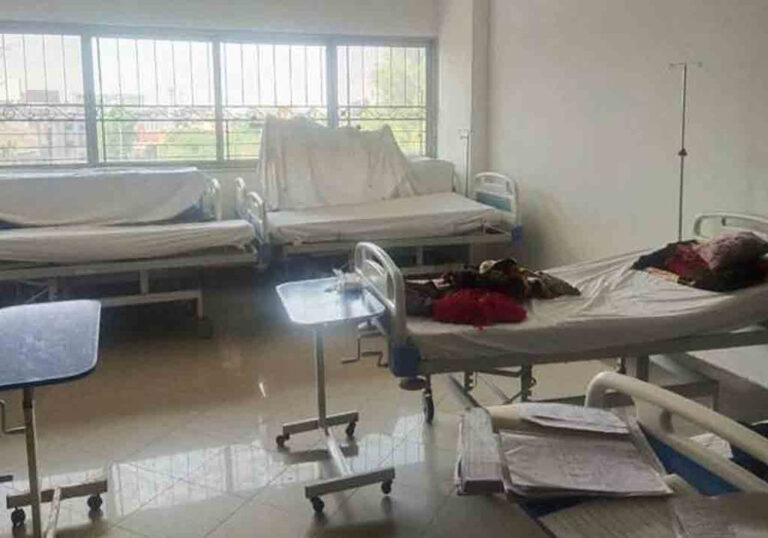
    Hani Rasheed  Turbat urgently needs better healthcare facilities. Although some improvements have been made, many patients still face shortages of medicines, medical equipment, and specialist doctors. Poor families often have to travel to other cities for treatment which is costly and difficult. Access to quality healthcare is a basic right and should be available to everyone. The authorities should ensure that hospitals are fully equipped, essential medicines are available, and qualified doctors and staff are appointed. Better healthcare services will reduce the suffering of patients and improve the well-being of the people of Turbat.

  • Smartwatch data may trigger anxiety

    Smartwatches have become popular health devices that can track heart rate sleep stress levels physical activity and recovery. While these features can help people understand their health better experts warn that relying too much on the numbers may lead to unnecessary anxiety. According to health experts the problem is not the smartwatch itself. The real issue begins when people trust the watch’s readings more than how they actually feel or the advice of a doctor. Nargiza Neumann Zander, founder of X Technology says health data is useful when it helps people make better choices. However it can become harmful if daily scores start controlling a person’s mood or decisions. One common sign of this is checking the smartwatch immediately after waking up instead of paying attention to how the body feels. Experts say people who naturally worry a lot try to be perfect or want to control everything are more likely to depend too much on smartwatch data.  A poor sleep score or low recovery rating may make someone think they are seriously ill even when there is no real medical problem. They also explain that smartwatch readings are based on algorithms and estimates not complete medical examinations. A low recovery score does not always mean a person is unhealthy because the human body gives many signals that wearable devices cannot fully measure. Constantly checking health data can also change people’s behavior. Normal changes such as temporary tiredness less sleep or a small increase in heart rate may be seen as signs of illness. As a result some people may skip exercise delay important tasks or believe they are not fit enough even though they are healthy. Heart specialists stress that smartwatches can increase health awareness but they should never replace professional medical advice. The devices can provide helpful information about heart rate sleep and activity but every reading should be understood in the context of a person’s overall health. Experts also note that movement poor sensor contact dehydration stress caffeine and environmental conditions can affect smartwatch readings. While a smartwatch may point to a possible issue only a qualified doctor can make a diagnosis after reviewing a patient’s medical history performing an examination and ordering any necessary tests. Health experts recommend focusing on long term improvements such as regular exercise better sleep and healthy daily habits instead of worrying about small day to day changes in smartwatch scores. People with conditions like high blood pressure diabetes or heart disease may benefit from monitoring certain health measures under a doctor’s guidance. They conclude that good health is not about getting the perfect smartwatch score every day. It is about maintaining long term physical and mental well being