بلاگز

  • Cool your home cut power bills

    Extreme heat and rising electricity bills have become a major concern for many families. Air conditioners, air coolers and fans provide relief from the heat but using them for long hours can significantly increase monthly power costs. Experts say there are several simple and energy saving ways to keep homes cooler without relying heavily on expensive cooling appliances. One modern option is an electric heat pump. During summer it removes warm air from inside the house and releases it outdoors keeping rooms cool. In winter the same system can provide heating. Compared to traditional air conditioners heat pumps use less electricity although they are still not widely available in Pakistan. If a heat pump is not an option ceiling fans are a practical and affordable choice.  They use very little electricity while improving air circulation. In hot and dry areas evaporative air coolers (also called swamp coolers) can also work well. These coolers use water to lower the air temperature and consume much less power than air conditioners. Experts also recommend improving the home’s design to reduce indoor heat.  Sealing gaps around doors and windows helps prevent hot air from entering. Good ventilation and proper placement of windows can also make a house feel cooler naturally. The materials used to build a home also matter. Concrete roofs cement slabs bricks and stone absorb heat more slowly than metal sheets helping maintain a more comfortable indoor temperature. Painting the roof white is another low cost solution. White roofs reflect 60% to 90% of the sun’s rays keeping the roof cooler and reducing the amount of heat entering the house. This is why white roofs are becoming more common in many hot regions around the world. Natural shade can also make a big difference. Thick curtains trees around the house and rooftop plants help block sunlight and lower surrounding temperatures. Experts say that well planned tree planting can reduce nearby temperatures by as much as 15°C in some conditions making homes more comfortable while lowering electricity use.

  • Indian Yoga teacher sets underwater push up record

    An Indian yoga instructor living in Vietnam has set a new world record by completing 86 push ups underwater on a single breath showing remarkable strength and breath control. The record was achieved by 38 year old Kamal Kloi in a swimming pool in Vietnam. He said his training in calisthenics and special breath holding techniques helped him complete the difficult challenge. This is not his first world record. In 2020, Kamal earned a place in the Guinness World Records by performing 21 yoga poses underwater without coming up for air. •Speaking to guinness World records Kamal said he has always enjoyed taking on unique challenges.  He explained that watching other people achieve world records inspired him to push his own limits and try something different. He added that years of practice physical fitness and breath control training played a key role in helping him achieve this milestone. After carefully reviewing the evidence submitted by Kamal Guinness World Records officially.  confirmed his achievement of 86 underwater push ups in one breath making it a new world record.

  • Montaigne’s philosophy is the antidote to modern burnout

    Approximately four centuries ago, the French Renaissance philosopher Michel de MMontaigne offered a philosophy that feels relevant to our hyper-connected world. He wrote in his famous essay Of Solitude that every person ought to maintain a hidden back room (arrière-boutique) inside their own mind. He should possess an uncolonized space where external obligations, public opinions, and societal expectations are strictly forbidden. In this interior, he argued, we establish our true independence and safeguard our core identity. Montaigne was writing long before the advent of smartphones, social media feeds, and workplace notifications. However, his reflections speak directly to a growing contemporary dilemma. The erosion of personal mental autonomy. This 16th-century insight continues to captivate modern psychologists. It reveals how carving out deliberate quietude remains our strongest defense against emotional exhaustion. To appreciate Montaigne’s metaphor, it helps to envision a medieval or Renaissance shopkeeper. In the front of the store, the merchant greets customers, negotiates prices, manages displays, and puts on a professional performance upto public expectations. However, behind the commercial counter sits a private back room. A space away from the gaze of buyers, where the owner can rest, reflect, and exist simply. Montaigne argued that human life operates on a similar dual structure. We all inhabit public identities. We are employees, parents, partners, citizens, and friends. In these roles, we must navigate duties, relationships, and social etiquette. However, Montaigne warned against allowing these outward roles to swallow our entire psychological existence. Our self-worth and peace of mind mustn’t rely exclusively on external validation. We must leave ourselves utterly vulnerable when those external structures vanish. The back room of the mind isn’t a place to hide misdeeds or abandon loved ones. Rather, it is a deliberate mental reserve. It is the part of your consciousness that remains unrented. It’s where you can question assumptions, process emotions, and figure out what you genuinely believe before the rest of the world tells you how to think. Psychologists today pose distinction between two experiences that are often conflated. Loneliness is an involuntary, painful state caused by an unwanted deficit in social connection. It acts as an emotional alarm signal that our fundamental human need for belonging is unmet. In contrast, solitude is a voluntary, chosen pause from social interaction. Recent psychological studies affirm what Montaigne intuitively understood. When individuals intentionally step back from social eengagements in reflective solitude, they experience lower levels of stress, improved emotional regulation, and creative problem-solving. Crucially, the key variable that determines whether time alone feels refreshing or painful is personal agency. Chosen solitude restores energy, whereas forced isolation breeds distress. Montaigne’s philosophical framework complements these findings by emphasizing that true solitude is a mental habit rather than a physical location. You do not need to retreat to a secluded mountain or cut ties with society to experience it. You can sit in a crowded coffee shop or a busy subway train and still inhabit your internal back room. One condition provided that you retain control over your own thoughts and judgment. In the modern digital landscape, preserving an uncolonized back room has become significantly more difficult. Technology companies design algorithms specifically to capture and monetize human attention. Our devices invite us to check messages from the moment we wake up. Afterwards, we respond to emails, view news updates, and seek social validation in the form of likes and comments. Many people have turned their entire interior life into a public display. Every preference is shared. The thought is broadcast. The free moment is filled with external input. When every gap in our day is filled with podcasts, streams, or scrolling feeds, the boundary protecting our inner retreat disintegrates. We become perpetually accessible to everyone else while remaining complete strangers to ourselves. Most people cannot afford to abandon their careers or family obligations to go live in isolation. So, a mental back room in the 21st century requires intentional daily boundaries. The room does not need to be built with physical walls. It can be constructed out of time and habits. A daily twenty-minute walk without wearing headphones or listening to audiobooks allows thoughts to drift, settle, and organize naturally. The delaying act of checking social media notifications for the first thirty minutes after waking up ensures that your mind starts the day with its own thoughts. Also, keeping personal journal where thoughts are written purely for self-clarification reclaims the joy of private thought. Ultimately, Montaigne’s classic essay reminds us that reserving a private space in the mind is not an act of selfishness or social withdrawal. On the contrary, an inner sanctuary ensures that we return to our families, workplaces, and communities. We bring a grounded, clear-headed, and genuine self to the table. We ensure that while we may give our time to the world, we never give away the key to our mind.  

  • |

    Rare 1858 volume returned to Australian library after 150 Years

    A home renovation in Australia recently uncovered a piece of literary history that had been missing for a century and a half. A homeowner in the coastal community of Kiama, located south of Sydney in New South Wales, was tearing down wall structures. Amidst, he stumbled upon a sealed fireplace. Inside an old wooden tea crate behind the brickwork was an antique book that belonged to the town’s local library. The volume, titled Antiquities of Athens, was published in London in 1858. Staff at the Kiama Library realized that the book had been missing since 1870s. Library officials described the return as completely unprecedented. While they occasionally receive books that are a few decades late during estate cleanouts, they had never seen a volume missing for over a century. The book itself is a notable historical work. It was originally authored by British architects James Stuart and Nicholas Revett to document classical Greek architecture. Book No. 506. A part of Kiama Library’s inaugural catalog which comprised roughly 1,000 items when the library first opened its doors in 1872. Despite enduring around 150 years encased inside a chimney cavity, the physical volume appeared in a surprising condition. Mild water exposure near the margins and natural weathering consistent with a century of neglect. However, the pages and original library stamps remained clearly legible. How the book ended up sealed behind a fireplace wall remains open to speculation. During the 19th and early 20th centuries, homeowners used unwanted household items as insulation or filler material when bricking over chimney flues. When Kiama Library manager Michelle Hudson examined the interior cover of the returned tome, she discovered the original set of lending regulations printed inside. Among those provisions was a penalty clause dictating an overdue fee of three British pence per week. Doing the math to adjust that Victorian-era fine for inflation over 150 years results in an eye-watering figure: roughly  $28,000 Australian dollars (approximately $19,500 USD). Luckily for the current homeowner who handed it over, the library has no intention of collecting. In fact, even if staff wanted to hold someone accountable, identifying the original borrower is impossible. The library’s paper borrow ledgers from the 1870s were lost or discarded long ago. It left a complete mystery as to who last checked out the book. The volume provides a fascinating glimpse into Victorian-era social norms and public library regulations. A borrower was forbidden from checking out another book until any previously borrowed item was returned and all associated fines were cleared. Hudson playfully speculated that this rule might explain why the original patron never brought the book back. Once the fine started accumulating, returning it became too costly. Households could borrow up to three books at a time, but only if at least six members of the family were verified as capable of reading. The regulations specifically prohibited lending books to individuals who arrived at the library in a state of intoxication. Modern library policies focus on patron code of conduct rather than testing family literacy rates. However, these antique guidelines serve as a memorable reminder of how public institutions functioned in colonial Australia. Antiquities of Athens will not be re-entering general circulation returning home after a century and a half in exile. Library staff plan to place the volume on permanent display within their local history archive. It is aimed to preserve it as both a physical artifact of Victorian publishing and a symbol of local history. As Hudson quipped, the library is thrilled to have its 506th catalog entry back on the shelves. Also, they have no intention of risking another 150-year wait to see it again.  

  • When global recognition becomes a local burden

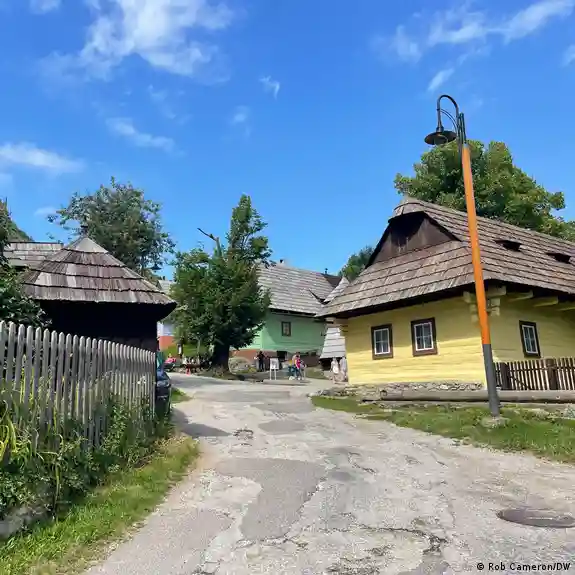
    In the Carpathian Mountains of central Slovakia lies Vlkolínec, a preserved settlement. This village is renowned for its pastel-painted timber cottages and traditional 19th-century folk architecture. It was inscribed as a UNESCO World Heritage site in 1993. Vlkolínec was celebrated not merely as a set of historical buildings, but as a living community. A rare surviving traditional rural life in Central Europe. However, three decades after receiving this prestigious designation, the small mountain is struggling with an existential dilemma. What was meant to be a cultural preservation has transformed into a challenge for the few villagers who still call Vlkolínec home. Now, frustration among permanent residents has reached a boiling point. There are calls to have the village removed from the UNESCO list altogether. When UNESCO designated Vlkolínec as a World Heritage site, one of the criteria was that it remained an inhabited settlement. At the time of inscription, the village was home to around 200 residents. Today, that permanent population has declined to just 14 to 17 people spread across four core families. In contrast to this dwindling resident count, Vlkolínec receives approximately 100,000 tourists every year. For the remaining inhabitants, the ratio of over 7,000 visitors per resident has basically altered the daily life. Locals report feeling as though they live inside a tourist zoo. The boundaries between public spaces and private homes are routinely ignored. Despite signs requesting privacy, visitors frequently wander into private yards, peer through kitchen windows, and treat active properties as open-access museum displays. The loss of privacy is compounded by anti-social tourist behavior. This conduct has been leaving locals feeling alienated in their own hometown. Overtourism is only one side of the coin. Residents also voice deep frustration over the rigid conservation framework that accompanies World Heritage status. Under national protection laws and strict UNESCO guidelines, historic homes face tight restrictions on modern modifications and physical alterations. Elderly villagers point out that these preservation rules have made customary rural activities increasingly difficult. Small-scale farming, livestock keeping, and land cultivation have gradually vanished. Surrounding agricultural terraces have become overgrown. Traditional meadow mowing has largely ceased as older generations pass away and younger generations move away. Furthermore, many of the village’s timber cottages have been bought up by outside buyers to serve as weekend holiday retreats. This phenomenon has increased the loss of a permanent, cohesive community. Some residents argue that revoking UNESCO status would reduce tourist pressure and ease regulatory burdens. However, municipal officials and heritage experts contend that delisting is neither practical nor the right solution. Local administrators in the nearby town of Ružomberok emphasize that UNESCO status brings significant heritage recognition and funding opportunities. Rather than abandoning the title, officials advocate for smarter tourism management. From a procedural standpoint, voluntary delisting at the request of a local community is virtually unprecedented in UNESCO’s history. The organization typically removes properties only when they lose their outstanding universal value due to severe destruction or irreversible development. The debate unfolding in Vlkolínec highlights a broader issue facing protected historic sites around the globe. How to balance global recognition and economic benefits with the rights and wellbeing of local inhabitants! Small historic communities across Europe and beyond battle with overcrowding and demographic decline. Vlkolínec serves as a reminder that preserving physical architecture alone is not enough. Without protecting the living social fabric of a community, world heritage sites risk turning into empty shells of their former selves.  

  • Motherhood impacts health more than fatherhood

    Having children brings major changes to parents physical mental and social lives but a new study suggests that mothers are affected much more than fathers. The research published in the Journal of Family Studies looked at how becoming a parent changes health and daily habits including exercise and smoking. The study found that becoming a father has little effect on men’s overall health before or after the birth of a child. However the situation is different for women. Researchers found that a mother’s age and the number of children she has can influence her health. Women with only one child or those whose children have reached their teenage years were more likely to experience symptoms of depression. On the other hand mothers with two or more young children were generally found to have better overall health. The biggest lifestyle change was seen in physical activity.  Mothers were much less likely to exercise than fathers. According to the study only 16% of mothers with young children exercise regularly while men’s exercise habits remain almost the same whether they have children or not. Researchers believe this is because mothers spend much more time caring for their children leaving them with less time to look after their own health. As a result their physical and mental well being may be affected.

  • |

    Silence is the gateway to self-knowledge

    In a world governed by the constant impulse to broadcast every thought, quiet reflection has become a rare commodity. Modern culture often treats silence as an uncomfortable void. It is termed as a gap in conversation that must be immediately filled with idle chatter, opinions, or background noise. However, a insightful cultural piece by The Marginalian revisit Kahlil Gibran’s classic masterpiece, The Prophet. It reminds us that embracing silence is not an act of withdrawal, but a necessary passage toward understanding who we truly are. When Kahlil Gibran wrote The Prophet in 1923, he addressed human struggles that remain relevant today. In his discourse on speech, Gibran suggests that incessant talking often springs from a subtle internal distress. We speak most compulsively when we lose touch with the quiet rhythm of our own thoughts. When we can no longer sit comfortably with our internal world, language transforms from genuine connection into a mere distraction. Thus, rendering itself as verbal pastime designed to drown out silence. Gibran offers a vivid metaphor for this dynamic. He writes that thought is a bird of space that can spread its wings inside a cage of words. Yet, it remains incapable of real flight. By reducing complex feelings into rigid verbal formulas, we often constrain the depth of our experiences. Excessive talk can obscure deeper understanding rather than clarify it. It might replace genuine contemplation with superficial noise. Why do so many people flee from quiet moments? According to Gibran, chatter frequently serves as a shield against the intimidating clarity of solitude. In the stillness of being alone, external distractions vanish. This silence forces us to stand face-to-face with our unvarnished selves: our fears, insecurities, unresolved longings, and raw truths. When Gibran’s prophet-protagonist is asked to address the matter of talking, he responds: You talk when you cease to be at peace with your thoughts; And when you can no longer dwell in the solitude of your heart you live in your lips, and sound is a diversion and a pastime. And in much of your talking, thinking is half murdered. For thought is a bird of space, that in a cage of words may indeed unfold its wings but cannot fly.In a world governed by the constant impulse to broadcast every thought, quiet reflection has become a rare commodity. For many, this exposure feels uncomfortable, triggering an urgent desire to keep a conversation going. It takes genuine courage to endure the silence long enough to hear what our inner world is actually trying to tell us. Gibran’s perspective on self-knowledge carries a warning against over-categorizing human identity. He cautions against treating the human soul as a static math problem or a territory that can be fully mapped and measured. Rather than declaring, “I have found the absolute truth,” Gibran suggests a humbler, more open attitude: “I have found a truth” He describes the human spirit not as a straight line or a single rigid structure, but as a boundless sea unfolding like a lotus with countless petals. When we attempt to define our entire identity through fixed labels or rigid verbal definitions, we risk placing artificial boundaries around a psyche that is naturally vast and evolving. Real self-knowledge isn’t about arriving at a final conclusion about who we are… it is about maintaining a curiosity toward our own inner evolution. Reclaiming Quiet in a Hyper-Connected Age In an epoch characterized by constant connectivity, Gibran’s reflections serve as an urgent invitation to recalibrate our relationship with quietness. Silence is not the absence of sound. Rather, it is a space where creative intuition, emotional healing, and genuine self-awareness take root.  

  • Fuel light on? How far can you drive?

    Running out of fuel while driving can leave you stranded so it is important to pay attention when the fuel warning light appears on your dashboard. Many drivers wonder how far they can travel once this light turns on.  The answer depends on several factors including your car’s model age fuel efficiency driving style road conditions and weather. Experts say the fuel warning light usually comes on when only about 10% to 15% of the fuel tank is left. In most cases small cars can still travel around 20 to 30 miles (32 to 48 km) after the warning light appears. Larger vehicles may be able to drive up to 50 miles (80 km) before running out of fuel. However older vehicles rough roads heavy traffic or cold weather can reduce that distance because the engine uses more fuel in these conditions. Experts also warn that repeatedly driving until the tank is nearly empty may damage the fuel system or engine over time. While driving a few extra miles after the warning light comes on is usually safe it is always best to refill your tank as soon as possible.

  • | |

    Modern fiction Is turning to non-human storytellers

    In contemporary literature, narrative perspective is being handed over to dogs, octopuses, whales, birds, and endangered wildlife. Talking animals have long been a fixture of children’s fables and folklore.  However, today’s literary fiction is doing something far more ambitious. Authors are adopting animal vantage points to grasp  profound existential questions, ecological grief, and the bewildering complexity of human society. Why readers and writers alike are suddenly captivated by animal narrators? This interest reveals much about our current cultural moment and the unique psychological role that fiction plays in times of global crisis. One of the most compelling reasons for the rise of animal storytellers is their ability to cut through human cynicism. We live in a world saturated with social media fatigue, and moral ambiguity. So, human characters often arrive with heavy psychological baggage. Readers may instantly judge a human narrator based on their socio-economic background, political leanings, or lifestyle choices. An animal narrator, by contrast, operates outside these human constructs. Whether it is a rescue dog observing a broken family or a pelican observing coastal transformation, an animal offers a clean perception. Their observations are rooted in immediate sensory experience: hunger, instinct, weather, fear, affection, and loyalty. Non-human narrators re-open channels of emotional honesty by stripping away political pretense. They allow readers to engage with burdening themes like grief, isolation and love. In literary theory, the concept of defamiliarization refers to the art of making the familiar look strange so that readers can see it clearly for the first time. Human beings have become accustomed to concrete jungles, light pollution, plastic waste, and digital distraction. To us, these phenomena are simply the backdrop of daily life. When we view through the eyes of a non-human entity, modern human habits suddenly appear bizarre. A bird that’s trying to navigate glass skyscrapers. Whale interpreting the deafening sonar of industrial ships. Forest mammal trying to cross a highway. They all illuminate the bizarre artificiality of human civilization. By shifting the vantage point, authors force readers to step outside their anthropocentric bubble. Thus, readers recognize how dramatically human choices disrupt the living ecosystem. We live in an era marked by accelerating biodiversity loss and climate instability. We own a reality that frequently induces emotional paralysis or denial in human populations. Directly reading about ecological devastation in news reports can lead to apathy or fatigue. Fiction narrated by animals offers a way to process ecological mourning on a deeply personal level. The abstract concept of climate change transforms into an immediate tragedy when the perspective is of an animal suffering habitat destruction. The non-human perspectives give dignity to  creatures that are seen as collateral damage in human progress. It transforms passive statistics into active, feeling individuals whose survival matters to the reader. At its core, the novel has always been an engine for cultivating empathy. For centuries, that empathy was restricted to other human beings of different cultures, genders, or eras. Modern fiction is taking the logical next step by stretching the boundaries of empathy beyond our own species. How do you depict a mind that experiences the world primarily through smell, echolocation, or instinct rather than human logic? Successful books navigate this by taking an imaginative leap with scientific understanding. Thereby, resisting the urge to turn animals into simple humans in fur or feathers. In doing so, they remind us that human intelligence is not the only valid way of experiencing reality. The surge in animal-led fiction reflects a growing realization that human stories do not exist in a vacuum. Our reluctance to listen to non-human perspectives has come at a high cost. Modern literature is not retreating from reality into fantasy. It is confronting our reality with clarity. It is reminding us of the wild world we share and the urgent need to preserve it.  

  • China tests giant fusion magnet

    China has successfully tested the world’s largest fusion magnet weighing 582 tons marking a major step toward developing an “artificial sun.” The technology aims to produce clean safe and nearly unlimited energy through nuclear fusion in the future. The giant D-shaped superconducting magnet was developed by the Institute of Plasma Physics under the Chinese Academy of Sciences. It is designed to control extremely hot plasma using powerful magnetic fields which is one of the most important parts of the nuclear fusion process. The magnet measures 21 meters long and 12 meters wide and has been built for the world’s largest fusion reactor. Reports say it is about 1.3 times larger than a similar magnet used in an international fusion project and can store three times more energy. It is capable of containing plasma at temperatures of up to 100 million degrees Celsius allowing scientists to recreate the same fusion process that powers the Sun. Chinese officials said most of the materials and manufacturing were completed within China reducing the country’s reliance on foreign technology and supplies. China hopes to generate electricity from fusion energy by around 2030. Scientists say an “artificial sun” is a nuclear fusion reactor that copies the natural process used by the Sun to produce energy. If successful this technology could provide the world with a reliable source of clean and almost unlimited electricity in the future.