بلاگز

  • |

    Kashmir is beyond a geographic location

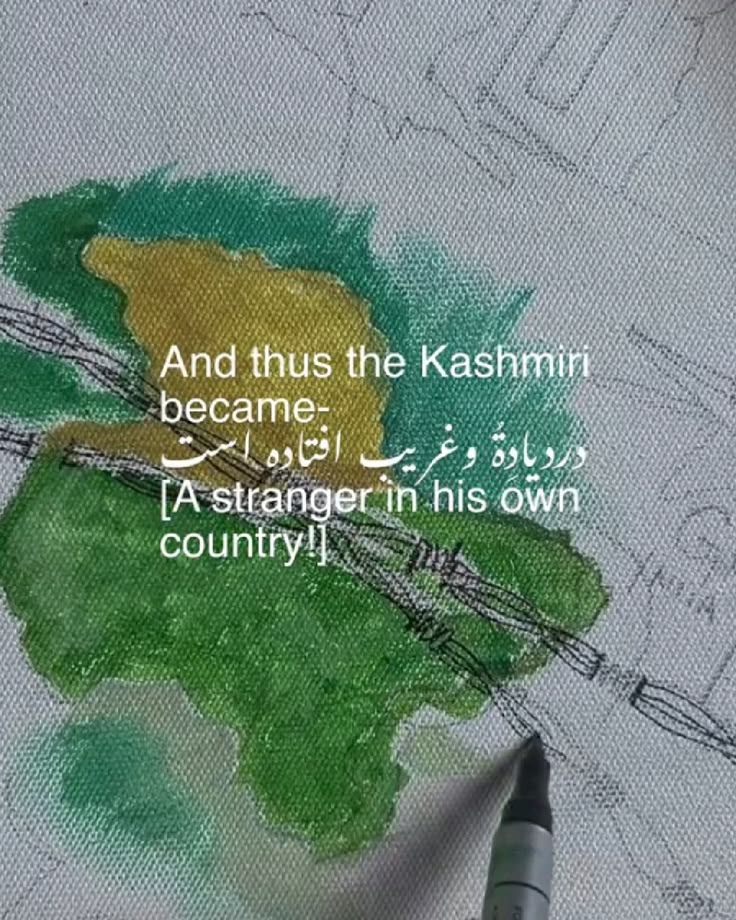
    For centuries, Kashmir has occupied a singular space in the poetic imagination. It is a region defined by a paradox. On one hand, earthly paradise of pristine lakes, towering snow-capped peaks and crimson autumn chinars. On the opposite, centuries of political upheaval, exile and grief. In literature, Kashmir is beyond a geographic location. It is a metaphor for divine beauty, and a testament to human endurance. The poetic tradition of Kashmir took root in spiritual mysticism and poignant lyricism during the medieval period. In the 14th century, the mystic poet Lal Ded pioneered the Vakh: four-line spiritual verse couplets in the Kashmiri vernacular. Her poetry bridged Hinduism and Sufism. It’s essence was inner purity, liberation, and the transcendence of physical suffering. I searched for my Self until I grew weary, No one, I thought, could reach this hidden knowledge. I plunged into it, and there found the jar of nectar. Habba Khatoon was known as the Nightingale of Kashmir. The 16th-century peasant-turned-queen introduced the Lol: a short, melodic form of love lyric. Her husband, King Yousuf Shah Chak, was exiled by the Mughal Emperor Akbar. Then, her poetry transformed into immortal songs of separation and longing. The spring has come, but you have not returned; My heart bleeds like the red bloom of the pomegranate. During the Mughal and Persian era, Kashmir became synonymous with heavenly superiority. The iconic Persian couplet often attributed to Amir Khusrow or Mughal Emperor Jahangir summarized this adoration: Agar firdaus bar roo-e zameen ast, Hamin ast-o hamin ast-o hamin ast. (If there is a paradise on the face of the earth, it is this, it is this, it is this.) In the 20th century, Allama Iqbal, whose ancestors hailed from Kashmir, brought a nuanced perspective to this paradise. In works like Javid Nama, he celebrated Kashmir’s breath-taking landscape while lamenting the subjugation and suffering of its people. He reflected on the region’s immense dormant potential in Payam-e-Mashriq: ​Pani tere chashmon ka hai aab-e-hayat, Aur tere kohsar hain qasran-e-kibriya. ​The water of your natural springs is the elixir of life, And your mountain ranges are towering palaces of divine grandeur. Iqbal’s verse moved beyond aesthetic wonder, using poetry as a call to dignity, resilience, and self-realization for the Kashmiris. In modern poetry, Kashmir’s narrative shifted dramatically toward exile, memory, and war. No poet captured this transition more powerfully than Agha Shahid Ali (1949–2001). He wrote primarily in English while employing traditional Urdu ghazal forms. Ali gave voice to the tragedy of late 20th-century Kashmir. In his seminal collection, The Country Without a Post Office (1997), Kashmir becomes a landscape of ghost letters, curfews, and faded memories. I write on fallen leaves and floating petals, I write to you from a country without a post office. Ali’s verse knits together global literary influences from Mahmoud Darwish to James Merrill. His poetry creates a poignant eulogy for a lost homeland. Their memory is anything but green, an white-hot fire. They burn down Kashmir in my veins. From the ascetic reflections of Lal Ded to the haunting elegies of Agha Shahid Ali, poetry has served as Kashmir’s truest archive. A disputed land of changing maps, borders, and historical conflicts. It’s the poetry that preserves the living soul of the land. The verses anchor its beauty, its heartbreaks, and its unyielding hope. Kashmir remains forever intact. It is an eternal paradise written in ink, surviving through the memory and voices of its poets.  
  • |

    Kashmir’s nightingale Habba Khatoon

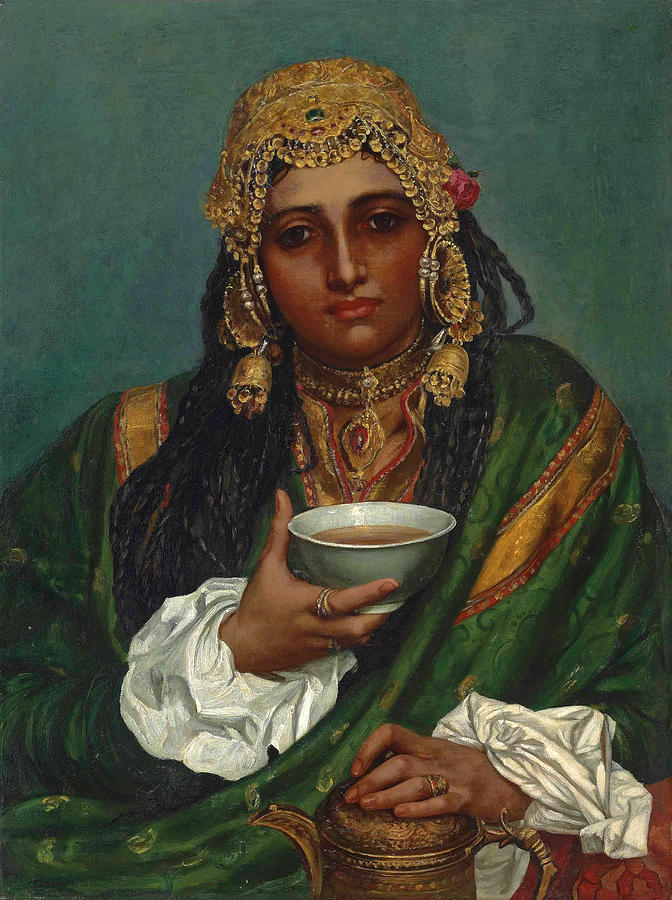
    Habba Khatoon stands as Kashmir’s Nightingale and Zoon: the Moon of Kashmir. Living in the 16th century, she transformed personal grief, marital heartbreak, and political exile into the foundational canon of Kashmiri romantic poetry. She was born to a peasant family in Chandhara village (Pampore), famous for its saffron fields. Unlike most rural girls of her era, her father sent her to a local maktab where she learned Persian and Arabic, nurturing her early literary talent. She got married to a peasant named Aziz Rathar. Unappreciative of her poetic disposition and intelligence, her husband and mother-in-law ill-treated her. She began singing her inner pain while working in the saffron fields and fetching water. Legend holds that while hunting near Pampore, Prince (later Sultan) Yousuf Shah Chak heard her singing under a plane tree. He arranged her divorce and married her as he was mesmerized by her voice and beauty. This marriage elevated her to Queen of Kashmir as Habba Khatoon. Emperor Akbar summoned Sultan Yousuf Shah to Delhi under the pretense of talks, arrested him, and exiled him to Bihar. Kashmir fell to Mughal rule, breaking Habba Khatoon’s world. She shed her courtly garments, donned the robes of an ascetic, and wandered the valley singing lamentations for her lost king. In short, she refused royal comfort. She spent her final years near Gurez and Athwajan, where her tomb rests today. Before Habba Khatoon, Kashmiri verse was dominated by devotional mysticism: Vaakhs and Shrukhs. She revolutionized Koshur literature by introducing the Lol. Lol is a short, melic lyric of intense personal feeling, love, longing, and domestic intimacy. It’s particularly designed to be sung rather than recited. One of her most iconic pieces, sung to this day across the valley: Mey haa karchey kitt kitaye, Mey kar tayiaar lole-vun… Chey kyaah gazi chaani roopeye, Volo haa maalyene dhoopeye! I have prepared myself in every way, I have composed my heart into a song of longing… What does it cost your beauty to look upon me? Come, my love, let us gather wild mountain herbs together! In the following verses, she uses Kashmir’s fleeting spring as an allegory for human beauty and time: Gulaan goy rang, pholan goy bahar, Mey valai poshan hyund hahaar… Yuthus chhumyene chaani dhaar, Volo maayi chaane pyarey! The flowers have faded, spring has taken its leave, My youth is wilting like a blossom in the heat… My eyes remain fixed on the path where you disappeared Come back, my beloved, for the sake of love!   After emperor Akbar exiled her husband to Bihar, she wrote this verse that captures geopolitical heartbreak reduced to raw human loss: Cchey saazey vaaye, bo saazey vaaye, Kati chhak chey, bo kati chhas… Diluk zaar vanay kith-kith bo, Jeel-e-Jhelum geyi aaba-haar! You play your tune far away, while I play mine in solitude, Where are you trapped, and where am I left to wander? How shall I tell you the agony of my heart? Even the waters of the Jhelum weep and overflow their banks for us. Her poetry is more than a story of personal transformation. It is the emotional arc of Kashmir itself. By introducing the Lol, she pulled Kashmiri verse down from abstract, detached mysticism into the intimate, beating heart of human experience. She gave language to the quiet endurance of ordinary women, the agony of sudden separation, and the unyielding beauty of a homeland caught in the tides of history.  

  • |

    Subjective aesthetics versus literary brilliance

    Litigation over artistic quality reveals more about the critic’s personal taste and ideological leanings than it does about the intrinsic value of the literature itself. A prominent Bangladeshi academic initiated a debate across literary circles when a short video clip went viral online. In this brief excerpt from a presentation delivered at a university literary festival, the scholar dismissed the acclaimed author Shahidul Zahir. He claimed that Zahir does not even qualify as a third-rate artist. He  labeled him instead as a third-class writer whose language is thoroughly uninteresting. He similarly critiqued another modern Bengali prose writer, Akhteruzzaman Elias. For this case, he dismissed his writing style as endlessly monotonous. This judgment raises critical questions about literary aesthetics and the metrics used to evaluate global literature. Does a critic’s subjective boredom justify reducing a writer’s work to a low rating? Analytically, the fiction of Shahidul Zahir demonstrates the exact qualities that define world-class literature. Shahidul Zahir was never a conventional storyteller who somehow aimed to comfort his audience. Rather than offering comfortable narratives, his work exposes uncomfortable truths beneath established historical accounts. His portrayal of wartime violence, political opportunism, and societal compromise during and after the 1971 Liberation War forces readers to confront disturbing realities. Zahir connects the grim details of local life with magical and surreal elements. He utilizes oral storytelling traditions. He also combined surreal metaphors with layered depictions of the human condition. His narratives have bizarre occurrences such as animals acting as caretakers or war collaborators feeding human flesh to animals appear surprisingly believable against the background of ordinary towns like Sirajganj or Old Dhaka. His surrealism reflects real-world atrocities that were often equally unimaginable far from being mere fantasy. The academic’s critique centered primarily on two claims. Firstly, Zahir’s writing is dull. Secondly, his portrayal of the 1971 war is historically inaccurate. However, a closer look at these claims exposes significant flaws in the critic’s premise. The critic in question strongly favors traditional, highly formal, Sanskritized prose (sadhu bhasha) and rejects everyday spoken dialect (cholito bhasha) for serious discourse. In contrast, Zahir’s prose relies on the living, informal, and at times raw language spoken by everyday people. Therefore, rejecting an author because their prose reflects the authentic cadence of public speech reveals an elitist preference rather than an objective literary standard. The scholar accused Zahir’s acclaimed novella Jibon O Rajnoitik Bastobota (Life and Political Reality) of presenting stereotypical representations. He further pointed the supposed depiction of war collaborators wearing skull caps. Yet, nowhere in the actual text does such a detail exist. The critic appeared to project his own assumptions onto the text rather than reading what was actually written. Zahir’s novella accurately captures the painful political reality of post-liberation Bangladesh, where former wartime collaborators were gradually integrated back into mainstream power structures. Literary scholars often define world literature as creative work that responds to the global dynamics of modern capitalism and political change. Zahir’s novels illustrate how global economic forces interact unevenly with local feudal structures. In his masterpiece Shei Raate Purnima Chhilo (It Was Full Moon That Night), Zahir explores the rise of a powerful rural leader under state-sponsored political reform. The narrative illustrates how modern capitalist development mixes with lingering feudal mentalities. This mentality then creates a system where local elites hold unchecked power. Zahir constructs a portrait of a society caught between tradition and modern governance. Furthermore, Zahir’s treatment of the 1971 war connects local experiences with international geopolitics. In his stories, wartime memories constantly surface like fresh grass breaking through soil. His words speak about how national liberation was simultaneously a local struggle for survival and an event influenced by global Cold War tensions. The argument that a nation must produce literature directly accessible or marketed to Western readers in order to be considered world-class relies on a flawed premise. Global literary status should not depend solely on English translation or commercial visibility. Countless profound authors around the globe write within their local contexts. Such marvelous authors produce works that match the thematic depth of international figures like Franz Kafka or Gabriel García Márquez. As a matter of fact, dismissing Shahidul Zahir as third-class overlooks the artistic, historical, and linguistic power of his work. His fiction stands as an extraordinary accomplishment in modern literature. He is the one that challenges, provokes, and immortalizes the complex human experience far beyond the boundaries of narrow critique.  

  • The unforgettable legacy of Raja Mehdi Ali Khan

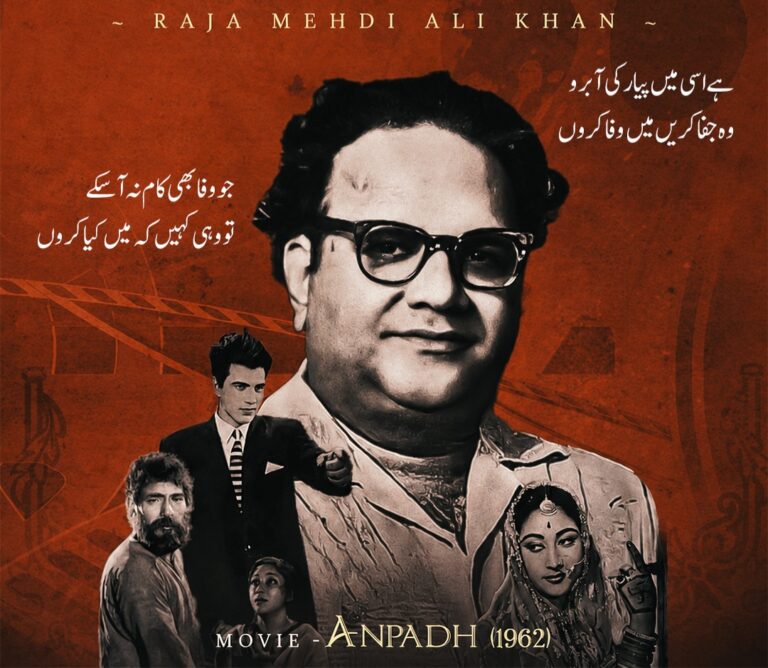
    Twentieth-century Urdu literature and Indian cinema was shaped by figures whose creativity crossed literary traditions and popular entertainment. Among these luminaries, Raja Mehdi Ali Khan stands out as a unique persona connecting high-art literary satire and immortal Bollywood melodies. This legend was born in 1915 in the historical town of Wazirabad. Khan was an observer of culture. He inherited a formidable poetic pedigree that caused him to be one of the most celebrated humorists and lyricists of his era. Raja Mehdi Ali Khan’s literary inclinations were virtually coded into his lineage. He was related to the renowned journalist and political figure Maulana Zafar Ali Khan. He was raised in an environment saturated with verse and socio-political commentary. Moreover, his mother was a recognized poetess in her own right. She taught him a deep reverence for language and rhythmic expression from an early age. This environment nurtured his inherent talent, allowing him to absorb classical Urdu poetic conventions while developing an understated wit that would define his future work. Before making a name for himself in the cinema, Khan began his journey in print journalism. He contributed prolifically to prominent periodicals and literary magazines of the era. The names included Monthly Alamgir, Weekly Khayyam, Tehzeeb-e-Niswan and Do Phool. His early journalistic writings allowed him to polish his observational skills. Whether analyzing social norms or painting witty portraits of everyday life, his prose stood out for its accessibility and warmth. Later, he transitioned into radio broadcasting. It’s considered a medium that further refined his sense of auditory storytelling and lyrical timing. He was driven by creative ambition. Later, Khan relocated to Bombay (now Mumbai) during a transformative era for Indian cinema. His entry into the film industry marked the beginning of a golden age for Hindi film music. He partnered with legendary music composers such as Madan Mohan. Khan penned lyrics that transcended simple movie themes, capturing profound emotional truths. His songs have proved to be timeless masterpieces, continuing to resonate across generations. Among his most iconic works are: hai isi mein pyaar ki aabru wo jafa karen main wafa karun jo wafa bhi kaam na aa sake to wahi kahen ki main kya karun Raja Mehdi Ali Khan, Anpadh (1962) His celebrated catalog includes evergreen classics. Lag Jaa Gale (Woh Kaun Thi?): Widely regarded as one of the greatest romantic ballads in Hindi cinema. Aapki Nazron Ne Samjha (Anpadh): A masterpiece of subtle expression and devotion. Jhumka Gira Re (Mera Saaya): A vibrant classic in popular culture. Tu Jahan Jahan Chalega (Mera Saaya): A hauntingly beautiful exploration of love and devotion. Agar Mujh Se Mohabbat Hai (Aap Ki Khaatir): A poignant reflection on romantic commitment. What set Raja Mehdi Ali Khan apart from many of his contemporaries was his dual identity.  Film audiences revered him for his deeply romantic and melancholic lyrics. On contrary, the literary world celebrated him as an exceptionally gifted humorist and satirist. Even amidst his demanding schedule in Bombay’s competitive cinematic landscape, Khan never abandoned his literary roots. His satirical essays and humorous poems were regularly featured in leading newspapers and journals across both India and Pakistan. His humor was rarely cynical. Instead, it offered a gentle, witty critique of human flaws, societal absurdities, and the complexities of modern living. Khan proved that high literary craft could flourish alongside popular music. Raja Mehdi Ali Khan passed away leaving behind a rich archive of literary contributions and cinematic songs that continue to be sung, reimagined, and loved today. His life journey from the quiet streets of Wazirabad to the recording studios of Bombay embodies the shared cultural heritage of the Indian subcontinent. His art remains vibrant and melodious whether delivered in a literary journal or sung by iconic playback singers.  

  • |

    Why August 12 total solar eclipse is so special?

    The last total solar eclipse occurred two years ago and once again millions of people will have the opportunity to witness this rare celestial event. This year’s eclipse is particularly special because some observers will see the total solar eclipse at sunset making it an exceptionally rare and breathtaking sight. According to NASA, the total solar eclipse will occur on August 12 but only a limited number of countries will experience totality. People in Greenland, Iceland, northern Spain and a small part of Portugal will be able to witness the total eclipse. In Spain, the eclipse will coincide with sunset creating a spectacular view that is expected to captivate skywatchers. A partial solar eclipse will also be visible across many other parts of Europe and Africa including most European countries and several regions of North Africa. Russia will enjoy another rare phenomenon as a partial eclipse will be visible at both sunrise and sunset. On the remote Taymyr Peninsula, the partial eclipse will begin at sunrise while in another part of the country it will be seen at sunset. Solar eclipses occurring at sunset are extremely rare which is one of the reasons why this year’s event is considered so unique. According to Pakistan Standard Time (PST), the partial solar eclipse will begin at 10:34 PM, the total eclipse will start at 12:12 AM and the event will conclude at 2:58 AM.

  • Beautiful childhood is lost

    Childhood has changed dramatically over the years, and many of its simple joys seem to be disappearing. In the past, children spent their evenings playing outdoors with cousins and neighbourhood friends flying kites, playing with marbles rolling tyres through the streets and enjoying games that created lasting memories.   I still remember how the evening sky in our city used to be filled with colourful kites bringing excitement and happiness to children of all ages. Today however these traditions are becoming rare. Instead of outdoor activities many young children spend hours using mobile phones and tablets often because they are given these devices to keep them occupied.   Excessive screen time at an early age can affect eyesight delay language development reduce social interaction, and limit opportunities to develop important physical and communication skills.   While technology certainly has its benefits, it should not replace the experiences that help children learn build friendships and enjoy a healthy childhood. Parents should encourage outdoor play family interaction and traditional games so that children can grow up with happy memories and balanced development rather than spending most of their childhood in front of screens

  • Women are not safe in our city

    I want to draw attention to the safety problems faced by women in our city. Many women and girls are afraid to go to schools, colleges and educational centers because they do notfeel safe on the roads. Harassment crime and unsafe public places make it difficult for them to continue their education freely. The government should take serious steps to improve security. More police officers, CCTV cameras street lights and safe transportation should be provided. Strict action should also be taken against people who harass or threaten women. I hope the authorities will take immediate action so that women and girls can go to school and educational centers without fear.

  • Urgent Need for a Hospital and Ambulance Service in Shapuk, District Kech

    By Asma Qayyum I would like to draw the attention of the health authorities and the Government of Balochistan to the severe healthcare crisis faced by the residents of Shapuk, a rural village in District Kech. At present, Shapuk has no healthcare infrastructure. There is no hospital, Basic Health Unit (BHU), clinic or even a single doctor available to serve the local population. For even minor illnesses routine check-ups  or medical consultations, residents are forced to travel nearly 34 kilometers to Turbat. This not only causes inconvenience but also places an unnecessary financial burden on families. The situation becomes even more alarming during medical emergencies. Shapuk has no ambulance service leaving critically ill patients without immediate medical assistance.   In cases of childbirth complications serious accidents heart attacks or other life threatening conditions patients must wait for expensive private transport. Many lives are put at risk or even lost during the long and painful journey to Turbat.   Pregnant women in particular face immense danger when timely medical care is unavailable. Access to basic healthcare is a fundamental human right yet the people of Shapuk remain deprived of this essential service. According to regional healthcare assessments by the Pakistan Poverty Alleviation Fund and district development profiles Kech has long suffered from a shortage of healthcare facilities and medical professionals. It is encouraging that the Balochistan Government’s Public Sector Development Programme (PSDP) has allocated funds for infrastructure projects such as the Construction of the Shapuk External Road. However while roads are being developed healthcare remains neglected. Roads alone cannot save lives if there are no nearby medical facilities to serve the people. I respectfully urge the Balochistan Health Department the Deputy Commissioner of Kech, and the elected representatives of the area to take immediate action.   The government should establish at least a fully equipped Basic Health Unit (BHU) in Shapuk appoint qualified doctors and medical staff provide essential medicines and station an emergency ambulance to ensure timely medical care for residents. Healthcare is not a privilege it is a basic right. The people of Shapuk deserve access to safe timely and quality medical services. Immediate action today can save countless lives tomorrow.

  • The Kinship Conundrum: Tradition vs. Compatibility in Cousin Marriages

    While cousin marriage often offers a sense of cultural continuity, it frequently introduces complex emotional, financial and relational challenges that can strain familial bonds. In many traditional settings couples grow up together and are engaged at an early age. However this deep familiarity can sometimes work against the union.   Because the groom is already a member of the same extended family there is often less structural or financial obligation such as a substantial dowry or independent financial planning which can lead to early imbalances in the household.   Over time these unions can give rise to deep seated regret between both parties. Paradoxically while the shared family network is originally intended to keep the couple together it can also inadvertently lower the barrier to divorce as broader familial disputes quickly spill over into the marriage itself.   Ultimately cousin marriage represents a delicate conflict between cultural tradition and individual happiness. While it may appear socially practical from the outside it often masks fundamental incompatibilities between partners who were chosen for their lineage rather than their personal alignment. For these marriages to endure families must pivot away from rigid customs and instead prioritize open communication mutual compatibility and emotional well-being.   A bond sustained solely by kinship rarely stands the test of time proving that personal alignment must ultimately take precedence over tradition.

  • Stop the culture of begging

    Begging has become a growing problem in many cities of Pakistan. It is common to see children women and elderly people begging at traffic signals markets and public places.   While some are genuinely poor many are forced into organized begging networks that exploit them for money. Instead of encouraging begging by giving cash, society should support charities, shelters and welfare programs that help people become self reliant.   The government must also take strict action against begging mafias provide vocational training and create employment opportunities for those in need. By addressing the root causes of poverty and exploitation we can help people live with dignity rather than depend on begging