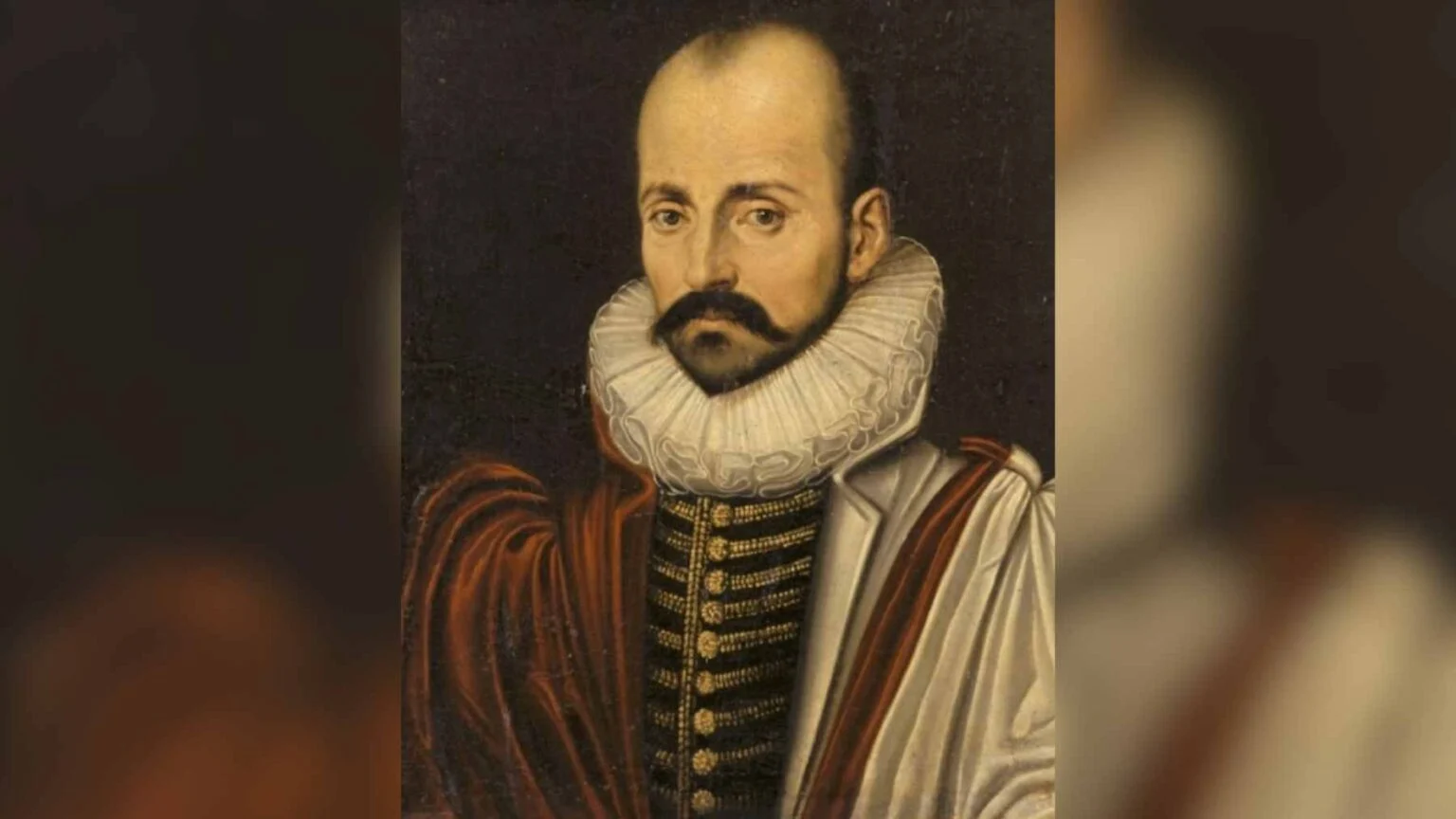
montaignes philosophy antidote

Montaigne’s philosophy is the antidote to modern burnout

Approximately four centuries ago, the French Renaissance philosopher Michel de MMontaigne offered a philosophy that feels relevant to our hyper-connected world. He wrote in his famous essay Of Solitude that every person ought to maintain a hidden back room (arrière-boutique) inside their own mind. He should possess an uncolonized space where external obligations, public opinions, and societal expectations are strictly forbidden. In this interior, he argued, we establish our true independence and safeguard our core identity.

Montaigne was writing long before the advent of smartphones, social media feeds, and workplace notifications. However, his reflections speak directly to a growing contemporary dilemma. The erosion of personal mental autonomy. This 16th-century insight continues to captivate modern psychologists. It reveals how carving out deliberate quietude remains our strongest defense against emotional exhaustion.

To appreciate Montaigne’s metaphor, it helps to envision a medieval or Renaissance shopkeeper. In the front of the store, the merchant greets customers, negotiates prices, manages displays, and puts on a professional performance upto public expectations. However, behind the commercial counter sits a private back room. A space away from the gaze of buyers, where the owner can rest, reflect, and exist simply.

Montaigne argued that human life operates on a similar dual structure. We all inhabit public identities. We are employees, parents, partners, citizens, and friends. In these roles, we must navigate duties, relationships, and social etiquette. However, Montaigne warned against allowing these outward roles to swallow our entire psychological existence. Our self-worth and peace of mind mustn’t rely exclusively on external validation. We must leave ourselves utterly vulnerable when those external structures vanish.

The back room of the mind isn’t a place to hide misdeeds or abandon loved ones. Rather, it is a deliberate mental reserve. It is the part of your consciousness that remains unrented. It’s where you can question assumptions, process emotions, and figure out what you genuinely believe before the rest of the world tells you how to think.

Psychologists today pose distinction between two experiences that are often conflated. Loneliness is an involuntary, painful state caused by an unwanted deficit in social connection. It acts as an emotional alarm signal that our fundamental human need for belonging is unmet. In contrast, solitude is a voluntary, chosen pause from social interaction.

Recent psychological studies affirm what Montaigne intuitively understood. When individuals intentionally step back from social eengagements in reflective solitude, they experience lower levels of stress, improved emotional regulation, and creative problem-solving. Crucially, the key variable that determines whether time alone feels refreshing or painful is personal agency. Chosen solitude restores energy, whereas forced isolation breeds distress.

Montaigne’s philosophical framework complements these findings by emphasizing that true solitude is a mental habit rather than a physical location. You do not need to retreat to a secluded mountain or cut ties with society to experience it. You can sit in a crowded coffee shop or a busy subway train and still inhabit your internal back room. One condition provided that you retain control over your own thoughts and judgment.

In the modern digital landscape, preserving an uncolonized back room has become significantly more difficult. Technology companies design algorithms specifically to capture and monetize human attention. Our devices invite us to check messages from the moment we wake up. Afterwards, we respond to emails, view news updates, and seek social validation in the form of likes and comments.

Many people have turned their entire interior life into a public display. Every preference is shared. The thought is broadcast. The free moment is filled with external input. When every gap in our day is filled with podcasts, streams, or scrolling feeds, the boundary protecting our inner retreat disintegrates. We become perpetually accessible to everyone else while remaining complete strangers to ourselves.

Most people cannot afford to abandon their careers or family obligations to go live in isolation. So, a mental back room in the 21st century requires intentional daily boundaries. The room does not need to be built with physical walls. It can be constructed out of time and habits. A daily twenty-minute walk without wearing headphones or listening to audiobooks allows thoughts to drift, settle, and organize naturally. The delaying act of checking social media notifications for the first thirty minutes after waking up ensures that your mind starts the day with its own thoughts. Also, keeping personal journal where thoughts are written purely for self-clarification reclaims the joy of private thought.

Ultimately, Montaigne’s classic essay reminds us that reserving a private space in the mind is not an act of selfishness or social withdrawal. On the contrary, an inner sanctuary ensures that we return to our families, workplaces, and communities. We bring a grounded, clear-headed, and genuine self to the table. We ensure that while we may give our time to the world, we never give away the key to our mind.


 

Similar Posts

  • Why are young bodybuilders dying so early

    Brazilian bodybuilder and fitness influencer Melson Araujo recently shared a gym photo showing his impressive physique. Just a few hours later the 35 year old reportedly became ill at home and died suddenly. The exact cause of his death has not been officially confirmed. However his passing has added to growing concerns about the number of young bodybuilders who have died unexpectedly in recent years. Earlier this year 22 year old Brazilian bodybuilder Gabriel Ganley also died after suffering sudden cardiac arrest. In 2024, two other Brazilian bodybuilders in their 30s and 40s also died from heart related problems including one who collapsed during a competition. Similar cases have been reported around the world. American bodybuilder Dallas McCarver died in 2017 at the age of 26, while German fitness influencer Jo Lindner passed away in 2023 at the age of 30. These deaths have raised an important question. why are some people who appear extremely fit and healthy dying at a young age? A 2025 study published in the European Heart Journal examined nearly 20,000 amateur and professional bodybuilders who competed between 2005 and 2020. Researchers found that professional bodybuilders were more than five times more likely to die from sudden cardiac arrest than amateur competitors. The study recorded 121 deaths including 46 caused by sudden cardiac arrest. The average age at death was 45 years but for active competitors it was only 34.7 years. Researchers believe several factors may increase the risk, including the use of performance enhancing drugs rapid weight loss before competitions and extremely intense strength training. Another 2025 study from Denmark published in the journal Circulation followed 1,189 men who used anabolic steroids and compared them with nearly 60,000 men over 11 years. The researchers found that steroid users had a nine times higher risk of developing cardiomyopathy a disease that weakens the heart muscle. They also had about three times the risk of heart attack and heart failure. Experts say anabolic steroids may also raise blood pressure speed up the build up of plaque in the arteries and change the structure of the heart. Autopsy reports from several bodybuilders have shown that many had enlarged hearts and thicker heart walls especially in the left ventricle. These changes can increase the risk of dangerous heart rhythm problems and heart failure. One of the best known cases was Dallas McCarver, whose heart weighed 833 grams more than twice the normal weight of an adult male heart. A 2022 review also found that many American bodybuilders had hearts that were much larger and thicker than normal. In some cases even athletes in their 20s showed enlarged hearts thickened heart muscles, and serious coronary artery disease.

  • Too much TV may speed up brain aging

    Spending long hours  watching television may be harmful to your brain over time according to a new study from the United States. Researchers at the University of Southern California found that people who spent more time in front of the TV were more likely to develop brain changes linked to aging and memory problems. The study included more than 1,700 adults with an average age of 53. Participants reported how many hours they watched TV each day. Researchers also performed MRI brain scans at the start of the study and again about 20 years later. After following the participants for more than two decades the researchers found that those who watched the most TV showed greater brain changes associated with aging stroke cognitive decline and dementia. The study also found that these individuals had a smaller volume in brain areas responsible for memory thinking and visual processing compared to people who watched less television. However the researchers noted that not all sitting activities affect the brain in the same way. They said the type of activity matters. Sitting while working reading or doing mentally engaging tasks did not show the same level of negative brain changes as spending long hours watching TV. The researchers explained that people spend nearly half of their waking hours sitting making it important to understand how different activities affect brain health. They also noted that women often combine TV watching with household chores while men are more likely to sit continuously and watch television for long periods. In today’s world many people also use multiple screens at the same time which may further increase the effects of a sedentary lifestyle. The researchers stressed that the study does not prove that watching TV directly causes brain decline. The findings are based on participants’ self reported habits so more research is needed to confirm the link.

  • |

    The architecture of world-building in fiction

    When readers choose a speculative novel or immerse themselves in a literary landscape, they are considering than following a character’s journey. They are stepping into a fully realized alternate reality. The imaginary reality is complete with its own geography, social hierarchies, natural laws, and cultural mythologies. While world-building is often discussed as a technical craft of maps, timelines, and terminology, its true power lies in psychology. The most compelling fictional universes merely inform readers. They subtly reshape how the human brain processes space, identity, and meaning. Psychologists refer to the mental phenomenon of becoming lost in a narrative as narrative transportation. When world-building is executed with precision, readers undergo a temporary shift in consciousness. Their immediate physical surroundings fade, and their working memory fully commits to the sensory and spatial details of the fictional environment. This process relies heavily on cognitive schemas. The mental blueprints the brain uses to organize information about the real world. Effective authors exploit these schemas. They purposefully present familiar elements of human behavior or physics to evoke wonder. What makes world-building psychologically resonant is the sheer volume of factual detail an author creates. Above all, the emotional truth that lies within those details. A fantasy city or distant alien colony feels authentic. Especially, its architecture, customs, and laws reflect the lived anxieties and aspirations of its inhabitants. Consider how fictional societies address scarcity, power, memory, or grief. When a setting’s internal logic mirrors fundamental human dilemmas, the brain accepts the setting as tangible. The world becomes a living stage rather than a static backdrop. Furthermore, immersive world-building fulfills a profound psychological need for safe exploration.  Well-crafted settings safely ask readers to navigate complex political systems, environmental collapses, or unfamiliar norms from a comfortable distance. Fiction acts as cognitive testing where readers can process real-world existential fears without experiencing direct danger. The sense of discovery that comes from decoding a world’s hidden rules releases dopamine. The experience rewards the reader’s curiosity and keeps them engaged across hundreds of pages. Ultimately, world-building is an exercise in mutual trust between writer and reader. The author provides the architectural framework. However, the reader’s mind brings the bricks and mortar. They use their own memories, visual imaginations, and emotional experiences to bring the landscape to life. When done right, a well-built fictional world never truly leaves the reader. Long after the final page is turned, its echoes linger in the mind. The immersive imagination forever alters how we view the boundary between what is real and what can be imagined.  

  • Shark jump captured on camera

    A video of a great white shark jumping out of the water near the California coast has gone viral on social media. According to international media reports, Soren Stevenson was filming a family member surfing near Newport Beach when a great white shark suddenly leaped out of the water. The unexpected moment was captured on video. Stevenson said he did not notice the shark while recording. He only saw it later when he watched the footage and was shocked by what had happened. Christopher Lowe a marine biology professor and director of the Shark Lab at California State University Long Beach believes the shark was likely a young great white that was simply playing near the surface. https://www.instagram.com/reel/DbZIMciAkbr/?igsh=cjlwNTlyZjhvdG8x According to the National Oceanic and Atmospheric Administration great white sharks are found in temperate and subtropical oceans around the world and often migrate as water temperatures change. Wildlife officials also said that warmer ocean waters linked to the 2026 El Nino weather pattern may bring more great white sharks closer to Southern California’s coastline.

  • |

    Marc Padeu is reimagining renaissance masterpieces

    In the global art world, classical European masterpieces have long held a dominant position in defining sacred aesthetics, grand narratives, and historical gravity. However, Cameroonian visual artist Marc Padeu is challenging this historical monopoly by taking the iconic compositions of Old Masters such as Caravaggio, Diego Velázquez, and Titian. He’s transplanting them directly into the lush, everyday landscapes of rural Central Africa. Padeu’s striking large-scale canvases reimagine classic biblical motifs and European artistic traditions against the backdrop of cocoa plantations and rural villages in Cameroon. Far from being a mere imitation of Western techniques, Padeu’s work represents a deliberate re-centering of world history, spiritual heritage, and local identity. A Dual Spiritual and Cultural Inheritance Born and raised in Cameroon, Padeu grew up navigating two distinct spiritual and cultural realities. The formal structure of Catholic devotion and the indigenous customs of Bamiléké animism. This dual background permeates his paintings, where sacred rituals and everyday agricultural labor exist side by side. In Padeu’s compositions, classical Christian iconography such as the baptism of Christ, the martyrdom of saints or solemn biblical gatherings is integrated into scenes of fieldworkers harvesting cocoa pods along riverbanks. Rather than treating these scenes as contradictory, Padeu views them as a natural reflection of human experience. He points out that the original stories of the Bible were ultimately rooted in the lives of ordinary people engaging in daily, unvarnished labor. Extending the Legacy of the Old Masters When Padeu incorporates the compositions, dramatic lighting, and gestures of European Renaissance masters, his objective is not passive homage or simple satire. Instead, he describes his creative philosophy as an extension of the art historical narrative. By placing Black African figures at the center of classical visual compositions, Padeu reframes European iconographic conventions as a shared human language. His paintings suggest that spiritual gravity, dignity and monumental art belong just as naturally to a Cameroonian cocoa harvest as they do to a 16th-century Italian cathedral. The Art of Patience and Global Recognition Padeu’s meticulous process reflects a deliberate rejection of fast-paced contemporary art production: Deliberate Pace: He completes rarely more than ten paintings per year. Long Incubation: Months are spent conceptualizing each piece before a brush ever touches the canvas. Global Reach: His recent solo exhibition in London highlights his growing prominence on the international stage.   Padeu’s ultimate creative ambition is both subtle and transformative. Rather than shaping his art to explain Africa to Western audiences, his goal is to present the wider world through an African lens. His work offers a perspective rooted firmly in the soils, traditions, and realities of Cameroon.

  • Baby Shark star makes K-Pop comeback

    Park Ji-won, who became famous as a child after appearing in the viral “Baby Shark Dance” video has returned to the music world after nearly a decade. Now known as “Baby Shark Boy,” Park is starting a new journey as a K-pop singer. He has released his first digital single “WAVE.” Park appeared in the “Baby Shark Dance” video when he was just seven years old.  The video later became the most watched video in YouTube history gaining billions of views around the world. His new solo music project is supported by The Pinkfong Company, the owner of the “Baby Shark” copyright. Park said he is thankful that people still remember him after so many years. He believes the love for “Baby Shark” inspired him to reconnect with people through music. The “Baby Shark” song was released in 2016 and its famous video has now crossed 17.2 billion views.  The song became a worldwide hit, inspiring dance trends parodies and countless social media posts. “Baby Shark” has even been played at the White House while famous figures such as Donald Trump and Elon Musk have mentioned the popular song. After his early success, Park also appeared in other Pinkfong projects. His new single “WAVE” begins with a sound that reminds listeners of “Baby Shark” before moving into a modern electro pop style.  Park also helped write the lyrics for the song. After becoming famous as a child Park is now ready to build a new identity in the K-pop world.

Leave a Reply

Your email address will not be published. Required fields are marked *