بلاگز

  • |

    Writers are embracing flaws to fight AI prose

    In an era where generative artificial intelligence can generate essays in seconds, the digital world is quietly witnessing a linguistic backlash. Readers are increasingly attuned to the invisible fingerprint of large language models. Perfectly balanced sentences, predictable three-item lists, flawless grammar and fondness for the em dash. In response, a movement of novelists, journalists, essayists, and even corporate creators are opting an anti-AI literary counterculture. These writers are actively reintroducing human idiosyncrasies ranging from unorthodox metaphors to intentional typos to declare that a human is behind the keyboard. The hallmark of standard AI-generated text is not necessarily bad grammar. In fact, it is often too clean. Text-generation algorithms default to statistically probable phrasing. It’s resulting in a distinctively smooth, neutral tone that rarely takes stylistic risks. Over the past few years, certain visual and structural patterns have become clear red flags for readers. Excessive dependence on em dashes. Relying on clinical or dramatic transitions like “In conclusion,” “Delve,” or “Navigating the landscape of…” Prose that seems lacking the natural rhythm, pauses, and unpredictable detours of spontaneous speech. To break free from these algorithmic habits, authors are adopting techniques anchored in absolute negation. Novelist Laura Brooke Robson, author of Love Is an Algorithm, noted that she actively altered her sentence structures to avoid robotic cadence. Instead of relying on conventional metaphors, she intentionally sought out unexpected punctuation. For creators, avoiding the default traps of language models has surprisingly made their writing more original and lively. This counterculture goes beyond simply avoiding specific punctuation marks. Writers are cultivating a distinct aesthetic centered on authenticity, vulnerability, and friction. After years of detached or objective styles, creators are leaning back into intimate first-person storytelling. Specific personal experiences, odd sensory details, and messy real-life observations serve as proof of lived experience. They prove to be something synthetic text generators cannot genuinely claim. Minor human flaws, casual slang and even subtle typos are being viewed as authentic signatures. Some digital platforms and creators have even experimented with tools that preserve raw keystrokes to signal genuine human origin. Instead of smoothing out every transition, writers are introducing erratic pacing, quirky similes, and inventive vocabulary. Authors create an experience that keeps the reader engaged. Deliberately reassuring them that the text wasn’t produced by an automated model. Can Artificial Intelligence Just Copy It? Skeptics of this trend point out an obvious paradox! If large language models are capable of processing complex prompts, they can just as easily be instructed to “write with typos,” “use casual grammar,” or “tell a quirky story in the first person.” From a purely technical perspective, intentional mistakes does not make prose impossible for a machine to imitate. However, proponents of the movement emphasize that outsmarting algorithms was never the primary goal. Instead, the anti-AI counterculture is an artistic statement about human craft and intention. Writing is fundamentally an act of personal communication between two minds. When readers engage with text, they are seeking the author’s unique perspective, effort, and creative voice. Ultimately, this movement signals how society values written communication. As machine-generated text becomes ubiquitous, hyper-polished prose is losing its premium status. What readers increasingly crave is not frictionless perfection, but the warmth and oddity of a human voice.  
  • |

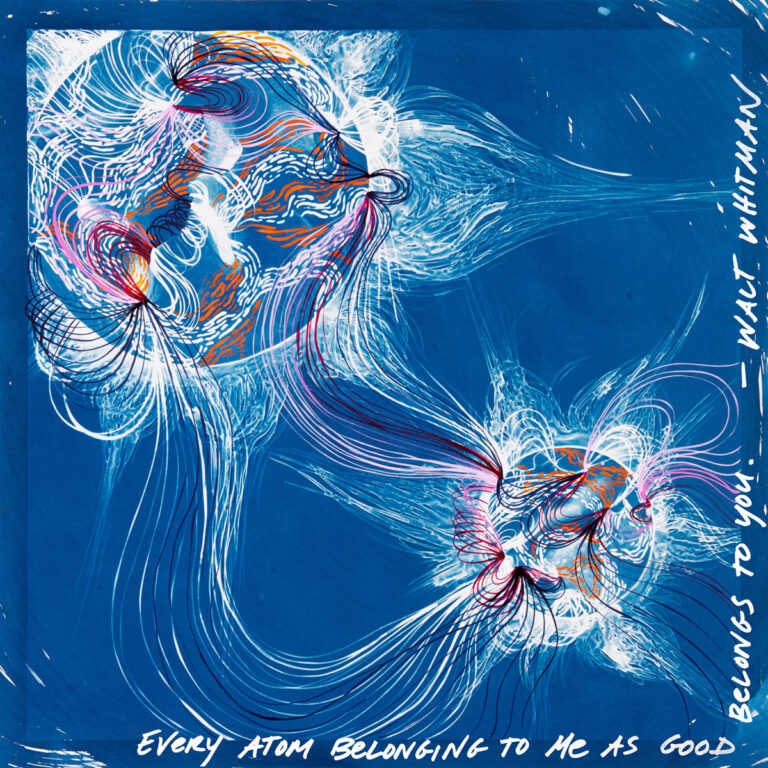
    How intentional attention can transform the ordinary

    The human mind often defaults to a posture of constant vigilance in the world dominated by endless news, digital noise, and social anxiety. We scan our environments for threat, hardship, and dysfunction. We maintain psychological defense mechanism sharpened by evolution and modern technology. The poet and educator Ross Gay demonstrated in his literary project, The Book of Delights that there exists a quiet, radical counter-practice. It’s the deliberate development of wonder on daily basis. It all began as a personal experiment on his forty-second birthday and turned into a meditation on how we inhabit time, space, and community. This educator wrote a short essay every single day for a year. He would capture a specific moment or observation that brought him joy. The resulting body of work reveals that gladness is something that simply happens to us even if it’s rare. When we think of joy or delight, we frequently imagine grand milestones. We suppose a long-awaited promotion, a dream vacation, or a monumental life event. Gay’s yearlong experiment turns this perspective upside down. His essayettes focus on the fleeting occurrences that populate everyday existence. For instance, the taste of fresh fruit picked directly from a vine. It can be warmth of two strangers sharing a brief smile on a crowded bus. We can’t neglect the simple relief of taking off uncomfortable shoes after a long walk. Gay discovered a psychological shift that he likened to developing a delight radar. When you know you must document joy before the day ends, your mind begins to actively search for it throughout your waking hours. You stop treating small encounters as background noise and start recognizing them as vital happenings. Attention itself becomes an act of appreciation. Crucially, this practice does not require ignoring life’s harsh realities. True gladness is not toxic positivity or the denial of suffering. Gay’s reflections frequently touch upon systemic injustice, racial prejudice, grief, aging, and personal loss. What makes his work so resonant is its insistence that delight and sorrow exist side by side. Noticing beauty amidst difficulty is not an act of escapism; it is a form of emotional resilience that sustains us through hard times. Another significant insight from Gay’s experiment is that delight is inherently contagious. Unlike physical resources that diminish when shared, human gladness expands when communicated. Gay illustrates how pointing out a pleasant detail to someone else creates a sweet bond of togetherness whether it’s about a casual interaction with local vendor or an unexpected moment of humor with neighbor. In a world that frequently feels fragmented and polarized, taking note of small wonders acts as a bridge. It reminds us of our shared vulnerability and our common capacity for appreciation. When we point to pastel sunset, a blooming flower breaking through sidewalk concrete or a delicious cup of coffee, we are essentially saying: Look, isn’t it incredible that we get to experience this together? You do not need to publish a book of essays to incorporate this mindset into your daily routine. Small, consistent habits can rewire how you perceive your day-to-day environment. You need two minutes before bed to write down one specific, physical thing that brought you comfort or pleasure during the day. Specificity matters instead of writing good lunch, detail the aroma of the spices or the crunch of fresh bread. Shift your focus away from digital screens periodically to notice physical textures, sounds, and scents around you. Acknowledge the feel of sunlight on your skin or the rhythm of rain against a windowpane. Tell someone when they make your day slightly better. A genuine compliment or a warm word of thanks multiplies the delight for both giver and receiver. Allow yourself to pause for ten seconds when something pleasant happens. Savoring a moment briefly allows the brain to encode positive experiences more deeply. Ultimately, practicing willful gladness is a choice to honor the gift of being alive.  

  • Human civilisation has always been scared of forgetting

    By Syed Tahir Rashdi A long time ago, before the first computer, the first library or even the first book, people thought memory was the most important thing for knowledge. Whole societies relied on it. People remembered laws and stories by heart. Passed them down to their children. To remember something was not just to recall facts it was to keep your identity, culture and history alive. A long time ago in ancient Greece, people started to worry about memory. In a book called *Phaedrus* a man named Socrates tells a story about a god named Theuth. Theuth invented writing. Thought it would make people wiser and help them remember more.. The king of Egypt, Thamus did not agree. He said that writing would actually make peoples memories weaker. People would start to rely on written words of trying to remember things themselves. They would think they know something just because they can read it. They would not really understand it. Course that is not what happened. Writing did not hurt society it changed it. Books became a way to store knowledge and share ideas with people all over the world. Socrates was worried about something that is still important today. The question now is not whether we remember things because of books. It is whether we remember anything all. Today we have information stored somewhere than ever before. Our phones remember our conversations. Computers store our photos forever. We can find answers to questions in seconds. Machines can summarise books. Help us find information fast. Never before has much information existed outside of our own minds. This is a change in how people relate to knowledge. A man named Marshall McLuhan said that every new technology is like an extension of our abilities. The wheel is like an extension of our feet. The telescope is like an extension of our eyes. By that logic our phones are like an extension of our memories. They help us remember things. The problem is obvious. As we get better at storing information outside of our minds we get worse at remembering things ourselves. We do not remember phone numbers because our phones do. We do not remember birthdays because our computers do. We do not remember how to get places because our phones tell us. We are not trying to remember things much as we used to. We are just looking them up. That small change might be one of the most important things that has happened to our minds in the past century. It is easy to see why we like to store information outside of our minds. Who would want to go to using paper maps or big books to find answers? Digital technology has made it easy for everyone to get information. We can find things out in seconds that used to take days. The question is not whether this is useful. It is whether it is changing our minds in some way. Some psychologists did a study in 2011. Found out something interesting. They found out that when people know they can find information easily they do not try to remember it much. They just remember where to find it. This is a deal. Our minds are changing from storing information to finding it. We are getting better at finding the path. Not the destination. This is not a habit it is how we think. Remembering things is not about storing facts it is about using them to make decisions to imagine things and to be creative. When we remember things we can connect them in ways and have new ideas. When we store information outside of our minds that changes. A man named Nicholas Carr said that digital technology is not just changing how we get information it is changing how we think. The internet is great at giving us answers. It is not so good at helping us really understand things. If we get used to getting answers we might not be as good at thinking deeply about things. This does not mean that technology is making us less smart. It means that our intelligence is changing. The problem is not that we do not know things. It is that we are too dependent on technology to remember them for us. A student might think that they can just look up answers and not really learn anything. A professional might rely much on reminders that they do not even try to remember things. Machines are getting better at remembering things for us. That might mean we do not have to try as hard. Slowly remembering things is becoming more like looking them up. Knowledge is becoming about getting access to information. Thinking is becoming more about getting things done. Technology has definitely helped us store information than ever before. The question is whether it is also making us less likely to try to remember things ourselves. Memory is not just about storing information. It is about how we experience life. A computer can store every document ever written. A machine can look up every photo ever taken.. They cannot turn experience into wisdom. Our memories are not just storage they are how we interpret things. We forget some things we remember others. We use them to understand ourselves. A writer named Jorge Luis Borges wrote a story about a man who could remember everything.. This gift was actually a curse. The man could not forget anything so he could not think about things in a way. He was trapped by his memory. Borges was saying that forgetting is not a thing it is actually necessary for thought. This is not about how we think as individuals. It is about how we learn and how we understand ourselves as a society. Education used to be about more than learning facts. It was about learning how to think. If we just store information outside of our minds education might just become about looking things up. The same

  • Amidst Consumerism: Has Modernity Stripped Us of The Ability To Love?

    By Hamza Aman As people of an unprecedented era, we often pride ourselves on the immense progress that has been furthered in various frontiers; be it state-of-the-art technology, sophistication in medicine, ground-breaking research in natural sciences or advancement in ideals like democracy, free speech and human rights. Our age has truly witnessed the remarkable realisation of human potential, enabling us to navigate and progress in uncharted terrains. But as the adage goes, ‘there ain’t no such thing as a free lunch’. This development came at an exorbitant cost. Modernity swiftly and discreetly robbed us of the most beautiful and human of experiences—love. A look into the annals of history suggests that love, especially in its romantic form, has never just remained an emotion. It has been a powerful unifying force that breathed meaning into life by offering to look beyond primitive human tendencies. The transcendence of social mores, as embodied in various celebrated stories, laid down a powerful moral framework of rising above oneself and praised classical themes of romanticism like selflessness, chivalry, and individual uniqueness. In philosophy, this notion of seeing people as ends in themselves was echoed by the German philosopher Immanuel Kant. Rejecting instrumentalism, he argued every human was possessed of inherent worth, distinct value, and dignity. And they must be treated as such. However, these notions began to change in postmodern society—drastically. A plethora of factors contributed to it. Postmodern society was marked by the withering of traditional anchors like family, marriage, and community, while rapid change and the steep rise of consumer culture completely changed how we viewed love and romance . Sociologist Zygmunt Bauman employs the term ‘liquid love’ to describe this change. He argued that modern relationships had become synonymous with shopping, wherein people saw their partners as products, browsing options, comparing, and checking them out. And because that kind of relationship is based on a consumerist approach, when the initial novelty fades away, it is easy to just exit. Furthermore, in an ever-changing world, individuals fear commitment and deliberately maintain fragile bonds that can be easily discarded when inconvenient. This is exacerbated by the extreme uncertainty that characterises the culture. As everything remains in constant flux and people go through changes in job, identity or preferences, bonds remain light and flexible. The result is a hindrance in building long-term relations whose bedrock is trust, commitment, and love, as everyone becomes disposable and replaceable. Moreover, people have formed a distorted perception of love, viewing it as something that magically happens and never fades away. This is not true and only leads to disenchantment in the long term. As the psychoanalyst Erich Fromm argues, love is an art that demands patience, discipline, and effort to cultivate. It needs constant nourishment. And true love can only flourish when it springs from abundance where you zoom in on ‘giving’ rather than ‘taking’. This kind of love not only enriches but also helps in building sound and enduring connections based on care, respect, and responsibility. Capitalist culture, however, perpetuates this need of being lovable rather than being on the giving side of the spectrum. It encourages us to market and commodify ourselves, to look good, possess status and wealth and/or cultivate certain personality traits. Thus, the culture stands in stark contrast to what is genuinely needed in fostering meaningful relationships. People have for centuries grasped the power and potential of this elusive emotion that we call love; but it went through radical change in the past few centuries. If we desire to truly develop and realise it, we need to abandon the consumerist tendencies that have become entrenched in our society. We need to give up seeing individuals as commodities or products and rather view them in a different light—as unique and irreplaceable beings with inherent worth that deserve love. Amidst chaos and change, what we need is stillness that is built on values like commitment, trust and responsibility. And finally, we, as a people, should celebrate love as a meaningful art that requires skills, refined through patience. Only then can we realise its actual potential, and its tremendous power, where it ultimately transforms into a symbol of rebellion in the face of alienation and meaninglessness.   Bio: Hamza Aman is a Political Science student at the Lahore University of Management Sciences (LUMS) with a keen interest in philosophy.

  • Fake it till you break it: inside the deepfake era

    Previously, I believed that if one could see something, it could be trusted because seeing is believing. A video was proof. A voice recording was evidence. That belief is gone, and I don’t think we have fully sat with the implications. There is an abnormal shift happening. AI-generated images, voice cloning, face-swapping apps, and similar tools were supposed to expand how people express themselves, but instead they have slowly chipped away at what matters most: the belief that people can express themselves through their images and their words. I attended a workshop under the project titled “Digital Trust and Free Expression in the AI Era” at Department of Media and Development Communication, University of the Punjab, supported by the U.S. Mission to Pakistan in partnership with the Pakistan-U.S. Alumni Network (PUAN) last week. During the discussions on digital trust. I took part in the discussion and shared my thoughts that we are now in a time where we must take this out of the realm of fun tech novelty and place it in the realm of a structural issue in how societies operate. Everyone says deepfakes are a “misinformation” issue, but this is not an adequate way to describe it. Misinformation is something that’s a false statement that can, in theory, be fact-checked. Deepfakes strike at the heart of video and audio credibility which have always been treated as vivid reality. When people realize that any clip can be fabricated, they stop trusting all clips, even real ones. This is what concerns me most. Fake things are believed and real things become deniable. Consider the implications of journalism, courts, political accountability, etc. If a politician is recorded saying something damaging, they can simply claim that it’s a “deepfake” and, depending on how much trust citizen have lost, people may believe them. We are creating a society in which it is possible to negotiate authenticity and in which negotiable authenticity is a gift for those who wish to avoid consequences. I also face a conflict here: I strongly believe in free speech, satire, parody, art and provocation even with synthetic media. The same technology behind de-aged actors, resurrected voices, dubbing, and experimental AI is extremely creative, yet it is all connected to malicious deepfakes. There is no way to ‘clean’ a tool of its worst use-case. A hammer can break windows or build houses. I do not think banning synthetic media is the answer, nor do I support pre-emptive censorship. That path harms legitimate satire, journalism and art under the pretense of ‘preserving truth’. History does not look kindly on institutions that decide what is a “fair” fake. Freedom of expression has never been of consequence or friction, and right now, deepfakes have almost no friction. The reality is there is no cost, disclosure, and accountability in using this technology deceptively. The issue is the imbalance. I believe the solution is not reducing synthetic tools but improving provenance. We need a digital watermarking, which cannot be “easily removed”: cryptographic signatures embedded into cameras, microphones and generative tools at the point of creation, so that the “unverified” label appears by default, not as an afterthought. Not to prohibit any content but to allow people to know what they are seeing before deciding whether to trust it. Platforms have been allowed to operate without responsibility for too long. Convincing fakes can reach millions before correction and corrections never travel as far. This asymmetry is not natural; it is a design choice. Platforms can mark, rate or tag synthetic content at the time of dissemination. Most simply haven’t had to! But, beyond platforms, we must change our own instincts as individuals. The old saying was “pics or it didn’t happen.” The new rule should be: “Who gains from believing this and can I verify it myself? A society that believes everything or worse, believes nothing is in danger. The deepfake age is not the age of AI; it is the consequences of a world where the cost of faking reality is near zero and the cost of establishing truth remains high. Freedom of expression should protect the most challenging and profound exchange of ideas, not the production of fake consent, fake evidence, or fake people. We can have creative freedom and still expect honesty about sources. These are not competing prioritie These are not different objectives/priorities. However, if we pretend it’s a content-moderation footnote, we must make sure we are not waking up in a world where “fake it till you make it” has become ‘fake it till you break it” and by that time, it won’t be just one video or one lie that will break. It will be our fundamental ability to reach a shared understanding of reality. The views, thoughts, and opinions expressed in this blog are solely those of the author and do not necessarily reflect the official policy or position of the U.S. Mission to Pakistan or USEFP/PUAN. The writer, Mahnoor Ashraf Wattoo, is a student of Media and Development Communication at University of the Punjab, Lahore 

  • Algorithmic moderation and the shadow-ban dilemma

    By Raheel Waqar I attended a workshop under the project titled “Digital Trust and Free Expression in the AI Era” at the Department of Media and Development Communication, University of the Punjab, supported by the U.S. Mission to Pakistan in partnership with the Pakistan-U.S. Alumni Network (PUAN) last week. During the discussions on digital trust, I remembered that a few months ago, I received a call from a friend who is a small business owner and runs a modest page selling handcrafted candles. She told me that her posts had suddenly stopped getting reaching people. No warning. No explanation. Her engagement dropped overnight, and when she contacted the platform, she received a flat, nonanswer. She wasn’t banned. She wasn’t warned. She was just… quieter. That is essentially the shadow-ban dilemma, and I believe it is one of the least discussed problems of trust in the age of AI. There is a reason for algorithmic moderation exists. The volume of content shared on a platform daily is far too large to be managed by humans alone. AI systems can now detect hate speech, misinformation, spam, and harassment faster than an entire team of human moderators. Theoretically, this creates a safer and more livable Internet. But where I differ from current structure is that moderation operates as black box, and the worst offender is shadow banning, silently restricting a user without informing them. If a platform explicitly rejects you, you can appeal, argue, or move on. Shadow-banning removes even the most basic dignity. You face punishment without knowing the charges; you are not shown the evidence and are rarely given any avenues for reclamation. I genuinely believe that trust is the digital currency. We bring our voices, our business, and our relationships to these platforms, expecting something close to a level playing field, even if imperfect. Shadow-banning violates that implied contract. It assumes the rules are clear while relying opaque algorithms, and doubt becomes corrosive. Users begin to question each drop in engagement. Was it the algorithm? Was it just a bad week? Did I say something wrong? This uncertainty leads to confusion and self-censorship, which is not healthy foundation for a digital public square. Moreover, the phenomenon of shadow-banning disproportionately effects those without influence, legal support, or the media visibility. A major creator, with millions of followers, may get a quick, individualized explanation when something goes wrong. My friend, the candle-seller, heard nothing. This imbalance is significant if free expression online is to be practiced, not not merely discussed — by everyone. I don’t believe that the solution is to eliminate moderation entirely. The combination of harassment, spam, and bad-faith users who overwhelm others makes a total freeforall unusable within minutes. As anyone who has used an unmoderated platform knows how quickly it becomes impossible to navigate when spam and abuse take over. When people are constantly shouted down, free expression is not free. However, there is a difference between moderation and invisible moderation. Platforms can reduce the reach of harmful content without disrespecting or degrading the users by withholding explanations. The technology to notify users already exists. What is missing is the will. In my own re-design of this system, three principles would guide it: A user should be notified, not in a lucky screenshot of a “test” a month later, but in a clear, timely notice to explain the general reason that their content or reach is being limited. It is not theatre; it is meaningful appeal. Many platforms claim to offer appeals, but these are often routed to another algorithm or a human who skims for a few seconds. Real appeal is a true second look with actual power to correct an error. Not all infractions are equal and deserve the same silence and indefinite containment. It is not the same as coordinated harassment campaigns; it is not borderline, or an honest mistake, or satire. There is nothing impossible for this. It is a matter of priorities. Transparency costs platforms something; it exposes them to scrutiny and disagreement. I am not opposed to algorithmic moderation. Used responsibly, it can make the internet more habitable space for all, particularly for those who are disproportionately targeted by harassment and abuse. However, moderation that is not transparent is not safety; it is control disguised as safety. In a world where artificial intelligence systems increasingly decide who is heard and who is quietly muted, we must hold these systems accountable for their explanations. Platforms that merely claim that they know how to handle moderation, do not build trust. Trust is constructed by showing their work. Shadow-banning is not just a technical issue; it is a question of what kind of digital public square we want to inhabit and whether we will insist on honest, accountable moderation. The views, thoughts, and opinions expressed in this blog are solely those of the author and do not necessarily reflect the official policy or position of the U.S. Mission to Pakistan or USEFP/PUAN. Raheel Waqar is a student of Media and Development Communication at University of the Punjab, Lahore and can be reached at raheelwaqar540@gmail.com.

  • The hallucination trap – information convincing but factually incorrect

    By Syeda Samar Zahra Zaidi When you ask an AI chatbot a question it does not know the answer to, an odd thing can happen: instead of hesitating or saying, “I am not sure!” it confidently delivers a tidy, well-structured, completely fabricated response—often with fake citations, fictional figures, and an authoritative tone. This phenomenon is known as the ‘hallucination trap ’, and it may be the most significant barrier between trust and artificial intelligence. I was introduced to the term “AI hallucination” for the first time in the workshop under the project titled “Digital Trust and Free Expression in the AI Era” at Department of Media and Development Communication, University of the Punjab, supported by the U.S. Mission to Pakistan in partnership with the Pakistan-U.S. Alumni Network (PUAN). I learned that a “hallucination” occurs when a language model produces information that sounds convincing but is factually incorrect or completely made up. Examples include inventing a legal case that never existed, citing a research paper that doesn’t exist or boldly misrepresenting a historical date. What is disturbing is not merely that AI can be wrong-humans make mistake too- but rather the way it presents that incorrect information with clearly, confidence and without a trace of doubt. Large language models are essentially highly complex pattern predictors trained to produce the most likely next word in a sequence. As a result, when a model has encountered a topic thousands of times in its training data, the predictors are typically accurate. However, when it comes across a gap, an unidentified fact or a question at the outer edge of its knowledge, it doesn’t shift into a hesitant mode. Instead, it continues doing exactly what it was trained to do: generate a logical, fluent piece of writing, producing a response that is structurally sound and grammatically correct but based on nothing. In human communication, confidence is generally perceived as a sign of strength which is important. We naturally prefer to trust a calm, reliable voice over a hesitant one. AI systems unintentionally exploit the tendency because their language remains confident whether they are right or wrong. The risks increase with the use of AI, as students may unintentionally include false information into their work and journalists have published articles citing artificially created sources and quotes, negatively affecting the credibility of their publications. Such inaccuracies influence what millions of people see, believe or share, thereby amplifying fabricated content. The reason AI does not simply say “I don’t know” is partly due to the way these systems are trained. Many models are designed to provide helpful, comprehensive-sounding answers and are rarely rewarded for expressing doubt during training. This means that a model that frequently acknowledges uncertainty may be judged as less helpful than one that consistently provides an answer, even when that confidence is occasionally misplaced. Such incorrectly aligned incentives arise when the training process gradually teaches the model that sounding confident is more valuable than being accuracy. Retrieval-augmented generation, which relies on responses in actual, verifiable records rather than internal memory alone, improved training techniques that explicitly account for uncertainty; and systems built to simply cite sources. So, users can independently verify claims are just a few of the ways developers are using to addresses this problem. While none of these solutions fully eliminate hallucination yet, taken together they represent a major shift from blind confidence toward earned trust. The most dangerous outcome is not an AI that makes mistakes but a culture of users who stop questioning because the system always sounds so sure of itself.   Therefore, until AI becomes more reliably aware of it own limitation, part of the responsibility falls on the people who use it: treating AI-generated output as a starting point rather than an endpoint, cross checking important facts against credible sources. In the end, the hallucination trap serves as a reminder that illusion is not the same as truth. As AI becomes increasingly common in education, digital media and everyday life, understanding why it occasionally lies with confidence is not only a technical curiosity but also a fundamental aspect of digital literacy. We must strengthen our ability to verify the information provided by AI as they become more persuasive. The views, thoughts, and opinions expressed in this blog are solely those of the author and do not necessarily reflect the official policy or position of the U.S. Mission to Pakistan or USEFP. The writer, Syeda Samar Zahra Zaidi, is a student of Media and Development Communication at  University of the Punjab, Lahore and can be reached at samarzahra456@gmail.com.  

  • Low magnesium? Don’t ignore these warning signs

    Health experts say magnesium is an essential mineral that helps keep the bones muscles nerves and heart healthy. A lack of magnesium can lead to several physical and mental health problems, so it is important to recognize the early warning signs. According to experts low magnesium levels may affect the nervous system causing anxiety nervousness irritability and mood changes. If these symptoms continue for a long time magnesium deficiency could be one possible reason. Magnesium deficiency can also affect emotions making some people more sensitive to stress or more likely to overreact to small problems. Experts recommend eating beans nuts leafy green vegetables fish and whole grains to help maintain healthy magnesium levels. Feeling tired weak or low on energy even after getting enough sleep may also be a sign of low magnesium.  Doctors suggest getting a blood test to check vitamin and mineral levels if these symptoms continue. Health experts also say that frequent nausea and vomiting can sometimes be linked to magnesium deficiency and should not be ignored. Low magnesium may also cause muscle weakness leg pain cramps muscle tightness or spasms as the mineral is important for normal muscle function.  While magnesium rich foods can help experts advise speaking to a doctor before taking any magnesium supplements.

  • |

    10 technologies replaced by smartphones

    Smartphones are now found in almost everyone’s hands but their rise has also rendered many once-popular technologies obsolete. At the beginning of the 21st century, personal computers, home internet and mobile phones became widely accessible. Few could have imagined that, within a few years, all these technologies would merge into a single device that would transform nearly every aspect of daily life. That device is the smartphone. It serves as a flashlight, bank account manager, weather forecaster, fitness tracker, camera and much more. One of the smartphone’s greatest strengths is its ability to combine multiple functions into a single, easy-to-use device. As a result, many older technologies have largely disappeared. Here are ten of them: 1. Landline phones Landline phones were among the first technologies to be replaced by smartphones. Once common in nearly every home, they have become largely unnecessary because smartphones provide calling capabilities along with numerous internet-based communication apps. 2. Digital cameras Between 2008 and 2021, sales of compact digital cameras declined by more than 97 percent. Modern smartphones feature increasingly advanced cameras eliminating the need for many people to purchase separate digital cameras. 3. Calculators Pocket calculators were once essential tools for students and professionals. Today, every smartphone includes a built-in calculator while dedicated apps can solve even complex mathematical problems. 4. Alarm clocks Traditional alarm clocks have become much less common because smartphones include customizable alarm features allowing users to choose sounds, adjust volume and set multiple alarms. They also function as clocks reducing the need for separate timepieces. 5. Walkie-talkies Walkie-talkies were widely used in workplaces for instant communication. Smartphones now offer voice calls, messaging and group chats providing far more advanced communication options. 6. MP3 players Before smartphones, MP3 players were the preferred way to listen to music. Smartphones now allow users to store songs or stream millions of tracks through music apps without downloading them. 7. Radios Radio was once the primary source of music and news. Today, smartphones can stream live radio stations as well as podcasts and online audio services. 8. Compact Discs (CDs) CD sales peaked in 2002 and remained popular even after the arrival of devices like the iPod. However, smartphones and online streaming services have largely eliminated the need for physical music discs. 9. GPS devices Dedicated GPS navigation systems were once common in vehicles. Today, smartphones include built-in GPS sensors and navigation apps such as Google Maps making standalone GPS devices largely unnecessary. 10. Feature phones Basic mobile phones were once highly desirable and even considered status symbols. However, smartphones have almost completely replaced them leaving feature phones with only a small share of the market.

  • Simple ways to boost your mood

    Feeling sad or in a bad mood after a busy and stressful day is normal. However health experts say that spending hours on your phone is not the best way to feel better. According to research a few simple daily habits can improve your mood and reduce stress. Experts recommend replacing negative thoughts with positive ones as a positive mindset can help you feel happier. Surprisingly brushing your teeth can also lift your mood. It creates a fresh feeling and can help you feel calmer and more relaxed. Cooking is another activity that may reduce stress. Focusing on preparing a meal gives your mind a break from worries and helps you relax. Some studies also suggest that chewing sugar free gum can make some people feel more refreshed. If you are able to taking a 10- to 15-minute walk can also improve your mood and boost your energy.If you are too tired to go for a walk spending a few minutes outdoors in fresh air may also help you feel calmer and more refreshed. Even a small change in your surroundings can have a positive effect. Sometimes people do not know why they feel upset which can make them more irritable.  Enjoying a favorite treat such as ice cream may provide a temporary mood boost. However experts advise seeking help from a mental health professional if sadness or low mood continues for a long time.