कारोबार

  • | | |

    FBR starts fiscal year strong with rs810 billion t…

    ISLAMABAD: Pakistan’s Federal Board of Revenue (FBR) kicked off the new fiscal year on a positive note by surpassing its July tax collection target, although a shortfall in income tax receipts and the government’s decision to reject a key enforcement proposal highlighted the challenges that lie ahead. According to provisional figures, the FBR collected Rs810 billion in July, exceeding its monthly target by Rs30 billion. The collection also marked a 7% increase compared to Rs757 billion collected during the same month last year. The strong performance was largely driven by robust sales tax collections, which reached Rs358 billion, surpassing the target by Rs53 billion and recording an 18% year-on-year increase. A significant 78% of total sales tax, amounting to Rs275 billion, was collected at the import stage, where tax compliance is generally higher. However, income tax collection remained below expectations. The FBR collected more than Rs300 billion in income tax, falling Rs23 billion short of the target. Analysts attributed the shortfall to advance tax collections made in June to meet last fiscal year’s revised revenue goals, along with reduced withholding tax rates for salaried individuals and property transactions introduced in the latest federal budget. Meanwhile, customs duty collection stood at Rs105 billion, matching the target, while federal excise duty generated Rs48 billion, slightly exceeding expectations. The July performance marks the beginning of a crucial fiscal year in which the government has committed to collecting Rs15.263 trillion in taxes under an agreement with the International Monetary Fund (IMF). Meeting the annual target is considered essential for securing future IMF loan disbursements and creating fiscal space for development, defence and water resource projects. The FBR also reported encouraging progress in tax compliance, receiving around 227,000 income tax returns during July after updated tax return forms became available. Additionally, the authority issued Rs98 billion in tax refunds, approximately Rs13 billion more than in the same period last year. Despite the positive revenue performance, the federal cabinet declined an FBR proposal to activate restrictions on high-value purchases by individuals with insufficient declared assets. Had the proposal been approved, it would have limited the purchase of luxury vehicles, expensive properties, large stock investments and major cash withdrawals by non-compliant taxpayers. Economic observers say the government’s ability to sustain monthly revenue growth will be closely watched, as consistent tax collection remains critical to maintaining fiscal stability and meeting commitments under Pakistan’s economic reform programme.


  • | | |

    One missed bill enough for Lesco to pull the plug?…

    The month of July brings heat and humidity to Lahore. It also brings frequent power cuts, mainly from weather related issues. When it rains, and the atmosphere is muggy, power breakdown occurs and people expect that power will return soon after it goes. But there is a different kind of fear. This fear grows when a house sits dark while every other house on the street still has light. This means the power meter has been disconnected. Recent reports say that field staff of the Lahore Electric Supply Company (LESCO), have been harassing consumers. These reports say that officials are disconnecting power for people who have missed just one month of bill payment. This goes against the normal rule. Under the normal rule, a meter can only be disconnected after two months of non-payment. LESCO spokesperson Rabia Qadir has denied these reports. She said the company has not received any complaint about this issue. She said that rules made by the National Electric Power Regulatory Authority (Nepra), protect the rights and safety of consumers. Under these rules, a meter cannot be disconnected simply because one month of bill payment was missed. She also said that Lesco has not received any formal complaint against any sub-divisional officer, executive engineer, or lineman of any of its circle regarding such incidents. However, she said that some linemen may try to scare or pressure consumers. These linemen may threaten to disconnect a meter if the consumer does not pay the outstanding bill right away. She said this could happen in some cases and this was not the company’s policy. But she stressed that Lesco has a consumer complaint cell. All complaints are recorded there. She said that according to these records, no such complaint has come in. The situation on the ground appears more complicated. This reporter visited the consumer cell at the office of the Lesco chief officer. Several consumers were present there. Their complaints were about different issues. Some wanted correction of industrial bills. Others reported broken meters. When asked about the reports of meters being cut for a single month of default, one officer gave an important detail. They said this practice usually happens in June or July. They said the ministry gives instructions during these months to speed up bill recovery. The goal is to reduce financial losses. Staff at the office suggested that a proper response should come from Lesco Chief Executive Officer Ramzan Butt or his public relations office. However, the public relations office said that Ramzan Butt was in Islamabad for a meeting at the time. This problem is not limited to LESCO areas. Similar reports have come from areas covered by the Multan Electric Power Company. In Muzaffargarh, consumers who missed one month of payment received strict warnings from field staff. These staff members told consumers to avoid another default. If they defaulted again, they were told, their meters would be disconnected. According to the rules, a power connection cannot be cut through meter removal unless bills for both the current and the previous month remain unpaid. Yet for several months now, Lesco teams have continued cutting connections even when only one month of payment was missing. Other than power severe threats, the other main issue people face is take notice of a major problem in the new electricity bill format. The Pakistan Hosiery Manufacturers and Exporters Association in a letter to the prime minister said the revised bill has removed a lot of information that consumers used to see. He said this makes it hard for people to check their meter readings, units consumed, tariff calculations and other charges on their own. They say the changes seem to have been made without following the proper process set by the National Electric Power Regulatory Authority, known as NEPRA. No formal request for changing the bill format was filed with NEPRA and that consumers were never asked for their objections, nor were they given a chance to take part in a public hearing before the change was made. They say that bills are supposed to show the date when the connection or meter was installed, but this information is now missing. The removal of the meter reading snapshot is a serious problem, because consumers can no longer check if the reading used for their bill matches the actual reading at their home. Also, information about the meter reader, along with the date and time of the reading, has also disappeared. They say that when a meter is changed, the bill should show a snapshot of the final reading from the old meter, but distribution companies are not properly doing this. The new bills carry a QR code instead, but this cannot replace information that should be clearly printed on the bill itself. Many senior citizens, people living in rural areas, and low income households may not have smartphones or the internet access needed to scan a QR code. Economist and corporate lawyer Dr Ikramul Haq commented on this situation. He said that the conduct of power distribution companies is not simply a small technical mistake. He called it as a form of pressure against ordinary citizens. These citizens are already struggling with rising prices, high electricity rates, and falling purchasing power. He said that reports of field teams arriving at homes, treating consumers badly, and threatening immediate disconnection show the real human cost of this careless approach. He added that in some cases, meters were removed without any prior notice being given. Dr said explained that the legal position on this matter is very clear. Under the revised Consumer Service Manual issued by Nepra, electricity cannot be disconnected only because the bill for the current or previous month remains unpaid. A notice of seven days must be given along with the bill for the second month of default. Only after this notice period passes, and the default continues, can disconnection take place. He said that removing a meter involves even more safeguards under the rules. He

  • | |

    Pakistan’s olive oil export dream at risk, g…

    LAHORE: Pakistan’s rapidly growing olive oil industry has reached a defining moment, with growers and processors warning that the country’s ambitions to become a major exporter could be undermined unless authorities introduce stricter quality standards, certification systems and stronger market regulation. Industry stakeholders say Pakistan has made significant progress in expanding olive cultivation over the past decade, but the absence of an effective regulatory framework now poses the biggest challenge to long-term growth. Dr. Qurat-ul-Ain Irfan, founder of Meshak Farms in Mardan, believes the focus should now shift from planting more olive trees to protecting product quality and building consumer confidence. “There is no proper implementation framework,” she said, noting that products of varying quality can currently be marketed as olive oil with little monitoring. “Consumers deserve to know whether they are buying premium extra virgin olive oil, blended oil or another edible oil altogether.” According to growers, the lack of routine laboratory testing, nationally recognized grading standards and certification mechanisms has made it difficult for genuine producers to distinguish their products from adulterated or lower-quality alternatives. Pakistan imports an estimated $5-6 billion worth of edible oil annually, making it one of the country’s largest import expenses. Policymakers have promoted olive cultivation as a strategic alternative capable of reducing dependence on imports while creating new export opportunities. Government-backed initiatives have led to the plantation of millions of olive trees, particularly across Potohar, Khyber Pakhtunkhwa and Balochistan, where nearly 10 million acres are considered suitable for olive cultivation. The industry’s latest boost has come through the OliveCulture Scale-Up Project (2024–2027), funded by the Italian Agency for Development Cooperation (AICS) and implemented by CIHEAM Bari, which aims to strengthen Pakistan’s olive value chain from cultivation to processing and marketing. Despite these initiatives, growers argue that commercial olive farming requires long-term investment and stronger policy support. Unlike seasonal crops, olive orchards often take several years before generating meaningful yields and may require 10 to 15 years to reach peak production. Meshak Farms reflects this long-term approach. Established on previously uncultivated land in Mardan, the farm uses imported Arbequina olive saplings, modern drip irrigation systems and internationally recognized cultivation techniques learned through collaboration with Italian experts. Dr. Irfan, who also leads a pharmaceutical company exporting to the United Kingdom and the European Union, said the same principles of traceability, laboratory testing and quality assurance should become standard across Pakistan’s olive industry. She revealed that representatives of an Italian company had expressed interest in sourcing Pakistani olive oil if producers consistently met internationally recognized certifications, including ISO 14000, and maintained premium quality standards. Experts also point to changing global market conditions as an opportunity. Climate change, ageing orchards and declining olive production in parts of the Mediterranean have encouraged international buyers to diversify their supply chains, potentially opening doors for emerging producers like Pakistan. However, industry leaders caution that export ambitions will remain difficult to achieve without mandatory grading systems, accredited testing laboratories, traceability mechanisms and consumer awareness campaigns promoting authentic Pakistani extra virgin olive oil. They also argue that reducing taxes and offering incentives for growers would encourage investment and help lower domestic prices. “The challenge is no longer proving that olives can grow in Pakistan,” Dr. Irfan said. “The real test is whether policy reforms can keep pace with an industry that is ready to compete in international markets.”

  • | |

    Apple risks losing $500 billion in market value

    The renowned and highly valued technology company Apple is facing the risk of losing its status as the world’s most valuable company. According to media reports, Apple’s supply chain could be affected due to the AI chip crisis. Analysts say that slower-than-expected growth in the company’s services business along with pressure on its supply chain has further increased concerns among investors. Meanwhile, weaker financial forecasts have dealt a major blow to Apple. According to the British news agency, Apple’s shares fell by around 10% on Friday raising concerns that the company’s market value could decline by approximately $500 billion.

  • |

    PSX rallies above 181,000 as investors return to key sectors

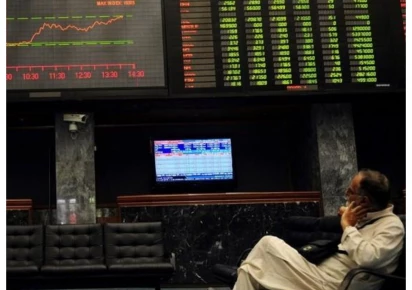
    KARACHI: Positive momentum returned to the Pakistan Stock Exchange (PSX) on Monday as investors stepped up buying activity across major sectors, pushing the benchmark KSE-100 Index above the 181,000-point mark during the opening phase of trading. At around 9:40am, the benchmark index was trading at 181,066.59 points, showing an increase of 961.98 points, or 0.53%, compared with the previous close. The early-session recovery reflected renewed investor interest in large-cap and index-heavy companies. Buying was particularly visible across automobile assemblers, cement, commercial banking, fertiliser, oil and gas exploration, oil marketing companies (OMCs), power generation and refinery sectors. Among the major stocks supporting the upward movement were Mari Petroleum (MARI), Oil and Gas Development Company (OGDC), Pakistan Petroleum Limited (PPL), Pakistan Oilfields Limited (POL), Hub Power Company (HUBCO), Habib Bank Limited (HBL), MCB Bank, Meezan Bank Limited (MEBL) and United Bank Limited (UBL). Most of these index-heavy shares traded in positive territory during the initial hours. The recovery came after a difficult week for the domestic equity market. The KSE-100 Index had closed the previous week at 180,104.61 points, declining by 1,325.41 points, or 0.7% on a week-on-week basis. Market sentiment had been affected by heightened geopolitical uncertainty, particularly concerns over the future of the US-Iran ceasefire and the potential impact of regional tensions on international energy supplies. Investors also remained cautious over developments affecting shipping activity around the Strait of Hormuz and the Red Sea, both of which are critical routes for global energy and trade. Despite the pressure on equities, Pakistan’s domestic fiscal position and external-sector indicators had provided some support to investor confidence. However, geopolitical developments continued to dominate trading decisions, particularly because any prolonged disruption to oil supplies could raise import costs and increase inflationary pressures. Global markets remain cautious The cautious mood was also evident across international markets on Monday. Asian equities moved largely sideways as investors monitored developments in the Middle East and assessed the implications for energy prices and global inflation. Oil prices recorded significant gains during the previous week as uncertainty surrounding efforts to end the Iran conflict increased concerns about potential supply disruptions. Investors remained particularly focused on developments concerning the strategic Strait of Hormuz, where tanker traffic had remained disrupted amid the continuing tensions. Iran on Saturday called on the United States to acknowledge defeat, while US President Donald Trump warned Americans that higher gasoline prices could persist as long as the conflict continued. The situation in the wider region also remained volatile. In southern Lebanon, Israeli strikes on Saturday killed at least 11 people, according to the Lebanese health ministry. The casualties came amid renewed tensions following an earlier US-mediated framework aimed at easing hostilities between Lebanon and Israel. Oil prices remain elevated Crude oil prices remained at elevated levels on Monday after recording strong gains during the previous week. Brent crude was trading around $88.50 per barrel, little changed during the session after climbing approximately 6% last week. Meanwhile, US West Texas Intermediate (WTI) crude slipped around 0.3% to $82.12 per barrel, following a weekly gain of about 5.4%. Higher international oil prices remain a key concern for oil-importing economies such as Pakistan because a sustained increase can widen the import bill, put pressure on the current account and contribute to domestic inflation. For investors at the PSX, developments in global energy markets are particularly important because oil and gas companies have significant representation in the benchmark index, while higher fuel costs can also affect the profitability of other industries. Asian equities mixed In regional markets, MSCI’s broadest index of Asia-Pacific shares outside Japan was broadly flat on Monday. Japan’s Nikkei 225, meanwhile, gained around 0.4%. The mixed performance reflected investor caution as markets continued to assess the potential economic consequences of prolonged geopolitical tensions. Concerns over energy prices, inflation and interest-rate expectations remained central to global market sentiment. At the PSX, however, the strong opening suggested that domestic investors were willing to look beyond short-term geopolitical concerns and accumulate fundamentally strong stocks. Whether the KSE-100 can sustain its early gains will depend on developments in global oil markets, regional tensions and trading activity in heavyweight sectors as the session progresses.

  • |

    Oil prices rise as Hormuz tensions escalate

    Oil prices climbed on Monday as uncertainty over a possible diplomatic breakthrough between the United States and Iran increased, while a sharp slowdown in tanker movements through the Strait of Hormuz heightened concerns about disruptions to global crude supplies. Brent crude futures gained as much as 1% during early trading to reach $89.40 per barrel. The benchmark was later up 72 cents, or about 0.8%, at $89.20 a barrel by 0229 GMT. US West Texas Intermediate (WTI) crude also moved higher, rising 44 cents to $82.83 per barrel. Both international benchmarks posted gains of more than 5% last week after a series of attacks involving energy and shipping assets in and around the strategically important Strait of Hormuz. The incidents have intensified fears that further escalation could affect one of the world’s most important oil transit routes. Market sentiment was further affected by developments over the weekend, when Iranian Foreign Minister Abbas Araqchi said Tehran had yet to decide whether it would resume negotiations with Washington. US President Donald Trump, meanwhile, told Americans to prepare for somewhat higher gasoline prices as the conflict continues. Analysts said the renewed uncertainty had brought geopolitical risk back into crude markets after oil prices had previously come under pressure on expectations that diplomatic efforts could ease tensions. “Oil prices have now rebounded almost completely from the lows seen in early August, as hopes for a more permanent resolution between the US and Iran have faded and geopolitical risk premiums have returned to the market,” said Priyanka Sachdeva, head of market insights at Phillip Nova in Singapore. Sachdeva cautioned, however, that the rally could lose momentum unless there is evidence of a further deterioration in the situation. She said the market would need to see renewed aggression in the Strait of Hormuz, particularly significant damage to oil tankers or energy infrastructure, before prices were likely to move substantially higher. Hormuz shipping activity slows Concerns over physical supply disruptions increased after ship-tracking data showed a marked decline in vessel traffic through the Strait of Hormuz over the weekend. According to data from Kpler, only five commodity vessels crossed the strategic waterway on Saturday, while no such transits were recorded on Sunday. This compared with 31 commodity vessel crossings during the previous weekend. The slowdown is significant because the Strait of Hormuz is a critical route for international energy shipments. Any prolonged disruption could increase transportation risks, raise insurance costs and place additional upward pressure on crude prices. The United Arab Emirates also accused Iran of attacking another vessel operated by Abu Dhabi National Oil Company (ADNOC) while it was passing through the strait on Friday, according to the Emirati state news agency WAM. The UAE had earlier blamed Iran for two separate incidents involving ADNOC-operated vessels on Thursday evening. The latest incidents have added to concerns among traders that the conflict could increasingly affect commercial shipping and energy infrastructure, rather than remaining confined to military and diplomatic confrontation. Markets remain focused on escalation risks The Strait of Hormuz remains particularly important to global oil markets because a substantial volume of crude and petroleum products moves through the waterway. Any sustained interruption could therefore have consequences well beyond the region. For now, traders are closely monitoring developments involving US-Iran diplomatic contacts, attacks on shipping and the movement of tankers through the strait. While the latest price gains reflect a higher geopolitical risk premium, analysts remain cautious about predicting a prolonged rally. If shipping activity resumes and diplomatic channels reopen, some of the premium built into crude prices could quickly unwind. Conversely, additional attacks on tankers, oil facilities or other critical infrastructure could trigger a stronger market reaction and push prices higher as traders reassess the security of regional supplies.

  • |

    Gold prices rise as weaker dollar, softer US data boost rate-cut hopes

    Gold prices moved higher on Monday as a weaker US dollar and subdued economic data strengthened expectations that the Federal Reserve may keep interest rates unchanged at its upcoming policy meeting. Spot gold gained 0.4% to $4,391.07 per ounce by 0248 GMT, extending its recent momentum after the precious metal reached a more than two-month high during the previous week. US gold futures for December delivery also advanced 0.3% to $4,448.10 per ounce. The dollar’s decline provided additional support to bullion. The US dollar index fell 0.1%, making gold and other dollar-denominated commodities relatively cheaper for buyers using other currencies. According to Tim Waterer, chief market analyst at KCM Trade, gold began the week with strong momentum as weaker inflation data put pressure on the dollar and created room for bullion to approach the $4,400 threshold. Waterer said a sustained rise beyond the $4,500-per-ounce level would likely require further weakness in the dollar or a clearer decline in energy prices. US economic data shape rate expectations Recent US economic indicators have played a major role in reshaping expectations for Federal Reserve policy. An unexpected contraction in US nonfarm payrolls in July, combined with relatively moderate consumer-price inflation, has reduced market expectations for an interest-rate increase at the Fed’s next meeting. Data from the CME FedWatch Tool showed that traders were assigning a roughly 30% probability to a September rate hike, down from about 47% a month earlier. Expectations surrounding interest rates are closely watched by gold investors because bullion does not generate interest or dividends. When borrowing costs and yields are lower, the opportunity cost of holding gold declines, potentially increasing demand for the precious metal. Market participants are therefore looking ahead to the minutes of the Federal Reserve’s July meeting, scheduled for release on Wednesday. Investors will examine the minutes for indications about policymakers’ views on inflation, employment and the future direction of monetary policy. Any indication that the central bank is becoming less inclined to raise rates could provide additional support to gold, while a more hawkish tone could strengthen the dollar and place pressure on bullion. Geopolitical tensions remain in focus Geopolitical developments also continued to influence financial markets. US President Donald Trump’s representatives met Egyptian, Qatari and Turkish mediators in Cairo on Sunday as diplomatic efforts continued to advance a proposed Gaza peace plan, according to a diplomatic source. The talks were taking place against the backdrop of continued Israeli military operations in Gaza. Ongoing tensions in the Middle East have kept investors alert to the possibility of further disruptions to energy markets and global trade. Gold traditionally attracts safe-haven demand during periods of geopolitical and economic uncertainty. Any escalation in regional tensions could therefore influence investor flows into precious metals. Other precious metals gain Other major precious metals also recorded gains during Monday’s session. Spot silver climbed 1.4% to $65.53 per ounce, extending its positive momentum. Silver tends to benefit from both investment demand and expectations surrounding industrial activity. Platinum advanced 0.3% to $1,752.36 per ounce, while palladium rose 1.6% to $1,333.35.

  • |

    Power sector circular debt rises by Rs364 billion in FY2025-26

    ISLAMABAD: Pakistan’s power sector circular debt increased by Rs364 billion during fiscal year 2025-26, highlighting persistent weaknesses in the electricity supply chain despite substantial government subsidies and efforts to contain the buildup of unpaid liabilities. According to the circular debt report for June 2026, the increase was significantly higher than the previous year, when the debt had risen by around Rs45 billion. The latest increase represents a surge of roughly 709% year-on-year in the annual flow of circular debt. The Power Division has not yet formally uploaded the one-page circular debt report for June 2026 on its official website. The latest figures indicate that structural problems, including distribution company inefficiencies, weak bill recovery, payment disputes and delays in tariff adjustments, continue to generate fresh liabilities in the power sector. The development comes despite the government’s efforts to contain the debt through budgetary support and subsidies. IMF target and government commitments The International Monetary Fund (IMF) had permitted Pakistan to record up to Rs400 billion in circular debt flow during the year, while simultaneously requiring the government to take measures to prevent the accumulation of new liabilities and eventually bring the flow down to zero. Under the IMF programme, the government has been relying on tariff adjustments, subsidy rationalisation and other reforms to improve the financial health of the electricity sector. However, the latest increase suggests that governance and operational problems remain a major obstacle to achieving a sustainable reduction in circular debt. The government provided approximately Rs302 billion in subsidies aimed at supporting the power sector and reducing the debt burden. However, the amount was insufficient to maintain the circular debt stock at the level of Rs1.614 trillion recorded at the end of June 2025. As a result, the debt stock recorded a net increase of around Rs61 billion during the year. The Power Division had earlier stated that the federal government allocated Rs893 billion for the power sector in the FY2025-26 budget. However, around Rs98 billion of the allocated amount was not released, affecting the government’s ability to reduce the outstanding liabilities. A Power Division spokesperson said that if the entire budgeted allocation had been released, the circular debt stock could have fallen further to around Rs1.577 trillion. The funding shortfall, according to the official, contributed to the Rs61 billion increase recorded during the year. Distribution companies remain a major source of losses Inefficiencies within power distribution companies continued to be one of the biggest contributors to the accumulation of circular debt. The government incurred approximately Rs262 billion in losses during FY2025-26 because of inefficiencies in distribution companies. The amount was only around Rs3 billion lower than the previous year, indicating that little progress has been made in addressing operational weaknesses. Another Rs64 billion was added to the circular debt because of lower electricity bill recoveries. Although significant, this amount was around 51% lower than the corresponding figure recorded in the preceding year. The figures underline the financial pressure created by electricity theft, transmission and distribution losses, weak collection systems and inadequate enforcement against non-paying consumers. Privatisation of distribution companies The government has initiated the process of privatising three relatively profitable distribution companies — Faisalabad Electric Supply Company, Gujranwala Electric Power Company and Islamabad Electric Supply Company. However, the proposed privatisation is not expected to immediately resolve the broader circular debt problem because a substantial portion of sector losses originates from other distribution entities. Earlier, the government had considered a model under which profitable distribution companies would be combined with loss-making entities before privatisation. The plan, however, was subsequently abandoned in favour of offering comparatively stronger companies separately. Experts have repeatedly argued that privatisation alone cannot eliminate circular debt unless the underlying issues of electricity theft, poor recoveries, governance and operational losses are addressed across the entire distribution network. K-Electric dispute adds to debt Payment disputes with K-Electric also contributed substantially to the increase. According to the report, approximately Rs194 billion was added to the circular debt because of non-payments by K-Electric. The company’s outstanding payments are linked to a dispute concerning the delayed finalisation of its multi-year tariff by the National Electric Power Regulatory Authority. The prolonged disagreement has created financial pressure throughout the power supply chain, adding to the accumulation of unpaid liabilities. In addition, around Rs75 billion was added to the circular debt because of delays in tariff adjustments. The government, meanwhile, made payments of approximately Rs129 billion against principal loans of the power sector. Without these payments, the annual circular debt flow could have exceeded Rs600 billion, according to the figures. The Power Division also benefited from a reduction of around Rs98 billion in the circular debt flow because of subsidy payments. Interest payments add further pressure Interest charges also contributed to the accumulation of liabilities, adding around Rs14 billion to the circular debt during the fiscal year. These financing costs ultimately increase the burden on consumers because the cost of servicing the sector’s outstanding liabilities is recovered through electricity bills. Consumer groups have frequently criticised the practice, arguing that households and businesses that regularly pay their electricity bills are effectively being charged for inefficiencies, theft and non-payment elsewhere in the system. Subsidies and burden on consumers The government’s continued reliance on subsidies has helped prevent an even larger accumulation of circular debt, but it has also placed pressure on the national budget. The power sector received hundreds of billions of rupees in subsidies during the year, while the government simultaneously pursued tariff increases and other measures intended to improve cost recovery. The contrast has raised questions about whether existing policies are addressing the underlying causes of circular debt or merely shifting the burden between consumers, the federal budget and power-sector entities. The government has also been under pressure to address similar financial problems in the gas sector. Although no comparable subsidy was provided for the gas sector, the authorities were expected to prevent a further increase in its circular debt. The government reportedly refrained from passing the full reduction in gas prices on

  • |

    FPCCI seeks industry consultation before revision of incremental power package

    ISLAMABAD: The Federation of Pakistan Chambers of Commerce and Industry (FPCCI) has called on the National Electric Power Regulatory Authority (Nepra) to consult industry representatives before making any changes to the Incremental Package for industrial electricity consumers. The business community has warned that revising the package without taking major industrial stakeholders into confidence could create market distortions, undermine the intended benefits of the scheme and potentially transfer additional costs to industries that do not qualify for incremental consumption incentives. In post-hearing comments submitted to Nepra on August 12, 2026, FPCCI said the regulator had already directed that the proposed changes to the Incremental Package should first be presented to and discussed with industry representatives before being brought back for approval. The federation welcomed the direction, describing meaningful stakeholder participation as essential for developing a workable electricity pricing mechanism for industrial consumers. FPCCI highlights delayed review FPCCI also raised concerns over the failure to conduct the package’s scheduled quarterly review. According to the federation, the Incremental Package was specifically designed to undergo a review every three months. However, no review had been conducted for approximately eight months. The federation said the prolonged delay had created uncertainty for industrial consumers and prevented the timely identification and correction of issues within the package. FPCCI urged Nepra to immediately carry out the overdue review and ensure that the quarterly review mechanism is followed consistently in the future. The federation argued that regular reviews were particularly important because industrial electricity consumption, production conditions and operating costs can change significantly over time. Major industry bodies seek participation FPCCI requested Nepra to formally engage leading industry organisations before the next hearing on the proposed revision. The organisations named by the federation include the Karachi Chamber of Commerce and Industry (KCCI), Korangi Association of Trade and Industry (KATI), All Pakistan Textile Mills Association (APTMA), as well as other major chambers and industrial associations. FPCCI said the participation of these organisations would allow the regulator to understand the practical challenges faced by different categories of industrial consumers. It stressed that the revised package should be based on actual industrial requirements and should not discriminate against existing consumers who are unable to qualify as incremental users. Warning against cost shifting The federation expressed concern that changes to the package could result in an unintended transfer of costs to non-incremental industrial units. FPCCI said any revised mechanism should ensure that incentives provided to additional electricity consumption do not create a financial burden for other consumers. It also called for clear safeguards to ensure that only genuine incremental electricity consumers receive the benefits of the package. According to the federation, the regulator should introduce mechanisms capable of preventing existing consumption from being presented as new or incremental demand merely to obtain preferential electricity rates. FPCCI maintained that a transparent verification system would be necessary to protect the integrity of the package and prevent potential misuse. Requests submitted to Nepra In its submission, FPCCI made a series of requests to the power regulator. The federation asked Nepra to formally consult FPCCI, KCCI, KATI, APTMA and other major industry bodies before the next hearing. It also requested the authority to provide sufficient advance notice of the date and time of any consultation, along with an online meeting link, so that FPCCI could coordinate participation by relevant chambers, associations and industrial representatives. The federation further sought a formal opportunity to present detailed recommendations on the proposed redesign of the Incremental Package. It called for safeguards restricting benefits to genuine incremental units and urged Nepra to immediately conduct the quarterly review that has remained pending for the past eight months. FPCCI also proposed making consultation with major industrial chambers and associations mandatory before any future revision or review of the Incremental Package or similar electricity pricing schemes. Invitation to power-sector institutions In a further effort to promote direct dialogue, FPCCI invited Nepra, the Power Planning and Monitoring Company (PPMC) and the Central Power Purchasing Agency-Guaranteed (CPPA-G) to visit its head office in Karachi. The federation proposed holding detailed discussions with the relevant institutions in the presence of industry representatives. FPCCI said direct engagement would provide an opportunity for all stakeholders to examine the existing mechanism, identify practical shortcomings and develop solutions based on actual operating conditions in the industrial sector. It maintained that consultation could help bridge the gap between regulatory objectives and the realities faced by industrial consumers. Industry seeks predictable power policy The dispute over the Incremental Package comes amid continued concerns among industrial consumers over electricity costs, competitiveness and the predictability of power-sector policies. For export-oriented and energy-intensive industries, electricity pricing is a major component of production costs. Business representatives have therefore repeatedly called for stable and transparent tariff mechanisms that allow companies to plan production and investment decisions. FPCCI said any changes to the Incremental Package should balance the objective of increasing electricity consumption with the need to maintain fairness among different categories of industrial consumers. The federation believes that a properly designed package, supported by regular reviews and meaningful industry consultation, could encourage additional industrial electricity consumption without imposing unintended costs on existing consumers.

  • |

    Government plans major reforms to modernise Pakistan’s construction sector

    ISLAMABAD: The federal government has stepped up efforts to reform Pakistan’s construction industry, with a comprehensive package under consideration to improve regulation, financing, taxation, procurement practices and construction quality. Federal Minister for Economic Affairs and Establishment Division Senator Ahad Khan Cheema chaired a high-level meeting on Saturday to review proposed reforms aimed at strengthening the construction sector and bringing national practices closer to modern standards. The meeting was attended by Minister of State for Finance Bilal Azhar Kayani, Federal Secretary for Housing and Works Captain Mahmood (retd), Managing Director of the Public Procurement Regulatory Authority (PPRA), representatives of the Construction Association of Pakistan (CAP) and senior government officials. The discussions focused on developing a coordinated policy framework capable of addressing longstanding regulatory, operational and financial challenges faced by the construction industry. Construction Industry Development Board proposed As part of the proposed reform package, the government is considering the creation of a Construction Industry Development Board (CIDB) to serve as both a development and regulatory body for the sector. The proposed board would be responsible for supporting the growth of the construction industry while also establishing and enforcing standards for contractors, consultants and other stakeholders. According to the plan discussed at the meeting, the CIDB would include representatives from both the public and private sectors, creating a platform for cooperation between government institutions and industry stakeholders. Senator Ahad Cheema said there was broad agreement between the federal government and CAP on the need for such an institution. He said the government would prepare the proposed framework and present it to the prime minister for approval. The proposed regulatory mechanism is expected to address gaps in the existing system, particularly those relating to professional standards, project quality and accountability. Consultants may face greater accountability One of the major issues discussed during the meeting was the lack of a clear accountability mechanism for consultants involved in public infrastructure projects. Cheema noted that contractors could face penalties for delays, defaults and poor performance, but similar legal and financial consequences were not adequately available for consultants when design or technical shortcomings resulted in project failures. Under the proposed CIDB framework, consultants would come under a more formal regulatory structure. The objective would be to ensure that professionals responsible for project design and technical supervision could also be held accountable for serious errors, design deficiencies or technical mistakes. CAP representatives supported the proposal, maintaining that stronger oversight of consultants would improve the quality of project designs and help safeguard public funds. Defect liability period to be extended The government is also preparing to increase the Defect Liability Period (DLP) for public development projects. At present, the standard liability period is one year. The government plans to initially extend it to three years and subsequently work towards increasing it to five years. Cheema said public infrastructure should remain durable for a considerable period after completion and should not begin deteriorating soon after being handed over. He argued that extending the liability period would create stronger incentives for contractors and executing agencies to maintain quality standards throughout construction. Under a longer liability period, contractors would remain responsible for addressing defects for an extended period, potentially discouraging the use of substandard materials or poor construction practices. The government views the proposed change as an important step towards improving the long-term value of public development spending. Construction development package under consideration The proposed construction industry development package is expected to address several financial and policy constraints currently affecting the sector. The package could include targeted tax reforms, revised import and export policies and incentives aimed at encouraging the adoption of modern construction technologies. Officials also discussed the need to strengthen domestic construction capacity by facilitating access to modern machinery, equipment, materials and technical expertise. The government believes that a more predictable policy environment could encourage greater private investment while supporting the development of local construction companies and suppliers. Proposal for Construction Development Bank Financing challenges faced by construction companies also came under discussion. CAP representatives highlighted difficulties encountered by contractors in obtaining banking facilities, particularly when arranging financial and performance guarantees required for government projects. The industry also proposed establishing a dedicated Construction Development Bank (CDB) to address the sector’s specialised financing needs. In response, Cheema directed Minister of State for Finance Bilal Azhar Kayani to consult the State Bank of Pakistan (SBP) and the Pakistan Banks Association (PBA). The feasibility of creating a dedicated construction development bank will be assessed after obtaining feedback from the central bank and commercial banking sector. Officials will also examine the financial implications and potential structure of such an institution before any decision is taken. Import and export policies to be reviewed The government is also considering changes to import and export policies affecting construction-related businesses. The proposed review is intended to facilitate access to modern technologies and equipment while simultaneously encouraging greater domestic production and development of local industrial capacity. The authorities are expected to examine existing duties, procedures and policy barriers to determine whether adjustments could help improve competitiveness without undermining domestic manufacturing. Focus on value for public money During the meeting, Cheema stressed that improving construction quality was directly linked to protecting public finances. He said the government’s objective was not simply to complete infrastructure projects but to ensure that they delivered value over their intended lifespan. The minister emphasised the importance of cost-effectiveness, durability and accountability at every stage of public construction projects. The proposed reforms, if approved, could introduce significant changes to the way construction contractors and consultants are regulated, how public projects are monitored and how construction companies access financing. The government is now expected to consolidate the proposals into a broader policy framework and seek approval for the proposed measures.