فیچرڈ

  • | |

    Gold price in Pakistan hits record high after anot…

    Gold and silver prices continued their upward trend in both international and local markets, with gold reaching another historic level in Pakistan. The latest increase has pushed the price of gold per tola to a new record high, creating fresh concerns for buyers and investors. According to market data, the international bullion market witnessed another major rise on Wednesday, with gold prices increasing by $46 per ounce. Following the surge, the global gold price reached $4,114 per ounce, reflecting continued strength in the precious metals market. The impact of rising international prices was also seen in Pakistan’s local bullion markets. The price of 24-carat gold increased by Rs. 4,600 per tola, bringing the new rate to Rs. 433,836 per tola. This marks another significant jump in gold prices after gains were also recorded in the previous trading session. Similarly, the price of gold per 10 grams increased by Rs. 3,944, reaching Rs. 371,944 in local markets. The continuous rise has made gold increasingly expensive for consumers, particularly those planning weddings, investments, or savings through precious metals. Silver prices also recorded an increase alongside gold. The price of silver per tola rose by Rs. 7, reaching Rs. 6,403, while the price of 10 grams of silver increased by Rs. 6 to Rs. 5,489. Market analysts link the rise in precious metal prices to global economic factors, including investor demand for safe-haven assets, international market trends, and fluctuations affecting commodity prices. Gold is often considered a secure investment during periods of uncertainty, which can increase demand and push prices higher. The latest increase continues a trend of rising gold prices in recent days, with both global and local markets showing strong momentum. Traders and investors are closely monitoring international developments as further changes in global markets could influence gold and silver rates in Pakistan. With gold prices reaching unprecedented levels, consumers are advised to keep track of daily market updates before making major purchases. The bullion market remains sensitive to international price movements, currency changes, and economic conditions that can quickly impact local rates.

  • | |

    55-year-old security guard missing in Lahore, Kidn…

    A private company security guard has reportedly gone missing from Lahore’s Nasirabad area, after which police registered a case of alleged abduction. Authorities have started an investigation to trace the missing man and determine the circumstances surrounding his disappearance. According to police officials, the case was registered on the complaint of the missing security guard’s daughter. The missing person has been identified as 55-year-old Ijaz Hussain, who was working as a security guard at a private company. In her statement to police, the guard’s daughter said that her father was unwell and had gone to Gulab Devi Hospital to get medicine and have tea. However, despite efforts to locate him, the family was unable to find any information about his whereabouts. Following the complaint, police registered a case and began collecting details as part of the investigation. Officials said that efforts are underway to trace the missing security guard and identify any possible suspects involved in the incident. Police teams are reportedly reviewing available information and taking necessary steps to find clues regarding the disappearance. Authorities have assured the family that the matter is being investigated and all possible measures are being taken to locate the missing man. Cases involving missing persons require immediate action, as early investigation and evidence collection can play an important role in determining the facts. Police officials have encouraged anyone with relevant information about the incident to cooperate with investigators. The investigation into the alleged abduction remains ongoing, and further developments are expected as police continue their efforts to recover the missing security guard and establish what happened.

  • | |

    PPP leader Nadeem Afzal Chan criticizes Punjab gov…

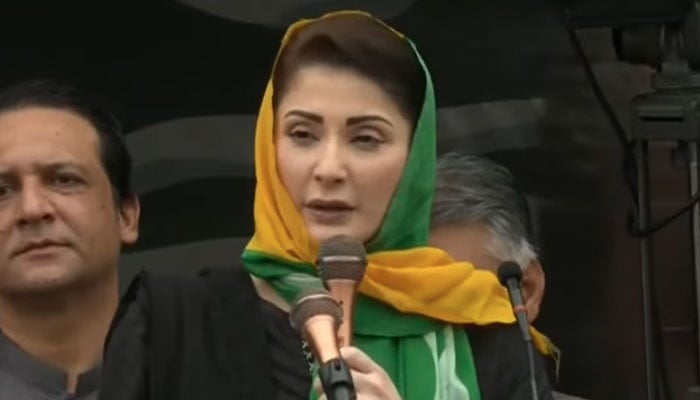
    Pakistan Peoples Party (PPP) Central Secretary for Information Nadeem Afzal Chan has strongly responded to a speech delivered by Punjab Chief Minister Maryam Nawaz during a public gathering in Muzaffarabad. In his statement, Chan accused the Punjab chief minister of making false allegations against the Pakistan Peoples Party and rejected the claims made during her address. Responding to Maryam Nawaz’s remarks, Nadeem Afzal Chan said that the Pakistan Muslim League-Nawaz (PML-N) should focus on addressing its own governance challenges instead of criticizing political opponents. He alleged that the party’s poor governance and corruption had negatively affected Punjab and claimed that the current condition of the province reflected years of administrative failure. Chan argued that the slogan of “Clean Punjab” had remained only a political promise and had not translated into meaningful improvements on the ground. According to him, the situation across the province demonstrates that many of the commitments made by the Punjab government have not been fulfilled.   Referring to the recent heavy rainfall in different parts of Punjab, the PPP leader claimed that a single spell of rain exposed weaknesses in the province’s infrastructure and urban management. He said that roads in several cities were submerged under water, creating serious difficulties for residents and disrupting normal daily life. Many people, he alleged, were forced to remain inside their homes because flooded streets made travel difficult and unsafe.   Nadeem Afzal Chan specifically mentioned the cities of Gujranwala and Layyah, describing their condition after the rainfall as particularly concerning. According to him, streets, markets, and residential areas in these cities resembled rivers and streams due to inadequate drainage systems. He argued that the flooding highlighted shortcomings in planning and municipal services despite repeated claims of development by the provincial government.   The PPP leader further criticized what he described as excessive government spending on publicity campaigns. He said billions of rupees had allegedly been spent on advertisements promoting the Punjab government’s performance, but the actual situation experienced by citizens painted a very different picture. In his view, the condition of roads and public infrastructure after the rainfall contradicted the government’s claims of effective governance and development.   Chan also accused the Punjab government of setting new records for corruption, alleging that financial irregularities had become a growing concern under the current administration. He claimed that additional controversies could emerge in the near future, including what he described as a potential wheat-related scandal. According to him, the details of the matter would soon become public, though he did not provide specific evidence to support the allegation. The remarks by Nadeem Afzal Chan reflect the continuing political rivalry between the Pakistan Peoples Party and the Pakistan Muslim League-Nawaz, with both parties frequently criticizing each other’s governance and policy decisions. Political exchanges between government and opposition leaders have intensified in recent months, particularly over issues related to public services, infrastructure, and economic management. The Punjab government has not immediately responded to Chan’s latest allegations. As political debate continues, issues such as urban infrastructure, flood management, public spending, and governance remain central topics in Pakistan’s political discourse, with both government and opposition parties presenting differing views on the province’s performance and future priorities.

  • | |

    Rare star explosion creates mysterious gas bullets…

    Astronomers have made a remarkable discovery in the Milky Way after observing a rare exploding star releasing extremely fast-moving streams of gas. Scientists have described these unusual formations as cosmic “bullets” because of their incredible speed and shape. According to a new study, the gas material is being expelled from the star system at speeds of nearly 20 million miles per hour, creating a phenomenon that has never been observed in this way before, either in our galaxy or in other known stellar explosions. The discovery involves a rare helium nova known asV445 Puppis, which has been under observation for more than two decades. Scientists were able to study the star in greater detail after the surrounding cloud of dust became less dense, revealing new information about the unusual explosion taking place around it. Researchers from the University of Warwick confirmed that V445 Puppis is the only known helium nova of its kind in the Milky Way. The system consists of a white dwarf star that is collecting helium fuel from a rare companion star, eventually triggering an extraordinary stellar eruption. Unlike typical stellar explosions, this event involves the release of helium-rich material, creating powerful and unusual gas streams that have surprised researchers. The exact nature of these mysterious “bullets” and the process responsible for producing them are still not fully understood. Scientists believe that studying this rare phenomenon could provide valuable insights into how unusual stellar explosions occur and how stars evolve under extreme conditions. Understanding these events may also help researchers learn more about the behavior of white dwarfs and their role in shaping the evolution of galaxies. The discovery of V445 Puppis represents a significant step forward in astronomy, as it offers scientists a rare opportunity to examine a type of cosmic event that has never been observed in such detail before. Further observations will be needed to determine how these high-speed gas formations are created and what their long-term impact may be on the surrounding space environment. For astronomers, the mysterious “bullets” from this exploding star remain one of the most fascinating discoveries in recent cosmic research.

  • |

    Angelina Jolie reacts as Vivienne files to remove …

    Angelina Jolie is reportedly staying calm and prioritising her family’s well-being after her youngest daughter, Vivienne, filed legal documents to remove Brad Pitt’s surname from her name. According to recent reports, the actress and filmmaker has chosen to focus on helping her children move forward rather than dwelling on the highly publicised family disputes that followed her separation from Pitt. Those close to Jolie say her primary concern has always been creating a peaceful environment where her children can heal from the challenges they have faced over the years. A person familiar with the situation claimed that Jolie is not driven by anger or resentment. Instead, she wants her family to find peace and continue rebuilding their lives. The insider also suggested that the public is unaware of many details surrounding the family’s private struggles, adding that the children’s decision to remain silent about personal matters reflects their maturity and dignity. The latest development comes after Vivienne filed a petition in the Los Angeles Superior Court requesting that her legal name be changed from Vivienne Marcheline Jolie-Pitt to Vivienne Marcheline Jolie. Court records reportedly describe the reason for the request simply as “personal.” A hearing regarding the petition has been scheduled for November. Vivienne’s middle name, Marcheline, is a tribute to Angelina Jolie’s late mother, Marcheline Bertrand. Bertrand died in 2007 after battling ovarian and breast cancer and has often been remembered by Jolie in interviews and public appearances as one of the most influential figures in her life. Although the legal filing has attracted widespread attention, it is not the first indication that Vivienne has chosen to use the Jolie surname professionally. In 2024, she was credited as Vivienne Jolie in the Playbill for the Broadway production The Outsiders. Vivienne worked alongside her mother on the award-winning musical, which marked another step in her growing involvement in the entertainment industry. Vivienne is not the only one of the former couple’s children to distance herself from the Pitt surname. Her sister Shiloh legally removed “Pitt” from her name after turning 18 in 2024. Meanwhile, Zahara has publicly introduced herself using the surname Jolie, and Maddox has also been identified by the Jolie surname on several occasions. Angelina Jolie and Brad Pitt, once regarded as one of Hollywood’s most famous couples, have remained involved in a lengthy legal and personal dispute since their separation in 2016. Their divorce proceedings and disagreements over custody and shared assets have frequently made headlines, while both stars have largely avoided discussing private family matters in detail. The former couple share six children. They adopted Maddox, Pax, and Zahara before welcoming three biological children together: Shiloh and twins Knox and Vivienne. Despite the ongoing legal matters surrounding the family, recent reports suggest Angelina Jolie’s attention remains firmly on supporting her children and helping them move forward with stability and privacy. As Vivienne’s name change petition awaits its court hearing, the family continues to navigate life away from the spotlight while keeping personal matters largely out of public discussion.

  • | |

    NCCIA Punjab cracks down on online blackmailers, a…

    LAHORE: The National Cyber Crime Investigation Agency (NCCIA) Punjab has arrested three suspects in coordinated operations across Lahore, Faisalabad, and Multan for allegedly harassing, blackmailing, and targeting women through social media platforms. The operations were carried out under the special directives and supervision of NCCIA Punjab Director Muhammad Ali Waseem as part of an intensified campaign against cyber-enabled crimes involving women. During the raids, investigators seized mobile phones, SIM cards, and other electronic devices containing digital evidence, while further investigations are underway. In Lahore, NCCIA officials arrested Qaiser Bilal in connection with FIR No. 151/2026. Authorities said a mobile phone recovered from the suspect allegedly contained objectionable photographs of the complainant, threatening messages, and evidence of image sharing. Investigators further alleged that the suspect created a private TikTok account under the name “Miss.B” to upload the victim’s photographs and falsely posed as an officer of a sensitive government institution to intimidate and blackmail her. The case is being investigated by Sub-Inspector Umm Salma. In Faisalabad, officials arrested Soban Ahmed under FIR No. 100/2026. According to investigators, the suspect allegedly used social media platforms and WhatsApp to blackmail and threaten the complainant’s sister by exploiting objectionable material. A mobile phone and SIM cards believed to have been used in the offence were recovered during the operation. Sub-Inspector Umar Rehman is leading the investigation. Meanwhile, in Multan, NCCIA arrested Muhammad Imran in connection with FIR No. 123/2026. Authorities alleged that the suspect obtained objectionable images of the complainant and circulated them through multiple WhatsApp accounts while continuously harassing the victim and her family. Investigators recovered a mobile phone, two SIM cards, and the WhatsApp account allegedly used in the crime. A court has granted a four-day physical remand of the suspect to facilitate further investigation, which is being conducted by Sub-Inspector Saeed Ahmed. Director NCCIA Punjab Muhammad Ali Waseem reaffirmed the agency’s commitment to protecting women from online harassment, blackmail, and the misuse of digital platforms. He said the agency would continue taking strict legal action against those involved in cybercrimes targeting women and would use advanced digital forensic techniques to ensure offenders are brought to justice.

  • | |

    Punjab University staff demand forensic audit, war…

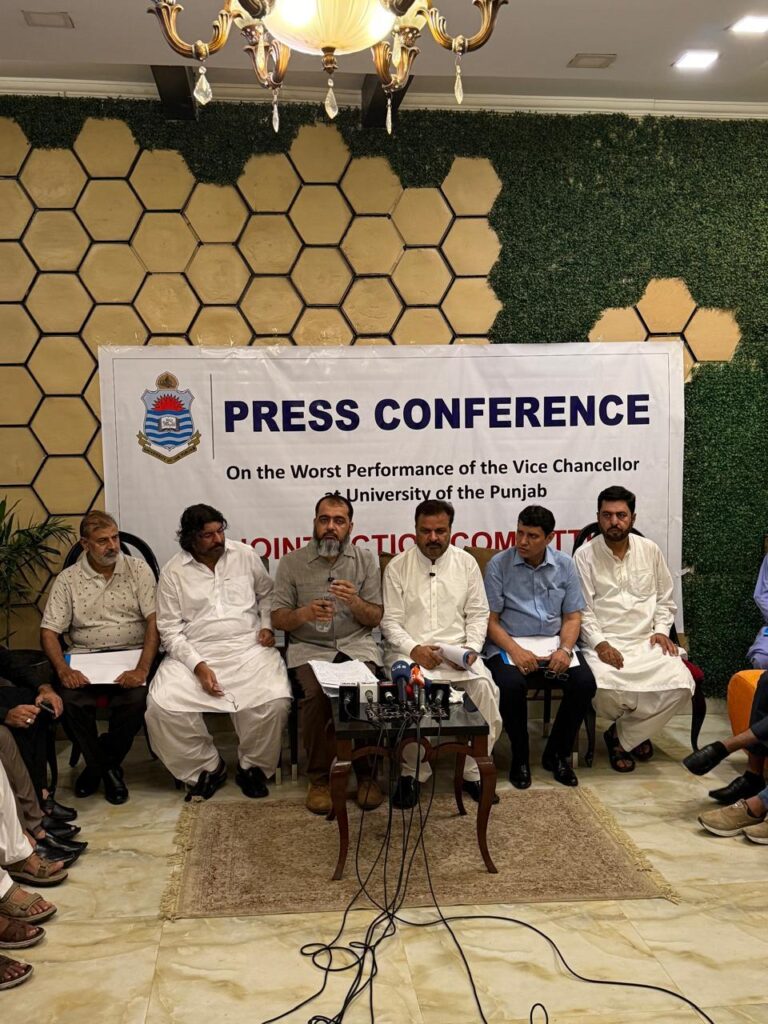
    Lahore: A joint platform representing teachers, officers, employees, and other stakeholders at the University of the Punjab has accused the university administration of driving the country’s oldest and largest public university into a deep financial, administrative, academic, and research crisis, while warning of a protest movement if their demands remain unaddressed within two weeks. Addressing a press conference in Lahore, the Joint Action Committee (JAC) said its purpose was not to target individuals but to present what it described as documented concerns regarding the university’s governance, financial management, academic standards, and research environment. The committee appealed to the Chancellor of the University, the Governor of Punjab, and the provincial government to intervene immediately to safeguard the institution.   The committee alleged that reserve funds worth approximately Rs4.88 billion, accumulated over many years, had been utilized within just 14 months without approval from the Finance and Planning Committee. It claimed that the university’s 2025–26 budget reflected a deficit of Rs2.57 billion and argued that, when combined with the depletion of reserves, the institution was effectively facing a financial shortfall of nearly Rs8 billion. It also questioned expenditures allegedly made beyond approved budget limits and called for greater transparency in financial decision-making. JAC further claimed that around Rs786 million belonging to various academic departments and institutes had been transferred to a central account under the One-Account Policy and later utilized, raising questions about whether the expenditures had received approval from the relevant statutory bodies. It also expressed concern over what it described as the first-ever financial deficit of nearly Rs350 million in the university’s self-supporting programmes. The committee also pointed to an apparent discrepancy in financial reporting, claiming that while the Finance and Planning Committee was informed of a Rs2.57 billion budget deficit at the end of the financial year, a subsequent Syndicate meeting was told the deficit stood at Rs1.6 billion. According to the committee, the variation requires a transparent explanation. Expressing concern over campus security, the committee referred to the killing of a student and the son of a university employee near the Vice Chancellor’s residence despite the presence of armed security personnel, arguing that the incident had raised serious questions about the effectiveness of the university’s security arrangements. On governance, the committee alleged that key statutory bodies, including the Senate, Deans’ Committee, Chairpersons’ Committee, Syndicate, and Selection Boards, had met only infrequently during the current administration, resulting in delays in appointments, promotions, and major policy decisions. It further criticized what it described as an excessive concentration of administrative authority in the office of the Director General (Students, Estate and Security), saying such an arrangement was inconsistent with principles of transparency, institutional balance, and accountability. The committee also referred to pending complaints and inquiries involving the office-holder, questioning the wisdom of assigning additional responsibilities while such matters remain unresolved. Highlighting academic concerns, JAC said the university had slipped from 542nd to 588th position in the QS World University Rankings and had also experienced a decline in the Higher Education Commission’s Office of Research, Innovation and Commercialization (ORIC) rankings. It alleged that faculty members were facing an atmosphere of insecurity and harassment, while research grants, travel support, and publication funding had effectively come to a halt. The committee claimed that although research grants of up to Rs1 million had been announced, no faculty member had yet received financial assistance under the initiative. It further alleged that several researchers had been forced to abandon nationally and internationally funded projects because of inadequate institutional support, damaging both research output and the university’s reputation with funding agencies. According to the committee, hostel accommodation remains unavailable for many students, including research scholars, while an increasing number of inquiry committees against faculty members and officers has created an atmosphere of fear and professional uncertainty. It also expressed concern over delays in permanent appointments to several senior administrative positions, saying the lack of regular appointments had weakened institutional efficiency. The Joint Action Committee demanded an independent forensic audit of the university’s financial affairs, including the use of reserve funds, deficit budgets, the One-Account Policy, and the finances of self-supporting programmes. It also called for the immediate removal of the Director General (Students, Estate and Security) under the principle of “one person, one post,” an end to what it described as retaliatory inquiries, restoration of a secure and professional working environment, immediate advertisement and transparent appointment of a permanent Registrar, payment of outstanding financial dues and benefits to teachers and employees, and the restoration of regular meetings of all statutory bodies in accordance with the University Act. The committee warned that if its demands are not addressed within two weeks, it will launch a phased protest campaign, including demonstrations outside the university, a sit-in outside the Punjab Assembly, publication of a white paper containing documentary evidence, and a boycott of classes that could ultimately disrupt academic activities at the historic institution. The university administration had not issued an official response to the allegations at the time this report was filed.


  • | |

    From Glasgow to the heart of UK power

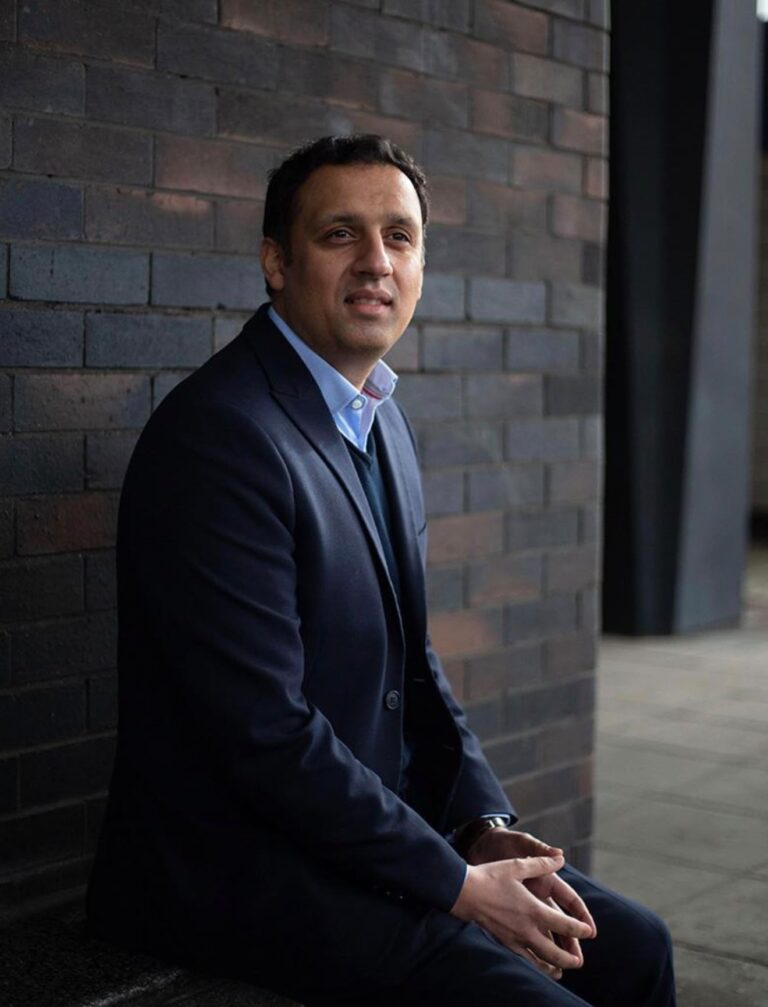
    How Anas Sarwar challenged a Prime Minister, reshaped Labour politics and rose to become a UK minister Anas Sarwar’s journey from a young Scottish politician carrying the weight of a famous political surname to one of the most senior ministers in the British government has reached a defining moment. His appointment as Minister of State for Business, Innovation, Science and Trade, alongside his elevation to the House of Lords, marks one of the most significant political achievements by a British politician of Pakistani heritage in recent decades. The appointment also underlines the confidence Prime Minister Andy Burnham has placed in Sarwar, entrusting him with a department central to the government’s ambitions for economic growth, scientific research, innovation and international trade. A FAMILY THAT MADE HISTORY Politics has long been part of the Sarwar family story. Anas Sarwar is the son of Mohammad Sarwar, who made British political history in 1997 by becoming the first Muslim and the first MP of Pakistani origin elected to the House of Commons. Mohammad Sarwar later went on to serve as Governor of Punjab, Pakistan’s largest province, giving the family a unique political legacy spanning both Britain and Pakistan. Although his father’s achievements opened doors for greater representation of British Pakistanis in politics, Anas Sarwar has spent much of his career building his own political identity through perseverance, resilience and leadership. A POLITICAL CAREER BUILT ON RESILIENCE A qualified dentist by profession, Sarwar entered Parliament after winning Glasgow Central in 2010. His political career has been shaped by both success and setbacks. Following Labour’s electoral collapse in Scotland in 2015, Sarwar emerged as one of the party’s most recognisable figures during one of its darkest periods. He served as Deputy Leader of Scottish Labour before unsuccessfully contesting the party leadership. Rather than retreating from frontline politics, he rebuilt his standing within the party and was elected Leader of Scottish Labour in 2021. Tasked with reviving a party that had suffered years of decline, Sarwar focused on rebuilding Labour’s organisation, reconnecting with voters and restoring its credibility as Scotland’s principal opposition party. THE MAN WHO FIRST CHALLENGED STARMER Sarwar’s reputation as an independent political figure was cemented during Labour’s leadership crisis when he became the first senior Labour politician to publicly call for Keir Starmer to resign. At a time when many senior figures remained publicly loyal, Sarwar openly argued that Labour required a change in leadership. Political observers viewed his intervention as a turning point that encouraged wider debate within the party over Starmer’s future. In the weeks that followed, pressure on the Prime Minister intensified, ultimately culminating in Starmer’s resignation and the election of Andy Burnham as Labour leader and Prime Minister. Today, the politician who first publicly challenged Starmer has become one of the key members of Burnham’s ministerial team—an illustration of how dramatically Labour’s political landscape has changed. A KEY ROLE IN GOVERNMENT Sarwar’s appointment as Minister of State for Business, Innovation, Science and Trade places him at the centre of one of the government’s most important departments. His responsibilities will include supporting business investment, promoting innovation, advancing scientific research, strengthening Britain’s industrial strategy and expanding international trade—areas regarded as crucial to the UK’s long-term economic future. His elevation to the House of Lords enables him to take up ministerial office while bringing his tenure as Leader of Scottish Labour to an end, triggering a contest to choose his successor. POLITICAL SIGNIFICANCE Political commentators believe the appointment carries significance far beyond a routine cabinet reshuffle. For Prime Minister Andy Burnham, it brings an experienced political strategist into a department central to delivering economic growth. For Scottish Labour, it marks the departure of the leader who steadied the party during a challenging period and leaves a significant leadership vacancy. For Britain’s Pakistani community, Sarwar’s promotion represents another landmark in the growing influence of British Pakistanis at the highest levels of national politics. COLLEAGUES SEE A RESILIENT LEADER Labour colleagues have publicly described Sarwar as a disciplined and pragmatic politician who remained committed to rebuilding Scottish Labour despite difficult electoral circumstances. Political observers argue that his appointment reflects years of persistence, resilience and organisational leadership rather than a sudden political promotion. Critics, meanwhile, have questioned his move from frontline Scottish politics to the unelected House of Lords, arguing that Scottish Labour loses one of its most experienced leaders at a crucial political moment. A NEW CHAPTER Anas Sarwar now moves from leading Labour in Scotland to helping shape Britain’s economic future from the heart of government. His appointment completes a political journey that began in Glasgow, was forged through years of electoral battles and internal party struggles, and has culminated in one of the most influential ministerial positions in Westminster. From following in the footsteps of his father, Mohammad Sarwar, to becoming the first senior Labour figure to challenge Keir Starmer’s leadership and now joining Andy Burnham’s Cabinet, Anas Sarwar’s rise reflects one of the most remarkable political stories in contemporary British politics.

  • | |

    Pakistan stock exchange holds steady in mid-day tr…

      KARACHI: The Pakistan Stock Exchange (PSX) traded in positive territory during Thursday’s mid-day session, although gains remained limited as investors continued to adopt a cautious approach. The benchmark KSE-100 Index stood at 174,533.28 points, registering an increase of 103.36 points, or 0.06 percent, compared to the previous closing level of 174,429.92 points. The market started the day on a stronger note, with buying interest pushing the benchmark index higher in early trading. During the session, the KSE-100 climbed to an intraday high of 175,237.59 points, reflecting initial optimism among market participants. However, the upward momentum was short-lived as investors began booking profits, causing the index to retreat from its peak. At one stage, the benchmark slipped to an intraday low of 174,144.11 points before recovering modestly. Despite the fluctuations, the overall market remained in positive territory, indicating a degree of resilience. Trading activity was moderate throughout the first half of the session. By mid-day, total trading volume had reached approximately 60.14 million shares, while the value of traded securities stood at around Rs3.52 billion. These figures suggested that although investors were active, trading lacked the intensity typically associated with a strong bullish rally. Market participants remained watchful as the trading session continued, with investors responding cautiously to mixed economic and market signals. Analysts noted that the benchmark index moved within a relatively narrow range following its early gains, reflecting uncertainty about the market’s short-term direction. Rather than witnessing broad-based buying across sectors, trading activity appeared selective, with investors focusing on specific stocks instead of making aggressive market-wide investments. According to market observers, institutional participation remained relatively subdued during the session. Large investors largely stayed on the sidelines, resulting in lower overall momentum despite the benchmark index maintaining positive territory. The absence of strong institutional buying limited the market’s ability to sustain its early advance. Brokers also pointed out that profit-taking emerged after the KSE-100 Index approached its intraday high. Investors who had benefited from recent market gains chose to lock in profits, leading to some downward pressure on the index. This selling activity prevented the market from extending its early rally and kept price movements within a limited range. Although the market showed signs of stability during the mid-day session, analysts believed that investor sentiment remained cautious. The performance of key sectors and any fresh developments during the remainder of the trading day were expected to influence the market’s closing direction. A stronger participation from institutional investors or renewed buying in heavyweight stocks could provide additional support, while continued profit-taking might limit further gains. Overall, the Pakistan Stock Exchange demonstrated resilience by holding on to modest gains despite intermittent selling pressure. However, with trading remaining range-bound and investor confidence still measured, market participants continued to monitor developments closely before making significant investment decisions.

  • | |

    Pakistan rejects India’s statements at UN securi…

      ISLAMABAD: Pakistan has strongly rejected India’s remarks at the United Nations Security Council (UNSC) concerning the Indus Waters Treaty (IWT) and allegations of terrorism, describing them as an attempt to misrepresent facts and divert attention from issues raised by Pakistan. The response came after India’s Permanent Representative to the United Nations, Ambassador Harish Parvathaneni, accused Pakistan of supporting cross-border terrorism and suggested that the issue had affected bilateral cooperation under the Indus Waters Treaty. Pakistan dismissed these allegations during the UNSC’s High-Level Open Debate on “Natural Resource Governance: The Foundation of Peace, Security and Prosperity.” Speaking in a right of reply, Pakistan’s First Secretary to the UN, Ansar Shah, said India’s statement was misleading and represented a futile effort to distort the facts surrounding the treaty and regional security issues. He maintained that the Indus Waters Treaty remains legally valid and binding, rejecting India’s claim that the agreement could be placed in abeyance through unilateral action. Shah stated that the treaty contains no provision allowing either party to suspend or set it aside on its own. He referred to the Court of Arbitration’s August 2025 award, which, according to Pakistan, reaffirmed that the treaty continues to remain fully in force along with its dispute resolution mechanisms. He argued that India’s unilateral approach violated the terms of the agreement as well as established principles of international law. Pakistan also accused India of using shared water resources as a political tool. Shah said any attempt to weaponise water for political pressure or to restrict water access would amount to a serious breach of international legal obligations and norms. He added that such actions could undermine regional stability and pose risks to international peace and security, making the issue relevant to discussions at the Security Council. Responding to India’s allegations regarding terrorism, Shah rejected the accusations and instead claimed that India was attempting to conceal its own involvement in activities that Pakistan says have contributed to terrorism within its borders. He alleged that militant groups such as the Tehreek-e-Taliban Pakistan (TTP), the Balochistan Liberation Army (BLA), and the Majeed Brigade had been responsible for attacks that claimed the lives of thousands of Pakistani civilians and security personnel, including women and children. Pakistan reiterated its long-standing allegation that India supports and finances these groups, a claim India has consistently denied. Shah also referred to reports of alleged extraterritorial operations involving India, saying such incidents had raised international concerns. He further argued that India could not portray itself solely as a victim of terrorism while ignoring accusations directed against it. Addressing the situation in Indian Illegally Occupied Jammu and Kashmir, Shah said the people of the region continue to be denied their right to self-determination. He maintained that the territory remains internationally recognised as disputed and asserted that no unilateral measures could alter its legal or historical status. He also urged India to fulfil its obligations under the UN Charter and implement relevant UN Security Council resolutions. Earlier in the debate, Pakistan’s Permanent Representative to the United Nations, Ambassador Asim Iftikhar, reaffirmed that the Indus Waters Treaty remains effective and legally binding. He called on the UN Security Council to remain vigilant against the misuse or weaponisation of natural resources and encouraged greater use of preventive diplomacy, peaceful dispute resolution, monitoring mechanisms, and other international measures to prevent disputes over shared resources from escalating into broader conflicts.