تازہ ترین

  • | | |

    Govt accelerates FBR reforms to build transparent,…

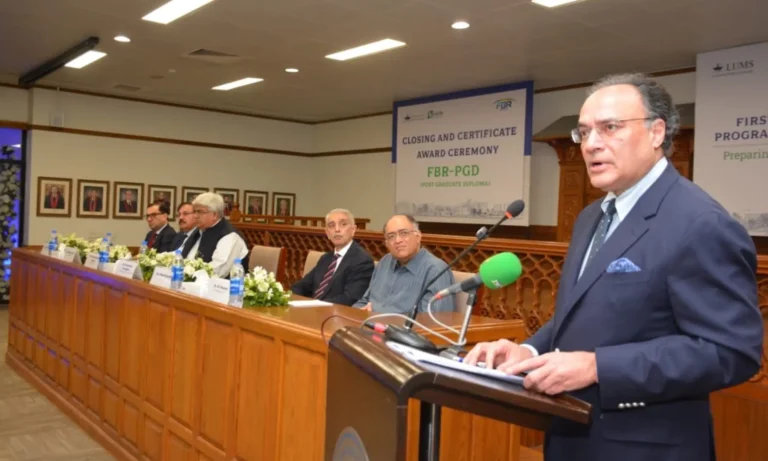
    LAHORE: The federal government has intensified efforts to modernise Pakistan’s tax system by accelerating reforms in the Federal Board of Revenue (FBR), expanding the cashless economy and integrating advanced digital technologies to improve transparency and tax compliance. Speaking at the certificate distribution ceremony for the FBR’s Postgraduate Diploma Programme at Lahore University of Management Sciences (LUMS), Finance Minister Muhammad Aurangzeb said the government is committed to creating a taxpayer-friendly and transparent financial system that supports long-term economic growth. He said reforms are being implemented simultaneously in tax policy and tax administration, with a new operational model being introduced in the FBR to improve efficiency, accountability and public trust. The minister added that Prime Minister Shehbaz Sharif is personally overseeing initiatives aimed at documenting the economy, broadening the tax base and promoting digital financial transactions. Aurangzeb revealed that authorities have uncovered major sales tax evasion cases, resulting in higher tax collections and increased revenue for the national exchequer. He stressed that modern digital tools, integrated databases and artificial intelligence will play a central role in strengthening tax administration and bringing the FBR in line with international standards. Calling on tax officials to continuously upgrade their skills, the finance minister said restoring taxpayers’ confidence and protecting national resources remain among the institution’s highest priorities. He expressed confidence that ongoing reforms would improve the business environment and ensure the benefits of economic reforms reach ordinary citizens. FBR Chairman Muhammad Rashid Langrial also addressed the ceremony, highlighting the importance of professional training and capacity building for tax officers. He said the organisation is focused on developing a modern, transparent and efficient tax system capable of meeting Pakistan’s evolving economic needs.

  • |

    Qudsia Ali, Abbas Ashraf discuss modern relationship challenges

    Pakistani actors Qudsia Ali and Abbas Ashraf Awan have opened up about the growing challenges in modern relationships, sharing their thoughts on why many marriages struggle and how family upbringing plays a significant role in shaping people’s behavior. Qudsia Ali Abbas Ashraf interview Aik Mohabbat Aur, discussed issues such as toxic masculinity, insecurity, and unhealthy relationship dynamics during a recent interview. Speaking about the behavior of some men, Abbas Ashraf said that many negative personality traits begin at home. According to him, parents often raise sons with a sense of superiority by repeatedly telling them they are more important than daughters or that they are the family’s future and primary heirs. He explained that such parenting creates an unhealthy mindset where boys grow up believing they deserve special treatment. Abbas stressed that children should be raised equally, regardless of gender, so they develop mutual respect and healthier attitudes toward relationships. He added that when parents teach sons and daughters the same values and responsibilities, it becomes easier to build a society where men treat women as equals rather than believing they have authority over them. Qudsia Ali also shared her perspective on why some women remain in emotionally unhealthy relationships despite facing repeated disappointment or mistreatment. The actress suggested that a lack of emotional support during childhood can leave lasting effects. She said some women grow up without receiving enough affection or validation from their families, making them more likely to accept even the smallest signs of attention later in life. According to Qudsia, this emotional deprivation can cause women to become deeply attached to relationships that are not healthy for them. She explained that when someone has experienced a shortage of love, even temporary affection may feel meaningful enough to overlook harmful behavior. She further noted that insecurity often becomes a major factor in these situations. Women who struggle with low self-confidence may fear losing a relationship, even if it is emotionally damaging, because they believe they may not find love elsewhere. Reflecting on her own journey, Qudsia admitted that she also experienced insecurities in the past. However, she emphasized that personal growth and self-awareness helped her recognize those feelings and gradually overcome them. The actress encouraged individuals to work on building confidence and understanding their self-worth rather than relying entirely on validation from others. The discussion resonated with many viewers because it touched on issues that frequently appear in real-life relationships as well as television dramas. Their comments highlighted the importance of healthy parenting, emotional well-being, and equal treatment within families. While both actors acknowledged that every relationship is unique, they agreed that respect, emotional security, and equality are essential for building lasting partnerships. They also suggested that addressing these issues early in life could help reduce toxic behavior and create healthier relationships in the future.

  • | | | |

    Iran, Oman make progress on Strait of Hormuz shipping talks

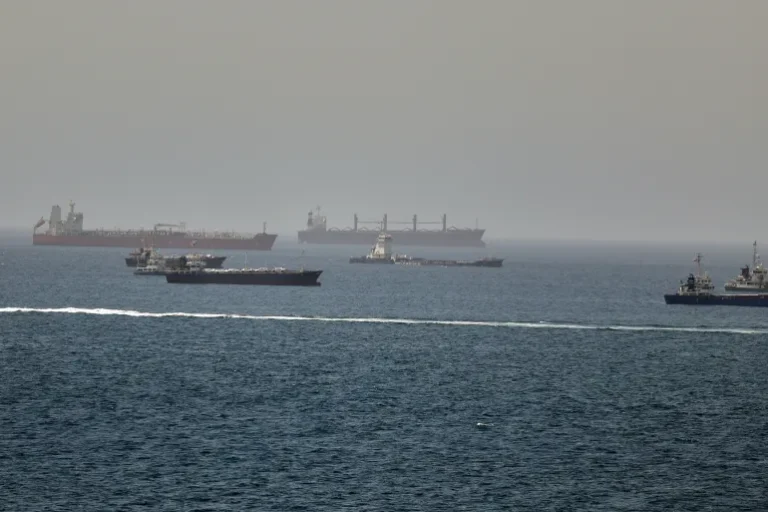
    Iran and Oman have reported progress in discussions aimed at ensuring safer shipping through the Strait of Hormuz amid the ongoing regional conflict. Iranian Foreign Ministry spokesman Esmaeil Baghaei said senior officials from both countries held talks in Tehran over two days to discuss arrangements for managing maritime traffic through the strategic waterway. According to Baghaei, the discussions focused on common principles and practical measures to maintain safe shipping while respecting the sovereignty of Iran and Oman, the two countries bordering the strait. He described the talks as useful and said progress had been made. Further political and technical consultations are expected to continue between the two sides. Baghaei also said there had been no change in the current traffic situation in the Strait of Hormuz. The development comes as tensions remain high between Iran, the United States and Israel. The waterway has become a major focus of the conflict because it is a critical route for global energy shipments. Iranian army spokesman General Abolfazl Shekarchi separately claimed that Washington had failed to achieve its objectives in the Strait of Hormuz and in weakening Iran. He described the situation for the United States as “chaotic and undesirable” and said Washington was apparently considering a new strategy. Shekarchi also suggested that any possible US withdrawal from the conflict could depend on Israel’s approval. Meanwhile, tensions have spread beyond the immediate battlefield. Iran summoned Ukrainian diplomats after Kyiv reportedly struck an Iranian vessel in the Caspian Sea, killing at least one sailor and injuring another. Ukraine said the operation targeted Russian vessels allegedly carrying military cargo linked to Iran. Ukrainian President Volodymyr Zelenskyy has also accused Russia of supporting Iran during the ongoing conflict.

  • | |

    Typhoon Noul hits China, 715,000 evacuated

    Typhoon Noul has made landfall in southern China, bringing powerful winds and heavy rainfall to Guangdong province and neighbouring Hong Kong. The storm reached the coast of Huidong county in Huizhou, Guangdong, at around 3:50am local time on Sunday, according to China’s weather authorities. Noul was reported to be the strongest typhoon to make landfall in China so far this year. Authorities warned that heavy rain and strong winds could continue across parts of southern Guangdong and southeastern Fujian. More than 715,000 people in Guangdong had been moved to safer locations by early Sunday as authorities stepped up preparations for the storm. The number was more than double the evacuation figure reported a day earlier. The typhoon brought winds of up to 110 kilometres per hour near its centre as it moved inland across Guangdong. Weather officials said the storm would gradually weaken after making landfall, but dangerous weather conditions were expected to persist. Strong winds caused damage in several areas. Trees were uprooted in coastal Huilai county, while sections of scaffolding attached to a high-rise building in Hong Kong collapsed as Noul approached. Initial reports indicated that nobody was injured in the scaffolding incident. The storm also severely disrupted air travel. Hong Kong’s airport authorities said around 350 flights were cancelled on Sunday because of the adverse weather. At least nine people were injured in Hong Kong during the typhoon period, according to local authorities. The storm also affected Taiwan, where authorities reported rainfall in parts of the southern and eastern regions. Noul was moving away from the island after passing over waters to its south. China has faced several major tropical storms this month. Typhoon Bavi struck eastern China on July 11 after authorities evacuated more than two million people. Tropical Storm Maysak made landfall in southern China on July 3.

  • |

    Italy faces growing childhood obesity crisis as diets change

    Italy is confronting a growing childhood obesity problem as traditional Mediterranean eating habits are increasingly replaced by calorie-heavy and highly processed foods. The issue is particularly serious in southern Italy. In parts of the Campania region, more than 40% of children aged eight and nine are reported to be overweight. Naples and surrounding communities have become major areas of concern for health professionals. Doctors say they are seeing increasingly younger patients with severe obesity. At a hospital in Naples, specialists who once mainly treated adults are now treating teenagers with serious weight-related problems. In severe cases, patients may require bariatric surgery to reduce the size of the stomach. However, doctors say some teenagers are now arriving at weights that make such procedures too risky. Some are first given medical treatment to help control appetite and lose enough weight to undergo surgery safely. Health experts point to major changes in Italian eating habits as one factor behind the trend. The traditional Mediterranean diet, built around vegetables, legumes, whole grains, olive oil and fish, is becoming less common. Instead, children are increasingly exposed to processed snacks, sugary drinks, refined carbohydrates and calorie-dense foods. Experts say the problem is not necessarily one particular meal but the cumulative effect of frequent snacking and poor diet quality. Doctors also say many parents struggle to recognise when their children are overweight. In some communities, a heavier child may traditionally be viewed as healthy or well-fed, making it harder for families to identify a potential health problem early. Physical activity can also be difficult for some children. Many schools operate in historic buildings that were not designed to provide adequate space for modern sports and exercise. Authorities are now attempting to address the problem through schools and community programmes. A regional initiative in Campania plans to involve more than 17,000 students across 25 schools in nutrition education and healthy lifestyle programmes, with families also receiving guidance. Italy has also taken a broader approach to obesity. In 2025, it became the first country to introduce a national law recognising obesity as a chronic, progressive and relapsing disease. Campania is also being used to test new approaches, including a controlled “fast-mimicking” diet for overweight adolescents. Researchers hope the programme could improve metabolic health, although some paediatric specialists have raised concerns about the limited evidence and possible psychological effects of restrictive diets on young people. Health experts stress that tackling childhood obesity will require more than simply telling children to eat less or exercise more. Families, schools, healthcare providers and policymakers all have a role in changing the environment around young people.

  • | | |

    Monsoon rains, floods disrupt life across Pakistan

    Monsoon rains and flooding have disrupted daily life in several parts of the country, with rising water levels and overflowing streams causing damage and cutting off road links. In Mianwali, the rising water level of the Indus River caused a protective embankment to breach, allowing floodwater to enter nearby residential areas. Meanwhile, low-level flooding continues along the Ravi River. In Dadu, rising water levels in the Gaj River have cut off road access to more than 10 villages, leaving residents facing difficulties in travelling and accessing essential supplies. Heavy rain is also continuing in Nangarparkar, Tharparkar, where more than 150 millimetres of rain has been recorded over the past two days. The Pakistan Meteorological Department has also released rainfall figures for Karachi, showing that several parts of the city received rain overnight. In Gilgit-Baltistan, rain in Chilas and surrounding areas has caused streams and waterways to swell, raising concerns about further disruption. The Astore Valley Road has remained closed for the past six days, creating shortages of essential food and other supplies in affected areas. The Meteorological Department has forecast heavy rain in parts of Sindh and southern Punjab today. Authorities have advised residents in vulnerable areas to remain cautious as further rainfall could worsen the flooding situation.

  • | |

    PTI social media faces internal differences, group…

    ISLAMABAD: Pakistan Tehreek-e-Insaf (PTI) Secretary General Salman Akram Raja has acknowledged that the party is facing internal differences and grouping, saying that the lack of contact with party founder Imran Khan for the past nine months has made decision-making much more difficult. In a post on X, Salman Akram Raja said that, for the first time in the party’s history, there has been no contact with Imran Khan for nine months. He said that issues and disputes that were previously resolved within minutes through the party founder’s guidance now become the subject of long discussions. His remarks suggest that the absence of the jailed PTI founder has created a leadership gap, allowing disagreements within the party to become more visible. Raja also admitted that PTI had faced what he described as a “planned campaign” to weaken the party during this period. According to him, efforts were made from within the party to create problems, but senior leaders remained united and resisted those attempts. “I am grateful to Imran Khan’s senior colleagues who stood firm against these failed attempts,” he said. The PTI secretary general also claimed that another challenge comes from social media, where he said three different groups are active against the party’s interests. According to Raja, the first group consists of people who are formally linked to the media teams of PTI’s political opponents. The second group, he said, includes people within PTI who are seeking party positions and view certain leaders as obstacles to their ambitions. His statement is being seen as a rare public acknowledgment that internal rivalries and competition for positions exist within the party. Raja said the third group includes sincere PTI supporters who genuinely want Imran Khan’s release and the party’s success. He described them as passionate young people and older supporters who may not be fully aware of all developments. He argued that while emotional slogans are easy to raise, developing and following an effective political strategy requires patience, understanding and careful planning. Referring to calls for immediate action, Raja said that a political revolution cannot be achieved simply by gathering “one truck and 20,000 to 30,000 people.” He stressed that successful movements require well-thought-out strategies rather than emotional decisions. He added that every PTI worker wants Imran Khan to be released as soon as possible, but said the party must adopt practical and successful methods instead of relying on slogans alone. Raja’s comments come at a time when PTI has faced repeated speculation about internal divisions, disagreements over strategy and criticism exchanged on social media by supporters of different leaders. While he blamed external forces for trying to weaken the party, his remarks also indicate that internal competition, differences over leadership and disagreements about political strategy have become significant challenges for PTI during the prolonged absence of direct communication with its founder. His statement is likely to fuel further debate about unity within the party as it continues to navigate political and organisational challenges.

  • | |

    Ghazi University, Chinese academy sign MoU for agr…

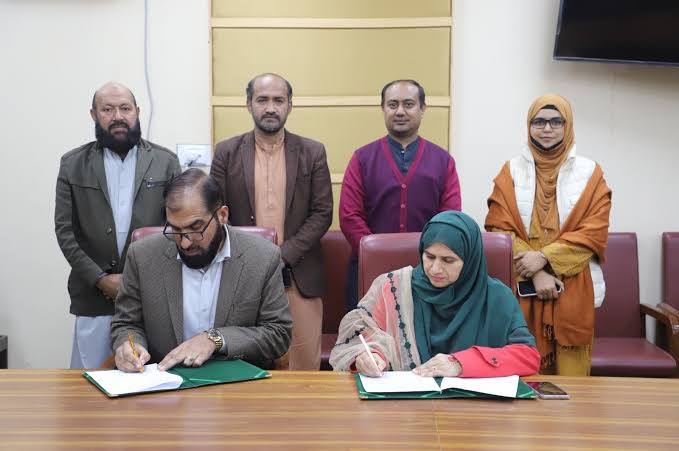
    By MIR HUNBAL BIRMANI DG Khan: Ghazi University has formally signed a Memorandum of Understanding (MoU) with the Chinese Academy of Agricultural Sciences (CAAS), China, establishing a strategic partnership aimed at advancing agricultural research and academic excellence.The agreement was officially signed by Dr. Muhammad Asif (Registrar, Ghazi University) and Dr. Zahoor Hussain on behalf of Ghazi University, alongside Prof. Dr. Xiaohui Zhang and Prof. Dr. Haiping Wang representing CAAS According to details , Department of Horticulture at Ghazi University, Dera Ghazi Khan, successfully organized a comprehensive one-day international workshop attended by scientists from china titled “Sustainable Vegetables Production Under Changing Climate” to address the growing challenges posed by global climate fluctuations on agricultural security. Registrar of Ghazi University, Dr. Muhammad Asif, who underscored the immense value of the event in enhancing the technical capacity and research aptitude of the university’s faculty members and senior students in attendance. The workshop’s core highlight featured keynote addresses delivered by a delegation of distinguished international agricultural scientists from the Chinese Academy of Agricultural Sciences (CAAS) in Beijing, China. The visiting panel included Prof. Dr. Xiaohui Zhang, Prof. Dr. Haiping Wang—Director, Chief Scientist of the Department of Vegetable Germplasm, and Curator of the National Vegetable Germplasm Resources Bank—and Dr. Jiangping Song, also a scientist and curator at the institution. During the technical sessions, these experts presented advanced, climate-resilient strategies tailored to modern horticultural demands, focusing on improved cultural practices, vegetable forcing techniques to optimize growth cycles, and controlled greenhouse production systems designed to maintain high yield quality despite extreme weather conditions. An interactive question-and-answer session was also part of the workshop, providing attendees with a valuable opportunity to engage directly with the keynote speakers and clarify complex concepts. The event concluded with a vote of thanks from Dr. Zahoor Hussain, Chairperson of the Department of Horticulture, who expressed deep gratitude to the honorable international guests, administration, and participants for contributing to the event’s success. Ultimately, the workshop served as a vital academic platform for knowledge transfer and scientific exchange, strengthening bilateral ties between Pakistani and Chinese agricultural researchers while setting a clear path forward for sustainable vegetable cultivation in the region. Ghazi University has formally signed a Memorandum of Understanding (MoU) with the Chinese Academy of Agricultural Sciences (CAAS), China, establishing a strategic partnership aimed at advancing agricultural research and academic excellence. The agreement was officially signed by Dr. Muhammad Asif (Registrar, Ghazi University) and Dr. Zahoor Hussain on behalf of Ghazi University, alongside Prof. Dr. Xiaohui Zhang and Prof. Dr. Haiping Wang representing CAAS. This bilateral agreement lays the groundwork for joint research initiatives, faculty and student exchange programs, and the provision of specialized scholarships. Additionally, the collaboration will focus on hosting joint workshops, technical training sessions, and capacity development programs designed to build expertise and strengthen global academic cooperation in agricultural sciences.

  • | |

    16 militants killed in Balochistan operation

    Security forces have killed 16 militants during intelligence-based operations in several areas of Balochistan, according to security sources. The operations are being carried out under Operation Al-Azm following a series of terrorist attacks in the province. Authorities said several militant hideouts and ambush positions were destroyed during the ongoing action. Security personnel also recovered weapons, ammunition and explosive material from the targeted locations. Operations are continuing in areas including Killi Kundi Umrani, Khad Kocha and Mastung, where security forces are targeting militant networks blamed for recent attacks. The latest operations followed an attack on the Mangi Dam Police Station, after which security forces launched a separate campaign named Operation Shaban. The security situation in Mastung also came under renewed focus after unidentified armed men attacked a vehicle on a national highway. A district and sessions judge and his security guard were killed in the attack, while an additional sessions judge and another person were seriously injured. Security sources said counterterrorism operations would continue across Balochistan until militant infrastructure is dismantled and law and order is restored. The state refers to militants linked to the banned Balochistan Liberation Army (BLA) and other groups operating in the province as Fitna al-Hindustan. Chief of Defence Forces and Chief of Army Staff Field Marshal Syed Asim Munir recently reiterated the military’s determination to eliminate militant networks in Balochistan. He said targeted operations against Fitna al-Khawarij and Fitna al-Hindustan would continue until terrorism and those supporting it were eliminated. The latest operation comes amid a broader rise in militant violence in Pakistan, particularly in Balochistan and Khyber-Pakhtunkhwa. A United Nations Security Council assessment has also highlighted continuing threats from militant groups in the region. The report pointed to attacks claimed by the BLA against Pakistani security forces and infrastructure linked to the China-Pakistan Economic Corridor. The UN assessment also raised concerns about militant groups obtaining modern weapons and equipment through cross-border smuggling and illegal markets. It noted the reported use of advanced rifles, night-vision equipment, thermal imaging systems, sniper weapons and drones by the Tehreek-e-Taliban Pakistan. The report further cited assessments that the BLA and TTP have maintained coordination in some areas, including through shared resources and training networks.

  • |

    Sidra Amin’s century in vain as Sri Lanka level ODI series

    Pakistan suffered a heavy eight-wicket defeat against Sri Lanka in the second women’s ODI despite a brilliant unbeaten century from opener Sidra Amin. After being asked to bat first, Pakistan posted 273 for five in their 50 overs. Sidra led the innings with a composed 100 not out from 120 balls, striking 13 boundaries. It was her seventh century in women’s ODIs. Ayesha Zafar added 49 from 45 deliveries, while Muneeba Ali scored 45. Captain Fatima Sana contributed a quick 25 from 18 balls to help Pakistan reach a competitive total. Sri Lanka, however, produced a dominant response and chased down the target in just 46.5 overs, winning by eight wickets and drawing the three-match series level at 1-1. The hosts’ chase was built around a record partnership between Vishmi Gunaratne and Harshitha Samarawickrama. The pair put together 203 runs, the highest partnership for any wicket in Sri Lanka’s women’s ODI history and the team’s first 200-plus stand in the format. Gunaratne played an aggressive innings, scoring 123 from 123 balls with 11 fours and a six. Samarawickrama remained unbeaten after reaching her century, while Kavisha Dilhari provided the finishing push with an unbeaten 40 from 33 balls. Pakistan made an early breakthrough when Fatima Sana dismissed Sri Lanka captain Chamari Athapaththu for just one run. However, Gunaratne and Samarawickrama quickly took control and kept Pakistan’s bowlers under pressure. Sidra said Pakistan had adapted well to the conditions but needed to improve their approach against Sri Lanka’s slower bowling. She also acknowledged that the bowling attack needed to be more disciplined in the decisive match. She said Pakistan would look to bowl straighter and target the stumps to restrict Sri Lanka’s batters from opening up and scoring freely. With the series tied 1-1, both teams will now compete in the final ODI with the series trophy at stake.