تازہ ترین

  • | |

    Japan’s 7.1 quake injures 50, cuts power to 40,0…

    A powerful 7.1-magnitude earthquake jolted Japan’s southern Kumamoto prefecture on Tuesday, leaving at least 50 people injured, disrupting transport and cutting electricity to around 40,000 homes as authorities warned residents to remain alert for aftershocks. The earthquake struck Kyushu, Japan’s southwestern main island, at a depth of about 10 kilometres, according to the Japan Meteorological Agency (JMA). The tremor reached the highest level of 7 on Japan’s seismic intensity scale in parts of Kumamoto, underlining the strength of the shaking. The powerful tremor damaged roads, bridges and buildings, while transport services across the affected region were thrown into disruption. Rail services, including high-speed trains, were suspended, while Kumamoto airport also temporarily closed its runway. The earthquake also triggered an emergency response across Kyushu. Authorities urged more than 150,000 residents to evacuate as officials assessed damage and monitored the situation. Reports said a fire and explosion occurred at a shopping mall, while a goods train was derailed during the chaos. For residents, the immediate concern was not only the first powerful jolt but the possibility of more shaking. Japanese authorities issued warnings over potential aftershocks and landslides, urging people in affected areas to remain cautious and follow official instructions. A tsunami warning was also issued after the earthquake, with authorities warning of waves of up to one metre along parts of the Ariake and Yatsushiro seas. The warning was later lifted after no significant tsunami activity was observed. Despite the widespread disruption, there were no reports of irregularities at nuclear power plants in the affected region, providing some relief as authorities continued their assessment. The earthquake has also drawn attention because Kumamoto has experienced devastating seismic activity before. The region was badly hit by a major earthquake sequence in 2016, which caused extensive destruction and hundreds of deaths. Japan is among the world’s most earthquake-prone countries, making disaster preparedness a central part of everyday life. Yet the latest tremor again demonstrated how quickly a powerful earthquake can disrupt communities, transport networks and essential services. With rescue and assessment operations continuing, authorities are now focused on helping those injured, restoring electricity and transport, and preparing residents for potentially dangerous aftershocks.


  • | |

    Jungkook asks fans to stop shoving cameras in his face

    BTS member Jungkook has addressed fans directly after a series of privacy violations left him visibly frustrated, drawing a clear line between genuine fan support and behaviour that crosses into rudeness and disrespect. During a live session on Weverse, Jungkook spoke candidly about an incident that had clearly bothered him. He described going into a bakery to simply buy bread when a fan shoved a camera directly into his face without warning or permission. “Taking pictures together isn’t a problem, but I went in to get some bread and there was someone who shoved a camera in my face. That’s not good manners,” he said, adding plainly that this kind of behaviour was “kind of rude.” It was not an angry outburst. It was a measured and direct appeal from someone who has consistently tried to maintain a warm relationship with his fanbase while also asking to be treated like a human being rather than a subject for content creation. This is not the first time Jungkook has raised these concerns. He has previously spoken about fans showing up near his home, sending unsolicited deliveries and tracking his private movements and whereabouts. Each time, he has responded with patience and directness, asking people to reconsider whether what they were doing was genuinely supportive or simply intrusive. The latest comments come at a significant moment for BTS as a group. The band is currently preparing for its highly anticipated group comeback, with all members having completed or in the process of completing their mandatory military service in South Korea. Fans have been eagerly watching every update, which may partly explain the heightened intensity of interest in the members’ private lives during this period. But for Jungkook, that context does not change the basic principle he was articulating. The response from the BTS ARMY was largely supportive. Many fans took to social media to echo his message, encouraging other supporters to engage with the group’s work in ways that did not involve crossing personal boundaries. The conversations that followed touched on a broader tension that exists within large, dedicated fanbases, where the line between admiration and intrusion can blur, sometimes without the fan even realising it. Jungkook’s willingness to address the issue directly, on his own terms, in a live conversation with fans rather than through a formal statement, reflects a specific kind of relationship he has always tried to maintain. He speaks to his audience honestly and without pretence, which is precisely why the message landed the way it did. Respecting a public figure’s private moments is not a complicated ask. When someone is simply trying to buy bread, the most supportive thing a fan can do is let them.

  • | |

    Ariana Grande sues hackers over unreleased music

    Ariana Grande has taken legal action against those responsible for years of music leaks, filing a lawsuit against two unidentified individuals she alleges hacked into the private digital accounts of photographers and producers within her inner circle and walked away with hundreds of unreleased songs, behind-the-scenes photographs, and private video and audio recordings from her creative process. The complaint, filed on Monday, July 27, paints a picture of sustained and deliberate theft that stretches back years. According to the filing, the stolen material was never intended for public consumption and was subsequently sold on the dark web, turning the private moments of Grande’s creative life into a commodity traded without her knowledge or consent. The scale of what was taken is considerable. “In 2023 alone, 45 unreleased songs belonging to Ms. Grande were hacked, stolen, and leaked by Defendants,” the complaint alleged. “Since her music debut in 2011, hundreds of similar leaks have taken place.” The cumulative picture that emerges is of an artist who has spent over a decade watching work she had not chosen to release being stripped from her and shared with the world on someone else’s timeline. Grande is also asking the court to assist in identifying the individuals behind the alleged cyberattacks, suggesting that the full extent of who is responsible remains under investigation. A source close to the singer framed the lawsuit in terms that extended beyond her own situation. “The lawsuit is intended to serve as a deterrent against future acts of this nature, not only targeting Ariana, but also the many artists who have faced similar invasions of their privacy and theft of their creative work,” the source told People magazine. “Artists deserve the right to control how and when their art is shared with the world. The unlawful theft and distribution of creative work undermines that right and should not be tolerated.” The lawsuit carries a particular irony given what Grande herself said publicly years before it became reality. While promoting Eternal Sunshine on the Zach Sang Show, she had reacted to the viral leak of Fantasize with a warning that now sounds entirely prophetic. “We were, before I left for Wicked, a few studio sessions that I did which are all over TikTok, thank you so much, I’ll see you in jail. Literally,” she had said. She described the leaked material as having been written for a separate television project and was unambiguous about her feelings toward those responsible. “These pirates, crooks, illegal!” she said. For Grande, the filing of this lawsuit is a statement that the theft of an artist’s creative work is not a victimless act. It is an invasion, and she intends to hold those responsible accountable for it.

  • | |

    Arooj Aurangzeb calls out support for Indian Gen Z

    Arooj Aurangzeb is a name that carries real weight in Pakistan’s student activism circles. In 2019, she went viral after a video of her reciting a powerful poem during the student solidarity march spread rapidly across social media. She was protesting alongside thousands of other students who were demanding the restoration of student unions and proper political representation for young people within the country’s institutions. The videos from that movement were electric, emotional and widely shared, including hers. Seven years later, she is back in the public conversation, but this time it is not because of a protest. It is because of a contradiction she says she can no longer stay quiet about. When Indian students began protesting over the NEET paper leak at Jantar Mantar, demanding justice and systemic reform in the country’s examination system, Pakistani social media users responded with visible enthusiasm. Support poured in from across the border, with many Pakistanis praising the Indian Gen Z for their courage, awareness and refusal to be silent. Arooj Aurangzeb watched that wave of support and felt something shift inside her. She took to social media to point out what she saw as a glaring and painful inconsistency. While Pakistanis were celebrating the Indian protesters and calling their movement inspiring, many of those same people had ridiculed, trolled and dismissed her and her fellow students when they took to the streets in 2019 for exactly the same kind of systemic change. She did not hold back. She highlighted the irony directly, asking how the same people who mocked Pakistani students fighting for their rights could turn around and feel so moved by Indian Gen Z doing the same thing. Her post was not framed as anti-India. It was framed as a question about selective empathy and the way Pakistanis sometimes extend more admiration to voices from abroad than to those speaking up at home. The internet did not respond with silence. Reactions were divided and sharp. Some users sided with her immediately. “We never stand by our own heroes,” one person wrote, capturing the frustration that Arooj was articulating. Others pushed back, with one commenter arguing that the dynamics of Indian and Pakistani Gen Z are completely different and that direct comparisons were unfair. Another raised a pointed question of their own, asking why so many Pakistani revolutionaries eventually leave the country on foreign visas, a remark that suggested the critique went both ways. Arooj Aurangzeb’s voice in 2019 was a reminder that young Pakistanis were willing to stand up and demand something better. Her voice in 2026 is a reminder that those same young people are still watching, still paying attention, and still asking why the recognition they deserved then continues to be denied while admiration flows so freely elsewhere.

  • |

    A peek into this week’s must-watch K-dramas

    The K-drama lineup for 27 July to 2 August 2026 is stacked, with two big premieres and fresh episodes of the shows everyone is already hooked on. Topping the list is A Bona Fide Killer, starring Gong Hyo-jin as Yoo Bo-na, a seemingly average working mother who is secretly “Kingfisher,” a legendary sniper. Directed by Yoon Jong-ho, the thriller-comedy follows her struggle to keep her family life intact while her secret identity starts catching up with her. Also premiering is The Affair Was Just the Beginning, a black comedy led by Kim Hye-soo. Two couples get pulled into a scandal that starts small and quickly turns into total chaos. Lee Chang-hee directs, with Dear X actor Kim Ji-hoon rounding out the cast. On the romance front, Dream to You continues with Hwang In-youp and Lee Hye-ri as Woo Su-bin and Joo Yi-jae, two people reconnecting years later and figuring out whether old feelings still hold up against new dreams. A Shop for Killers season 2 keeps the action coming, with Lee Dong-wook’s Jin-man deep in his fight against Babylon. Murthehelp is under constant threat, and every decision he makes gets riskier. Namkoong Min’s thriller The Husband ramps up too, as Kang Tae-ju gets closer to the truth behind his wife’s kidnapping. Each new clue pushes him toward harder, more dangerous choices to bring her home safely. For fans of supernatural stories, Spooky in Love returns with Park Eun-bin and Yang Se-jong solving ghostly mysteries together, all while their bond quietly deepens beneath the case-of-the-week format. And in The Apartment Job, Ji Sung’s offbeat run for residents’ council president hits another snag, as corruption buried within the complex becomes harder for him to look past. From assassins hiding in plain sight to slow-burn romances and ghost hunts, this week’s K-drama slate has something for every kind of viewer.

  • |

    Delhi high court orders removal of Kala Hiran teaser, says Salman Khan’s reputation must be protected

    The Delhi High Court has ruled against the teaser of Kala Hiran: The Battle for Legacy, directing that it be taken down within 24 hours. The film is widely believed to draw from Salman Khan’s 1998 blackbuck poaching case, and the court found that letting the teaser stay online could hurt the actor’s public image. Justice Jyoti Singh made it clear that if the makers did not comply, platforms including X and YouTube would be ordered to remove the relevant links themselves. Khan had initially approached the court to protect his personality rights and won that protection early on. He then pushed further, asking for the film to be banned outright, insisting it mirrors his still-unresolved poaching case far too closely. His plea claimed the film features a character who looks just like him, wearing a bracelet he’s often seen with, and includes content he calls defamatory, including suggestions of underworld ties. He also flagged concerns that the film could interfere with his right to a fair trial, given that the original case is still active in both the Rajasthan High Court and the Supreme Court. Adding to his argument, Khan’s petition referenced an incident involving producer Amit Jani, who reportedly ripped up a legal notice sent by Khan’s lawyers during a public interview, then claimed on social media that he was being threatened by the actor and underworld figures. Justice Singh didn’t hold back on this point, saying the teaser was actively harming Khan’s reputation with each passing day it remained accessible, and reminded the court that a person’s reputation, built over years, can unravel almost instantly. Lawyers for the producer pushed back, saying the teaser never actually mentions Khan by name, does not rely on AI-generated visuals or deepfakes, and only reflects publicly known events, not anything exclusive to him. Khan’s side rejected that argument, maintaining that the resemblance was too obvious to ignore. They also noted he has already been acquitted in three of the four criminal cases linked to the incident, with his sentence in the last one currently on hold. After watching the teaser during the hearing, Justice Singh observed that portraying an ongoing legal matter this way could border on contempt of court. The judge also addressed the responsibilities of digital platforms, noting that companies like Meta and Google can’t fully sidestep accountability, even without a pre-publication order. Khan has now been directed to share a list of specific links he wants removed.

  • | | |

    Dar targets $20bn Pakistan-US trade

    Deputy Prime Minister and Foreign Minister Ishaq Dar has expressed confidence that Pakistan and the United States can increase bilateral trade in goods to $20 billion within the next five years. Dar said Pakistan’s trade in goods with the US stood at $9.4 billion during the last fiscal year. He described the US as Pakistan’s largest single-country export market. Addressing a US Congressional Delegation and American business representatives, Dar said stronger trade and investment ties could create new opportunities for companies in both countries. He said closer economic cooperation could also generate employment, encourage innovation and support long-term economic growth. Dar highlighted several areas where Pakistan and the US could expand commercial cooperation. These include information technology, artificial intelligence, energy, manufacturing, agriculture and critical minerals. He said Pakistan is already an important buyer of American cotton and soybeans. The country is also becoming a growing market for US hydrocarbons. At the same time, Pakistan’s increasing demand for advanced machinery, technology and capital goods could create opportunities for American manufacturers, he added. Dar said the presence of more than 80 US companies in Pakistan demonstrated growing confidence in the country’s market and economic potential. He welcomed the interest shown by American companies in Pakistan’s technology, energy, critical minerals and defence sectors. The foreign minister also pointed to the US Exim Bank’s $1.25 billion financing for the Reko Diq project as an indication of increasing US confidence in Pakistan’s investment prospects. Dar encouraged American businesses to establish partnerships with Pakistani companies and explore long-term investment opportunities. He said Pakistan had improved its infrastructure over the past decade through modern highways, ports and logistics networks. These developments, he added, had strengthened the country’s position as a potential trade and investment gateway. The government is also working to make the business environment more investor-friendly. Dar said regulatory procedures had been simplified to reduce bureaucratic delays and make licensing and approvals easier. He said Pakistan wanted to deepen cooperation with the US across both goods and services. Technology, AI, energy, manufacturing, critical minerals and agriculture were among the sectors identified for greater collaboration. Dar also highlighted the broader improvement in Pakistan-US relations. He said frequent high-level contacts under Prime Minister Shehbaz Sharif and US President Donald Trump had helped strengthen bilateral engagement. He said his meetings with US Secretary of State Marco Rubio had also focused on strengthening relations and discussing regional developments. The foreign minister stressed that parliamentary engagement was equally important. He said regular interaction between lawmakers could improve mutual understanding and strengthen institutional ties. Dar said Pakistan’s engagement with the US Congress had increased significantly over the past year. The interaction has included lawmakers from both political parties and key congressional committees. The two countries also discussed regional security and stability. Dar said stronger Pakistan-US relations could contribute to peace and stability in the wider region. He also recalled Pakistan’s role in facilitating dialogue between the US and Iran. Dar said Islamabad remained committed to dialogue, diplomacy and peaceful solutions to regional disputes. The foreign minister separately received a US congressional delegation comprising Representatives Ryan Zinke and Michael James Baumgartner. During the meeting, both sides discussed ways to expand cooperation in trade, investment, IT, energy and other areas. The US lawmakers acknowledged the contribution of the Pakistani community to American society and economy. They described the diaspora as an important link between the two countries.

  • | | |

    PSX sheds 280 points amid cautious trading

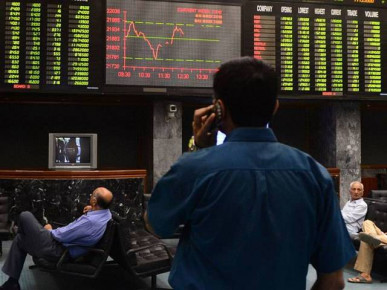
    The Pakistan Stock Exchange (PSX) remained under pressure during Tuesday’s trading session as investors adopted a cautious approach. The benchmark KSE-100 Index opened on a weak note and stayed in negative territory during the first half of the session. By 1pm, the index had dropped 279.65 points, or 0.16%, to 177,982.68 points. It had closed at 178,262.33 points in the previous session. The market witnessed further pressure shortly after opening. At around 9:39am, the KSE-100 fell to 177,914.38 points, losing 347.95 points, or 0.20%. The index later recovered some of its early losses but remained below the previous close. Trading remained volatile during the session. The index reached an intraday high of 179,123 points and a low of 177,903.87 points. Despite the decline in the benchmark index, market activity remained relatively strong. Around 339.48 million shares were traded during the session. The total value of shares traded stood at approximately Rs19.71 billion. Investor sentiment remained subdued as market participants appeared cautious about taking fresh positions. Profit-taking also contributed to the pressure on the benchmark index. The partial recovery from the morning low indicated some buying interest at lower levels. However, it was not enough to push the index back into positive territory by midday. Investors continued to monitor market developments and broader economic indicators for direction. The afternoon session was expected to determine whether the index could recover its losses or close the day in negative territory.

  • | |

    Musadik Malik calls for smarter water management

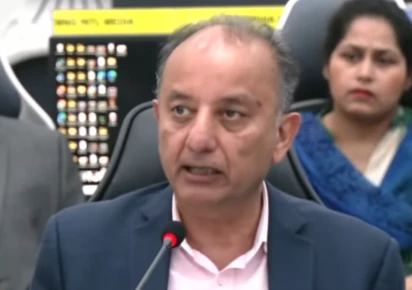
    Climate Minister Musadik Malik has called for a major shift in Pakistan’s water management strategy, saying the country must focus not only on storing water but also on regulating its supply throughout the year. Speaking at a briefing at the National Disaster Management Authority (NDMA), Malik said effective water management was essential for protecting food supplies, supporting agriculture and reducing the impact of climate-related disasters. His remarks came as Pakistan faces another difficult monsoon season. At least 107 people have died and 297 others have been injured since the current rainy season began on June 26, according to disaster management authorities. The Pakistan Meteorological Department has forecast another strong spell of monsoon rains from July 29. Heavy rainfall could trigger urban flooding, flash floods and landslides in several parts of the country. Malik said Pakistan needed different climate strategies for different regions instead of relying on a single nationwide approach. Plans are being developed for cities facing extreme heat, northern areas vulnerable to floods and landslides, and agricultural regions where changing weather patterns are threatening food production. He stressed that water must be available when farmers need it during the Rabi and Kharif seasons. According to the minister, simply allowing large quantities of floodwater to escape without regulating or storing it creates serious risks for agriculture and food security. Malik described water infrastructure as a national security issue. He said the government would focus on improving water regulation, telemetry and storage systems. It would also work with provincial governments to improve zoning and construction standards in disaster-prone areas. National Food Security Minister Rana Tanveer Hussain said Pakistan would require greater water storage capacity in the coming years. He said the country faced two linked challenges: controlling floods and dealing with water shortages. Tanveer said climate change was already changing crop cultivation and sowing patterns. He stressed that agriculture would need to adapt to shifting weather conditions to protect food supplies. The minister said Pakistan was among the countries most vulnerable to climate change, with agriculture facing some of the strongest impacts. He recalled the huge economic losses caused by the 2022 floods but said the country’s disaster response capabilities had improved since then. He said the government had started modifying crop cycles and cultivation patterns in response to changing climatic conditions. Authorities are also working on a broader strategy to strengthen agricultural resilience. Tanveer highlighted several major water projects. He said the Diamer-Bhasha Dam would provide around 6.4 million acre-feet of additional storage capacity, while the Mohmand Dam would add nearly one million acre-feet. He also mentioned progress on the Dasu project and expressed hope that the K-IV water supply project for Karachi would be completed by the end of this year or early next year. Finance Minister Muhammad Aurangzeb described climate change and population growth as major long-term challenges for Pakistan. He called for a coordinated response involving all parts of the government. Aurangzeb said the country was now better prepared financially to respond to natural disasters. He said the government had decided to use domestic resources for rescue and relief operations instead of relying primarily on international assistance. He said Pakistan had launched a $2 billion programme aimed at strengthening climate resilience and reducing environmental risks. Around $700 million annually has also been allocated for disaster management, vulnerability reduction and protection of lives and infrastructure. The finance minister said Pakistan’s disaster financing approach had changed significantly since the 2022 floods. The country had previously relied heavily on international commitments, but authorities are now increasing domestic funding for climate adaptation and emergency response. Information Minister Attaullah Tarar said preparations for the current monsoon season had started before the rains arrived. He credited NDMA’s National Emergencies Operation Centre (NEOC) with improving forecasting and early warning capabilities. Tarar said the system had helped authorities issue timely alerts about dangerous weather events. He urged citizens to follow official warnings and take precautions during periods of heavy rainfall. Meanwhile, flooding continues in parts of Punjab and other regions. The Provincial Disaster Management Authority said water levels in the Chenab River had shown some improvement, while low-level flooding persisted at several locations along the Indus.

  • |

    India’s top court orders release of minors amid exam protests

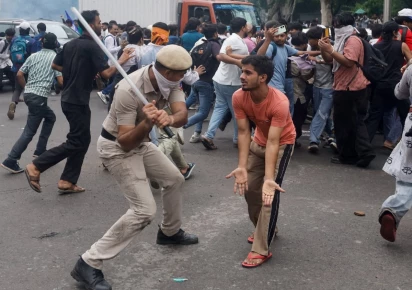
    NEW DELHI: India’s Supreme Court has ordered authorities to release minors detained during protests over examination paper leaks and directed officials to preserve evidence linked to allegations of excessive police force. Chief Justice Surya Kant reportedly issued the interim directions while hearing petitions filed by student protesters and activists. The petitions accuse police and paramilitary personnel of using excessive force, including baton charges and other crowd-control measures, against demonstrators. The court also directed authorities to preserve all available surveillance material from the protests. This includes CCTV recordings, drone footage and body-camera video. Officials were further told to protect the personal and digital information of protesters and ensure that it is not publicly disclosed. The court reportedly barred authorities from taking coercive action against protesters while the matter remains under consideration. Justice Kant stressed the importance of an independent investigation into allegations of mistreatment. He said accountability must be established if wrongdoing occurred. The government has defended the security forces’ response, describing the measures as necessary for crowd control. Solicitor General Tushar Mehta told the court that around 250 police officers were also injured during the unrest. He reportedly said the government had no objection to an investigation into allegations involving protesters. The protests erupted after question papers for a national medical college entrance examination were leaked. The controversy triggered demonstrations in New Delhi and several other parts of India. Protesters demanded reforms to the examination system, withdrawal of cases against demonstrators and compensation for families of students who died by suicide following the controversy. The demonstrations ended after the education minister resigned and the government agreed to several demands raised by the protesters. Meanwhile, the Indian government has proposed tougher penalties for examination paper leaks. Under the proposed amendments, the maximum prison sentence could be increased to 10 years, while fines could rise to more than $1 million. The government says the proposed changes are intended to strengthen the examination system, speed up legal proceedings and restore confidence among students and young people. The issue has also created political tension in parliament. Opposition lawmakers have repeatedly raised concerns about the police response to the protests and demanded accountability. In several cities, clashes between demonstrators and security personnel led to tear gas and baton charges. Authorities also suspended a police officer in an eastern state after he allegedly fired rounds into the air while attempting to disperse student protesters. Concerns have additionally emerged over the use of artificial intelligence-powered surveillance during demonstrations. Activists have questioned the deployment of police surveillance equipment capable of providing wide-area monitoring of protest gatherings. A protest group that helped lead the movement has claimed that hundreds of students were arrested in different states. However, the figure has not been independently verified.