تازہ ترین

  • |

    West Indies stun Pakistan by 90 runs

    West Indies defeated Pakistan by 90 runs in the first Test of the two-match series on Tuesday. Pakistan failed to chase down a target of 211 runs. The national team was bowled out for just 120 runs in its second innings. The match was played at the Brian Lara Academy in Tarouba. Pakistan’s batters struggled badly on a difficult pitch. The West Indies fast bowlers maintained constant pressure throughout the innings. Pakistan began their chase with hopes of securing a win. However, the batting line-up collapsed quickly. Eight Pakistani batters failed to score in double figures. Captain Babar Azam was the only batter who offered strong resistance. He remained unbeaten on 58 runs. However, he received little support from the other end. Azan Awais, Imam-ul-Haq and Shan Masood were dismissed for three runs each. Ali Usman scored two runs. Khurram Shahzad made four runs. Salman Ali Agha, Aamer Jamal and Mohammad Ali were dismissed without scoring. The repeated fall of wickets left Pakistan in serious trouble. Earlier, West Indies resumed their second innings on the fourth day at 126 for seven. Their batters added 55 more runs before being bowled out for 181. West Indies entered the second innings with a 29-run lead from the first innings. That advantage proved crucial. It allowed the hosts to set Pakistan a target of 211 runs for victory. Pakistan’s batters found the target extremely difficult to chase. The pitch offered assistance to the bowlers. West Indies used the conditions effectively and kept taking wickets at regular intervals. The visitors had earlier scored 282 runs in their first innings. Shan Masood was Pakistan’s leading batter. He scored an impressive 109 runs. Imam-ul-Haq also made an important contribution. He scored 63 runs. However, the rest of the batting line-up failed to build enough partnerships. Justin Greaves was the standout bowler for West Indies in Pakistan’s first innings. He claimed five wickets and played a key role in restricting Pakistan to 282. West Indies had scored 311 runs in their first innings. Shai Hope was among their top performers. He scored 92 runs and narrowly missed a century. Kavem Hodge also played an important innings. He scored 84 runs and helped West Indies post a competitive total. Pakistan’s Mohammad Ali was the leading bowler in the first innings. He took four wickets. Mohammad Abbas also impressed with the ball and claimed three wickets. The match remained competitive because of the difficult batting conditions. However, West Indies handled the pressure better in the crucial moments. Pakistan’s second-innings collapse eventually handed West Indies a convincing victory. The hosts bowled the visitors out for 120 runs.

  • | | |

    Oil prices jump as US-Iran tensions rattle markets

    Oil prices climbed sharply on Wednesday as fresh military developments involving the United States, Iran and Saudi Arabia raised fears of further escalation in the Middle East. Brent crude futures rose $3.30, or 3.9%, to $87.39 a barrel. US West Texas Intermediate (WTI) crude also gained $3.05, or 3.8%, to $82.31 a barrel. The latest increase came after the United States and Saudi Arabia carried out strikes against Iran-backed groups in Iraq. The developments followed Iran’s reported missile attack targeting US forces in the region. The renewed tensions have increased concerns about oil supplies from the Middle East. Investors are now watching closely for signs that the conflict could spread further across the Gulf. US officials said American forces intercepted ballistic missiles launched by Iran towards US military positions in the Middle East. Washington described the incident as an attempted surprise attack. Iran’s Islamic Revolutionary Guard Corps later said it had launched several ballistic missiles at a US air base and the US Central Command facility in Jordan. Saudi Arabia also confirmed that its forces had conducted targeted strikes against Iran-backed groups in Iraq. Riyadh said the strikes were carried out jointly with the US Central Command. Saudi authorities linked the operation to drone attacks targeting energy facilities in the kingdom. The developments have added to concerns over the security of critical oil infrastructure in the region. Market analysts said the latest escalation has reduced expectations of a quick easing of tensions in the Persian Gulf. Any disruption to oil production or transportation routes could put additional upward pressure on crude prices. US oil inventories have also provided support to the market. Crude stocks fell by around 3.3 million barrels during the week ending July 24, according to data cited from the American Petroleum Institute. Official inventory figures from the US Energy Information Administration are expected later on Wednesday. Traders will closely examine the data for further signs of changes in demand and supply. Meanwhile, OPEC+ could provide another boost to oil prices. Sources said the producer group is likely to pause planned increases in oil output for three months starting in October. The possible pause would come after OPEC+ completes its scheduled return of barrels that had previously been removed from the market through voluntary production cuts. For now, traders remain focused on developments between Washington and Tehran. Any further military escalation could increase concerns over regional oil supplies and push crude prices higher.

  • |

    China rejects US sanctions on research institutions

    China has strongly opposed a US decision to place several Chinese research institutions on a sanctions list. Beijing criticised the move on Wednesday. It accused Washington of using national security concerns to restrict scientific and technological cooperation between the two countries. A spokesperson for China’s Ministry of Commerce said Beijing would take necessary steps to protect the legitimate rights and interests of its research institutions. The spokesperson also said China wanted to maintain a stable environment for normal scientific exchanges and cooperation with international partners. Beijing accused the United States of repeatedly expanding the definition of national security. It said Washington had created discriminatory barriers against Chinese institutions. China also criticised what it described as the politicisation and weaponisation of scientific research. According to Beijing, such policies could damage cooperation between researchers and universities in both countries. The Chinese government said the US measures were against the broader global trend of international cooperation in science and technological innovation. Beijing urged Washington to withdraw what it called unjustified accusations against Chinese research institutions. China also called on the United States to correct its policies as soon as possible. It demanded fair, just and non-discriminatory treatment for Chinese research organisations. The dispute comes amid wider tensions between Washington and Beijing over technology, trade and national security. The United States has increasingly tightened restrictions on Chinese access to advanced technologies. Semiconductor manufacturing has become a major area of competition between the two countries. China is also working to expand its domestic semiconductor industry. Beijing aims to reduce its dependence on advanced foreign chips affected by US export restrictions. Last week, the US Department of Defence updated a list of foreign institutions it considers involved in “problematic activities”. The updated list included Chinese defence-related academies and several universities. Shanghai-based Fudan University was also among the institutions added to the list. The latest move is likely to add another point of tension to already strained US-China relations. Beijing has repeatedly opposed US measures targeting Chinese companies, universities and research organisations. Washington, meanwhile, has maintained that its restrictions are linked to national security and technology concerns.

  • |

    Escalating water shortages compound the crisis for Sudanese refugees in Chad

    Sudanese refugees who escaped violent conflict in Darfur are facing an severe water shortage in eastern Chad’s overcrowded displacement camps. Over 938,000 people have fled into Chad since fighting erupted in April 2023 between the Sudanese Armed Forces (SAF) and the Rapid Support Forces (RSF). Settlements such as the Goudrane refugee camp, which accommodates roughly 50,000 refugees, frequently go days without water tank deliveries, leading to desperate scrambles when limited supplies arrive. The extreme scarcity forces many families to survive on less than half of the United Nations High Commissioner for Refugees’ (UNHCR) recommended daily minimum water allocation. At local medical clinics, doctors report an inability to effectively administer treatments for bacterial infections because patients lack access to clean drinking water. Aid agencies, including Solidarités International, caution that existing funding levels cannot keep pace with the growing capacity requirements for boreholes, sanitation, and water treatment infrastructure. Refugees arriving at transit sites such as Adré and long-term camps like Metche describe systematic violence in Sudan, particularly targeting the Masalit community. Reports detail mass killings, sexual violence, heavy shelling, and deliberate destruction of vital supplies by RSF fighters during escapes from towns like el-Fasher and el-Geneina. With the conflict entering its fourth year and diplomatic resolution remaining distant, displaced families face prolonged instability alongside severe resource shortages.

  • | |

    DSP among three killed in Balochistan attacks

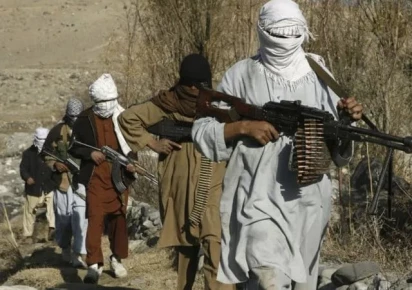
    Three people, including a deputy superintendent of police (DSP), were martyred in separate attacks across Balochistan, officials said. The incidents were reported in Barkhan, Kech and Chagai districts. A truck driver was also injured during one of the attacks. Six labourers were abducted in Kech. Meanwhile, five trailers and two gas bowsers were set on fire in Chagai. In Barkhan, DSP Rakhni Murid Bugti was killed when armed men opened fire on his police vehicle. The incident occurred near Khatta Chowki on Tuesday evening. The DSP was reportedly patrolling the area when the attackers targeted his vehicle. Police, Frontier Corps (FC), Counter-Terrorism Department (CTD) personnel and other security forces reached the area after the attack. The security personnel launched a search operation to trace the attackers. Authorities also increased security around the area. Another deadly incident occurred near Kalatak in Turbat, the district headquarters of Kech. According to officials, armed men stopped a vehicle carrying seven labourers on Monday night. The attackers opened fire on the vehicle. Javed Khan, a resident of Swabi district in Khyber-Pakhtunkhwa, was killed in the attack. The attackers then abducted the other six labourers. Four of those abducted belong to Punjab, while two are from Khyber-Pakhtunkhwa. A passer-by was also caught in the crossfire. Abdul Razzaq, a resident of Solband, was killed in the incident. Police and security agencies launched a search operation after receiving information about the abduction. Efforts were underway to locate and recover the missing labourers. In another incident, armed men blocked the N-40 highway in Chagai during the same night. The highway connects Quetta with Taftan and is an important route in the region. The attackers reportedly blocked the road at Padag. They also opened fire outside a roadside hotel. The assailants later set five trailers and two gas bowsers on fire. A truck driver sustained injuries during the firing. Law enforcement personnel reached the area soon after the attack. Police and other security agencies launched a search operation to locate those responsible. Investigators also cordoned off the affected area and began collecting evidence.

  • | |

    Ferozewala submerged as monsoon rains intensify

    Flooding has intensified in several parts of Ferozewala as hundreds of families remain stranded in submerged areas. The situation has become more concerning with another spell of monsoon rain expected across Punjab. The Pakistan Meteorological Department has forecast widespread rain and thunderstorms across Punjab and other parts of the country from July 29 to August 5. Several districts could receive heavy to very heavy rainfall during this period. The new weather system may increase the risk of urban flooding, flash floods and landslides. Weather officials said monsoon currents from the Arabian Sea and Bay of Bengal are likely to enter upper and central parts of Pakistan. A westerly weather system affecting northern areas is also expected to strengthen from August 1. Several areas of northern and central Punjab are likely to receive rain with breaks until August 4. These include Lahore, Rawalpindi, Islamabad, Gujranwala, Gujrat, Sialkot, Faisalabad, Sargodha, Sahiwal and surrounding districts. Southern Punjab is also expected to receive rainfall from July 31 to August 3. Bahawalpur, Bahawalnagar, Rahim Yar Khan, Multan, Vehari, Khanewal, Lodhran, Muzaffargarh, Kot Addu, Dera Ghazi Khan and Rajanpur are among the areas likely to receive rain. The Punjab Disaster Management Authority has directed provincial departments and district administrations to remain on high alert. Authorities have been warned about possible urban flooding in Lahore, Rawalpindi, Gujranwala, Gujrat, Sialkot, Faisalabad and Multan. Mountainous areas could face additional risks. Murree, Galliyat and nearby regions may experience landslides. Flash floods are also possible in local streams and nullahs. The threat extends to Kashmir, northeastern Punjab, Islamabad, Khyber-Pakhtunkhwa and Gilgit-Baltistan. Hill torrents may also affect Dera Ghazi Khan and northeastern parts of Balochistan. Officials have been instructed to complete preparations before the next spell of rain. District administrations have also been asked to closely monitor rivers, streams and other vulnerable locations. Authorities warned that additional rainfall could increase water levels in eastern rivers and adjoining nullahs. Residents have been advised to avoid unnecessary travel during heavy rain. People have also been asked to stay away from damaged buildings, mud houses, standing water and exposed electrical wires and poles. Parents have been urged to keep children away from flooded and low-lying areas. People have also been advised to move to safer places during thunderstorms. Water and sanitation authorities across Punjab have been directed to remain ready throughout the forecast period. Officials have been asked to keep drainage stations, pumps and machinery fully operational. Field teams are also expected to remain deployed during rainfall. Construction sites have been ordered to take additional safety measures. Open pits should be covered or properly cordoned off. Warning signs and barriers should also be installed. The weather warning comes as Ferozewala is already facing serious flooding. Dozens of villages and settlements have been submerged after an embankment along the seasonal Bhir Nullah was breached. The flooding has affected several residential communities. Water levels have continued to rise in some areas after further rainfall.

  • |

    Diplomatic tension flares between Kyiv and Tehran following Caspian Sea maritime strike

    Ukrainian Foreign Minister Andrii Sybiha held a direct phone call with Iranian counterpart Abbas Araghchi following Tehran’s formal condemnation of a Ukrainian drone attack on a vessel in the Caspian Sea. During the exchange, Sybiha cautioned Iran against taking escalatory measures and reiterated Kyiv’s demand that Tehran cease all military support for Russia’s invasion. Ukrainian officials maintained that their military strikes in the Caspian body of water strictly targeted Russian warships and cargo ships transporting military equipment between Iran and Russia, stressing that Ukraine had no intention of causing civilian casualties or damaging commercial shipping. In response, Iranian Foreign Minister Araghchi confirmed that Sybiha characterised the strike on the vessel as unintentional, noting that while Tehran does not seek wider conflict, any assault on Iranian citizens or commercial assets remains unacceptable. The incident, which resulted in the death of one Iranian sailor and injuries to another, previously drew sharp rhetoric from Tehran, with Iranian officials accusing Ukraine of acting at the behest of Israel and warning that the strike would not go unanswered. The dispute highlights the growing convergence between the Eastern European conflict and Middle Eastern tensions, underscored by concurrent discussions between Ukrainian and Israeli foreign ministers regarding shared security threats posed by Iranian military capabilities.

  • |

    Gulf nations back Omani plan for voluntary transit payments to resolve Hormuz maritime crisis

    Gulf Cooperation Council member states have formally endorsed a diplomatic initiative proposed by Oman to introduce voluntary service fees for commercial vessels transiting the Strait of Hormuz, seeking to restore global energy shipments disrupted by the broader conflict involving the United States, Israel, and Iran. The framework, modeled after the cooperative navigation safety mechanism used in Asia’s Malacca Strait, allows shipowners to make optional financial contributions toward environmental protection, search-and-rescue services, and navigational maintenance rather than paying mandatory tolls. Designed as a compromise between Tehran’s demand for administrative authority over shipping lanes and Washington’s insistence on unimpeded international transit, the Omani proposal explicitly prevents Iran from exercising exclusive operational control over the waterway while offering a structured path toward reopening commercial transit routes. The diplomatic breakthrough coincides with a temporary lull in direct aerial bombardments after US President Donald Trump called off a two-week bombing campaign following advice from military commanders. Despite the pause in direct strikes between Washington and Tehran, regional tensions remain elevated due to ongoing proxy drone activity across Jordan, Saudi Arabia, and Iraq, alongside continued US naval enforcement actions against non-compliant commercial vessels. While market reactions to the suspension of airstrikes sent global crude prices down sharply, formal resolution remains subject to upcoming diplomatic negotiations in Washington and the broader implementation of the bilateral framework agreement.

  • |

    PIA-style model proposed for DISCO privatisation

    ISLAMABAD: The government has proposed a new financial structure for the privatisation of three major power distribution companies. The plan covers Faisalabad Electric Supply Company (FESCO), Gujranwala Electric Power Company (GEPCO) and Islamabad Electric Supply Company (IESCO).The proposal is based on the restructuring model used during the privatisation process of Pakistan International Airlines (PIA). Under the proposed plan, selected assets and liabilities of the three companies will be separated from their balance sheets.The government plans to establish a Special Purpose Vehicle (SPV) for this purpose. The SPV will be owned by the government. It will hold specific assets and liabilities removed from the DISCOs. The restructuring is aimed at making the companies more attractive to private investors. The government wants to offer financially stronger entities to potential buyers.Land assets are among the items expected to be separated from the DISCO balance sheets. Liabilities related to retired employees and pension benefits will also be shifted to the SPV.These pension-related liabilities were worth around Rs312 billion for the three companies as of June 2025. The final amount could change after the companies’ balance sheets are restructured. The government plans to use audited financial results for March 2026 as the basis for the final calculation.The three DISCOs had combined assets of around Rs1.2 trillion in June 2025. Their combined liabilities stood at approximately Rs1.05 trillion.The companies together reported net positive equity of around Rs145 billion. However, the financial position of the three companies varies considerably.GEPCO had negative equity of around Rs14.4 billion as of June 2025. The final figures may be different because the government is using March 2026 audited accounts for the restructuring process. The Privatisation Commission board has recommended that the Cabinet Committee on Privatisation approve the restructuring plans. The plans cover the first group of DISCOs selected for privatisation.The proposed arrangements have been prepared using audited financial statements for the period ending March 31, 2026. Officials believe the new structure could increase the value of the companies for the government.It is also intended to make the transactions commercially viable for private-sector investors. The government hopes the approach will attract stronger interest from domestic and international buyers.The strategy closely resembles the model adopted for PIA. During the airline’s privatisation process, the government separated more than Rs650 billion in liabilities from PIA’s balance sheet.The move was designed to leave the airline in a stronger financial position before its transfer to new owners. A similar approach is now being considered for the three DISCOs.The Privatisation Commission has been informed that both local and foreign investors have shown interest in the companies. The government has already announced deadlines for Expressions of Interest.Investors interested in FESCO must submit their Expressions of Interest by August 7, 2026. The deadline for GEPCO is August 21, 2026.For IESCO, the deadline has been set for September 7, 2026. FESCO has a relatively stronger financial position among the three companies.Its assets stood at around Rs410.3 billion as of June 2025. Its liabilities were approximately Rs347 billion.The company reported positive equity of around Rs63 billion. The equity position was supported by deposits for shares and gains from asset revaluation.FESCO also recorded a profit after tax of around Rs9.4 billion. Its non-current liabilities stood at approximately Rs217.6 billion.Staff retirement benefits accounted for around Rs123 billion of these liabilities. The company’s current liabilities were estimated at about Rs130 billion.Trade payables made up around Rs118 billion of the current liabilities. GEPCO reported a profit after tax of around Rs13.7 billion.Its total assets stood at approximately Rs238 billion. However, its equity remained negative at around Rs14.4 billion.The company’s total liabilities were around Rs252.5 billion. Staff retirement benefits accounted for approximately Rs79 billion.IESCO reported a loss after tax of around Rs1.42 billion during the same period. The company had total assets of approximately Rs547 billion.Its liabilities stood at around Rs450 billion. Despite recording a loss, IESCO had positive equity of around Rs97 billion. The company’s equity position was supported by a share deposit of approximately Rs67 billion. It also benefited from a surplus revaluation of around Rs158 billion.IESCO’s liabilities included staff retirement benefits worth around Rs110 billion. The company also carried deferred tax liabilities.The proposed privatisation is part of Pakistan’s wider power-sector reform programme. It is also linked to commitments made under Pakistan’s agreement with the International Monetary Fund (IMF).Pakistan has repeatedly pledged to reduce government involvement in the power distribution sector. The commitment to privatise at least three DISCOs has been made several times since 2013.Previous attempts, however, failed to reach completion. The IMF has urged Pakistan to implement structural reforms in the power sector.The broader objective is to reduce electricity costs for households and businesses. The reforms also aim to improve the operational efficiency of power distribution companies.The IMF has previously noted delays in the private-sector participation process for DISCOs. The first group, consisting of FESCO, GEPCO and IESCO, faced delays after potential investors raised concerns about the proposed transaction structure.The government has now said that those concerns have been addressed. Officials expect the privatisation process to move forward.The government is targeting completion of the first phase by early 2027. The proposed SPV will be an important part of the process.It is intended to separate selected financial burdens from the three companies before they are offered to private investors. The government hopes the restructuring will improve investor confidence and make the DISCO transactions more commercially attractive.

  • |

    Backlash grows within conservative ranks as far-right AfD surges past German chancellor in polls

    German Chancellor Friedrich Merz is facing acute political pressure following a contentious cabinet reshuffle that triggered widespread friction within his conservative ranks. The internal discord comes at a critical juncture, as the far-right Alternative for Germany (AfD) pulls ahead in national opinion polls ahead of key regional elections in September. The shake-up was prompted by the abrupt departure of party heavyweight Jens Spahn over his decision to have a child via surrogacy abroad, a practice banned in Germany and previously opposed by Spahn himself. Merz appointed his chief of staff, Thorsten Frei, to replace Spahn as leader of the conservative parliamentary group, whilst moving Health Minister Nina Warken into the chancellery. However, additional dismissals, including Transport Minister Patrick Schnieder and junior minister Tino Sorge, provoked sharp backlash from party members in Rhineland-Palatinate and Saxony-Anhalt, who accused Merz of poor communication and unfair treatment. With approval ratings for the CDU/CSU alliance slipping to 21% behind the AfD’s 27%, the upcoming state elections in Saxony-Anhalt and Mecklenburg-Vorpommern present a formidable test. Merz has urged patience, predicting internal tempers will cool before parliament reconvenes in September. However, growing discontent within the coalition leaves the chancellor in a precarious position as he attempts to push forward economic and social reforms.