تازہ ترین

  • | | |

    PTI seeks LHC order for August 5 Minar-e-Pakistan …

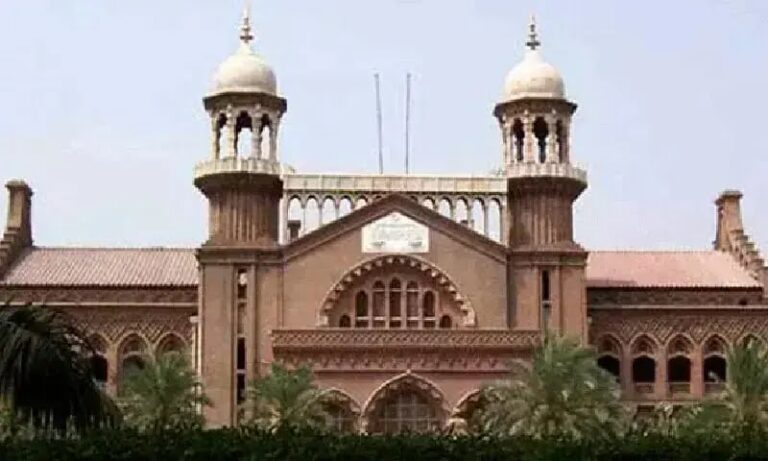
    LAHORE: Pakistan Tehreek-e-Insaf (PTI) has moved the Lahore High Court (LHC), seeking judicial intervention after the Lahore district administration allegedly failed to decide its application for permission to hold a public rally at Minar-e-Pakistan on August 5. The constitutional petition, filed by PTI Lahore President Mian Usman Akram through legal counsel, names the Deputy Commissioner Lahore and other relevant government authorities as respondents. The party argues that the delay has created uncertainty over one of its planned political gatherings at a time of increasing political activity across the country. According to the petition, PTI submitted its application to the Deputy Commissioner’s office on July 22, requesting official permission to organize a peaceful public rally at the historic Minar-e-Pakistan. However, despite the passage of several days, the district administration has neither approved nor rejected the request. The petitioner contends that the prolonged silence from the authorities amounts to an arbitrary exercise of power and effectively prevents the party from exercising its constitutional rights. It argues that every citizen and political party is entitled to hold peaceful public meetings and political gatherings, subject to reasonable restrictions imposed by law. PTI maintains that administrative authorities cannot deny constitutional freedoms simply by delaying decisions on lawful applications. The petition states that the failure to issue a timely decision has deprived the party of sufficient time to make arrangements for the proposed gathering and has created unnecessary legal uncertainty. The petition further argues that public assemblies are an essential component of a democratic society, allowing political parties to communicate with supporters and present their views peacefully. It says government officials are legally required to act fairly, transparently, and within a reasonable timeframe while deciding such applications. Seeking judicial relief, PTI has asked the Lahore High Court to direct the Deputy Commissioner Lahore to decide the pending application for the August 5 rally without further delay. The party has also requested the court to declare the prolonged inaction unconstitutional, unlawful, and without legal authority. In addition, the petition urges the court to ensure that the respondents perform their statutory duties in accordance with the Constitution and applicable laws, enabling the party to exercise its democratic and political rights through a peaceful public gathering. The case is expected to come before the Lahore High Court in the coming days. The court’s decision could determine whether the district administration must promptly rule on PTI’s request ahead of the proposed August 5 rally. At the time of filing, no official response had been issued by the Lahore district administration regarding the allegations made in the petition.
  • | | |

    Pakistan clarifies Afghan deportation policy

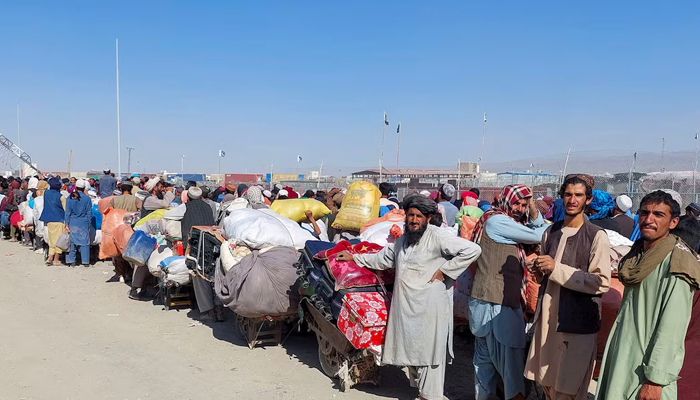
    Pakistan has clarified that Afghan citizens with valid visas and travel documents have not been expelled from the country. Foreign Office spokesperson Tahir Hussain Andrabi said the government was following a legal process regarding Afghan nationals staying in Pakistan. Addressing the weekly press briefing, Andrabi said cases of around 89,000 Afghan citizens were currently being reviewed under the Illegal Foreigners Repatriation Plan (IFRP). He explained that the process was being carried out according to established procedures and legal requirements. The spokesperson added that Pakistan was also providing humanitarian relief by extending the stay of nearly 16,000 Afghan nationals. The extension applies mainly to vulnerable groups, including women, children and elderly citizens, he said. Commenting on reports of an incident near the Chitral border areas, Andrabi said the Foreign Office had no confirmed information about the matter. He stated that reports coming from Afghanistan needed proper verification at the ground level before any official response could be given. The spokesperson stressed that Pakistan would avoid commenting on unverified reports and would share information only after confirmation from reliable sources.

  • | |

    Police trace Aamir Khan threat to foreign VPN

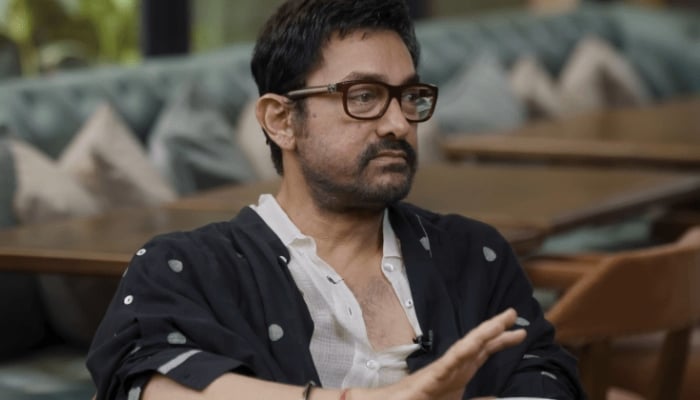
    The investigation into the threatening message sent to Bollywood star Aamir Khan has taken a new turn after police reportedly traced the message to a Sweden-based virtual private network (VPN), while authorities continue efforts to identify the individual behind it. According to police sources, the threatening audio message, which was allegedly circulated in the name of the Lawrence Bishnoi gang, was sent using technology designed to conceal the sender’s real location. Investigators believe the person responsible used both a VPN and the Tor browser, making it more difficult to determine their identity. Officials reportedly traced the initial IP address to Sweden, but suspect the location may have been masked through online privacy tools. Authorities are now working with digital evidence to establish the sender’s actual whereabouts and identity. The audio clip was allegedly sent after Aamir Khan’s recent marriage to Gauri Spratt. In the recording, the speaker, claiming to be Arzu Bishnoi, accused the actor of promoting what was described as “love jihad” and allegedly threatened to “teach Aamir Khan a lesson.” According to the report, the threat was accompanied by a social media post claiming to represent the Lawrence Bishnoi group. An excerpt from the alleged post read: “I, Aarzoo Bishnoi and Tyson Bishnoi (Lawrence Bishnoi Group), want to say that people like Aamir Khan are promoting what is being called ‘Love Jihad’ in our country, which is against our culture. We will not tolerate this man, and he will soon be made to face the consequences.” The message further claimed: “We promise our brothers, sisters, and fellow citizens that whoever promotes such disgraceful acts will be dealt with in our own way.” Police are treating the matter seriously because the threat referenced the jailed gangster Lawrence Bishnoi, whose name has previously surfaced in several high-profile cases involving public figures. However, investigators have not confirmed whether the threat has any genuine connection to Bishnoi’s criminal network. Authorities are now examining digital records, internet routing information and communication platforms used to send the audio clip. Investigators have also reportedly contacted relevant online platforms and international authorities as part of efforts to obtain additional technical information. The threatening message surfaced shortly after Aamir Khan married his longtime partner Gauri Spratt in a private registered ceremony held at his Mumbai residence on July 5. The marriage marked the actor’s third. He was previously married to Reena Dutta, with whom he shares children Junaid and Ira, before later marrying filmmaker Kiran Rao. Although Aamir and Kiran divorced in 2021, they have continued to collaborate professionally, including on the acclaimed film Laapataa Ladies. For now, police have not announced any arrests. Investigators continue analysing the digital trail behind the threatening message while attempting to determine whether the sender acted alone or as part of a larger operation. Officials say the use of VPN services and anonymity tools has made the investigation more complex, but efforts to identify the individual responsible remain ongoing.

  • |

    QatarEnergy buys US LNG cargoes amid Hormuz crisis

    QatarEnergy has purchased 33 liquefied natural gas (LNG) cargoes from the United States this year to reduce supply disruptions caused by the ongoing conflict in the region and the closure of the Strait of Hormuz, according to industry sources. The LNG shipments have been arranged for key Asian markets, including South Korea, Taiwan, Bangladesh, India and Japan, as Qatar works to maintain supplies for its long-term customers. The move comes after QatarEnergy declared force majeure on some of its LNG contracts following the shutdown of shipping routes through the Strait of Hormuz. The waterway is a critical global energy corridor through which a significant portion of the world’s oil and gas supplies passes. The company’s decision to purchase additional LNG cargoes from the US represents a major increase compared with previous years. In 2025, QatarEnergy had purchased only four spot LNG cargoes, while the number has now risen sharply to 33 in 2026. The additional purchases are aimed at protecting Qatar’s reputation as one of the world’s most reliable energy suppliers and ensuring that customers continue receiving gas despite regional instability. Industry sources said the US LNG purchases represent a goodwill effort by QatarEnergy to support important Asian buyers affected by the disruption. The 33 cargoes are estimated to equal around one-third of QatarEnergy’s monthly LNG exports before the conflict and are valued at nearly $1 billion. Qatar is among the world’s largest LNG exporters, with Asia accounting for around 80% of its LNG shipments. Countries such as Japan, South Korea and India rely heavily on Qatari gas supplies for energy security. The Strait of Hormuz crisis has created uncertainty in global energy markets, forcing major producers and consumers to seek alternative supply arrangements. QatarEnergy has not officially commented on the reported LNG purchases, but the move highlights efforts by energy companies to adjust supply chains amid geopolitical tensions.

  • | |

    LHC grants interim bail in Crypto fraud case over …

    MULTAN: In a significant development in a cryptocurrency fraud case, the Lahore High Court’s Multan Bench has granted interim bail to Hammad Ali and other co-petitioners, observing that the prosecution has, at this stage, failed to produce sufficient material linking them to the alleged electronic fraud or the freezing of the complainant’s cryptocurrency accounts. Justice Tariq Saleem Sheikh issued the detailed 15-page judgment while hearing the interim bail petitions, emphasizing that the investigation remains underway and that the available record does not disclose prima facie evidence of cheating, fraud, or forgery against the petitioners. According to the judgment, the allegations contained in the First Information Report (FIR) do not appear, at first glance, to establish the offences alleged against the accused. The court noted that no evidence had been placed on record demonstrating the petitioners’ involvement in electronic fraud or showing that they played any role in freezing the complainant’s cryptocurrency accounts. The court further observed that it is the responsibility of the investigating officer to independently examine the role of each individual account holder before reaching any conclusion regarding criminal liability. The judgment stressed that investigations must be conducted impartially and based on verifiable evidence rather than assumptions. Justice Sheikh also noted that the petitioners had already provided the investigating officer with the records requested during the course of the investigation. The investigating officer, the court said, remains free to obtain additional documents from relevant financial institutions or other authorities if further verification is required. The judgment also outlines the complainant’s version of events. According to court records, the complainant initially invested Rs5 million in cryptocurrency. He claimed that a subsequent crash in the cryptocurrency market caused him heavy financial losses. The complainant further alleged that, in an effort to recover those losses, he sold household belongings, his vehicle, and gold jewellery to make additional investments in cryptocurrency. He later claimed that his cryptocurrency accounts were frozen, preventing him from accessing his digital assets. According to the FIR, the complainant then began withdrawing funds through the cryptocurrency accounts of friends. He alleged that the accused obtained cryptocurrency through bank accounts but failed to return the corresponding amount owed to him. After reviewing the available material, the Lahore High Court concluded that there was currently insufficient prima facie evidence directly implicating the petitioners in the alleged offences. On that basis, the court allowed their interim bail petitions while making it clear that the investigation would continue in accordance with the law. The ruling highlights the judiciary’s emphasis on evidence-based investigations in complex financial and cryptocurrency-related disputes, while leaving the final determination of criminal responsibility to the outcome of the ongoing investigation.

  • | |

    Cardi B sets record straight on cosmetic procedures

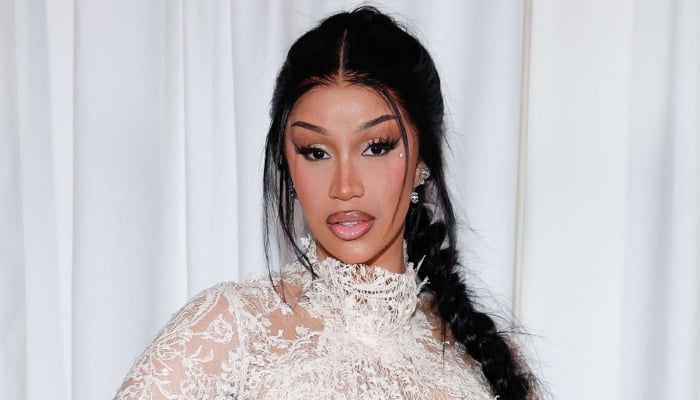
    Grammy-winning rapper Cardi B has addressed renewed speculation about her appearance, revealing that she has already undergone a butt reduction procedure while making it clear she has no plans for further major cosmetic surgery anytime soon. The rapper responded to the rumours during a recent Instagram Live session after seeing repeated comments from fans suggesting she should reduce her butt. According to Cardi, many people were unaware that she had already done exactly that. “A lot of y’all keep telling me to go get my ass reduced,” Cardi said during the livestream. She quickly set the record straight, adding, “I don’t need to go get my ass reduced, news flash, I did get my ass reduced.” The rapper explained that cosmetic procedures are not as straightforward as many people believe. She said another liposuction procedure is not a realistic option because of the condition of her skin following previous surgeries. “I can’t just go and lipo my butt because my skin is like kinda loose,” she explained. “That’s why my ass shakes so much.” Cardi added that removing more tissue through liposuction could create additional complications. “So if I just go and get a lipo reduction… my ass could drop,” she said, noting that the only alternative would involve a more invasive operation requiring a lengthy recovery period. “So I would have to cut myself. And I’m not cutting myself. I’m not sitting down for four months. I’m outside.” The 33-year-old also stressed that she is happy with the way she looks today. “I like my body how it looks right now. I’m comfortable in my skin.” Cardi reminded fans that she has always been transparent about the cosmetic work she has chosen to undergo throughout her career. “I’m very, very honest,” she said before revealing, “First of all, I got two lipos and one ass reduction.” The rapper also explained that she chose to reduce her previous biopolymer injections because she naturally has a petite frame. “First thing first, I am a small girl. I’m a very small, petite girl. My mom is petite. My sister’s petite. My aunts are small.” Addressing critics who continue to speculate about her appearance, Cardi insisted that much of her current physique is also the result of healthy eating rather than surgery alone. She shared that she regularly eats grilled chicken and grilled salmon while also drinking fibre-based beverages. She encouraged fans not to starve themselves in pursuit of unrealistic beauty standards before dismissing ongoing rumours about additional cosmetic procedures. “Y’all acting like y’all new to this. Y’all been seeing my body for how many years now?” she said, later adding, “I’m being as honest as possible.”

  • |

    US car leasing declines as higher costs hit buyers

    Car leasing in the United States has dropped significantly in recent years as automakers reduce incentives and consumers struggle with rising monthly payments. Before the COVID-19 pandemic, leasing accounted for nearly 30% of new vehicle deals in the US. However, the share fell sharply during the post-pandemic vehicle shortage and has not fully recovered. In the first half of 2026, leasing represented around 23% of new car transactions. Industry experts say one of the biggest reasons behind the decline is the end of attractive lease offers that previously encouraged customers to choose leasing over buying. Automakers have become less willing to provide low-cost lease deals as they focus on maintaining tighter vehicle inventories and reducing discounts. As a result, many customers returning after the end of their lease terms are facing significantly higher monthly payments. Dealers say some customers are surprised to find their next lease costing hundreds of dollars more than their previous agreement, causing many to reconsider leasing altogether. The decline in leasing has added pressure to vehicle affordability in the US market. Some buyers are now choosing longer financing plans, including loans lasting up to seven years, to manage higher vehicle prices. Leasing usually allows customers to drive newer vehicles with lower monthly payments compared with traditional financing. The average lease payment remains lower than loan payments, but industry analysts say the gap has narrowed significantly. Experts believe automakers changed their approach after the 2021–2023 vehicle shortage caused by semiconductor supply disruptions. Limited inventories helped companies reduce incentives and maintain stronger pricing power. The decline in leasing is also affecting the used-car market. Vehicles returned after three-year leases have traditionally provided dealerships with a steady supply of affordable pre-owned cars. With fewer leased vehicles coming back to the market, used-car supplies have tightened and prices have increased. Data from industry analysts shows that average prices for three-year-old used vehicles have risen substantially compared with pre-pandemic levels. Dealers warn that fewer lease customers could also weaken long-term customer loyalty, as leasing often brings buyers back to showrooms every few years for new vehicles

  • | |

    FBR detects Rs10bn tax shortfall, issues notices t…

    ISLAMABAD: The Federal Board of Revenue (FBR) has issued notices to seven major oil marketing companies, including Pakistan State Oil (PSO), after detecting an alleged tax and levy shortfall of nearly Rs10 billion linked to imported petroleum products. According to official documents, the tax authority claims that the companies deposited less than the required amount in customs duty, petroleum levy and climate support levy based on the volume of petroleum products imported and unloaded at their storage facilities. The notices were issued after the FBR examined petroleum import and sales data, comparing the quantities of fuel handled by the companies with the taxes and levies paid into the national exchequer. The authority concluded that the payments made did not match the applicable liabilities. Reports indicate that the total amount identified by the FBR stands at Rs9.99 billion, prompting the revenue authority to seek explanations from the companies and direct them to clear the outstanding amounts. Among the companies named in the notices, Pakistan State Oil (PSO) faces the largest claim. According to the FBR, the state-owned oil giant is required to deposit approximately Rs8.19 billion in unpaid customs duty, petroleum levy and climate levy. The remaining amount is distributed among six other companies. Puma Energy and Pak-Arab Pipeline Company have jointly been asked to deposit around Rs135.3 million, while Hi-Tech Lubricants has been directed to pay Rs116.7 million. Similarly, B Energy Limited has been issued a notice for approximately Rs250 million, Taj Gasoline has been asked to deposit around Rs260.4 million, and Gas & Oil Pakistan Limited (GO) has been directed to pay approximately Rs222.2 million, according to the official figures. The FBR has warned all the companies that failure to respond to the notices within the prescribed time or to deposit the outstanding amounts could result in legal proceedings under the relevant tax laws. The development comes as Pakistan continues efforts to strengthen tax collection and improve revenue generation amid ongoing fiscal reforms. Authorities have intensified scrutiny of various sectors, including the petroleum industry, to ensure compliance with customs regulations and levy payments. The companies concerned have not publicly responded to the notices or the allegations at the time of filing this report. The FBR is expected to review their replies before deciding on any further legal or administrative action. The case is likely to attract significant attention given its financial scale and the role of the petroleum sector in Pakistan’s economy.

  • | |

    Where to stream The Devil Wears Prada 2 after its theatrical run

    Fashion fans can finally watch The Devil Wears Prada 2 from home as the highly anticipated sequel has officially arrived on streaming following a successful theatrical run. The sequel became available for streaming on July 29, roughly three months after its cinema release, giving audiences another chance to revisit the glamorous world of Runway magazine. The film is now streaming on Hulu and Disney+, where subscribers can watch the latest chapter in the beloved franchise. Directed by David Frankel and written by Aline Brosh McKenna, the sequel reunites much of the original cast, including Meryl Streep as the formidable Miranda Priestly, Anne Hathaway as Andy Sachs, Emily Blunt as Emily Charlton, and Stanley Tucci as Nigel Kipling. Set nearly two decades after the events of the 2006 blockbuster, the story follows Andy as she returns to Runway magazine, this time as the publication’s features editor, once again working under Miranda Priestly. The sequel explores how the iconic fashion magazine adapts to the rapidly changing media landscape while revisiting the complex relationships between its central characters. The film enjoyed an impressive run at the global box office before making its streaming debut. According to reports, the franchise surpassed the billion-dollar mark worldwide, making the sequel one of the year’s biggest commercial successes. For viewers who missed the theatrical release, Hulu subscribers can now stream the movie directly through the platform. The sequel is also available on Disney+, with availability depending on the subscription package in some regions. Several Disney and Hulu bundles also include access to the film. Fans looking to revisit the story from the beginning can also stream the original The Devil Wears Prada before watching the sequel. The 2006 classic remains available on Disney+, allowing audiences to follow Andy’s journey from aspiring journalist to one of Miranda Priestly’s assistants before diving into the new chapter. The sequel has also introduced several new faces alongside its returning stars, while maintaining the sharp dialogue, high-fashion settings and workplace drama that made the original film a cultural phenomenon. Critics have particularly praised the chemistry between the returning cast members and the film’s updated take on the modern fashion and publishing industries. With its digital release now underway, viewers can enjoy The Devil Wears Prada 2 from home on Hulu and Disney+, whether they’re revisiting Miranda Priestly’s world for nostalgia or experiencing the stylish sequel for the first time. The streaming launch marks the next chapter for one of Hollywood’s most iconic fashion franchises after another successful run on the big screen.

  • | |

    Tiny kurtas and Y2K trends dominate summer fashion

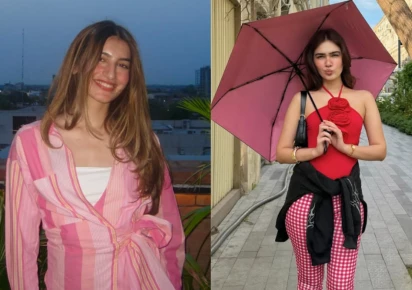
    Pakistani fashion influencers are embracing a fresh wave of nostalgic style this summer, with Y2K-inspired outfits, tiny kurtas, polka dots and fusion dressing emerging as some of the season’s biggest trends. Rather than recreating early-2000s fashion exactly as it was, creators are blending vintage influences with contemporary styling, giving classic pieces a modern update. Across Instagram, influencers are moving away from heavily embellished looks in favour of versatile wardrobe staples that can be styled for both casual and dressy occasions. The result is a mix of timeless silhouettes, tailored basics and playful colours that reflect nostalgia while remaining practical for everyday wear. One of the standout trends making a strong comeback is the tiny kurta. Popular during the late 1990s and early 2000s, the short kurta has returned with a modern twist. Fashion creators are pairing it with straight-leg jeans, tailored trousers, capri pants and flowing skirts, creating looks that combine traditional Eastern wear with contemporary styling. The trend has reminded many fashion enthusiasts of classic Bollywood wardrobes from the early 2000s while fitting naturally into today’s minimalist aesthetic. Instead of heavily embroidered designs, influencers are opting for clean cuts and understated styling that allow the silhouette to take centre stage. Another pattern enjoying renewed popularity is the polka dot. After several seasons dominated by florals and abstract prints, the timeless motif has returned on dresses, matching co-ord sets and separates. The classic print offers a vintage-inspired feel without appearing outdated, proving that certain fashion elements continue to return in new forms. Summer wardrobes are also embracing a colour palette inspired by Y2K fashion. Shades such as butter yellow, cherry red, chocolate brown, powder blue and soft pink are appearing frequently across influencer feeds, bringing warmth and nostalgia to seasonal outfits. Accessories like headbands and capri trousers have also quietly re-entered fashion conversations, although in more refined ways than their original early-2000s versions. While nostalgic pieces are attracting attention, wardrobe basics remain equally important this season. Oversized button-down shirts, classic waistcoats, relaxed tailoring and crisp white shirts have become essential styling pieces. Influencers are layering these staples over denim or pairing them with tailored trousers to create polished everyday looks. Perhaps the defining feature of this summer’s fashion movement is fusion dressing. Rather than separating Eastern and Western clothing, creators are combining them effortlessly. Tiny kurtas are styled with denim, waistcoats are worn with skirts, blazers are layered over traditional separates, while shalwars are paired with fitted tank tops and contemporary accessories. Instead of chasing fast-changing microtrends, many Pakistani influencers appear to be focusing on clothing that offers longevity and versatility. By blending nostalgic Y2K influences with classic tailoring and traditional silhouettes, they are creating wardrobes that feel both fashionable and wearable, making this summer less about dramatic statements and more about timeless personal style.