تازہ ترین

  • |

    Fatima Zehra says better facilities could have earned gold

    Pakistan’s trailblazing boxer Fatima Zehra believes she had the potential to win a gold medal at the Commonwealth Games if she had access to the same level of training facilities and international exposure as many of her competitors. The 22-year-old made history by becoming the first Pakistani woman to win a boxing medal at the Commonwealth Games after claiming bronze in the women’s 60kg category. Although she narrowly missed out on a place in the final, Fatima described the achievement as a proud moment for herself and for Pakistan. Reflecting on her campaign, Fatima said her main objective before the tournament was to secure a medal, while also hoping to progress to the final. She admitted that the competition was extremely challenging, with many of her opponents benefiting from extensive international training and experience. Her journey ended in the semi-finals, where she faced Canada’s Marie-Bathoul Al-Ahmadieh. Fatima acknowledged that her opponent’s speed and international experience proved decisive, making it difficult to overcome the challenge. Despite the defeat, she expressed satisfaction with her bronze medal, saying it was earned against some of the strongest boxers in the competition. She also noted that competing at such a high level allowed her to gain valuable experience by observing other elite athletes and learning from every bout. Fatima highlighted the gap between Pakistan’s sporting infrastructure and that of leading boxing nations. She pointed out that several countries, including regional rivals, organized overseas training camps in the United States before the Games, while Pakistan’s preparations took place entirely at home. According to Fatima, world-class coaching facilities, modern training environments, and regular international competition are essential if Pakistani athletes are to consistently challenge for top honors on the global stage. She believes greater government investment in sports development would significantly improve the country’s chances of success. The young boxer also acknowledged the role played by the Pakistan Army, the Pakistan Boxing Federation, and her coach, Raheel Adnan, crediting them for their guidance and support throughout her preparation. She said their encouragement was instrumental in helping her achieve the historic milestone. Looking ahead, Fatima has already shifted her focus to the upcoming Asian Games, which are scheduled to take place in Japan in September. She hopes the experience gained at the Commonwealth Games will strengthen her performances against Asia’s top competitors. Fatima previously won a bronze medal at the 2025 Islamic Games in Saudi Arabia, and she is determined to build on that success by aiming for an even stronger finish at the Asian Games. Her boxing journey has not been without challenges. She revealed that although boxing now runs in her family, her parents initially opposed her decision to pursue the sport. After competing at the Punjab level, she was forced to step away from boxing because of her family’s concerns. However, her coach Raheel Adnan convinced them to give her another opportunity, a decision that ultimately changed her career. Today, her family fully supports her ambitions, and her two sisters, Dua and Aiman, along with her younger brother Naday Ali, have also taken up boxing. Fatima secured her historic Commonwealth Games bronze after defeating New Zealand’s Jordan Wilson by a unanimous 5-0 decision in the quarter-finals. Under tournament rules, both losing semi-finalists were awarded bronze medals, marking a landmark achievement for women’s boxing in Pakistan.

  • |

    Anil Kapoor misses Satish Kaushik in heartfelt Friendship day note

    Anil Kapoor has shared a heartfelt tribute to his late friend Satish Kaushik, who passed away in 2023. The veteran actor took to Instagram to mark Friendship Day with an emotional message dedicated to him. Along with his note, Kapoor posted a nostalgic clip from one of the films he made with Kaushik. The clip brought back memories of their years spent working together and building a lasting friendship. Kapoor began his caption by wishing his followers a happy Friendship Day. He then shifted his focus to Kaushik, writing that he was missing his dear friend deeply on this particular day. He went on to reflect on what made their bond so special. According to Kapoor, everyone has that one friend they turn to during frustrating moments, sad days, or simply when they need a laugh. He said Satish was exactly that person for him. Their conversations, he explained, never needed to go beyond that comfortable, easy space friends naturally share. Kapoor also spoke fondly about Kaushik’s talent. He recalled his humour, his infectious energy, and the sense of positivity he always brought into any room he entered. Towards the end of his note, Kapoor reflected on how rare true friendships like theirs really are. He described them as a blessing rather than something people should ever take for granted. He said that on this particular Friendship Day, his thoughts were with Kaushik. He then closed the post with a simple, heartfelt message, wishing his late friend a happy Friendship Day and expressing his love for him. Over the years, Kapoor and Kaushik shared the screen together in several memorable films. These included Deewana Mastana, Mr. India, and Thar. Their real-life friendship often carried the same warmth that fans saw in their on-screen collaborations. Kaushik passed away at the age of 66 on March 9, 2023, following a sudden heart attack. His death came as a major shock, both to the film industry and to fans who had grown up watching his work over the decades. Even years after his passing, heartfelt tributes like this one from Kapoor continue to show just how deeply Kaushik’s presence and friendship are still missed by those who knew him best.

  • |

    Jon Bernthal reveals why he distanced himself from family for ‘The Punisher’

    Jon Bernthal has opened up about the personal cost of playing Frank Castle in The Punisher. The actor admitted that he chose to isolate himself from his wife and children while working on the intense Marvel series. The Punisher is a standalone show built around Bernthal’s widely praised performance as the vigilante antihero. Frank Castle is a dark, violent character, and stepping into that role required Bernthal to shift into a completely different mental space than his everyday life. To keep that darkness from spilling into his home life, Bernthal made a deliberate choice. He kept his distance from his wife, Erin Angle, and their kids throughout filming. According to him, this was about protecting his family from the emotional shadow of the character he was playing. Speaking candidly with Howard Stern, Bernthal explained his process in detail. He said isolation becomes necessary during these projects, and that his wife remains the one person he still talks to regularly. He added that it wouldn’t feel right to be out socialising at restaurants or bars while simultaneously embodying a character defined by grief and violence. The 49-year-old actor also reflected on how this affects his bond with his children. He admitted that staying away from them has only grown harder over time. He said he does not want them around him while he is still mentally carrying the weight of such a heavy role. Even so, he made it clear that his love for them remains as strong as ever. Bernthal didn’t shy away from the practical realities of parenting either. He joked about the never-ending costs that come with raising young kids, specifically mentioning diapers. He added that if he’s going to spend time away from his children for work, he wants that time to genuinely count for something. Beyond The Punisher, Bernthal recently returned to the role of Frank Castle in Spider-Man: Brand New Day. The film, directed by Destin Daniel Cretton, also stars Tom Holland. Through this conversation, Bernthal gave fans a rare and honest look into what it really takes to fully commit to such a demanding role, and the personal sacrifices that often come along with it, both for himself and for the family waiting for him at home.

  • |

    Pakistan batting woes deepen ahead of crucial second Test

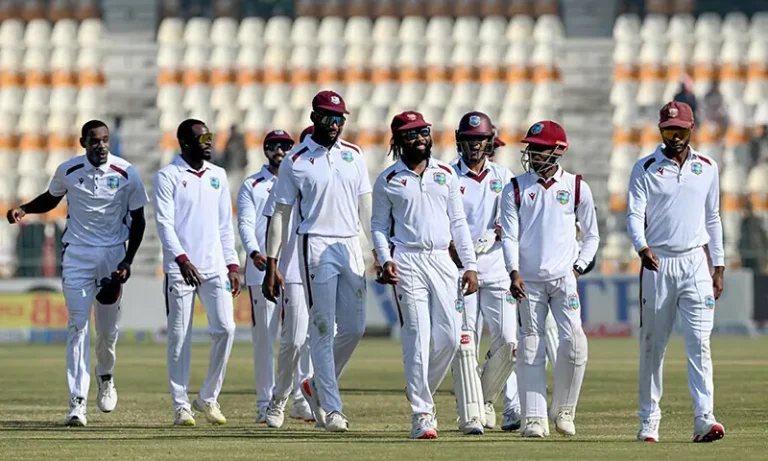
    Pakistan’s batting frailties remain a major concern after a disappointing display in the opening Test against the West Indies, where the visitors failed to chase a modest target and suffered a heavy defeat. Set 211 runs for victory, Pakistan’s batting lineup crumbled under pressure and was dismissed for just 120, raising fresh questions about the team’s ability to perform in challenging conditions. The collapse exposed familiar weaknesses against disciplined fast bowling, with only former captain Babar Azam showing resistance. Remaining unbeaten on 58, Babar stood firm while wickets continued to tumble around him, but his lone effort was not enough to keep Pakistan in the contest. The batting unit struggled to build partnerships from the outset as the West Indies bowlers exploited the conditions brilliantly. The pace attack maintained consistent line and length, making the most of the bowler-friendly surface to keep the Pakistani batters under constant pressure. Regular breakthroughs prevented Pakistan from gaining any momentum during the chase. Apart from Babar’s fighting knock, no batter managed to make a meaningful contribution. Several players got starts but failed to convert them into significant scores, allowing the West Indies to dominate throughout the innings. Poor shot selection and an inability to adapt to the conditions further compounded Pakistan’s problems. The defeat also highlighted the struggles of Pakistan’s middle order. Captain Salman Ali Agha endured a disappointing outing, failing to make an impact in either innings of the Test. His inability to anchor the innings or guide the lower order placed additional pressure on the rest of the batting lineup. Experienced wicketkeeper-batter Mohammad Rizwan also had a forgettable match. Known for his resilience and ability to perform under pressure, Rizwan was unable to deliver in both innings, leaving Pakistan without the stability they often rely on in difficult situations. His lack of runs was a significant setback for the visitors. With the series now moving to Port of Spain, Pakistan will need a much-improved batting performance if they hope to level the contest. The top and middle order must take greater responsibility, particularly against a confident West Indies bowling attack that has already shown its ability to exploit weaknesses. Babar Azam’s unbeaten half-century remains one of the few positives from the defeat, demonstrating that success is possible even in demanding conditions with the right approach. However, Pakistan cannot depend on one batter alone. Greater contributions are needed from senior players, especially Salman Ali Agha and Mohammad Rizwan, if the team is to bounce back. As the second Test approaches, Pakistan face a crucial opportunity to respond. A stronger batting display will be essential if they are to challenge the West Indies, keep the series alive, and restore confidence after a disappointing start.

  • |

    Ram Kapoor opens up on hidden depression during ‘Bade Achhe Lagte Hain’

    Ram Kapoor has made another candid revelation on the latest episode of Lock Upp 2. The 52-year-old actor opened up about a painful chapter from his past that he had kept hidden for years. Kapoor reflected on the time he spent working on Bade Achhe Lagte Hain. During that period, he struggled with obesity and continuous weight gain, which eventually led to serious health complications. He revealed that this phase also overlapped with the most difficult emotional period of his life. According to Kapoor, this was a secret he had never shared publicly, not even with his wife, Gautami Kapoor. He said, “I have kept one secret from the world; even my wife doesn’t know. During the show, I went through the absolute worst depression of my life.” He then described just how severe his health situation had become at the time. Doctors reportedly told him he could die within six months if nothing changed. Kapoor recalled being on insulin three times daily, with his blood sugar levels swinging between dangerously high numbers. Despite this, he kept working roughly 14 hours a day without pause. He admitted he avoided confronting the issue seriously, largely because of the immense love and financial success he was receiving during that time. He explained that walking away from all of it felt nearly impossible, even as it took a toll on both his body and mind. He also acknowledged that the pressure changed his personality, admitting he became a much harder person to be around during those years. Kapoor further shared that even his wife and child only learned the full truth about this struggle after watching the latest episode of Lock Upp 2 themselves. This revelation adds another deeply personal layer to Kapoor’s run on the show, where he has continued opening up about experiences he had never spoken about publicly before. By choosing to share this now, years after the fact, Kapoor seems intent on giving fans a more honest picture. His story sheds light on the hidden costs that can come with sustained fame, long working hours, and public pressure, even when everything on the surface appears successful.

  • |

    Infantino’s future in doubt after FIFA rights controversy

    FIFA president Gianni Infantino is facing growing criticism after abandoning a controversial proposal to sell a stake in the commercial rights of the FIFA World Cup, a move that has raised questions about his leadership and decision-making within world football’s governing body. The proposal sparked strong opposition from several football organizations, particularly regional confederations and professional leagues, who argued that such a major commercial decision should not have been pursued without broader consultation. Critics believe the plan exposed concerns over transparency and governance at FIFA. Claudius Schaefer, the chairman of the organization representing 53 professional men’s and women’s football leagues across Europe and the chief executive of the Swiss Football League, said the handling of the proposal had seriously damaged confidence in FIFA’s leadership. According to Schaefer, the situation would have significant consequences in most organizations, especially when a senior executive advances a major business initiative without informing or involving key governing bodies. He suggested that the controversy has left Infantino’s position under increased scrutiny. The proposal was officially withdrawn after widespread resistance from football stakeholders. The decision came following criticism from various regional football confederations, with UEFA and CONCACAF publicly expressing that they had lost confidence in Infantino’s leadership after the episode. Schaefer argued that the failed proposal reflected a broader concern about FIFA’s priorities. He said the organization appeared increasingly focused on generating greater commercial revenue rather than protecting the long-term interests of football competitions, players, clubs, and domestic leagues. He also warned that expanding commercial opportunities could encourage FIFA to create even larger tournaments and increase the number of international matches. Such developments, he said, would place additional pressure on an already crowded football calendar. Professional leagues have repeatedly voiced concerns over fixture congestion, arguing that players are being asked to participate in too many matches throughout the season. Domestic competitions, they say, often bear the consequences when international tournaments continue to expand. Schaefer emphasized that national leagues remain the foundation of professional football and should not be weakened by decisions aimed primarily at increasing commercial returns. He argued that any future reforms to international competitions must balance financial objectives with the welfare of players and the health of domestic football. Another major point of criticism centered on FIFA’s decision-making process. Schaefer claimed that even members of the FIFA Council—the organization’s highest decision-making body—were reportedly unaware of the proposal before it became public. He described this lack of consultation as surprising and said it raised serious concerns about governance within FIFA. The controversy has intensified calls for greater transparency and accountability in football administration. Many stakeholders believe decisions involving the commercial future of the World Cup should involve extensive discussion with FIFA’s governing bodies, member associations, leagues, and other key partners before being considered. Although FIFA has now withdrawn the proposal, the fallout continues to fuel debate over leadership, governance, and the future direction of world football. With criticism coming from influential football organizations across different regions, pressure remains on Infantino to rebuild trust and demonstrate a more inclusive approach to decision-making on matters affecting the global game.

  • | | |

    Operation ’11 Garaj’ continues as 10 T…

    Pakistan’s security forces continued Operation “11 Garaj” with multiple intelligence-based operations in different parts of Khyber Pakhtunkhwa. The latest actions targeted militants belonging to the banned Tehreek-e-Taliban Pakistan (TTP), also referred to by the state as Fitna al-Khawarij. According to security sources, two militants were killed during an operation in the Shakro area of Bajaur district. The militants had allegedly established hideouts inside mosques and were using them as operational bases. Security forces launched the operation after receiving verified intelligence about their presence in the area. In another intelligence-based operation, security forces targeted militant hideouts in the Darbi Khel and Battan areas of Khyber district. Eight more TTP militants were killed during the operation. The actions were carried out after security agencies gathered confirmed intelligence regarding militant activities in the region. Officials said all the operations were based on credible intelligence and were aimed at dismantling terrorist networks operating in Khyber Pakhtunkhwa. The operations form part of the ongoing campaign under Operation “11 Garaj” to eliminate militant threats and prevent terrorist attacks. Security officials said the purpose of these operations is to clear the affected areas of terrorist elements, strengthen law and order, and ensure lasting peace for local communities. They added that intelligence-based operations will continue wherever the presence of militants is confirmed.

  • | |

    245 technical institutes affiliated by FBISE face …

    Islamabad: Questions have been raised over the affiliation process of hundreds of technical institutes after an audit revealed that 245 technical institutions were affiliated with the Federal Board of Intermediate and Secondary Education (FBISE) before concerns over legal authority and inspection procedures were fully addressed. The issue came up during the 47th meeting of the Public Accounts Committee, held under the acting chairmanship of Syed Naveed Qamar, where lawmakers reviewed audit objections related to FBISE’s affiliation procedures. According to audit findings, FBISE affiliated 245 technical institutes during 2022 and 2023 and collected Rs. 26.750 million in affiliation fees. The audit questioned the process, stating that the original FBISE Act of 1975 mainly covered intermediate and secondary education and did not clearly mention technical institute affiliations. Officials informed the committee that the matter was reviewed by the Law and Justice Division, which issued a legal opinion on 15 June 2026. The opinion stated that FBISE has legal authority under relevant sections of the FBISE Act 1975 to conduct examinations, provide affiliations and issue certificates for technical education programmes including Matric Tech and Inter Tech programmes at secondary and higher secondary levels. During the discussion, PAC members stressed that clear policies and official notifications should be issued so that all concerned institutions have proper guidance regarding technical education affiliations. The committee questioned whether the legal position and policy framework were clearly communicated before allowing affiliations. Officials were directed to ensure that proper procedures and documentation are completed before moving forward. The audit also highlighted another issue related to the registration process of technical institutes. Audit observations indicated that provisional registrations were issued to technical institutes before physical inspections were completed. The audit noted that registrations were granted without complete details of teaching staff. Officials informed the committee that inspections were being carried out and most institutions had already been reviewed, while only a limited number of uninspected institutions remained pending as of March 2026. Officials also informed the committee about steps being taken to improve technical and modern education in schools. The Federal Directorate of Education has introduced coding, robotics and artificial intelligence programmes to encourage students towards technology fields. Officials said coding fellows were engaged through support from NUST, while additional technology fellows were also working to support IT education. The committee was also informed about the Matric Tech programme, which was introduced to provide practical skills to students who may not continue traditional education after matriculation and want to enter professional careers. Officials said the aim of the programme is to provide students with useful skills that can help them find employment and participate in modern industries. The meeting also discussed the shortage of teaching resources, especially in areas where educational facilities face staff challenges. Officials informed the committee that 1,699 teaching and non teaching fellows, including technology fellows, were engaged to support educational needs. The committee emphasized that technical education is important for preparing young people for future jobs but stressed that proper monitoring, legal clarity and transparent procedures must remain part of the system.

  • |

    US military faces growing strain as Iran conflict tests support for Israel

    A senior American military commander has warned that the United States could soon struggle to maintain its support for Israel while also protecting its own military interests across the Middle East. The warning reflects increasing concern inside the Pentagon that the ongoing conflict with Iran is placing heavy pressure on US naval forces and missile defence resources. According to reports from The Washington Post and other international media outlets, General Alexus Grynkewich, who leads US European Command, has told Pentagon officials that American naval assets in the region are becoming overstretched. He reportedly said that unless another US Navy destroyer is deployed, military commanders may eventually have to choose between defending American personnel and continuing missile defence operations in support of Israel. His assessment has drawn attention because it comes from one of the senior officers directly responsible for overseeing US military operations rather than from outside analysts. It suggests that the growing demands on American forces are becoming a serious concern at the highest levels of military planning. US Navy destroyers equipped with the Aegis combat system have played a major role in helping defend Israel from Iranian missile attacks. These warships are capable of detecting incoming ballistic missiles and intercepting them using advanced SM-3 and SM-6 missile systems. However, these destroyers are also critical to American security operations around the world. They are needed in the Indo-Pacific to counter China’s growing military presence, in Europe to support NATO allies, and across the Middle East to protect US military bases and key shipping routes. Sending more of these ships to one conflict reduces the military’s ability to respond quickly to other global crises. The conflict has also placed significant pressure on America’s stockpile of advanced missile defence systems. Pentagon assessments reported by The Washington Post indicate that US forces have fired more than 200 THAAD interceptors during the fighting with Iran, which is believed to be nearly half of the country’s available inventory. In addition, US Navy ships have launched more than 100 missile interceptors. Although Israel also relied on its own defence systems, including the Arrow and David’s Sling missile shields, American support proved essential during the most intense phases of the missile exchanges. Military experts say the challenge goes beyond the number of missiles used. Advanced interceptors are highly sophisticated weapons that require considerable time and resources to manufacture. Replacing depleted stockpiles cannot happen quickly, raising concerns about America’s ability to sustain long conflicts while remaining prepared for new security threats elsewhere. Defence planners have warned that prolonged military operations could leave the United States with reduced inventories of some of its most important air defence weapons. For many years, US military strategy has been based on the ability to respond to several major conflicts at the same time. The country maintains security commitments across Europe, the Middle East, and the Indo-Pacific, requiring a constant supply of military equipment and personnel. The latest warning from US European Command suggests those assumptions are now being tested as growing global tensions demand the same resources in multiple regions. An analysis by the Center for Strategic and International Studies, cited by CNN, estimates that the US has already used a large share of its advanced missile inventory in recent weeks. The report suggests that around half of the country’s THAAD and Patriot interceptors have been consumed, while substantial numbers of Precision Strike Missiles, Tomahawk cruise missiles, Joint Air-to-Surface Standoff Missiles, and SM-3 and SM-6 interceptors have also been used. The findings highlight a broader challenge facing the US military. Although it remains one of the world’s strongest armed forces, modern warfare is consuming advanced weapons at a pace that is difficult for defence industries to match. As conflicts continue across different regions, Washington may increasingly face difficult decisions about where to deploy its military resources.

  • |

    Gazans welcome Hamas disarmament plan but remain doubtful of Israeli withdrawal

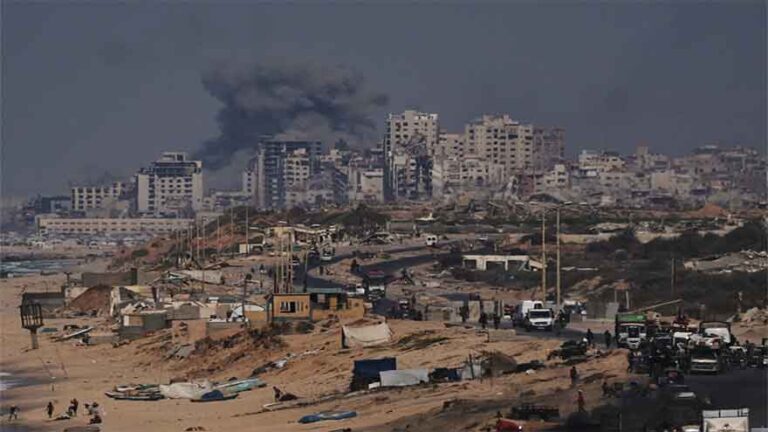
    Many Palestinians in Gaza have cautiously welcomed reports that Hamas has agreed to disarm under a new United States backed proposal, hoping it could eventually bring an end to the devastating conflict. However, despite this small sign of progress, many remain unconvinced that Israel will withdraw its forces or that lasting peace is within reach. US President Donald Trump recently announced that Hamas had accepted a plan to surrender its weapons as part of a broader roadmap aimed at stabilising Gaza and beginning reconstruction. Hamas later confirmed the agreement. Even so, Israeli military operations have continued, leaving many residents uncertain about whether the proposal will lead to any real change. Thousands of families remain displaced, while many others continue living in overcrowded tent camps where shortages of food, clean water, medicine and proper sanitation have created severe humanitarian conditions. Disease outbreaks and poor living conditions have become an everyday reality for much of the population. For many Palestinians, survival remains the immediate concern. Abdel Moneim Aboul Roos, a 24 year old tuk tuk driver who lost a leg in an Israeli airstrike, said discussions about disarmament and troop withdrawals mean little while people continue to struggle for basic necessities. He said access to food and medical care matters more than political agreements that have yet to improve conditions on the ground. The latest proposal builds on a ceasefire agreement reached last year with US support. That deal ended large scale fighting for a period, secured the release of Israeli hostages and increased humanitarian aid entering Gaza. It also included plans for a gradual Israeli military withdrawal, the formation of an international stabilisation force and the dismantling of Hamas’ weapons. However, the agreement soon stalled as both Israel and Hamas accused each other of violating its terms. Hamas retained its weapons while Israeli forces remained in the territory, causing negotiations to break down. The newly announced roadmap provides more detailed arrangements for transferring Hamas’ weapons to a technocratic Palestinian administration. According to the proposal, Israel would not participate in the disarmament process and would instead halt military operations to allow political transition and reconstruction efforts to move forward. Despite these commitments, many Gazans remain deeply sceptical because previous promises of peace failed to deliver lasting results. Displaced resident Ayman Ahmed said people have repeatedly been told that the war would end, only to see the violence continue. While he hopes Hamas eventually lays down its arms, he believes such a step is unlikely in the near future and expressed frustration that ordinary Palestinians continue to suffer while political leaders remain divided. The conflict began after Hamas launched its October 2023 attack on southern Israel, killing around 1,200 people and taking hundreds of hostages. Israel responded with a large military campaign in Gaza that has caused widespread destruction and heavy casualties. According to Gaza health authorities, more than 73,000 Palestinians have been killed during the war, while the fighting has displaced most of the territory’s population. The figures do not distinguish between civilians and fighters, although officials say women and children account for a large share of those killed. Many residents also fear that Israel has no intention of fully leaving Gaza even if Hamas is disarmed. Israeli officials have not publicly endorsed the latest roadmap and anonymous government sources have suggested that it does not match Israel’s security objectives. They have also indicated that Israeli forces intend to remain along the Yellow Line, a military zone separating Israeli controlled territory from the rest of Gaza. The military has strengthened its positions in these areas by building defensive barriers and carrying out demolition operations, leaving many displaced families uncertain whether they will ever return to their homes. Despite these fears, many Palestinians continue to hold onto hope. Anas Nakla, whose home in Rafah was destroyed during the war, said he still dreams of returning with his family even though nothing remains of his house. Mohamed Hamad, displaced from northern Gaza, believes that if the new plan results in even a partial Israeli withdrawal, it would restore hope that one day all displaced families could rebuild their lives in their own communities.