تازہ ترین

  • | | |

    Jamaat-e-Islami storms streets over petrol levy

    Jamaat-e-Islami (JI) has staged sit-ins in Karachi, Lahore and Peshawar against the petroleum levy, rising fuel prices and inflation. In Karachi, a JI rally led by Karachi chief Munim Zafar reached Fawara Chowk. The party had announced a sit-in outside the Governor House to protest the petroleum levy. JI workers are moving towards the Governor House from the Sindh High Court. Party activists have been raising concerns over the impact of the petroleum levy and rising fuel prices on the public. Following the sit-in at Fawara Chowk, the road leading towards the Press Club and Arts Council remains open for traffic. Police personnel have also been deployed near the Governor House to maintain security and manage the situation. In Lahore, JI workers staged a sit-in at Faisal Chowk on Mall Road, near the Chief Minister’s House. JI Pakistan chief Hafiz Naeemur Rehman also reached the protest site and joined the demonstrators. The protest in Lahore was led by JI Punjab chief Javed Kasuri and other party leaders. The protesters are demanding relief from rising petroleum prices and the petroleum levy. The party has also criticised the increasing burden of inflation on ordinary citizens. JI leaders have called for measures to reduce the financial pressure faced by the public. In Peshawar, JI workers staged a sit-in outside the Governor House. The protest has resulted in the closure of the road up to the Sadar Khyber Pakhtunkhwa Assembly Chowk. JI Deputy Emir Liaquat Baloch is scheduled to address the protesters in Peshawar. Party leaders are expected to highlight their demands regarding petroleum prices, the levy and inflation. The demonstrations are part of JI’s wider campaign against the petroleum levy and rising prices. The party has announced protests in different cities to pressure the government to provide relief to consumers. JI leaders have argued that increases in petroleum prices affect the prices of transport, food and other essential goods. They have demanded that the government reconsider the petroleum levy and take steps to control inflation.

  • | |

    Jaranwala tragedy remains a deep wound, says Punja…

    Punjab Minister for Minority Affairs Sardar Ramesh Singh Arora has said that the painful memories of August 16 are still fresh. He described the Jaranwala tragedy as a deep wound on the hearts of the affected families and communities. In a statement, Arora said the Punjab government stood with all victims of the tragedy. He said Chief Minister Punjab and the provincial government were committed to protecting the rights of religious minorities. Arora said the Punjab government had adopted an effective strategy to ensure the safety of minority communities. He added that security measures had been strengthened to protect people from violence and discrimination. The provincial minister said the protection of religious minorities was a priority for the government. He claimed that the government had taken steps to ensure that such an incident would not happen again. Arora warned that no individual or group would be allowed to take the law into their own hands. He said violations of the rights of religious minorities would not be tolerated. He stressed that every citizen had the right to live in safety and with dignity. He said the government was responsible for protecting the lives and property of all citizens, regardless of their religious background. The minister also said religious minorities in Punjab were being provided with all possible facilities. He said the government was working to address their concerns and improve their overall security. Arora said the Punjab government would continue taking measures to create a peaceful environment for all communities. He added that protection of minorities was essential for maintaining harmony and stability in the province. The minister’s statement came on August 16, the anniversary of the Jaranwala incident. The episode remains a painful memory for the Christian community and has continued to raise concerns about the protection of religious minorities. Arora said the government was determined to learn from the tragedy and prevent similar incidents in the future. He reiterated that no one would be permitted to violate the law or target minority communities.

  • | |

    Khawaja Asif hails Sialkot Medical City project

    Defence Minister Khawaja Muhammad Asif has said that Sialkot urgently needed a medical city. He said the project would help improve healthcare facilities for people in the city and nearby areas. Addressing the inauguration ceremony of Sialkot Medical City, Khawaja Asif praised the business community for supporting the project. He also appreciated the role of the Sialkot Chamber in making the initiative possible. The minister said Sialkot had been facing a major healthcare gap. He said patients often had to travel to Lahore when serious medical emergencies occurred in the city. According to Khawaja Asif, the new medical city will help reduce the need for patients to travel to Lahore. It will also provide better healthcare services closer to the people of Sialkot. He said the project was an important development for the city. He hoped that the medical facilities would further improve the quality of healthcare available to local residents. Khawaja Asif also spoke about major road projects in the region. He said another lane would be added to the Lahore-Sialkot Motorway. He said the Kharian Motorway would be completed before the other project. He added that better road links would further improve connectivity between Sialkot and other parts of Punjab. The defence minister recalled that he had received a positive response when the motorway proposal was presented. He said major road networks had connected several cities and towns with each other. He said the route from Shahdara to Rawat had created stronger links between different urban centres. Such projects, he added, were important for trade, travel and economic activity. Khawaja Asif also highlighted the growing importance of Sialkot International Airport. He said the airport was no longer serving only the people of Sialkot. He said people from Jhelum and Gujrat were also using the airport. Residents of Azad Jammu and Kashmir were also travelling through the facility, he added. The minister credited Sialkot’s business community for many of the city’s major development projects. He said local traders and industrialists had made significant contributions to the city’s growth. Khawaja Asif said the Sialkot business community had established high standards. He added that these standards were recognised internationally. He said the success of Sialkot showed what could be achieved through cooperation between the business community and public institutions. He stressed that continued development could further strengthen the city’s position as an important economic and industrial centre.

  • | | |

    Pakistan targets $1.5bn hybrid rice market in Chin…

    Pakistan has a major opportunity to increase its hybrid rice exports to China and could potentially secure exports worth up to $1.5 billion, according to industry experts. The opportunity has emerged as China looks for alternative sources of non-Basmati rice amid a decline in rice trade with India. Pakistani exporters believe the changing market conditions could allow the country to expand its presence in China. Shahzad Ali Malik, founding chairman of the Rice Exporters Association of Pakistan (REAP) and CEO of Guard Agricultural Research and Services, said Pakistan should move quickly to take advantage of the situation. He said Pakistan had a competitive edge because local farmers already grow Chinese hybrid rice varieties. With a coordinated strategy between the government and private sector, Pakistan could significantly increase its exports to the Chinese market. China is expected to remain one of the world’s largest rice importers. Its rice import demand for 2025-26 has been estimated at around 3.1 million tonnes. India had previously been an important supplier of non-Basmati rice to China. However, changes in Chinese import requirements and non-tariff restrictions have affected Indian rice shipments. This has created an opening for other suppliers. Pakistan is considered well placed to benefit because it already produces both Basmati and non-Basmati rice. Pakistan also has surplus stocks of several non-Basmati varieties. These include Chinese hybrid rice and IRRI varieties that are used in China for food processing and strategic food reserves. The hybrid rice segment offers particular potential. Pakistan uses hybrid seed parent lines imported from China. This could make it easier for Pakistani producers and Chinese buyers to maintain compatibility in varieties and quality standards. Pakistan also has an advantage in the non-GMO segment. Industry representatives believe this could strengthen the country’s position as Chinese buyers become more selective about imported rice. The Pakistan-China Free Trade Agreement could further support exports. Existing trade links and CPEC-related logistics may also help Pakistani exporters reduce transportation time and improve their competitiveness. The changing market could benefit both exporters and farmers. Lower competition from India may increase demand for Pakistani rice and could improve prices. Chinese buyers may also seek long-term contracts and assured supplies. Such arrangements could provide farmers with greater market certainty and encourage investment in rice production. However, industry experts say Pakistan must improve its export systems to take full advantage of the opportunity. The government and private sector will need to work together on contract farming, seed quality, certification and food safety requirements. Chinese authorities have strict standards for food safety and pesticide residues. Pakistani exporters will therefore need to ensure that rice consistently meets the required specifications. Seed companies can also play an important role. Improved hybrid seeds could increase yields per acre while helping farmers produce rice of consistent quality. Logistics will be another key factor. Industry representatives believe Pakistan’s ports and CPEC-linked infrastructure could help shorten delivery times and reduce costs. Rice is one of Pakistan’s most important export commodities and ranks second after textiles. An increase in rice exports could generate additional foreign exchange and provide greater economic opportunities for farmers, particularly in Punjab and Sindh. Malik estimated that Pakistan could increase its overall rice exports to around $5 billion within three to five years if the necessary planning, investment and policy support are provided. He also proposed establishing a Pakistan-China Rice Export Task Force. The proposed body could include rice exporters, seed companies and relevant government authorities. The task force could develop a long-term export strategy, coordinate with Chinese buyers and address regulatory and logistical challenges.

  • |

    Pope Leo urges end to West Bank violence

    Pope Leo has called for an immediate end to violence against Palestinians in the occupied West Bank. Speaking after the Angelus prayer at his residence in Castel Gandolfo near Rome, the Pope expressed concern over repeated violence targeting Palestinian civilians. He urged the international community to take practical steps to help end the conflict and advance efforts for a two-state solution. The Pope said lasting peace would require a fair political settlement that guarantees the rights and security of both Palestinians and Israelis. His comments come amid growing tensions in several parts of the West Bank. Violence involving Israeli settlers and Palestinians has increased, while restrictions and confrontations have added to concerns among local residents. The situation in the village of Qusra has also drawn attention. Reports have described severe restrictions on residents, including disruptions to essential services and movement. Rights organisations have raised concerns that increasing settler activity and pressure on Palestinian communities could contribute to further displacement and the expansion of Israeli settlements. The Vatican has consistently supported the establishment of a Palestinian state as part of a negotiated two-state settlement. More than 150 of the 193 UN member states recognise Palestine. The future of the West Bank remains one of the central issues in the Israeli-Palestinian conflict. Palestinians seek the West Bank, Gaza Strip and East Jerusalem as the basis of an independent state. Israeli settlement expansion in the West Bank has remained a major source of international criticism. Palestinian officials and rights groups say the continued expansion threatens the possibility of establishing a viable Palestinian state. The Israeli government, however, disputes the international characterisation of the West Bank as occupied territory and considers it disputed land.

  • |

    Historic floods leave at least six dead in Indiana

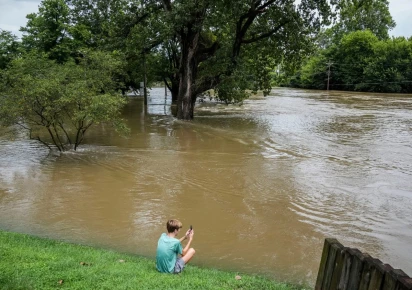
    At least six people have died in the US state of Indiana after severe storms brought record-breaking rainfall and triggered widespread flooding. Authorities said several areas received more than 11 inches of rain over two days. The heavy rainfall caused the White River to rise rapidly, flooding communities and forcing large-scale rescue operations. More than 90 people and 45 pets were rescued from flooded areas, according to local authorities. The worst flooding was reported along the White River, stretching from Hamilton County towards the northern suburbs of Indianapolis. Several neighbourhoods were left under water. In Indianapolis, floodwaters submerged vehicles and reached residential properties. Some residents used kayaks and small boats to move through streets that had turned into waterways. The White River rose above 24 feet in Anderson and Noblesville. The level exceeded records set during the major flooding of 1913, highlighting the severity of the disaster. Indianapolis Mayor Joe Hogsett declared a local emergency and urged people living near the river to leave their homes if authorities advised evacuation. Emergency officials described the flooding as an unprecedented event. Marion County Emergency Management director Jacob Spence said the scale of the disaster was unlike anything recently experienced in the area. Several counties reported storm-related deaths. One woman, aged 58, was found dead in Delaware County after apparently attempting to drive through floodwaters. Authorities also confirmed fatalities in Jennings, White, Porter and La Porte counties. Indiana Governor Mike Braun said he had spoken with US President Donald Trump about the disaster. He said a request for a federal emergency declaration was being processed to speed up assistance for affected communities. Braun expressed sympathy for the families who lost loved ones and urged residents to remain cautious. He warned people to stay away from flooded roads and fast-moving water. The National Weather Service continued to issue flood warnings across parts of central Indiana. Officials warned that water levels were still rising in some locations. More severe weather was also expected. Emergency authorities urged residents to monitor official warnings and avoid unnecessary travel. The storms were not limited to Indiana. Tornadoes, intense rainfall and flash flooding affected several parts of the US Midwest. Damage was reported across a broad area stretching from the Chicago region towards western Pennsylvania.

  • | |

    Balochistan lawmakers condemn Nushki killings

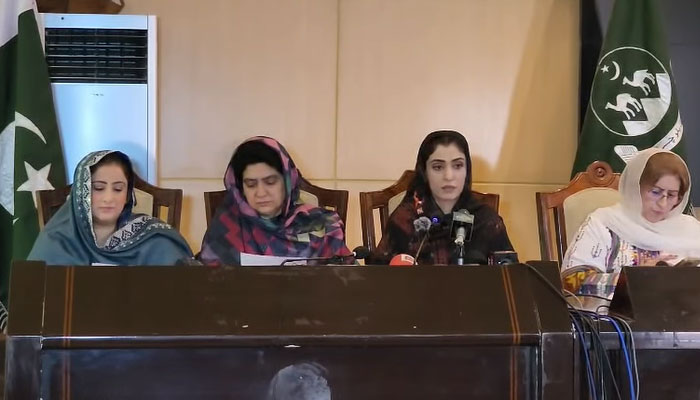
    Women parliamentarians in Balochistan have strongly condemned the killing of a mother and daughter in Nushki. The victims were reportedly killed after militants entered their home. The lawmakers described the incident as deeply tragic. They said the attack was also against Baloch traditions and social values. They expressed concern over the targeting of civilians, especially women. Speaking at a press conference in Quetta, Balochistan government adviser Meena Majeed said the victims were identified as Bibi Hanifa and Hafsa. She alleged that the two women were killed by militants linked to what the authorities describe as Fitna al-Hindustan. Majeed questioned why the mother and daughter were targeted. She asked what their crime was. She said ordinary Baloch citizens were now facing threats from militants. She also expressed concern about the targeting of women. Majeed said the government and security forces were continuing operations against militants in the province. She assured that those involved in the Nushki attack would be identified and brought before the law. She said the government would continue efforts to protect civilians. Balochistan Assembly Deputy Speaker Ghazala also condemned the incident. She said women parliamentarians would not remain silent over the killing of the mother and daughter. Ghazala stressed that women must be protected everywhere. She said their safety should remain a priority under all circumstances. Provincial Education Minister Raheela Durrani also expressed strong concern over the incident. Durrani questioned the message being sent about Balochistan when women were targeted and killed. She said such incidents damage the image of the province and create fear among local communities. The women lawmakers said violence against civilians could not be tolerated. They called for effective action against those responsible for the killings. They also stressed the need for stronger security measures to protect women and other vulnerable citizens. The lawmakers expressed solidarity with the victims’ families. They said the government and security institutions must ensure that those responsible for the attack face justice.

  • | | |

    Cristiano Ronaldo reportedly told family about wed…

    Cristiano Ronaldo has reportedly married his longtime partner Georgina Rodríguez in a highly private ceremony in Portugal, with claims that his family was informed about the wedding only moments before the ceremony began. According to Portuguese television presenter Cristina Ferreira, Ronaldo and Rodríguez reportedly exchanged vows during a private ceremony on August 11, 2026. The event was said to have been attended by only four witnesses and the couple’s children, making it a remarkably intimate occasion for one of the world’s most famous footballers. One of the most surprising details surrounding the Cristiano Ronaldo wedding is the reported absence of his mother, Dolores Aveiro, and his three siblings. Ferreira claimed that Ronaldo’s family may have learned about the ceremony just 30 seconds before it took place. The reported last-minute announcement has generated significant interest among fans because Ronaldo has maintained a close relationship with his family throughout his career. However, the decision to keep the ceremony private appears to have allowed the couple to celebrate away from the intense media attention that normally surrounds their lives. Following the reported wedding, Ronaldo’s mother appeared to acknowledge the occasion on social media. Dolores reportedly reacted with a heart emoji to photographs of the couple’s wedding rings. Her reaction was seen as a warm gesture despite her reported absence from the ceremony. Ronaldo and Rodríguez later made their first public appearance together as a married couple. They were reportedly seen with their children at Al-Awwal Park in Riyadh while watching an Al-Nassr match against Al-Fateh. The appearance attracted considerable attention, as it came only days after the reported private ceremony. Fans were particularly interested in seeing the couple together following reports of their marriage. Ronaldo and Rodríguez have been partners for several years and have built a family together while balancing their highly public careers and personal lives. Their reported decision to hold a small ceremony demonstrates their desire to keep important family moments private. Although details of the ceremony remain limited, the claim that Ronaldo informed his family only seconds before the wedding has become the most striking part of the story. More information about the ceremony and the couple’s plans could emerge in the coming days. For now, the reported Cristiano Ronaldo wedding remains a closely watched story, with fans around the world eager to learn more about the private celebration.

  • | |

    Goods transporters defer nationwide strike for 40 …

    Goods transporters have announced a 40-day postponement of their nationwide strike following talks with government representatives in Karachi. The negotiations were held at the Governor House in Karachi. Sindh Governor Nihal Hashmi, Karachi Mayor Murtaza Wahab, Federal Minister for Communications Abdul Aleem Khan and All Pakistan Goods Transporters Association President Malik Shahzad attended the meeting. Speaking at a press conference after the talks, Malik Shahzad said transporters had decided to postpone the strike after receiving assurances from the government. He said the transporters had been on a nationwide strike for the past nine days. According to him, the Sindh government assured them that the parking issue would be addressed. Shahzad said the government had also sought 15 days to review the mechanism for determining petroleum prices. The issue of whether fuel prices should be revised every 15 days or once a month would be examined, he added. He said Federal Minister Abdul Aleem Khan had assured the transporters that a committee would be formed to review toll taxes and consider reducing the charges. The transporters were also assured that 10-wheeler vehicles would be allowed to carry an appropriate weight, Shahzad said. He added that the federal and provincial governments had already resolved some of their concerns. Other issues require decisions at the cabinet level, he said. Shahzad said meetings of the relevant committees would continue. He expressed hope that the government would fulfil its commitments. He clarified that the transporters were not ending their strike permanently. Instead, they were postponing it for 40 days. He warned that the transporters could resume protests if the government failed to implement the assurances given during the negotiations. Federal Minister for Communications Abdul Aleem Khan said the government had addressed the transporters’ issues that could be resolved immediately. He said some demands required formal procedures, which the government would complete. Several committees had been formed to work on the remaining issues, he added. Aleem Khan also criticised the condition of the Karachi-Hyderabad road. He said the existing road could not properly be described as a motorway. He announced that work on a new motorway from Sukkur to Hyderabad and onward to Karachi would begin this year. The minister said the government wanted to avoid decisions that could create unnecessary disputes. Sindh Governor Nihal Hashmi said the regional situation was currently unusual and had significant economic implications. He said the economic effects of conflicts were being felt not only in Pakistan but across the world. He added that the prime minister and the field marshal were making efforts to ensure that the impact on the public remained manageable. Hashmi said the government and transporters had listened to each other during the negotiations. Both sides, he added, agreed that they were prepared to make sacrifices for the country. Karachi Mayor Murtaza Wahab said the authorities had spent the entire day trying to resolve the issues raised by transporters. He said the Sindh government would take action on matters falling under its jurisdiction. Wahab stressed that the authorities wanted to resolve disputes through dialogue rather than confrontation.

  • | |

    Gulf allies reportedly lose confidence in Trump over Iran war

    Several US allies in the Gulf are reportedly becoming increasingly frustrated with President Donald Trump over what they see as a lack of effective diplomacy to end the war between the United States and Iran. According to a report by The Washington Post, officials from Arab, European and US circles said governments in Saudi Arabia, the United Arab Emirates, Qatar, Kuwait and Bahrain were growing increasingly concerned about the Trump administration’s approach to the conflict. The report said Gulf allies were particularly worried that the Trump administration had failed to advance the diplomatic efforts needed to achieve a peaceful settlement with Iran. According to the newspaper, some Gulf states have also started discussing whether continuing to host major US military bases on their territory remains in their national interest. Three current US officials and a former American diplomat reportedly told the Washington Post that the debate had intensified after months of war and continued missile and drone attacks by Iran and groups allied with Tehran. The officials said some Gulf countries were questioning how beneficial it was to host large US military installations while also facing potential security risks linked to the conflict. One senior Gulf official was quoted as saying that Trump had started the war while Gulf countries were paying the price. Despite the growing frustration, Gulf states continue to regard Washington as a major security partner and an important supplier of military equipment. The United States maintains major military facilities in Qatar and Bahrain. These bases have long played an important role in Washington’s military presence and security strategy in the region. However, the reported dissatisfaction is prompting some Gulf governments to consider alternative security arrangements. Some countries have also started exploring other options to reduce their dependence on the United States for defence and regional security. The recent mutual defence agreement between Saudi Arabia, Türkiye and Pakistan has also attracted attention in this context. A senior European official reportedly described the agreement as a signal to Washington. According to the official, the so-called Makkah defence agreement indicates that Gulf countries may no longer want to rely exclusively on the United States for their security. The development reflects growing concerns among some US allies about the consequences of the Iran conflict. While Gulf states continue to maintain close relations with Washington, the war has encouraged discussions about diversifying their security partnerships. The reported shift could have wider implications for US influence in the Gulf. Any reduction in reliance on American military protection could encourage regional countries to strengthen defence cooperation with other partners.