تازہ ترین

  • | |

    Dar, Wang Yi discuss bilateral ties and SCO cooper…

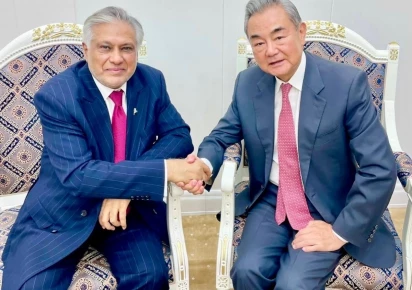
    Deputy Prime Minister and Foreign Minister Ishaq Dar held a meeting with Chinese Foreign Minister Wang Yi on the sidelines of the Shanghai Cooperation Organisation (SCO) Council of Foreign Ministers’ meeting in Cholpon-Ata, Kyrgyzstan. The two leaders reviewed Pakistan-China relations, exchanged views on regional developments and discussed expanding cooperation through multilateral platforms. The meeting reaffirmed the close and longstanding partnership between Pakistan and China. Both sides discussed ways to further strengthen bilateral cooperation in areas of mutual interest, including diplomacy, regional peace, economic collaboration and strategic coordination. During the discussions, Dar thanked Wang Yi for appreciating Pakistan’s diplomatic efforts aimed at promoting regional peace and stability. He said Pakistan remains committed to dialogue, cooperation and peaceful engagement in addressing regional challenges. Wang Yi congratulated Pakistan on its upcoming responsibilities within the Shanghai Cooperation Organisation. He extended his best wishes as Pakistan prepares to assume the chairmanship of the SCO Council of Heads of State for 2026–27 and host the SCO Summit in 2027. He expressed confidence that Pakistan would make a positive contribution to advancing the organisation’s objectives. Both foreign ministers also exchanged views on the regional and international situation. They agreed that continued consultation and cooperation among SCO member states are important for promoting peace, economic development, connectivity and regional stability. Earlier in the day, Dar met Kyrgyz President Sadyr Japarov at the presidential residence in Cholpon-Ata. During the meeting, he conveyed greetings from President Asif Ali Zardari and Prime Minister Shehbaz Sharif and thanked the Kyrgyz leadership for hosting the SCO foreign ministers’ meeting. The meeting with President Japarov focused on regional and global developments as well as the growing role of the SCO in strengthening cooperation among member states. Dar highlighted the importance of maintaining close collaboration as Pakistan prepares to lead the organisation during its upcoming chairmanship. The foreign minister is representing Pakistan at the two-day SCO Council of Foreign Ministers’ meeting, attended by foreign ministers from China, Russia, India, Iran, Kazakhstan, Kyrgyzstan, Tajikistan, Uzbekistan, Belarus and Pakistan. The meeting is reviewing key regional and international issues while preparing the agenda for the next SCO summit.
  • |

    Wildfires force 43,000 to flee in France

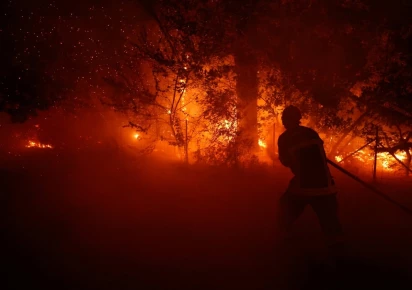
    More than 43,000 people have been evacuated from southwestern France as massive wildfires continue to spread across several regions, threatening residential areas, forests and popular tourist destinations. French authorities have launched one of the country’s largest emergency operations of the year as firefighters work around the clock to contain the rapidly advancing flames. The worst-affected area is located near Arcachon Bay and the Cap Ferret peninsula in the Gironde region. The wildfire has already burned through more than 8,700 hectares of land and continues to spread because of strong winds, dry vegetation and extremely high temperatures. Authorities ordered the complete evacuation of the Cap Ferret peninsula, a major holiday destination on France’s Atlantic coast that attracts thousands of visitors every summer. Residents, tourists and campers were instructed to leave immediately as emergency services expanded evacuation operations. To speed up the evacuation, authorities arranged transport by both road and sea. Special boats were deployed from several coastal villages while vehicles used the peninsula’s only highway leading to the mainland. Emergency officials urged everyone in the affected areas to leave without delay for their own safety. French Interior Minister Laurent Nunez described the Gironde wildfire as the largest fire of the current season. He said around 80 homes have been damaged, including nearly 50 houses that were completely destroyed by the flames. More than 1,000 firefighters, supported by helicopters, military engineering units and civil security teams, are working to control the blaze in Gironde. Hundreds of police officers and emergency personnel have also been deployed to help with evacuations, traffic management and public safety. A second major wildfire is burning near Biscarrosse in the neighbouring Landes region. The fire has destroyed more than 2,500 hectares of forest and forced the evacuation of over 23,000 residents, tourists and campers. Local authorities said the blaze remains out of control after continuing to spread overnight. French President Emmanuel Macron has requested international assistance through the European Union Civil Protection Mechanism. Several European countries have agreed to send additional firefighting aircraft and helicopters to help French authorities contain the fires. Croatia is sending Canadair water-bombing aircraft, while Portugal will provide specialised firefighting planes. The Czech Republic and Slovakia are also deploying heavy helicopters to assist emergency crews. Emergency officials said there have been no confirmed fatalities in the Gironde wildfire so far. However, they warned that weather conditions remain highly dangerous and could make firefighting efforts even more difficult in the coming days. Fire experts say the blazes are spreading unusually quickly because of prolonged heatwaves, severe drought and strong winds. These conditions have left forests and vegetation extremely dry, allowing fires to expand rapidly across large areas. Authorities estimate that nearly 50,000 hectares of land have burned across France since the beginning of this year’s wildfire season, making it one of the country’s most destructive fire seasons in recent years.

  • | |

    FCC to hear PTI ‘Release Force’ and May 9 case…

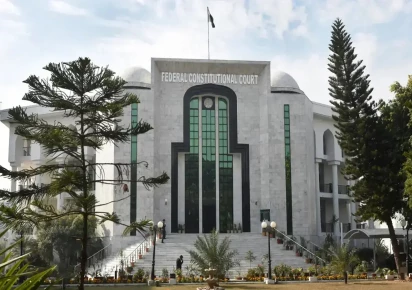
    The Federal Constitutional Court (FCC) has fixed July 29 for hearing two important petitions linked to Pakistan Tehreek-e-Insaf (PTI) founder Imran Khan. The hearings come at a time when PTI is preparing to launch a nationwide campaign demanding the release of its founding chairman. A three-member bench headed by Chief Justice Aminuddin Khan will hear a petition challenging the proposed formation of what has been described as the “Imran Khan Release Force.” On the same day, the bench will also hear another petition concerning the Khyber Pakhtunkhwa government’s decision to withdraw selected criminal cases related to the May 9, 2023 violence. The first constitutional petition argues that the formation or mobilisation of any organisation under the title of the “Imran Khan Release Force” would be unconstitutional and contrary to Pakistani law. The petitioner has requested the court to declare such an organisation illegal, arguing that private forces or militias are prohibited under the Constitution and relevant legislation. The petition also states that citizens and public office holders are constitutionally bound to remain loyal to the state and act within the framework of the law. It argues that any attempt to organise a private force would violate constitutional principles and existing legal provisions. The issue first came before the court after public statements were made earlier this year regarding the creation of a movement aimed at securing Imran Khan’s release. At that time, the court sought a response from the Khyber Pakhtunkhwa chief minister. The matter has now been scheduled for detailed hearing after several months. However, some legal experts have disputed the interpretation presented in the petition. They argue that the term “Release Force” refers to a political campaign or public movement seeking Imran Khan’s release rather than the creation of any armed organisation. According to their view, there is no proposal to establish a private militia, and the movement has no official connection with the provincial government. The same bench will also hear a petition filed by the Pakistan Broadcasting Corporation (PBC) concerning the attack on Radio Pakistan Peshawar during the May 9 unrest. The petition requests that the criminal case be transferred from Khyber Pakhtunkhwa to an anti-terrorism court in Islamabad or another province to ensure an impartial trial. The petitioner argues that political influence and executive interference could affect the fairness of judicial proceedings if the case continues within the province. Earlier, the Federal Constitutional Court issued an interim order preventing the withdrawal of certain May 9-related cases while the matter remains under consideration. Officials from the Khyber Pakhtunkhwa Law Department have questioned that interim order. They maintain that the provincial government had not yet filed any formal application before the anti-terrorism court seeking withdrawal of cases. According to provincial authorities, the cabinet had only approved the withdrawal of cases considered politically motivated or those lacking sufficient evidence. Provincial officials have stated that 23 out of 29 terrorism-related cases linked to the May 9 incidents have already been decided. They also said that 285 of the 319 cases registered in ordinary courts have been concluded, while the remaining cases are still under trial.

  • | | | |

    Iran says US strikes kill 55, injure 645 as confli…

    TEHRAN: Iran’s Ministry of Health has claimed that at least 55 people were killed and 645 others injured in the latest wave of US military strikes across the country, as hostilities between Tehran and Washington continue to escalate. According to Iranian officials, the heaviest casualties were reported in the country’s southern and southwestern provinces, where several sites were allegedly targeted during the attacks. Iran’s state-affiliated Fars News Agency quoted a Health Ministry spokesperson as saying that the death toll had reached 55, while the number of injured had climbed to 645. The ministry described the strikes as among the deadliest incidents since the recent escalation in military tensions. Officials said Khuzestan Province suffered the highest number of casualties, followed by Hormozgan and Sistan and Baluchestan, where hospitals reportedly received dozens of wounded civilians following the attacks. The Health Ministry added that 586 of the injured have already been discharged after receiving treatment, while several others were treated for minor injuries and allowed to return home shortly afterward. According to the ministry, eight people remain hospitalized, with some expected to undergo additional surgeries due to the severity of their injuries. Iranian authorities condemned the attacks as an act of “American aggression” and called on the international community to respond to what they described as violations of international law. Officials urged global organizations to investigate the reported strikes and their humanitarian consequences. As of the time of publication, the United States had not issued an official response to the casualty figures released by Iran’s Health Ministry. The reported death toll and injury count have also not been independently verified, and international monitoring organizations have yet to confirm the claims. The latest figures come as military tensions between Iran and the United States continue to rise, fueling concerns about the humanitarian impact of the conflict and the risk of further regional instability. Security analysts warn that continued military exchanges could deepen the crisis across the Middle East, with civilians increasingly caught in the crossfire. They say the absence of verified information from independent sources makes it difficult to assess the full scale of the damage, but the competing claims from both sides underscore the rapidly evolving nature of the conflict. With diplomatic efforts showing little sign of progress, observers fear that further escalation could lead to additional civilian casualties and heightened security risks across the region, while the international community continues to monitor developments closely.

  • | |

    Kim Kardashian pokes fun at bar exam in new campaign

    Kim Kardashian has turned one of her biggest career setbacks into a bold marketing moment with the launch of her new energy drink brand, UPDATE. The reality star and entrepreneur used humour to address years of public scrutiny over her legal journey, delivering a witty response to criticism about her bar exam results. The campaign was unveiled through a promotional video in which Kardashian appears at a mock press conference, fielding questions about her busy lifestyle, business empire and legal studies. The commercial was designed to introduce UPDATE, an energy drink that she co-founded, while showcasing her ability to laugh at herself. During the video, Kardashian jokes about the questions she constantly receives from the public. She says, “People are always asking about all of the work I’ve gotten done… They always ask, ‘Kim, how do you do so much? Kim, how do you keep going? Kim, are they really real?’” She then credits her energy to UPDATE before the ad takes another humorous turn. The commercial’s biggest moment comes when celebrity attorney Gloria Allred asks Kardashian, “Did she even ever pass the bar?” Without hesitation, Kardashian responds, “No, I didn’t pass the bar. I raised it.” The line has quickly gone viral, with fans praising her confidence and sense of humour in addressing a topic that has often attracted criticism. Kardashian’s legal journey has been closely followed for years. After completing a six-year law apprenticeship, she sat for the California Bar Exam in July 2025 but did not pass. Despite the setback, she publicly vowed to continue studying until she becomes a qualified lawyer, saying she has no intention of giving up on her goal. The launch of UPDATE marks another expansion of Kardashian’s growing business portfolio, which already includes the billion-dollar shapewear brand SKIMS and several other successful ventures. The new drink is marketed as a modern energy beverage designed to help users stay focused throughout the day without the usual caffeine crash. Fans have widely praised Kardashian’s latest campaign, calling it a clever example of self-deprecating humour and smart branding. Many social media users said the entrepreneur successfully transformed criticism into a memorable marketing moment, proving once again her ability to keep people talking while expanding her ever-growing business empire.

  • | | | |

    Pakistan-origin Saadia Zahidi becomes first woman …

    Pakistan-origin global executive Saadia Zahidi has been appointed as the first woman Director General of the International Air Transport Association (IATA), making history by becoming the first female to lead the world’s largest airline industry organisation. She will officially assume her new responsibilities on November 1, taking charge of an organisation that represents hundreds of airlines and plays a key role in shaping global aviation policies, safety standards and industry cooperation. Saadia Zahidi is currently serving as the Managing Director of the World Economic Forum (WEF), where she has held several senior leadership positions. During her time at the WEF, she contributed to global initiatives focused on economic growth, innovation, labour markets, gender equality and sustainable development. Her appointment is being widely viewed as a landmark achievement for the international aviation industry. It reflects the growing recognition of women’s leadership in sectors that have traditionally been dominated by men. After the announcement, Zahidi said she was honoured to take on the new responsibility. She pledged to work closely with airlines, governments and industry partners to strengthen the global aviation sector and prepare it for future challenges. She said her priorities would include promoting innovation, improving the resilience of the aviation industry and supporting sustainable growth. She stressed that international cooperation would be essential in helping the aviation sector meet changing economic, environmental and technological demands. Industry observers believe Zahidi’s extensive experience in global economic policy and international cooperation will bring a broader strategic perspective to IATA as the aviation industry continues to recover from recent global disruptions and focuses on long-term growth. Originally from Lahore, Saadia Zahidi has built an internationally respected career through her work with global institutions. She holds dual Pakistani and Swiss citizenship and has represented Pakistan on several international platforms throughout her professional career. Her appointment is also being celebrated as a proud moment for Pakistan, with many viewing it as recognition of the talent and leadership of Pakistani professionals serving in prominent positions around the world. As Director General, Zahidi will lead IATA’s efforts to support airlines worldwide, strengthen global aviation cooperation, improve operational standards and encourage policies that promote safe, efficient and environmentally sustainable air transport.

  • | | | |

    Two Chinese oil tankers safely cross Bab el-Mandeb…

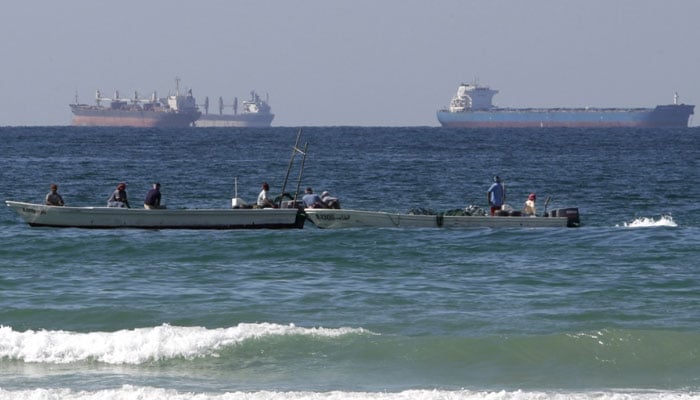
    RIYADH: Two Chinese supertankers carrying Saudi crude oil have safely passed through the Bab el-Mandeb Strait, despite growing security concerns following the Houthi movement’s recently announced naval blockade targeting Saudi-linked shipping. According to international media reports and shipping data, the vessels successfully navigated one of the world’s busiest maritime chokepoints, even as commercial shipping across the region faces mounting disruption due to escalating tensions in the Middle East. The two tankers departed earlier this week from Saudi Arabia’s Yanbu Port, transporting crude oil to China. Maritime tracking data indicated that both ships identified themselves as carrying Chinese crews, a detail analysts believe may have helped reduce the risk of interception while transiting the strategically important waterway. The successful voyage comes at a time when regional shipping routes are under increasing pressure. While the Bab el-Mandeb passage remained open for these vessels, traffic through the Strait of Hormuz has slowed significantly amid heightened geopolitical tensions and security threats. Industry monitoring organizations reported that only one oil tanker crossed the Strait of Hormuz on Thursday, marking the lowest daily traffic recorded since May 7. The sharp decline reflects growing concerns among shipping companies over the safety of vessels operating in the Gulf region. The latest developments follow the Houthis’ announcement of a naval blockade against Saudi shipping, raising fears of further disruptions to global energy supplies. The Red Sea and nearby waterways serve as vital corridors for international trade, with millions of barrels of crude oil passing through them every day. Maritime security experts say shipping companies are increasingly reassessing routes, insurance coverage, and operational risks as tensions continue to rise. Some firms have warned that insurance policies for vessels operating in high-risk conflict zones could become more expensive or even be withdrawn if security conditions deteriorate further. Although the two Chinese tankers completed their journey through Bab el-Mandeb without incident, analysts caution that the broader security situation remains highly volatile. Any escalation involving key maritime routes could have significant consequences for global oil markets, freight costs, and international supply chains. The safe passage of the vessels offers temporary reassurance for energy markets, but observers note that commercial shipping in the region remains vulnerable as geopolitical tensions persist. Governments, shipping operators, and energy traders are closely monitoring developments, with particular attention focused on the strategic waterways that connect the Gulf to global markets.

  • | |

    Sangeeta’s intimate direction to Moammar Rana criticized online

    Veteran Pakistani filmmaker Sangeeta has found herself at the center of online discussion after behind-the-scenes footage showing her directing actor Moammar Rana on set began circulating on social media platforms. ​The viral video, captured during the production of her upcoming film Mukho, shows the experienced director physically demonstrating how to execute a close romantic sequence between the lead actors. In the footage, Sangeeta steps in to personally guide Moammar Rana on body posture, facial expressions, and the specific physical proximity required for the scene. Taking a hands-on approach typical of traditional Lollywood directors, Sangeeta directly adjusted the actor’s positioning to demonstrate the movements needed to capture romantic chemistry on camera. ​Addressing her direct approach to film direction, the veteran filmmaker explained that hands-on instruction is an essential part of her creative process on set: ​”As a director with decades of experience, my focus is always on getting the exact emotion required for the scene. In traditional cinema, showing an actor how to move and convey feelings on camera is simply part of the job to ensure the final shot looks believable to the audience.” ​The behind-the-scenes clip quickly spread across online entertainment portals, triggering divided reactions among social media users. Critics described the physical guidance as awkward and unnecessary, arguing that established actors like Moammar Rana should be allowed more creative space without physical demonstration. Some commentators suggested that older directing methods might feel out of place in modern, contemporary filmmaking environments. ​Conversely, many fans and industry insiders came to Sangeeta’s defense, highlighting her career in Pakistani cinema spanning nearly 50 years. Supporters noted that veteran directors from the classic Lollywood era have long relied on direct physical demonstrations to communicate their creative vision clearly to the cast. They argued that her active role on set reflects her passion for filmmaking and close attention to detail rather than anything controversial. ​The online debate highlights the contrast between classic Lollywood production techniques and contemporary film set standards. While traditional directors frequently relied on direct physical instruction to achieve specific visual shots, modern digital coverage means behind-the-scenes moments are now routinely scrutinized and discussed by online audiences. ​As production on Mukho continues toward its scheduled release, the widespread reaction to the viral footage demonstrates how everyday moments from film sets regularly become topics of public debate in the digital age.

  • |

    Pakistan set to field seven batters in first West Indies Test

    TRINIDAD: Pakistan is set to adopt a batting-heavy approach for the opening Test against the West Indies, with team management reportedly planning to field seven specialist batters as they finalize the playing XI ahead of the series opener. According to team sources, initial discussions have begun on the lineup, with the management aiming to strengthen the batting order while maintaining a balanced bowling attack for the first Test, which begins on Saturday at the Brian Lara Cricket Academy in Trinidad. The proposed lineup is expected to include Azan Awais, Imam-ul-Haq, Shan Masood, Babar Azam, and wicketkeeper-batter Mohammad Rizwan. All-rounder Salman Ali Agha is also likely to feature, with the team expected to use him as the fifth bowling option while adding depth to the batting unit. Sources further indicated that Aamer Jamal and experienced pacer Mohammad Abbas are expected to retain their places in the side, providing balance with both bat and ball. There is also a strong possibility that left-arm spinner Ali Usman will make his Test debut. One of Khurram Shahzad or Mohammad Ali is expected to complete the pace attack, depending on the final assessment of conditions. Team management has reportedly advised the bowlers to focus on improving their batting contributions, reflecting Pakistan’s intention to maximize runs from the lower order. The final playing XI, however, will depend on players’ fitness and last-minute evaluations before the match. Meanwhile, preparations at the Brian Lara Cricket Academy suggest conditions could favor seam bowlers. According to sources, curators have prepared a pitch with brown grass rather than lush green coverage, a surface expected to provide pace and bounce while remaining suitable for batting as the match progresses. The first Test marks the beginning of Pakistan’s highly anticipated series against the West Indies, with both teams eager to make a strong start. Pakistan will be hoping that its strengthened batting lineup provides the platform for a winning performance in Caribbean conditions.

  • | |

    Indian rupee hits record low against dollar

    The Indian rupee has dropped to its lowest level on record against the US dollar, highlighting increasing pressure on the country’s currency amid challenging global economic conditions. For the first time in history, one US dollar has reached the value of 97 Indian rupees, marking a new record low for the Indian currency. The latest decline reflects growing concerns over external economic pressures and weakening investor confidence. According to international reports, the Reserve Bank of India (RBI) stepped into the foreign exchange market to support the rupee and limit further losses. Central bank intervention is aimed at reducing excessive volatility and preventing sharp fluctuations in the value of the currency. The latest depreciation comes only a few months after the rupee had already reached a previous record low of 96.96 per US dollar in May 2026. The fall to 97 rupees per dollar now represents the weakest exchange rate ever recorded for the Indian currency. Economists say several factors are driving the rupee’s decline. One of the biggest reasons is the sharp rise in global crude oil prices, which has significantly increased India’s import bill. As one of the world’s largest importers of crude oil, India requires large amounts of US dollars to pay for energy imports, increasing demand for the American currency. Experts also point to the strengthening of the US dollar in international markets, continued foreign investment outflows and growing pressure from expensive imports. These factors have reduced demand for the rupee while increasing demand for dollars, causing further depreciation. Market analysts warn that a weaker rupee could increase the cost of imported goods, including fuel, machinery and industrial raw materials. Higher import costs may also contribute to inflation and raise production expenses for businesses across different sectors of the economy. Financial experts believe the Reserve Bank of India will continue monitoring developments closely and may introduce additional measures if market volatility continues. The central bank is expected to use its foreign exchange reserves and other monetary tools to stabilise the currency and restore investor confidence.